Flamingo Sunset? – October 2010

Shot of the Month – October 2010

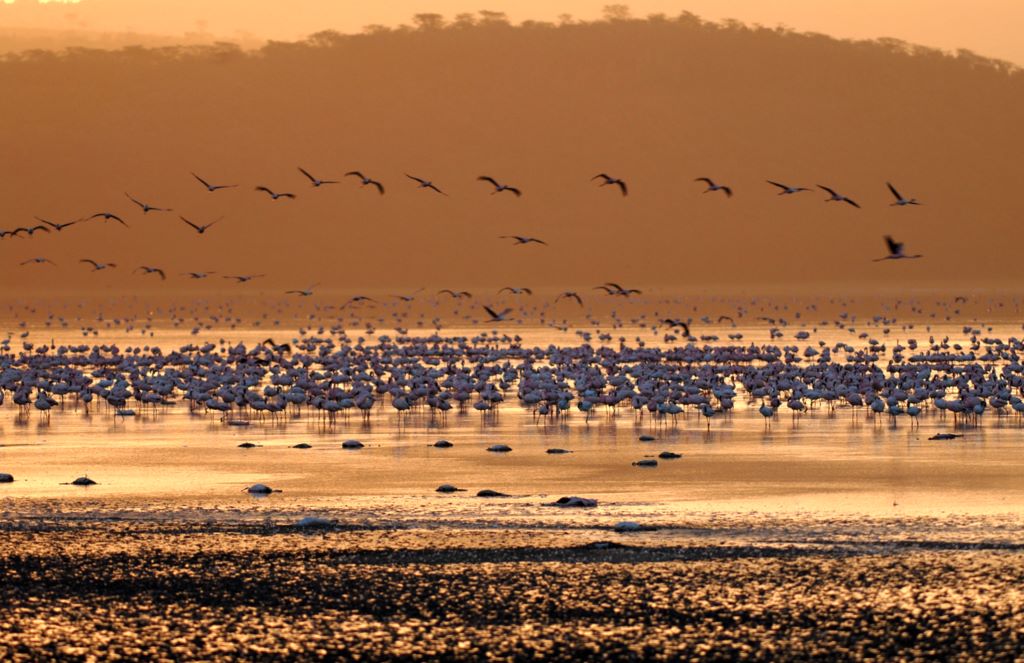
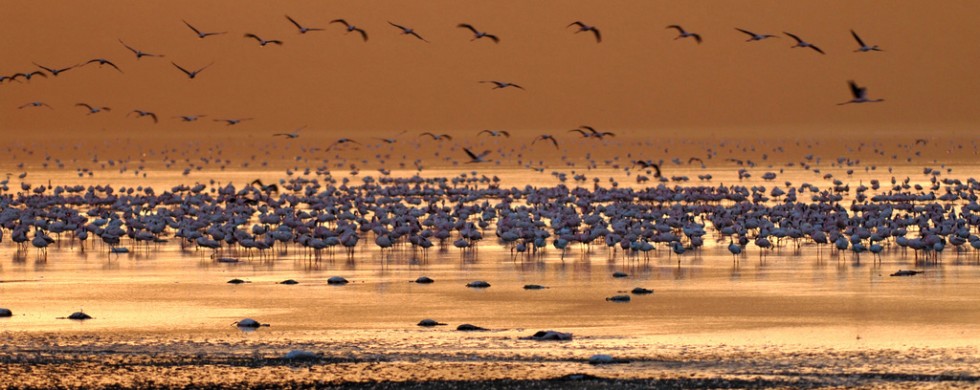
This month a lovely scene that pretty much speaks for itself.

Photographically I didn’t have to do much to capture this one.  It was a late afternoon as we drove along the edge of Lake Nakuru.  We stopped to look at some critter and when I glanced back and saw this scene, in this light, I knew we had something special.  I quickly threw a bean bag on the roof of the vehicle, steadied the camera on the bean bag, and fired off a few shots.  As if on cue some obliging flamingos took flight and added a nice element to the photo.

Lake Nakuru, located in Kenya, East Africa is a natural wonder in that it can attract thousands, and at times millions of flamingos to feed on algae found in the alkaline waters.  During these times the lake becomes a noisy, turbulent sea of shifting waves of pink.

The lake is also home to over 400 types of bird life and the areas around the park contain an amazing diversity of wildlife including lion, leopard, giraffe, waterbuck, impala, and other assorted grass eaters.  The park is also a rhino sanctuary and is home to over 100 of the prehistoric-looking beasts.

I have been to many wildlife parks in Africa and few can rival the quantity and diversity of life, and the amazing range of smells, sights, and sounds of this small jewel of a park.  It is one of my favorites.

It is unclear however if this ecosystem can continue to thrive.  The population of flamingos has waned in recent years and many fear that the pollution from the growing, nearby town of Nakuru and the run-off of pesticides from agricultural lands is destroying the habitat.

With the human population now at seven billion, and rising, the dilemma facing Lake Nakuru is being repeated with natural habitats across the globe as the expanding human footprint pushes other life forms onto shrinking, increasingly isolated, and fragile sanctuaries.


Until next month…
Life’s a Breach – September 2010

Shot of the Month – September 2010

The sequence of events, more often than not, went something like this.

  1. Hear a thunderous watery clap.
  2. Spin on my heels in the direction of the calamity.
  3. F*$%#@! (curse like a sailor)
  4. Watch the massive hole in the water begin to fill in as the whale slips beneath the surface

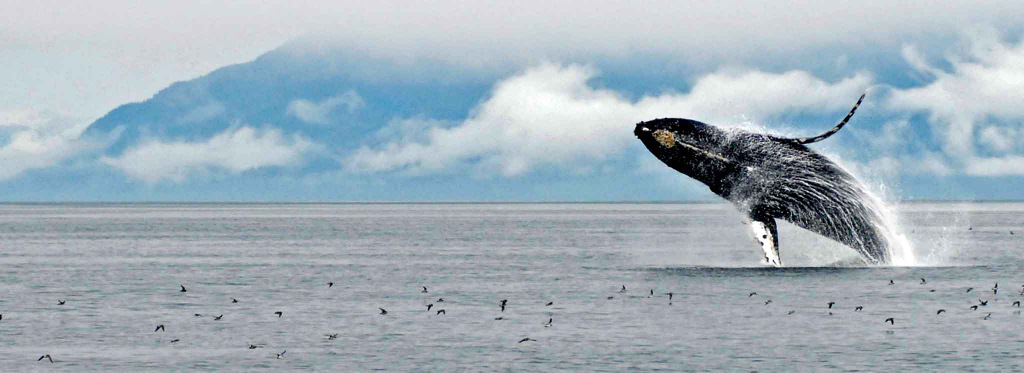
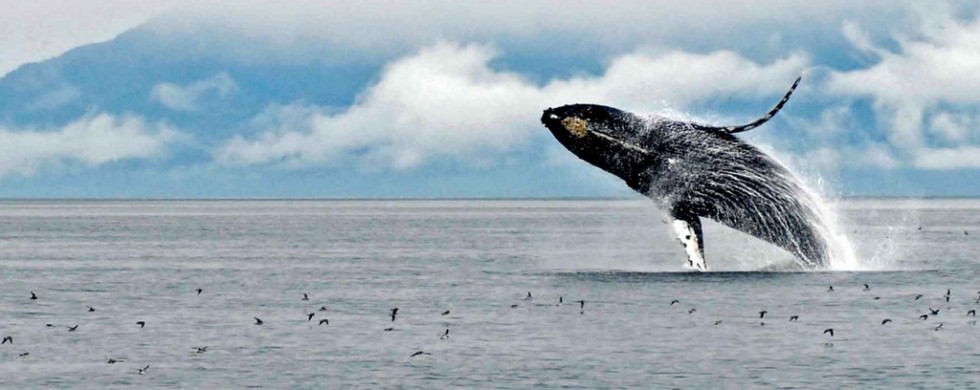
My heart sank each time I heard that sound.  That sharp report signaled that I had yet again missed seeing what is really a nonsensical idea – that a fifty-foot, forty-ton humpback whale could launch 2/3rds of its body out of the water like a Polaris missile before crashing back into the ocean.  This leap of credibility is called a “breach” and humpback whales seem quite adept at it.

Trying to capture a breach on “film” is one of the hardest types of shooting I have done.  Even though it was summer in the Inside Passage of Alaska, it could be quite cold standing on the bow of the boat.  I have a low tolerance for cold.  Using a tripod or monopod to steady the camera was out of the question given the motion of the boat and the speed of the action we were trying to capture.  Between the shivering body and trembling hands and the rocking boat getting a crisp shot seemed to require divine intervention.  When the water was fairly calm I would sometimes lean hard against the railing trying to make myself into a human camera support.  Other times when the boat rocked up and down significantly I would bend or unbend my knees, much like a surfer or skateboarder, to counter the motion of the boat.  In this case, I was trying to act like a human shock absorber.

And then there was the problem of knowing where to look.  We never knew when a whale might breach or from what position relative to the boat.  A breach might only last 2 seconds and you had almost no time to raise your camera and start firing if you wanted to capture the breach at its peak.

The few shots we did manage were due to a few gracious whales we called “serial breachers.”  Whales that breached only one time were rarely photographed because the odds of looking at the right spot out of a 360-degree angle of view were slim to none.  But some energetic whales would breach 2 or 3 times in fairly rapid succession.  Once a breach was spotted the captain would try and turn and point the boat in the direction of the splash and we would head in that direction.  We would hold our cameras near our faces and watch and hope for a serial breach.  Would we be lucky?

KAPOW!  The massive beast would burst through the water and it was a real struggle to remember how to use the camera.  I think my jaw literally dropped open the first few times I witnessed this stunning event.  During the remaining episodes, I had a huge grin on my face while pressing as hard as I could on the shutter release.

Scientists have no idea why humpback whales breach.  One theory is that breaching helps remove parasites from the skin, a form of aerobatic exfoliation if you will.  Some think it might have a social meaning.  Others posit that whales may breach because well, because it is just a lot of fun.

If breaching is half as much fun as witnessing the feat, then that explanation makes perfect sense to me.


Until next month…:-)

Steinbuck, Nxai Pan National Park - Botswana (3270)

Little Devil – August 2010

Shot of the Month – August 2010

 Steinbuck, Nxai Pan National Park - Botswana (3270)

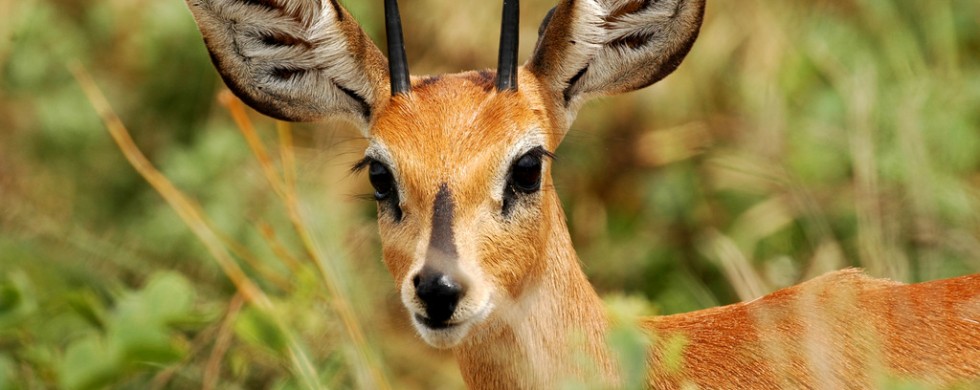
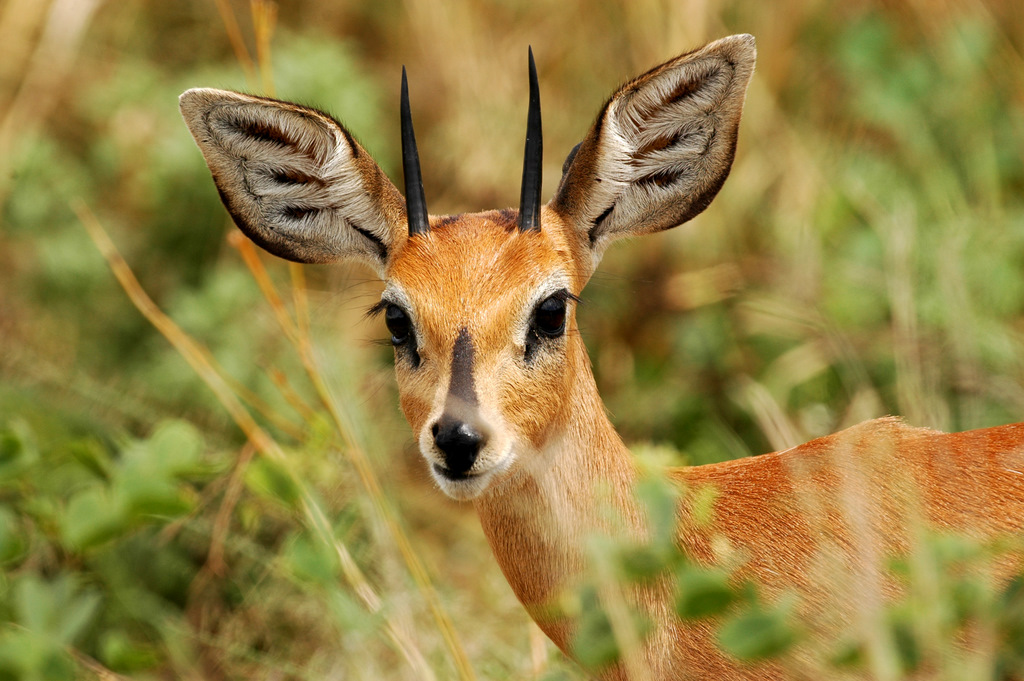
Ok, all together now, “awwwwwl.”  Yes, he is very cute.  This image is a crowd favorite, especially among mothers.

This diminutive antelope goes by a myriad of names, or at least spellings.  Steinbuck.  Steinbok.  Steenbuck.  Steenbok.  You get the idea.

Steinbuck stats:

  • They only reach 18-24 inches in height at the shoulder and weigh in at about 25 pounds.
  • They can go long periods of time without drinking water since they get most of the moisture they need from the plants they eat.
  • Steinbuck live in two distinct clusters.  In East Africa, they can be found in southern Kenya and Tanzania.  In Southern Africa, they can be found in Angola, Namibia, South Africa, Swaziland, Mozambique, Zambia, Zimbabwe, and Botswana, where this photo was taken.
  • When in trouble, like when fleeing the attack of African Wild Cats, Caracals, Jackals, Leopards, Marital Eagles, and Pythons, Steinbuck can take refuge in old Aardvark burrows.  They also use the burrows to raise their young.
  • Steinbuck live alone though there is some evidence that they may live in monogamous pairs.
  • Only the males have those straight, narrow horns.

So next time you are out in the bush remember to look down – a Steinbuck just might be afoot.


Until next month…:-)

Serendipity – July 2010

Shot of the Month – July 2010

I traveled to Alaska in the summer of 2009 with the goal of capturing a nice shot of a humpback whale.  Eight of our twelve days in the state would be spent exploring the Inside Passage on a 60-foot boat in a constant search for the massive beasts.  We spent 15 hours a day chasing whale flukes (fluke = tail, for you land lovers), traversing coves, dodging icebergs, combing islands, and navigating remote fjords in search of whales and other wildlife.  I shot over 11,000 photos during the trip.

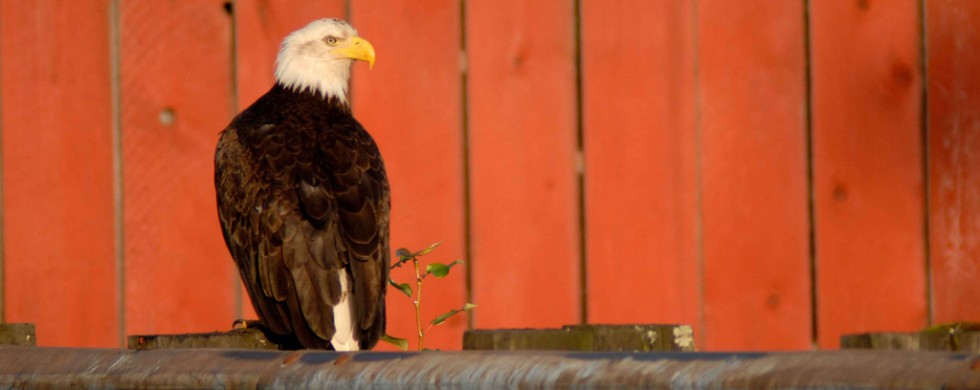
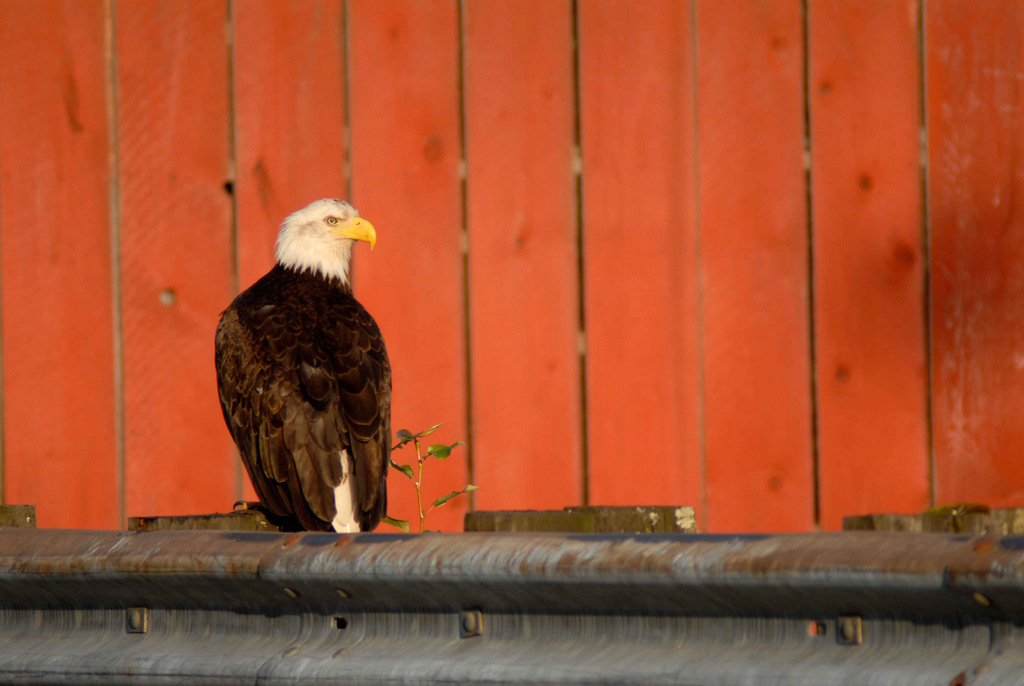
Yet, in spite of all those miles and thousands of exposures, one of my favorite shots from the journey was captured about 50 yards from our Bed & Breakfast in the town of Petersburg, the port of call for the boat we would be using in the days to come.  On our very first morning, perhaps thirty seconds after we left our lodging we came across this beautiful bald eagle beside the road.

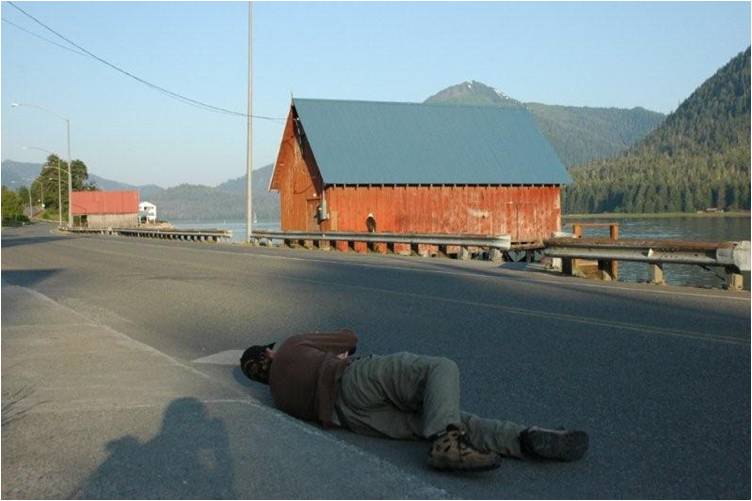
As you can see here, getting the shot required getting low – on a road.  Fortunately, it was pretty early on a Sunday morning so traffic was light.  My partner was supposed to be on the lookout for cars to ensure that I didn’t get run over.  She obviously was not fully engaged in her primary directive.

In some parts of Alaska seeing a bald eagle is about as exotic as seeing a robin, i.e. they are everywhere.  The bald eagle has always thrived in Alaska and of the 70,000 eagles estimated to exist today over half of them live in this northern state.  Bald Eagles can be found in all of the lower 48 states and some live year-round in the states along the East and West Coast, the Rocky Mountains, and the Mississippi River.  Other bald eagles will migrate from Canada into the remaining U.S. states during the winter months.

Michael’s life lessons from this trip:

  1. While it is always good to have a goal in life to provide some general direction the happiest people in this world are those who are able to seize and appreciate what life offers along the way.  I was drawn to Alaska to photograph whales but came away with a lovely shot of an American icon.
  2. Get up early and keep your eyes open, the greatest treasure may be just next door.
  3. No risk, no reward. (but use a spotter).


Until next month…:-)


A Tall Tale – June 2010

Shot of the Month – June 2010

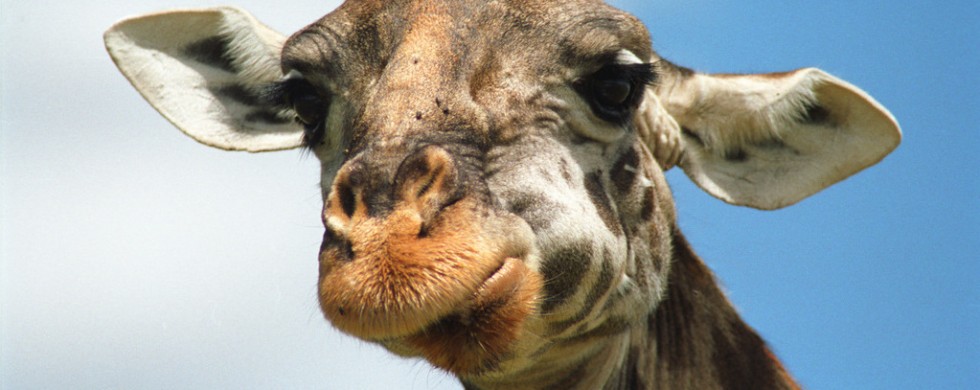
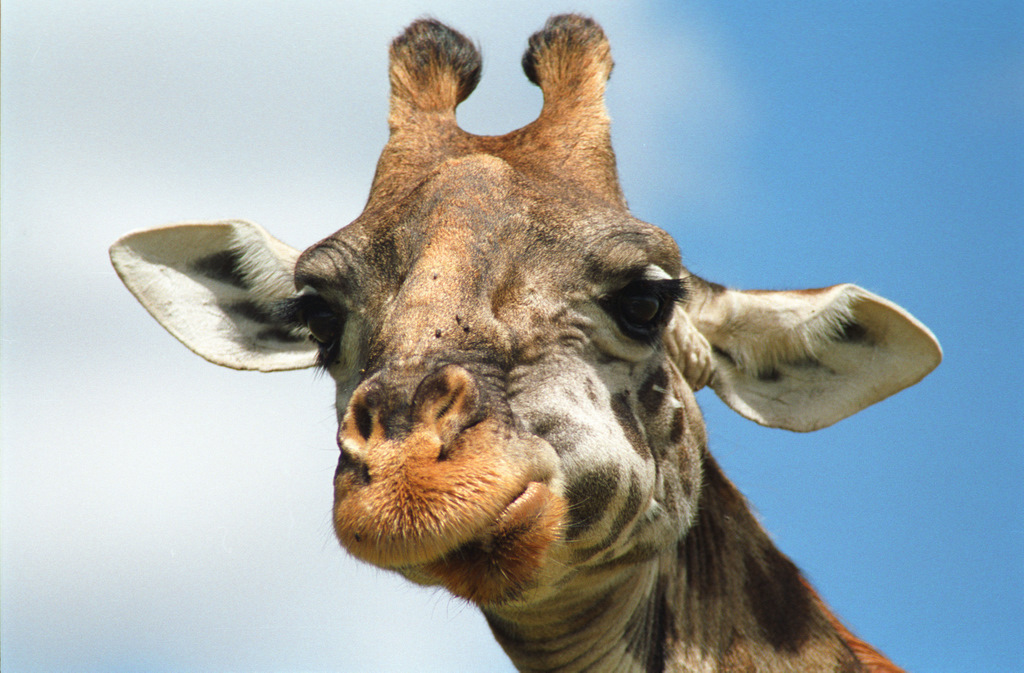
Last month I talked about the leopard.  This month we will discuss the camelopard — the 14th-century term used by the English for 500 years for the creature we know as the giraffe.  In fact, the scientific name for the giraffe, camelopardalis, comes from the early Roman name for the beast that they thought resembled a cross between a camel (general size and look) and a leopard (the spotting).

Giraffe Fun Facts:

Funny Looking Cows:  Did you know that giraffes were the largest ruminants in the world?  Yep, just like cows, giraffes have four stomachs and they regurgitate each mouthful several times to process it.  Giraffes can often be seen chewing their cud, just like Bessie the cow on your local farm.

Neck and Neck:  The six-foot neck found on your typical giraffe helps make it the tallest mammal in the world.  You might imagine that they have quite a few vertebrae to keep that neck going but like all mammals, including us, they only have seven vertebrae in their neck.  Seven very e-l-o-n-g-a-t-e-d vertebrae!

Big-Hearted:  Literally.  Pushing blood up that lengthy neck requires a powerful pump.  The giraffe’s heart weighs 22 pounds and is about 2 feet long.

That First Step is a Doozy:  Mother giraffes give birth standing up so newborns fall six feet, head first, to the ground.  Ouch.

We Need a Bigger Crib:  At birth, giraffes are 6 feet tall.

Light Sleepers: Giraffes require the least sleep of any mammal and on a given day they doze a maximum of 2 hours and may sleep as little as 10 minutes in a 24-hour period.  Periods of sleep rarely last longer than five minutes at a time.  Yes, they do sit on the ground to do this, resting their head on their rump.

Big Eaters:  Giraffes prefer the leaves and twigs of Acacia trees.  When times are good they can eat 65 pounds of the stuff in a day.  If water is plentiful giraffes can drink 10 gallons at a time.  When water is scarce, giraffes can go for long periods without water due to the high water content of acacia leaves.

Just Plain Big:  Male giraffes can reach 18 feet in height (meaning he can look in your second-story window without stretching) and can weigh from 1,800 to 4,300 pounds.  The females stand 13 to 15 feet in height and can weigh 1,200 to 2,600 pounds.

Kiss at your Peril:  Giraffes have tongues that are 18 inches long to help reach far away leaves and twigs.

Cute but Deadly:  The giraffe has six-foot-long legs with saucer-plate size hooves that deliver a kick that can crush the skull of a lion.


Ok, now you have all the basics on our favorite even-toed ungulate, the star previously known as camelopard.