
Menu

Jun
30
Shot of the Month – June 2025
In April, I visited Washington’s famous tulip fields in Skagit County. As I drove to the location, I was preoccupied with a concern:
“How am I going to create a unique image? Many thousands of people photograph these same fields year after year after year after……. What am I going to do that is any different? Does the world really need another pretty tulip snap?”
I have visited the fields multiple times — It wasn’t my first rodeo.
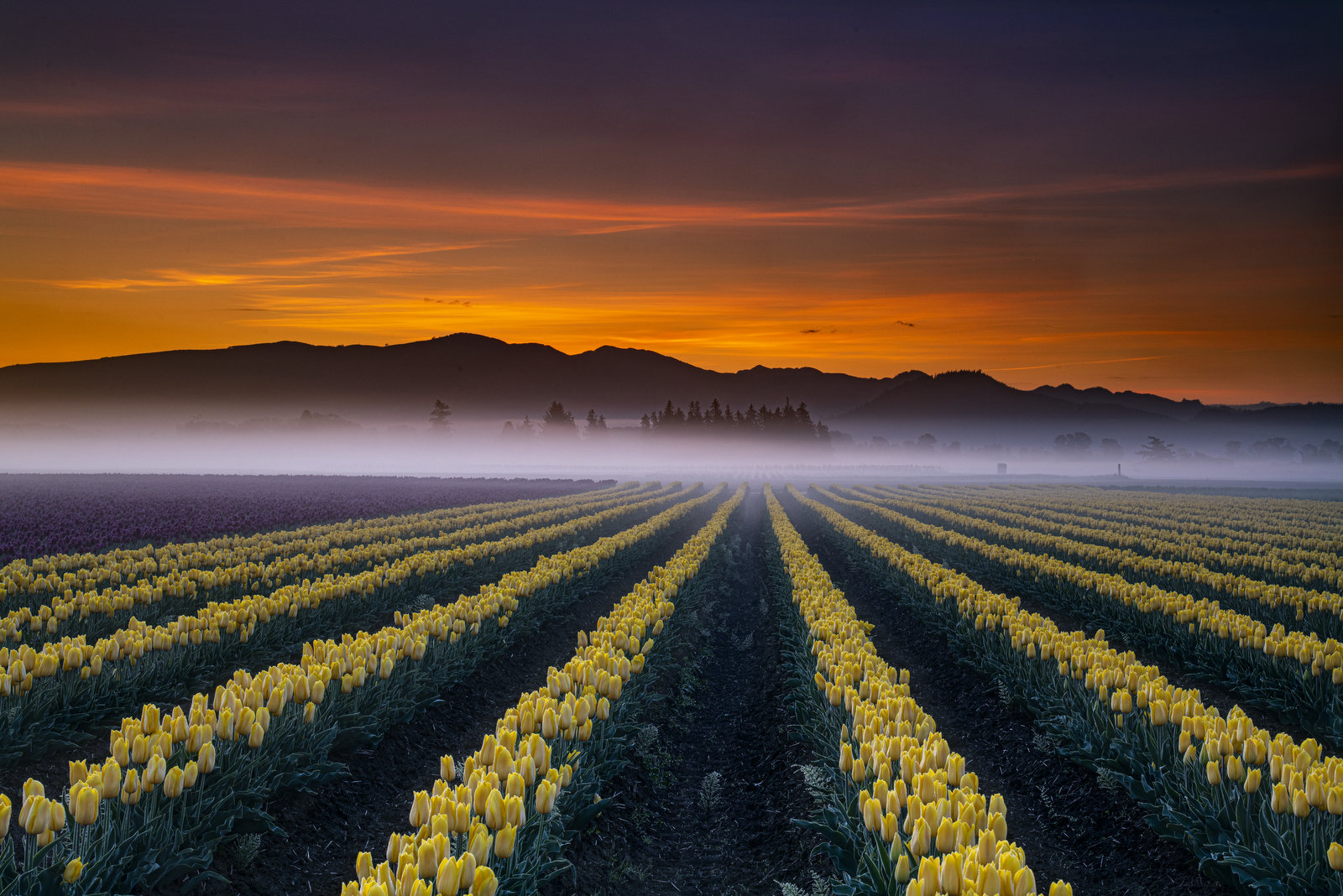
I have done the classic “landscape” shot at sunrise:
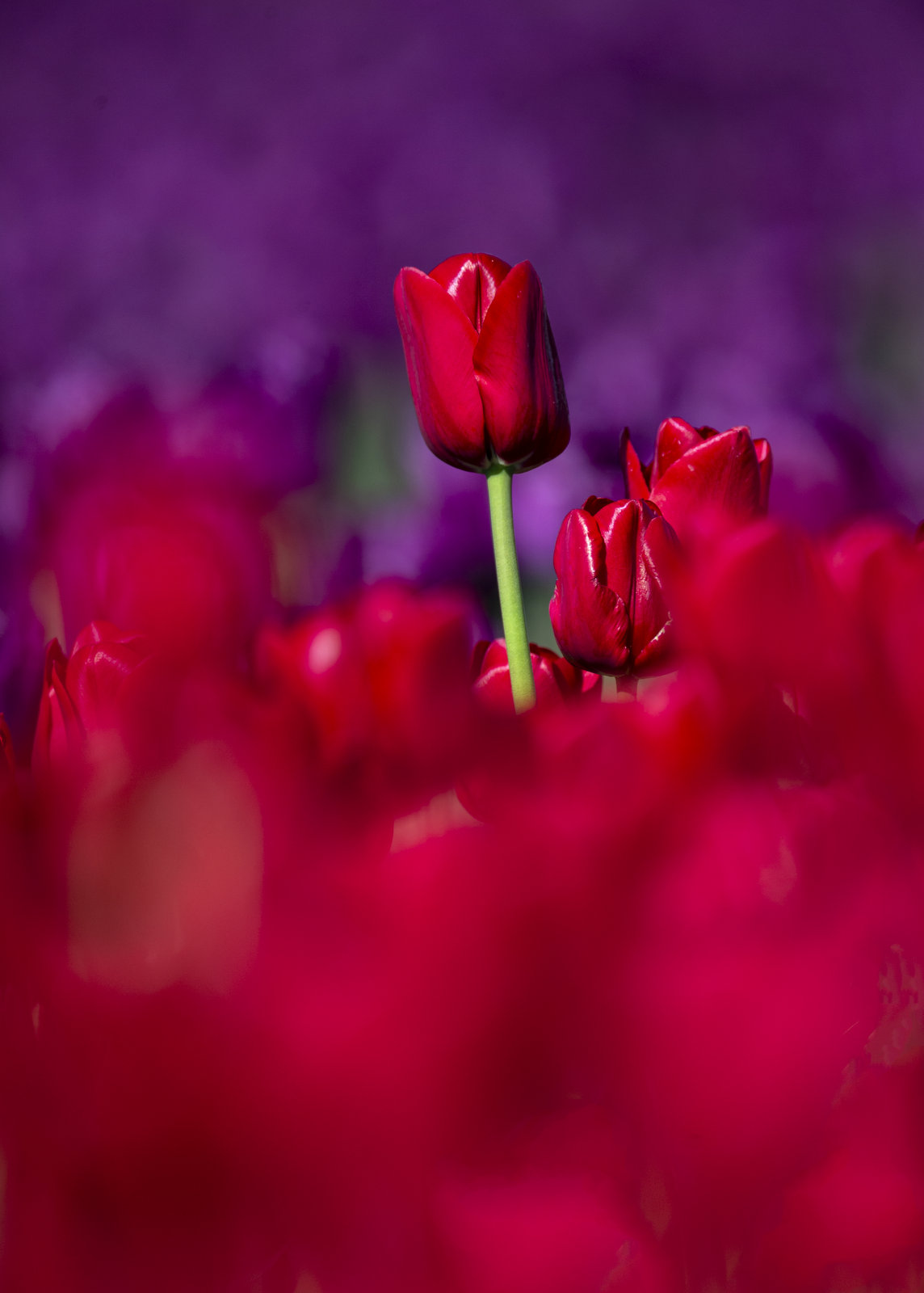
I have done some nice individual flower “portraits”:
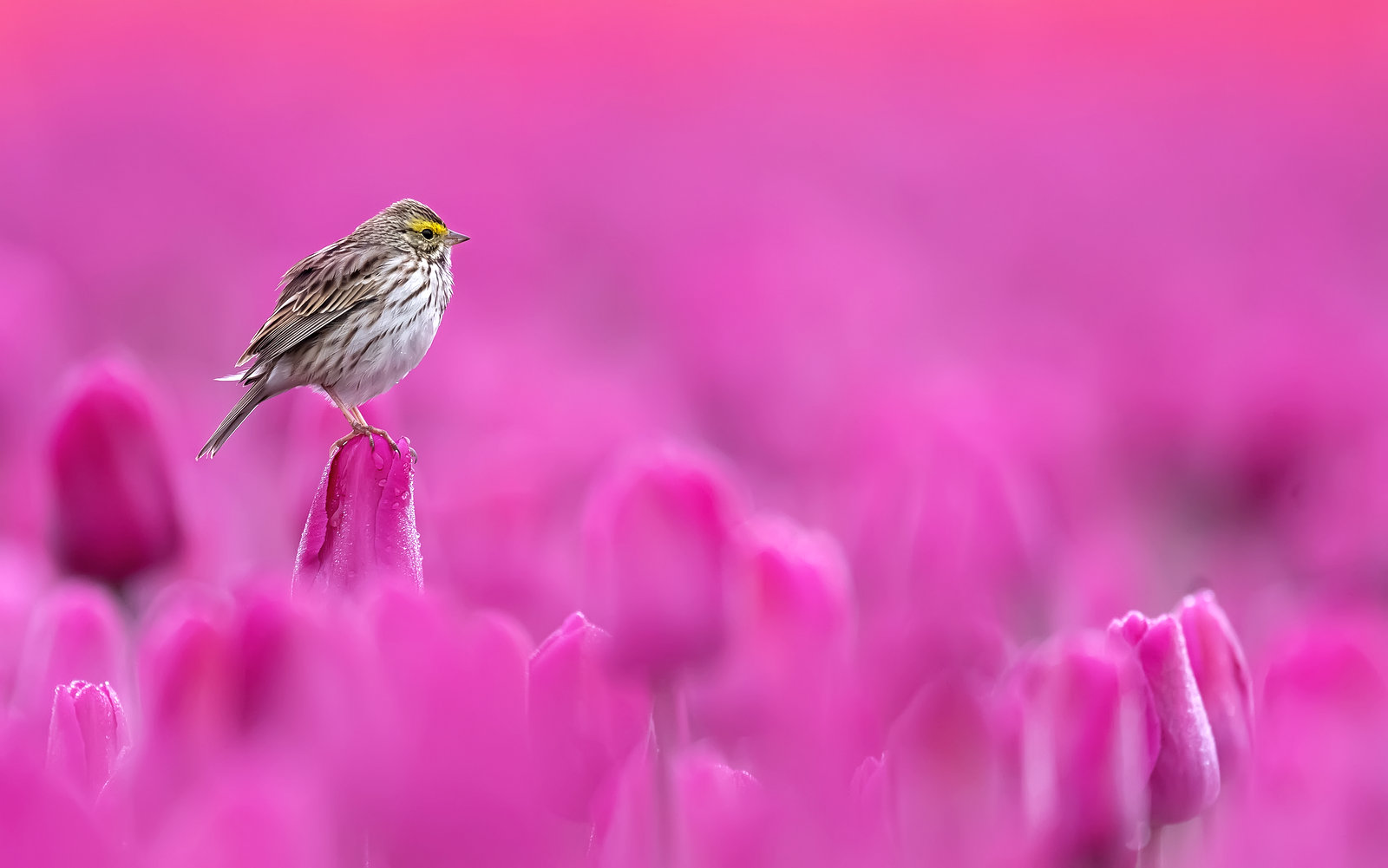
I have experimented with colorful birdscapes:
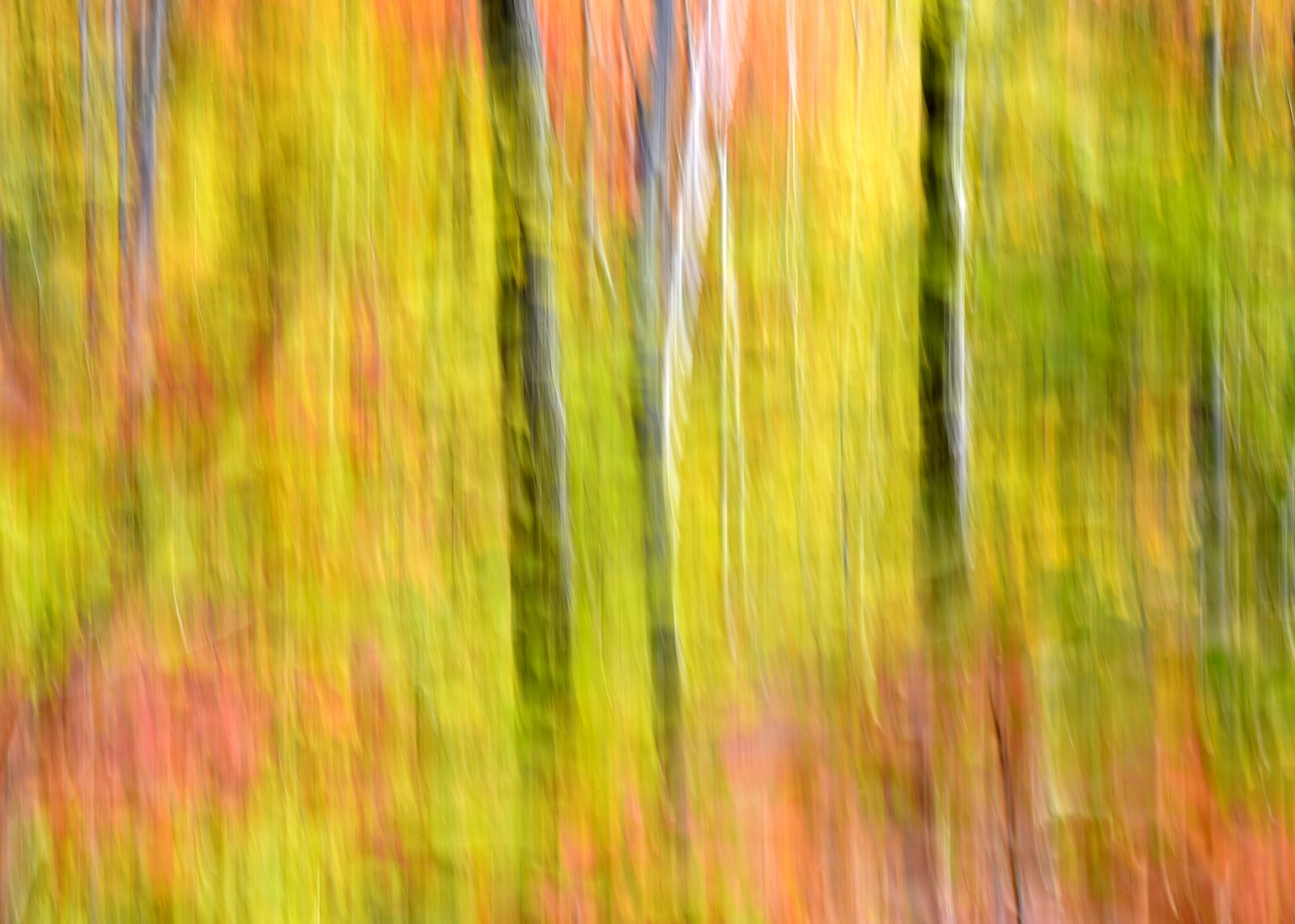
So what next? How can I move the needle? What is something new that I can try? Something beyond pretty flower…?…hmmmm………….Then it dawned on me. Many years ago, I experimented with slow shutter speeds and camera movement to add life to my autumn leaf photography, and I was stunned by the results. For the foliage, I used a slow shutter speed and tilted the camera up or down while exposing the scene to get abstract images like this:
For the tulips, I decided to experiment with “zoom bursts.” What’s dat?
“The zoom burst effect is a photographic technique creating radial streaks of motion by zooming a lens (in or out) while the shutter is open, using a slow shutter speed (like 1/30s or slower) and a steady camera (tripod recommended), resulting in an abstract, dynamic look that makes subjects appear to burst outward or rush inward, ideal for lights, cityscapes, or nature.”
Still confused? Remember in Star Wars when they made the jump to lightspeed? And all the stars came zooming by as streaks of light? Yeah, that. On this occasion, we replaced stars with flowers, and got something like this:
Shot #1:
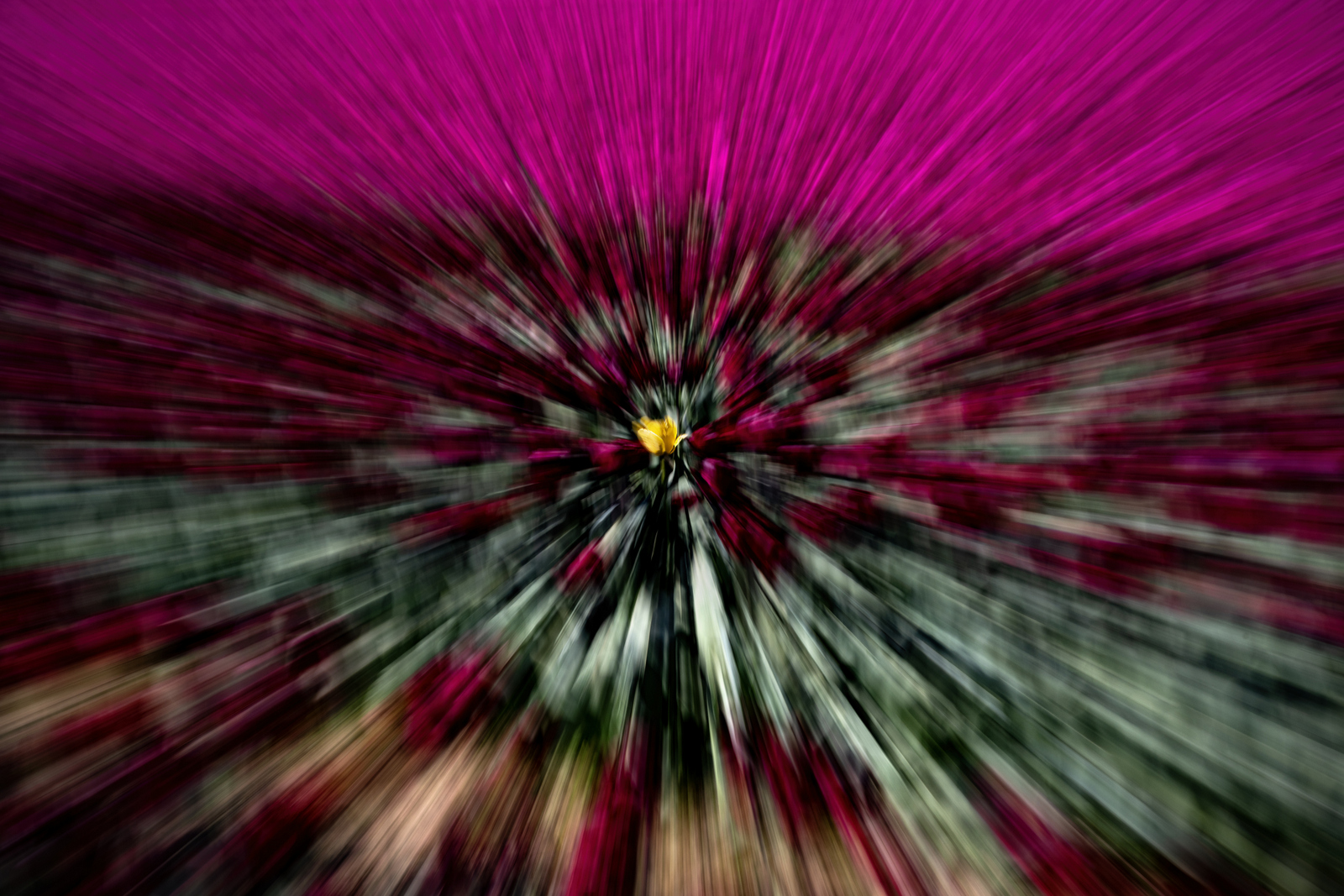
The yellow tulip provided a nice visual contrast and helped anchor the shot.
The key to creating the dynamic blurred streaks is to use a low shutter speed while zooming in or out during the exposure. Other than that, there are no rules. Just a lot of trial and error, experimenting with different shutter speeds and varying how rapidly to pull/push the zoom ring on the lens (So yes, a zoom lens is required to experiment with this technique).
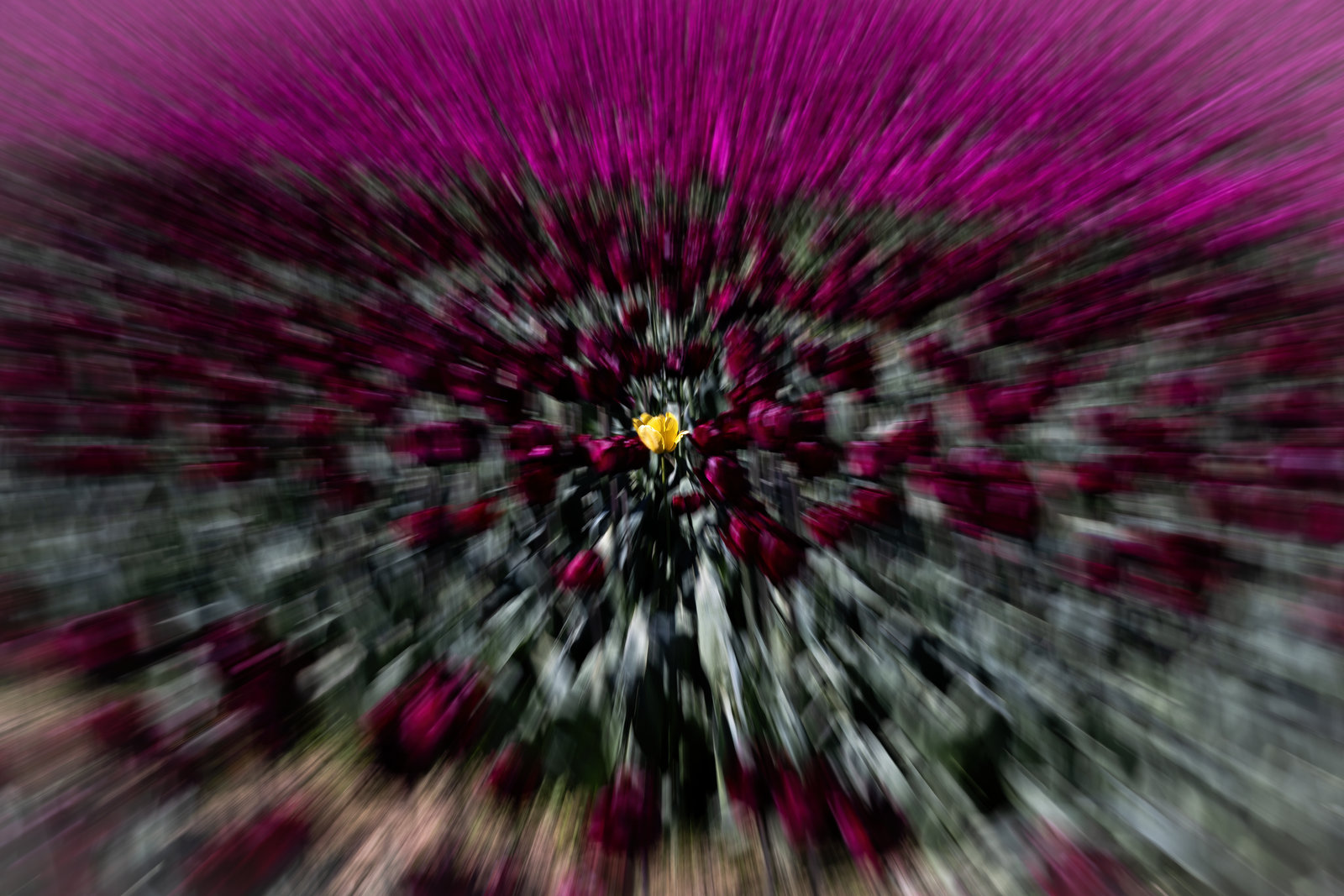
Another attempt from the same position:
Shot #2:
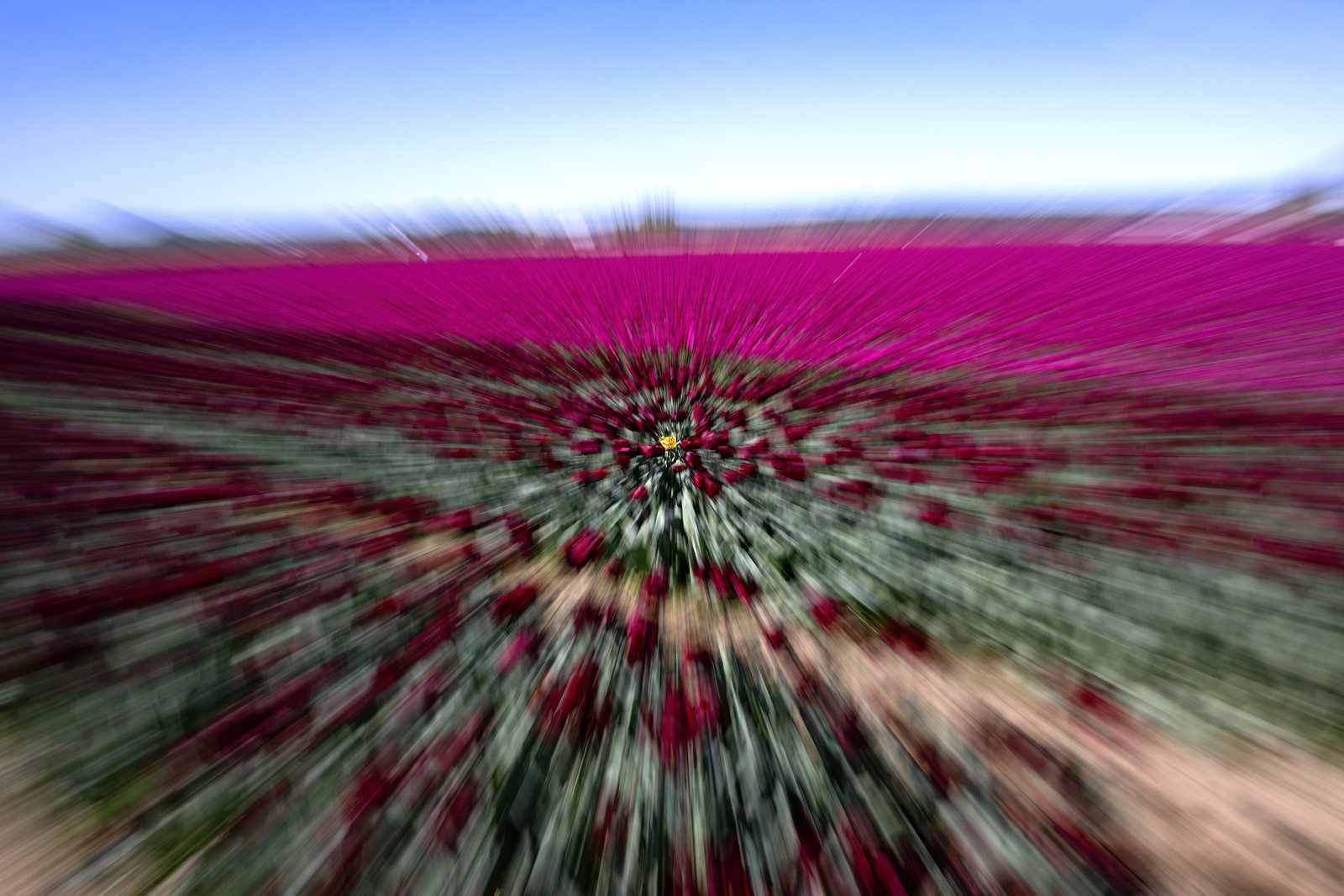
And here is a wider perspective from the same location:
Shot #3:
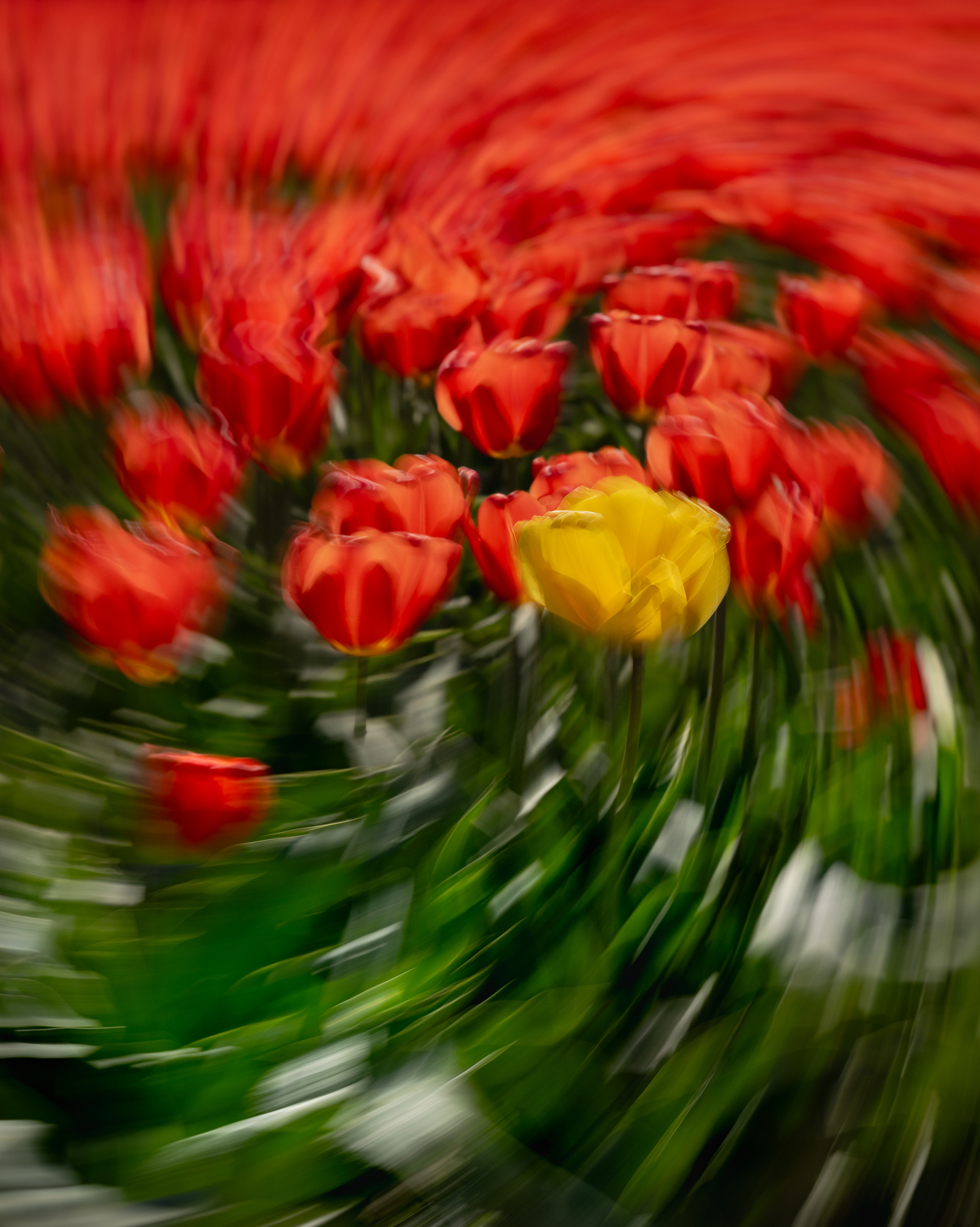
For an added “twist,” you can rotate the zoom ring as you are pushing or pulling the lens, adding a spiral effect to your radiating lines:
Shot #4:
Here is the same shot with a wider field of view:
Shot #5:
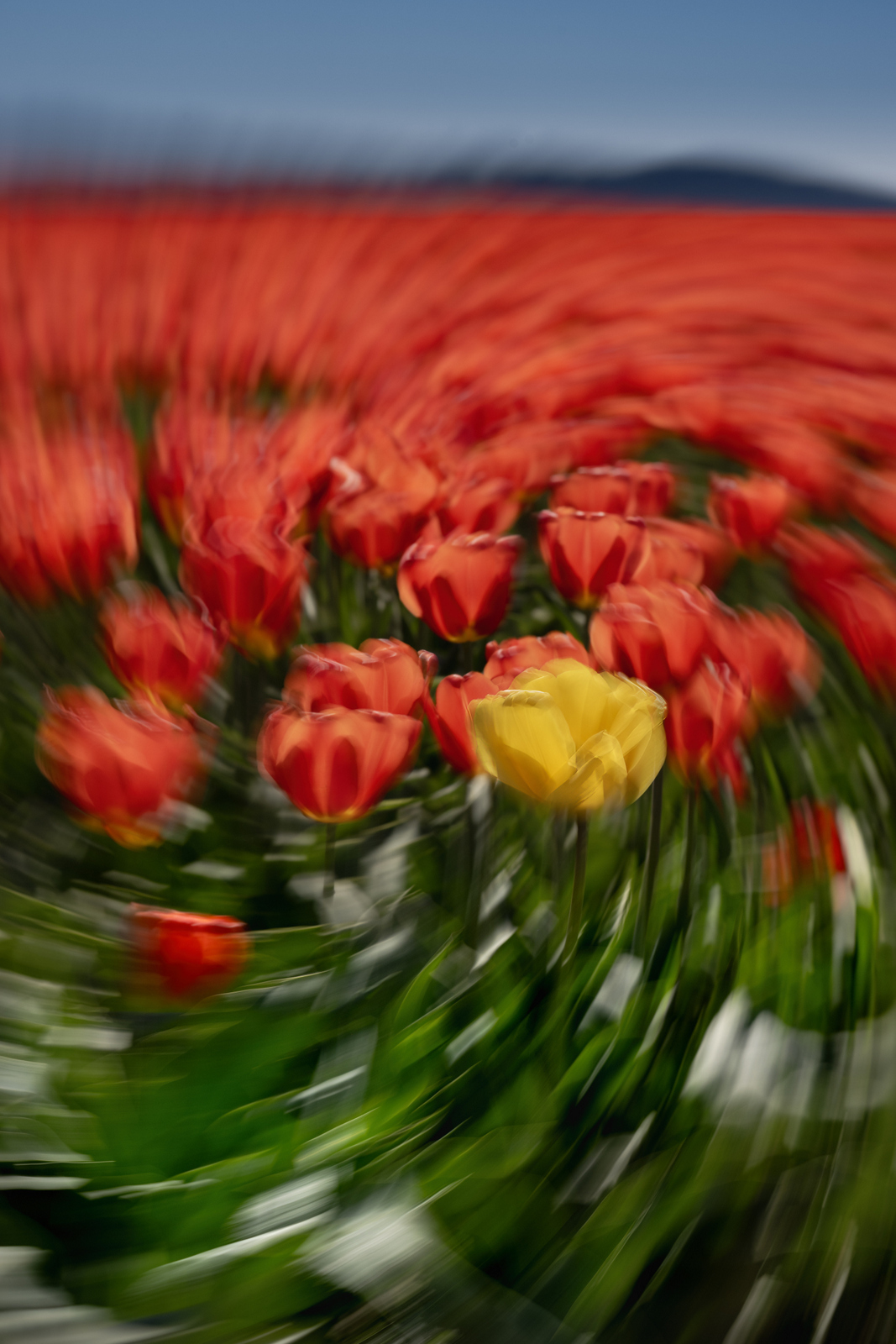
Typically, only the subject at the center of your image will be in focus, but you can experiment with off-center subjects, and sometimes you can get it reasonably sharp, as in the image above.
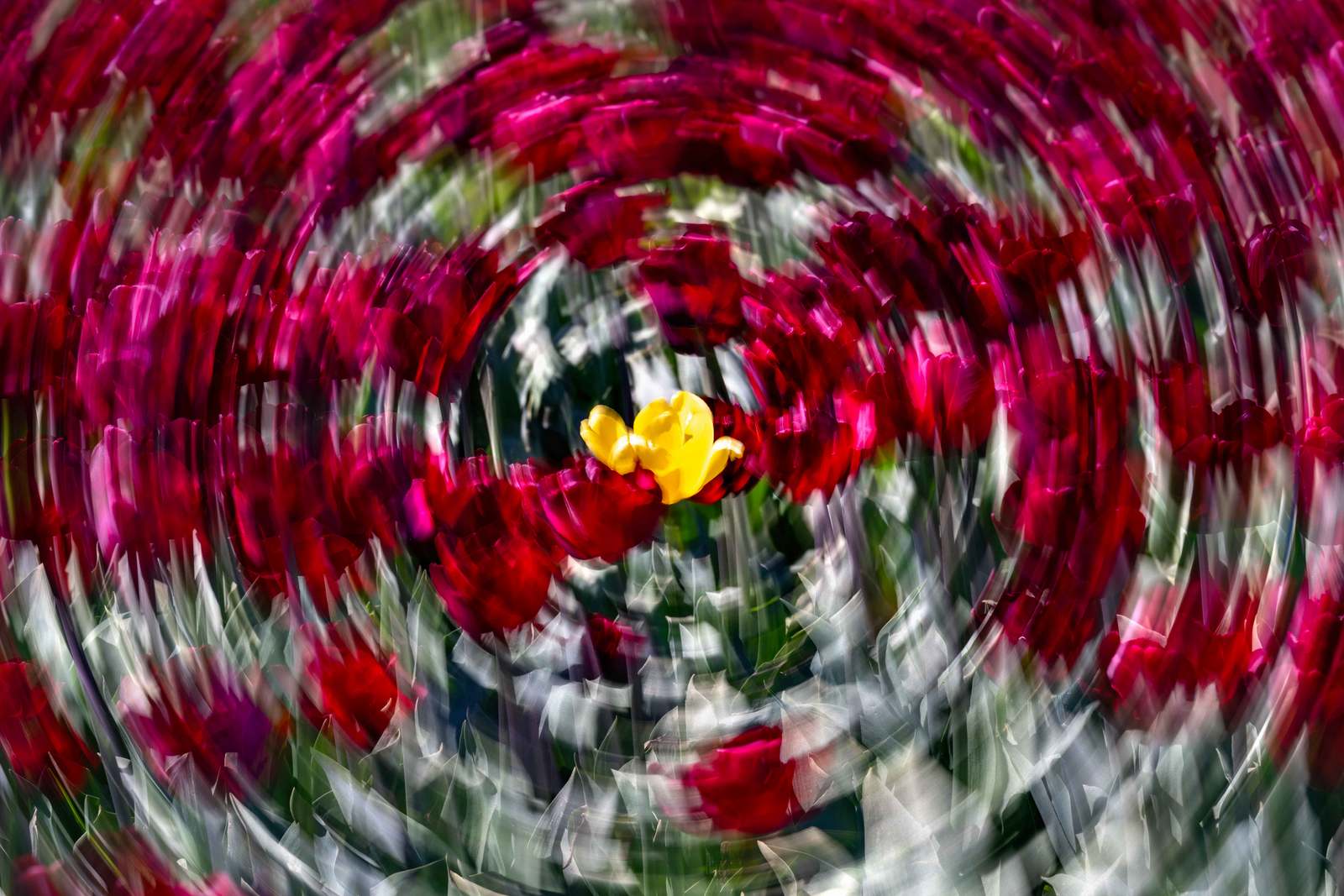
In the next image, I spun the lens 360 degrees with the yellow tulip dead center, creating a merry-go-round look:
Shot #6:
In the next image, I did not spin the lens a full 360 degrees:
Shot #7:
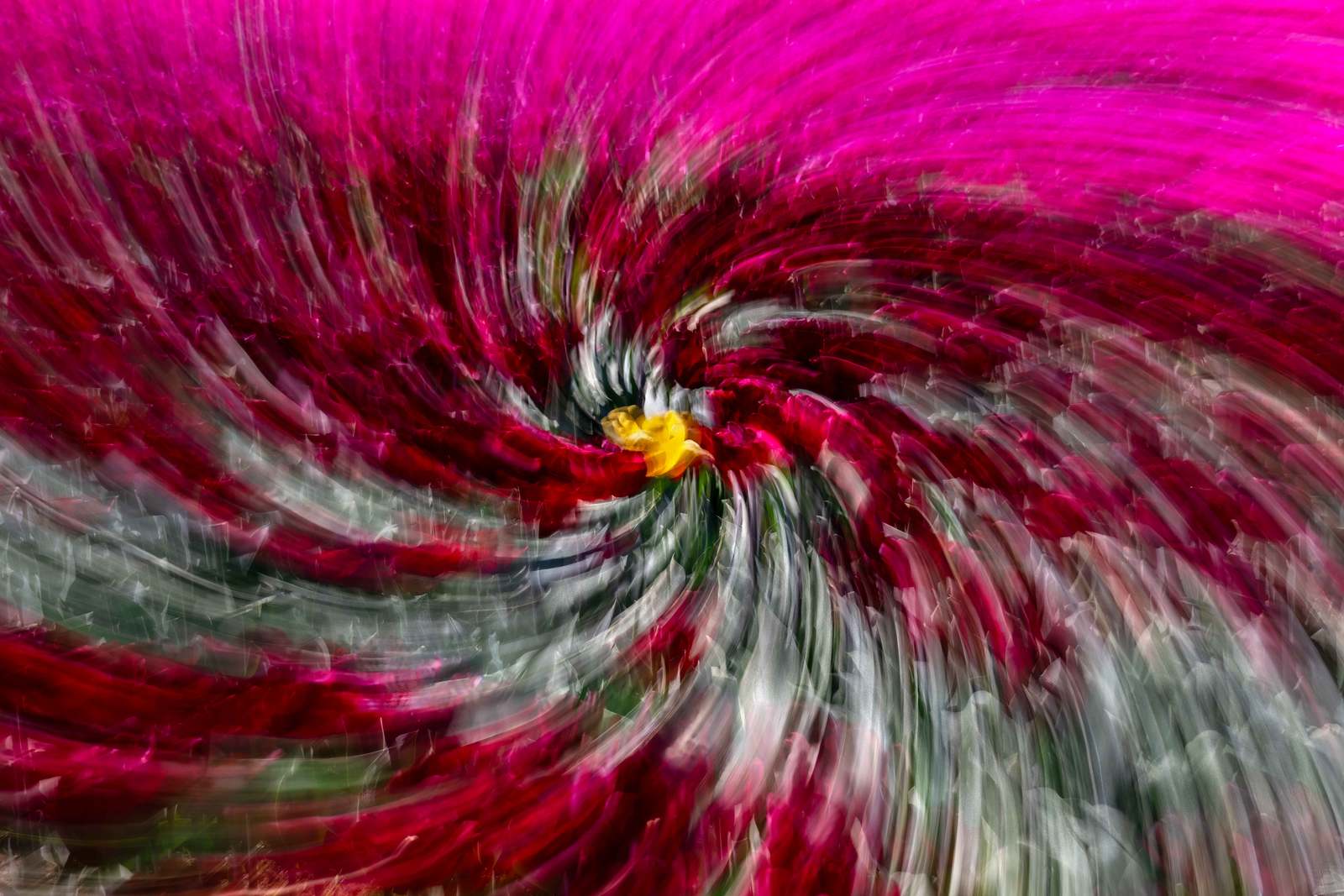
It seems like all of the flowers are being sucked into a vortex created by the yellow tulip. Dude, so trippy….
I looked for subjects that clearly stood out from the crowd:
Shot #8:
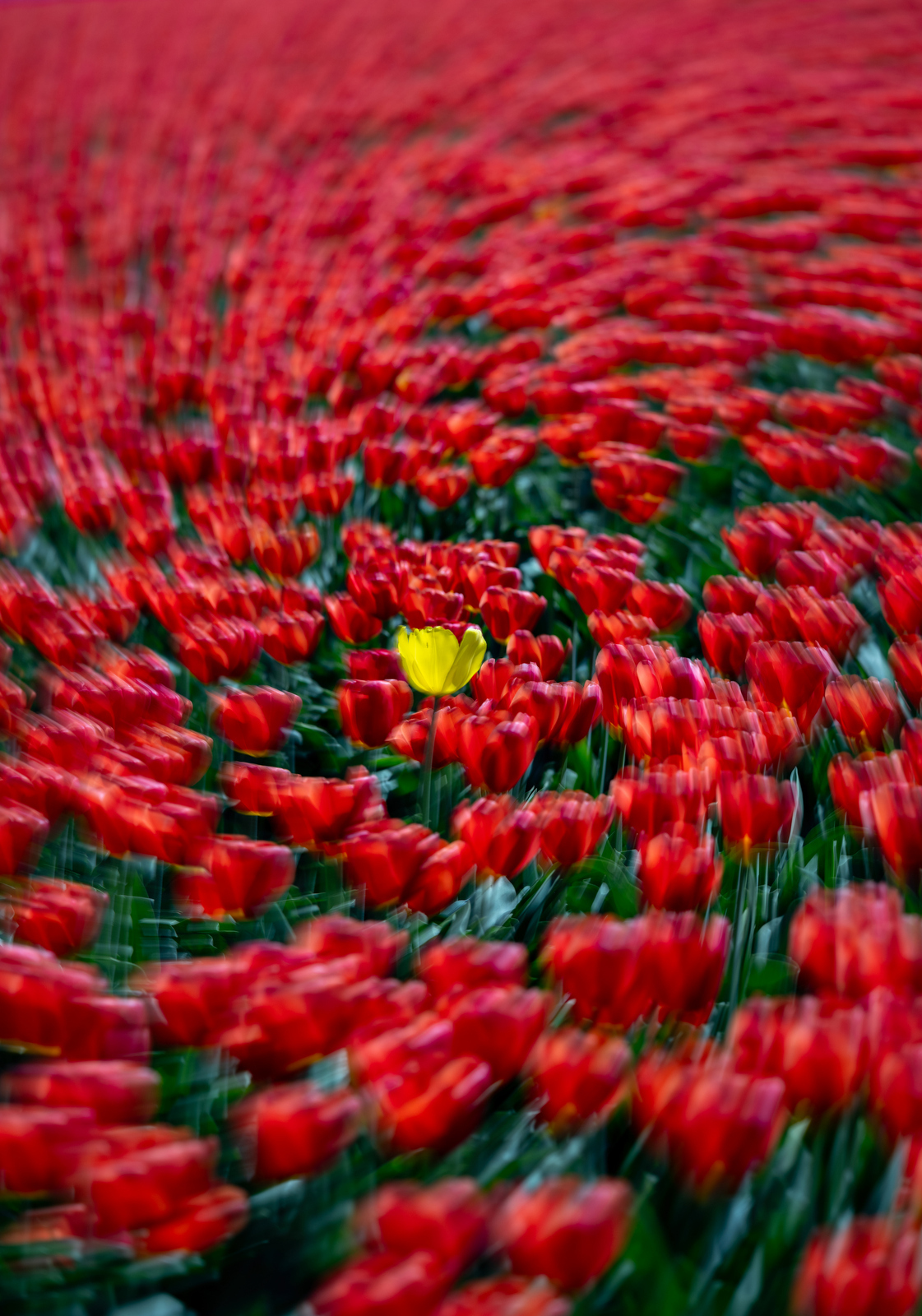
In the shot above, I used a relatively fast shutter speed and zoomed and rotated the lens only mildly, so the effect is more subtle.
Here’s a pretty field….
Shot #9:
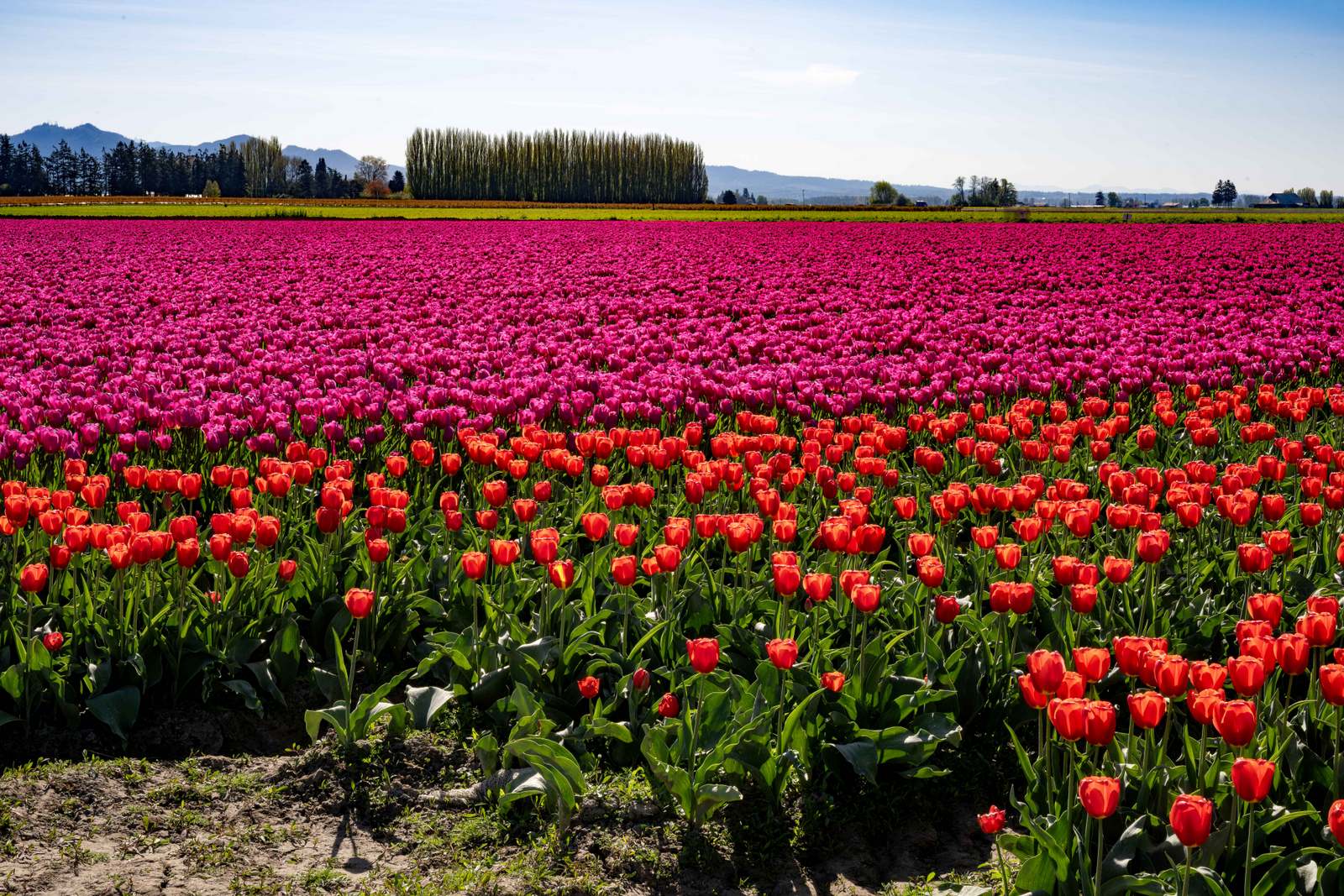
Ok, (yawn) what else you got? Let’s jump to lightspeed (straight zoom pull, no twist):
Shot #10:
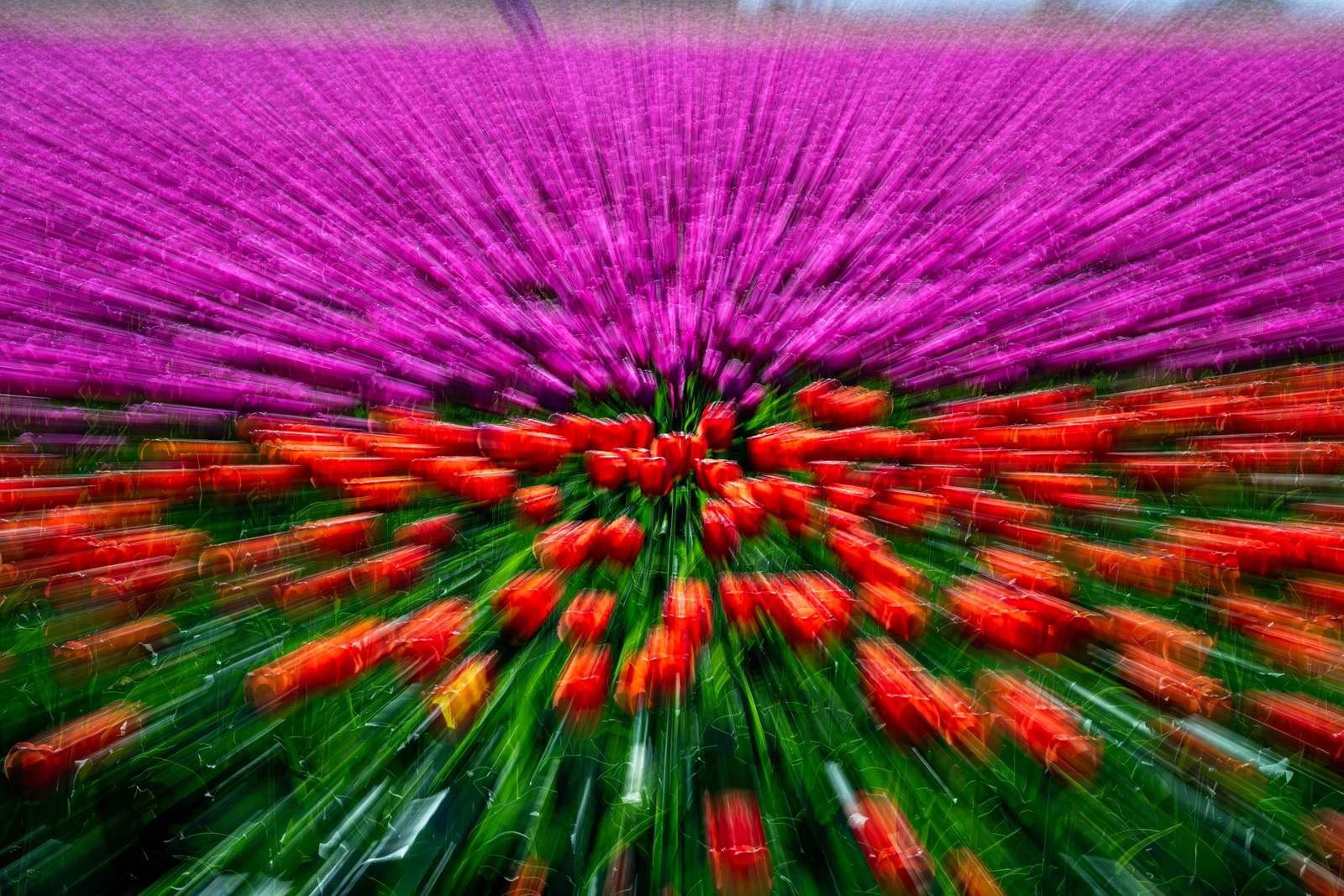
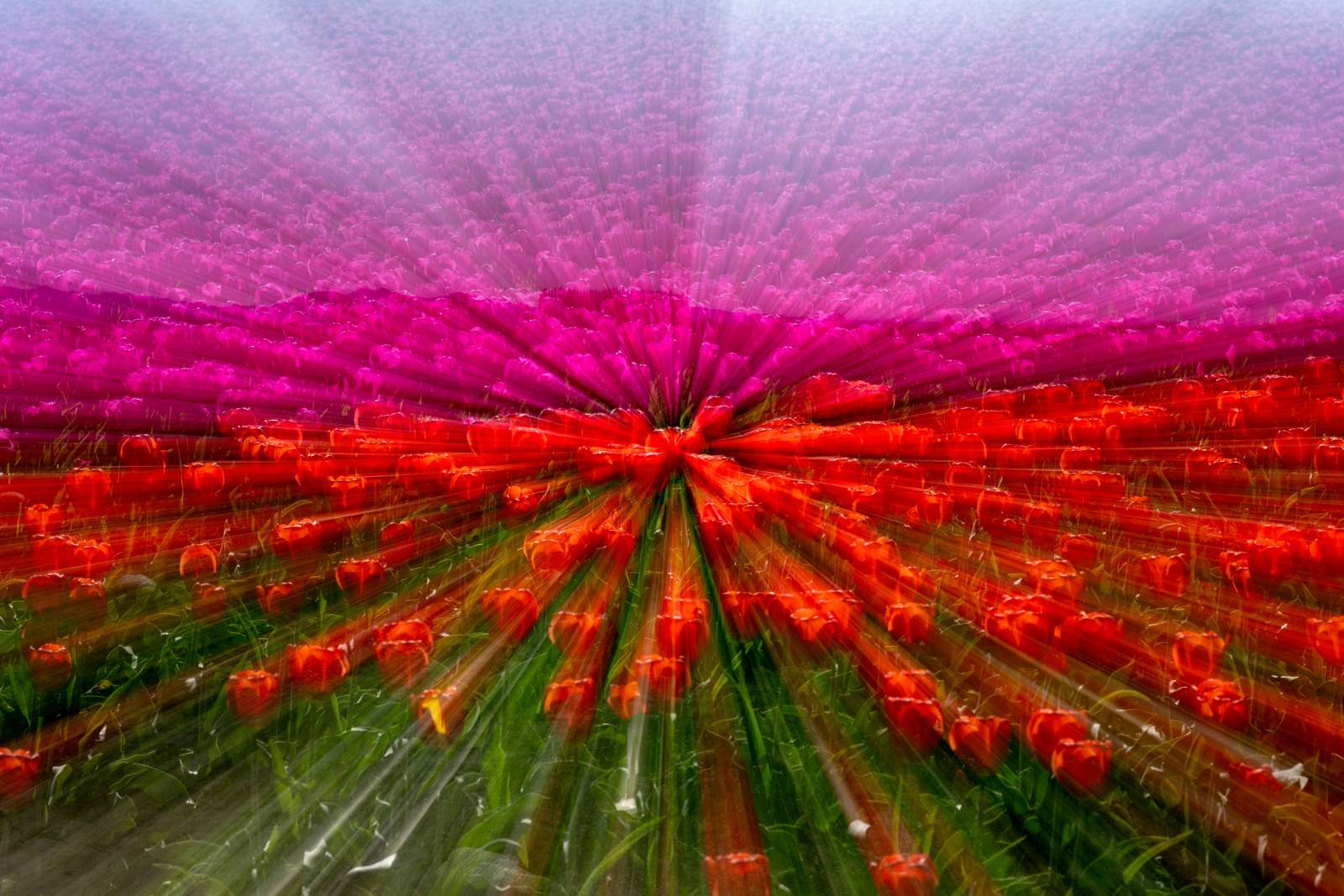
Another version, but let’s push the zoom in a different direction:
Shot #11:
Ok, one last shot with a wider perspective:
Shot #12:
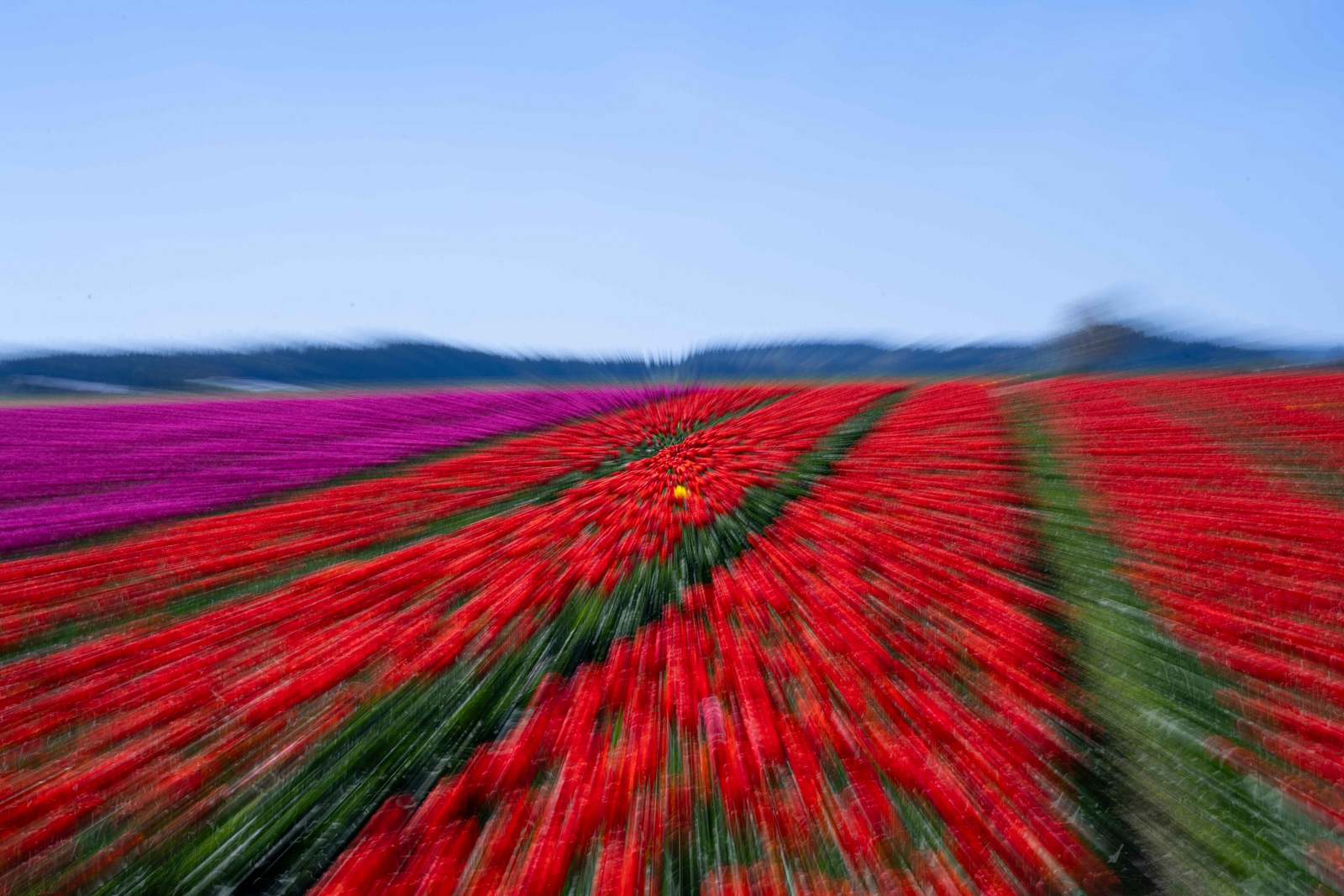
On some days, after so many years of photography, it can be challenging to find the inspiration or vision needed to create something worthwhile. Not on this day. I had a blast experimenting with the new technique. After each shot, I excitedly checked the screen to see what magical combination of color and shape I may have captured. The hours passed quickly as I played with the limitless variations of shutter speed and lens movement. And it was fun to study the scene with my new “mental lens” in looking for compositions that were conducive to the “zoom effect.”
What are your thoughts on this non-traditional view of the world? Strike your fancy? Any favorites among the group?
Until next month…
Shot #4: Nikon Z9, Nikon 100-400 mm, f/11, 1/30 sec, ISO 64
May
31
Shot of the Month – May 2025
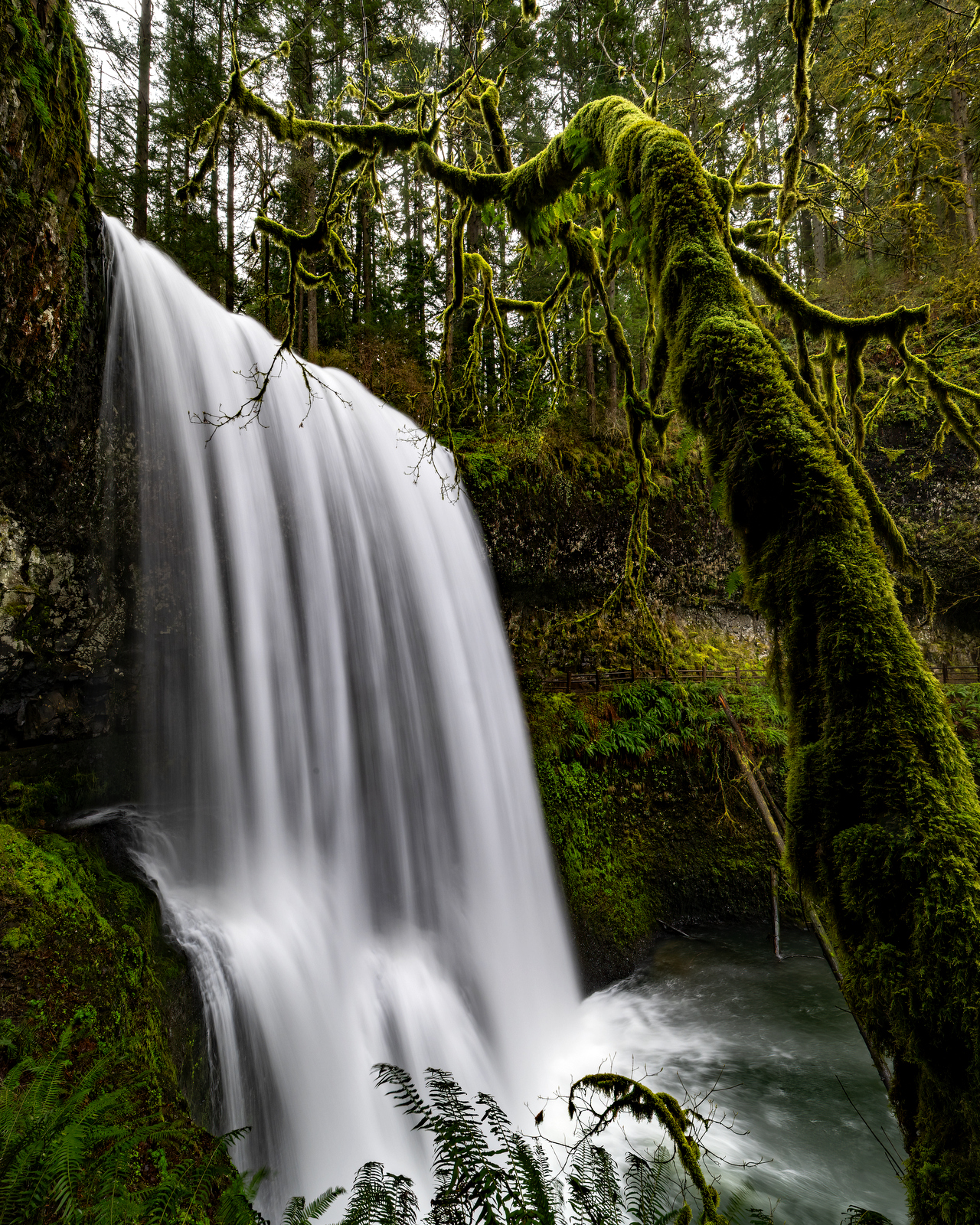
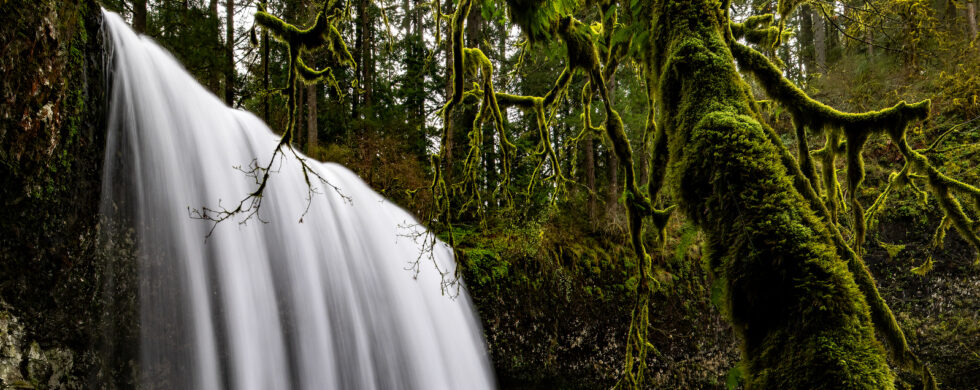
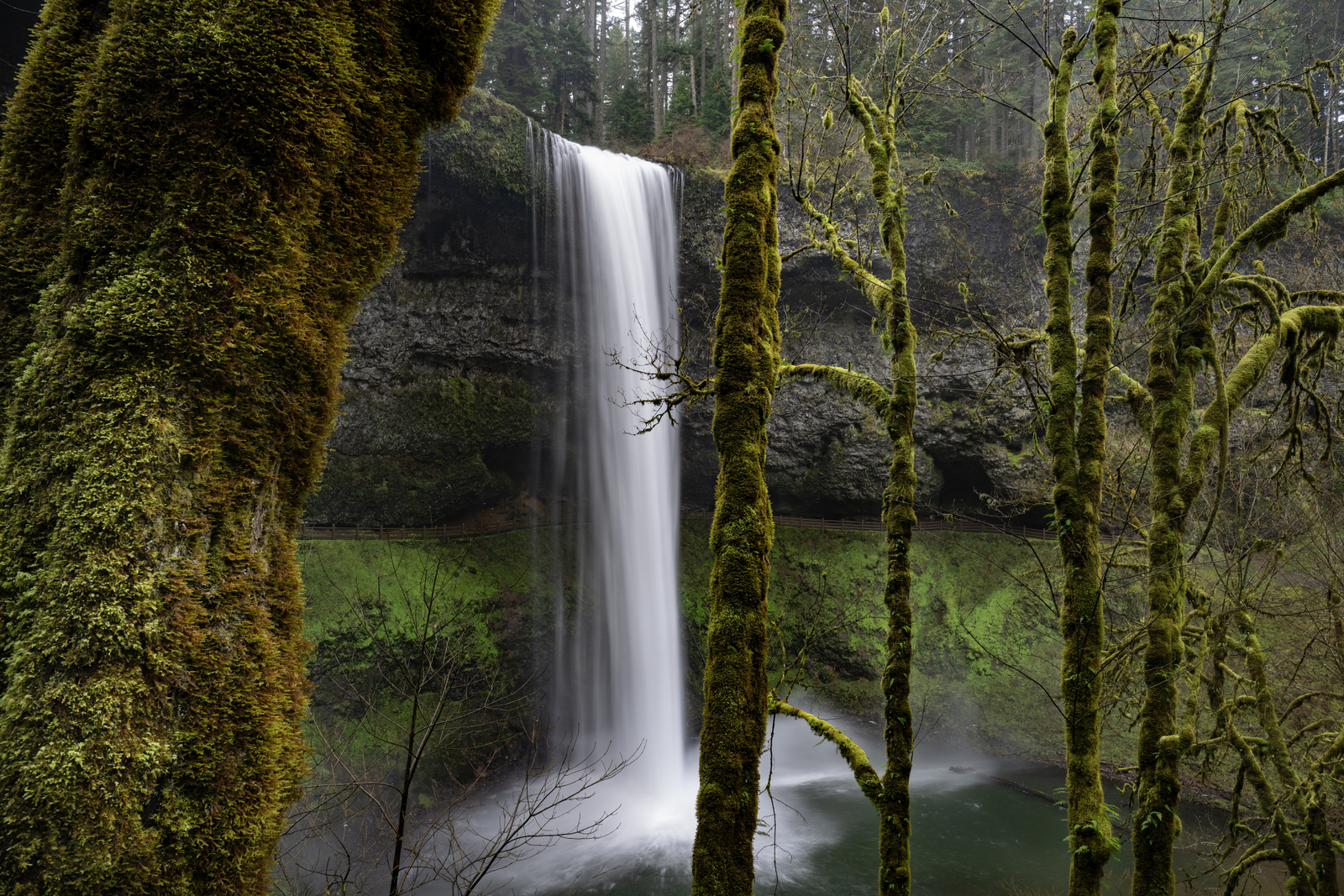
Stand in one spot for too long in the Pacific Northwest (PNW) and there is a good chance that you will be covered in moss before you know it, like the tree in my photo above. The PNW is (in)famously wet, and all that rainfall produces some of the few remaining lush forests in the Northern Hemisphere. Let’s break it down:
Pacific Northwest?
What exactly is the Pacific Northwest? Turns out that this is a rather complicated question and no one can agree on exactly what geography is covered under this title. The most common “definition” is that the PNW is made up of the US states of Oregon, Washington, Idaho and the Canadian Province of British Columbia.
What’s with the weather?
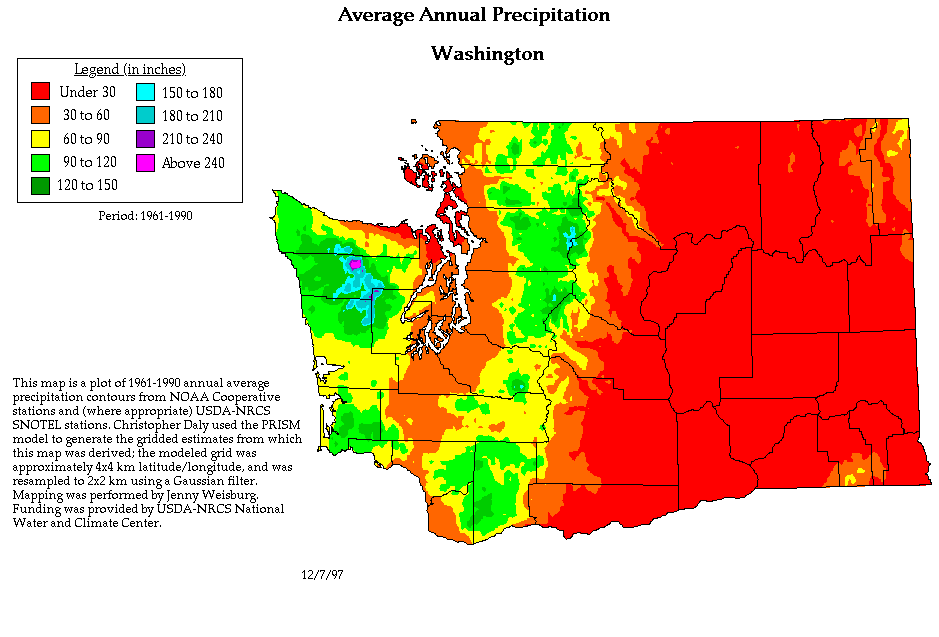
The PNW is famous for being wet. In fact, it does not rain year-round as many assume, and the summers are very dry. Most precipitation is during the winter, with areas west of the Cascade Mountains and along the coast getting the brunt of the wet stuff. But areas on the eastern side of the Cascade Mountains can be arid due to the rain shadow effect. Check out this animated graphic to see how the mountains impact rainfall levels. Winters are so wet along the coast due to the “Pineapple Express,” a weather pattern that brings warm, moist air from Hawaii across the Pacific Ocean. On the plus side, the temperatures are moderate/mild year-round thanks to the warm(ish) air from the ocean. Western Washington is classified as Csb which is “warm-summer Mediterranean climate.”
Shocking Fun Fact: I was blown away when I learned that New York City actually gets more rain than Seattle. Yep, you read that right. New York City averages 50 inches of rain annually while Seattle only averages about 37-40 inches each year. And it gets crazier. Seattle doesn’t even rank in the top 30 cities in the US for annual rainfall! Click here to understand the shocking truth!.
Today’s color is Green
Put all that together, and you find luscious temperate rain forests all the way from Alaska, through the PNW, down to northern California. Some areas can receive up to 12 feet of rain/year. Squish. These forests can have dense vegetation with every surface covered with some variation of fern, moss, or lichen.
Silver Falls State Park (SFSP)
A great place to experience this wondrous alchemy of water and vegetation is at the Silver Falls State Park in Oregon. SFSP is located about 20 miles east-southeast of Salem, the state Capital. There is a fantastic 8-mile loop that you can hike that takes you past (and sometimes under!) 10 waterfalls and through some glorious green and mossy forests. Go in the spring when the snowmelt is at its peak to find the falls GUSHING with water and the surroundings bursting in shades of green.
In the image above, we see the Lower South Falls – you can actually walk behind this waterfall.
Here is another view of the same waterfall:
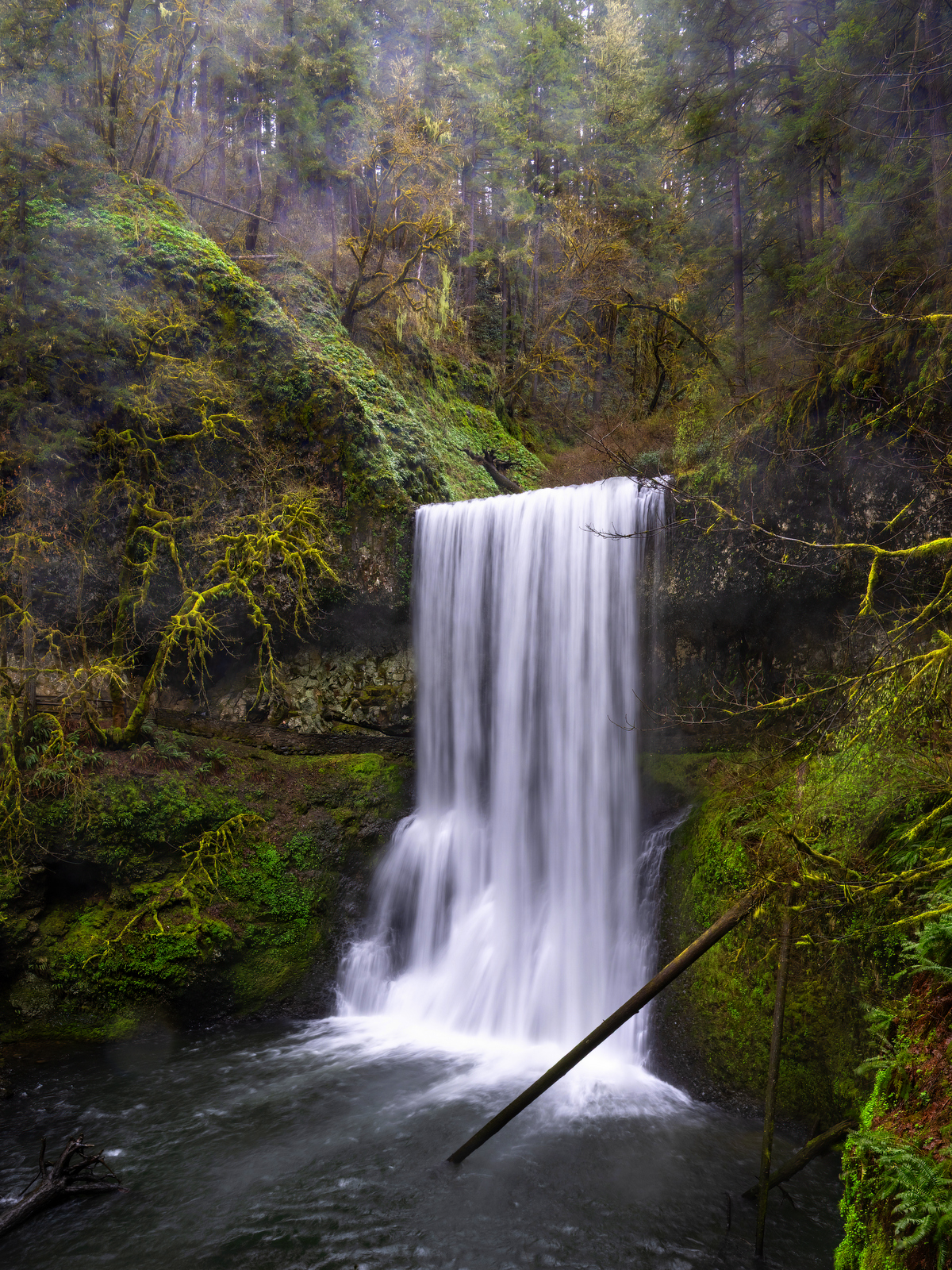
Does this scene not just scream Middle-earth?? I love the early morning fog and cacophony of colors and textures. That mossy tree that we saw in the first image is on the left side of this image.
Here is Lower Falls, the most visited waterfall in the park:
If you visit in the autumn, the water flow is much less as some falls slow to a trickle, but in compensation, you get a fun, albeit a bit odd, mix of Maine “fall” colors among the mossy forest.
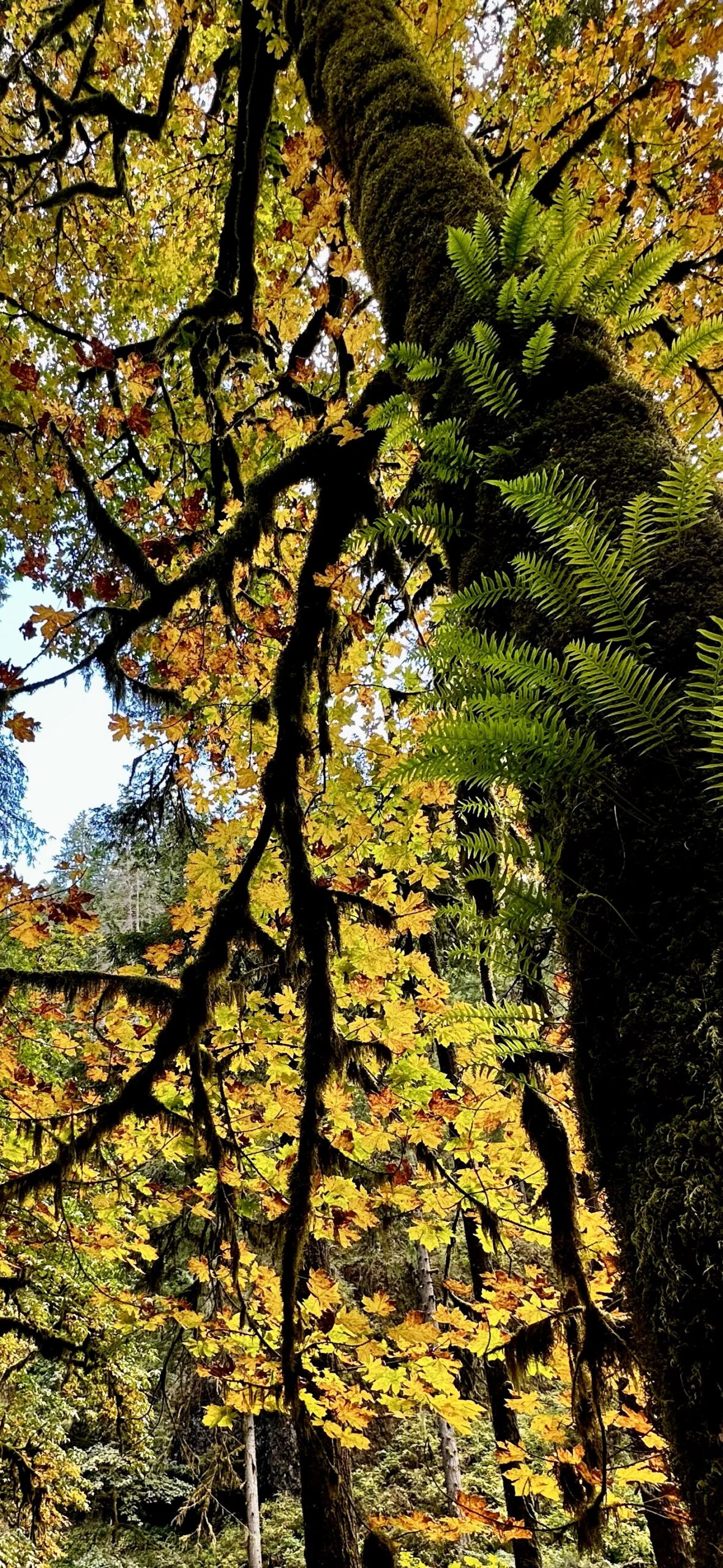
Either way, it is a visual treat. Just keep moving, as the moss is always looking for its next host…
Until next month….m
Nikon Z9, Nikon 14-30 mm (@14 mm), f/16, 1/25 sec, ISO 64
Apr
30
Shot of the Month – April 2025
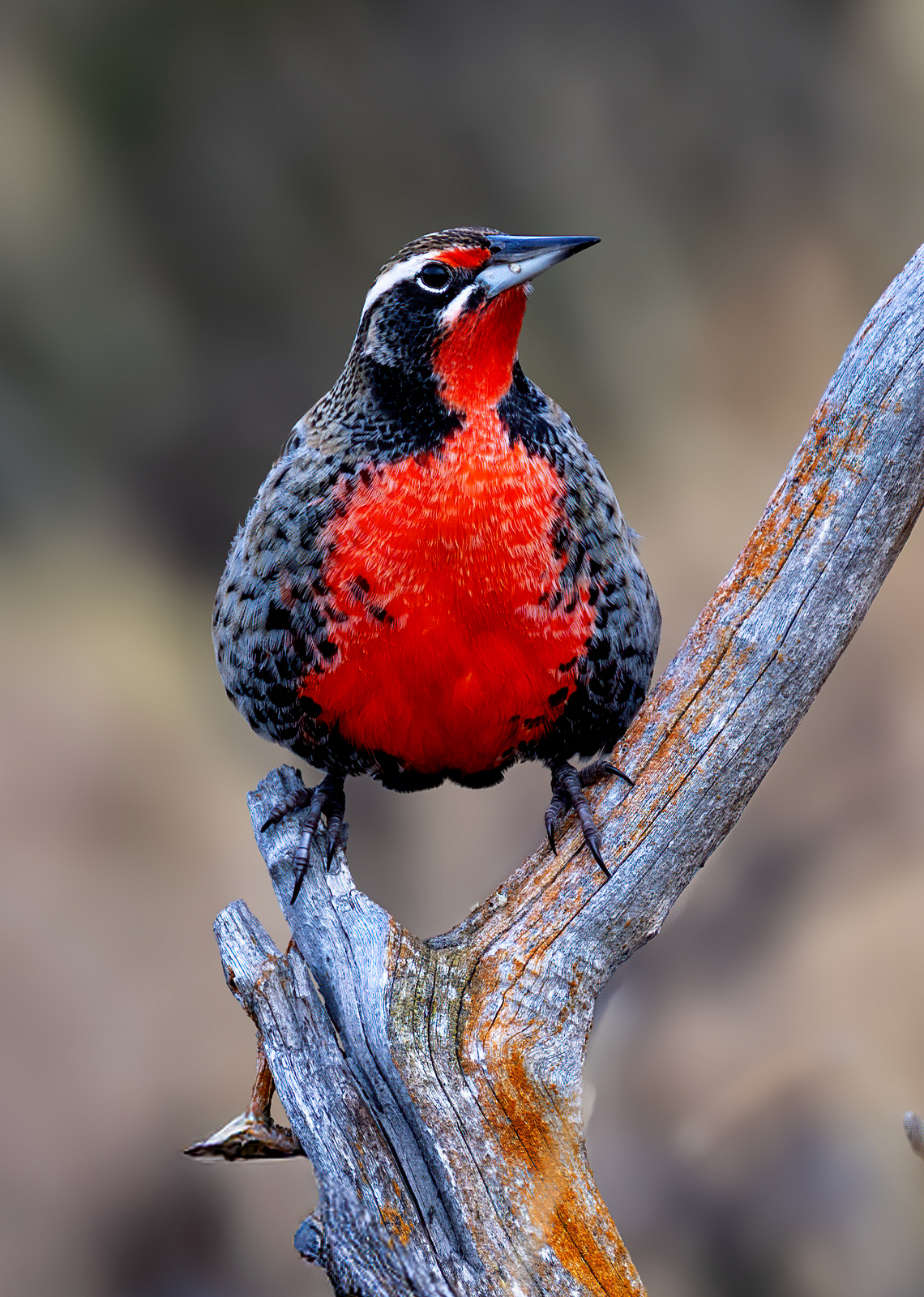
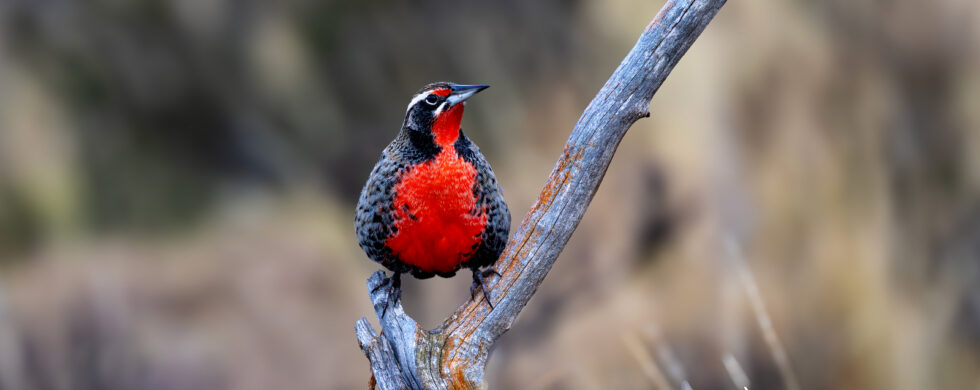
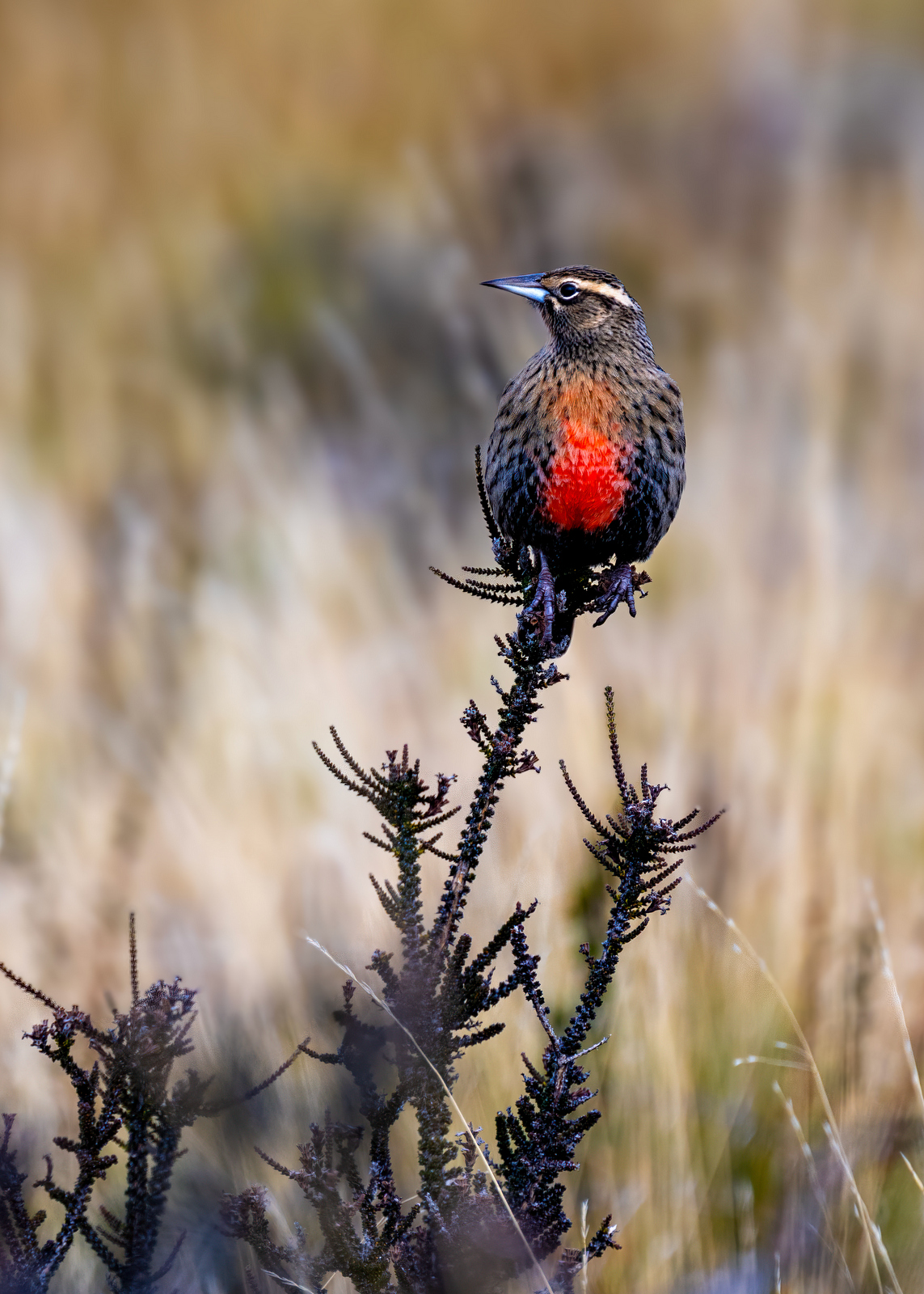
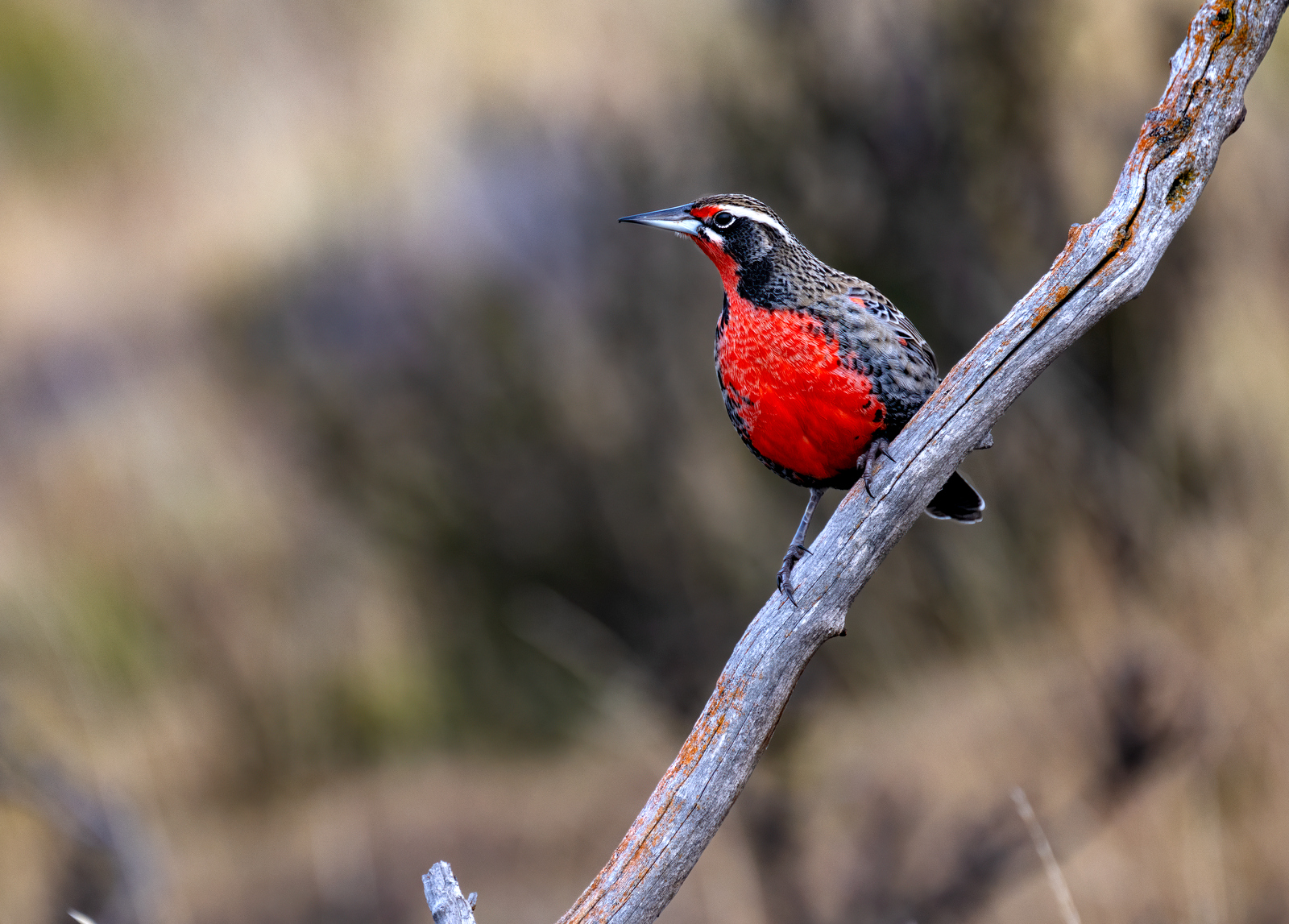
Some animals are masters of disguise, trying to quietly blend into the surrounding to avoid detection. That does not seem to be the strategy of the Long-tailed Meadowlark shown here. I photographed this dapper fellow in Patagonia, Chile.
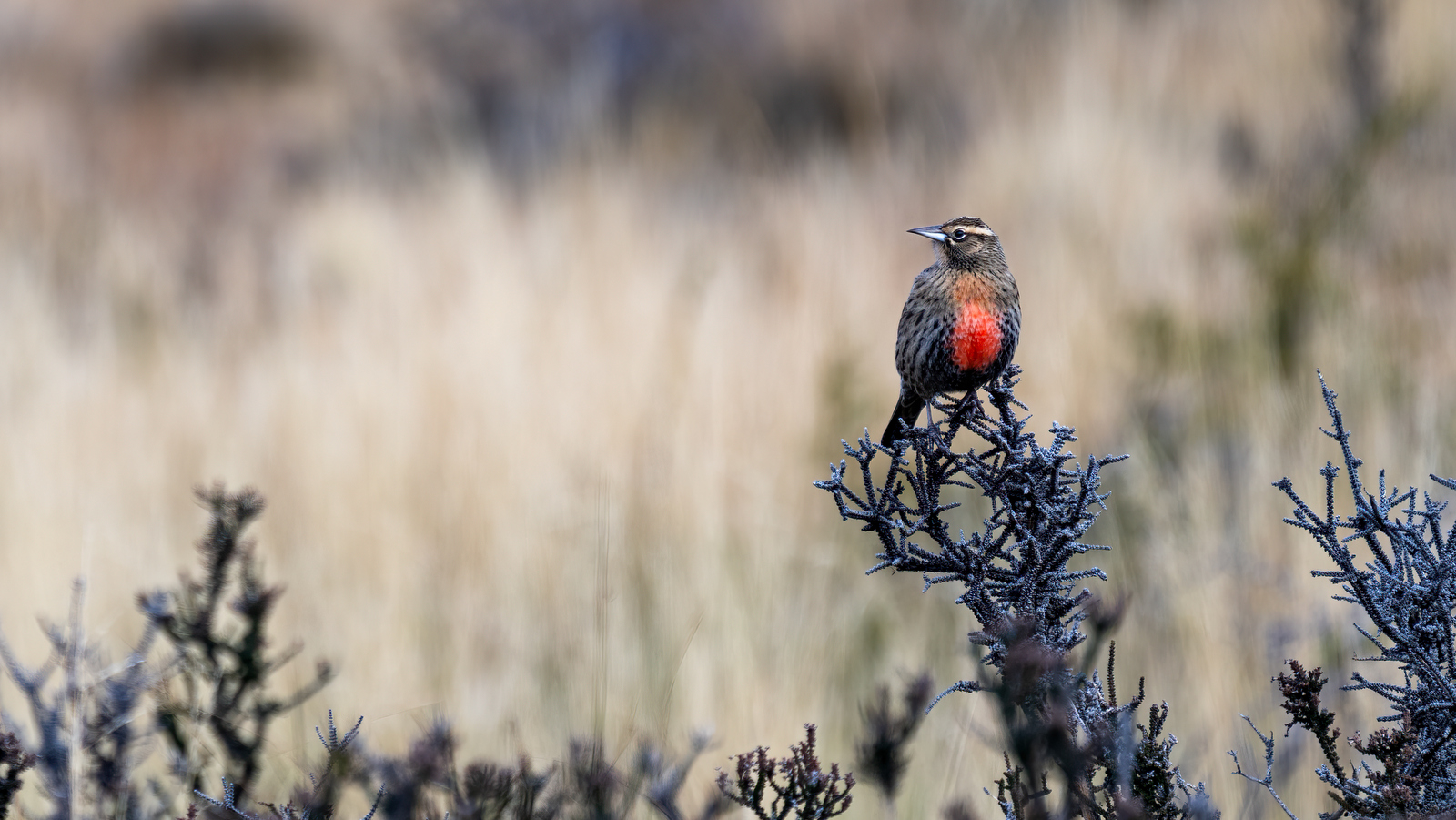
The males, especially during the mating season, take on dramatic hues to attract the ladies. The female birds also have red, but the coloring is more subdued as we can see here:
Another view of the female:
The Meadowlark is a New World bird that prefers grasslands, fields, and meadows, as the name suggests. These birds spend much of their time on the ground as they search for insects and seeds.
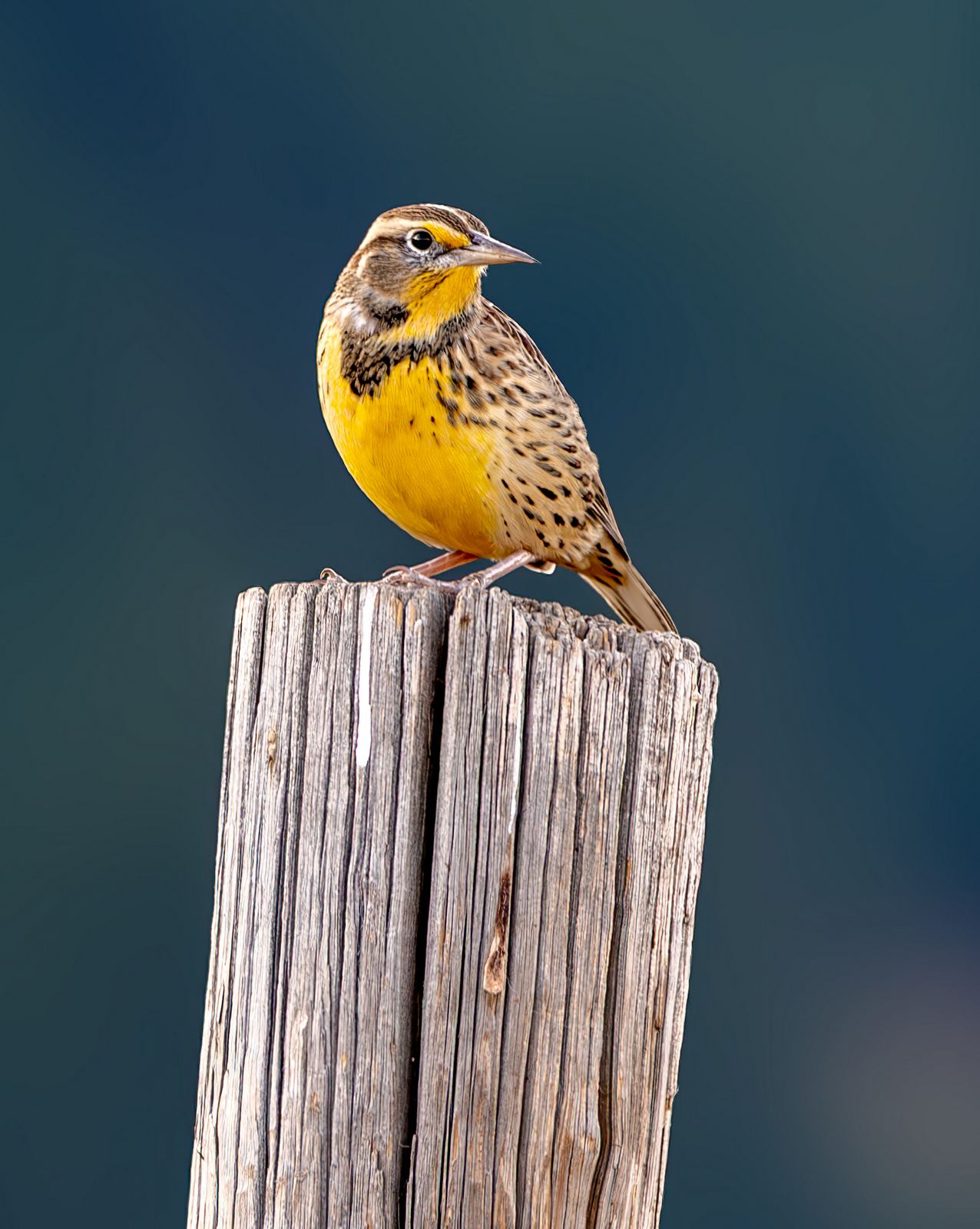
There are eight species of meadowlark spread out across the Western Hemisphere. Interestingly, all five of the species that live south of the Equator are adorned in red. But the three species of meadowlark that usually live in North America are adorned in yellow. Below is a Western Meadowlark that I photographed in Grand Teton National Park in the US, and he is clearly on team yellow.
Another shot of our lovely male:
Meadowlarks, the dashing fashion plate of the nearby meadow, with handy color coding for the directionally challenged (like me!).
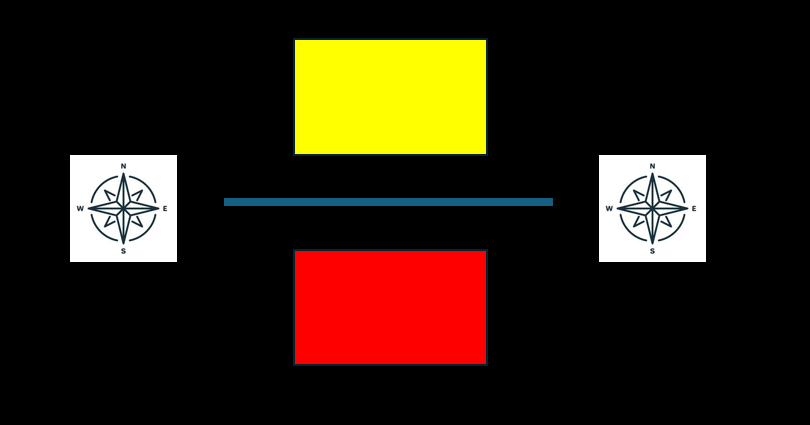
(Blue Line = Equator)
Until next month…michael
Nikon Z9, Nikkor Z 100-400mm, f/5.6, 1/125 sec, ISO 100
Mar
31
Shot of the Month – March 2025
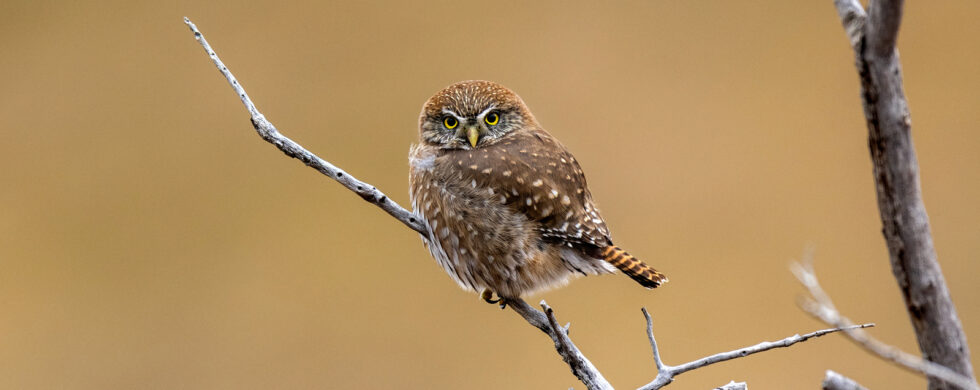
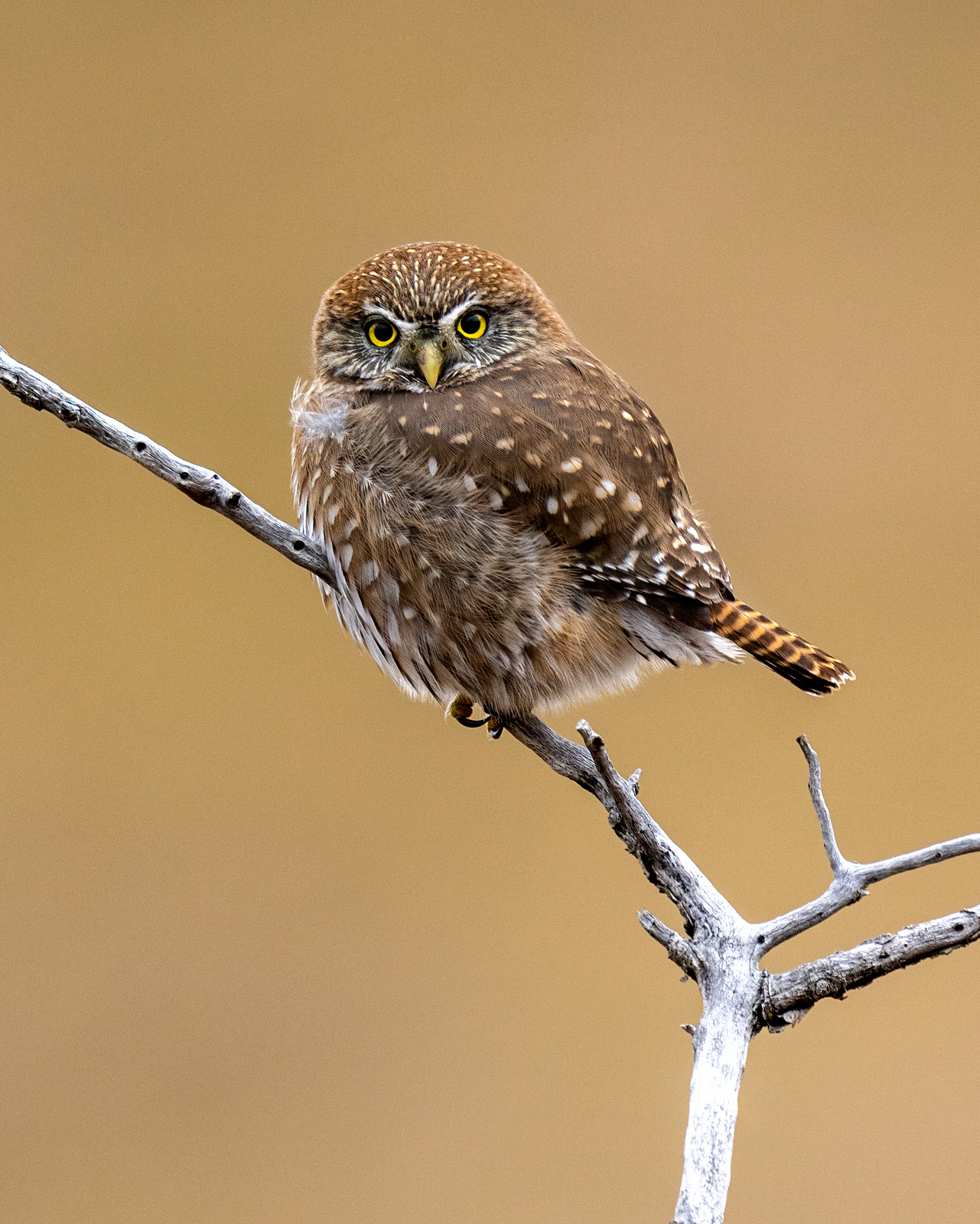
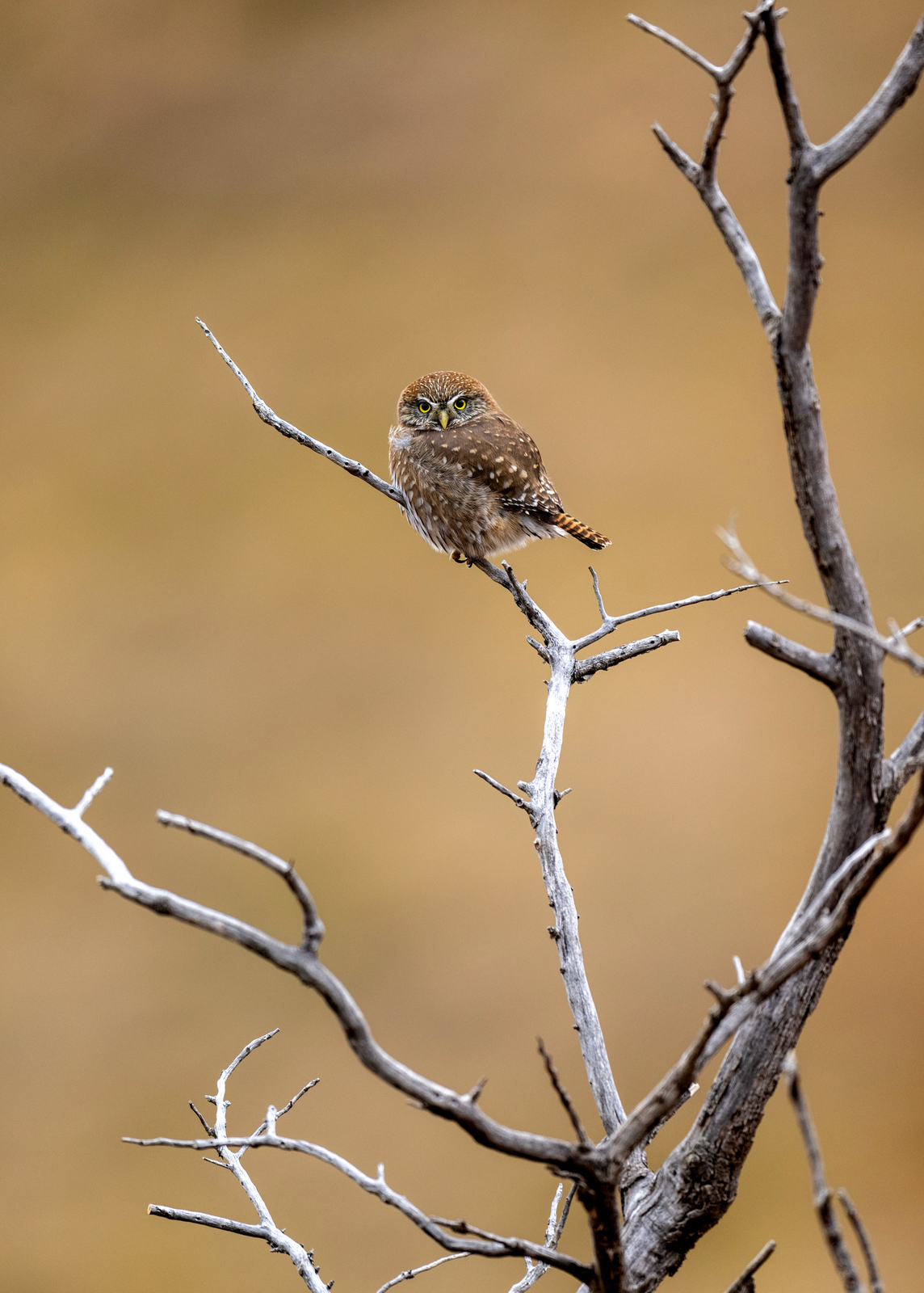 While in Patagonia, I finally came across an owl I had been trying to see for ages – a Pymy owl. Just look at this stunning Liliputian cutie pie of a raptor. I am sure he would be none to pleased to hear himself being called a cutie pie – similar to how I imagine cats, the perfect miniature killing machine, hate when we ooh and ahh over their “adorable” ways. That being said, this tiny terror is not to be taken lightly – they are renowned to be quite fierce and have been seen taking birds almost double their weight.
(WHOOS a FIERCe LITTLE OWL? YOOOUU ARE!! Yeessss YOU Are!! (said in that annoying pet owner voice…)
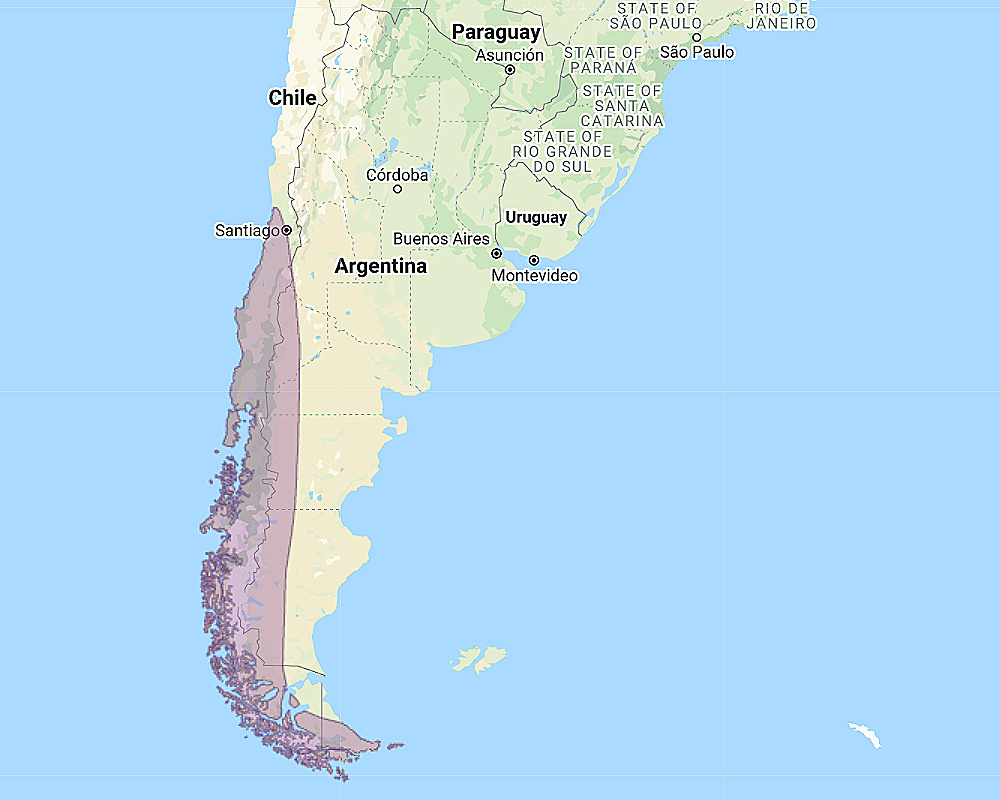
There are 29 species of Pygmy Owl scattered across the globe, and they can be found in Europe, Asia, Africa, and the Americas. The chappie in my photo is an Austral Pygmy Owl – they are found in two countries, Chile (mostly) and Argentina (less so). Locally, they are called Chuncho. The males weigh 56-75 grams (2.0 – 2.6 oz) while, as is common with many raptors, the females are larger and weigh 70-100 g (2.5 – 3.5 oz).
For those playing at home, a tennis ball weighs about 2 oz, and a deck of playing cards weighs 3.5 oz. The wee bird stands about 17-21 cm (6.7 – 8.3 inches). This tiny raptor hunts small birds, mammals, reptiles, and insects. These guys like to hunt during the day (diurnal), but they can hunt at night when the mood strikes.
A closer view:
Remember how it seemed that mom had eyes in the back of her head back when we were kids? Many raptors, including some species of pygmy owl, also give that impression, as seen here when my subject looked away:
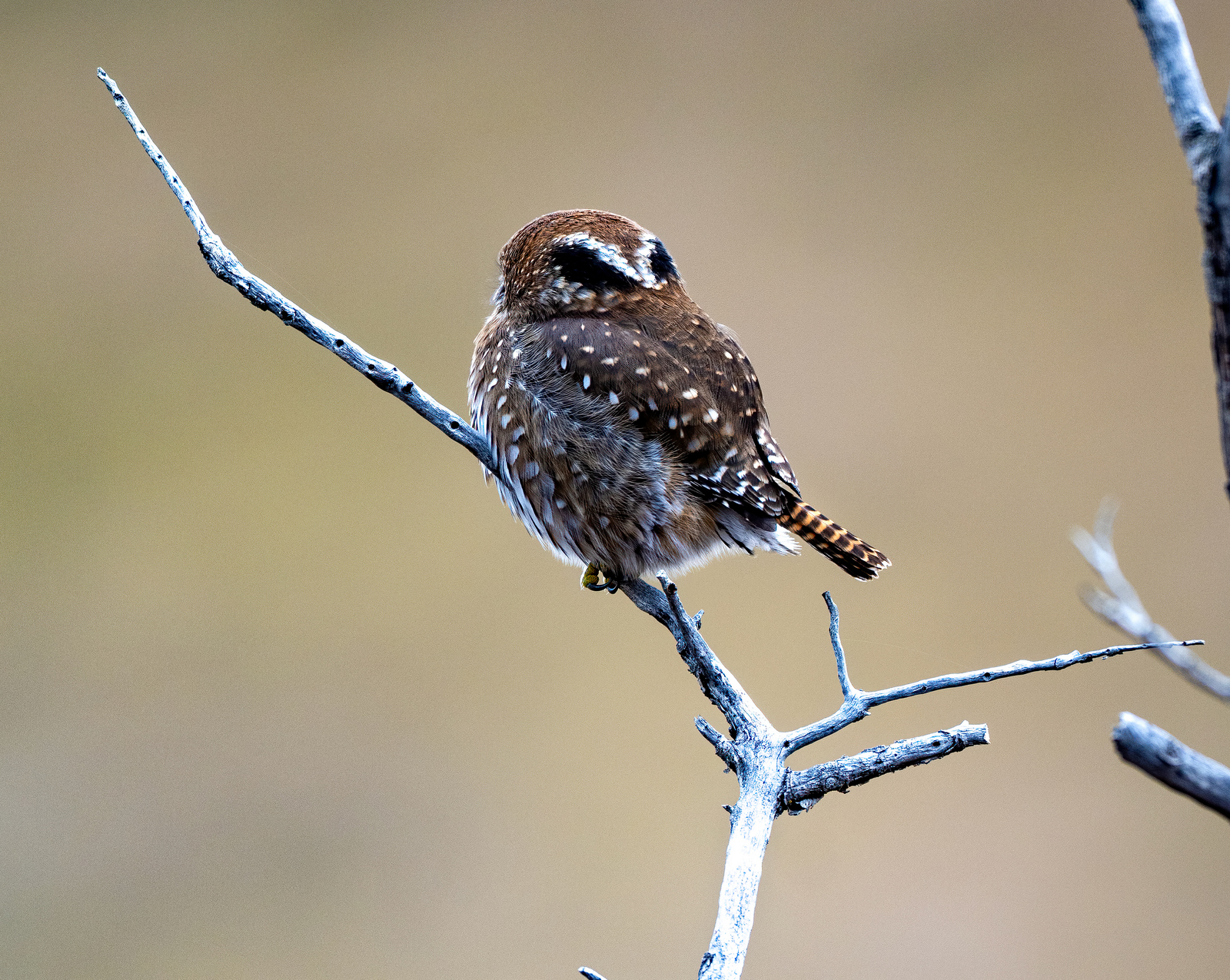
False eyes, called ocelli, are usually found on prey species to confuse predators. So why does this owl, a predator, have false eyes?? The Austral pygmy owl preys on a wide variety of song birds, which makes him very unpopular with that avian crowd. If prey birds find a resting owl, they will call out for reinforcements. Soon, the birds will mob the owl, dive-bombing and harassing him until he leaves – especially if the birds have nests nearby with chicks. One theory is that these false eyes help avoid getting attacked from behind. Some scientists think the large false eyes are actually designed to trigger the mob response, so birds come in close so the owl can then hunt them! What delicious subterfuge if true – using their rage against them!
A small bird in a large world:
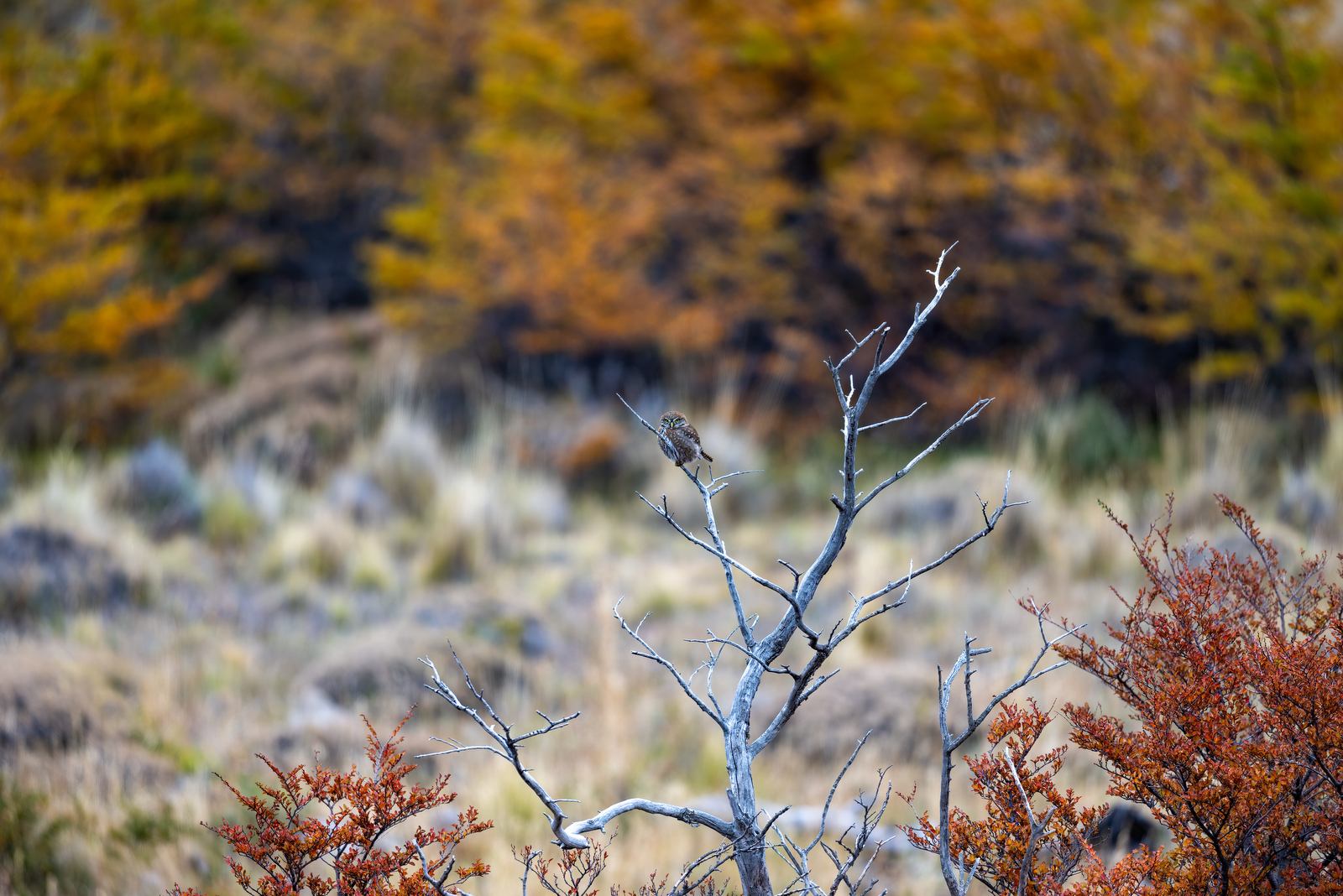
A closer look:
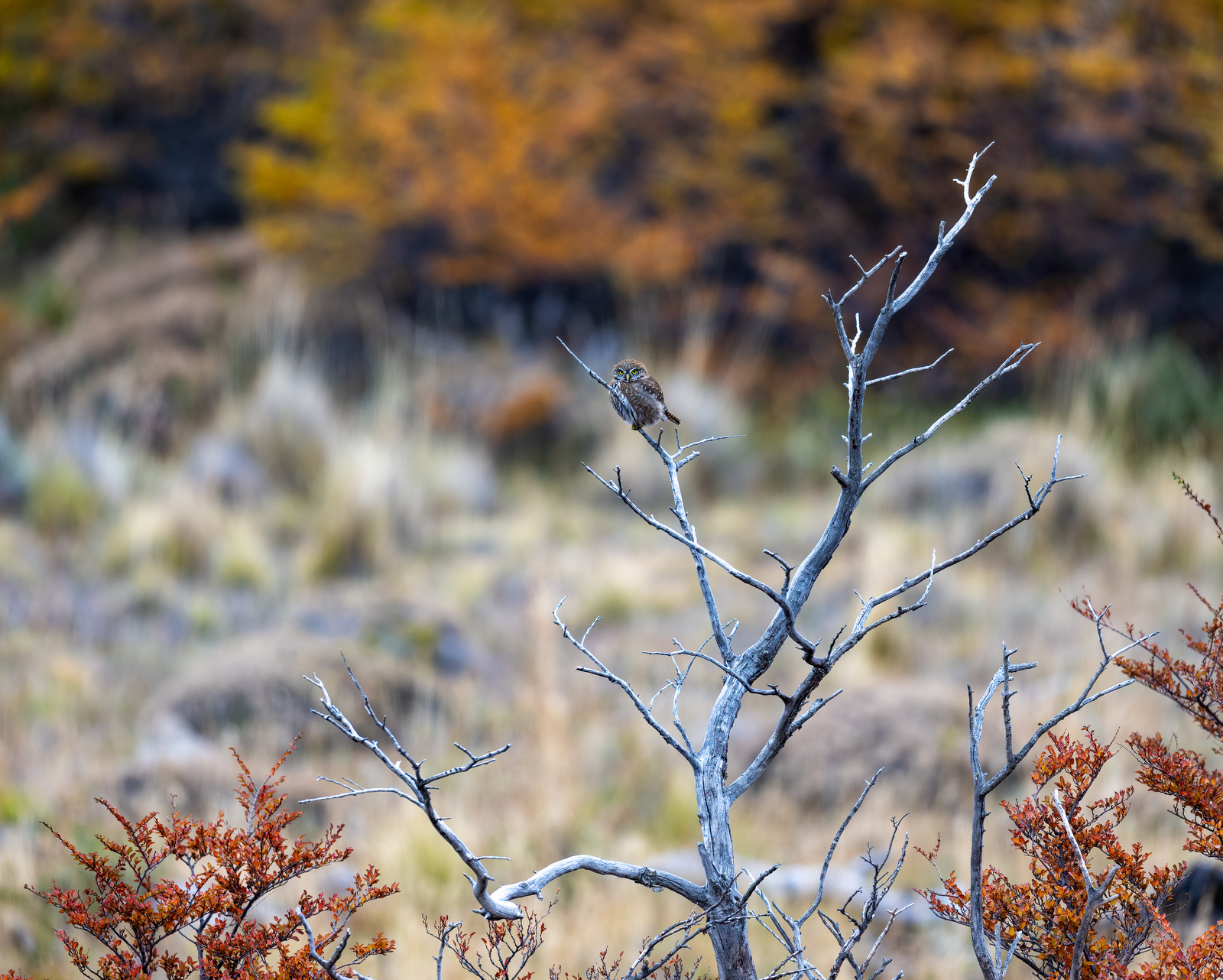
The Austral Pygmy Owl – the tiny but terrifying, diabolically deceptive (some say), geometrically perfect (tell me that head is not a perfect arc!) ball of feathers that is, yes, I still stand by it – adorable.
Until next month….michael
Nikon Z9, Nikon 600mm, f/4, 1/500 sec, ISO 400
Feb
28
Shot of the Month – February 2025
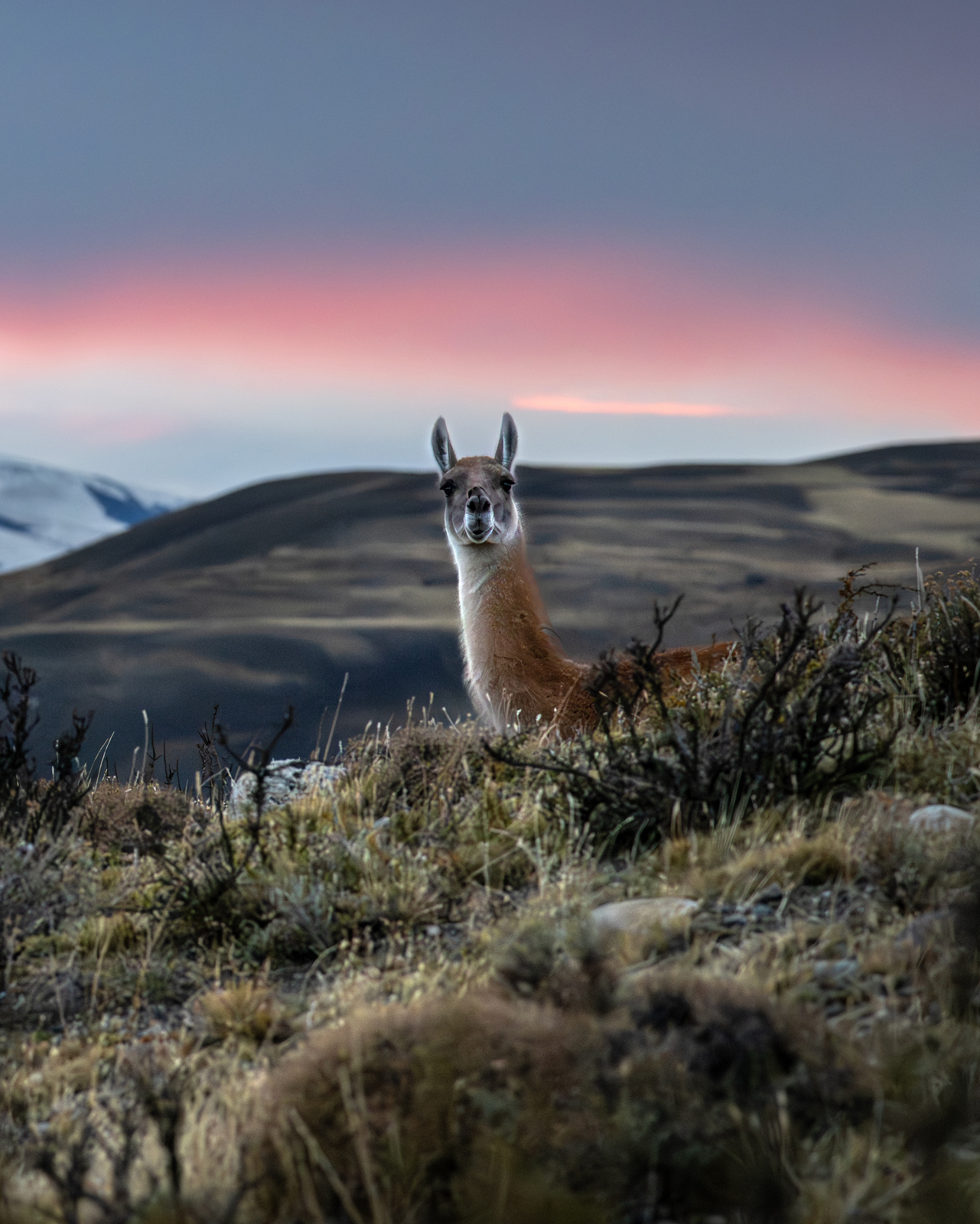
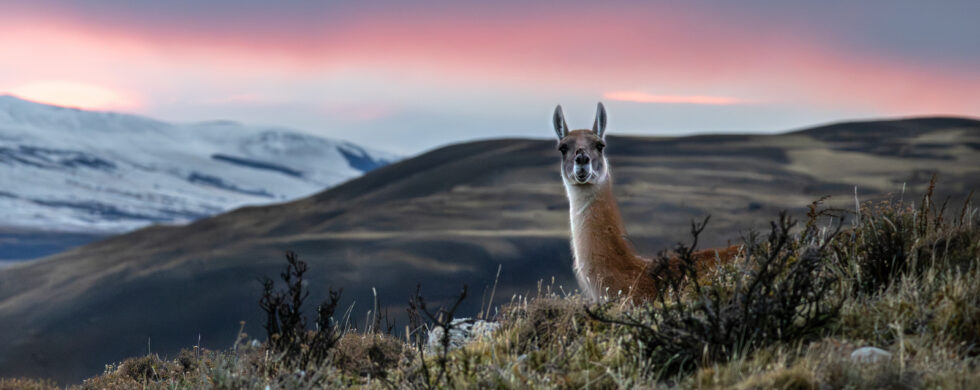
As the sun rises in Patagonia, a resting Guanaco looks on, likely wondering why we are up so early.
A Guana-what?
For the uninitiated, it is pronounced “gwa NAH ko.”
If you thought our long-necked furry thing was a llama, you are not far off. Guanacos have a very calm/mellow temperament which allowed locals to domesticate them 6,000-7,000 years ago. That domesticated version is, yep you guessed it, the llama.
Guanacos are the largest herbivores in South America’s dry areas, and they are the main prey of Patagonia’s apex predator – the puma.
But do note, guanacos are not an easy meal. No, far from it. Guanacos are BIG. They stand 6 feet tall and can weigh three times the weight of a puma. Guanacos are also fast – they can run 35 mph. These camel-like creatures (yes, they are related to camels) also have thicker skin on their long necks for protection against predators.
We watched the puma below stalk a guanaco for about 45 minutes. She was unsuccessful.
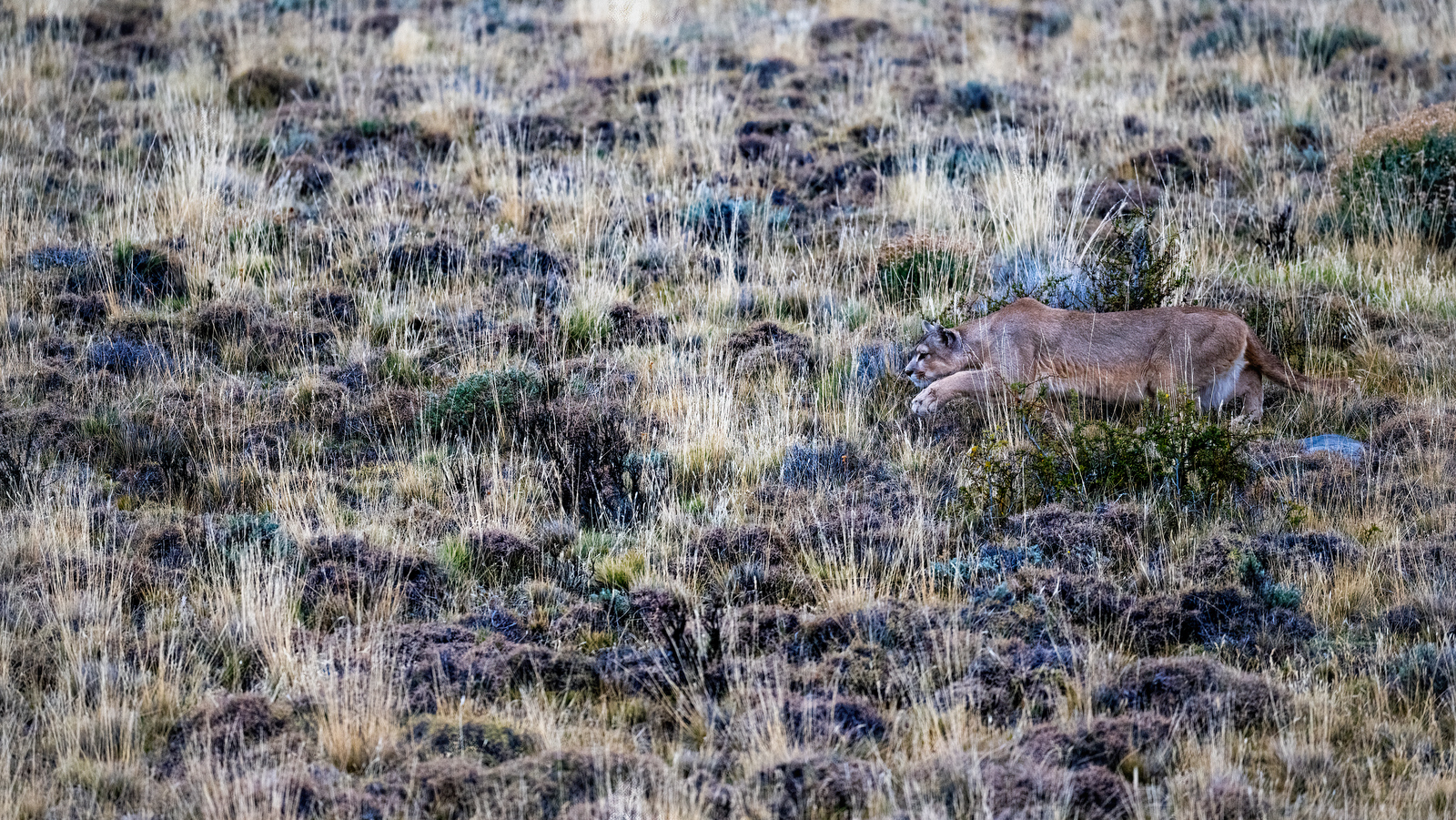
A failed hunt is expected. It is the norm. Pumas only succeed about 1 in 5 attempts (that is an 80% failure rate!). (In the video below, they say success is only 1 in 10!)
I have seen many feline predators hunt – some in person and many others on video. Catching prey is difficult for all predators, but nothing comes close to the challenge that a puma faces every day. Watch this video and be prepared to be stunned. (Video link here.)
Imagine if you had to do this every time you wanted a meal!!
I am shocked that there are any pumas left alive in Patagonia, given how hard they have to work day in and day out to secure a meal. I would expect that life-threatening injuries must occur regularly, as seen in the video below (fear not, mom and cubs survive, I have seen the entire documentary). The link is also here.
And in the next video, watch how hard the puma gets slammed to the ground…again, and again…and…..(the action starts at about 1m 50sec). I recommend watching with the sound off. (Video link here)
Excuse me, what? You are feeling a bit peckish? Well, saddle up, cowboy, you have some work to do if you are a puma in Patagonia!
E-V-E-R-Y D-A-Y, this is what you have to endure if you want to eat.
In the last example of this daily struggle, a professional photographer captures the battle through a dramatic series of stills stitched together into a short video:
I got nothing else to say. Speechless. Pumas are absolute gangsters. I have the greatest respect for both contestants. Life is H-A-R-D when you are in the food chain….
Until next month….michael
Click here to learn more about Patagonia:
And here for more on Pumas
Puma
And here for the story behind getting a great puma landscape image:
Nikon Z9, 100-400mm, f/5.6, 1/100 sec, ISO 5000, EV -0.666
Jan
31
Shot of the Month – January 2025
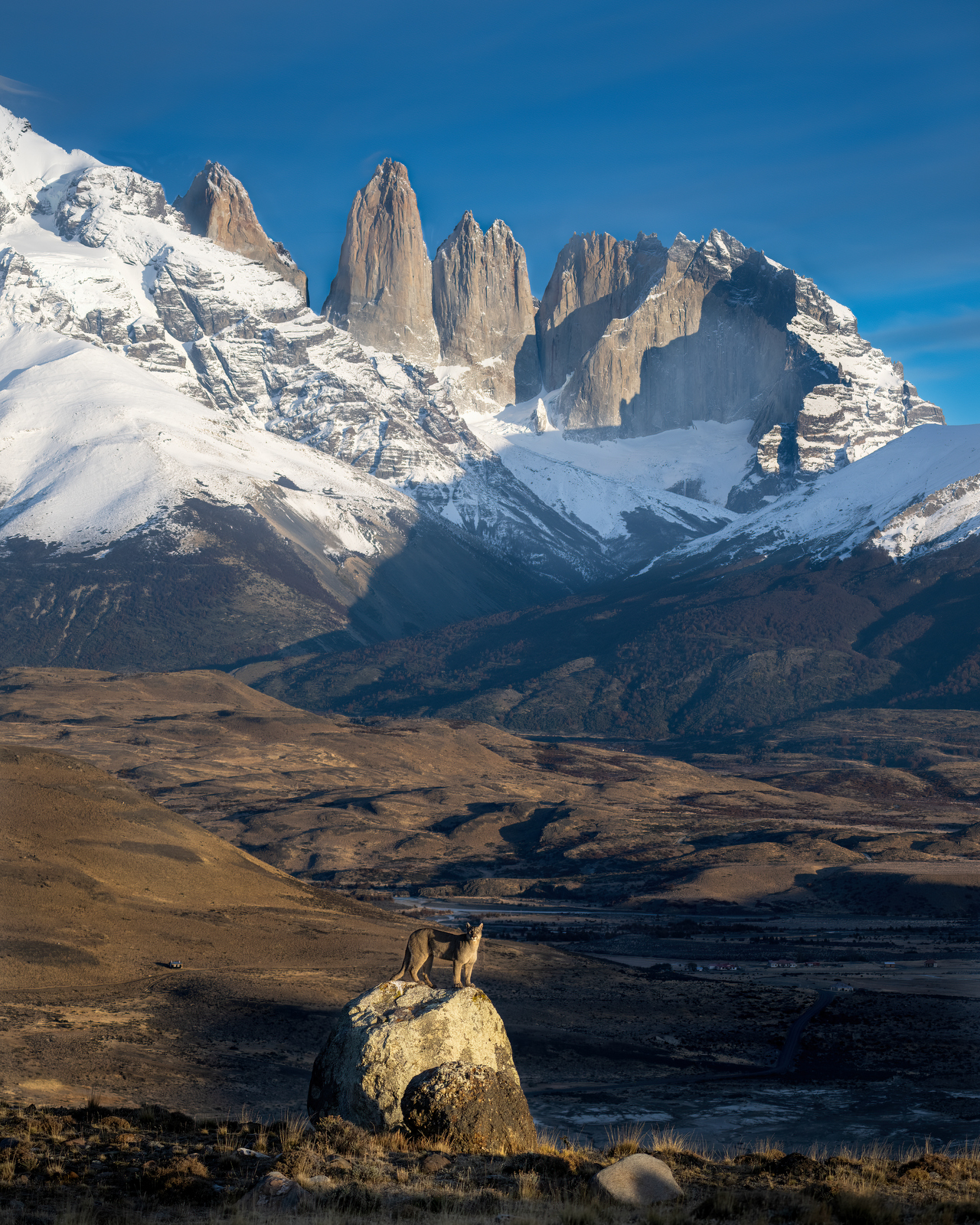
Boom! (The photographic equivalent of a “mic drop”)
My favorite (best?) shot of 2024!
A once-in-a-lifetime shot! Definitely
It doesn’t get any more Patagonia than this. If you need a refresher on Patagonia, check out this link:
Otherwise, let’s break it down:
Torres del Paine:
In the background of this shot we see three immense rock towers called the Torres del Paine (Spanish for “Towers of Paine”). These three peaks are the centerpiece of the eponymously named Torres del Paine National Park in Patagonian Chile. These peaks are part of the broader Cordillera del Paine mountain range, which makes up part of the southern Andes Mountains.
Puma
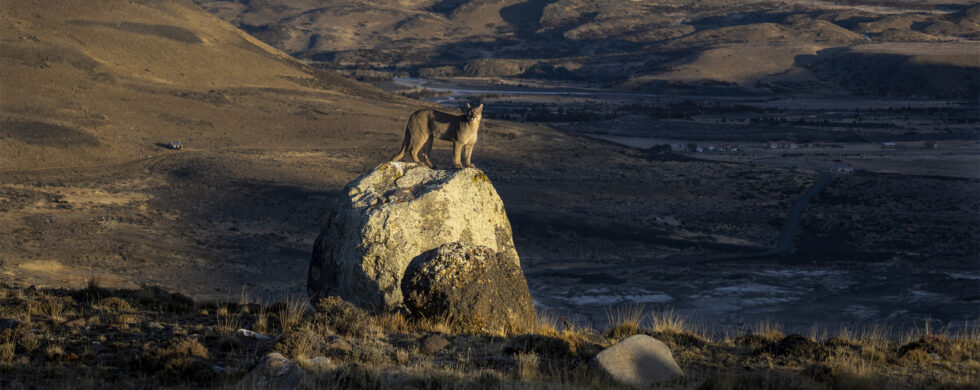
The apex predator of Patagonia is the Puma. In this shot, we see a female puma standing on a rock as she surveys her territory.
The Shot!!!
Getting a shot of a Puma in Patagonia is possible if you spend a few days and put in the miles. Getting an image of the Torres del Paine is a given, as they dominate the landscape in this park. Getting them both together, as in this composition? That puts us in “once in a lifetime territory”!
How did it happen?
One crisp morning, we were out hiking when we saw this female puma walking along a ridge line. My guide instantly looked at me and said “I know this cat. She likes to walk along the ridgeline. You are probably going to get some nice shots, but you are going to have WORK for it.” The challenge is that even when a puma is not walking very fast, by puma standards, this is very fast for us, fairly out of shape bipedal humanoids carrying more than 25 pounds of camera gear.
We took off with great haste to try and keep in front of the cat. We scanned the horizon and tried to guess where she might stop, and looked for potential good compositions. We scrambled to get out in front, set down our cameras and tripods, and set up for a shot. Usually, I would be breathing heavily and struggling to keep still as I composed a shot. We might get a few seconds to shoot before she was already past us again. MOVE!
We scrambled and did our best Olympic speed walking to get in front. This went on for hundreds of yards. Scramble. Stop. Drop to your knees and put the gear down. Try and compose an image and shoot while your chest is heaving. Scramble. Shoot. Repeat.
And then we saw the rock.
The rock that also happened to have the Torres del Paine in the background.
The same rock that had the Torres del Paine in the background as the morning light lit up the valley and the towers with a crisp blue sky as a backdrop.
My heart was now pounding in my ears. I realized the image that might be possible. I didn’t allow myself to even consider it. It would be like winning a photographic lottery with the same or even worse odds. I scrambled as fast as I could to get into position. Can I get there in time and set up the shot? Would she actually get up on that rock? Would she look at us? My mind was racing. I set my gear down and began to compose the image. Trembling.
My Brain: “Dont F*&^ this up!” Get your settings right. Get the focus ready. HURRY!
This all happened within a few seconds. The puma reached the rock. She did not hesitate and immediately leaped onto the boulder. She was checking for scents – seemingly a popular place to mark one’s territory. But she was also facing the wrong way!! I need just one MORE miracle. Please turn around! Turn around! Turn…
And she turned around.
I initially tried to shoot the image in landscape orientation, but my lens was not quite wide enough:
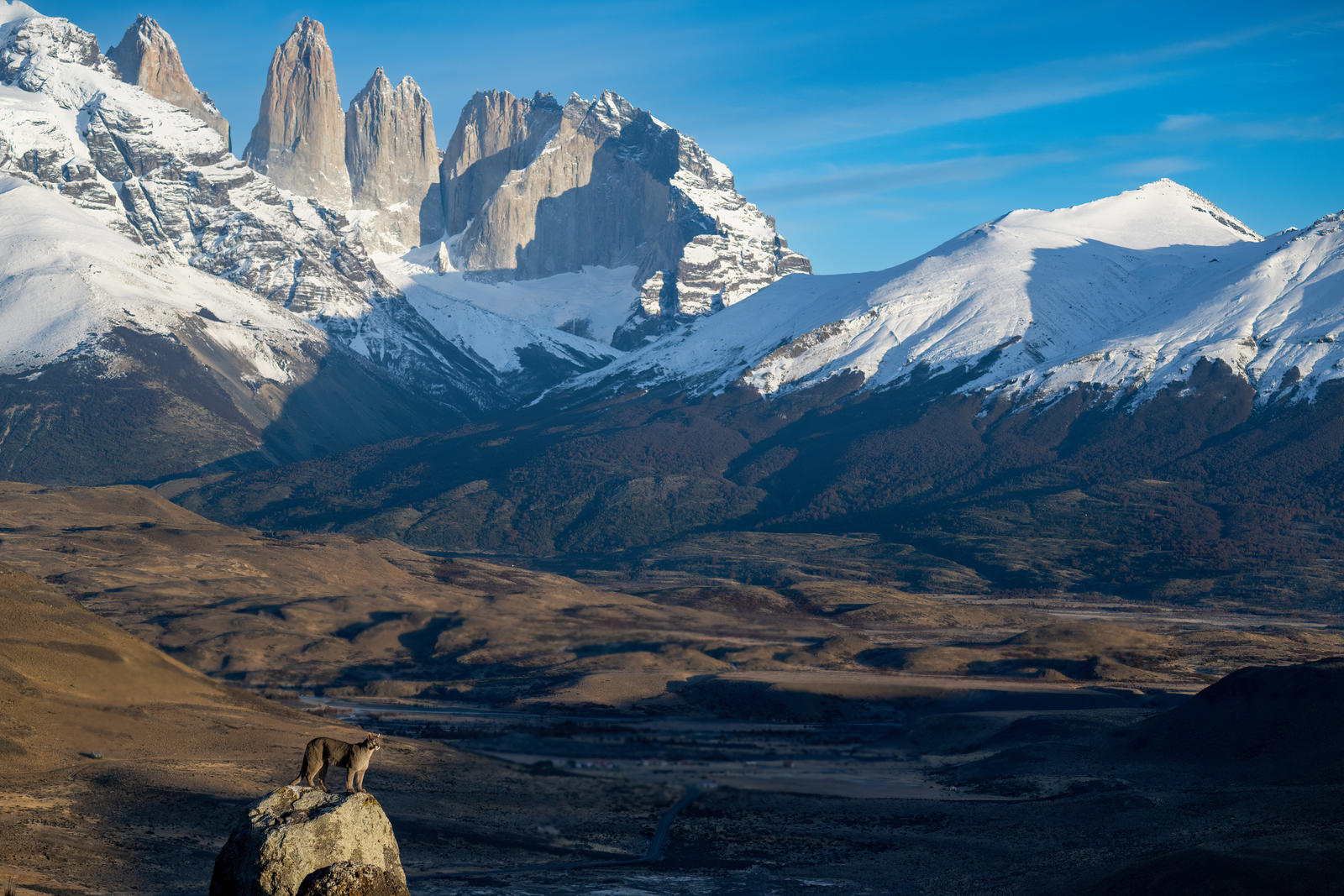
Arrrgh! Just a bit too cramped at the top to really work. Flip to vertical!!!
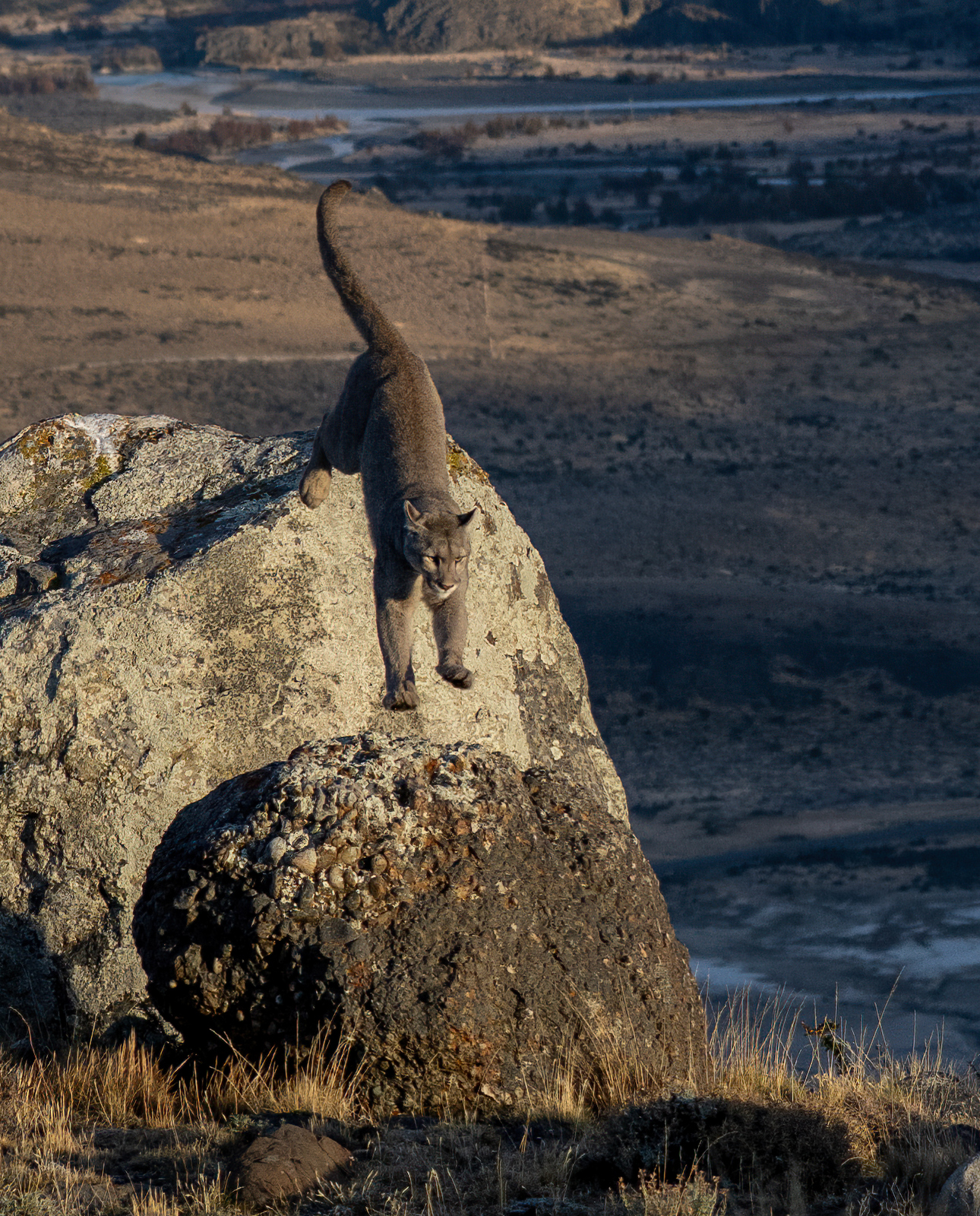
Fortunately, she was very cooperative and stood there for a few seconds, allowing me enough time to rotate my camera, adjust my settings, and get “the” shot before she leaped down and continued her patrol.
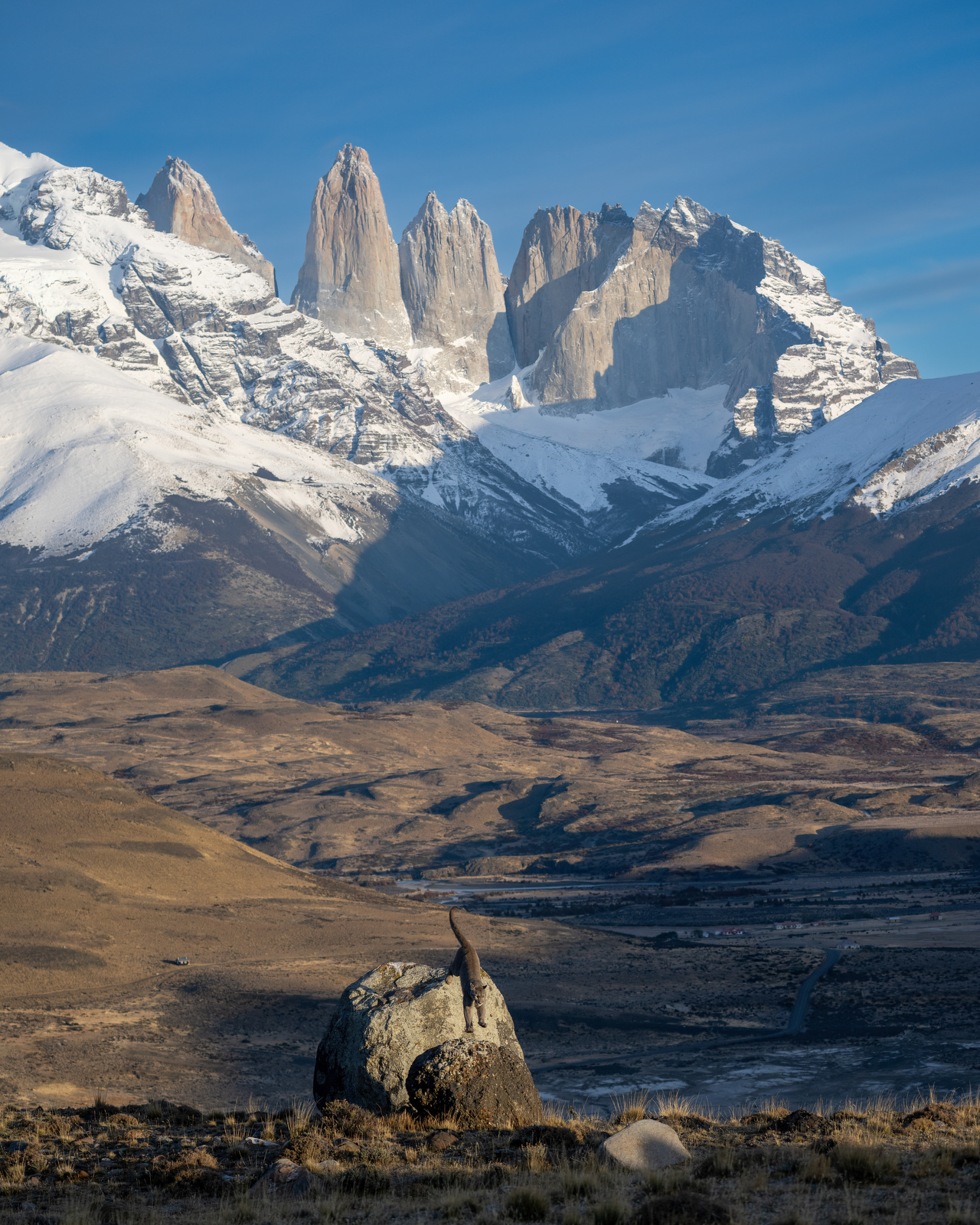
The leap:
In the first image, we see the puma, the region’s regal apex predator, on her throne, with Patagonia’s signature mountains, the Cordillera del Paine, towering behind her. Months and months later, and I am still in shock that it all came together so spectacularly.
Until next month….michael
Nikon Z9, Nikon 100-400 (@100 mm), 1/1000, f/4.5, ISO 250,

Dec
31
Shot of the Month – December 2024

Thought #1: I can’t believe that this is happening! Look at this magnificent creature!
After traveling for more than three days, navigating three airports, and traversing more than 7,500 miles, I was finally in Patagonia. And on our very first morning, after hiking for only a few hours, we had already found our first puma! I couldn’t believe our good fortune. We watched her through our lenses and binoculars for 45 minutes as she sat peacefully. And then she stood up, crouched, and started walking.
Walking in my direction.
Thought #2: “She is staring right at ME! And here she comes! This is amazing! I am going to get a great photo on my very first sighting.”
She kept coming. The muscles in her shoulders rippled with each step. Her gaze never wavered as she continued forward. With each step, she appeared larger and larger and soon filled the viewfinder of my camera.
Thought #3: “Uh, this may have been a mistake. Those paws are huge! Is she hunting me? This may not go well….”
As you may have gathered, she did not eat me. She did, however, walk directly beside me – she had seen prey just behind my position and was stalking them. She walked within 15 feet of me!
I had traveled to Chile specifically to try and add a new feline apex predator, the Puma, to my photography portfolio. Success!
More on this wildcat:
What’s in a name?

Apparently, the Puma holds the Guinness World Record for the animal with the greatest number of names. I didn’t even know that was a thing. But there are over 40 names for this lovely cat in English alone. A few of the most common:
Mountain Lion (United States) = Cougar (Canada) = Puma (Central and South America and most of Europe)
Catamount is another name sometimes used in the United States.
Likewise, Panther = Cougar, Puma, or Mountain Lion. Everyone got that? All these names refer to the exact same species.
The puma is scientifically classified as Puma concolor. In Latin, concolor means “one color,” referring to the uniform color of the feline’s coat. There are only two recognized subspecies:
Puma concolor concolor: South American Cougar, possibly excluding the region northwest of the Andes
Puma concolor cougar: North American Cougar, found in North and Central America and possibly northwestern South America. For many years, the Florida Panther was considered its own subspecies, but now scientists consider that population to just be part of the North American Cougar subspecies.
Where can I find one?
Mountain Lions hold another “record” – they are the most widely distributed wild, terrestrial mammal in the Western Hemisphere!! Pumas are found in 28 countries with a range spanning the Yukon, British Columbia, and Alberta provinces of Canada, the Rocky Mountains, and much of the western United States. The cat’s range continues through Mexico to the Amazon Rainforest and the southern Andes Mountains in Patagonia.

Many cougars prefer mountain habitats, but as we can see from the range map, pumas are HIGHLY adaptable. They are found in every New World habitat, including forests, grasslands and steppes (montane deserts), mountains, deserts, swamps, and everything in between. Pumas were found in all 48 states of the continental US but were wiped out across most of the eastern US due to habitat loss, hunting, and extensive predator eradication campaigns (read more on that here) in the 1800s by the US government. Cougars were declared extinct east of the Mississippi in the 1930s, although a small population does survive in Florida (the Florida Panthers mentioned earlier). Since 1950, pumas have been eliminated from Arkansas, Louisiana, Tennessee, and West Virginia.
What are they like?
Pumas are the fourth-largest cat in the world, though ironically, they are not considered a “Big Cat.” That designation goes to the cats of the genus Panthera, which includes the tiger, lion, jaguar, leopard, and snow leopard. The cats bigger than the puma are the tiger, lion, and jaguar.
Puma size varies by location – they tend to be smaller near the equator and get bigger closer to the poles. Males weigh from 110 to 180 lbs, while females typically weigh between 70 and 145 pounds. Males are usually about 30% larger than females.
Pumas are incredibly strong and agile, with long bodies and powerful, short legs. Their hindlimbs are larger and stronger than their forelimbs, making them extremely good leapers. How good? They can jump 18 feet (5 meters) vertically and 40 to 45 feet (12 to 14 meters) horizontally. Pumas are slower than most of their prey so they are ambush hunters – they stalk quietly and get as close as possible before pouncing on their prey.
What do they eat?
Pumas prefer large mammals, especially ungulates. In North America, pumas target mule deer, white-tailed deer, elk, moose, mountain goat, and bighorn sheep. In Central and South America, pumas target guanacos (like a llama), local varieties of deer, rodents, hares, birds, and just about anything else that moves.
Don’t let that “boring” brown coat fool you – there is nothing mundane about this cat. Pumas are considered a keystone species:
- They have conquered every habitat in the Western Hemisphere.
- Studies show that cougars interact and influence the behavior of over 450 species across the entire food chain.
- Pumas play an essential role in controlling the population of deer and other herbivores, preventing overgrazing, and maintaining healthy vegetation.
- By controlling deer populations, pumas indirectly help manage the spread of disease.
- Many species alter their behavior in puma habitats out of fear of becoming prey.
- Carcasses left behind play an important role in returning nutrients back to the soil and provide an essential food source for scavengers, including birds of prey, mammals, and insects.
- Pumas also influence the behavior and distribution of other predators when they share habitats (bears, wolves, jaguars, etc).
Pumas may not be as flashy as some of their feline counterparts but their adaptive skills are second to none, and they play a vital role in keeping our natural world thriving throughout the Western Hemisphere.
Regardless of what the science folks say, pumas are a “big cat” in every sense as far as I am concerned!
Until next month…..michael
Sources:
Puma Facts | Patagonia Wildlife Guide
Nikon Z9, Nikon 600mm, f/4, 1/1000 sec, ISO 400, EV +0.667
Nov
30
Shot of the Month – November 2024
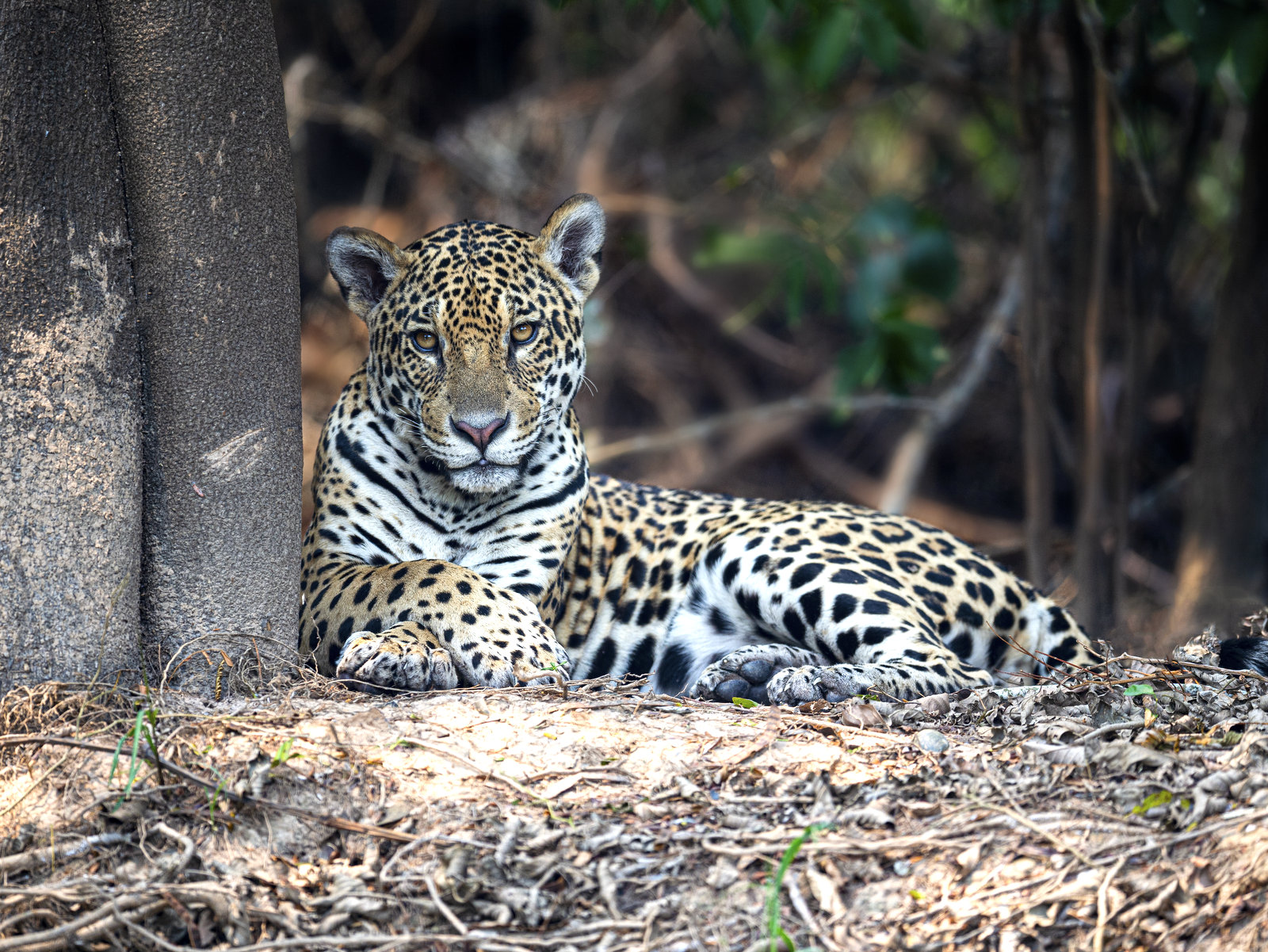
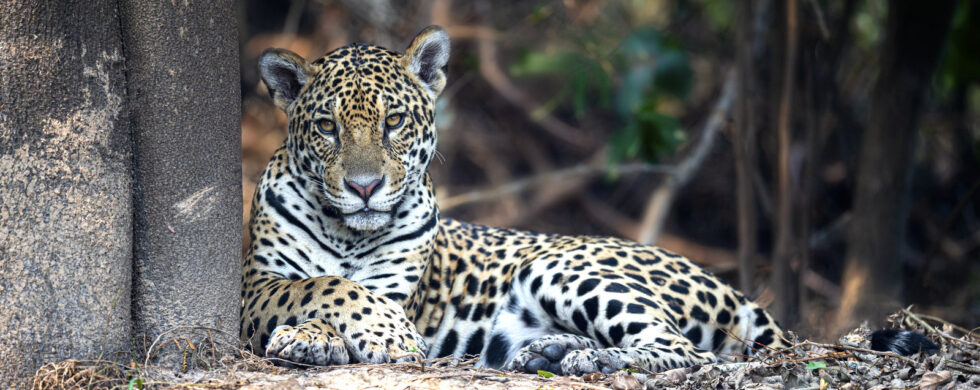
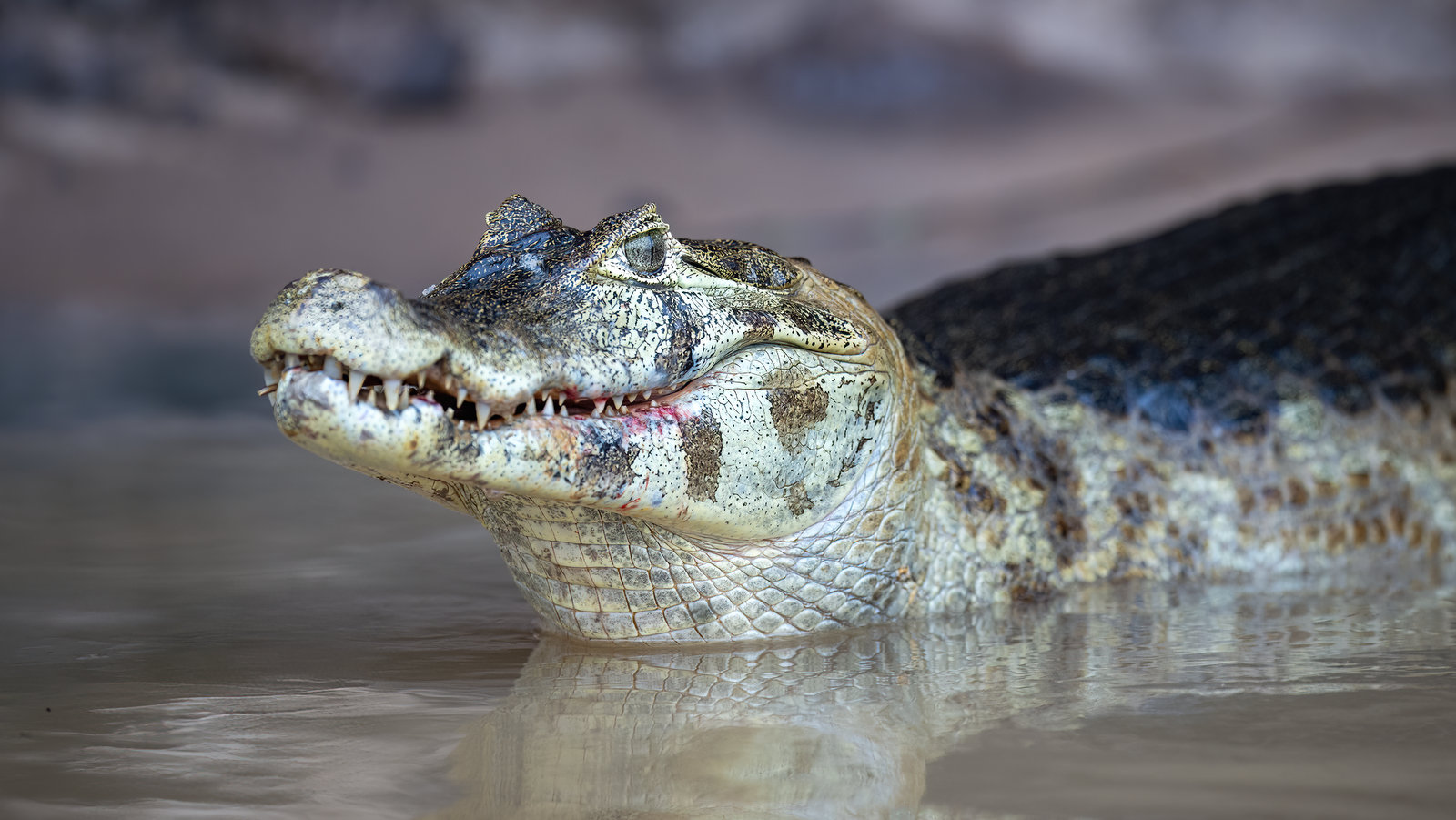
Ok, yeeessss, this female jaguar is an apex predator. Yes, she is a member of the biggest cat species in the Americas and the third largest in the world. Yes, this jaguar’s jaw is so powerful it can pierce the skull of a caiman (think alligator but a bit different) with one bite. Yes, she is terrifying.
Caiman:
But she is also stunningly beautiful. Those eyes! Could she look any more kitty-like? The bored gaze…the crossed paws. I just can’t…
I found this lethal kitty sitting in the shade under a tree along a riverbank in the Pantanal in Brazil.
Her looks are particularly striking after seeing male jaguars. Many males look like middle-aged heavyweight boxers. Massive, brutish, scarred, and battle-worn. This female is downright lithe, probably weighing in at the lower end of the typical 75 to 175 pounds for females. Males can weigh from 220 to 350 pounds. And her luscious fur coat — so beautiful!
Males often get into territorial battles to keep a preferred part of the jungle or win over rights to a female. Look at the wounds on this massive male:
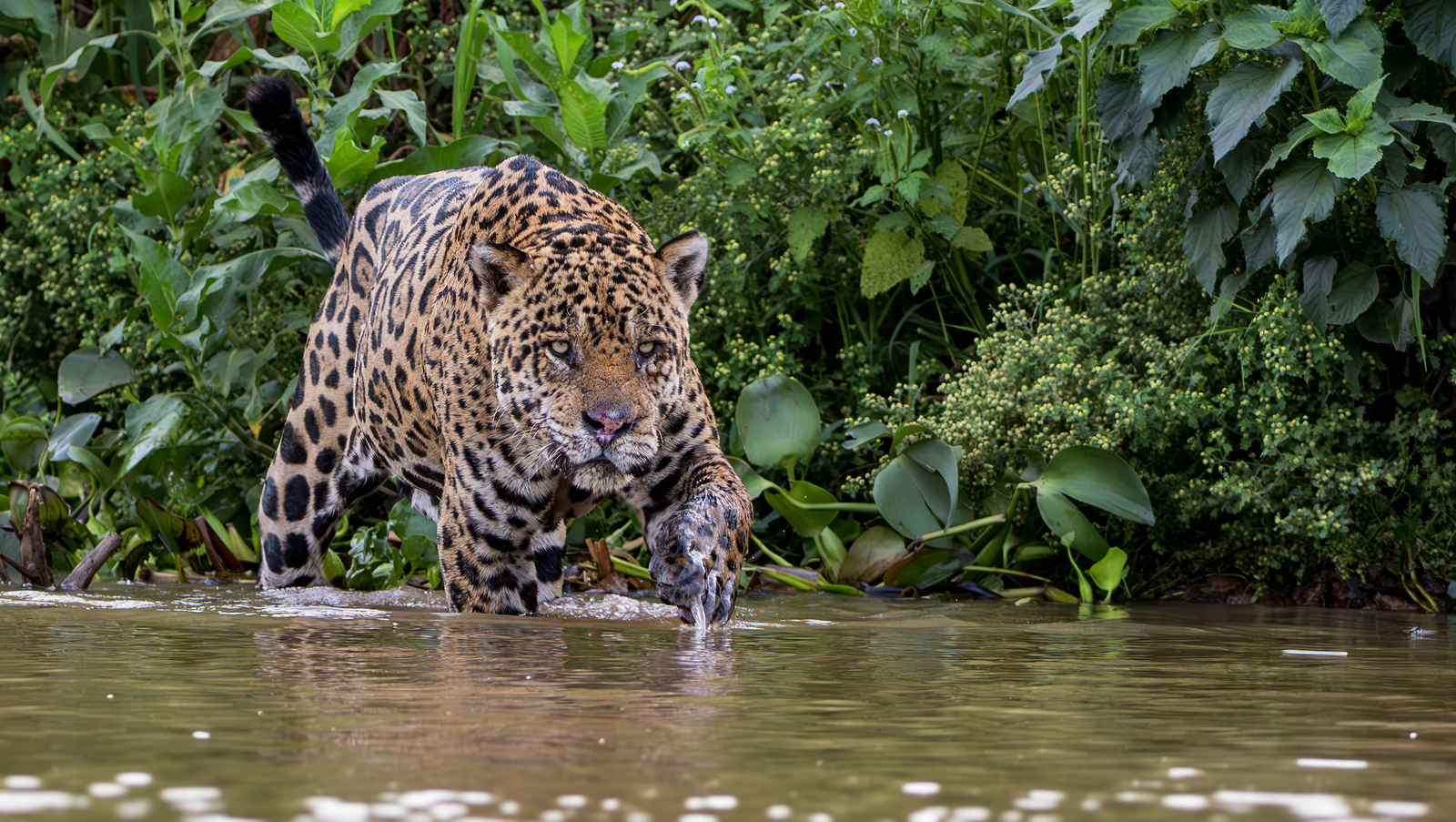
Here is another male jaguar with an injury to his eye. This jaguar was well known to researchers, and despite the injury, this jaguar was the dominant male in his part of the jungle for many years.
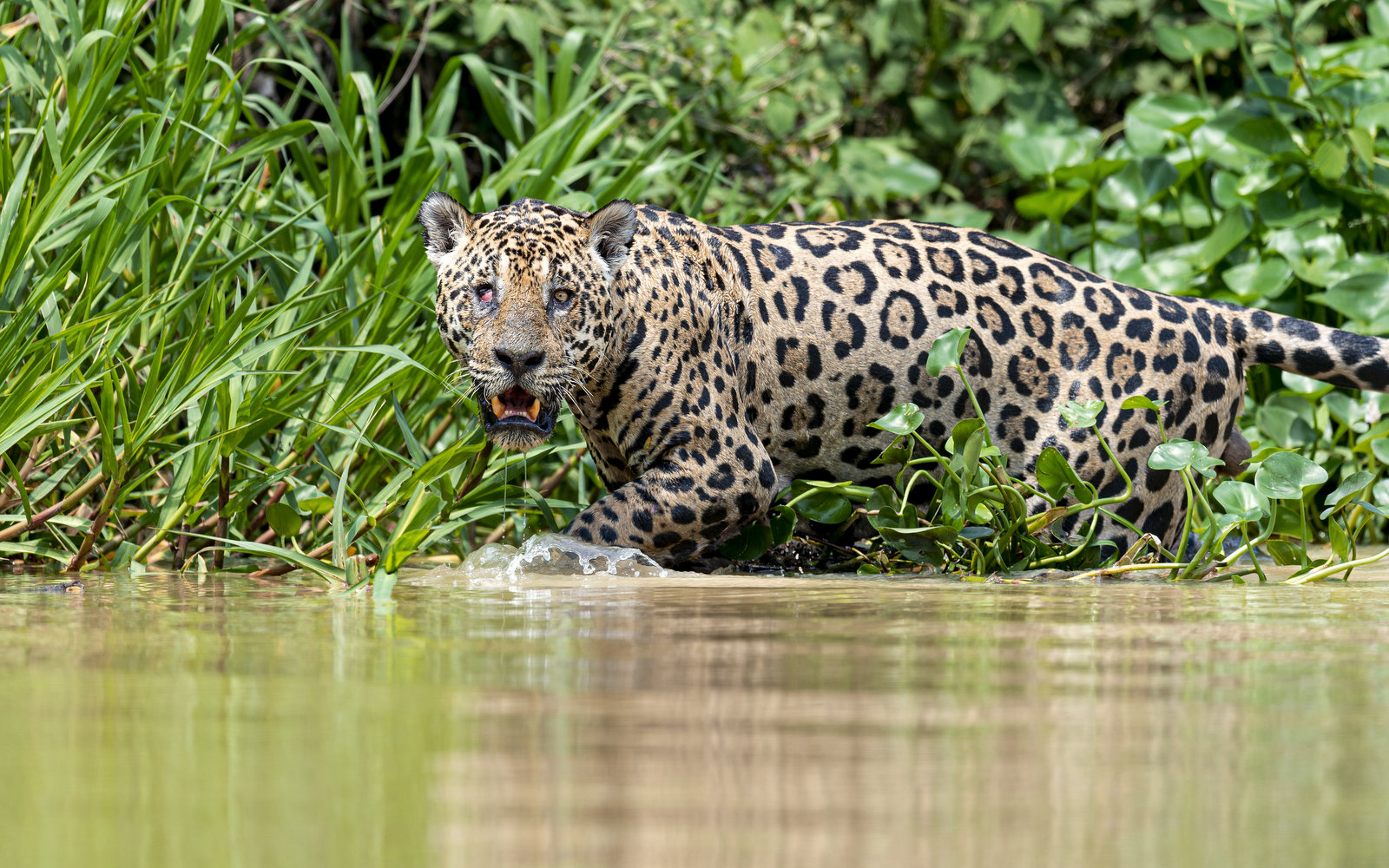
But I digress. Our lovely female has no scratches or marks on her face. Given her size and perfect facial features, I guess that she is fairly young and has not yet endured many fights or injuries while hunting. Females rarely fight but will fiercely defend their young from male jaguars and engage in mock battles with courting males. They may also fight to defend a kill from other jaguars.
There you have it, a female jaguar in the prime of her life – a stunning, regal queen of the jungle. Admire at a distance, as her beauty is deceptively lethal.
Read more about Jaguars in my previous posts:
Until next month……michael
Nikon D4S, Nikon 600 mm, 1/400 sec, f/4, ISO 560, EV +0.5
Oct
31
Shot of the Month – October 2024

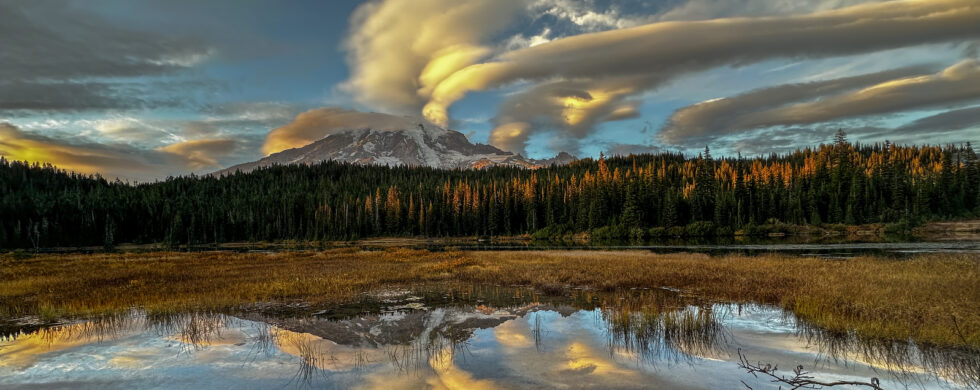
I stood by Reflection Lake in the late afternoon with low expectations. I have never had much luck getting a good shot of Mt. Rainier at this time of day – usually, too much wind to get a reflection and rarely any good clouds. I actually left my camera in the car figuring I would enjoy the scene like a normal person. But then I almost jumped out of my skin when the clouds suddenly rolled in and the low sun started to bask them in warm light. And the air was unusually calm allowing for a great reflection. I ran and got my gear and started shooting.
Click here for more on this photo hotspot:
Many non-photographers are surprised to learn how important clouds are to creating a compelling sunrise/sunset landscape image.
How important? Well, I know many a landscape photographer who will skip a potential shoot if there is a forecast for no clouds. Clouds are so important that there are apps to predict the timing, height, and density of clouds for a given location. Most serious landscape photographers have at least one or two of these apps on their phones and study them judiciously before heading out for a shoot. Some include Clear Outside, Astrospheric (IoS, Android), and Windy.com (IoS, Android).
There is no doubt that the sun sinking beneath the horizon on a cloudless night at the beach can be serene, beautiful, and romantic…. But it rarely makes for a compelling image. Clouds, when at the right height and density catch the sun’s glorious first or last rays of red, orange and yellows that humans love. Clouds create drama and make an image more visually striking.
For example, this is a nice sunrise shot I took at Swiftcurrent Lake in Glacier National Park:
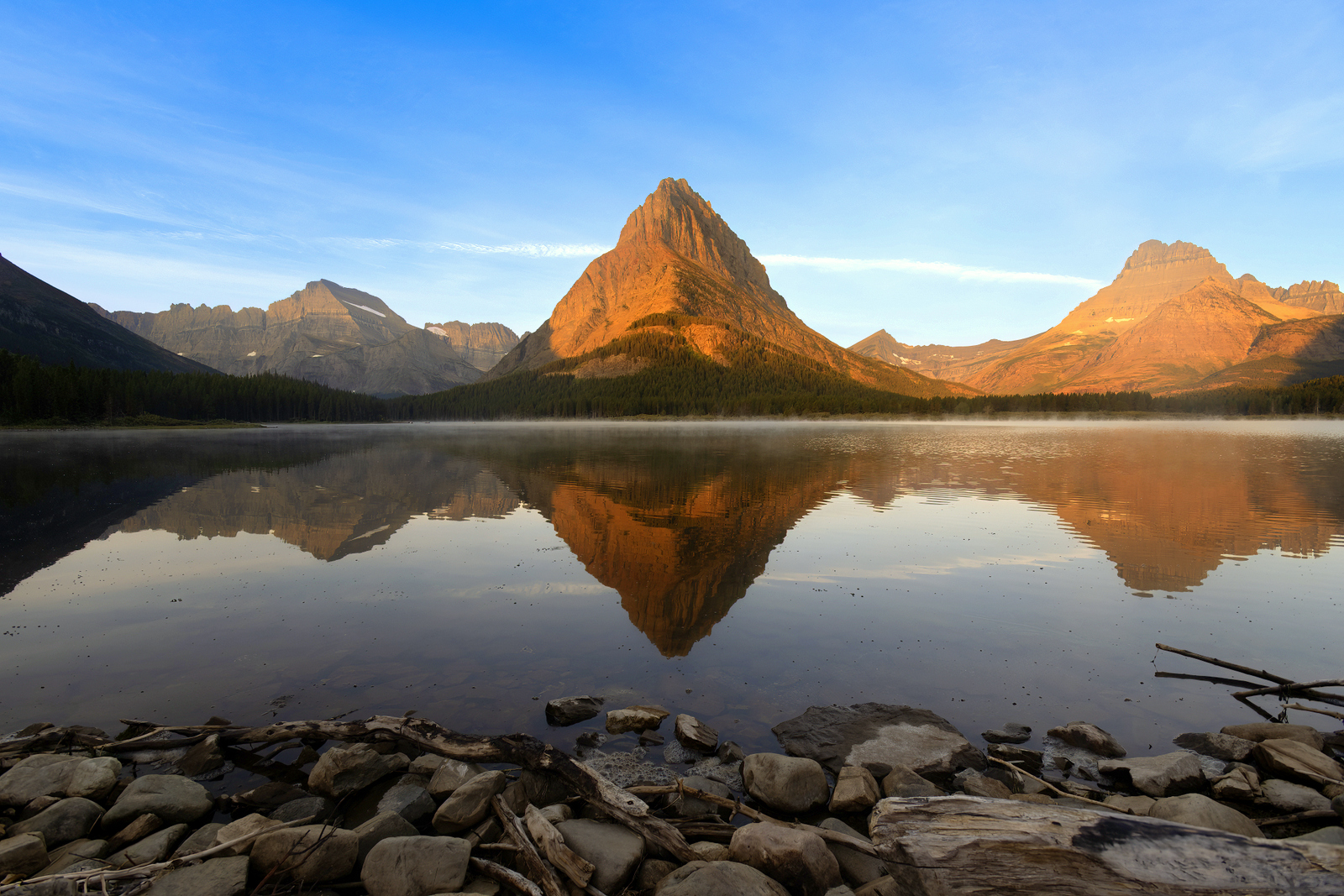
But look at what clouds can add to the scene:

(Ok yes, I found a better/more compelling foreground in the second image, but you still get the idea. That sky is more dramatic and interesting)
In this sunset scene at the same location I had clouds but they were too dense to allow the colors to come through. My solution was to go for a very long exposure that allowed the motion of the clouds to add drama and visual interest to the scene.
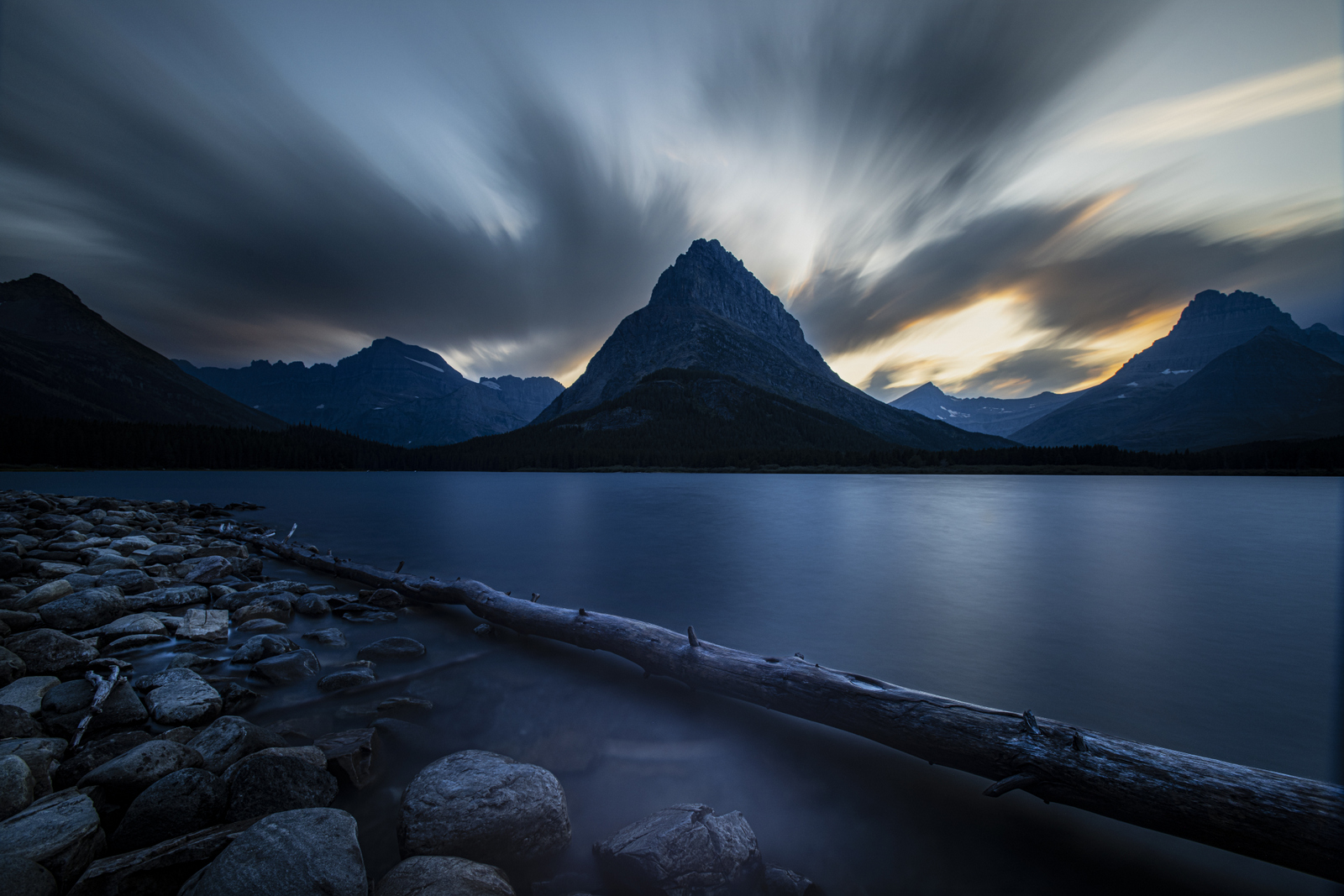
Read more about the story in getting these shots at Swiftcurrent Lake here:
The shot below of a tulip field at sunrise had some real potential but in the end fails due to the lackluster sky. Nary a cloud….sigh.
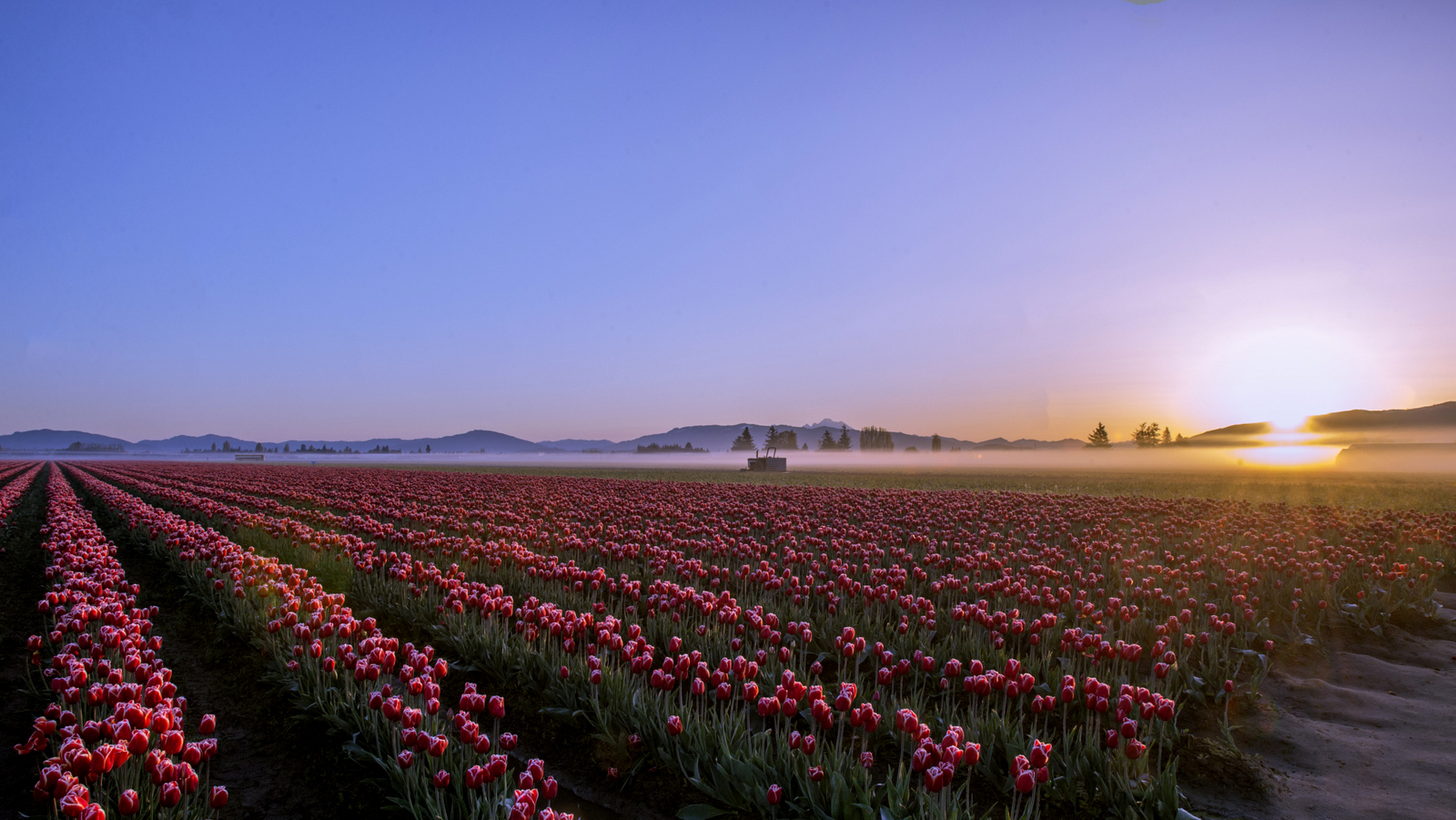
In the image below at Rialto Beach the dramatic foreground and compelling silhouette make this a decent image but a few more clouds to catch some color would have taken it to another level:
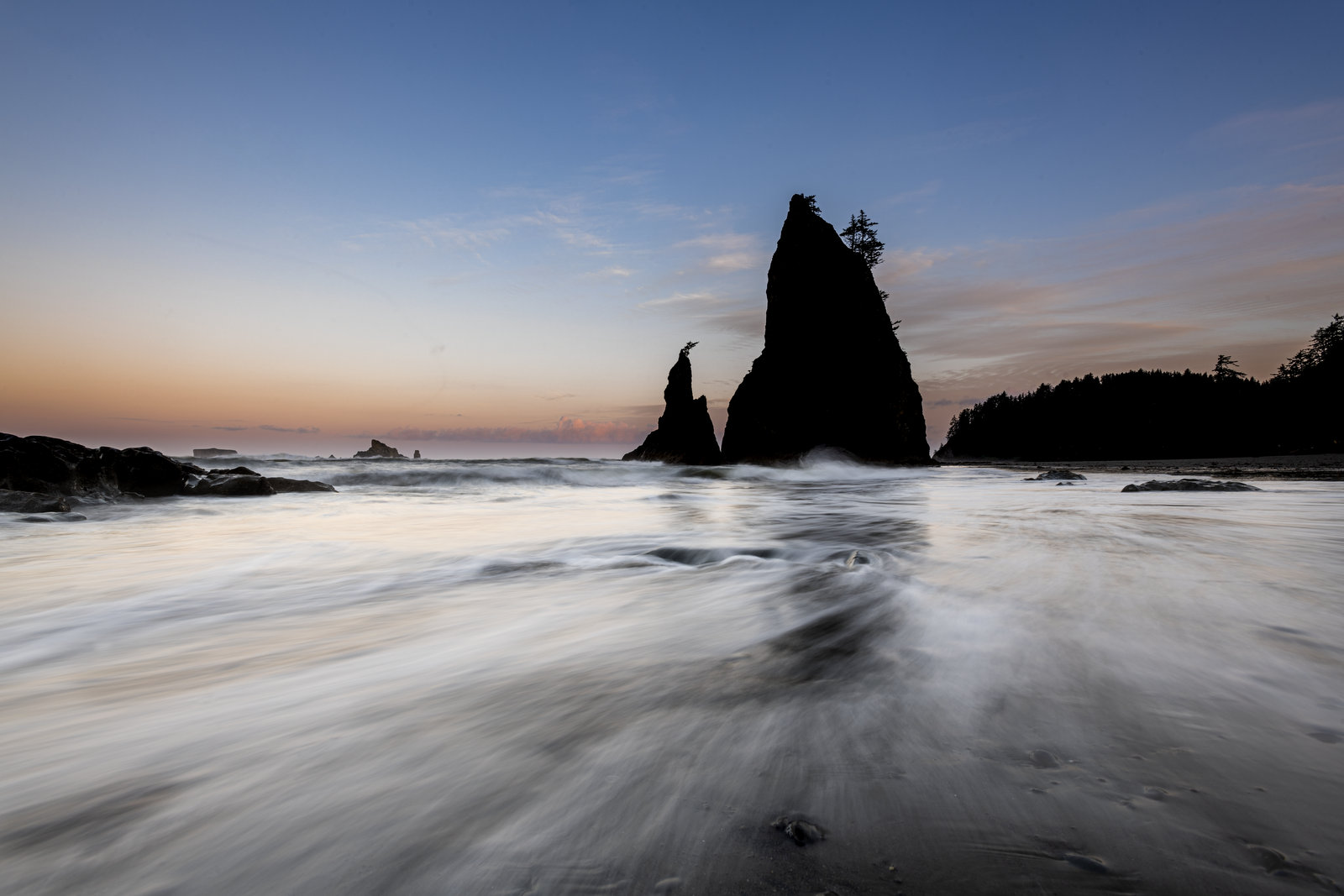
See more on Rialto Beach here: Rialto Beach
And in this next shot of the Lime Kiln Lighthouse we have juuuust enough clouds to make it a usable image:
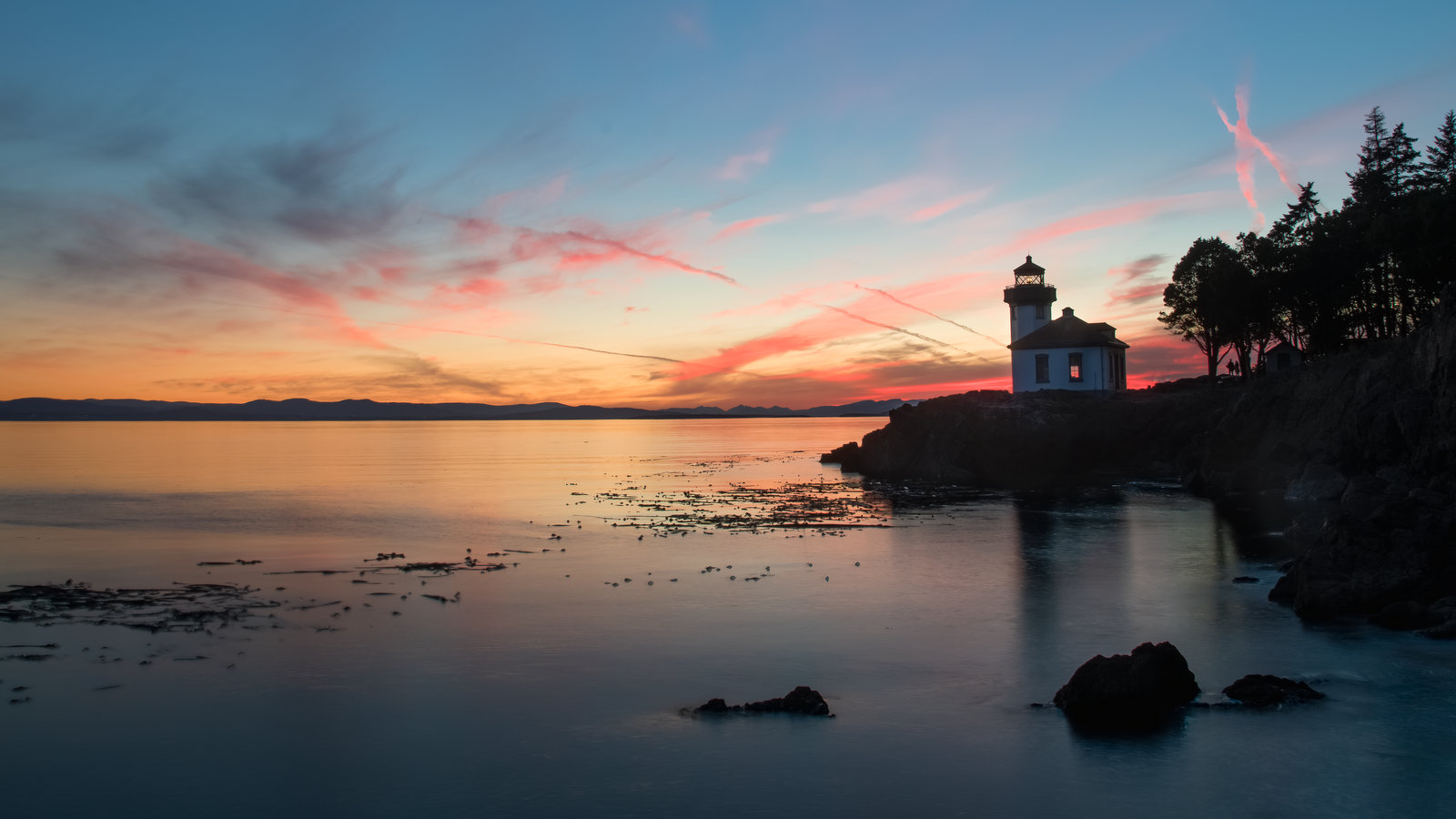
But if I crop the image, to allow the clouds to fill more of the scene, I find it more compelling:
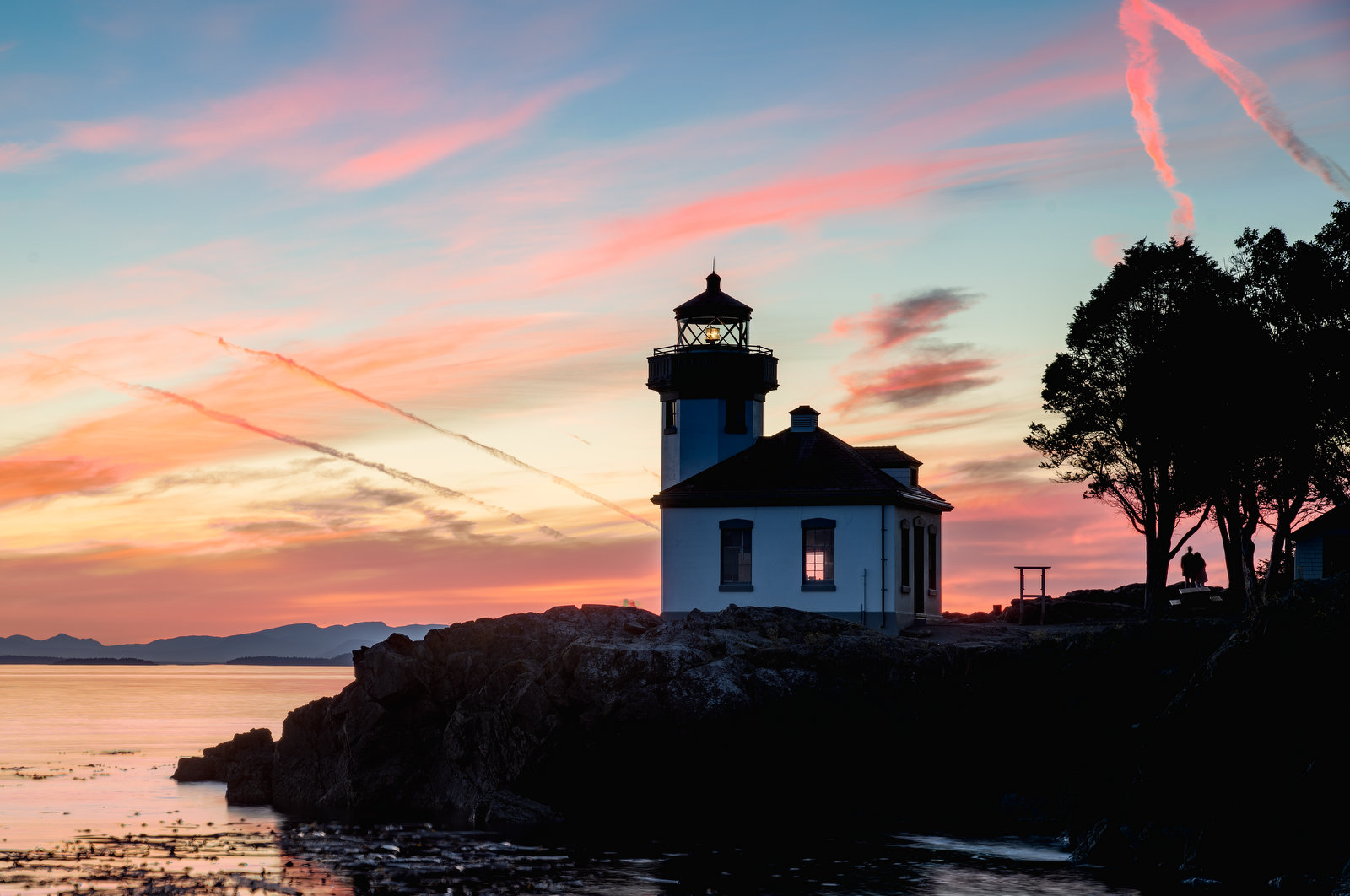
Click on the box to read more about how I got the shots at the Lime Kiln Lighthouse: Landscape to Lovers
As you can see, a cloudy day is not always a bad thing. And if you happen to be a landscape photographer, clouds are often essential to making our day into something special.
Until next month….michael
Sep
30
Shot of the Month – September 2024
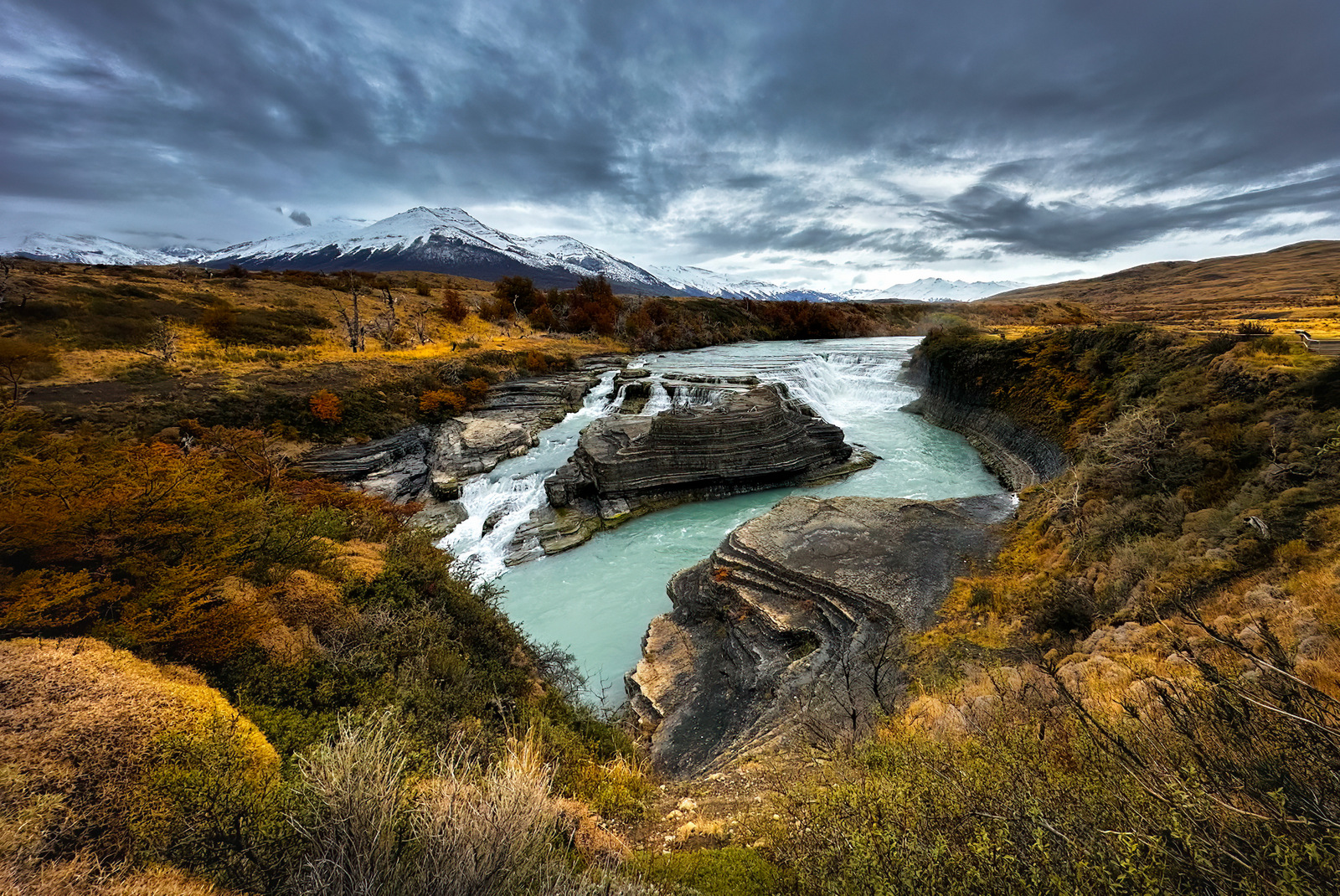
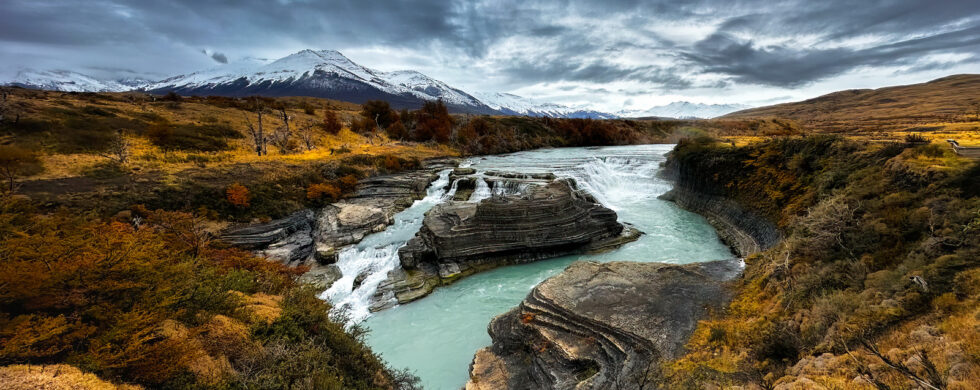
I don’t even know where to begin.
How do I describe this magical place? In our age of hyper-sensationalism, where a new cookie flavor is “revolutionary” and the latest TikTok dance is “epic,” many superlatives have lost their punch and meaning. But let me tell you, my dear friend, Patagonia is the real deal. Stunning. Awe-inspiring. Breathtaking. Majestic.
Tolkien’s Middle-earth has nothing on this place.
Where is this Magical Land?
Patagonia covers a massive region at the bottom of South America.
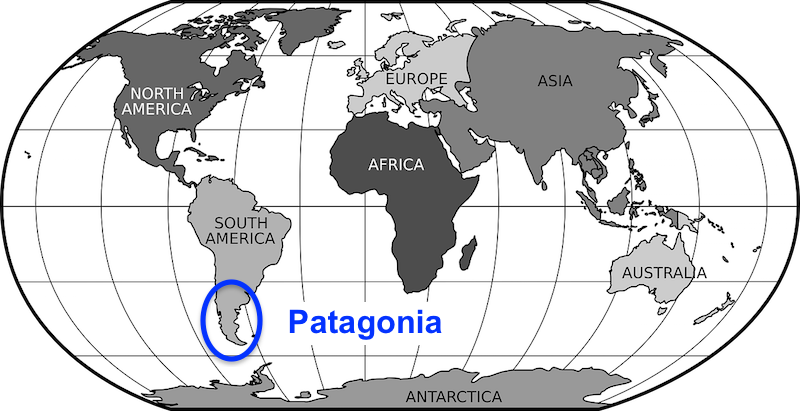
Patagonia is about 300,000 square miles (1 million square kilometers) in size and spans the countries of Chile (to the west) and Argentina (to the east). It is an area larger than 80% of the countries on earth, yet is one of the least populated areas on the planet (1-2 persons/sq km).
Stunning landscapes and no people?? My kind of place!
The southern Andes mountain range dominates the landscape in many places. It really is at the end of the world – the most southern tip is the starting point for voyages to Antarctica.
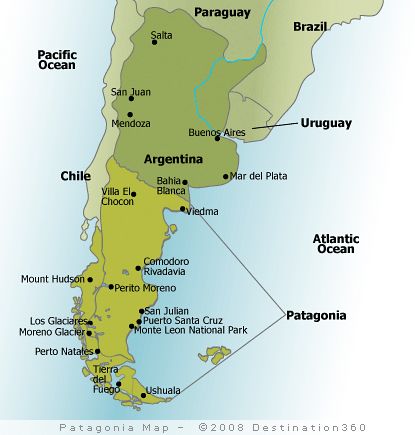
Argentina contains 90% of Patagonia, which spans one-third of the country. Ten percent of Patagonia is located in Chile, covering half of the country.
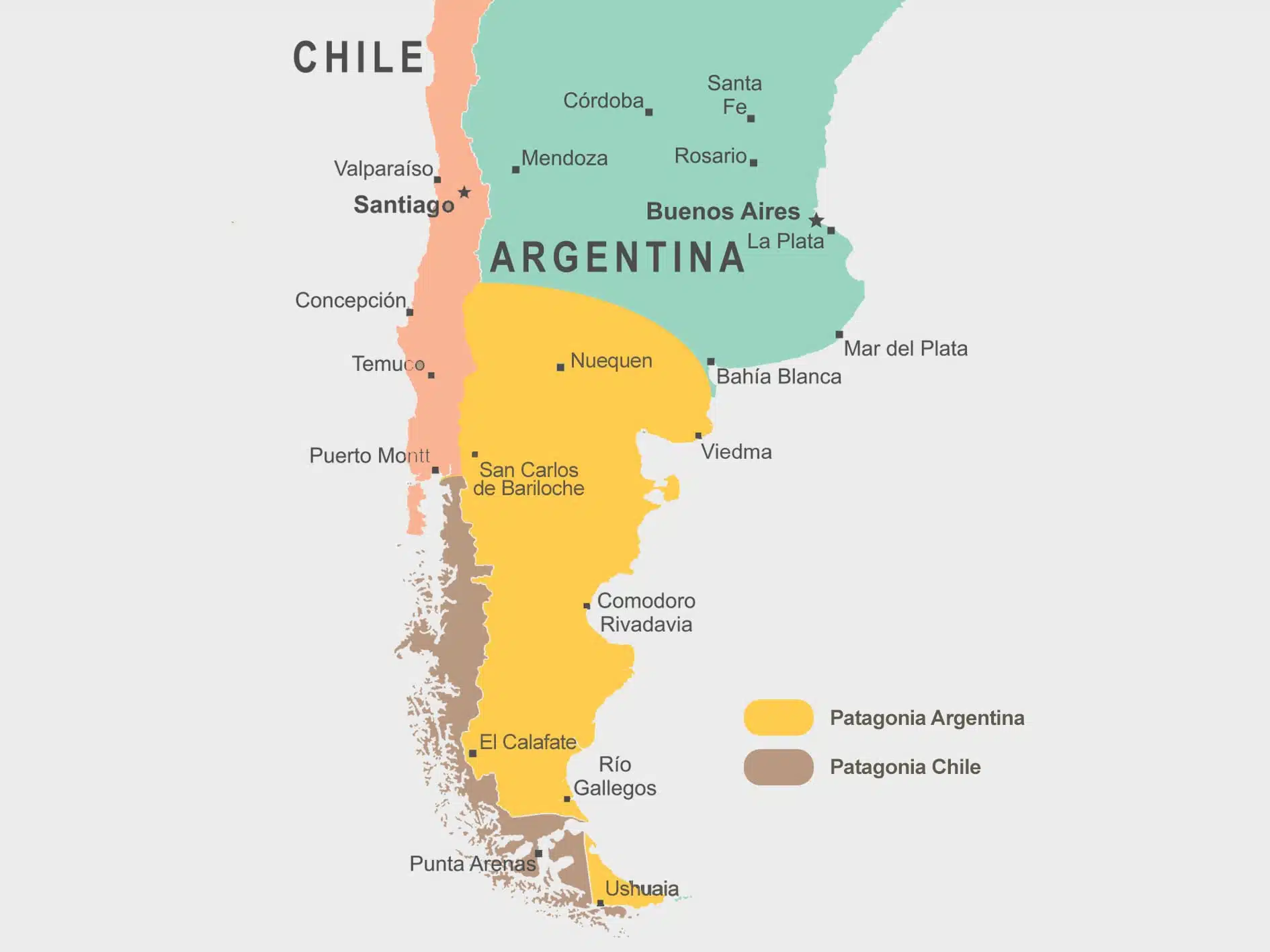
What is Patagonia?
Patagonia is a collision of habitats and landscapes, including towering mountains (Andes), crystal blue lakes, massive glacier fields, temperate rain forests, deep fjords, and huge deserts. Mother nature worked overtime here offering a bewildering array of habitats and biodomes. The area is also home to a stunning diversity of wildlife including puma, guanacos, Andean condors, penguins, pygmy owls, fur seals, flamingos, whales and…so much more.
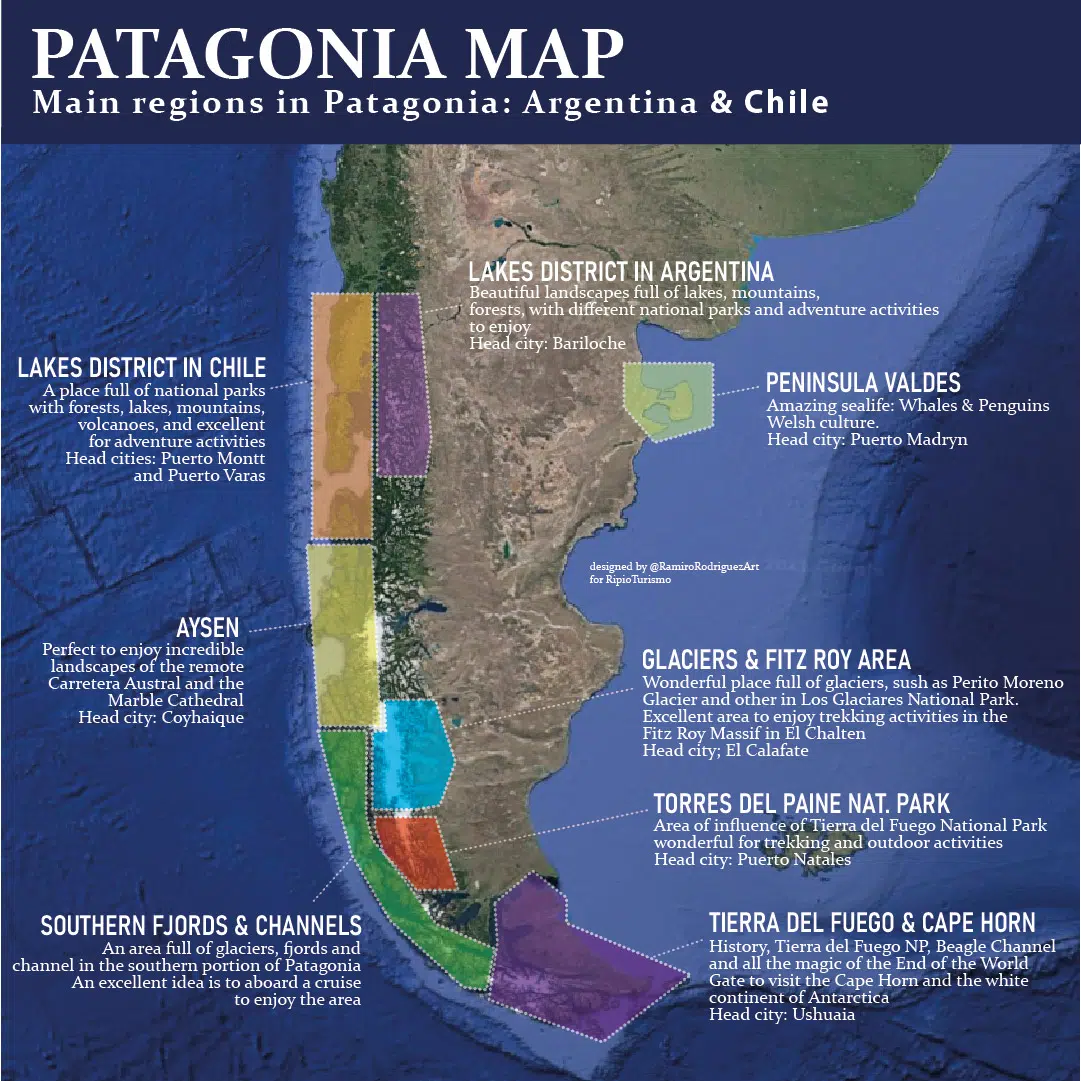
Watch this great video to get a sense of the variety of landscapes that can be found in Patagonia:
Chilean Patagonia is famous for its dramatic scenery – towering mountains, sprawling glaciers, and pristine fjords. We visited a ranch in Chile that borders the iconic Torres del Paine National Park in search of pumas. Each day on our hikes we were greeted with one stunning scene after another. I shot the image above with an iPhone as I walked up to the river’s edge.
Landscape photographers must lose their minds in Patagonia. How do you choose which scene to shoot when stunning vistas are found in every direction? Here is just another “average” sunrise:
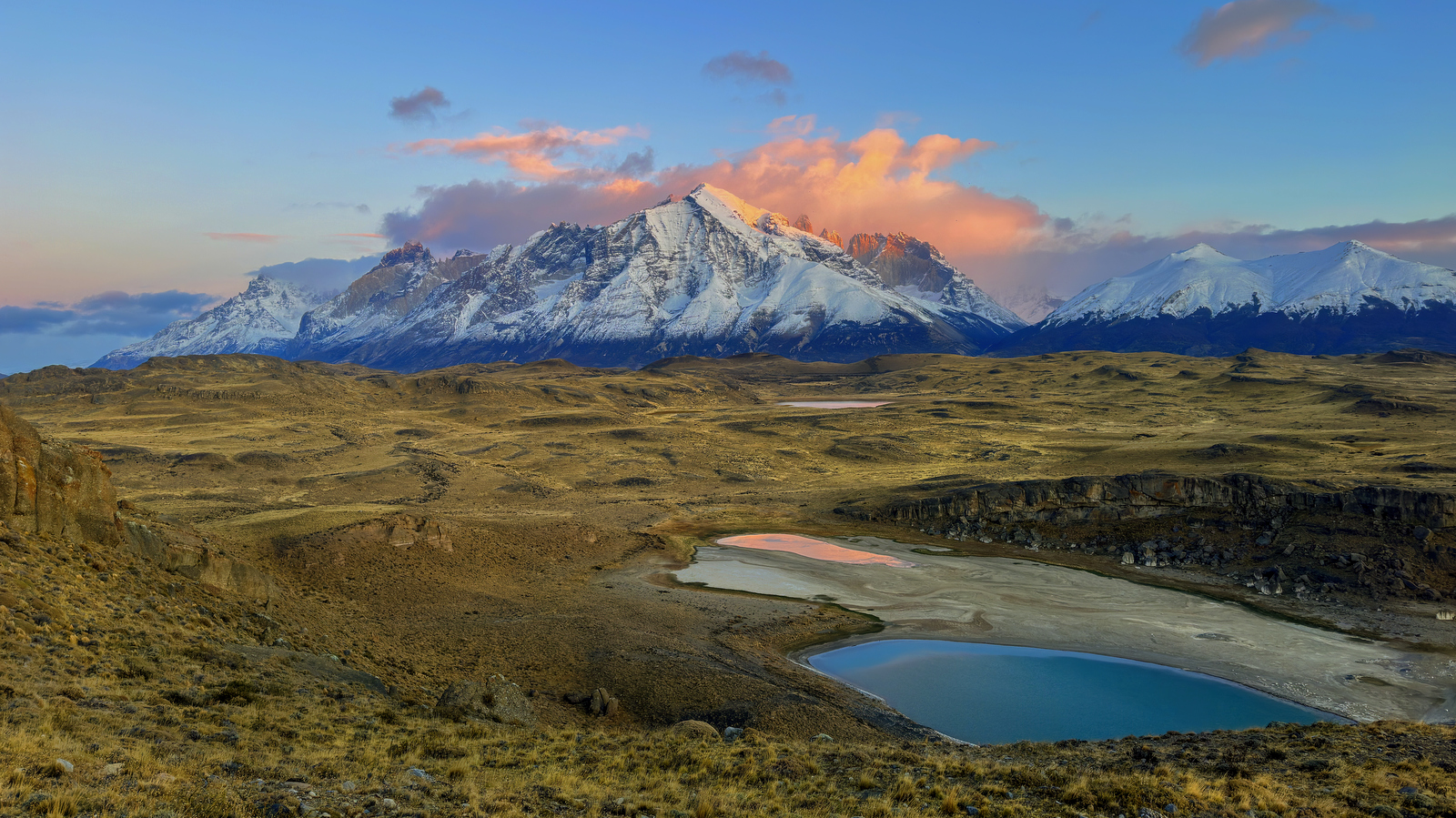
And another:
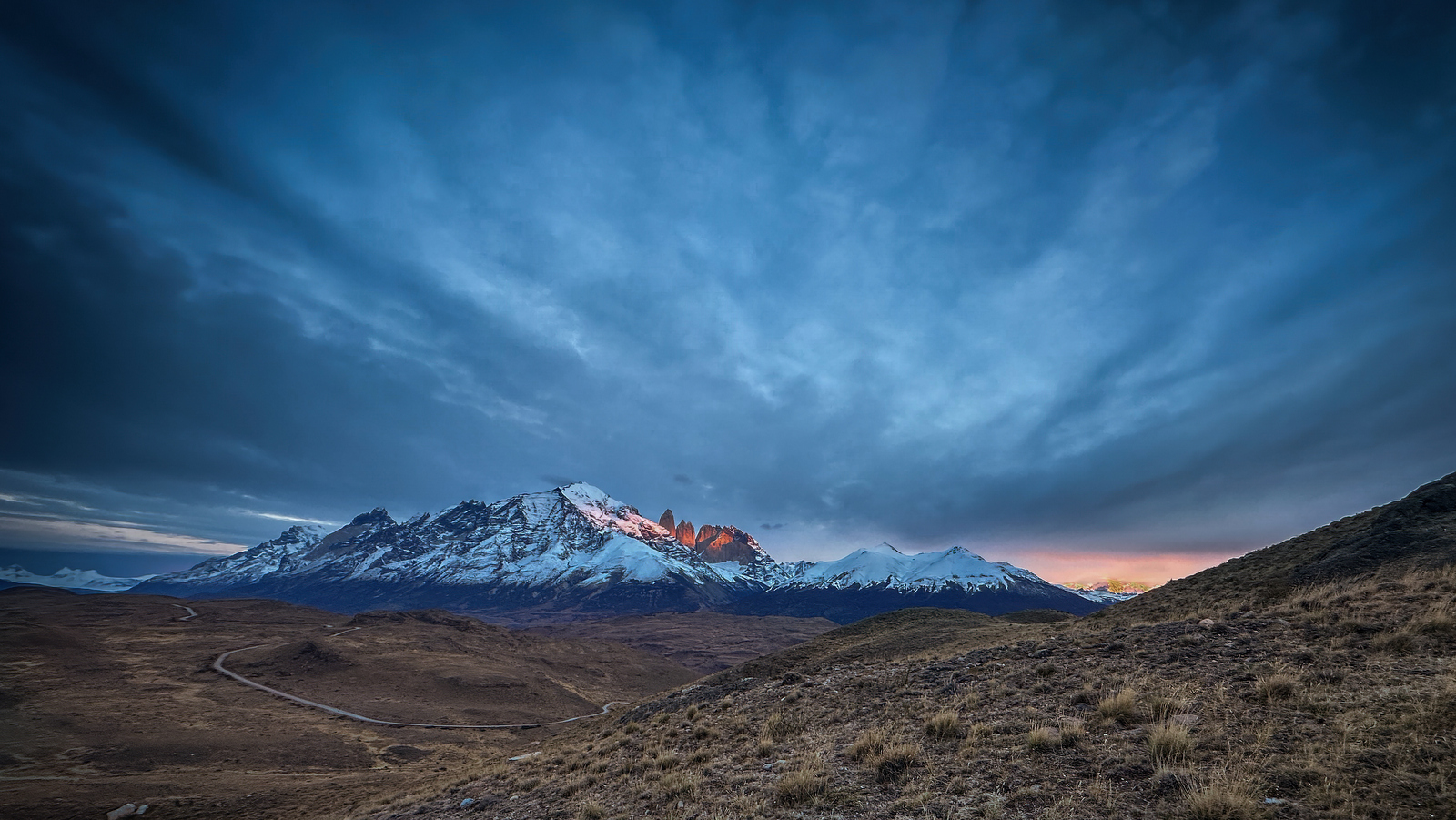
So yes, I fell in love with the place. So much so that we scrapped our original travel plans for 2026 (sorry Madagascar) and instead will return to Patagonia for more soul-filling vistas, once-in-a-lifetime animal encounters and glorious solitude that can only be found at this remote, rugged edge of the planet.
And we had some amazing luck with the wildlife…but more on that in future posts. 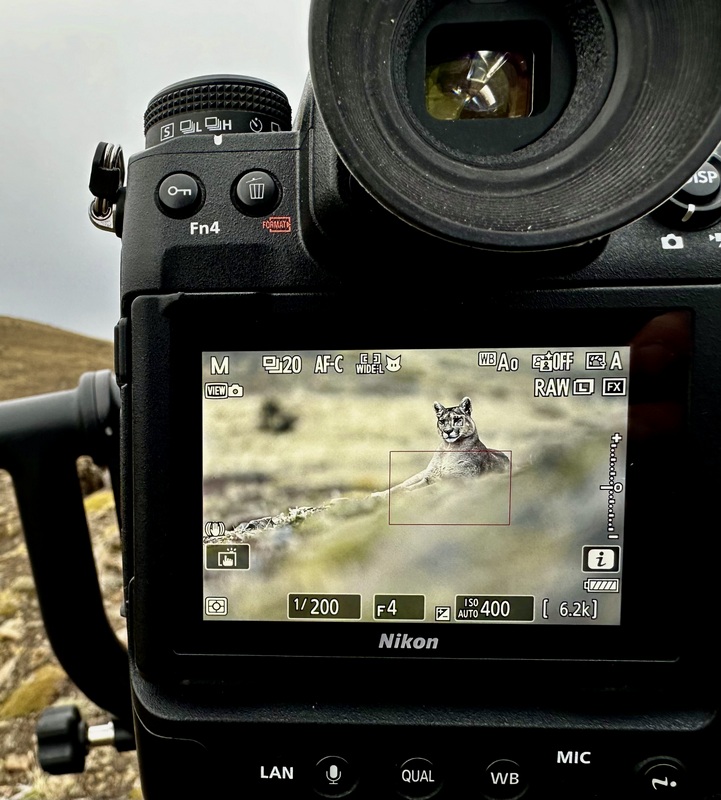
Until next month….michael
Sources:
Chilean Patagonia vs. Argentine Patagonia: Which is Right for You?
10 incredible facts about Patagonia
Apple Iphone 14 Pro, 14mm, f/2.2, 1/1250 sec, ISO 40

