Capturing Speed

Shot of the Month – December 2014

Pronghorn, Yellowstone NP - USA (7581)

The Pronghorn is a one-of-a-kind, American original.  Though we sometimes call it the “Pronghorn Antelope” or “American Antelope,” and despite his looks, the Pronghorn is not an antelope.  Pronghorns are the only surviving member of its family (Antilocapridae) and has no close relatives on this continent or any other.  In case you were wondering, there are no antelopes in the New World.

The defining characteristic of the Pronghorn is its speed — it is the fastest land mammal in North America.  We all know that the fastest animal in the world is the cheetah (see my write-up here).   While difficult to measure the cheetah may be able to reach speeds up to 75 mph. The top speed for the Pronghorn is believed to top out around 53 mph.  However, one could make an argument that the Pronghorn is the fastest animal alive.  How so?  Well, the cheetah can only maintain his top speed for a few hundred yards while the Pronghorn can reach 53 mph for a few hundred yards but then cruise at 30 mph for miles and miles.  And miles.  No other land mammal can keep up with the Pronghorn over a long distance.

The speedy nature of the Pronghorn is a bit of a mystery as none of its current predators, cougars, wolves, coyotes, or bobcats can run that fast.  Some scientists posit that Pronghorns developed their speed in response to now-extinct predators like the American cheetah.

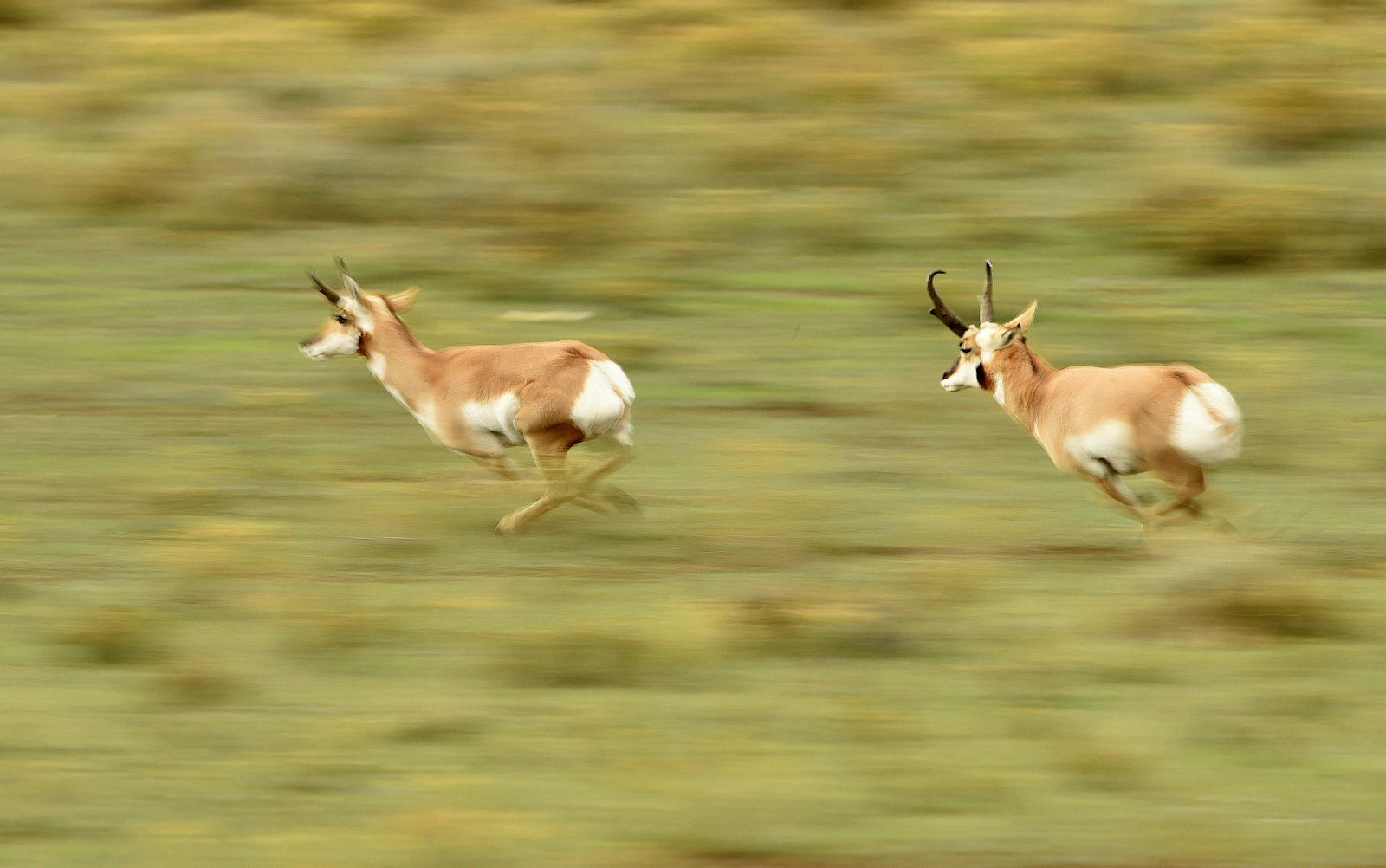
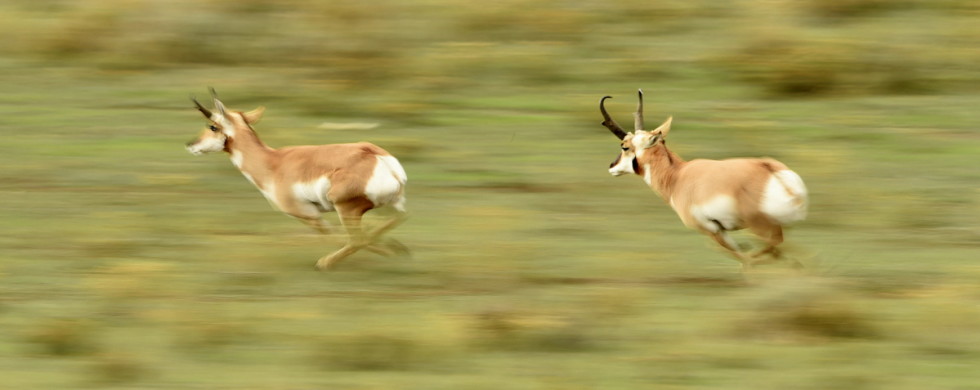
In the fall of 2014, I visited Yellowstone NP and spent some time among a herd of Pronghorn during the rut.  I was able to see up close the explosive speed of the Pronghorn male as he would chase off rivals or corral errant females.  I wanted to try and make an image that would convey the speed of the Pronghorn.  Ironically, to demonstrate speed, the trick is to slow the camera down.  I normally obsess about ensuring that I use proper technique and camera settings to allow for the sharpest images possible.  For this image, I had to fight all my instincts and lower my shutter speeds to allow blur into the photo.  I normally shoot with a shutter speed near 1/1000 of a second to stop the action and ensure razor sharpness; for this image, the shutter speed was 1/30 of a second.  The key is to pan the camera at the same speed as the subject to try and keep it at least partially in focus while the background blurs with the motion.  I experimented with shutter speeds of 1/15s, 1/30s, 1/45s, 1/60s, 1/90s, and 1/125s.  The slower the shutter speed the more dramatic the effect.  And all the harder to get something pleasing.

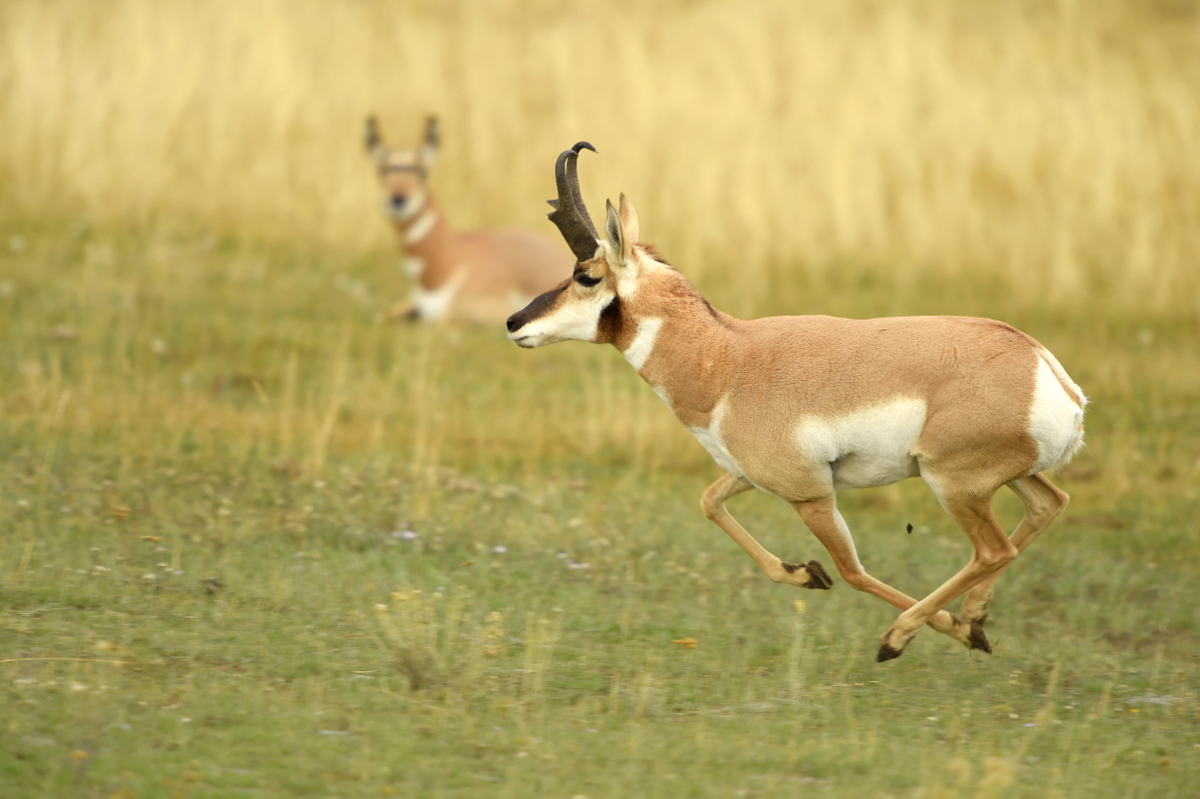
A few examples of how shutter speed can change the look of the image:
Pronghorn (7280)

1/500 second shutter speed

Here the shutter speed was 1/500s.  Fast enough to completely stop the running Pronghorn.  It is a decent photo but the image is oddly static given that it is a picture of a running animal.
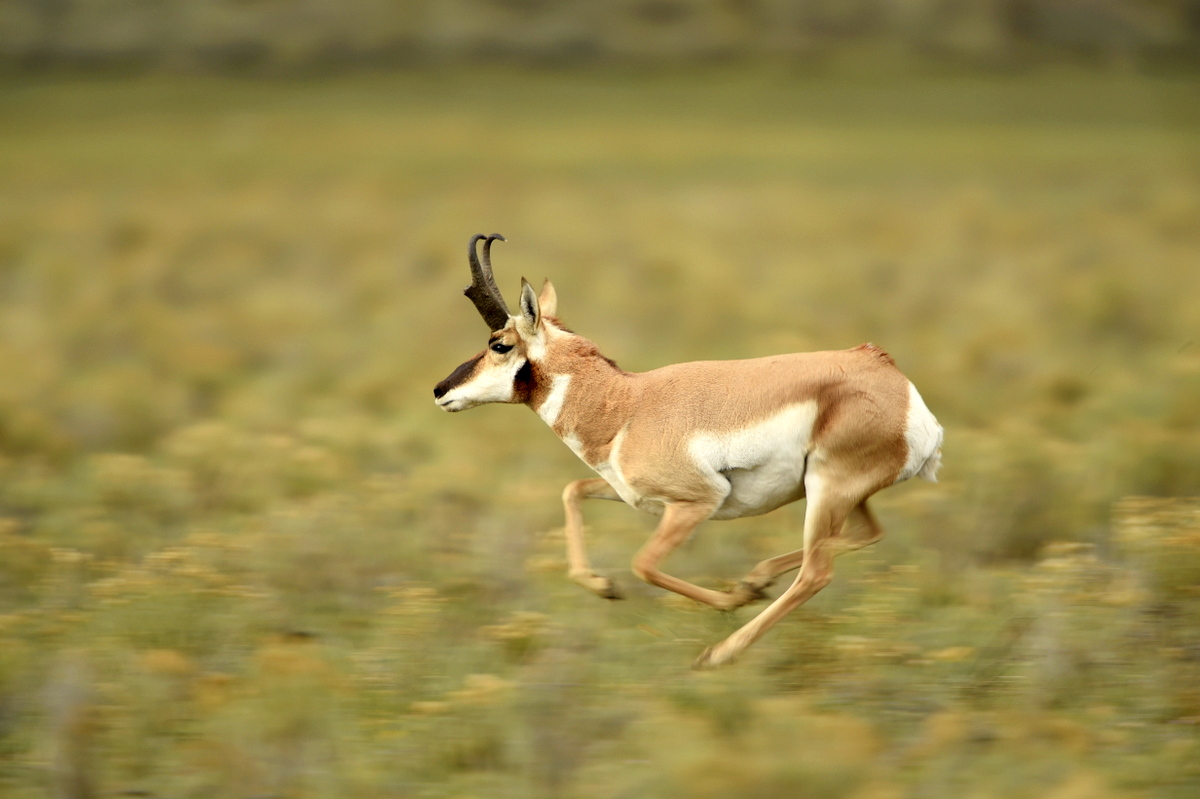
Pronghorn (7744)

1/125 second shutter speed


Here the shutter speed was 1/125s.  A bit of background blur is introduced while the Pronghorn is still quite sharp.  Starting to get a sense of motion.
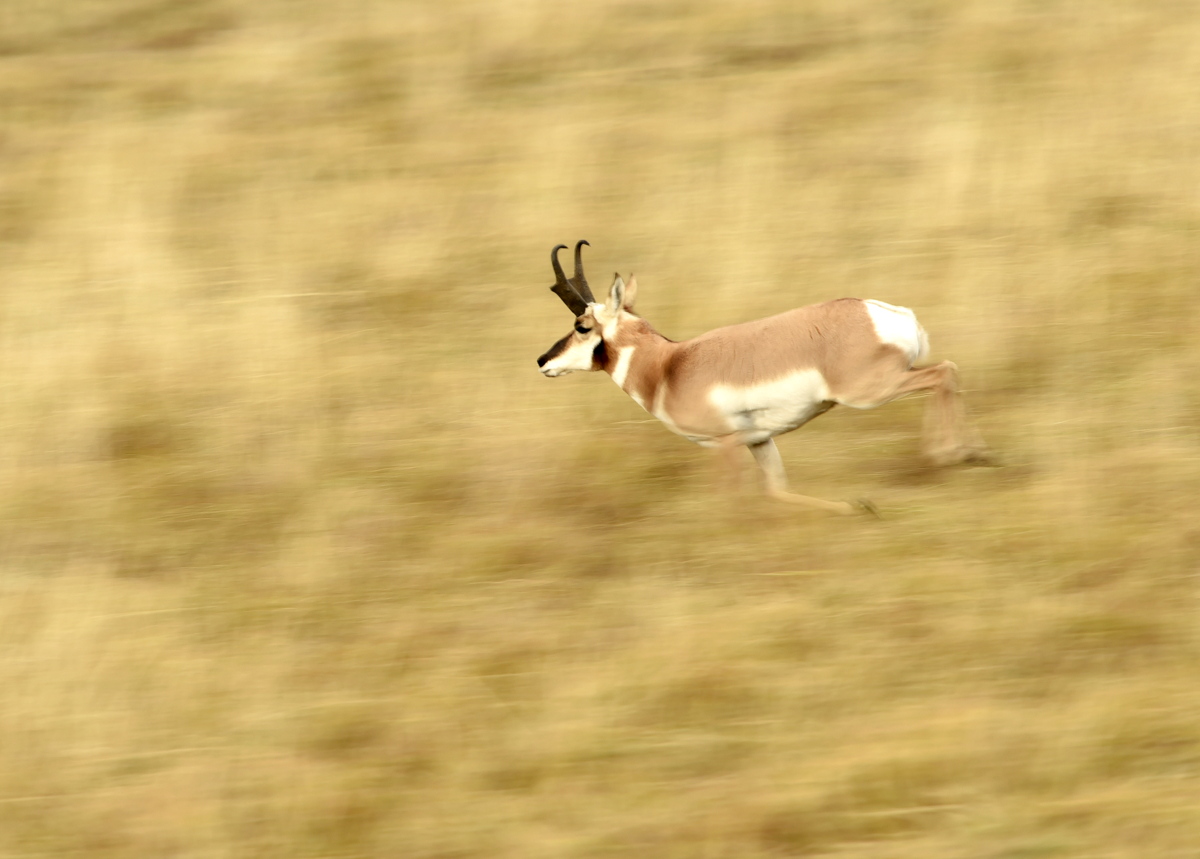
Pronghorn (7499)

1/45s shutter speed


A shutter speed of 1/45s was used for this shot.  More blur with the background and now the legs are starting to blur.
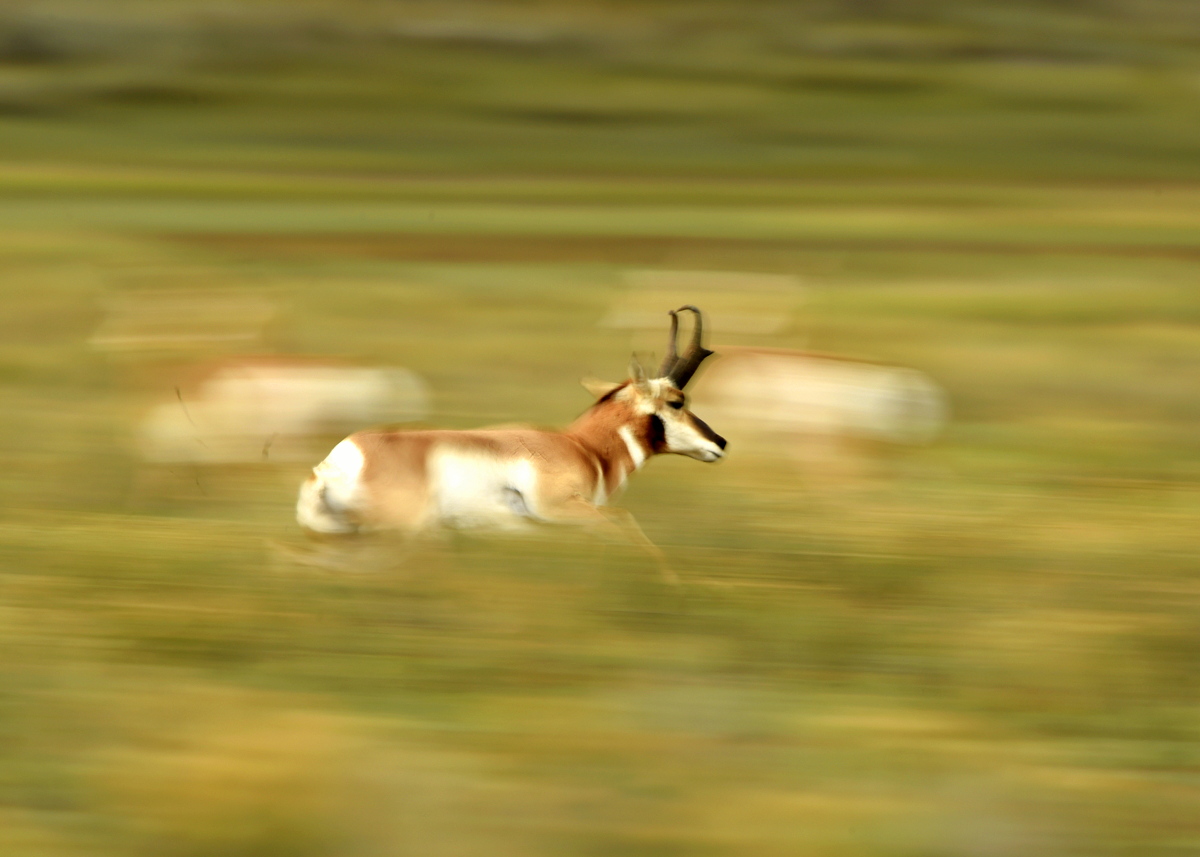


Pronghorn (7800)

1/15s shutter speed


Here a shutter speed of 1/15s.  The image is becoming more abstract.


I had a blast experimenting with the new approach and exploring new ways to communicate the story I was trying to tell.  So, which image do you like best?

Until next month….m


Nikon D4S, Nikon 600 mm w/ 1.4x TC (850mm), 1/30s, f/11, ISO 200, +0.5 EV
Happy Holidays 2014!

Happy Holidays 2014

Center of Attention

Shot of the Month – November 2014

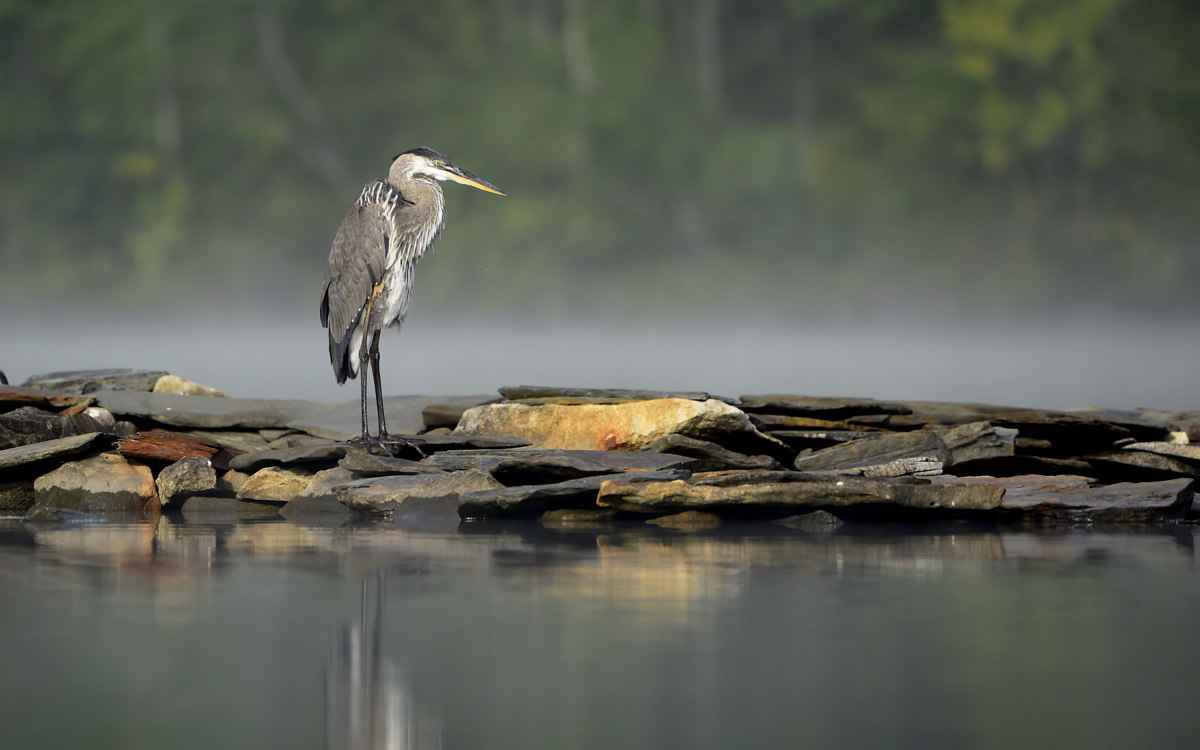
Blue Heron, Vermont -USA (4048)

Course Title:   Photography 101

Lecture #1:     Composition

Rule #1:          Never put your subject in the center of the image. (Yes, this will be on the final)

Ooops.

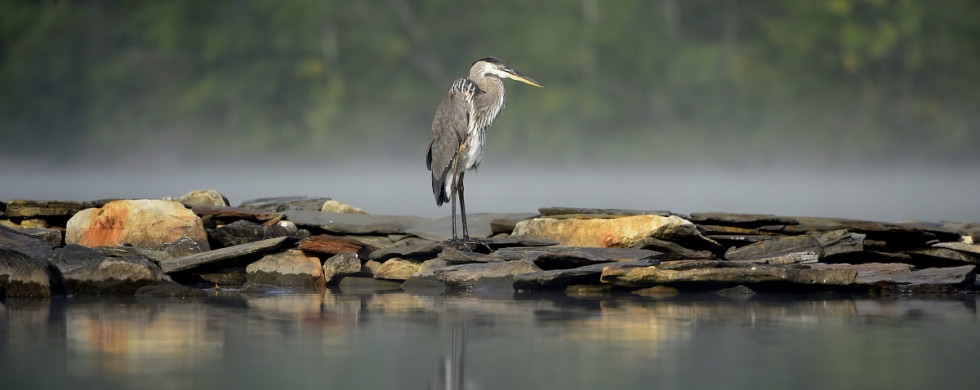
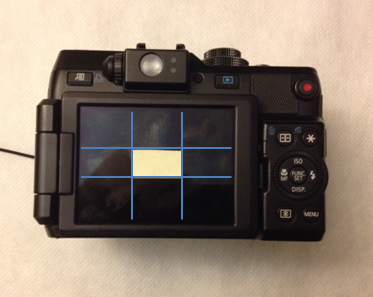
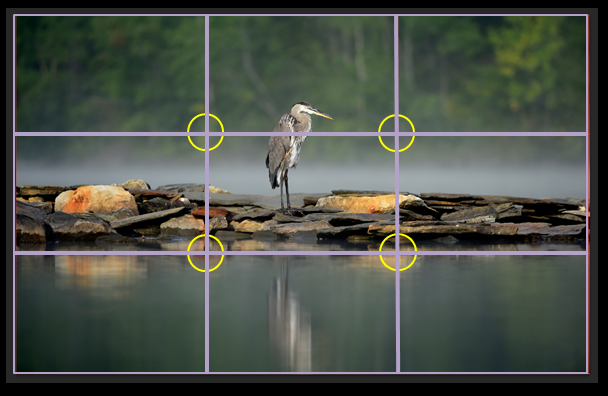
In the above photo I have broken a cardinal rule of photography composition — don’t put the subject of your photo in the center of the frame.  Generally, photos with a dead-center subject tend to look too static, boring, dull — in a word, dead.  I once read an article where the author recommended sticking a piece of masking tape in the center of the LCD screen on the back of your camera to make it hard to make that common error.  It would look something like this:

Avoid the Middle-Rule of Thirds

It is generally recommended that you follow “The Rule of Thirds” (cue harp music).  How does that work?  Well, imagine two horizontal lines that divide your image into three equal parts.  Next, add two vertical lines that break the image up into three equal parts.  In the case of my photo, it would look like this:

Rule of Thirds GridTo follow the rule of thirds you would align your subject along one of those four lines or at the intersection of those lines (shown by the yellow circles).  If you are not sure how to compose the scene before you, start with the rule of thirds.  Most cameras have a grid built into their display (check your manual folks) that you can turn on to help with composition.

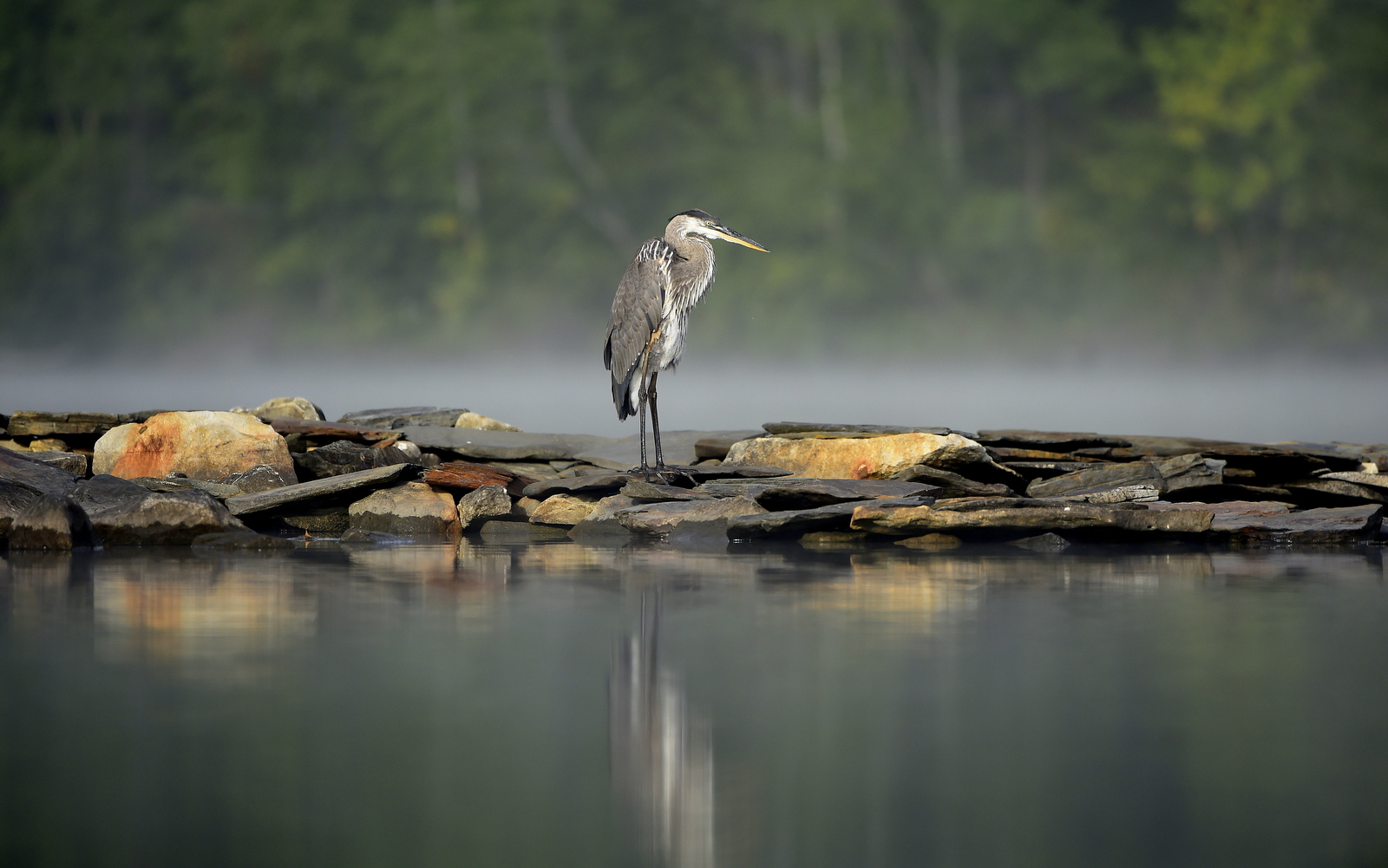
I photographed the Blue Heron above from a kayak in Vermont over the summer.  I took a variety of images, some closer, some further, some with the heron centered, others with him off to the left, then to the right.  I oriented some in landscape and others in portrait.  I really liked the color and texture of that narrow band of rocks and this centered composition allows the rocks to be the dominant element.  For this scene, I think the symmetry works.

I have a similar image where I more closely followed the rule of thirds.  But with that compositional change, I find that the heron becomes the dominant subject.  A pleasing image, I think, but it tells a different story.

Blue Heron, Vermont-USA (4048-v2)

If we always followed the rules, life would be kinda boring, wouldn’t it?  And all of our photos would look the same.  Of course, there are no rules.  A professional photographer told me once, “The only rule is that if it looks good, shoot it.”

Now that’s a rule I can live by.


Here is a fun video explaining the rule of thirds.

Until next month….michael


Nikon D4S, Nikon 200-400mm f/4 (@400mm), f/5.6, 1/1000, ISO 400


Bugle Boys

Shot of the Month – October 2014


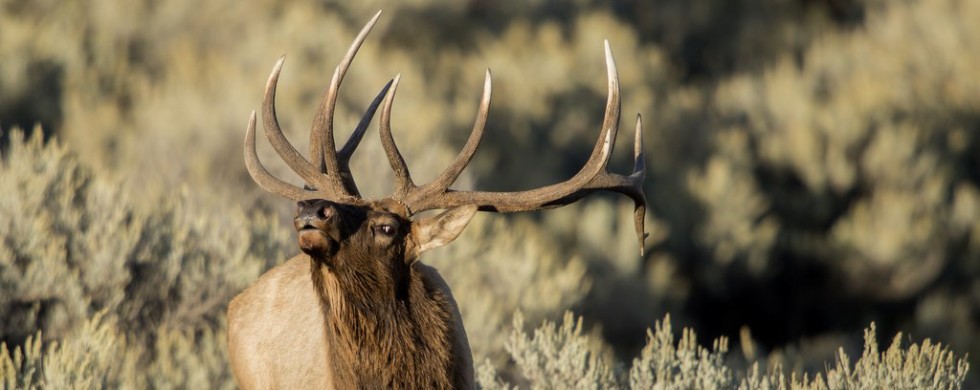
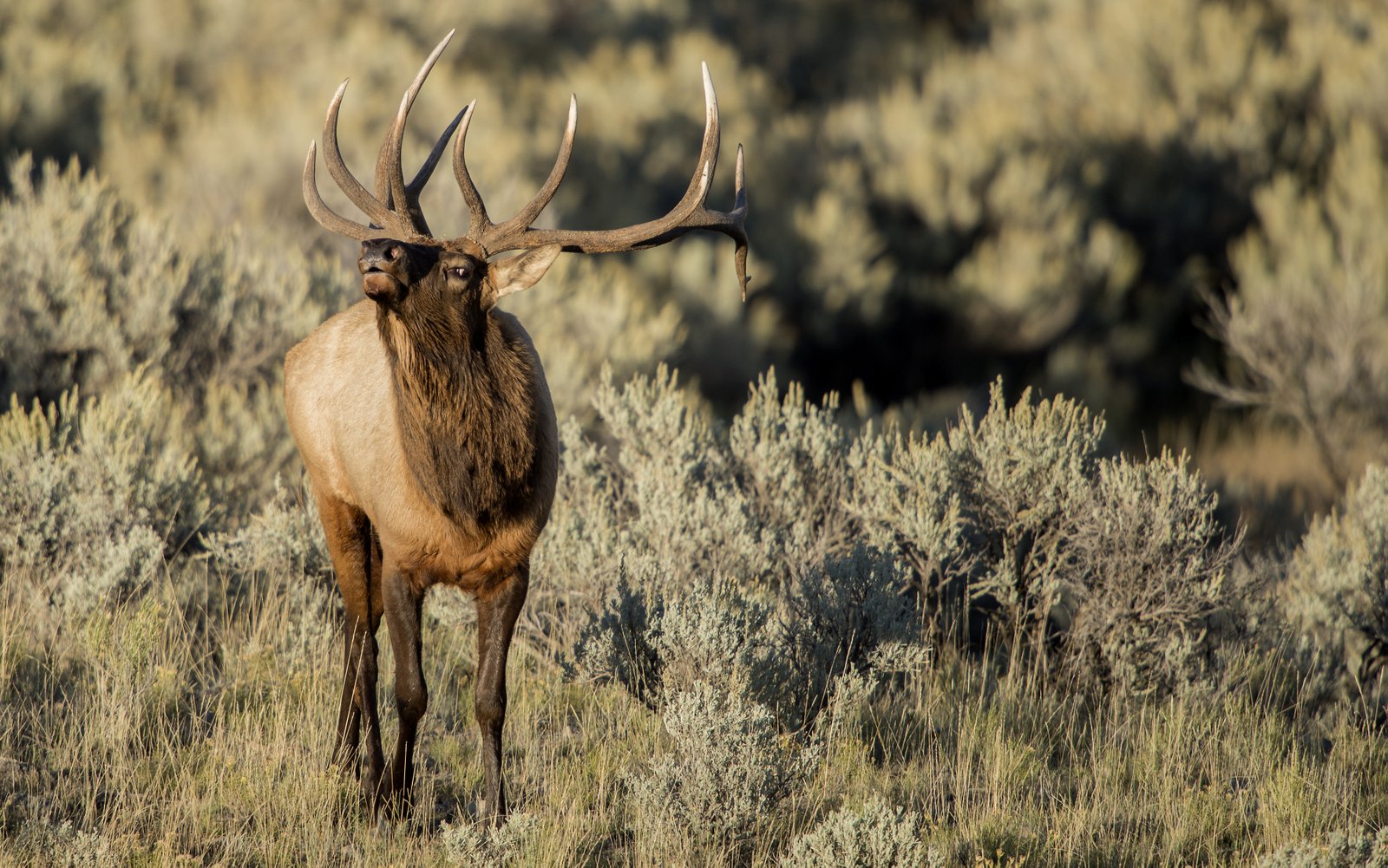
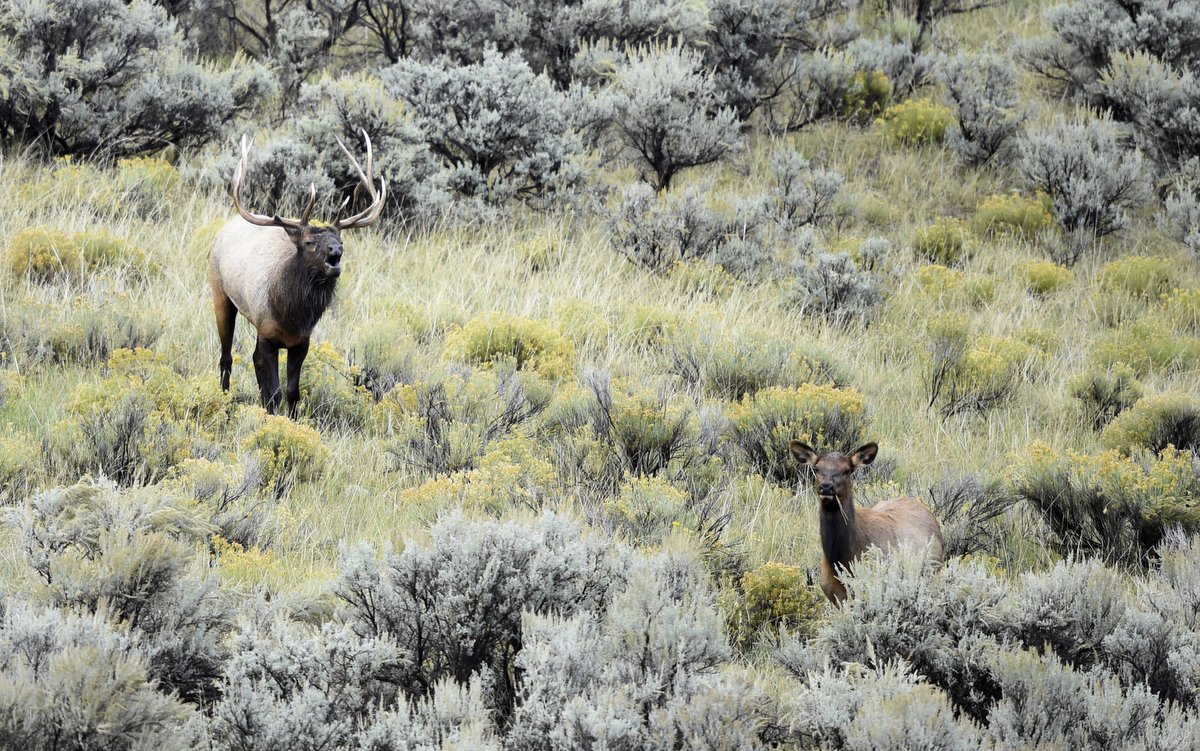
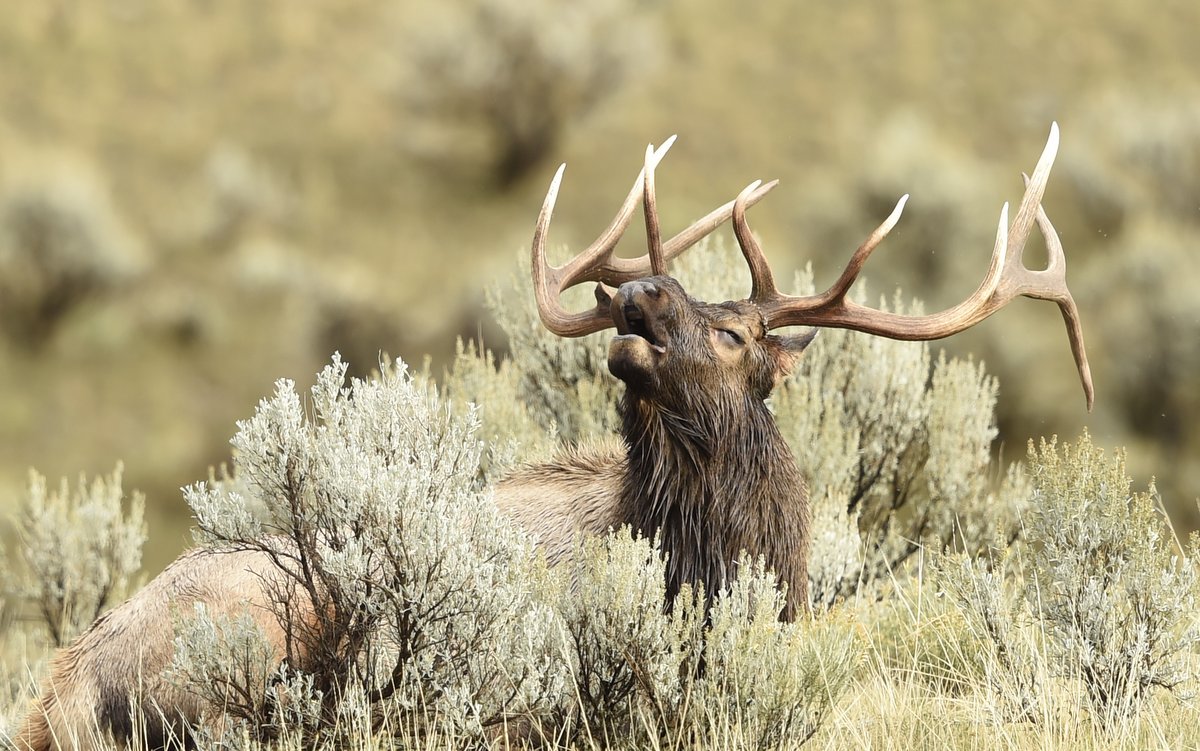
Elk, Yellowstone National Park-USA (2530)

I highly recommend that you check out the bugle concert series held in Yellowstone National Park each fall.  To be honest, the music is really just so-so — the event is more operatic than philharmonic.  But you will be spellbound just the same.

As the dawn sun fights its way up, through the chilled air the mountains surrounding us slowly ignite with color.  Laden with tripods, cameras, and lenses we clamber over hill and dale in search of the best balcony seats to catch the show.  We wonder when, even if, the event might start as we drive our hands deep into our coats to fight off the cold.

And then, at the edge of the sky, the silhouette of a 700-pound bull elk blocks out the light.

Dramatic entrance indeed.  The melee begins.

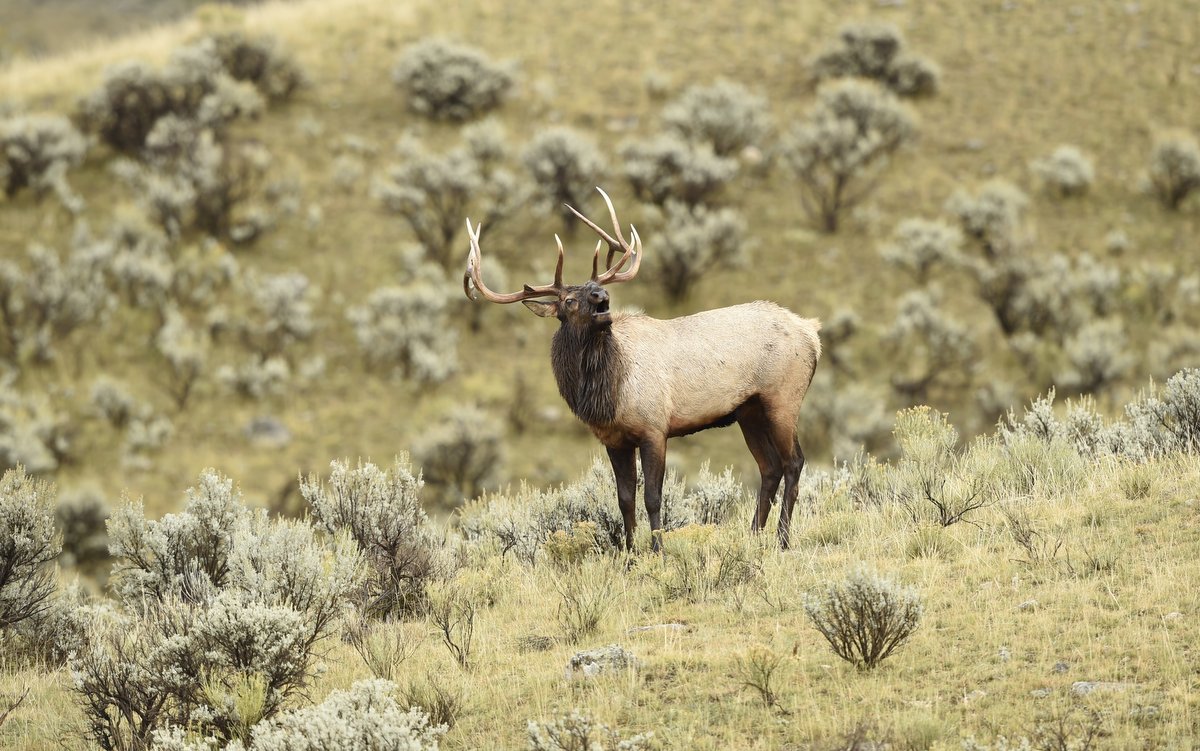
Standing five feet at the shoulder, with another four feet and forty pounds of antlers the rogue towers over 9 feet tall.  Wide-eyed, he thrusts his chest forward as he peers down on the hills and valley below.  His body is an endless twitch as testosterone courses through him.  The chemical transforms him into a maniacally focused beast.  He is driven to conquer his rivals and win the right to pass on his genes.

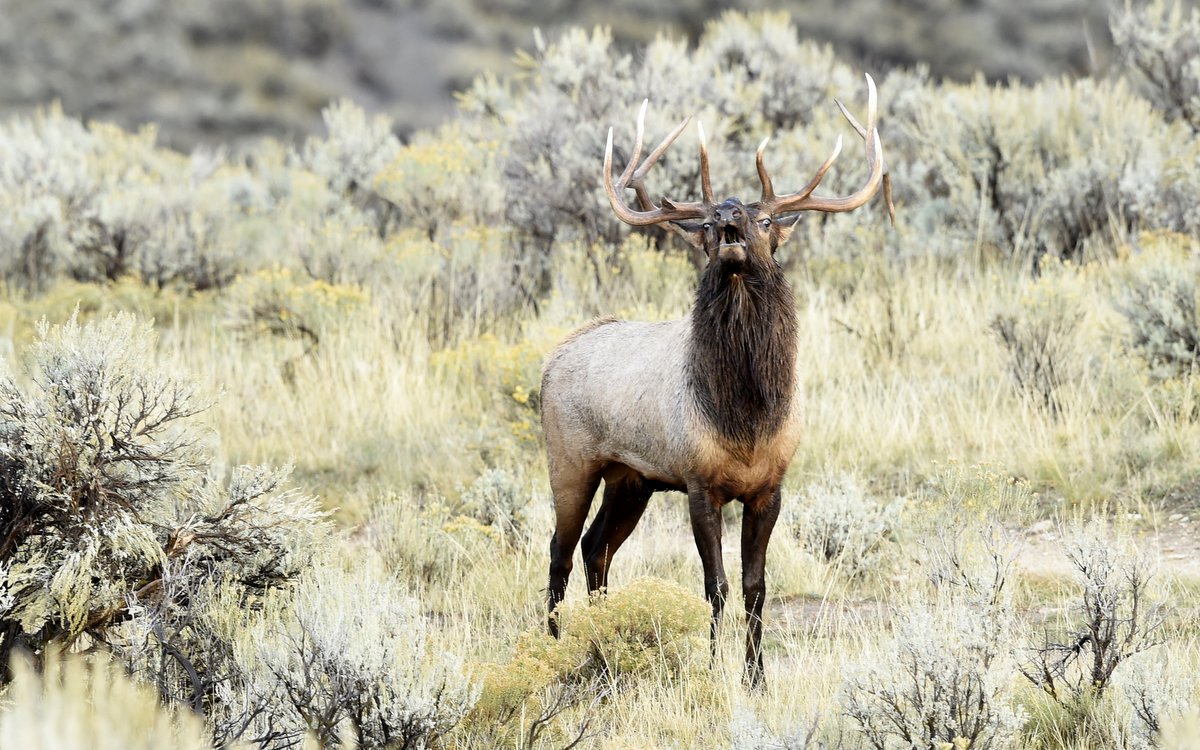
The elk rut has begun.  Each day over the next 4-6 weeks he will repeatedly bugle, unleashing a loud, screech of a wail to attract female herds and warn off other male suitors.  It can be heard for miles.

Elk, Yellowstone National Park-USA (9670)

One of his harem (As he Bugles!)

During this period the bull will eat little, bugle often, and continually……endlessly…..relentlessly chase and test cows for their readiness to mate.  Cow elks only come into estrus for 1-2 days so the male must be ever diligent.  In a word — obsessive.

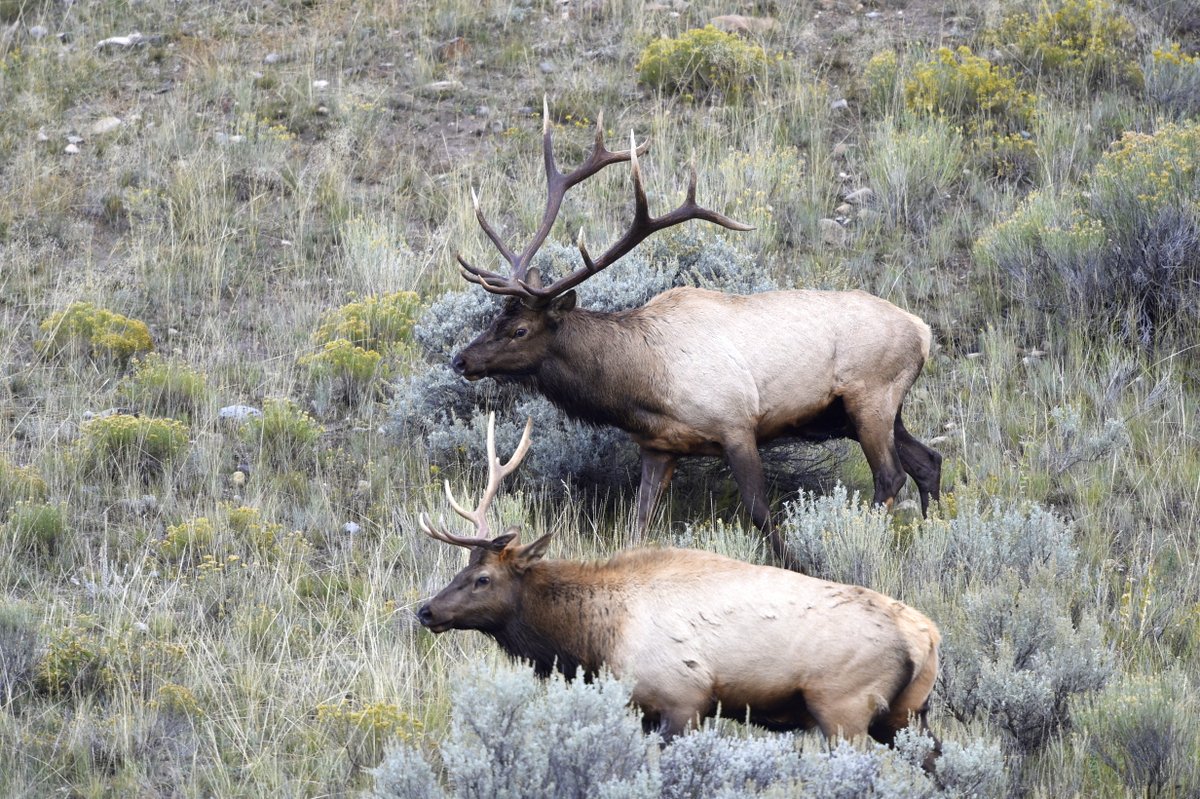
The dominant bulls will protect a harem of up to 20 cows from competing males and predators.  When necessary, the bulls will fight.   Rivals bugle at each other.  If both are of similar size they approach.


Elk, Yellowstone National Park-USA (6104)

No fight required for this mismatch

Males may walk in parallel sizing each other up while trying to intimidate.  If neither backs down then they lock antlers and wrastle it out.  These fights are rarely fatal but they take their toll.


The bulls are frenetic, rarely relaxing even for a moment.  Constantly watching over the herd.  Endlessly chasing and scolding cows that dare wander too far.  Warding off lesser males.  I was exhausted just watching.  During the rut, a bull can lose 20% of his body weight.  After such a tremendous effort some bulls will not recover in time and will perish during the winter.

Elk, Yellowstone National Park-USA (8871)

King of the Hill

Elk, Yellowstone National Park-USA (9334)

Menacing Stare

Elk, Yellowstone National Park-USA (8993)

Even while sitting, he must bugle


For two fortnights, the continual call to arms leaves some victorious, others vanquished.  And for this observer, it left a memory made up of surely more than just sound, but also fury,  firmly etched into my being.


The below video, shot in the Rocky Mountain National Park, gives a sense of the bugle boys in action.


Nikon D4S, Nikkor 600mm, 1.4x TC, (850 mm) f/5.6, 1/750 s, ISO 400, +0.5EV

Looner Flight – No Small Feat

Shot of the Month – September 2014

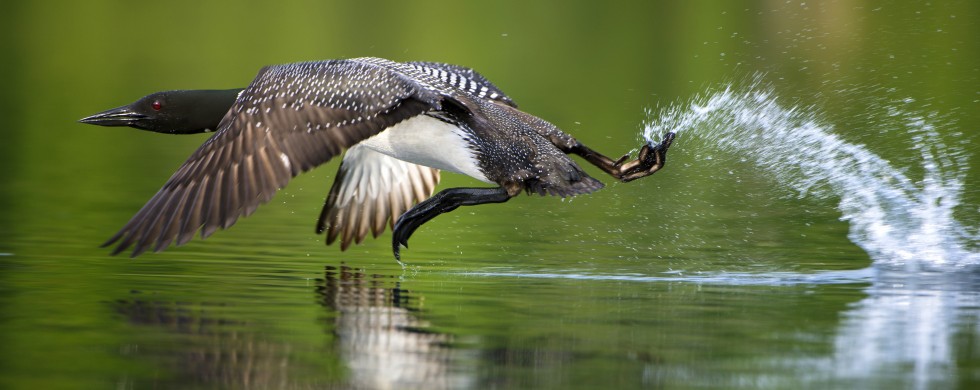
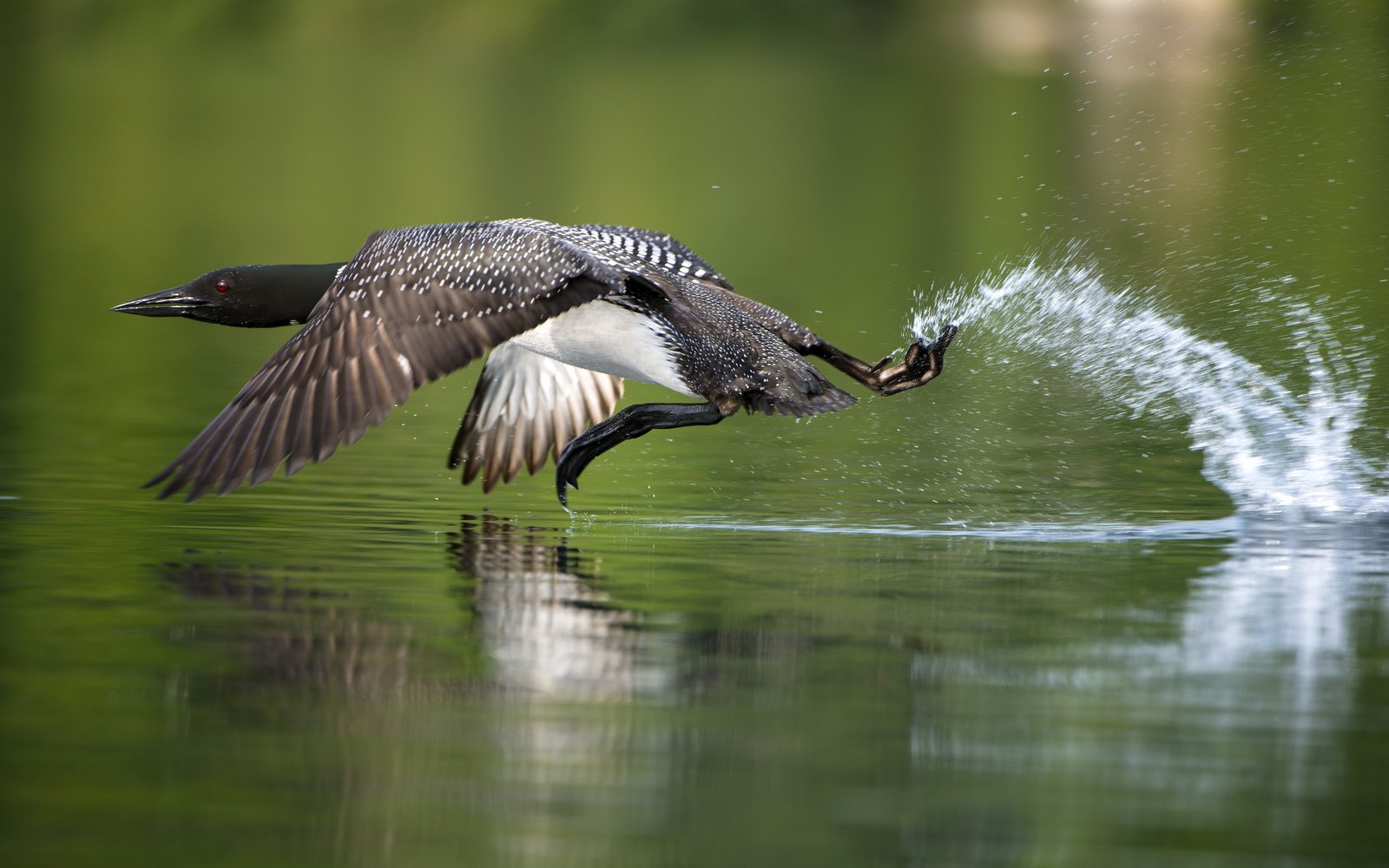
Common Loon, Vermont-USA (9398)

The Common Loon is the epitome of style and grace — most of the time.  Loons spend most of their time on water and their bodies are exquisitely designed to make them powerful and effective swimmers and divers.  Most birds have hollow bones while loon bones are solid.  This extra weight enables loons to dive to depths of 250 feet in search of fish – the mainstay of their diet.  They have large, powerful feet that propel the bird through the water like a torpedo. The bird’s feet are located unusually far back on the body which enable powerful underwater thrusts (imagine the avian version of Michael Phelps and his size 14 feet ).  In the air loons are regal athletes that can fly hundreds of miles and reach speeds of more than 70 mph.

Now for some of those less stylish moments in loon life.

Loons have a very difficult time walking on land given the placement of their feet on their bodies.  In fact, the name, “loon” most likely comes from either the Old English word lumme, meaning lummox or awkward person, or from the Scandinavian word lum, meaning lame or clumsy.  Both of these names refer specifically to how loons look when hoofing it on land.  To avoid such embarrassment loons rarely venture on terra firma except to nest and even then their nests are usually found only a few feet from the water’s edge to make for a short commute.

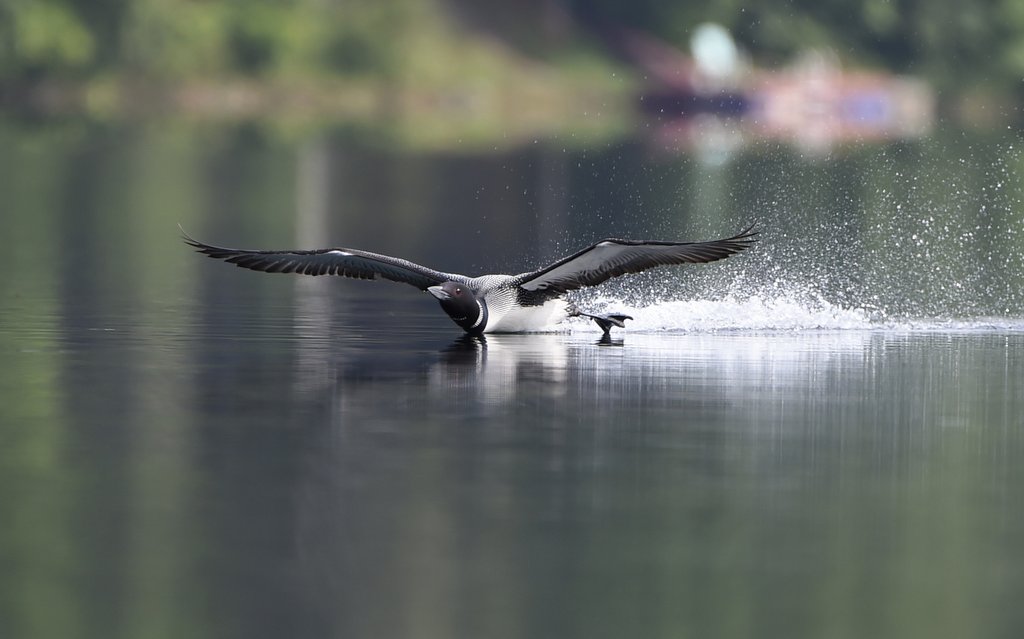
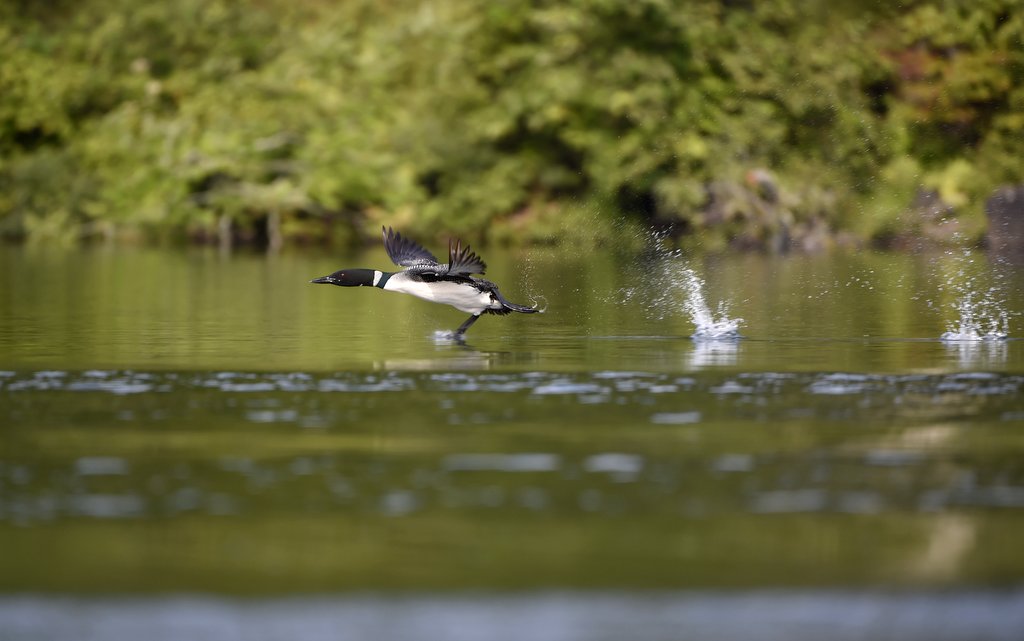
And while loons are powerful flyers they have a bit of a struggle in the transition up and down.  Loons are unable to take off from land and on the water they need a long distance as they run across the surface building up momentum.  Loons need anywhere from 30 yards to a quarter-mile of running and flapping before liftoff.  In my photo above you can see those large feet in full force as he runs for the sky.  The need for such space for takeoff means that you will never find a loon in a very small pond or lake as they do not provide enough of a runway for Loony Airlines.

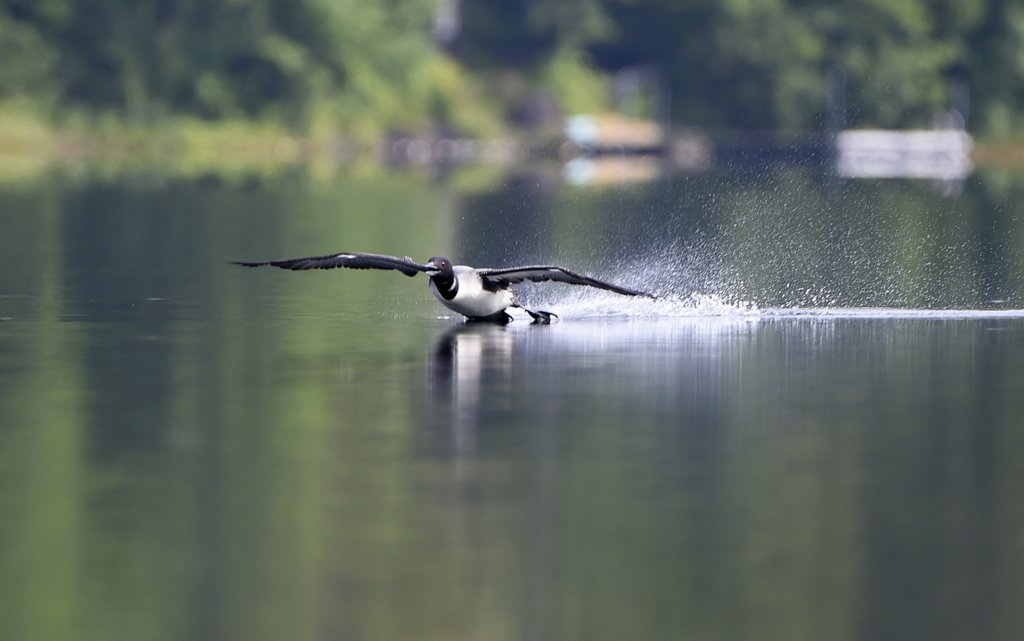
And then there is the landing.  Oh boy.  Again, as the feet are so far backward loons are unable to land feet first like your typical bird.  When they land on water they fly in head first and skim along on their bellies until they slow down.  It is a sight to behold.

Incoming…….                                                                                                                                                                     ……Outgoing

Loon Landing (9648)  Loon Landing (9656)  Loon Take Off (9455)

In their formal black and white dress and powerful moves, the common loon has a James Bond mystique.  I have to admit a certain schadenfreude in knowing that these superstars also have their Mr. Bean moments like the rest of us.

Until next month…


Exposure:

Nikon D4S, Nikon 200-400mm f/4 (@400mm), f/4.8, 1/1000 s, -0.5 EV, ISO 400