30
Shot of the Month – June 2026
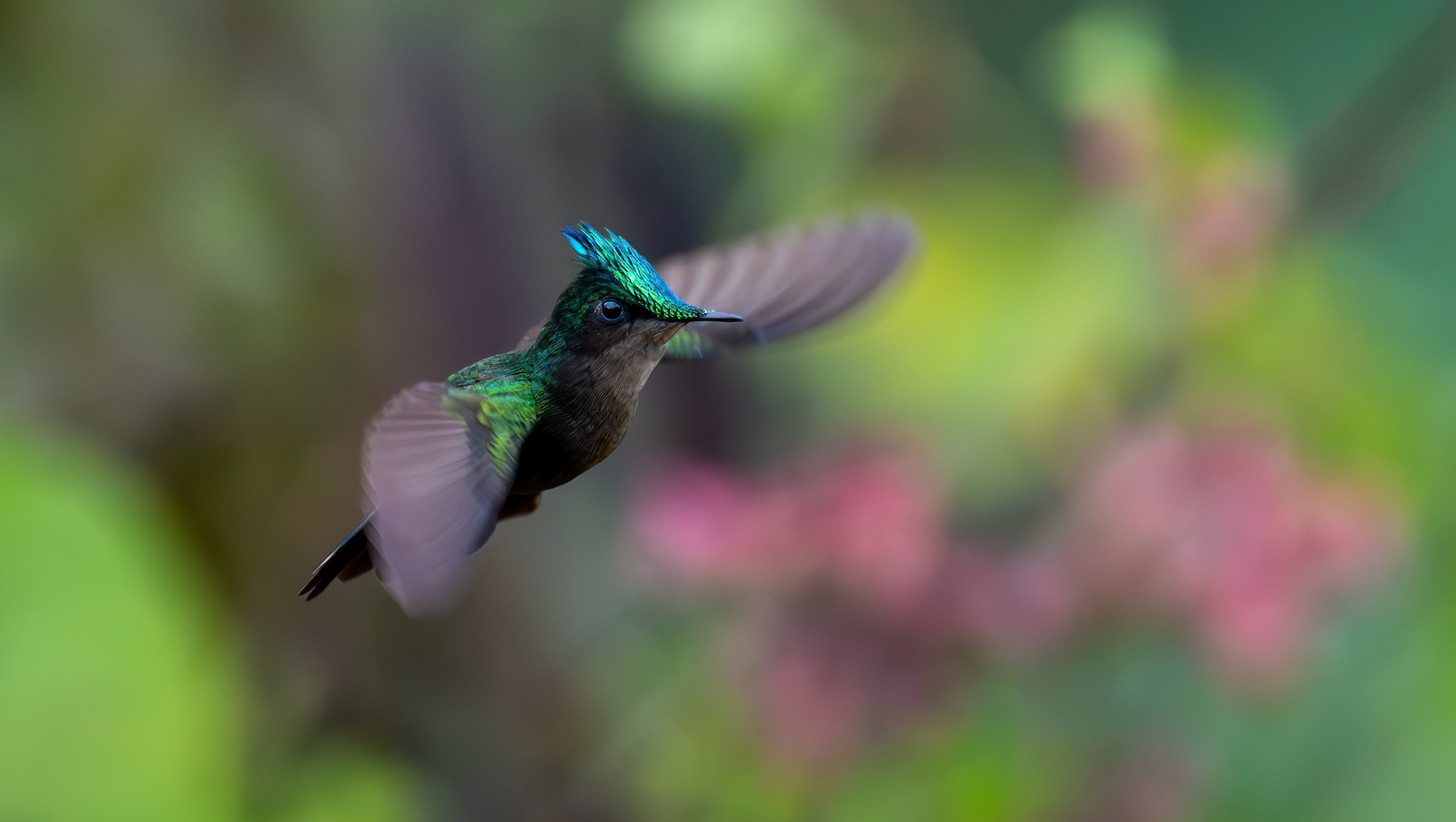
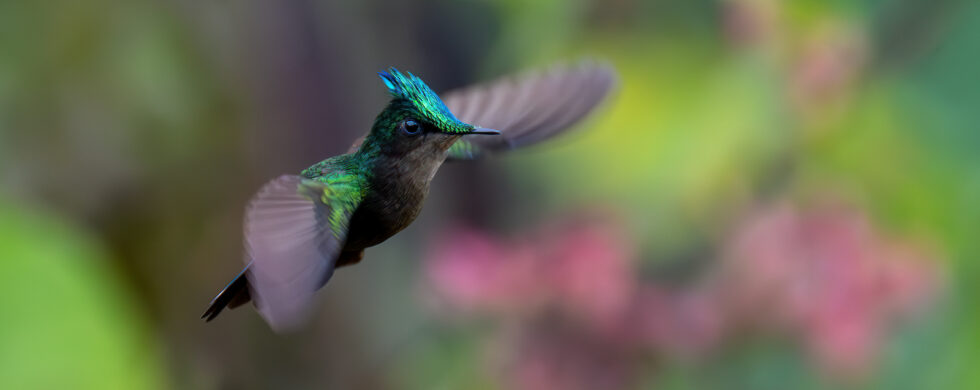
In this month’s dreamy garden scene, we have the magnificent Antillean Crested Hummingbird (ACH) as he hovers briefly while feeding on the nearby flowers.
Let’s break it down:
Crested
If you look closely, you will notice that our dapper dude is sporting a brilliant iridescent green crest. A crest is a prominent, distinct cluster of feathers on a bird’s head that can be raised or lowered. Only the ACH males, per usual, sport the spiky doo – these feathers are raised to draw attention during courtship displays, territory defense, or for signaling alarm. When the sunlight hits these prominent feathers, they can flash blue-green. There are 366 species of hummingbirds in the world (all live in the Western Hemisphere) but only about 25 species have a crest.
Antillean
The Antillean Crested Hummingbird is found from Eastern Puerto Rico throughout the Lesser Antilles. A few vagrants even make it as far as Florida in the US.
Lesser Antilles?? Yeah, I needed help with that also.
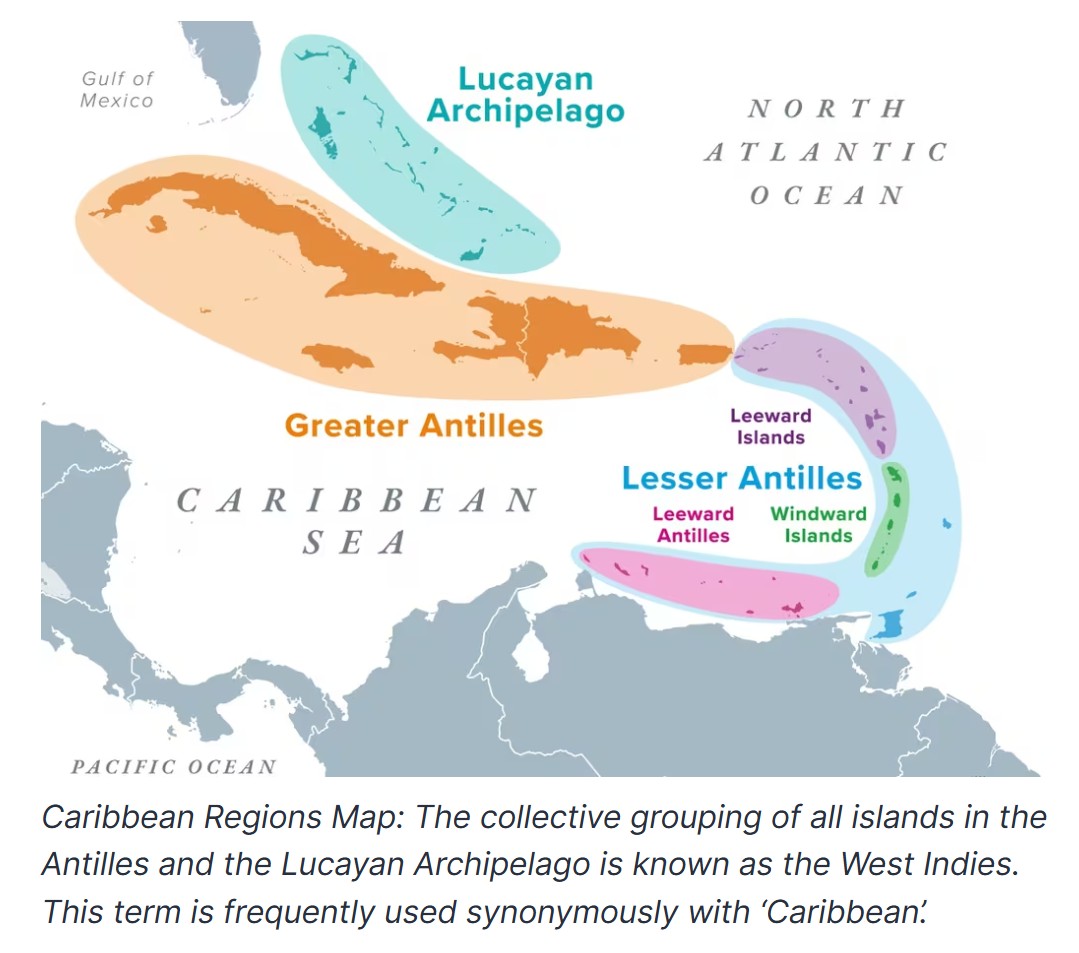
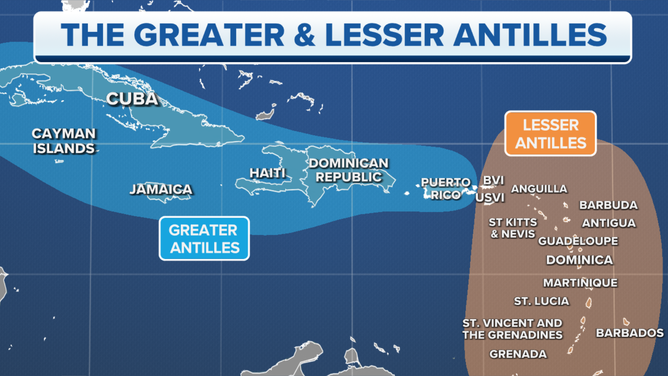
The Lesser Antilles is a long curving chain of smaller islands in the Caribbean Sea. It forms an arc stretching from the eastern end of the Greater Antilles (near the Virgin Islands) down toward the northern coast of South America. Oh great, now we have the Greater Antilles, and I haven’t fully figured out the lesser version. Let’s get a map or two to help us out:
Big picture:
A few more details:
And lastly, a few more details on the political affiliation of many of the islands.
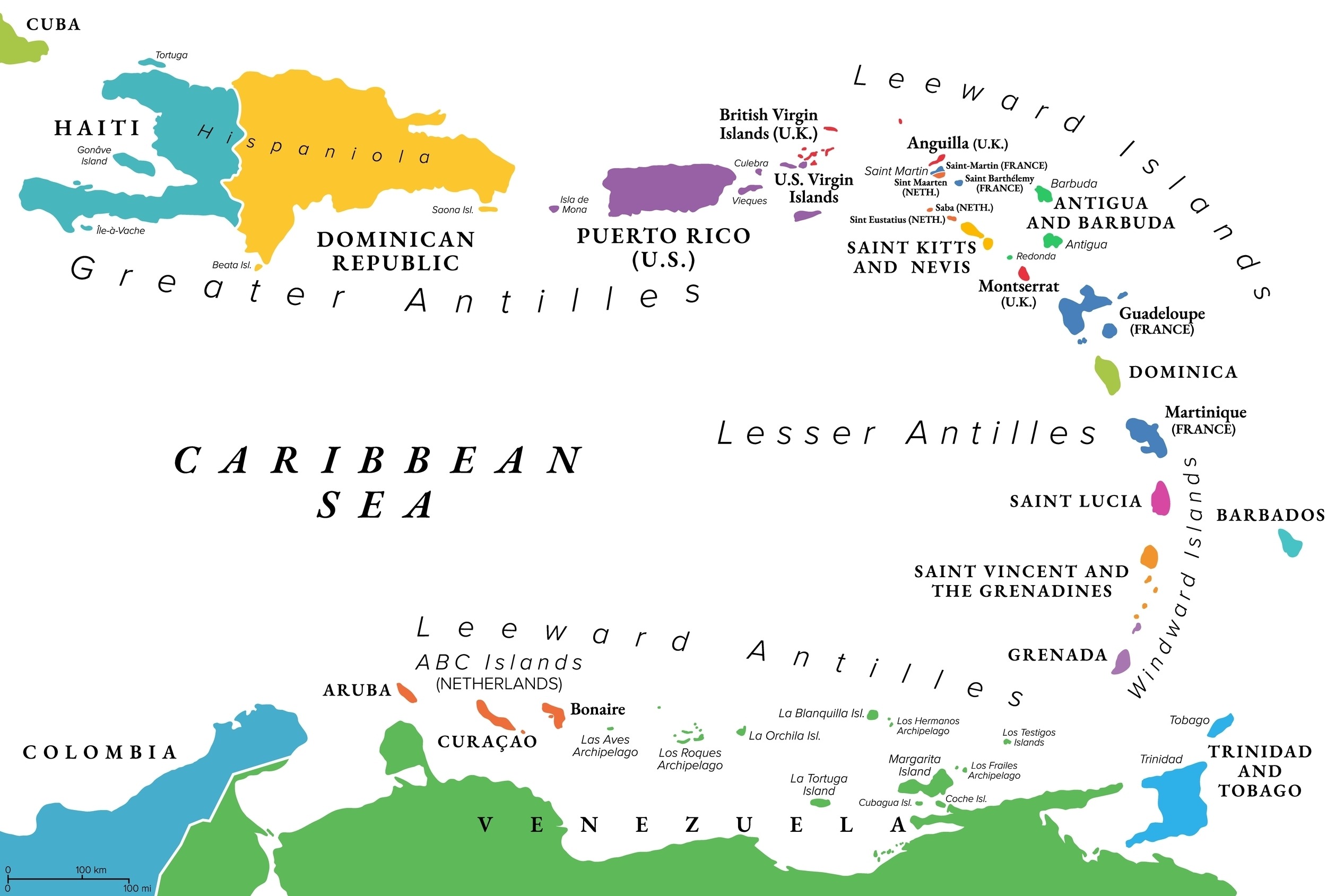
I photographed this lovely bird on the island of Saba – can you find it on the map above? It is a tiny place – only 5 square miles (about 13 sq km)!
Whew, enough geography already!
Hummingbird
The ACH is tiny, about 3 inches (8 cm) long, and weighs about 2-3 grams. For comparison, a US dime weighs 2.27 grams, or about the same weight as 2 to 3 standard paperclips! Males have stunning crests, while their underparts are dark, almost black. The upperparts are metallic bronze-green, and they have a short, straight bill.
The female, as shown below, has no crest, pale gray underparts, and green-bronze upperparts and, in general, is much less colorful than the male:
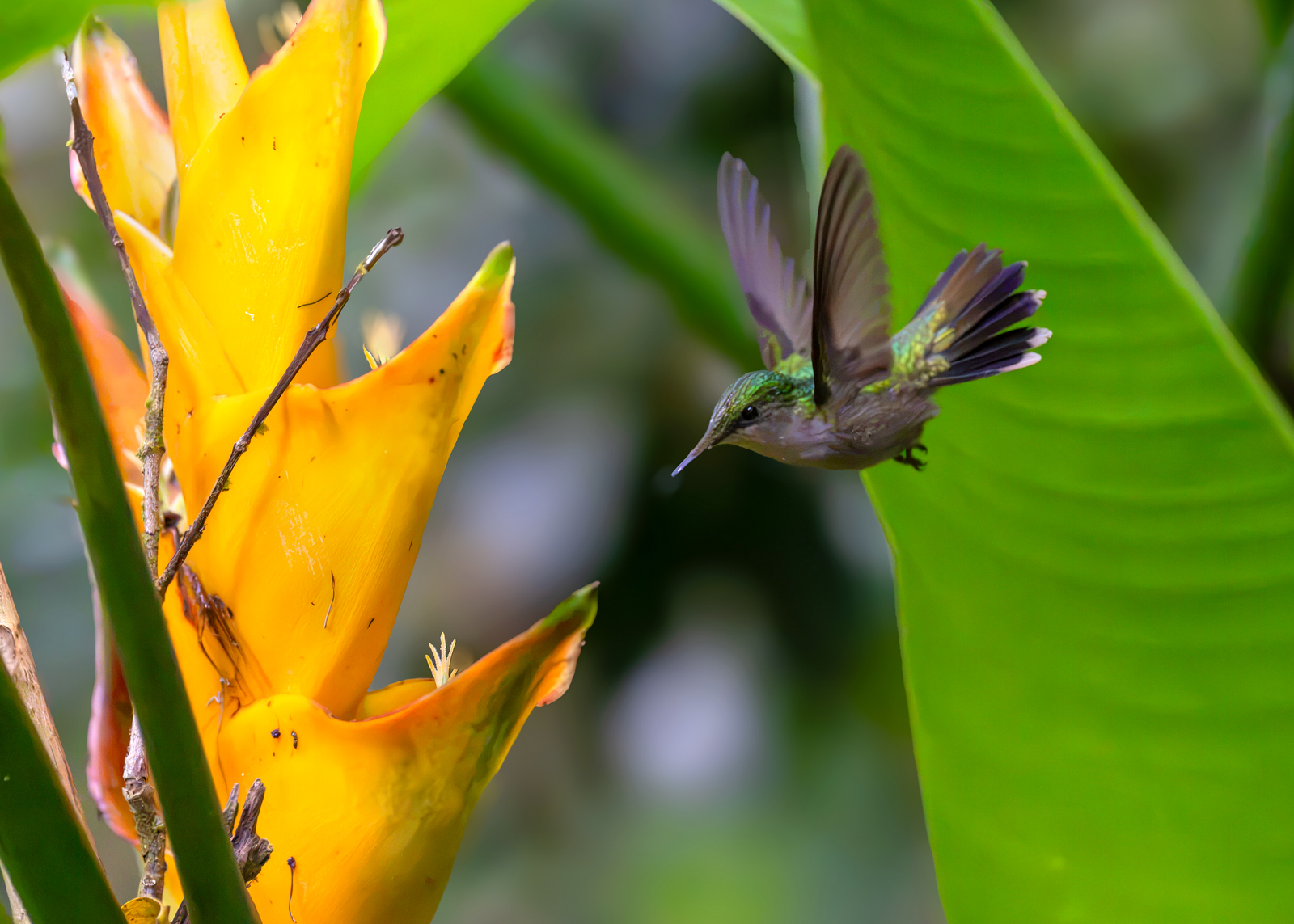
The ACH dines on the nectar of flowering shrubs and assorted plants and will also eat small insects and spiders for a bit of protein.
Here is a male power sliding up to a plant to feed:
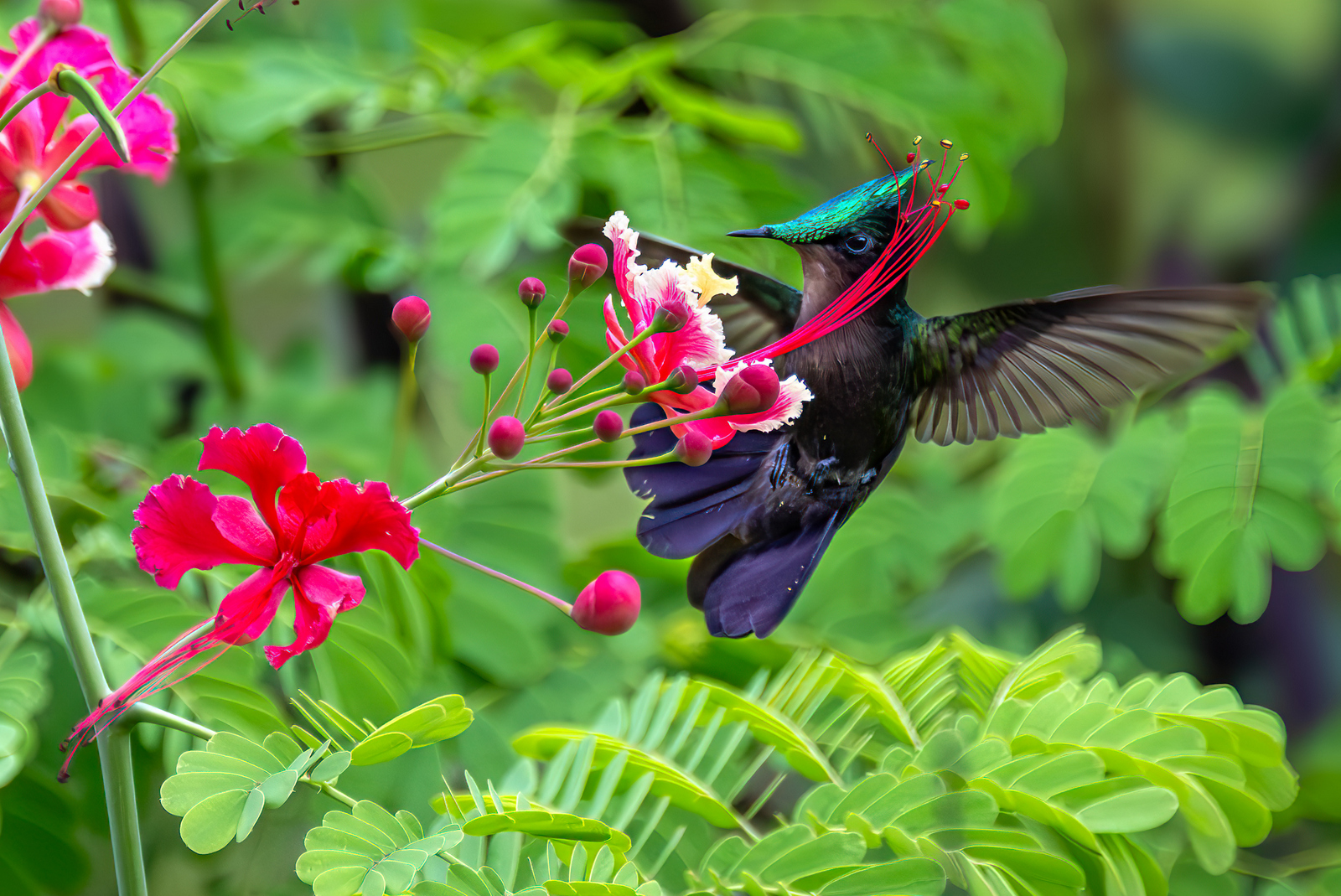
A spiky profile:
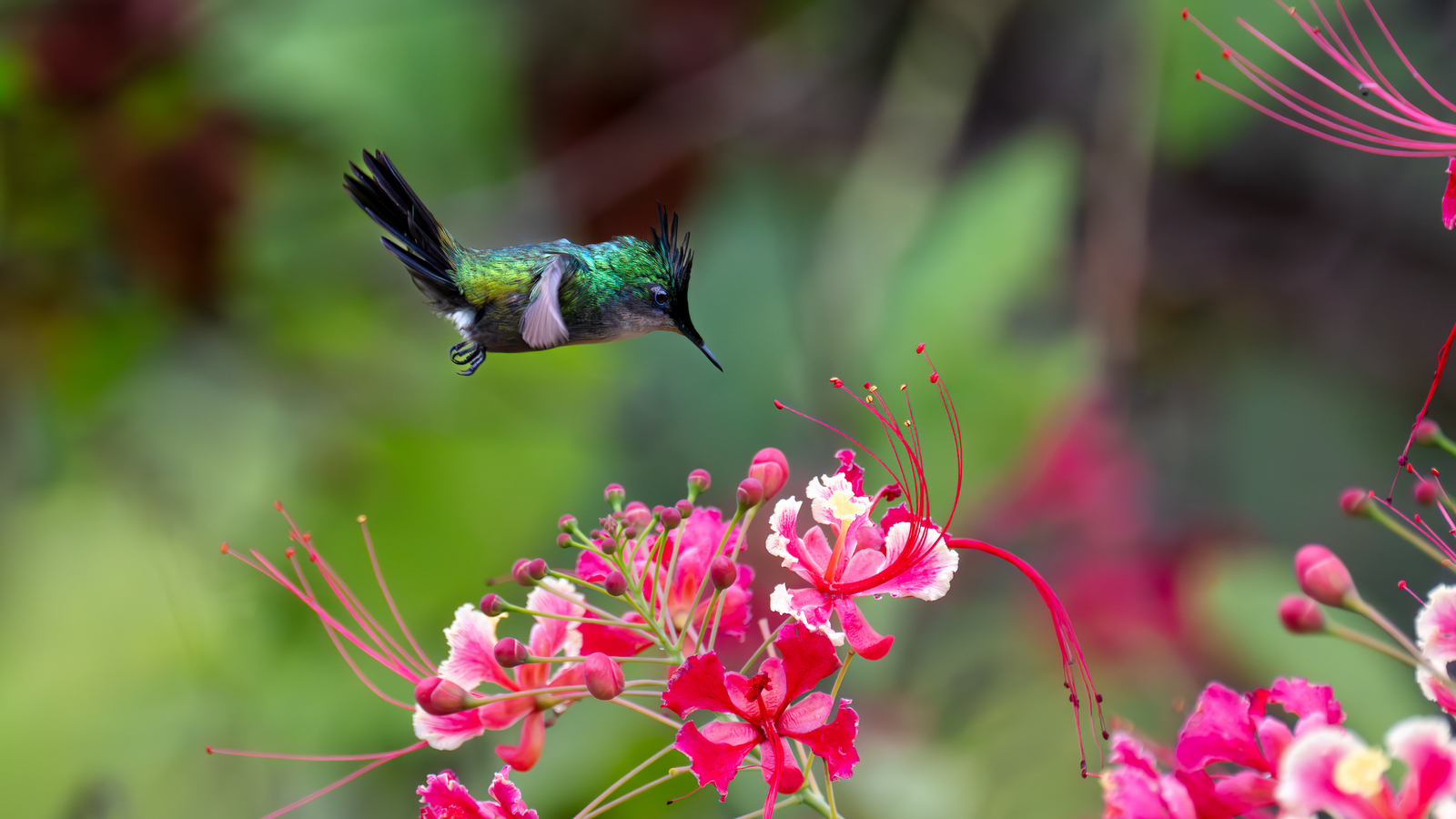
A good view of his crest:
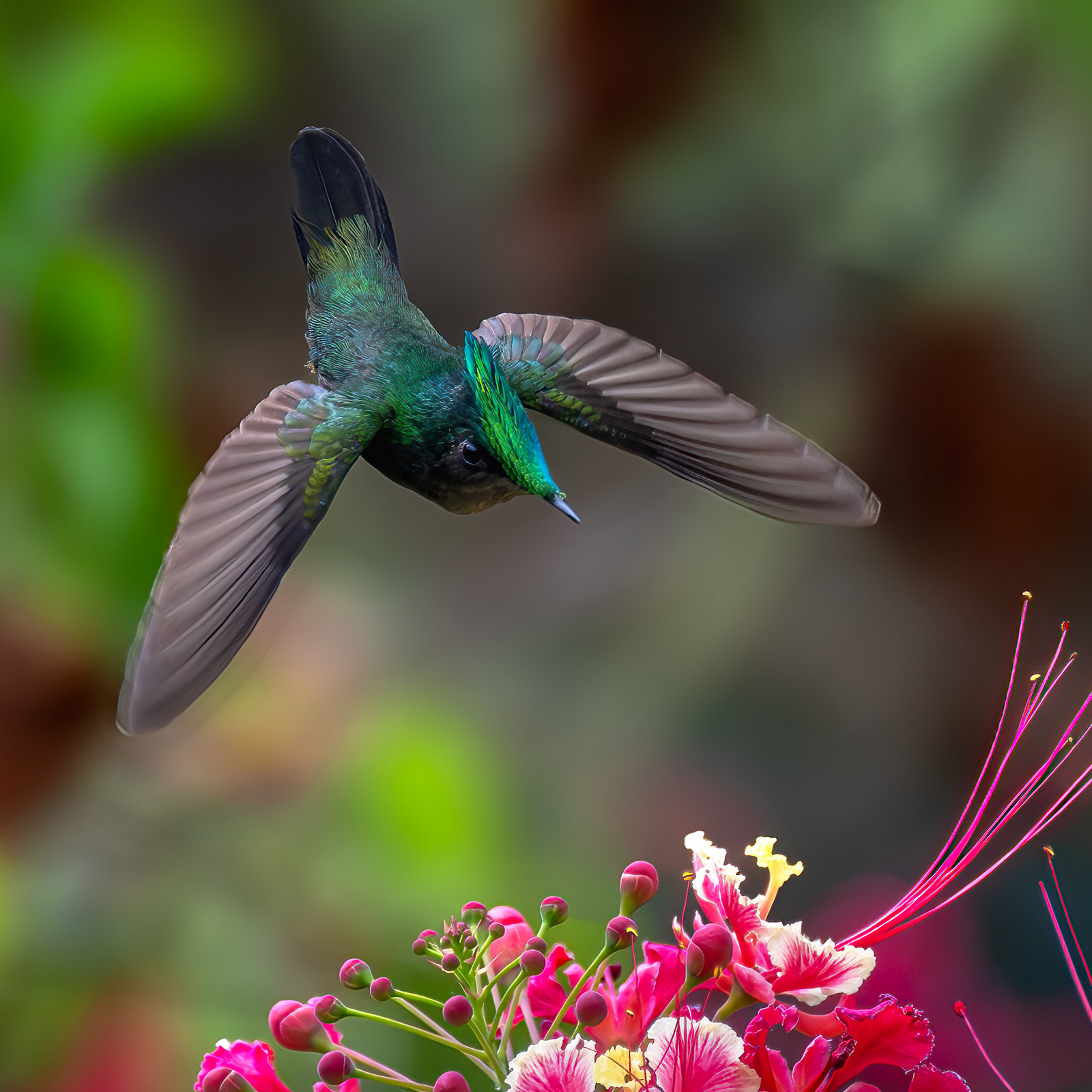
A tiny visitor to the garden:
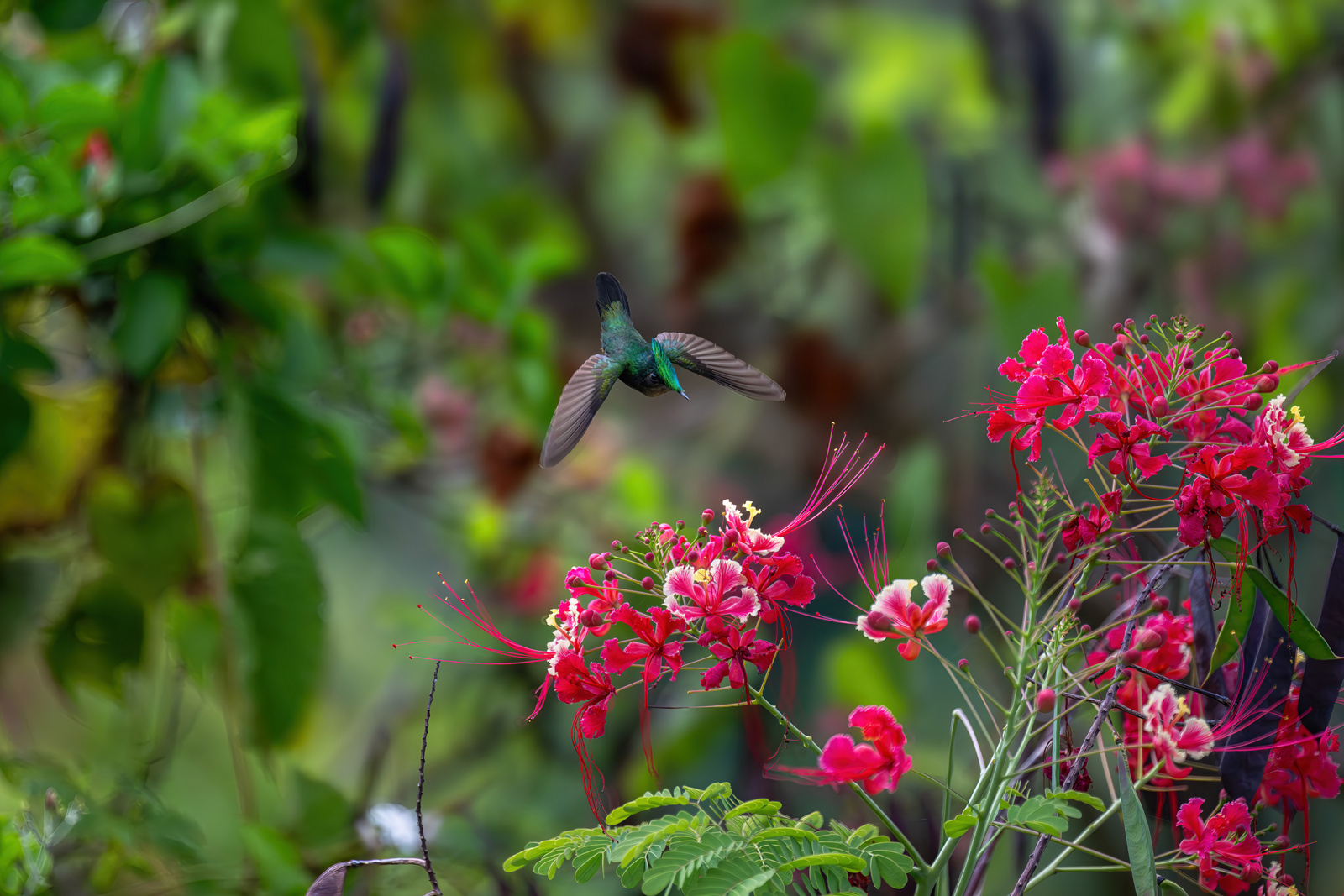
Finding this little garden and its daily visitor was one of the highlights of my visit to this tiny island. One day, on a whim, I walked along Saba’s only main road (which is terrifyingly narrow) to see what I could find. As I approached a nearby village (Windwardside), I came upon this small garden and these vibrant red flowers.
“Hmm, if I were a hummingbird, I would love this place.”
So I stopped and stood there for a few minutes. By LUCK, this ACH came by, almost as if on cue.
I spent about three to five hours each morning over five days to try and catch an image of a bird I had never seen before. On good days he would come by every 20 minutes or so. On less-good days, he might come by only once an hour. Some visits were fleeting, and it was impossible to track him down as he zipped from flower to flower. But in the end, my perseverance paid off, and I was able to capture a few good sequences.
What a fortuitous walk in the garden!
Until next month…..m
Nikon Z9, Nikkor 100-400mm, f/5.6, 1/3200 sec, ISO 2800