
28
2026Mousing
Shot of the Month – February 2026
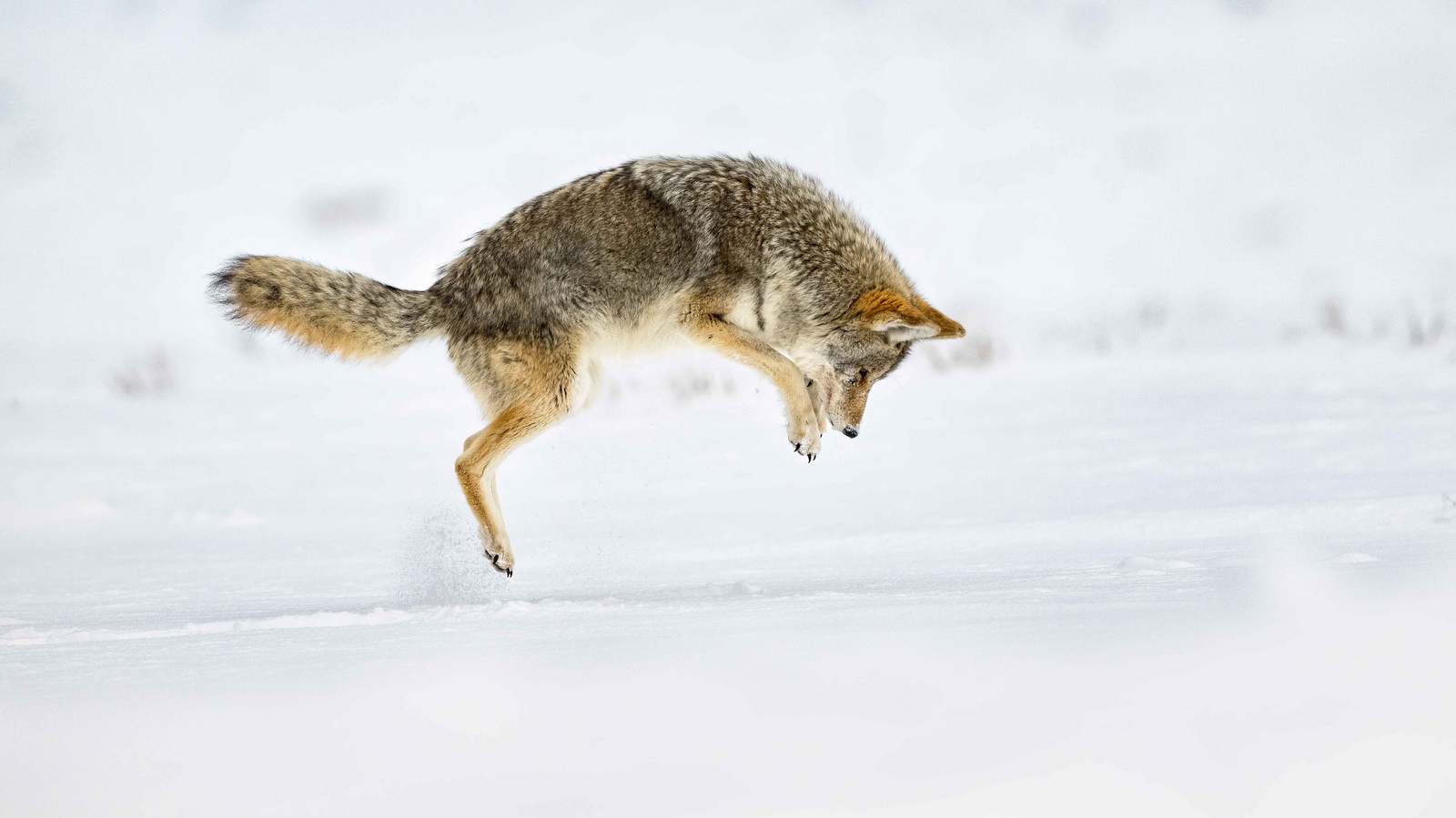
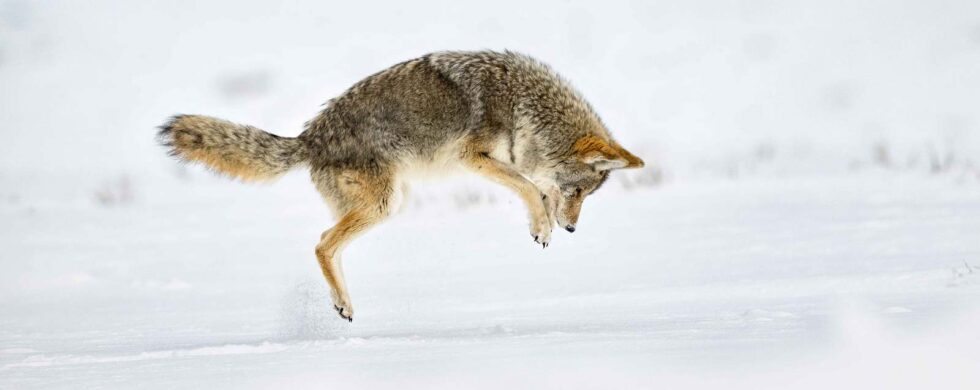
Life as a predator seems all glamorous and cool but catching other critters is hard work. I know we feel sad for that cute, fluffy thing with big eyes being chased by the thing with sharp teeth, but Fluffy actually wins most of those encounters. Predator success rate varies widely by species, but broadly speaking, ol’ Sharp Teeth is only successful about 10% – 30% of the time (for many large mammal carnivores).
Animals that have small rodents on the menu sometimes use “mousing” as a technique to catch said rodents. How does that work? The coyote in the image above is demonstrating the maneuver. It usually goes something like:
- Listen for prey hiding under snow or other cover;
- Stalk quietly
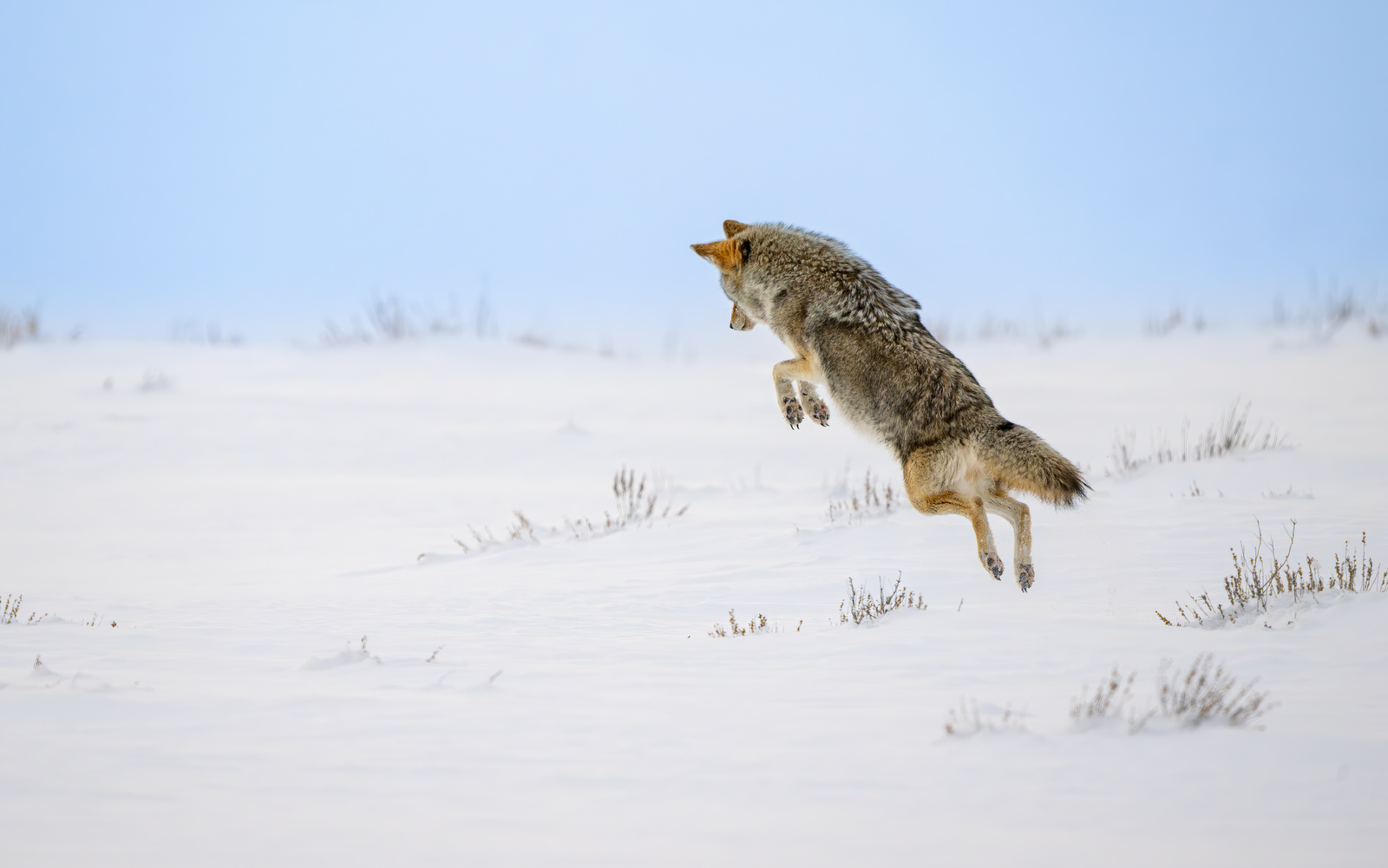
- Listen. Triangulate. Leap!!
- Drive front paws and muzzle downward to grab the unsuspecting prey.
During the winter, mousing is a vital survival skill for coyotes in Yellowstone National Park when large prey is scarce. Because wolves often dominate kills of larger animals, coyotes avoid direct competition by focusing on smaller prey, such as mice and voles, that wolf packs typically ignore.
In the image above, I caught this Yellowstone coyote at peak leap while mousing.
No luck on that last leap, let’s try again:

Drat. Missed. Let’s keep looking…
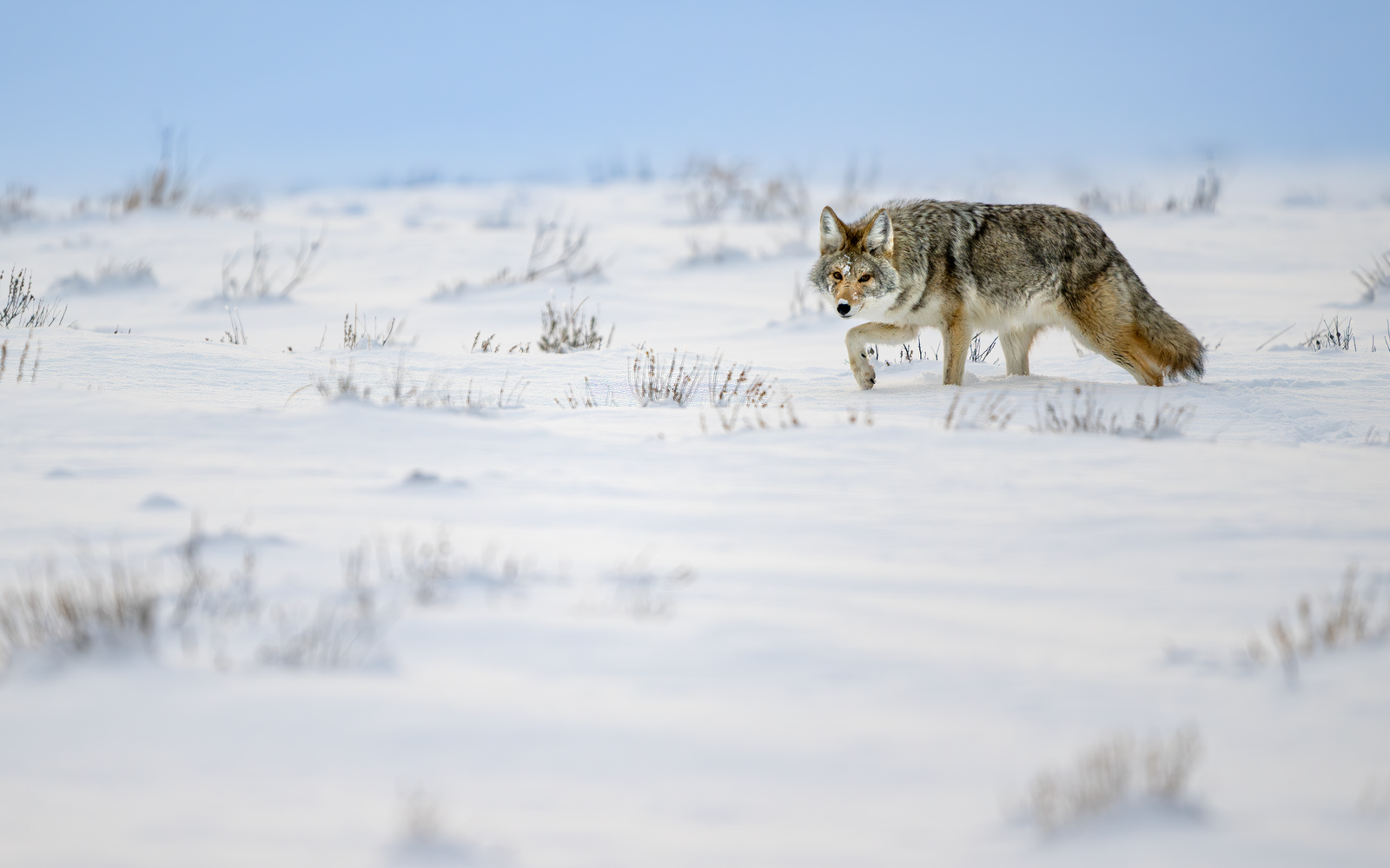
Hmmn. He can hear faint rustling noises as the mice run through their tunnels under the snow.
Launch:
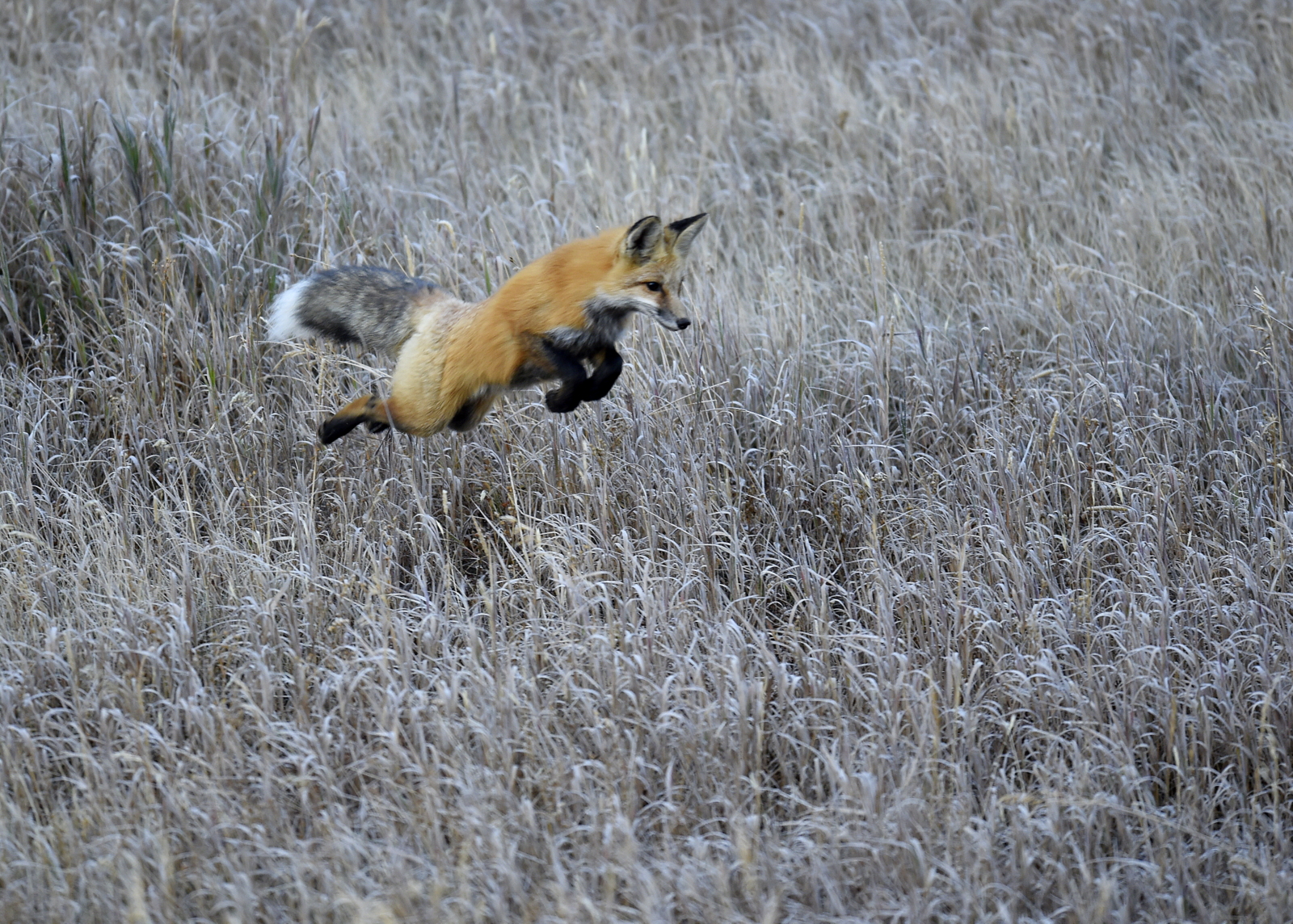
Foxes are famous for their mousing. I photographed this fellow also in Yellowstone one fall:
Here the BBC captured mousing at its finest…the music, the setting…glorious:
And many owls use a similar approach. Here is a Great Gray Owl with a catch:
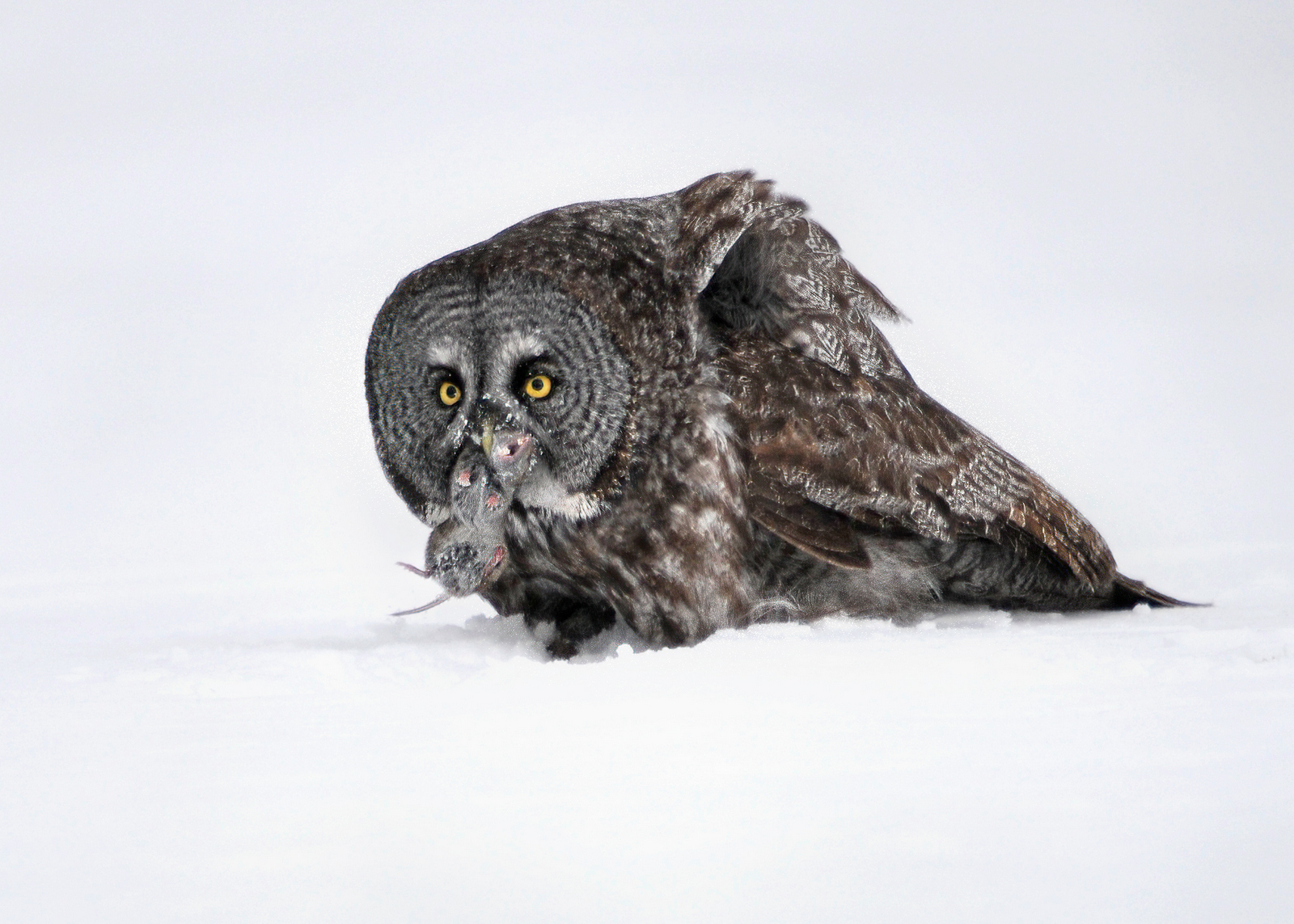
You can read about this adventure here.
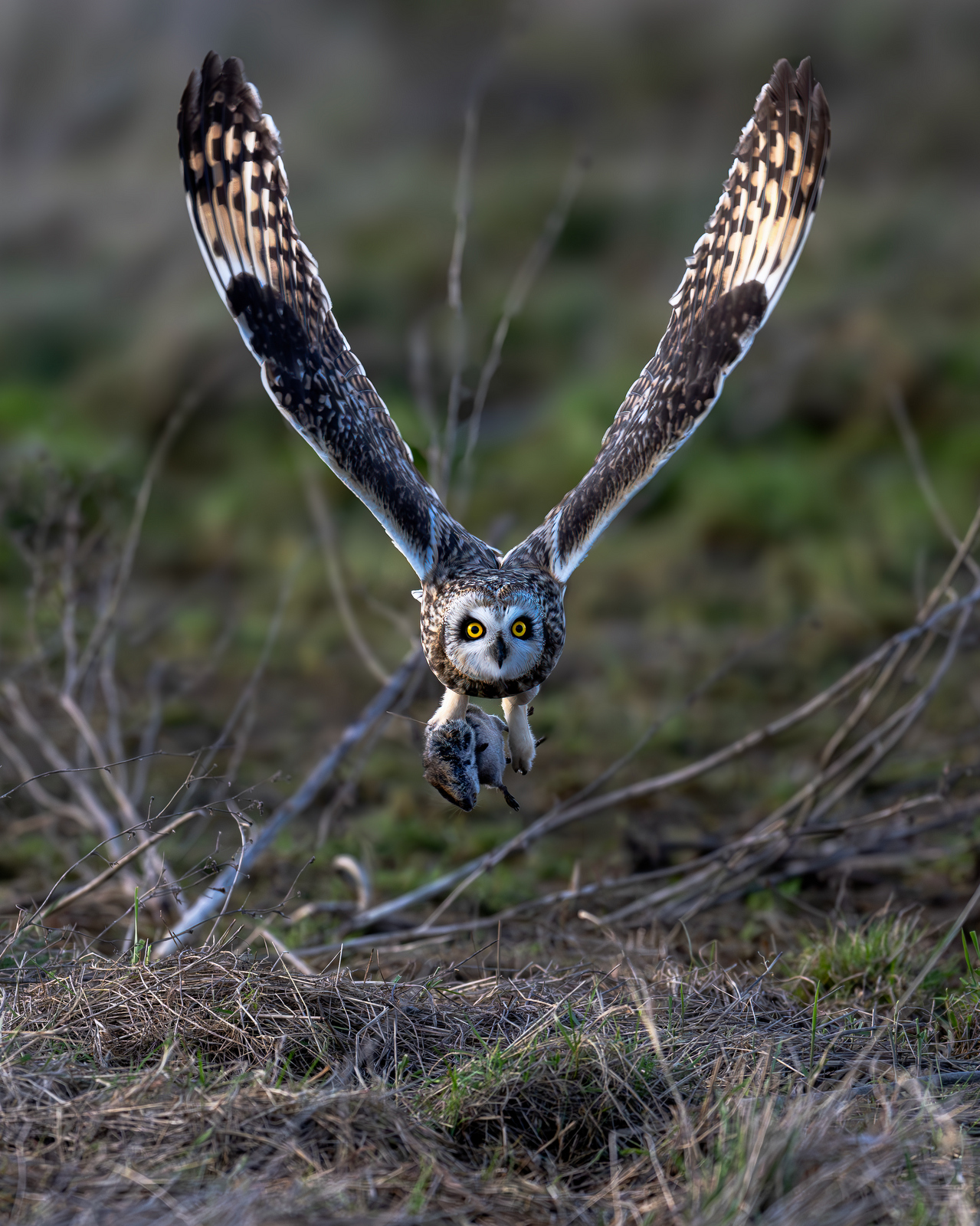
Using an aerial approach to mousing, short-eared owls often glide silently above the grass, listening below. Here is a successful catch:
Other predators that use the mousing technique include weasels, lynx, jackals, some bears, other raptors, servals, and other small felines. Mousing is so popular because small rodents (mice, voles, pocket gophers, etc.) are:
- Abundant
- Energy-rich
- Relatively easy to catch compared to large prey
- Are available year-round
And for many predators, mousing is:
- An efficient “daily calories” strategy
- A way for younger animals to practice hunting skills
- An important survival behavior during the lean seasons
Who knew that “mousing around” was such a vital skill?
Until next month…..michael
Nikon Z9, Nikon 600mm, f/7, 1/2000 sec, ISO 800, EV +0.2/3


Mini Menon
I learnt something new…thank you! As always, a fun read.