Morning Calm

Shot of the Month – January 2026

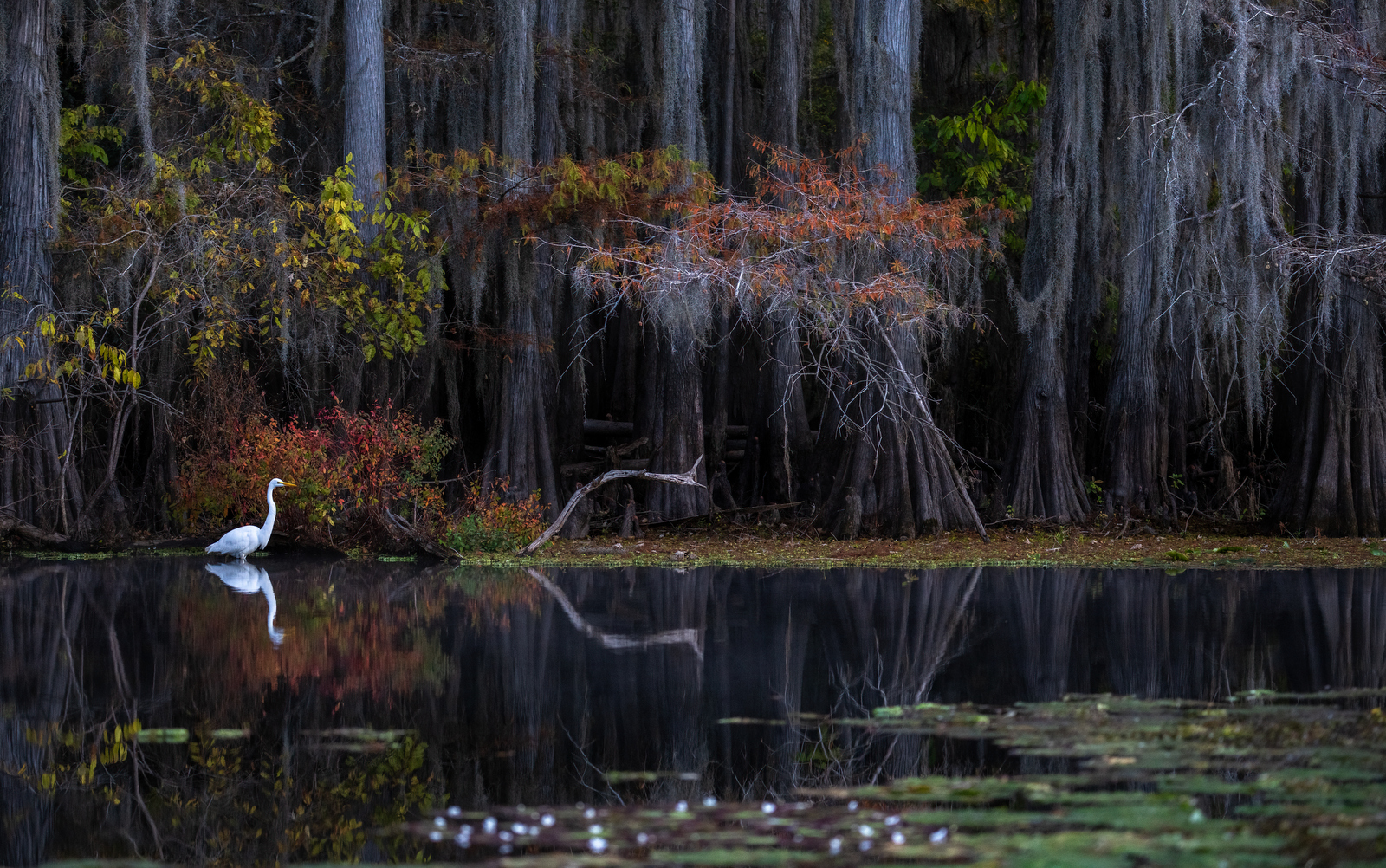
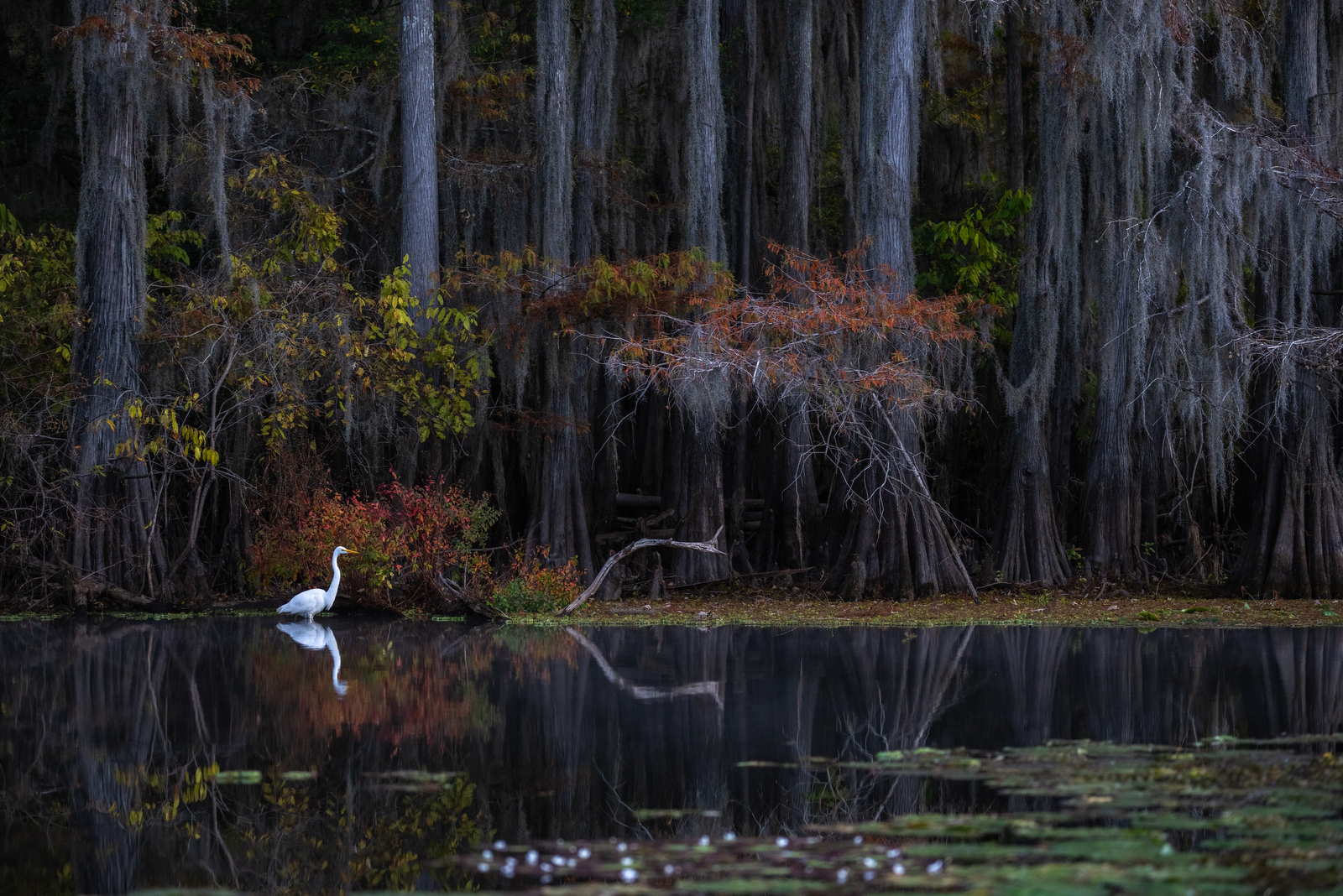
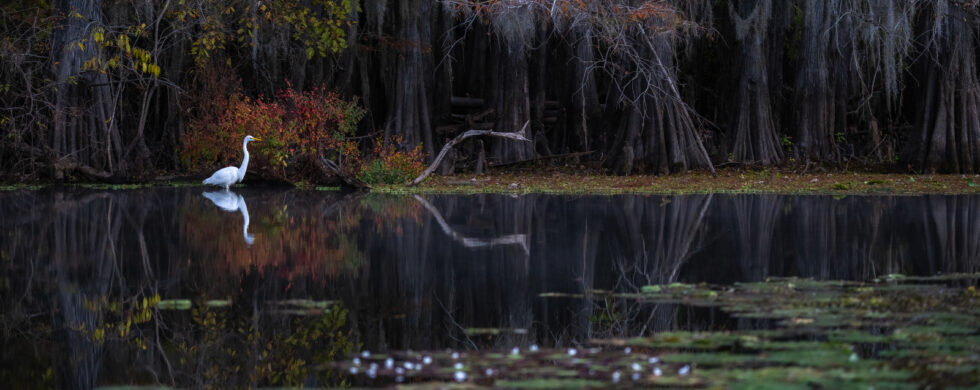
Great Egret, Caddo Lake (9260)

Up long before dawn, I paddled slowly as my kayak cut across the blackened water.  Caddo Lake was eerily quiet, and the air was crisp and still.  The water’s surface became an ebony mirror.  As I glided across the water, I scanned the scene drifting by — this was a landscape photographer’s paradise if you could sharpen your eye and cut through all the visual clutter.

As I came around a corner, I found a Great Egret sitting along the shore waiting for the sun to breach the horizon to begin fishing for a meal.  Yes!!  I am first a wildlife photographer, so I always feel more comfortable photographing critters.  I knew the key here was to compose an image that celebrated both the lovely egret and this magical setting.

For such a complex scene, I wanted to keep both the bird, the foreground, and the background in sharp focus – similar to a classic landscape image.  However, shooting from a kayak made this task quite difficult.  To have a deep depth of field I needed to use a small aperture.  But smaller apertures allow less light to reach the camera so to properly expose the image I would have to leave the shutter open longer (slower shutter speed).   On a tripod, this is no problem.  But now I was in a kayak that was always moving, even if only a little.  To overcome this challenge, I would start each sequence with “faster” shutter speeds, with a corresponding wider aperture (with less depth of field),  and then quickly shift to slower and slower shutter speeds, allowing for smaller and smaller apertures (and greater depth of field) until I could no longer hand-hold the camera and get a sharp image.   I also experimented with ISO levels – the higher the level, the more sensitive the image sensor, allowing for faster shutter speeds, but at the risk of adding more noise into the image.

As the egret sat near the shore, I paddled along the entire bank, looking for the best composition and lighting.  Once spotted, I circled back and found my spot.  Ooops, drifted too far.  Paddle back.  No, too far again.  Now I am drifting in the other direction.  Ok, quick, put the paddle down!  Compose and fire off as many shots as possible while shifting aperture and shutter speeds.  Ok, now we have drifted too far.  Camera down and paddle back to the best shooting location.  I repeated this over and over and over…it was exhausting.

Over time, the egret would fly a bit further down along the shoreline.  The good news was that I now had a fresh composition to work with.  The bad news was that I had to repeat the entire composition process again…oy vey.

I easily spent more than 45 minutes observing and photographing this egret until he moved into the lovely scene you see above.  I had been starting to feel guilty about spending so much time doing “wildlife photography” when I was here to do landscape photography.  But then it all came together.

I love this composition.  The white egret is perfectly highlighted as he stands in front of the colorful bush.  We see the fall colors bursting in sharp contrast to the otherwise dark and somber mood of this pre-dawn scene.  The colorless bald cypress trees in the background, draped in Spanish moss, add a mysterious gothic overlay and perfectly capture the unique feel and atmosphere of Caddo Lake.  The somber water mirrors the shoreline and subtly conveys the tranquility of the scene.  The lily pads in the front, right corner lead the eye into the frame and add visual balance to the composition.

In short, it is a nice picture.  Feeling exhilarated, I paddled off deeper into the bayou in search of more traditional landscape scenes…

Caddo Lake?  See last month’s post for the deets on this wondrous locale.


Until next month….michael


Nikon Z9, Nikon 100-400 f/4.5-5.6 (@105mm), f/5, 1/320 sec, ISO 1000
 

2025 Favorites

Favorite Images – 2025 Edition

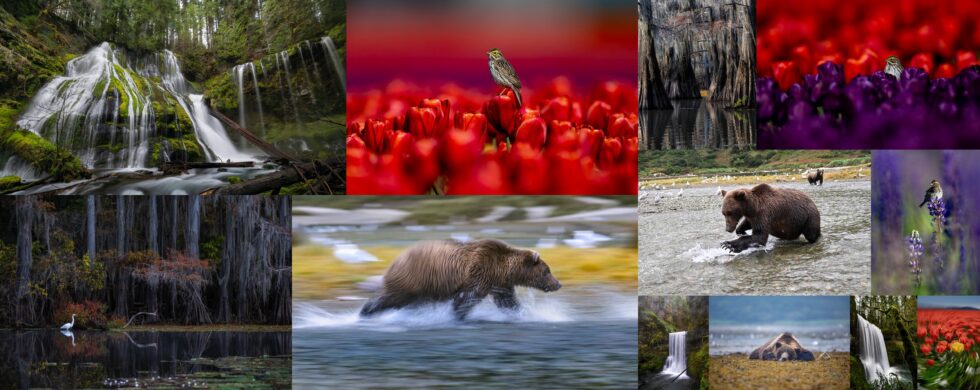
One final look back at 2025 before we go barreling ahead into 2026 with hope and vigor.  Let’s visit with some of my favorite images that I captured over the last 12 months.  The list is in chronological order.

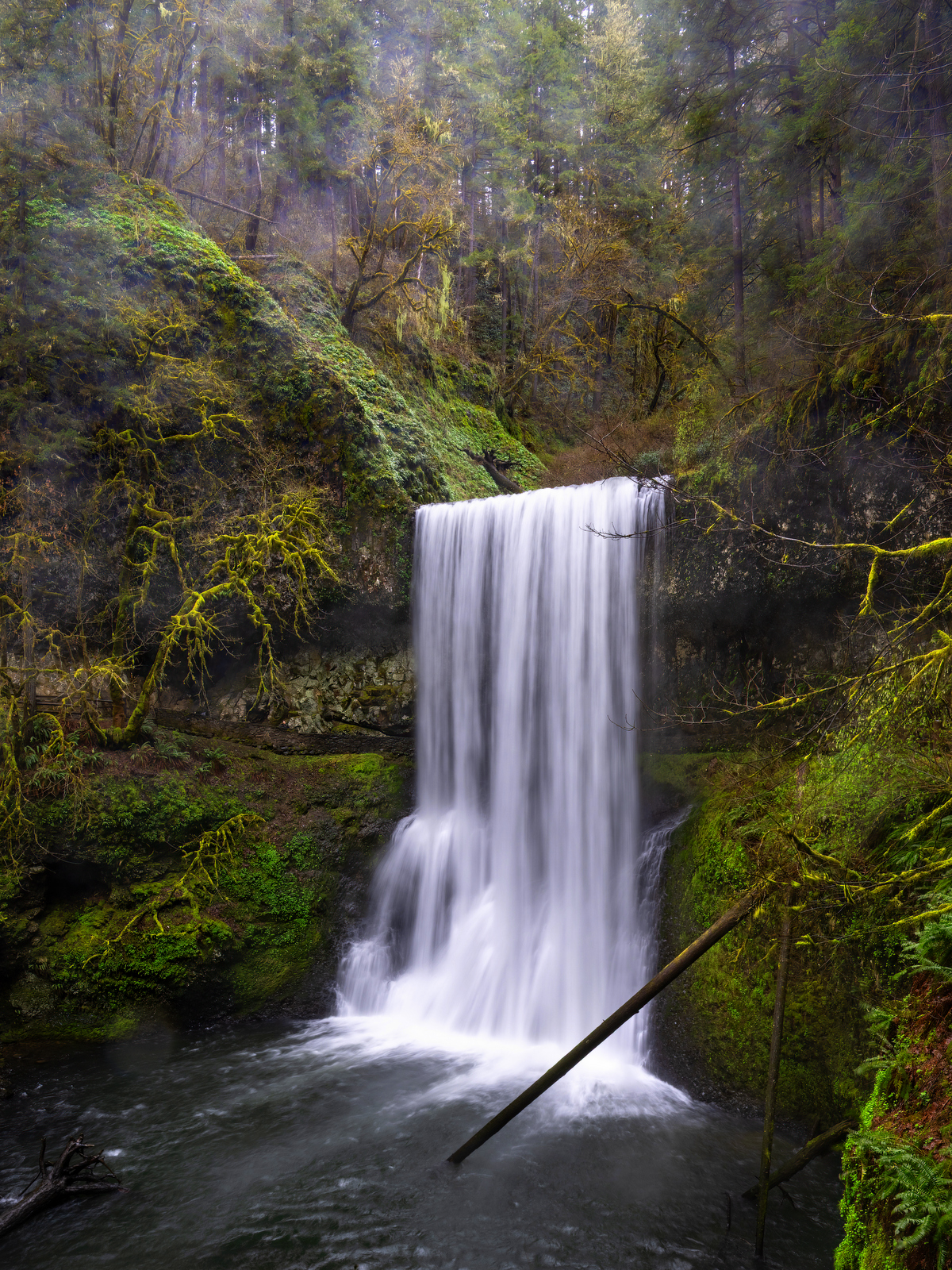
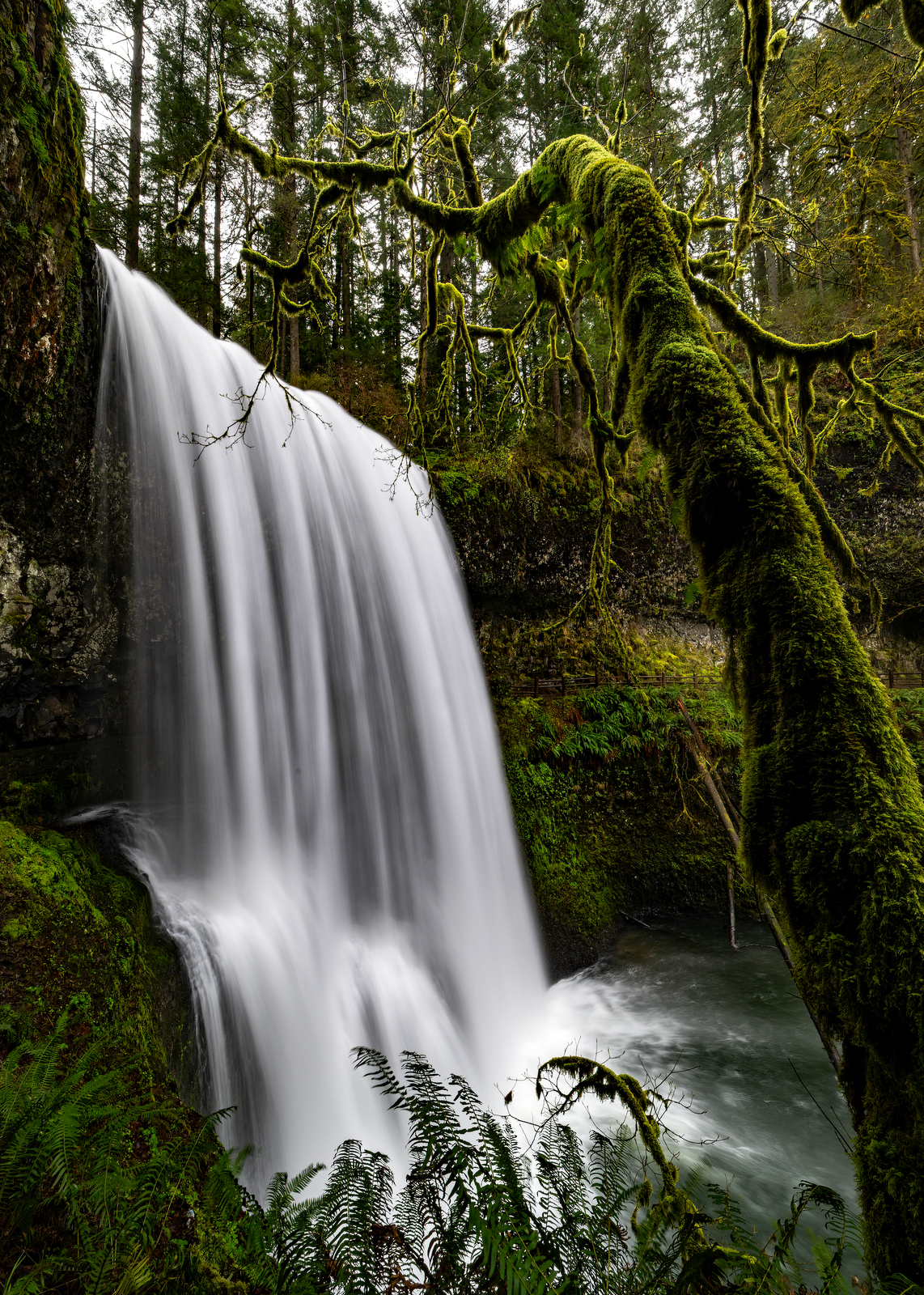
In March, I visited Silver Falls State Park in Oregon to wander among the 10 waterfalls found there.  I had particularly good luck with Lower South Falls.  There are two good vantage points to admire this waterfall:

1. Lower South Falls (v1)

Lower South Falls(6653), Silver Falls State Park, Oregon

2.  Lower South Falls (v2)

Lower South Falls(6694), Silver Falls State Park, Oregon

Click here to read more about those adventures.

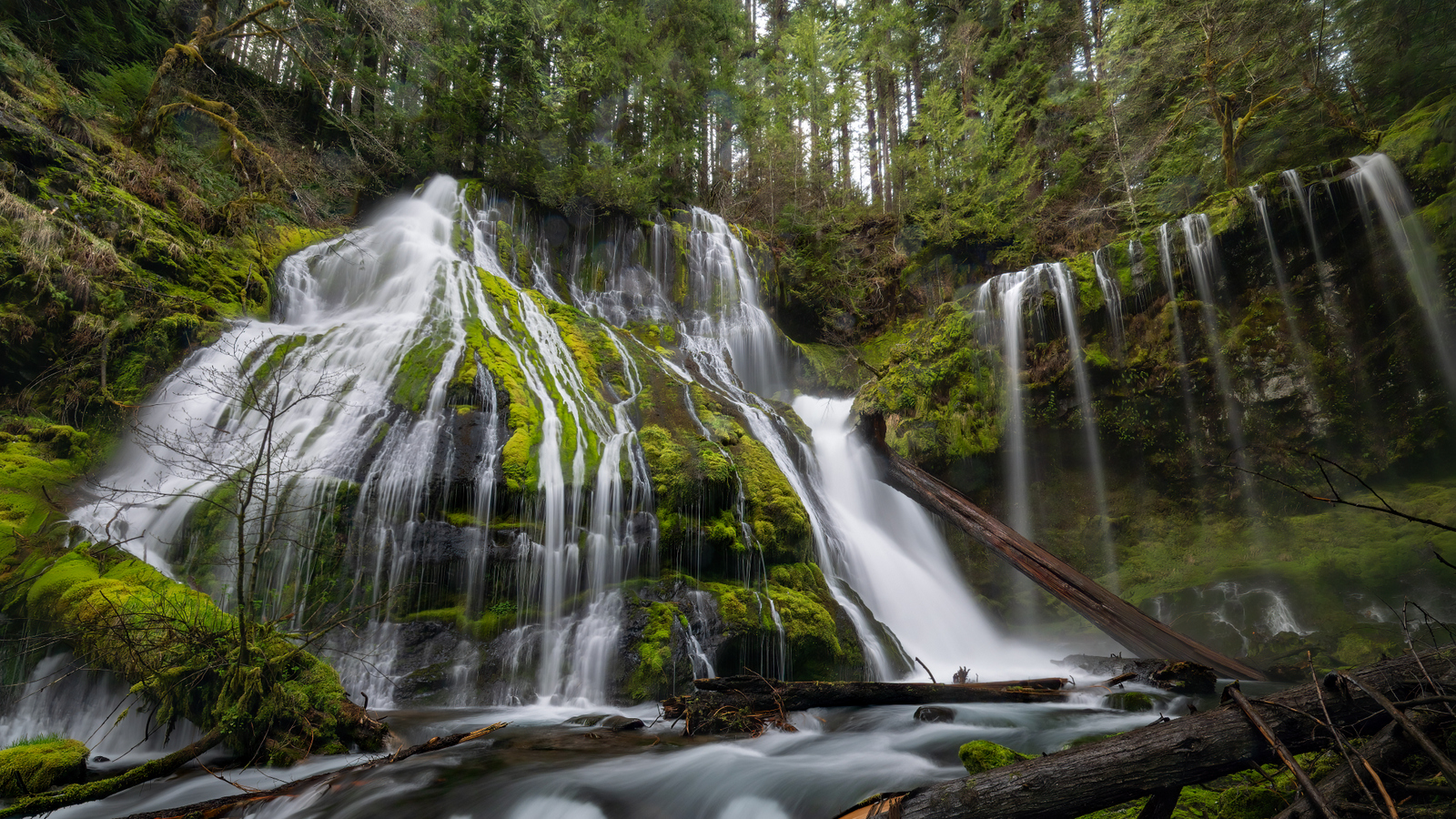
Just a month later (April), I spent several days exploring waterfalls in Southern Washington and a few more located just over the border in Oregon (Columbia River Gorge).  On this trip, I discovered the stunningly beautiful Panther Creek Falls in the Gifford Pinchot National Forest, as shown below.

3.  Panther Creek Falls

Panther Creek Falls, Washington (7556)

Later in April, I visited tulip fields in Skagit County (Washington) for a completely different color palette:

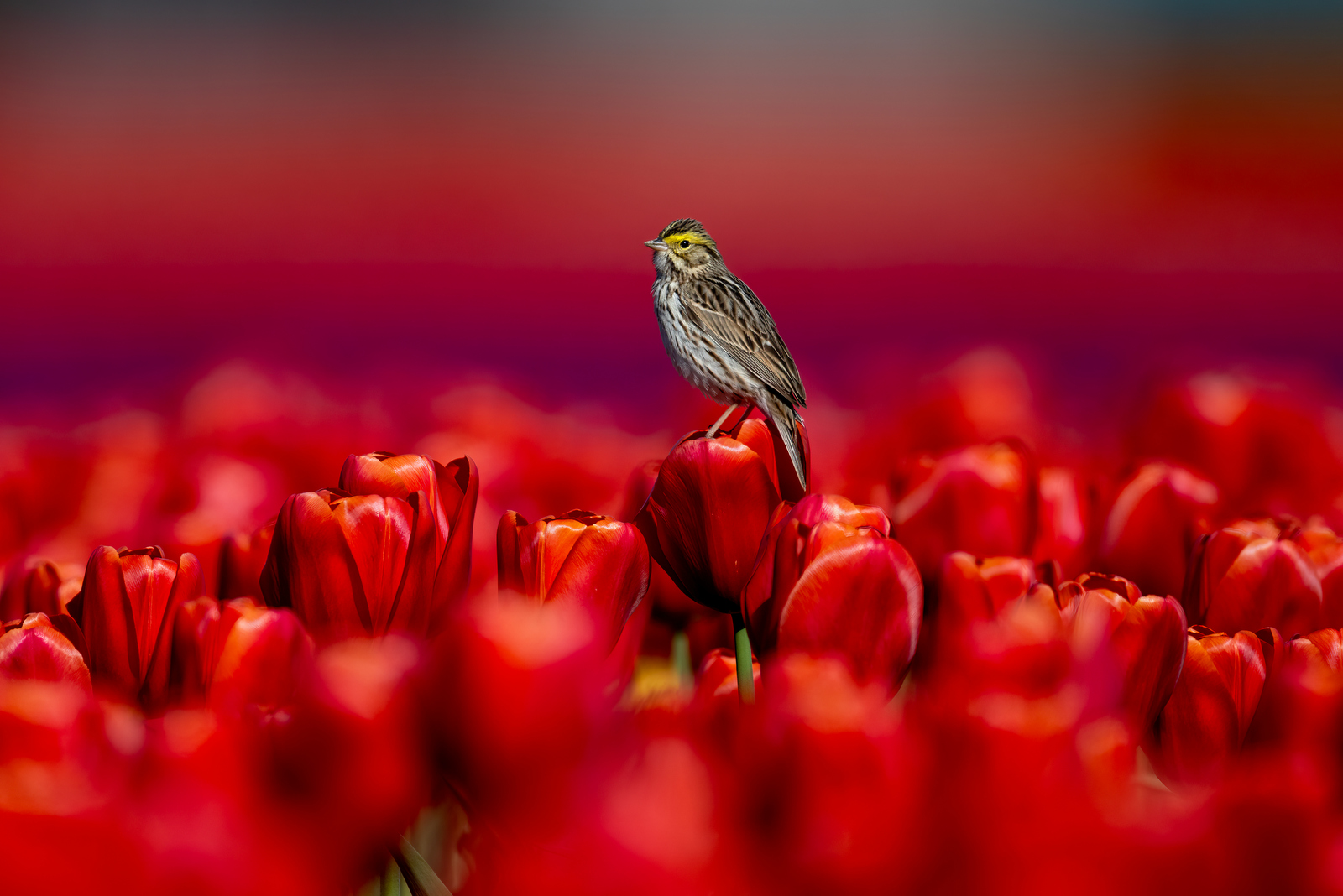
4. Savannah Sparrow in Red

Savannah Sparrow (9529) - Washington

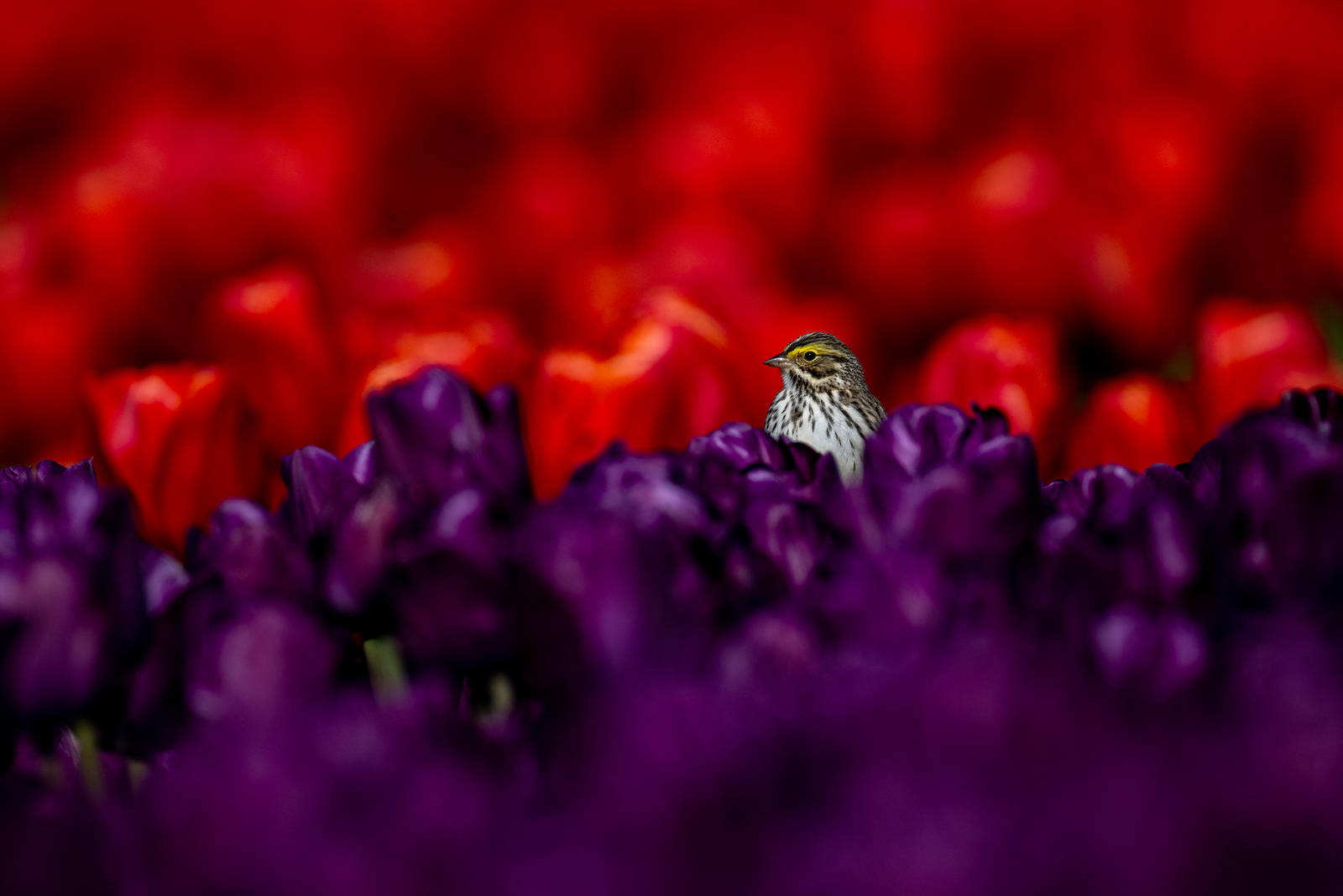
5.  At the Border

Savannah Sparrow (8195)) - Washington

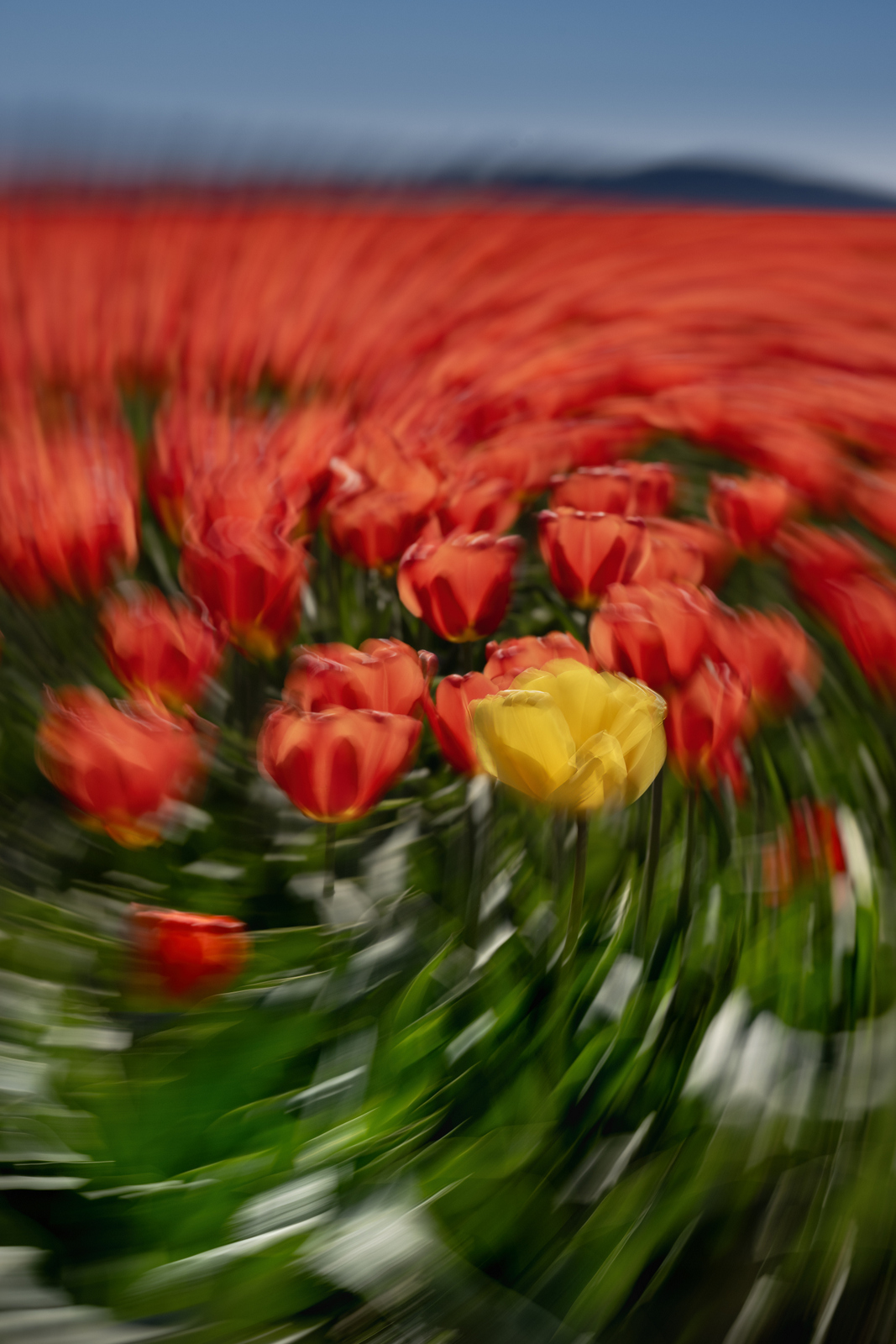
While exploring the tulip fields, I also experimented with some abstract takes on the flower scene:

6.  Flower Swirl

Tulip Zoon (8386) - Washington

You can see more flower abstracts here.

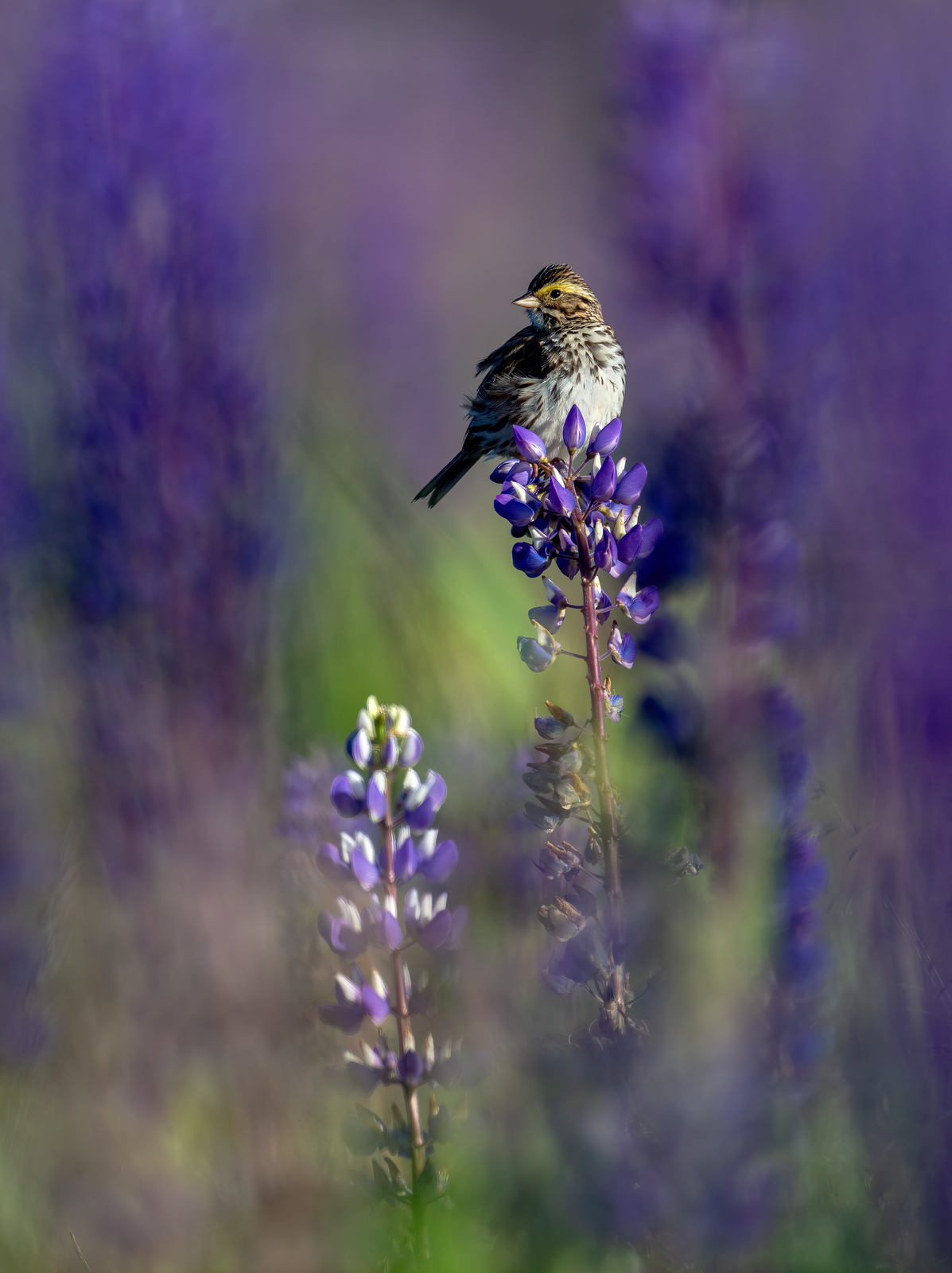
In June, I visited a field of lupines and captured this dreamy meadow scene.

7.  Meadow Dream

Meadow Dream (9354) - Washington

Did you notice that the bird was yet again a Savannah Sparrow?!  I seem to find them everywhere i go!

In September, I visited Katmai National Park in Alaska to photograph Brown Bears.  The weather was awful on this trip and our photo opportunities were quite limited, but I was pleased with these images:

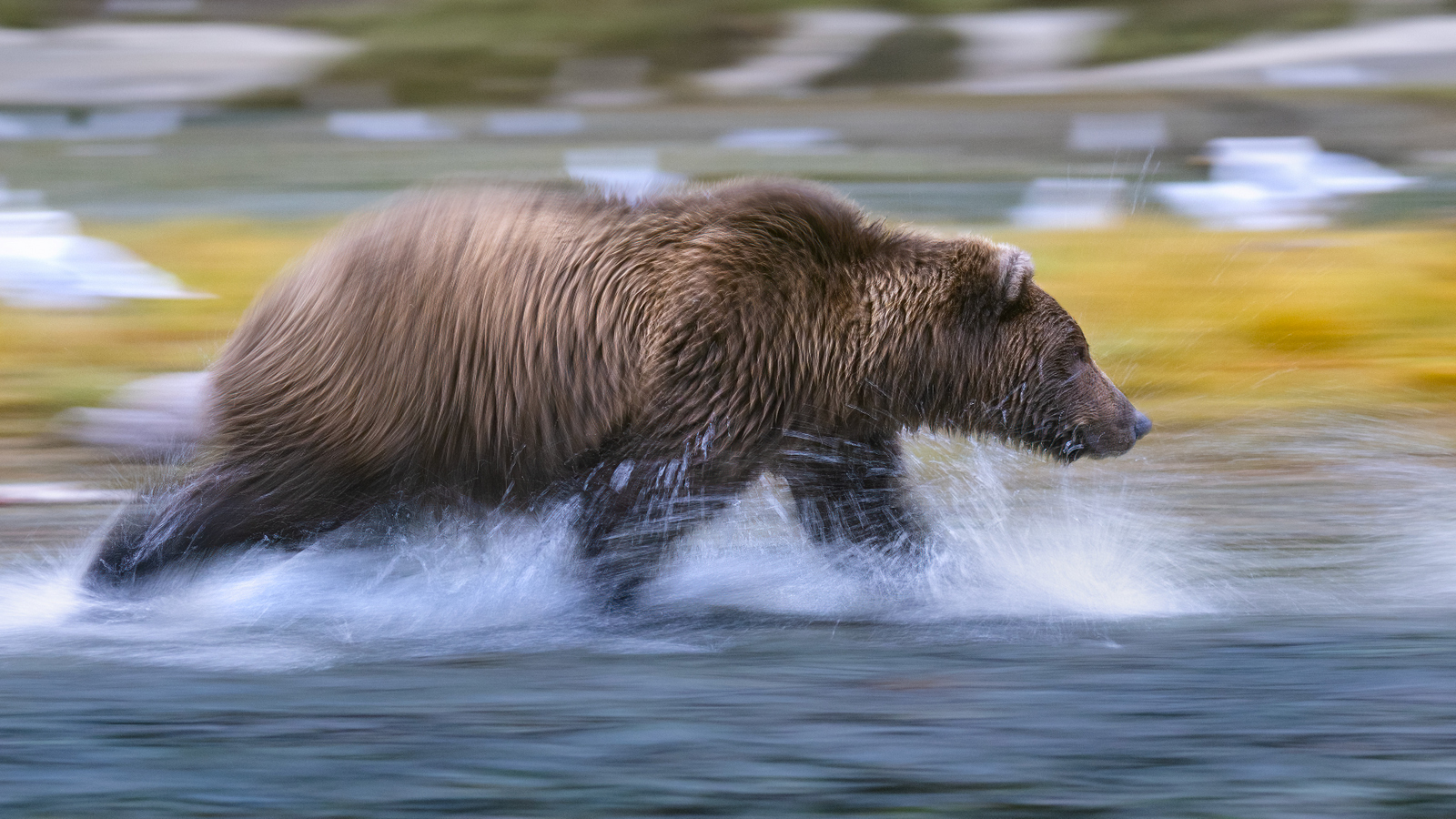
8.  Brown Bear Splash

Brown Bear (4631) - Alaska

In the image above, I experimented with a slow shutter speed to give a sense of the chaos as the bear barreled through the water in pursuit of a fish.  I really dig how his fur seems to swirl…

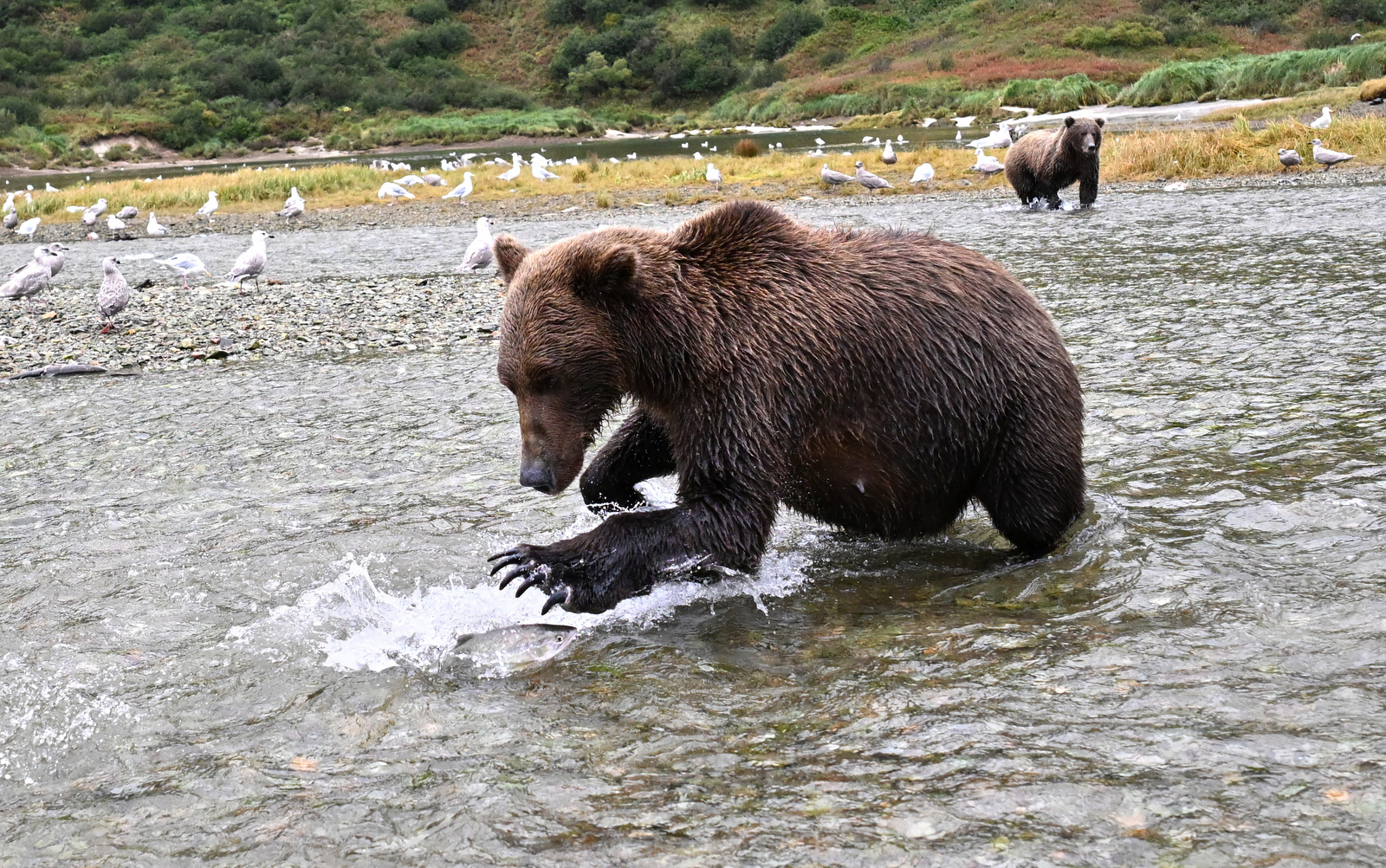
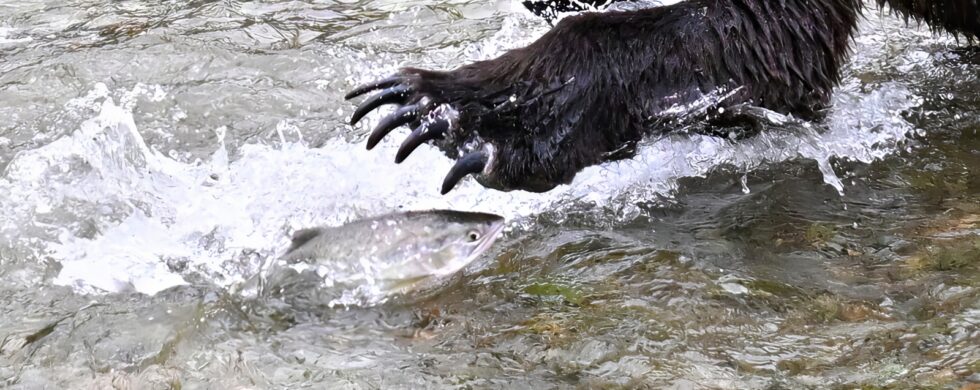
9.  Salmon Paw

Brown Bear (1065) - Alaska

Above, a dramatic action shot as a brown bear lunges for a salmon.

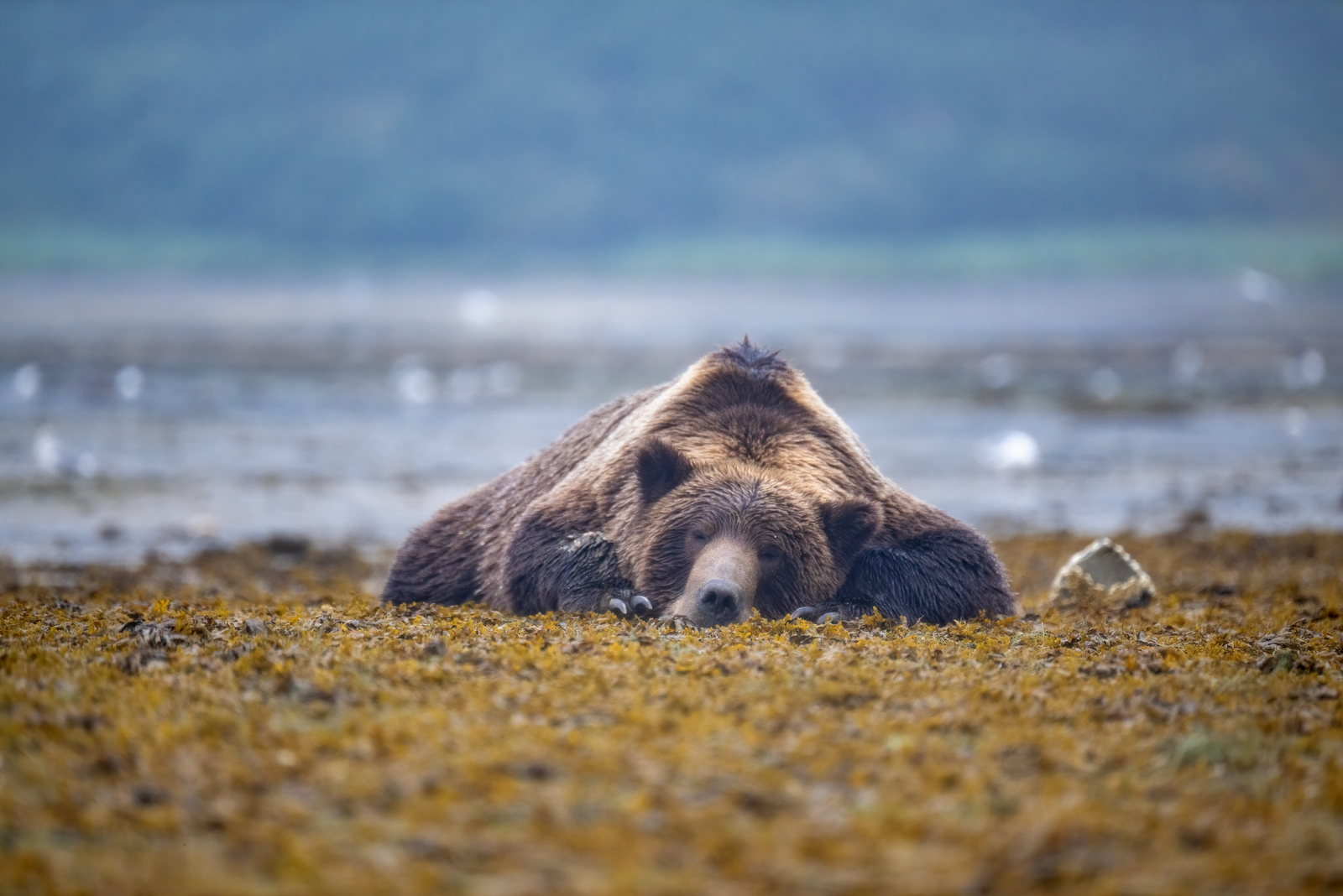
10.  Mood

Brown Bear (3690) - Alaska

Could this image capture the post-holiday mood any better?  He has obviously overindulged on the salmon buffet.

And speaking of bears, here is a video I captured of a bear in hot pursuit of a salmon:

11.  Caddo Lake

My last photo foray of the year was in November when I visited Caddo Lake for the first time.  I spent a glorious week paddling in a kayak through a surreal landscape that combined Texan swamps with autumn colors, creating an environment unlike anything I had seen before.

Caddo Lake (8791) - Texas

12.  Great Egret

Great Egret-Caddo Lake (9260) - Texas

This is probably my best and favorite image of the year.  I captured this from my kayak before sunrise, and the setting was sublimely serene.   The scene oozes tranquility – “ommmmm.”  The image wonderfully highlights the unique mix of swamp life and autumn colors found here.  I love it.  It will be on my wall soon.

So that was the top 12 images of the year.  A few bonus images for sticking around:

Latecomers:

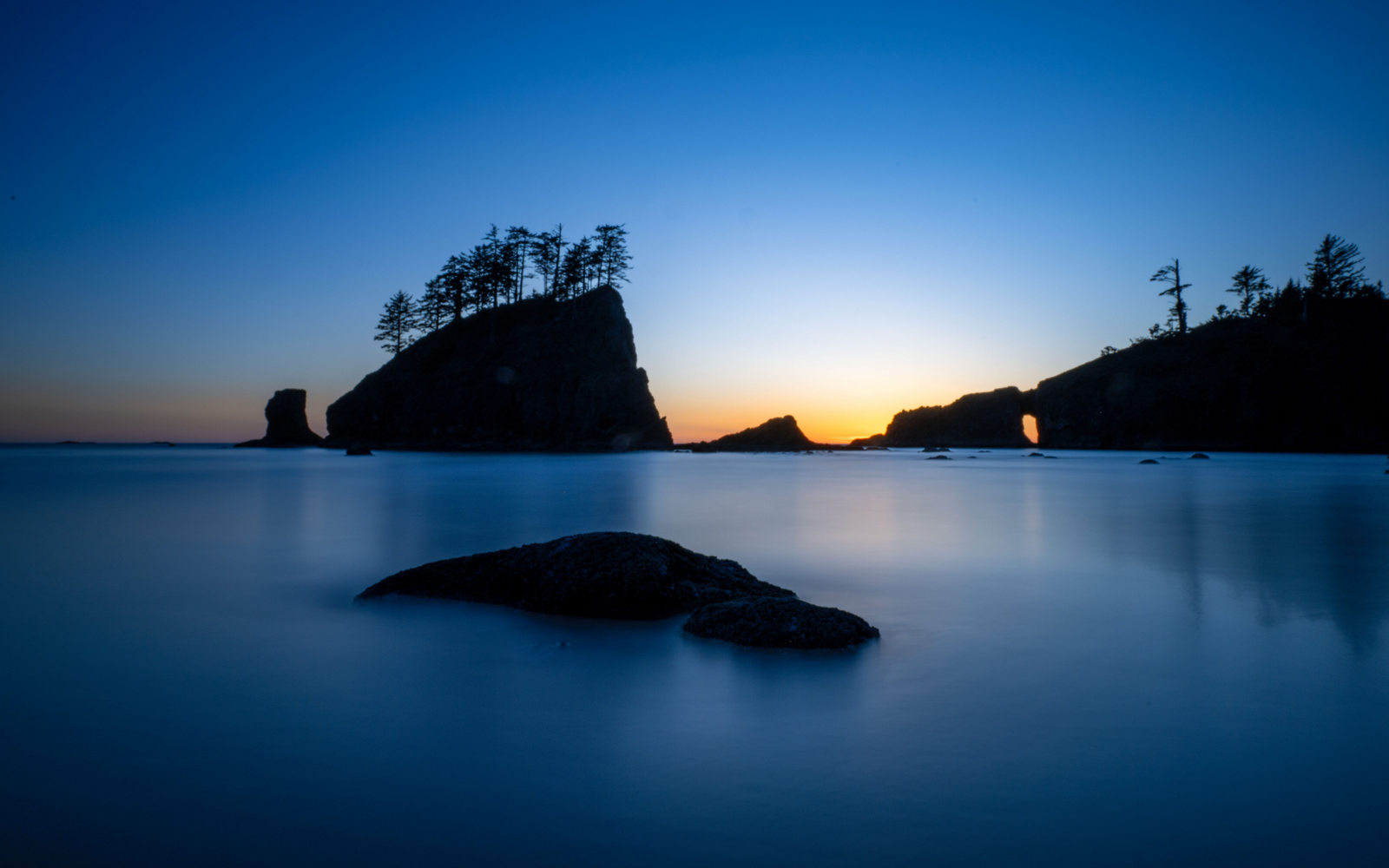
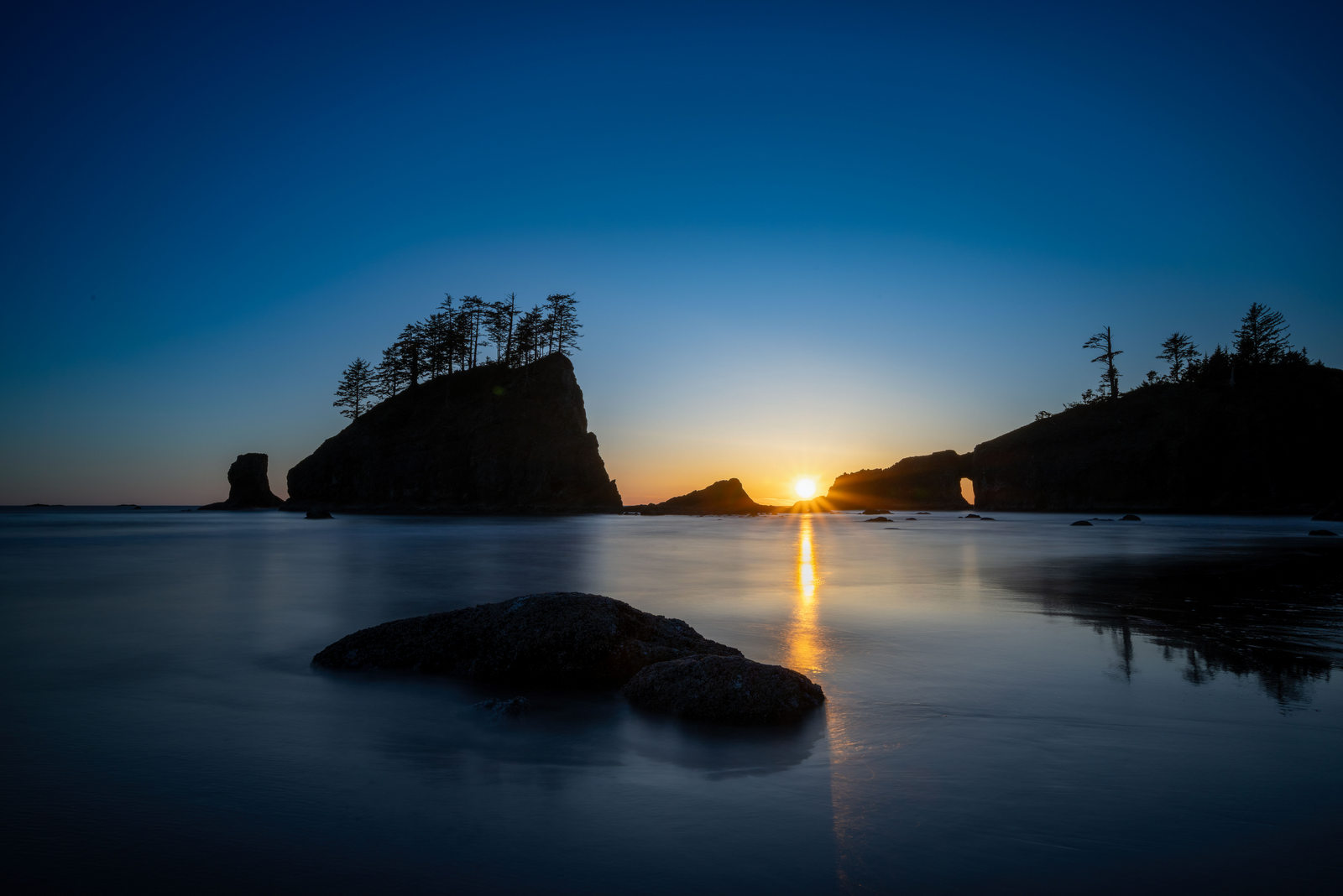
These two sunset images were taken at Second Beach in the Olympic National Park in 2024, but I didn’t process them until 2025:

13. Beach Blues

Second Beach Sunset (7491) - Washington

14.  Second Beach #2

Second Beach Sunset (7468) - Washington

Favorite Iphone Shots

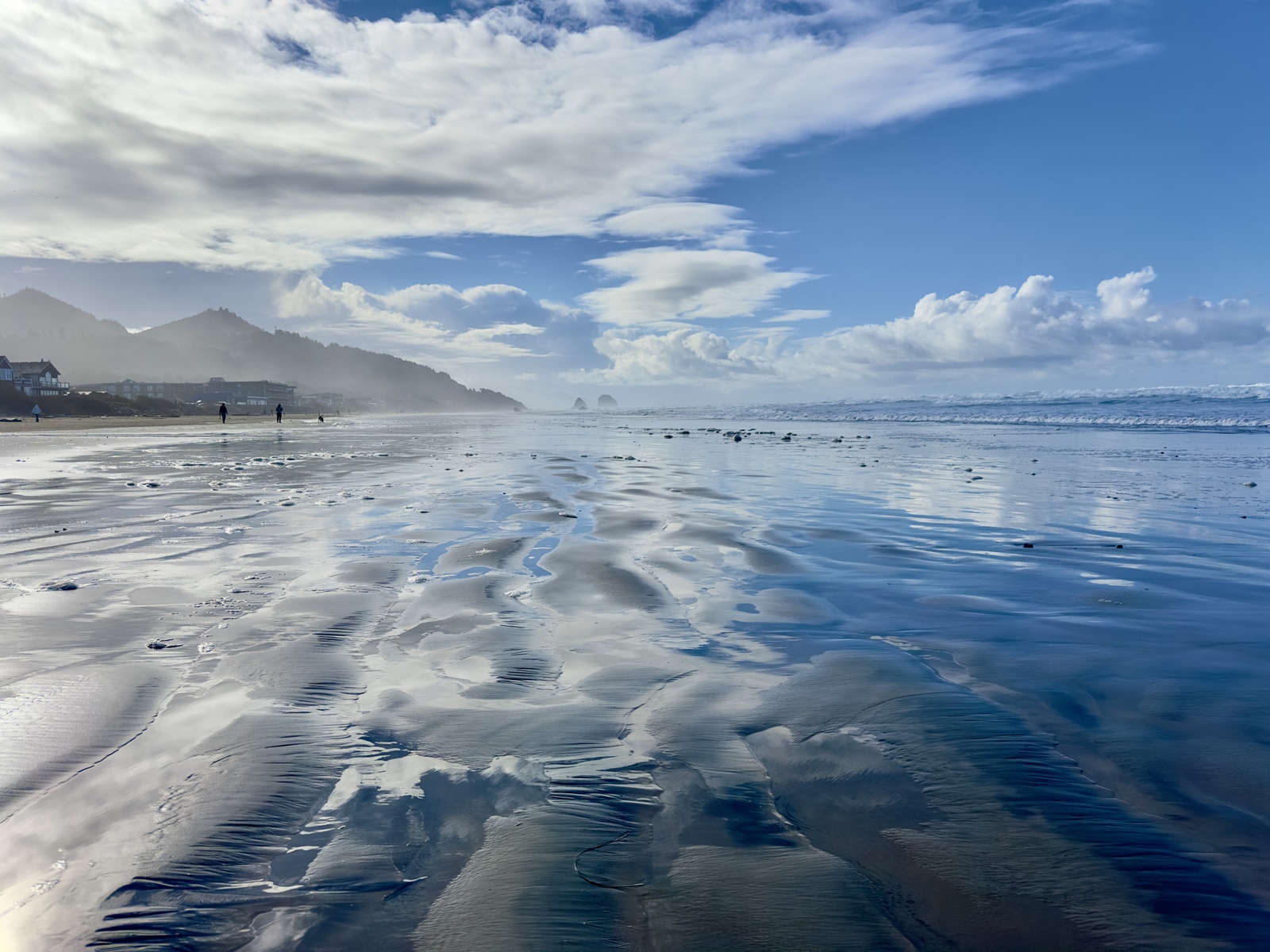
The cameras on smartphones keep improving, and when in a pinch (or too lazy), I will use mine instead of my “real camera.”

Iphone #1

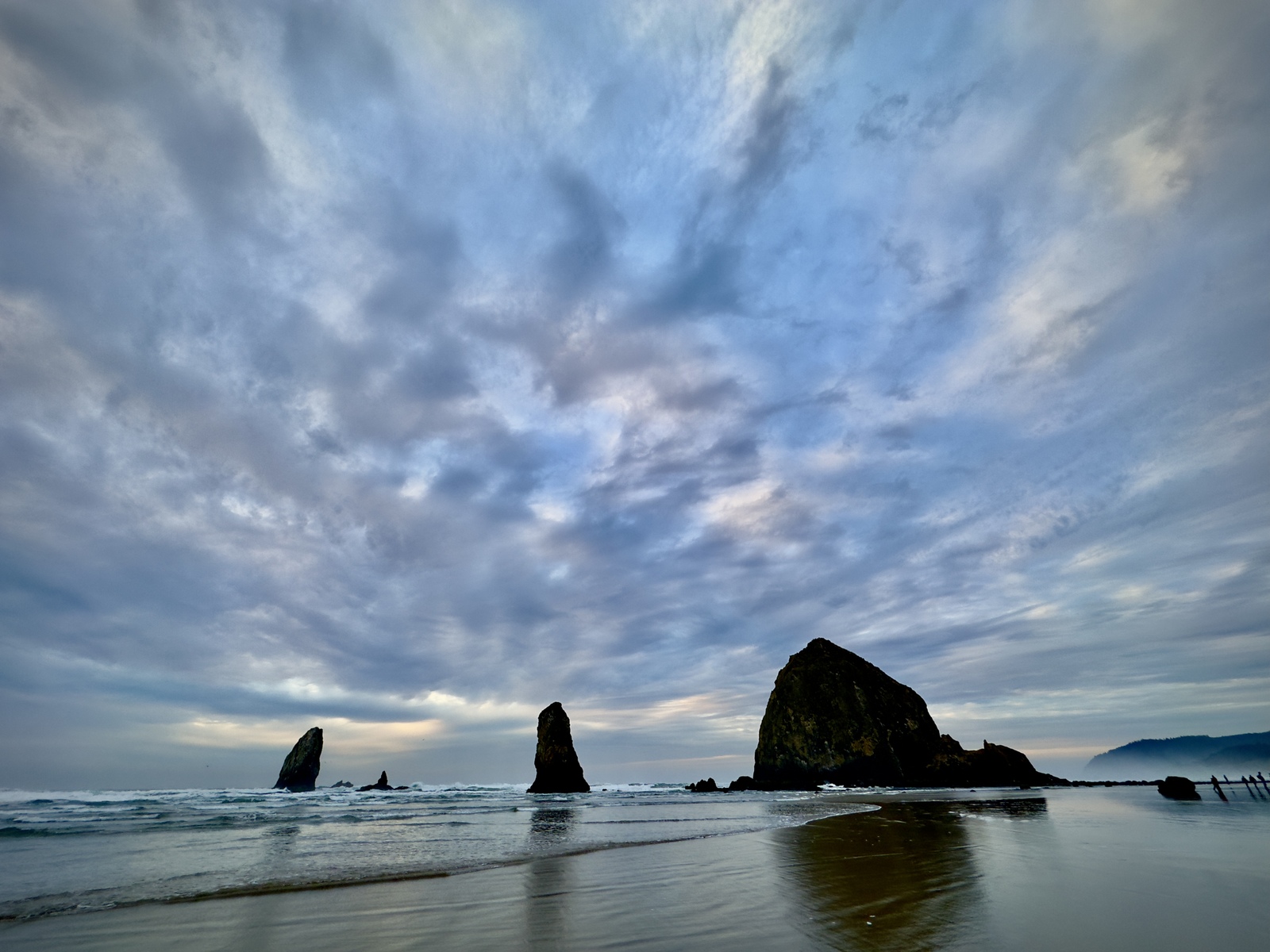
Cannon Beach (3027)I visited Cannon Beach in Oregon a couple of times to try and get a great sunset image, but no luck so far.  But one morning, I took this groovy shot with my iPhone.  Where does the sky stop and the beach begin??

Iphone #2

Cannon Beach (3113)

The same morning on Cannon Beach with a dramatic sky by the Sea Stacks.

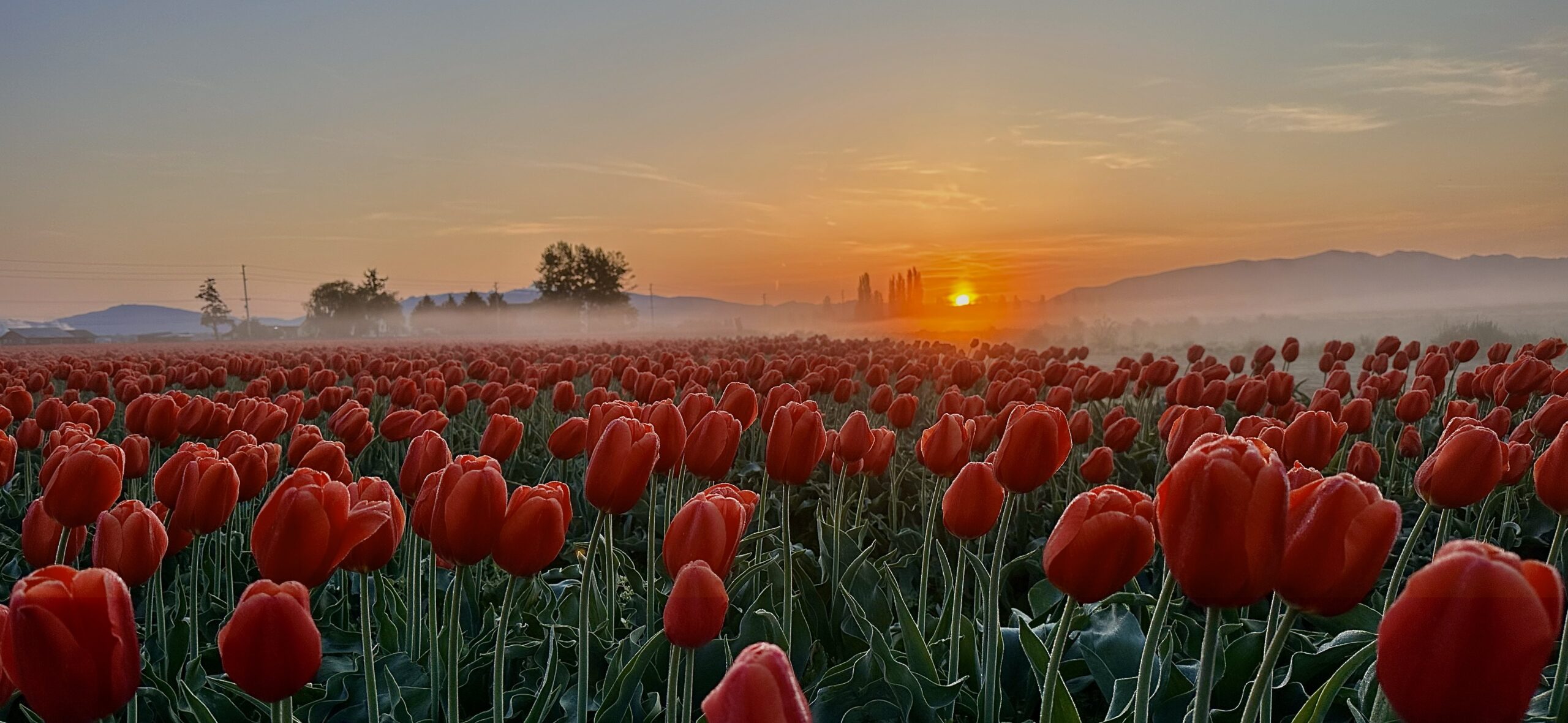
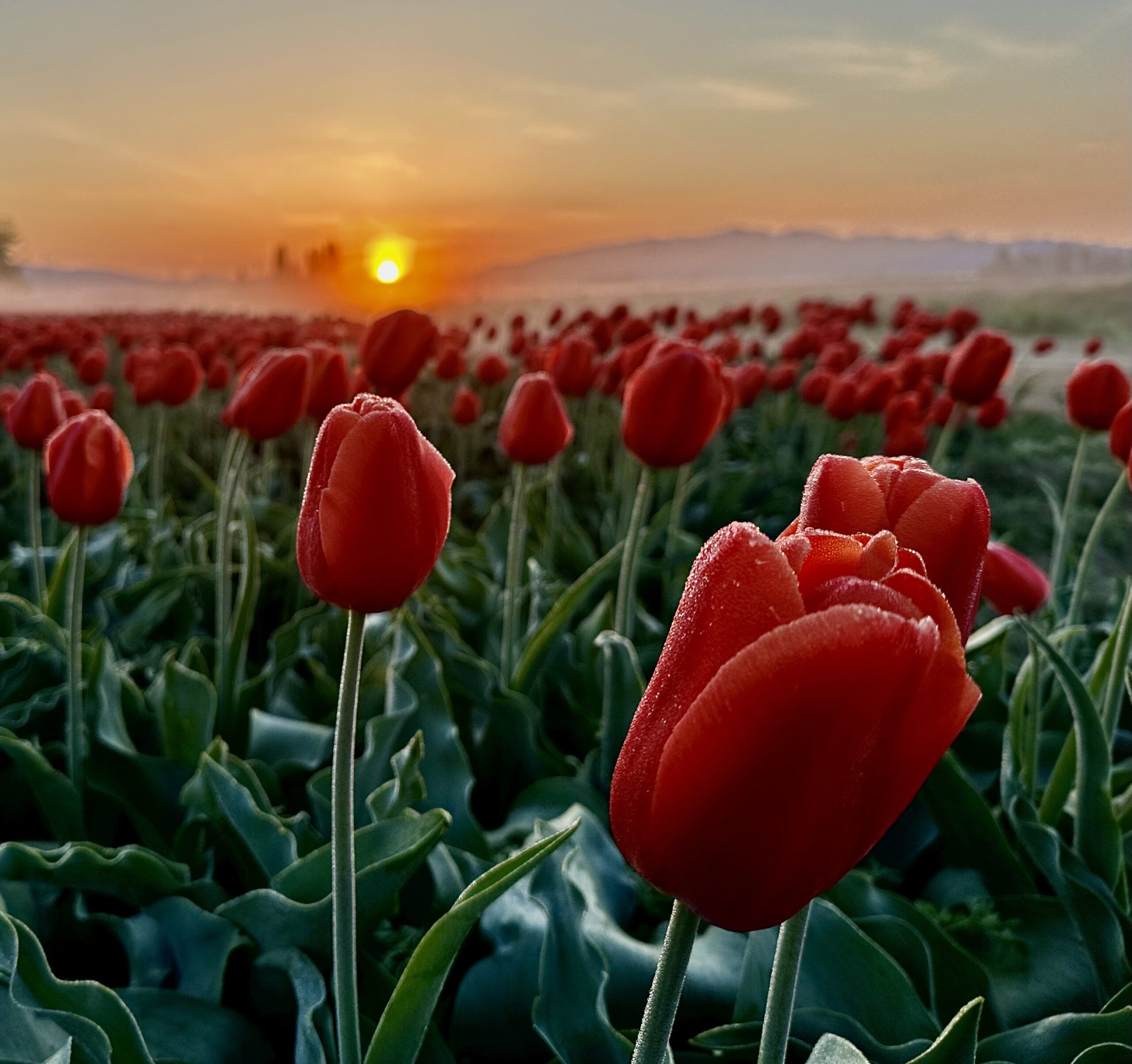
And finally, a couple of sunrise images from the tulip fields

Iphone #3

Tulip Sunrise (1430) - WashingtonThe image above is cropped to fit nicely on my phone as a background image.

Iphone #4

Tulip Sunrise (1455) - Washington

Got any favorites from this year’s roundup?

And what didn’t make the list?

  1. Bald Eagles:  I made 18 day-trips to photograph bald eagles….Sadly/oddly, I didn’t capture anything worthy of this list (the good news is that I have a pretty good portfolio of Bald Eagle images already, so the bar is pretty high)
  2. Tufted Puffin: I went out on two day-trips (on a boat) to see tufted puffins.  I saw those adorable birds for the first time, but no photos were worthy of showing.  I am working on a plan…
  3. Cannon Beach Sunset:  As mentioned, I made a couple of trips to Cannon Beach in Oregon to capture an epic sunset scene — so far, no luck in getting the right mix of clouds, weather, and sun.  The quest continues.
  4. Pika:  I photographed pika at two different locations but….meh.  But I still need to really go through the images in greater detail.  Perhaps one shot will make next year’s “Latecomer” list.
  5. Mt. Rainier:  The fall colors were a bit late, and when we visited, it poured incessantly, and there was no color to be seen.  Complete wash.

Ok, that’s a wrap on 2025.  Thanks for sharing in my adventures and “listening” patiently to my ramblings.

Wishing you a wonderful 2026!!


…..michael


Caddo Lake

Shot of the Month – December 2025

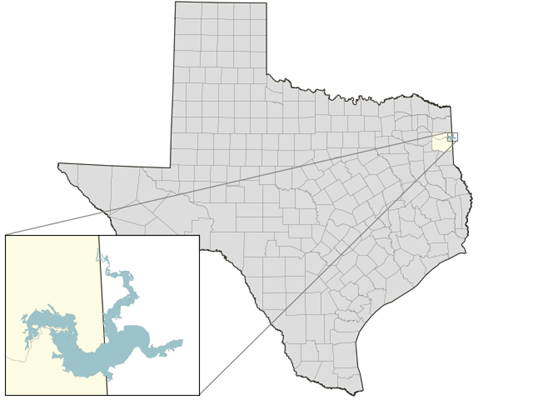
On the map, Caddo Lake is on the border between Texas and Louisiana as shown here:

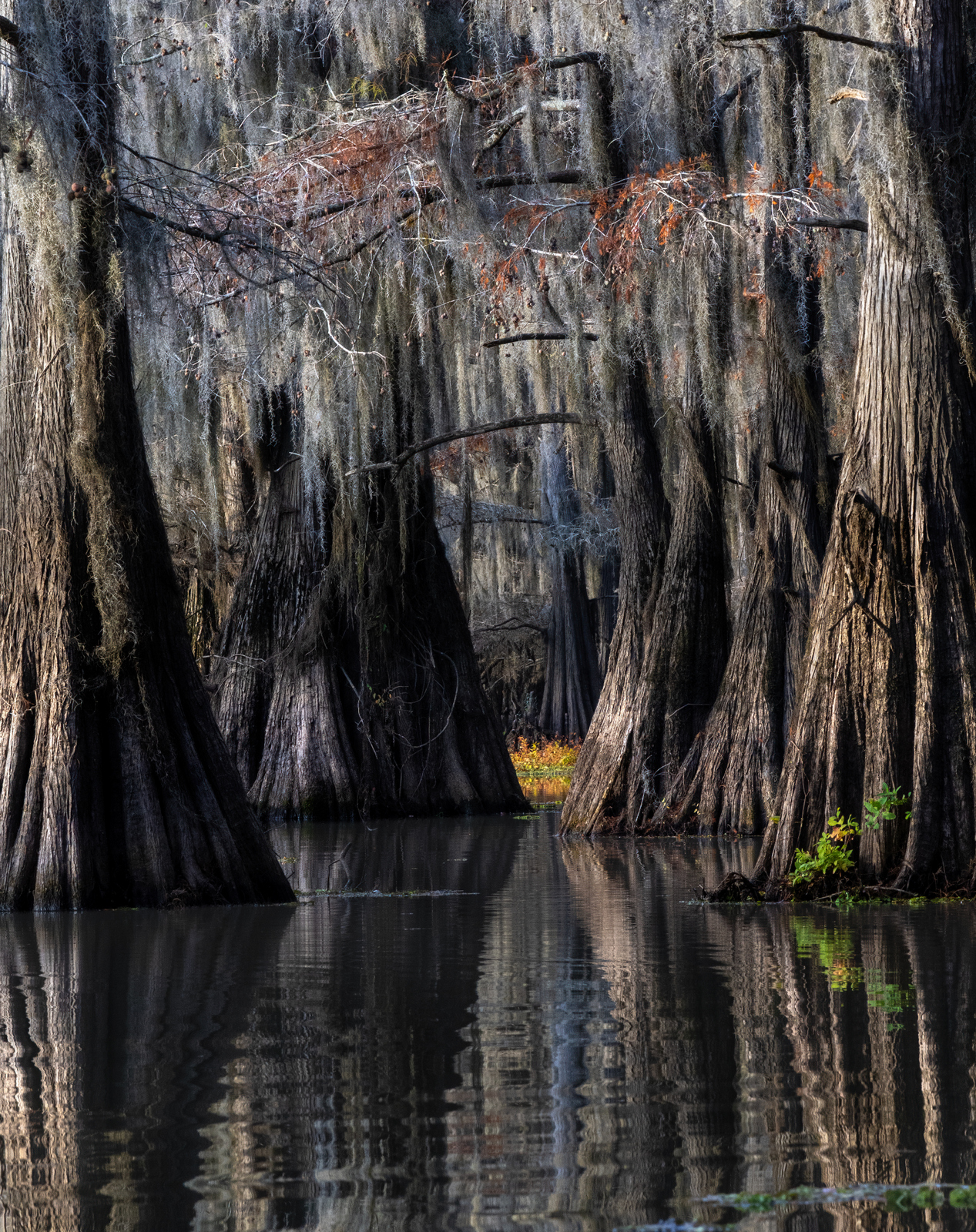
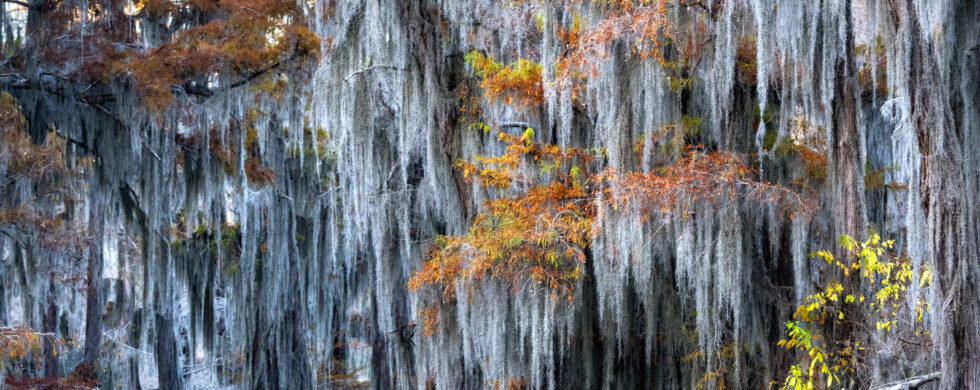
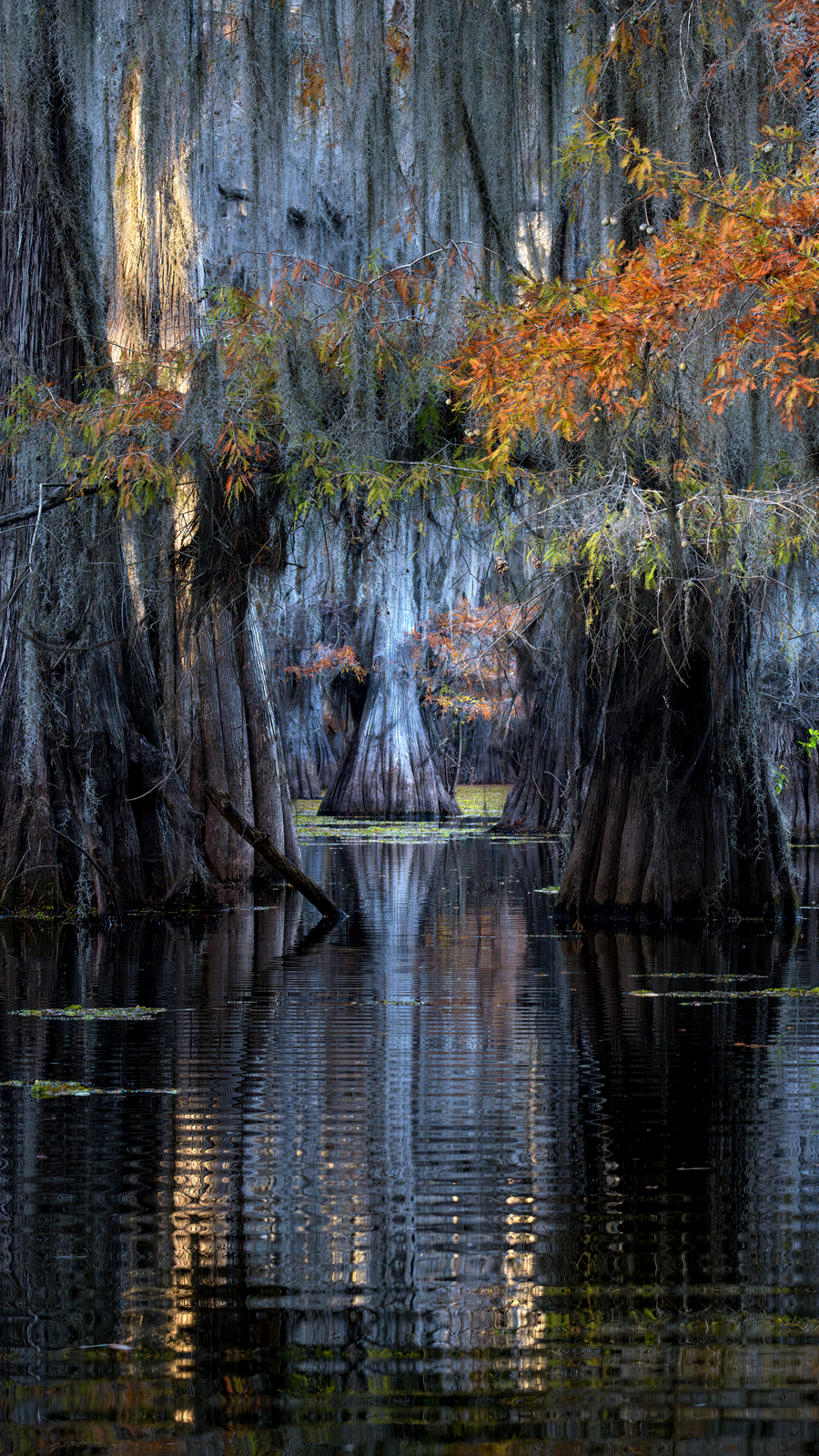
But from behind a camera, Caddo Lake feels like a place only found in dreams and fairy tales.  The bayou is dominated by the bald cypress tree and in the fall, these trees are covered in Spanish moss while the leaves transform into hues of copper, rust, orange, and cinnamon brown.  In the early morning, fog can hover just above the water, adding to the mystery.  One is teleported into a unique, magical landscape of color, textures, and abstract shapes and reflections.

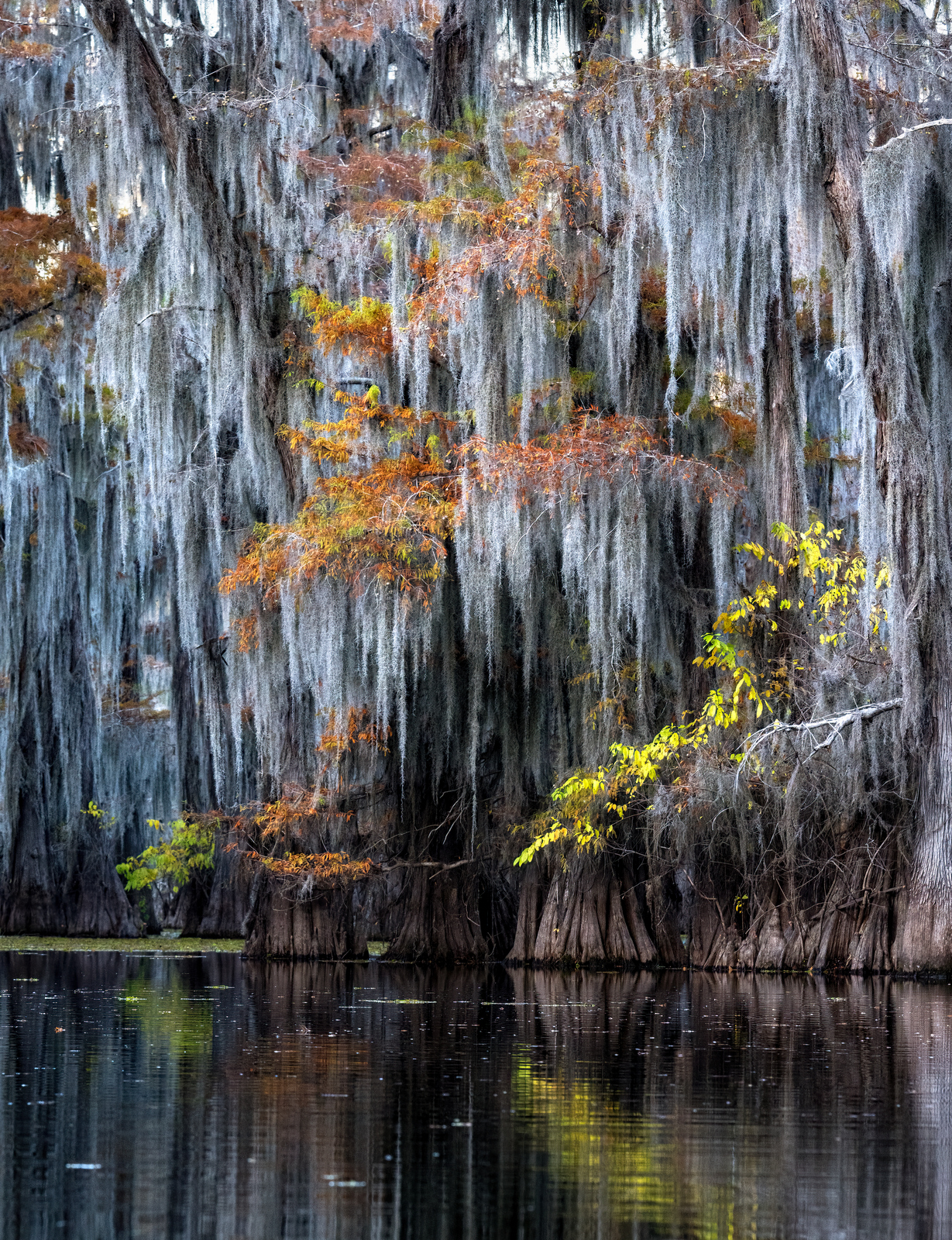
Caddo Lake, Texas (3460)

Drifting on a kayak across the still water at sunrise is a balm for the soul unless you are trying to photograph it.  Around every corner is an explosion of shapes and colors and contrasting textures – the fatal error is to try and capture it all in one photo.  You must really study a scene to find the right mix of elements and avoid a cacophony of sights that create a visual mess.

In the image above, the long curtains of Spanish moss offer a delicious color and textural contrast to the orange and yellow leaves.  The dark water provides a nice canvas for reflections of the color above.

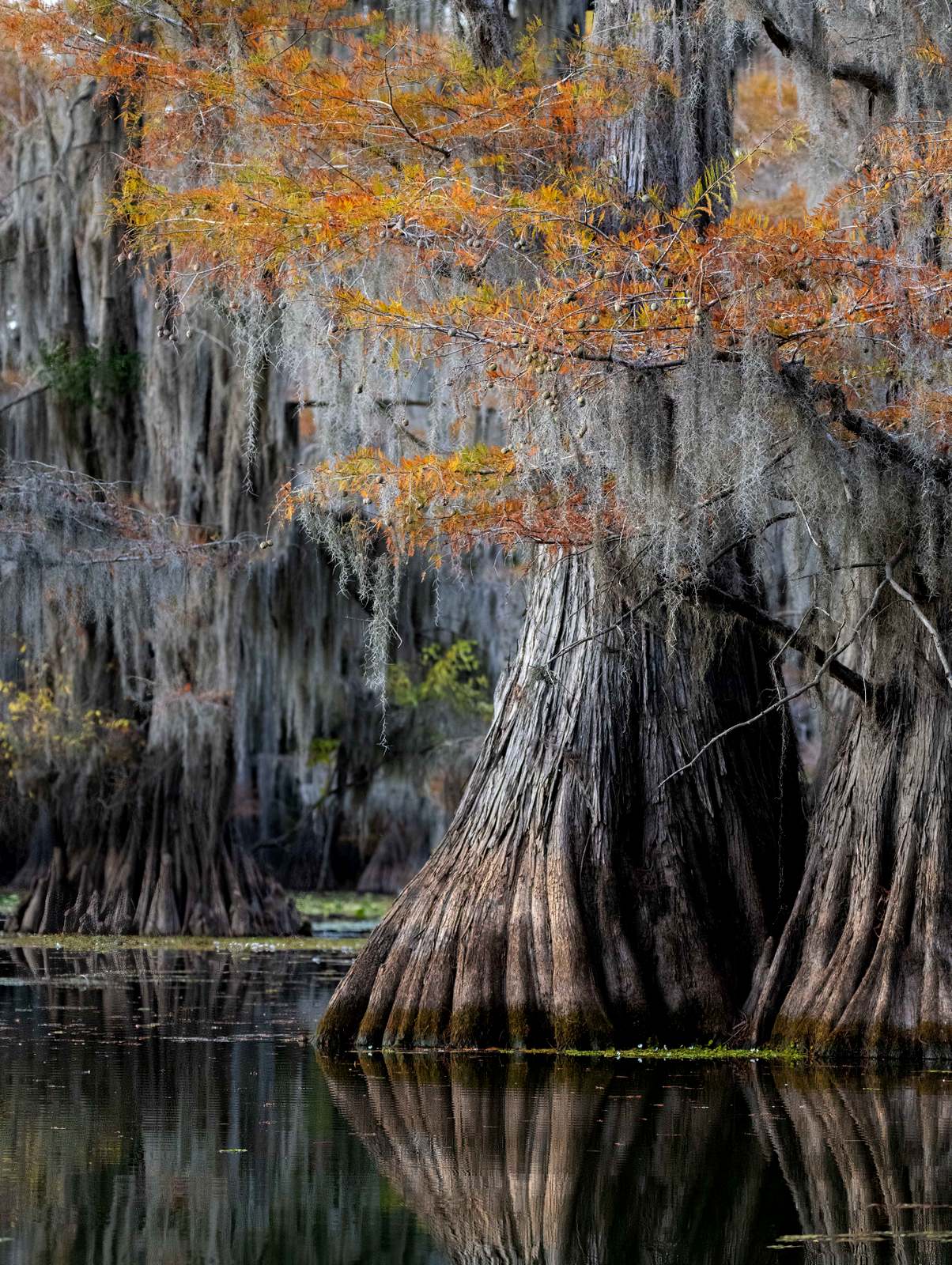
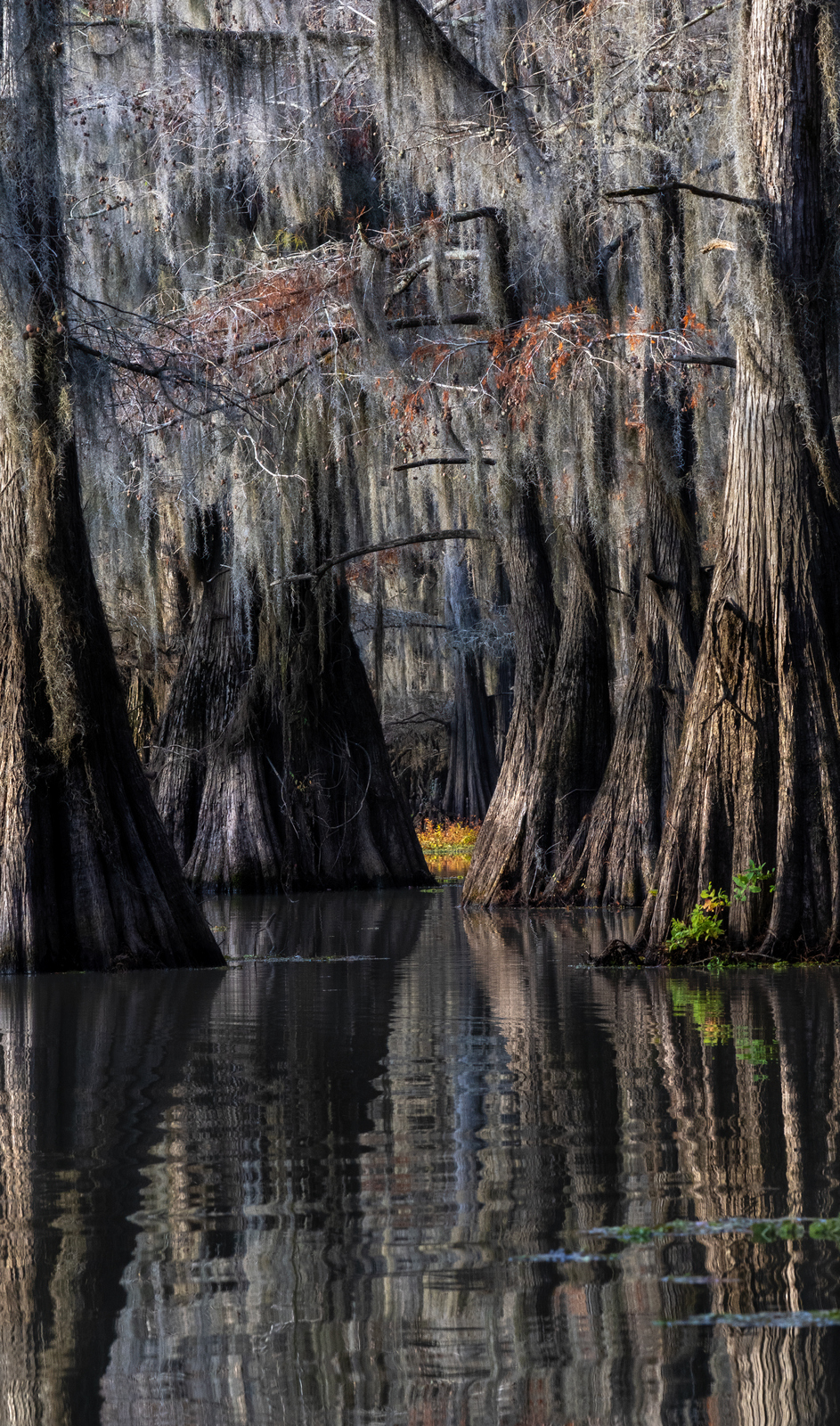
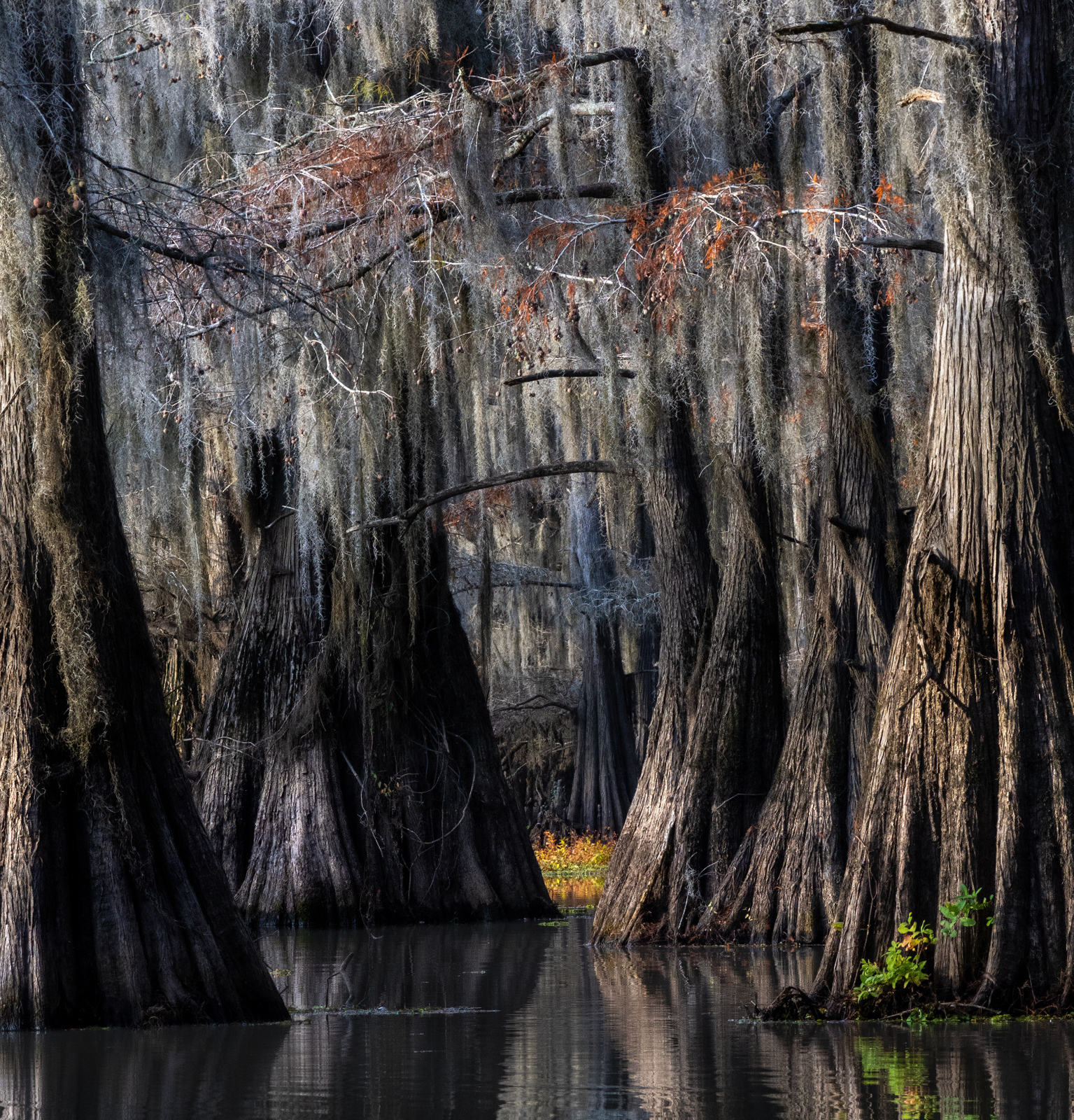
The massive flaired trunks of the bald cypress descend directly into the water, creating wonderful symmetrical patterns when the water is calm, as shown below.

Caddo Lake, Texas (3840)The orange leaves, Spanish moss, and seed pods create a richly textured “oil painting” effect in the image above.

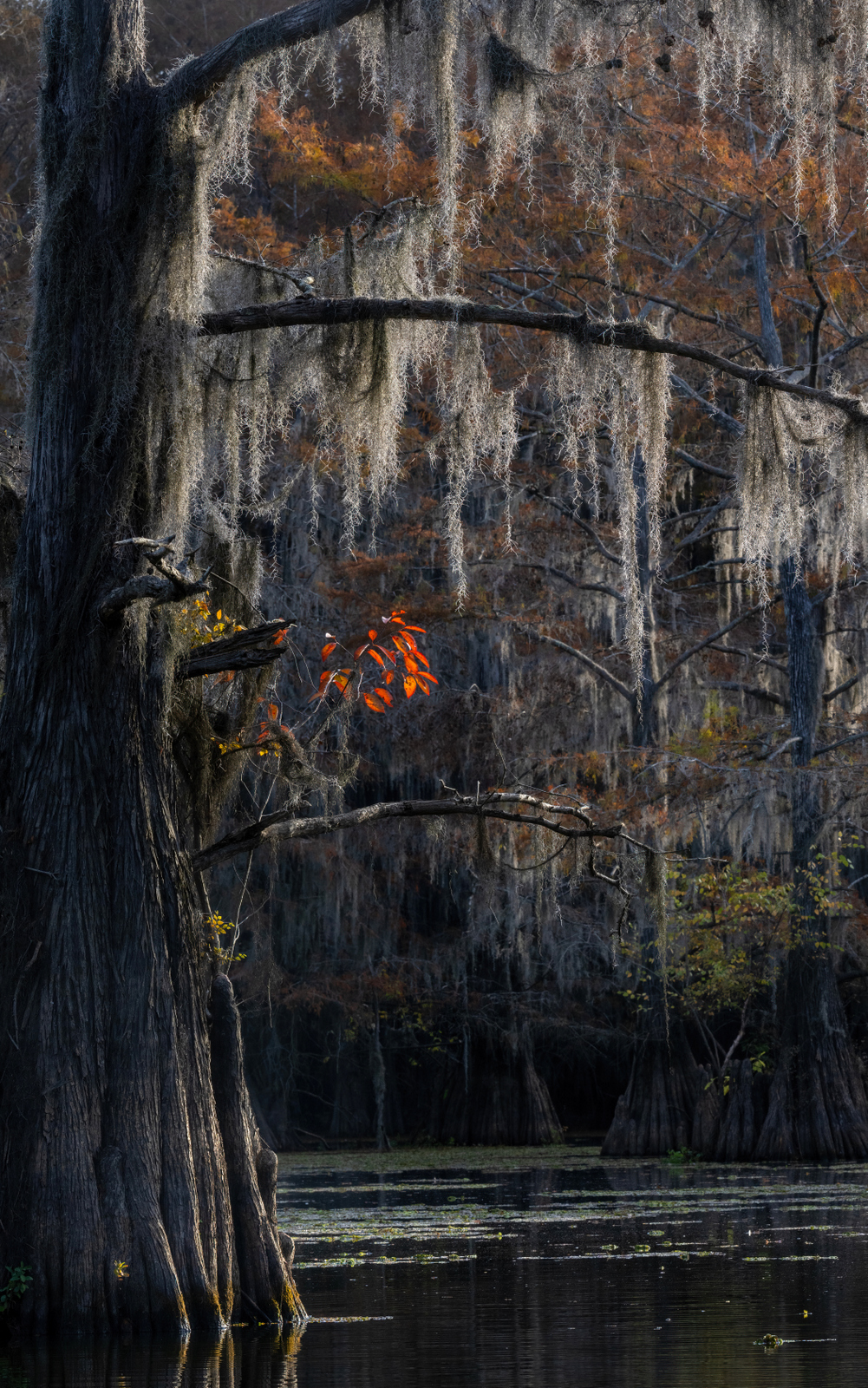
As the sun rises, the race is on to find delicate side lighting that brings color, texture, and contrast to life:

Caddo Lake, Texas (9009)

In the next image, I liked how the reflection of the tree leads the eye down the solemn tunnel past the striking caonopy of color:

Caddo Lake, Texas (3426)

My eye was instantly drawn to the colorful bouquet lurking in the distance:

Caddo Lake, Texas (8791)

Here is the same image, but with less water visible to celebrate the rich texture and delicate hues of the canopy above:

Caddo Lake, Texas (8791v2)


Caddo Lake offers a gothic, moody, atmospheric take on fall photography that will leave you filled with awe and tranquility – just don’t tip the kayak.

Prefer “classic” fall, a la New England? Click here.  Or here.

Prefer a Pacific Northwest take on autumn color?  Click here.

Mother Nature has something for everyone.


Until next month….michael


Nikon Z9, Nikon 100-400 (@185mm), f/11, 1/80s, ISO 900


Falling for Rainier

Shot of the Month – November 2025

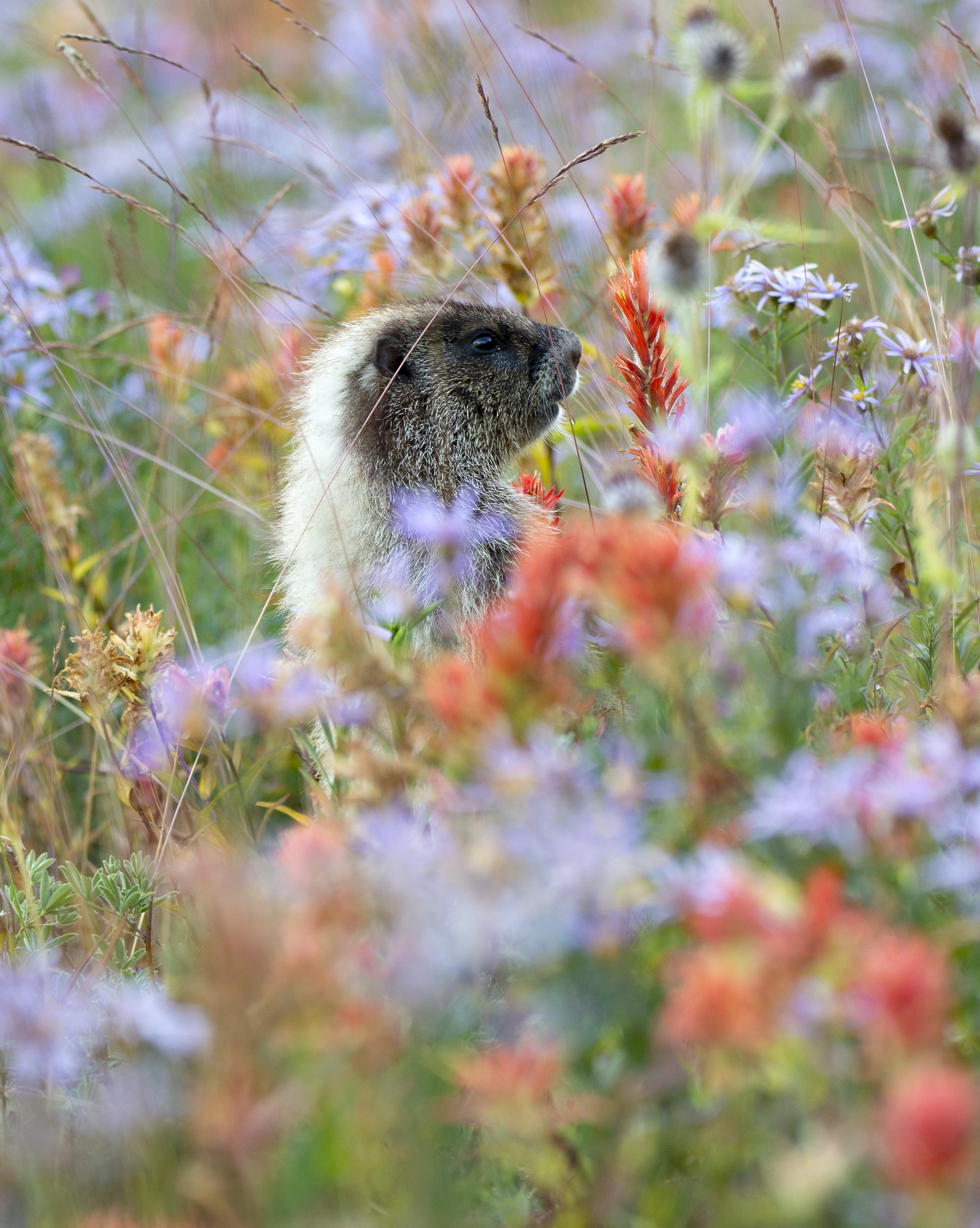
If you visit Mt. Rainier in late summer, the nearby fields and hillsides can be awash in color as mountain flowers rapidly bloom to celebrate the brief respite from the cold and snow.  Below we see a Hoary Marmot up to his eyeballs in a cacophony of assorted wildflowers at peak bloom (that he is about to eat!).

Hoary Marmot in Wildflowers (4054), Mt. Rainier

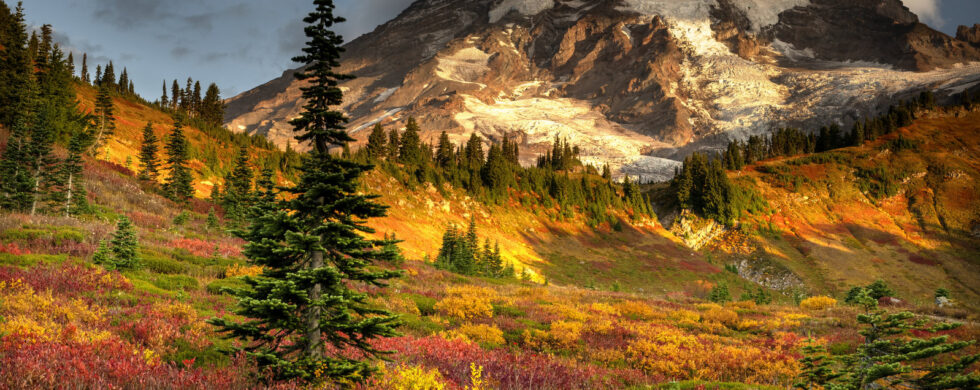
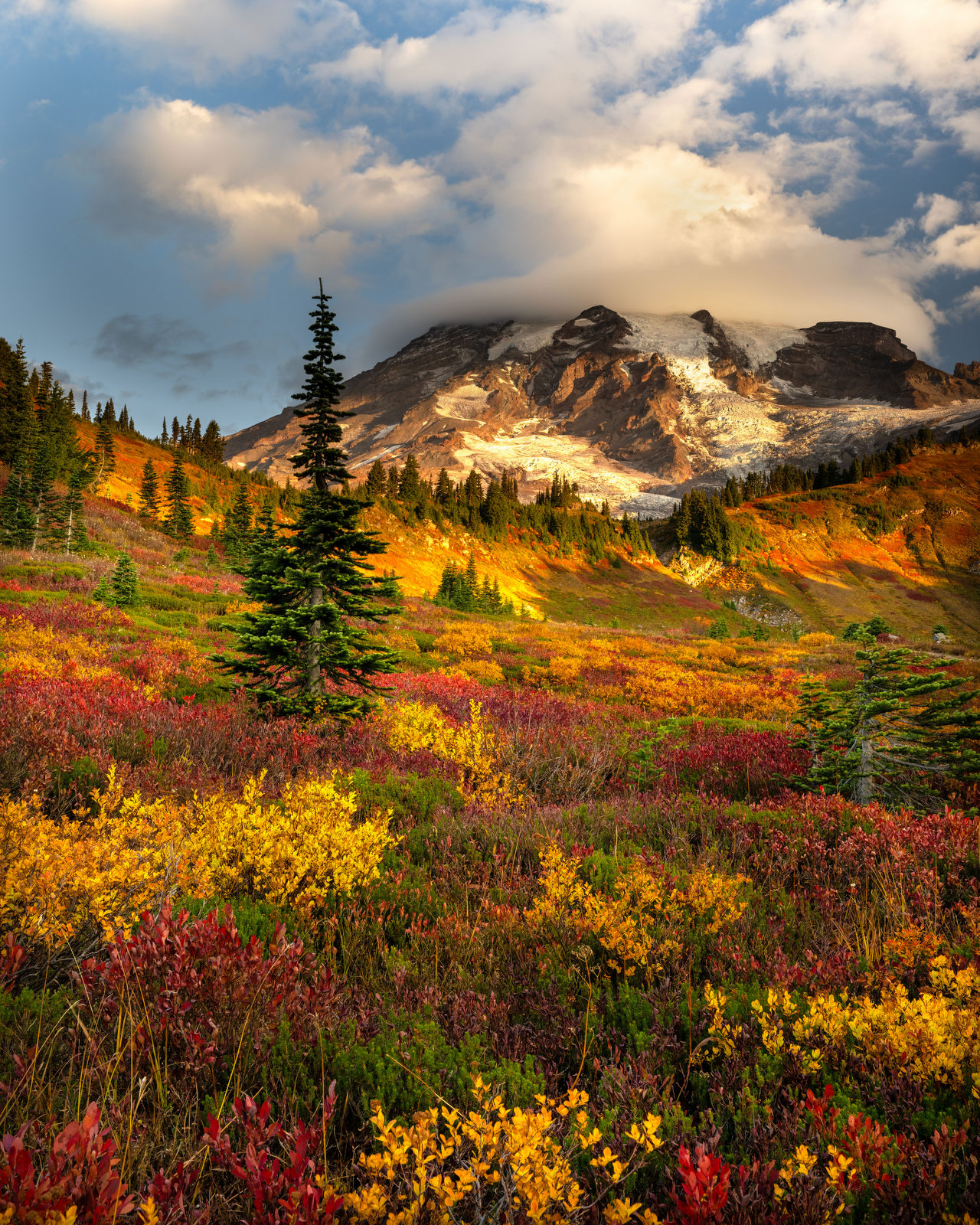
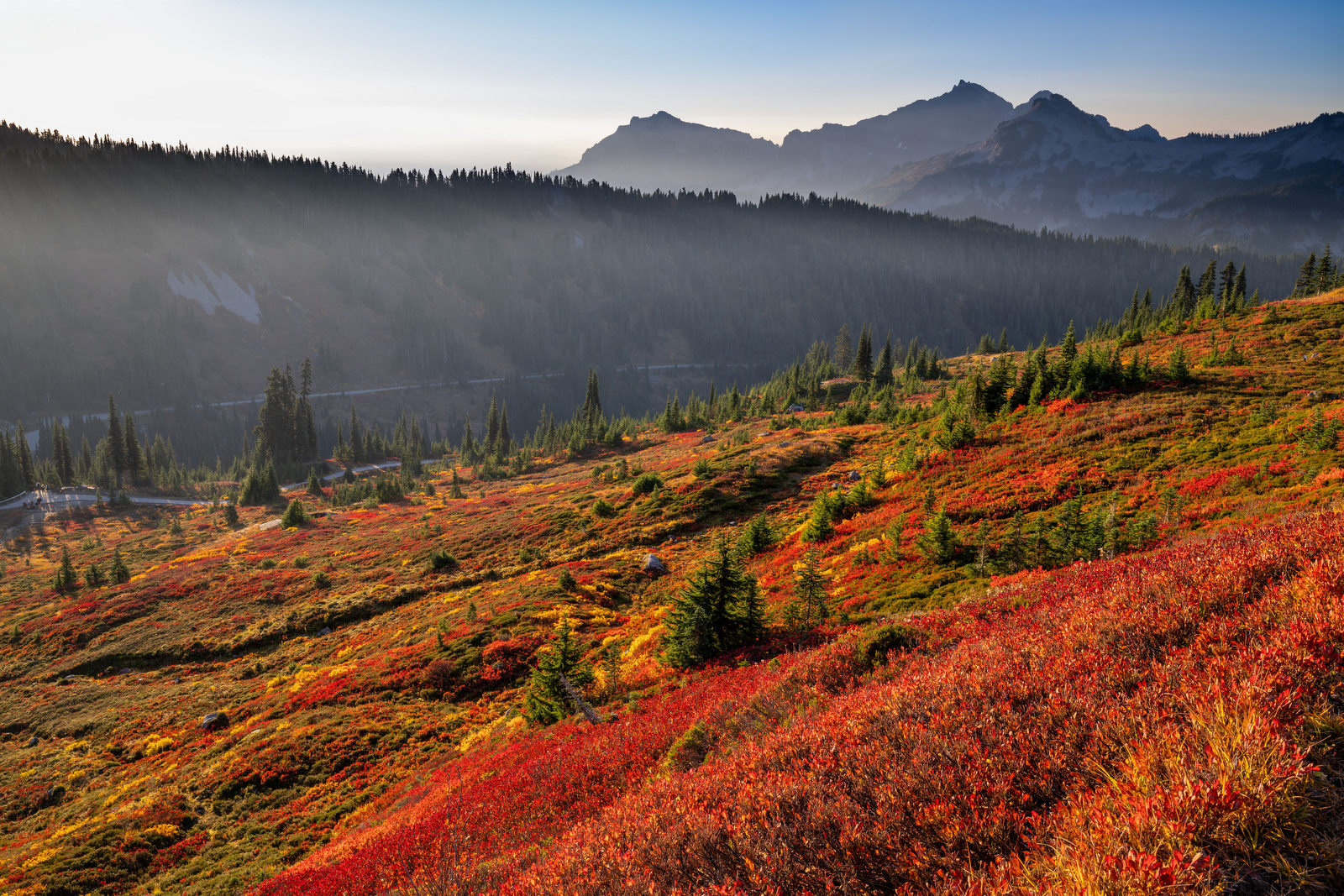
Visit in the fall, and you will find the mountain yet again awash in color of a different sort:

Mt. Rainier Fall Meadow (5610)

As you may have noted, the fall colors here are quite different than those found in the Northeastern USA.  To enjoy the autumn colors there, one must look upward toward the sky as the color is found (mostly) in the trees.

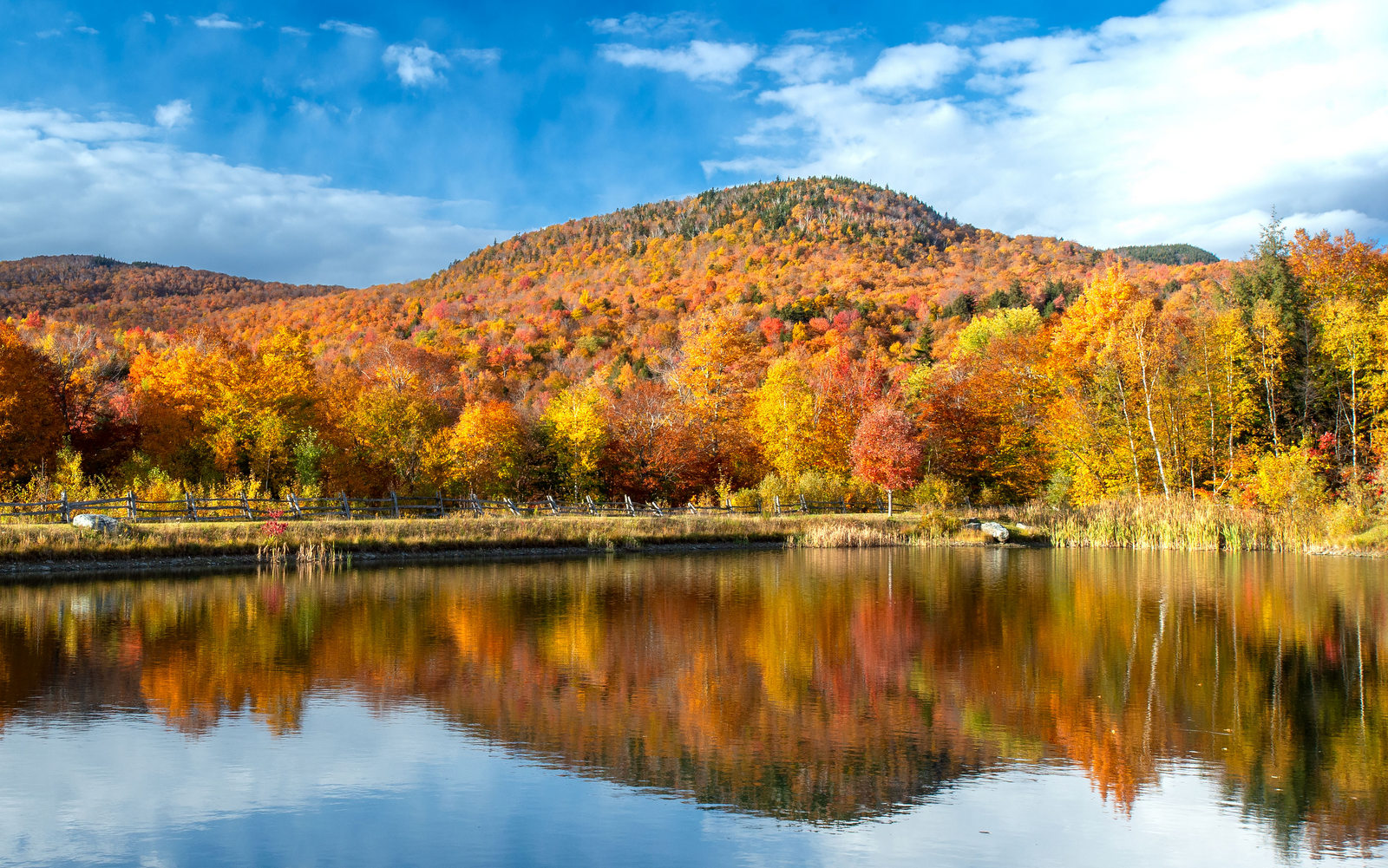
A scene from Vermont:

Fall Foliage (3934) - Vermont

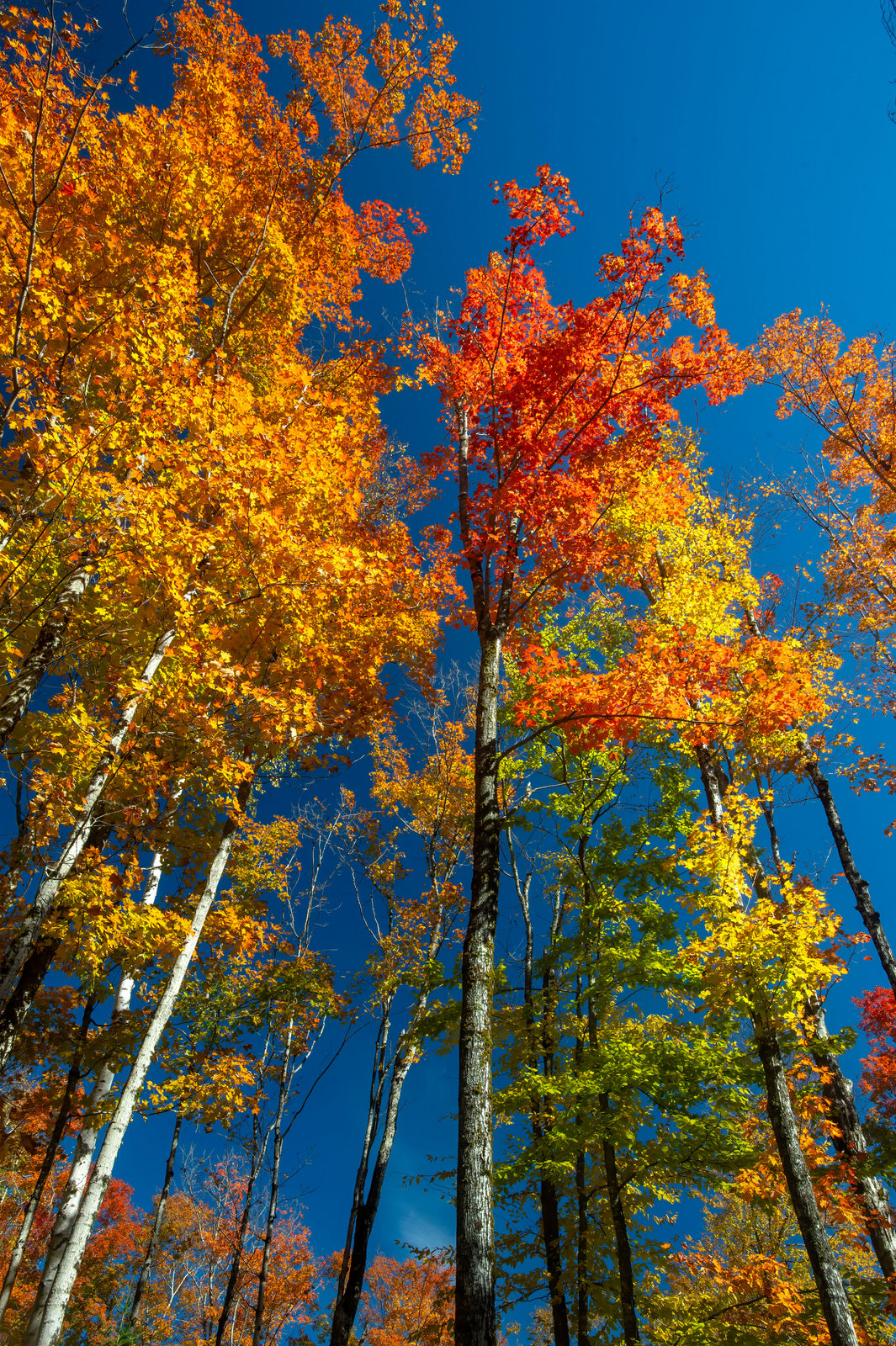
In the Northeast, the stunning fall colors come from a mix of trees:

  1. Sugar Maples (can turn brilliant yellows, oranges, and reds)
  2. Red Maples (produce intense reds)
  3. Beech Trees (golden-yellow)
  4. Oaks (deep reds and russets)
  5. Yellow Birch (bright yellows)

These trees can dominate the landscape, creating a wondrous, colorful canopy:

Fall Foliage (7239) - Vermont

But on Mt. Rainier, you tend to look down, as it is the shrubs, bushes, and subalpine plants closer to terra firma that allow the meadows to burst with color.   At some elevations, trees like the Western Larch, Cottonwoods, Willows, and Aspen can add another vertical layer of color.  In the meadows, like in my Mt. Rainier photo above, the colors come from:

  1. Vine Maple (vibrant red and orange, often found along roadsides and under firs)
  2. Huckleberry (these bushes create deep red carpets in the meadows)
  3. Fleeceflower (bright red)
  4. Arrowleaf Groundsel (bright yellow)
  5. Broadleaf Arnica (subalpine plant with yellow daisy-like flowers)
  6. Oregon Sunshine (yellow blooms
  7. Goldenrods (small yellow flowers)
  8. Sitka Mountain Ash and Wild Rhododendron (can add splashes of yellow and orange)

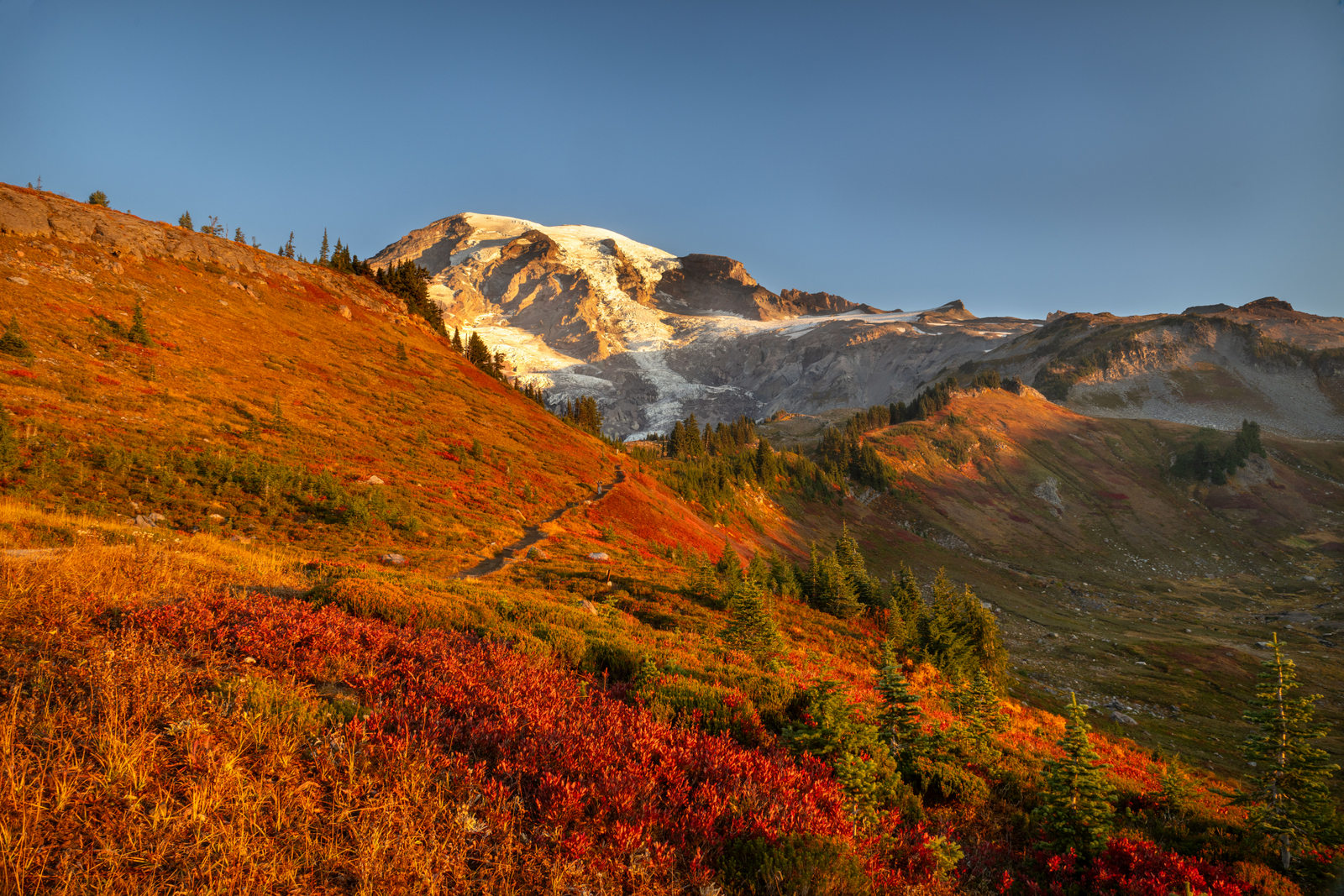
The hills are alive (with color)!!  Another view near Mt. Rainier:

Fall Foliage (6550) - Mt. Rainier

Another view of Mt. Rainier, with the meadow aglow in the morning light:

Fall Foliage (6446) - Mt. Rainier

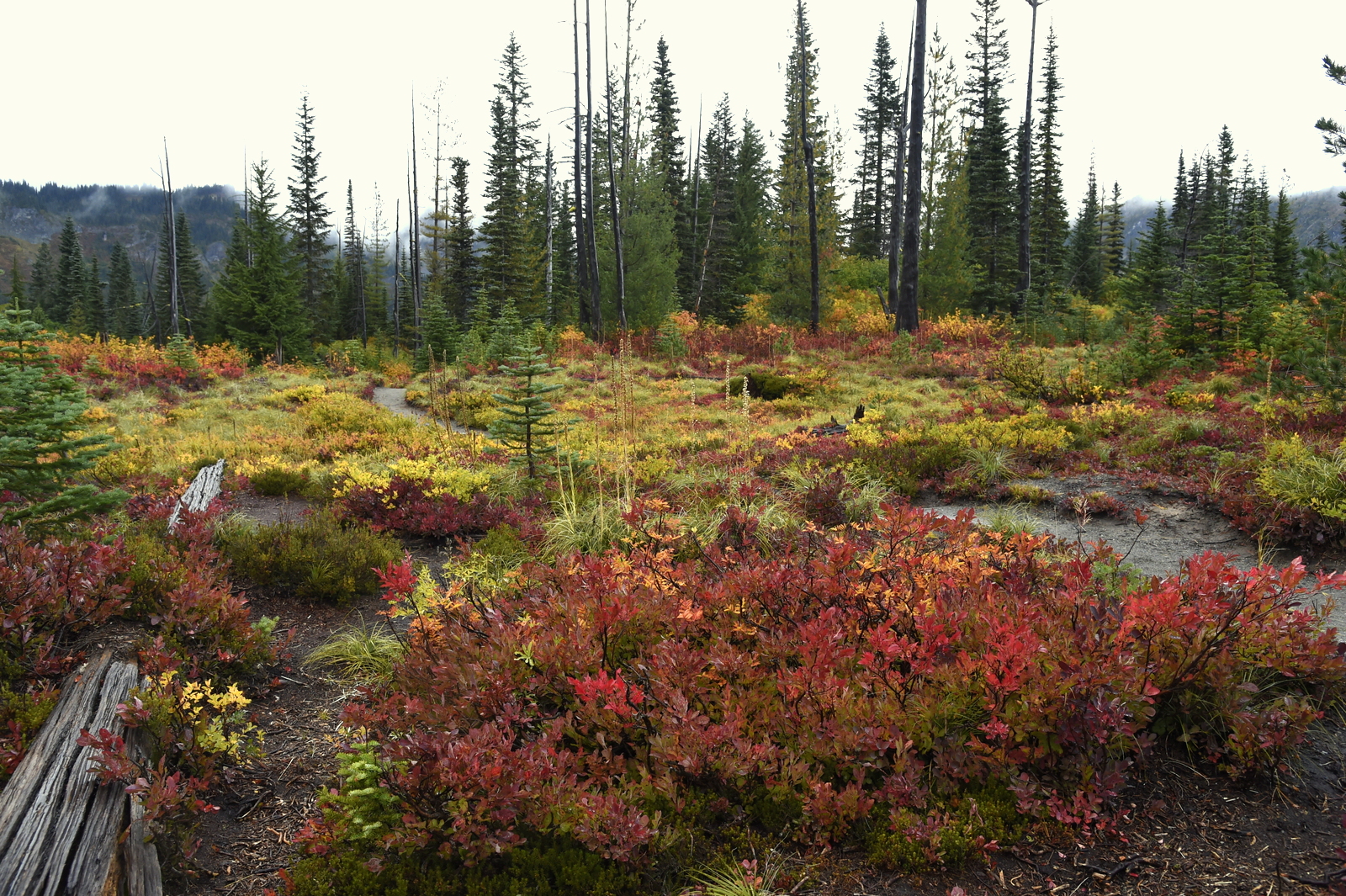
A more subtle palette I found at this spot near Mt. Rainier:

Fall Foliage (3331) - Mt. Rainier

East or West.  Up or down.  Either way, Mother Nature’s fall colors always astound.


Until next month…….m


Nikon Z9, Nikon 14-30mm (@30mm), f/11/ 1/15 sec, ISO 64


So Many Stories

Shot of the Month – October, 2025

Brown Bear, Alaska (1065c)

Opportunities to photograph wildlife are often rare and fleeting.  When lightning strikes, I often struggle to keep calm.  My natural reaction is to pull the camera immediately to my eye and fire off shots wildly to capture anything I can before the scene is gone.  But I know that my best images happen when I stay calm and look carefully at the scene before me and ponder,

“What is the story that I want to tell?”  Or, rather, “What story is the most interesting here?”

Or even better, I think about the potential stories that I want to tell given the subject and setting BEFORE the action begins.

Pondering even briefly can help get beyond the obvious snapshot and offer something a bit more meaningful for the viewer.  Once I have clarity on that, all the technical stuff comes into play – where to position myself, what elements do I include in the image that help tell the story?  And just AS important, what elements do I leave out because they distract from the story?  And all the other tech stuff..what aperture is best?  shutterspeed?  How close to zoom in?  Get low?  Get high?  Blah blah….

Let’s look at how different compositions of the same scene that I saw while at Katmai National Park in Alaska, earlier this year, tell different stories:

Story #1:

In the image above, we zoom in tightly to tell a very intimate tale of a life-and-death struggle between two individuals.  The brown bear has come to this river outlet in Alaska to feast on the spawning salmon.  The salmon are practically bursting with calories, up to 4,000 per fish, and the bear needs every calorie to fatten up before the long winter settles in.  The salmon, for his part, is racing against time to reproduce before he dies – with or without the bear, he will die within a few weeks of this final act.  It is part of the salmon’s ultimate sacrifice for its young.  The coastal rivers are nutrient-poor, and the parents’ rotting corpses infuse essential nutrients into the waterways that their offspring will feed upon once they hatch.
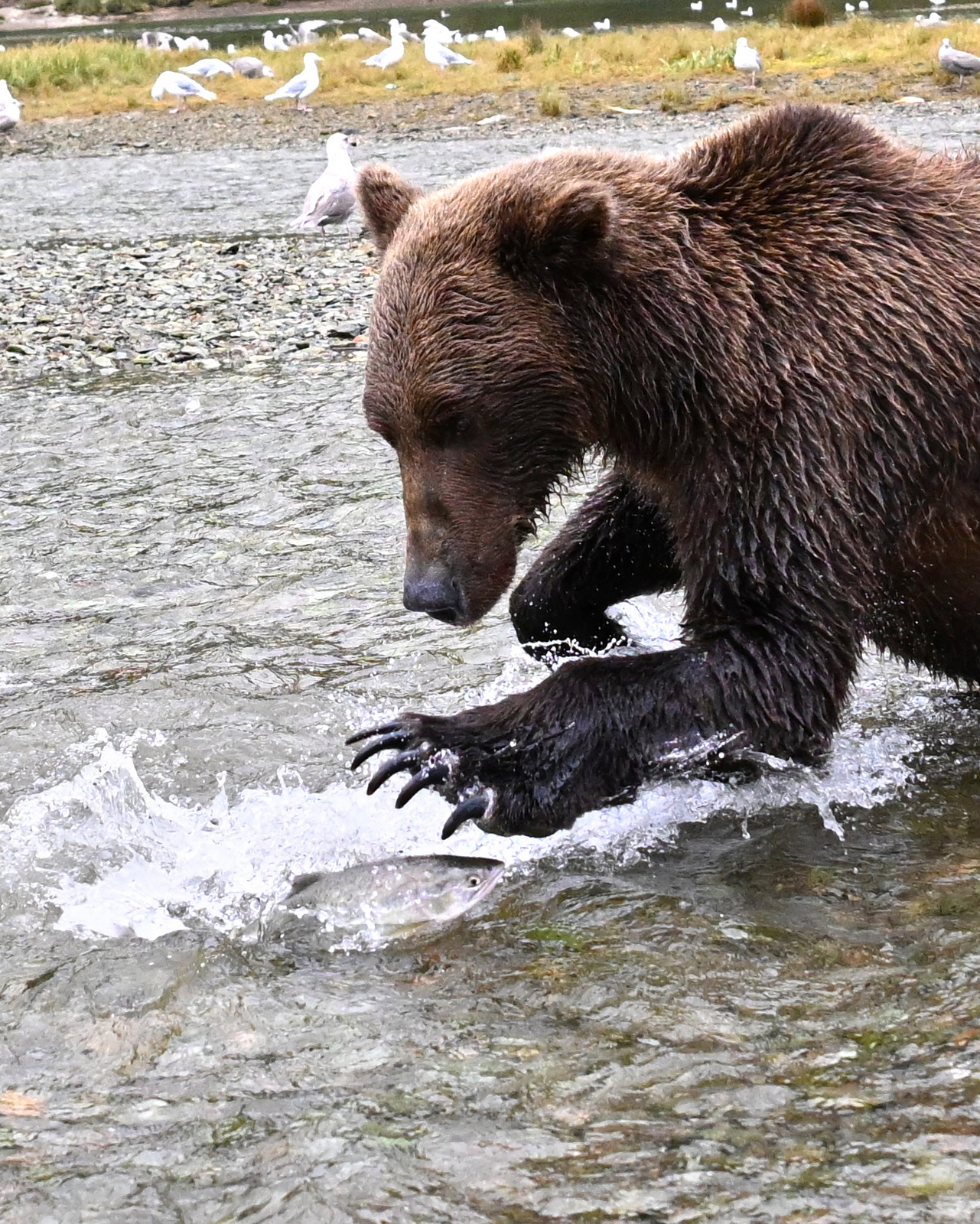
In this scene, the action is intense as the bear lunges forward with her plate-sized paw, striking downward as the salmon makes an evasive leap out of the water.  The bear’s massive 4-inch claws are spread wide to create a lethal “net.”  For the fish, this is a potentially life-ending encounter, while for the bear, this is just one of hundreds of paries that she will make that day.  I find myself tensing up as I make eye contact with the salmon and absorb his panic. In this story, we not only look closely at each subject but FEEL something palpable for another life.

Story #2

If I zoom out, I capture an image where a broader story unfolds:

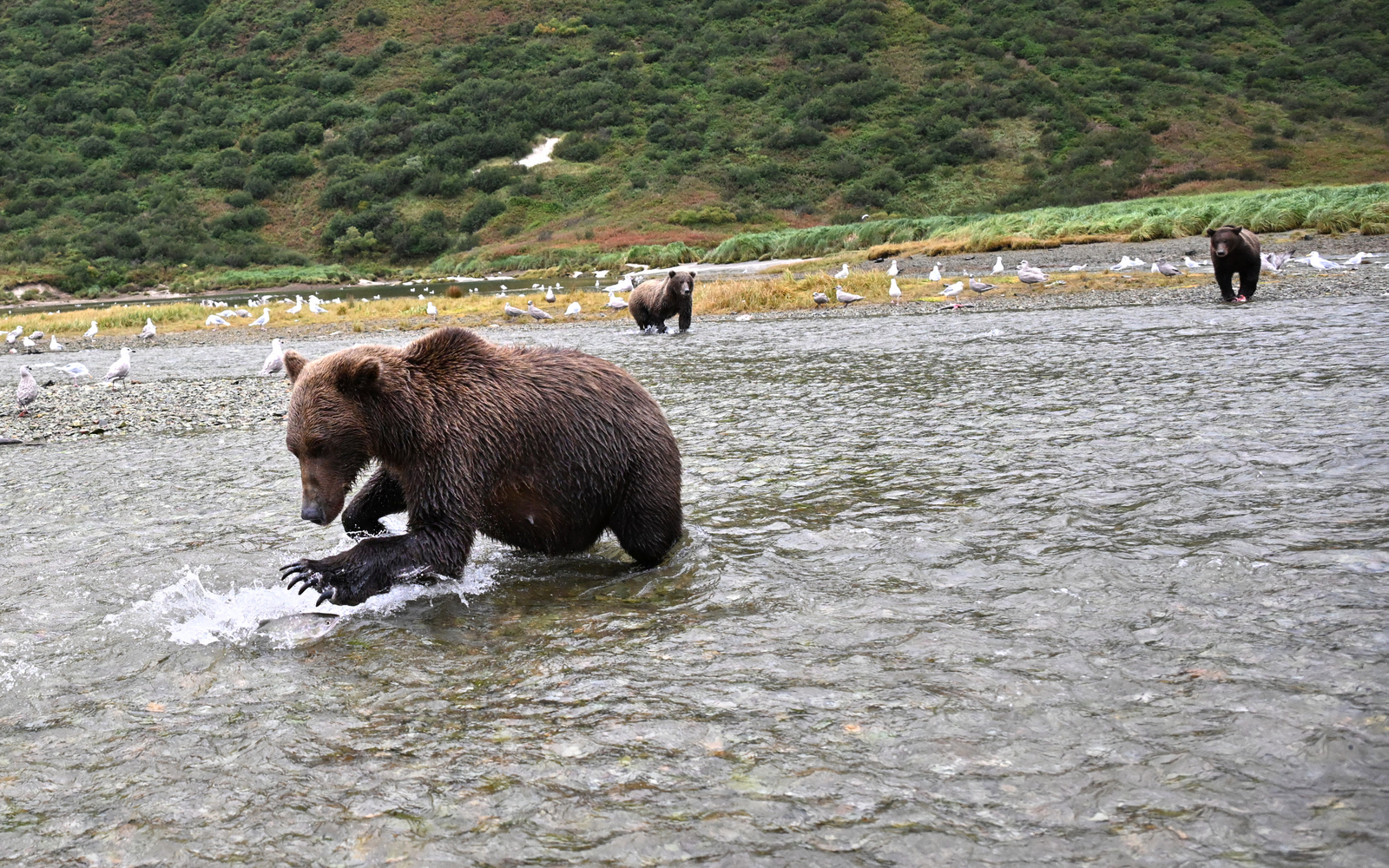
Brown Bear, Alaska (1065w)

In this photo, we have a wider view of the environment and see other actors.  The story becomes less about an individual bear or fish but rather about the natural cycles that drive many ecosystems.  Brown bears normally are solitary, so having three in one shot indicates that something special is going on.  They have all been drawn to the coast for the annual salmon migration – the movement of millions of fish from the ocean into coastal waterways that attracts untold numbers of species of mammals and birds to feast on the brief bounty.  It is an epic tale that affects millions of creatures in this ecosystem and countless others along the northern Pacific Ocean.

Learn more about this in my post – Keystone Krisis

The individual life-and-death struggle is now more subtle but ever-present.  The bear in the back right is feeding on a just-caught salmon.  The bear in the lower left has been frozen mid-strike.  The life of that fish is less than a second from ending.   And the bear in the back left is walking up the river in search of an opportunity.  Numerous seagulls wait for their chance to feed on the leftovers.  The shrill squawks from the seagulls can be deafening, and the water churns as salmon flee in all directions.

The second image pays homage to the sweeping cycles of nature that have gone on for millennia, while the first shot poignantly reminds us of the very real lives of the victors and the vanquished caught up in these epic movements.  The difference in scale and nature of reflection caused by each image reminds me of this quote:

A Single Death Is a Tragedy; A Million Deaths Is a Statistic

(source unclear)

As I mentioned here, I often push myself to shoot a range of compositions of a given scene to help me find the range of tales possible.

Well, enough chatter, time to grab my camera and get out there and find my next story….


Until next month…..michael