
Menu
Jan
31
Shot of the Month – January 2017
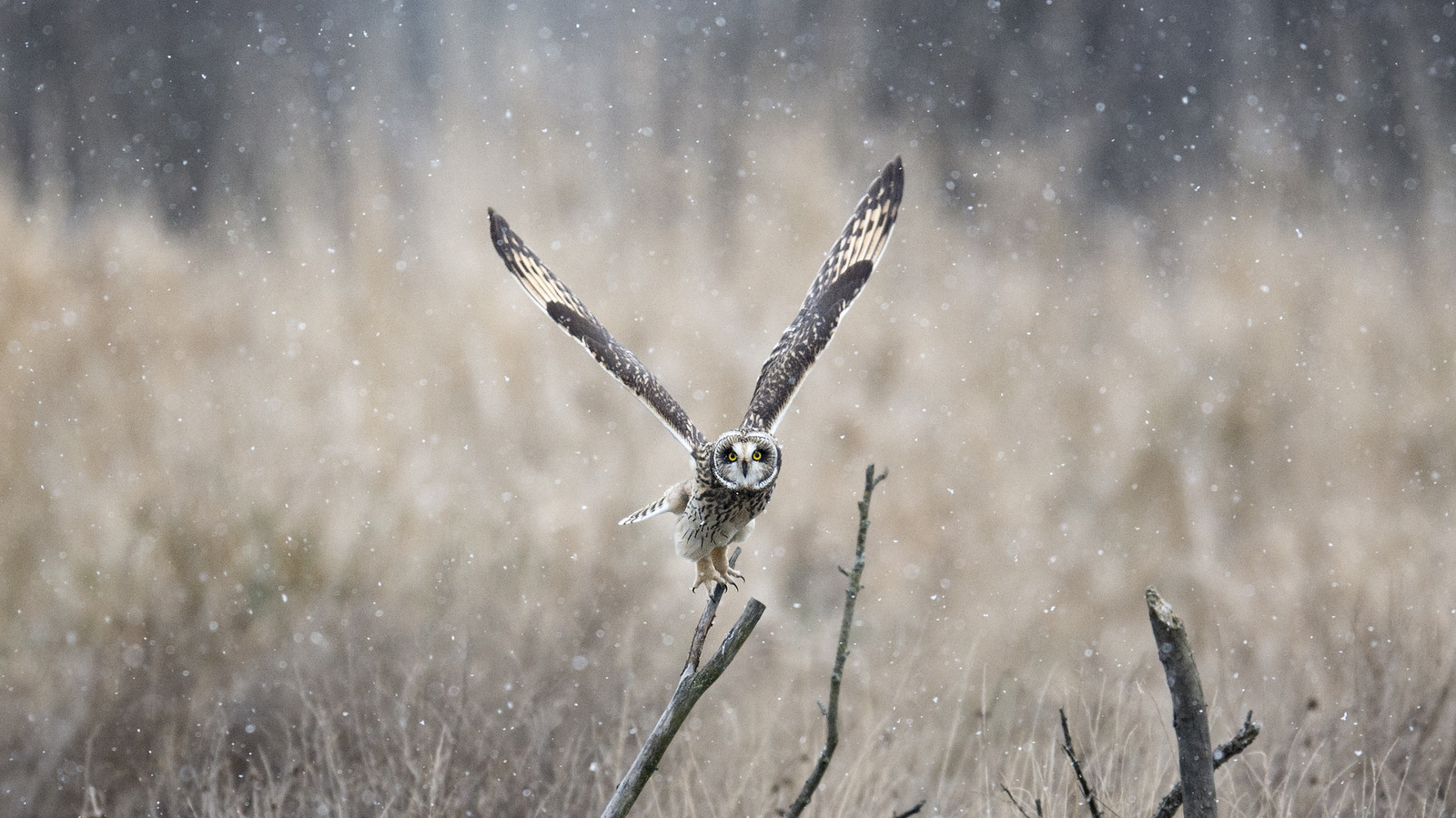
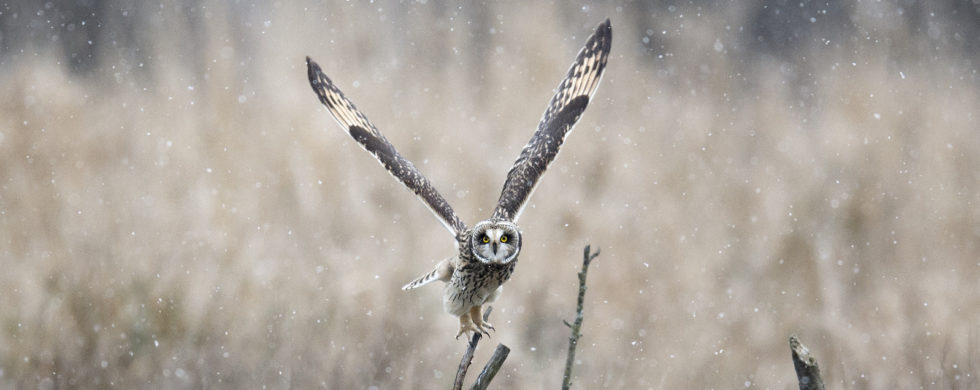
As you may recall from an earlier post, I am a BIG fan of owls so it is an exciting day when I get to add a new owl species to my portfolio. Let me introduce the Short-eared Owl (SEO), as captured here in this lovely winter scene that I found about an hour north of Seattle. Upon moving to Washington State I learned that Short-eared Owls (SEOs) winter over in my new state to escape the cold of northern Canada. Accordingly, I have been spending many a chilly weekend out looking for these aerial acrobats.
Owls can be very hard to photograph as they are usually most active at night. SEOs are one of the easier owls to view, relatively speaking, in that they often hunt during the day. Bless them.
The Short-eared Owl prefers open terrain and can be found in prairies, coastal grasslands, meadows, savannas, tundra, marshes, and other low-vegetation habitats.
These owls specialize in hunting voles and other rodents. The owl usually flies just a few feet off the ground as it scans for a meal — its flight can be highly erratic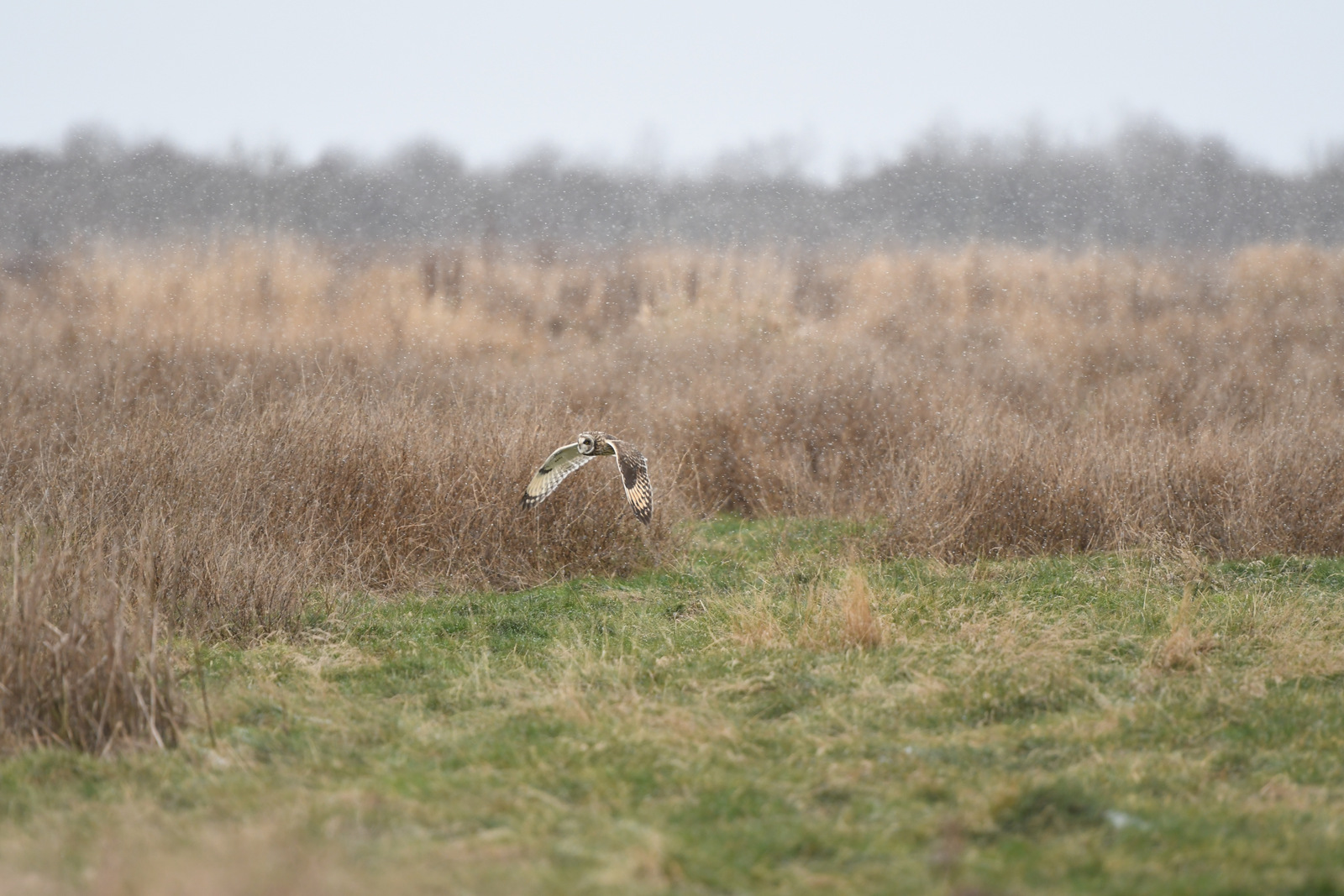
and undulating. As it listens and looks for prey it may suddenly bank to one side or another, or slam on its air brakes to drop to the ground feet first to grab its victim. Sometimes it will hover over a spot as it waits for an opportunity to pounce.
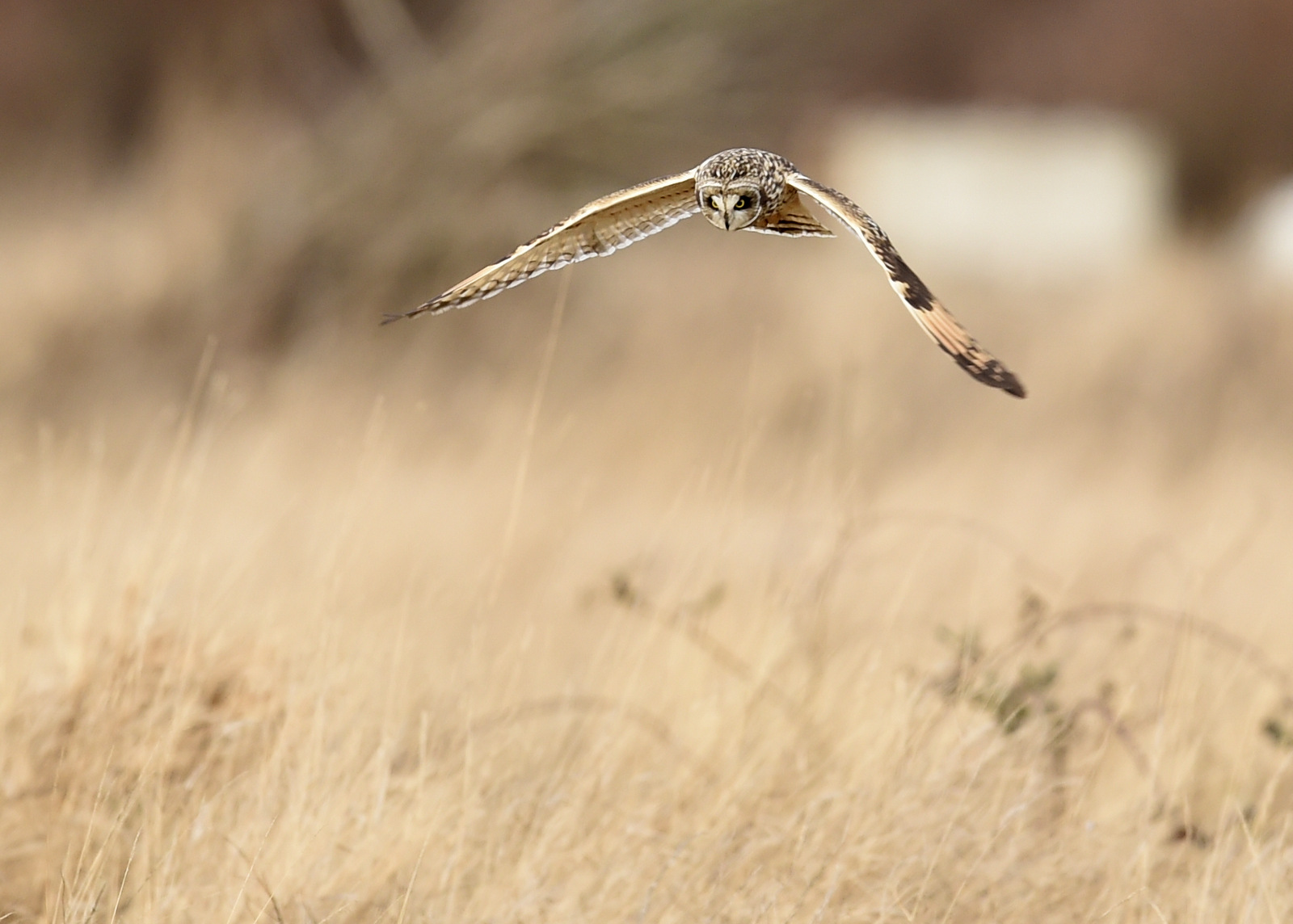
Imagine a large moth flying over a field and you will have a sense of its herky-jerky flying style. As a photographer, I can tell you that trying to capture an image of an SEO in flight is one of the most difficult types of photography I have tried to do. I will be tracking it, tracking it, just about ready to release the shutter, and then, poof, the bird vanishes from the viewfinder. This happens A LOT.
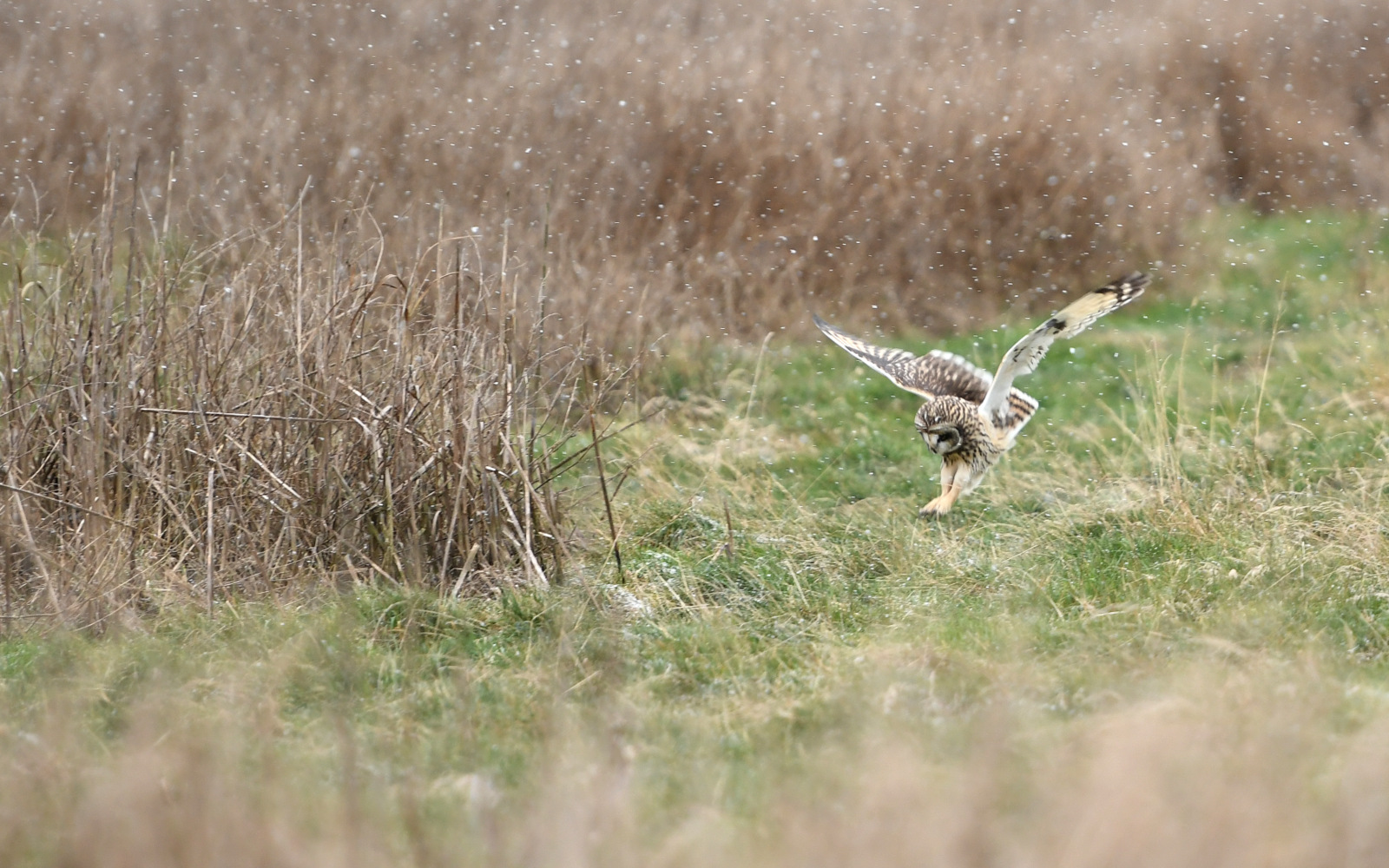 On a typical day, I will arrive at sunrise and take up a position in the field. And then I wait. As the sun rises, and the voles and mice become more active, the SEOs suddenly appear from the ether. I have seen as many as seven SEOs working a large field at the same time. The owls crisscross their way over the terrain in sortie after sortie as they look for prey. It is an amazing scene to behold though it must be a rather terrifying experience if you are a vole.
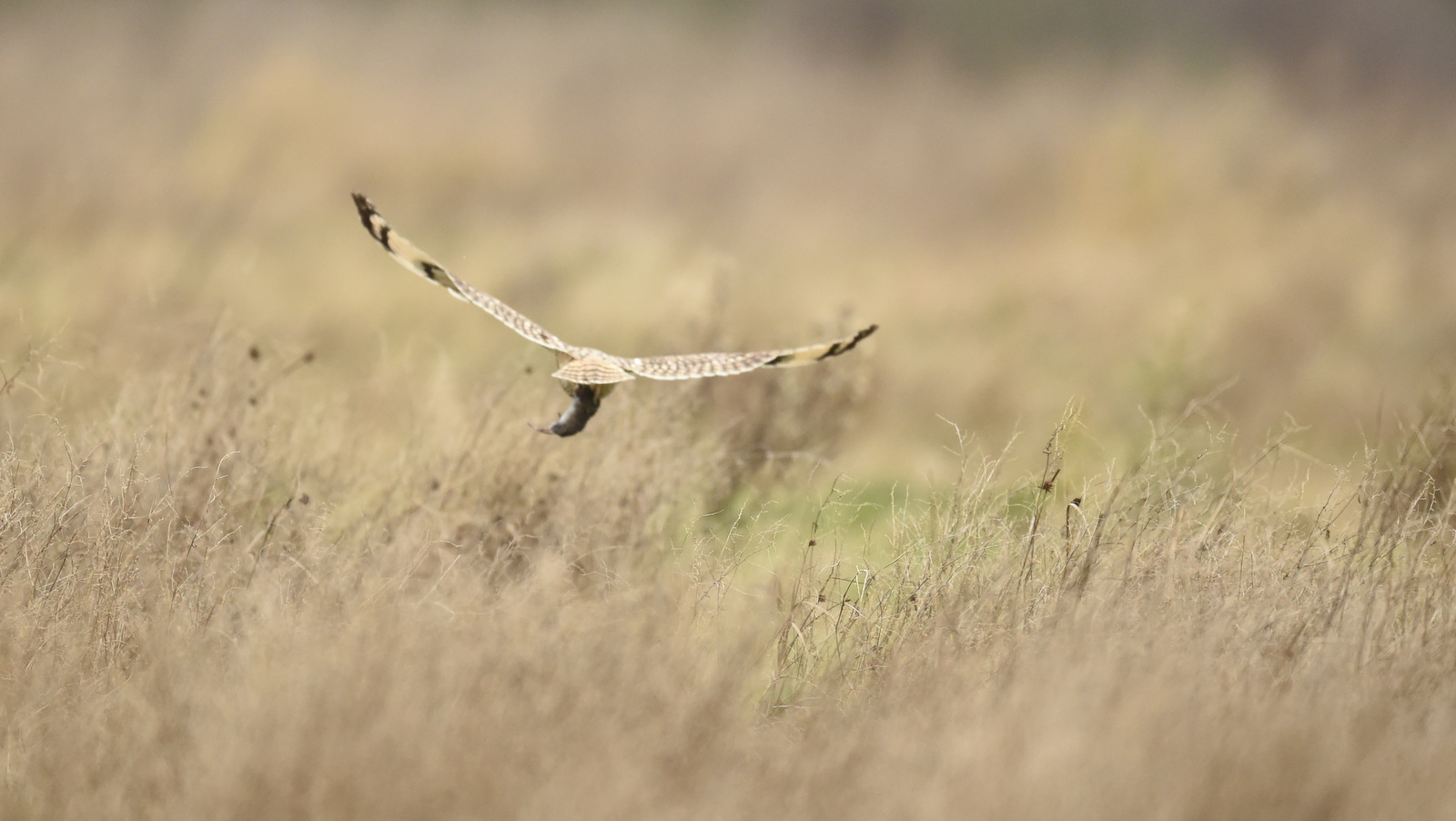
Bad day for the vole…
The airspace above these fields will soon fall quiet as the owls begin to migrate back north for mating season which starts in March. I imagine that spring can’t come soon enough for the voles — a few months respite from the constant onslaught from those malevolent, murderous moths.
Until next month…
Nikon D4S, Nikon 600mm f/4, 1/1600 s, ISO 1600, +0.5 EV
Jan
07
2016 was a year of transition — we moved across the country from Vermont to Seattle, Washington and we (Nicky and I) both took on new jobs. Between moving and career transition I did not have as much time for photography. We did manage to make two trips to Yellowstone NP (once in the Fall, and once in the Winter) while most other photographic forays were weekend trips exploring our new state. Four of my favorite images were shot in Washington while the other six images were shot in Yellowstone. Click on image below to see it bigger (highly recommended).
The Top Ten for 2016:
#1 Bobcat
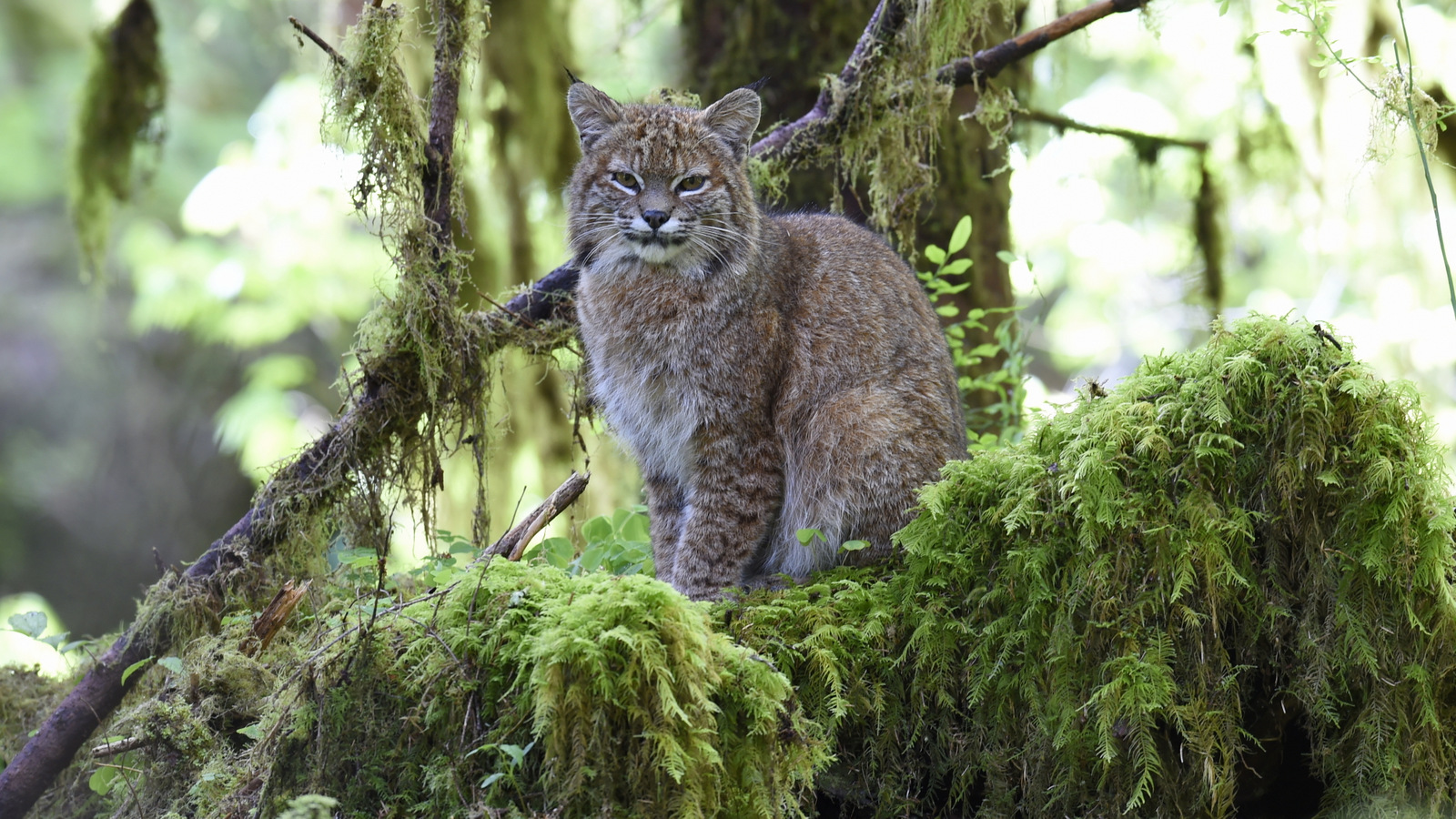 One of my earliest forays in Washington State allowed me to see my first bobcat in the wild and produced this amazing view in the Hoh Rainforest. You can read the full story behind getting the shot here.
#2 Marmot
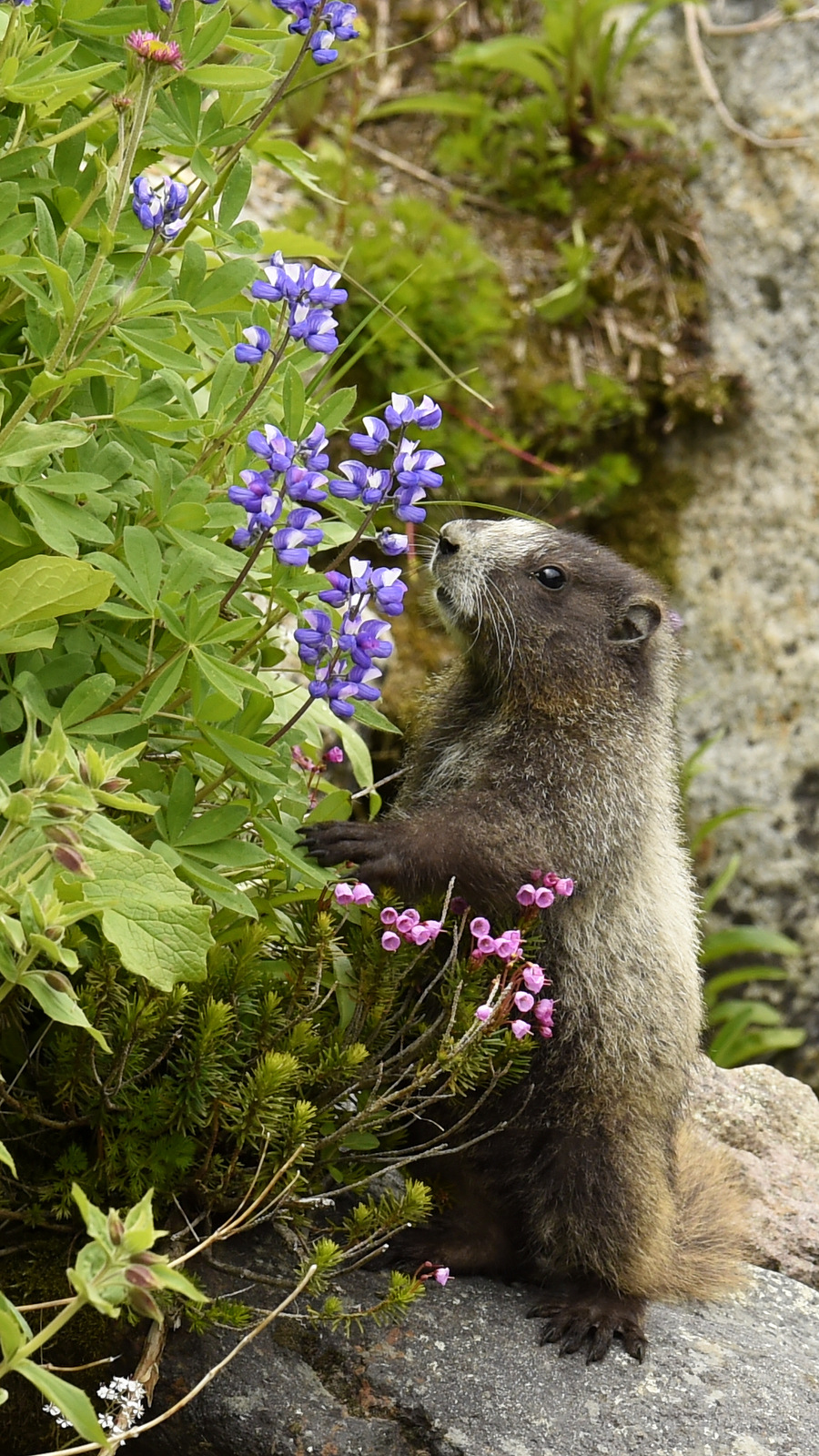 During the summer we visited Mt. Rainier several weekends in a row to try and capture the summer wildflowers at their peak. I didn’t have much luck on that front though I did get this nice shot of a marmot. And in my defense, there are 4 types of wild flowers in this scene!
#3 Great Gray Owl
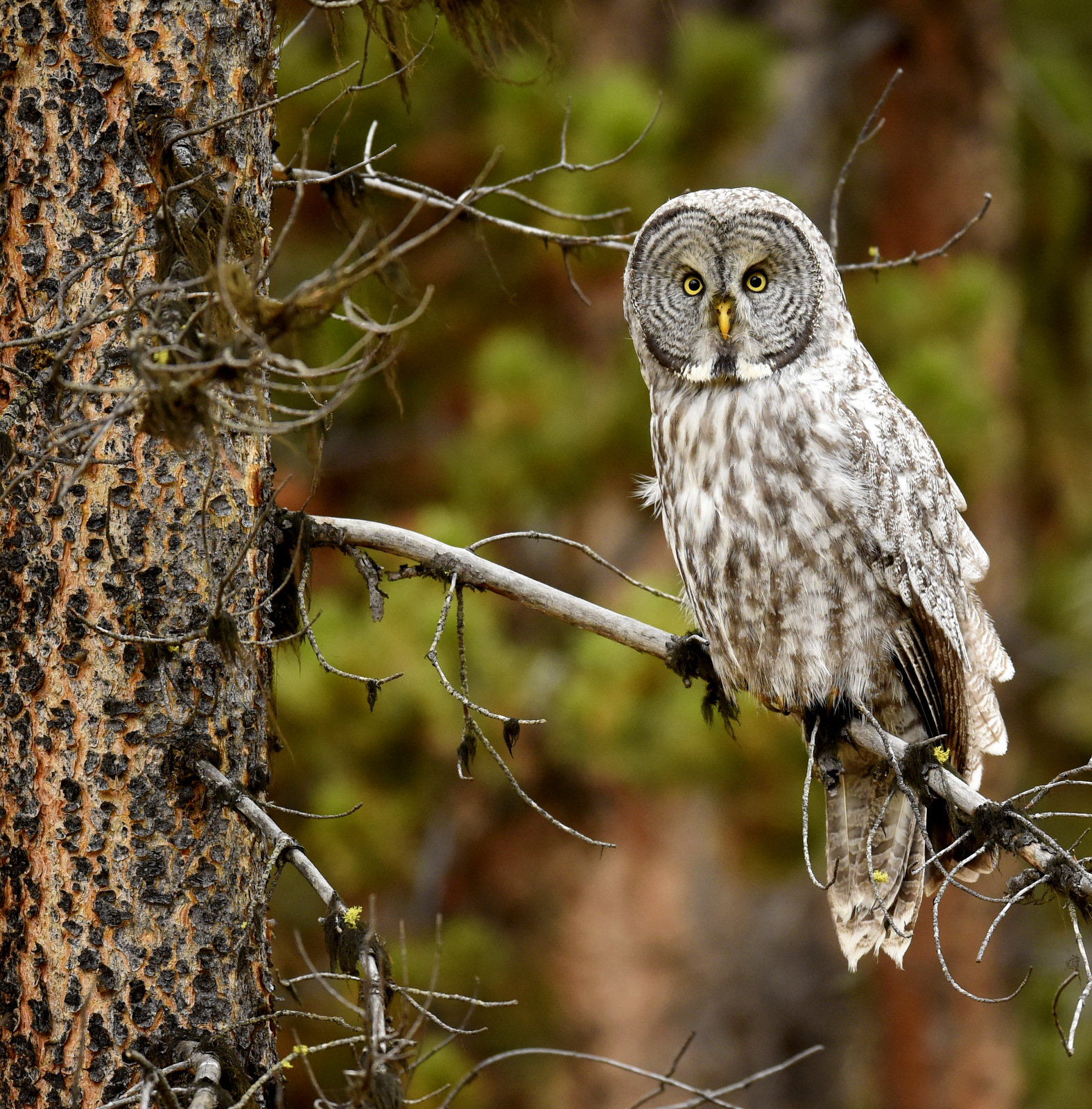 I spent three magical hours alone with this Great Gray Owl in a forest in Yellowstone NP. Wow.
#4 Bighorn Sheep
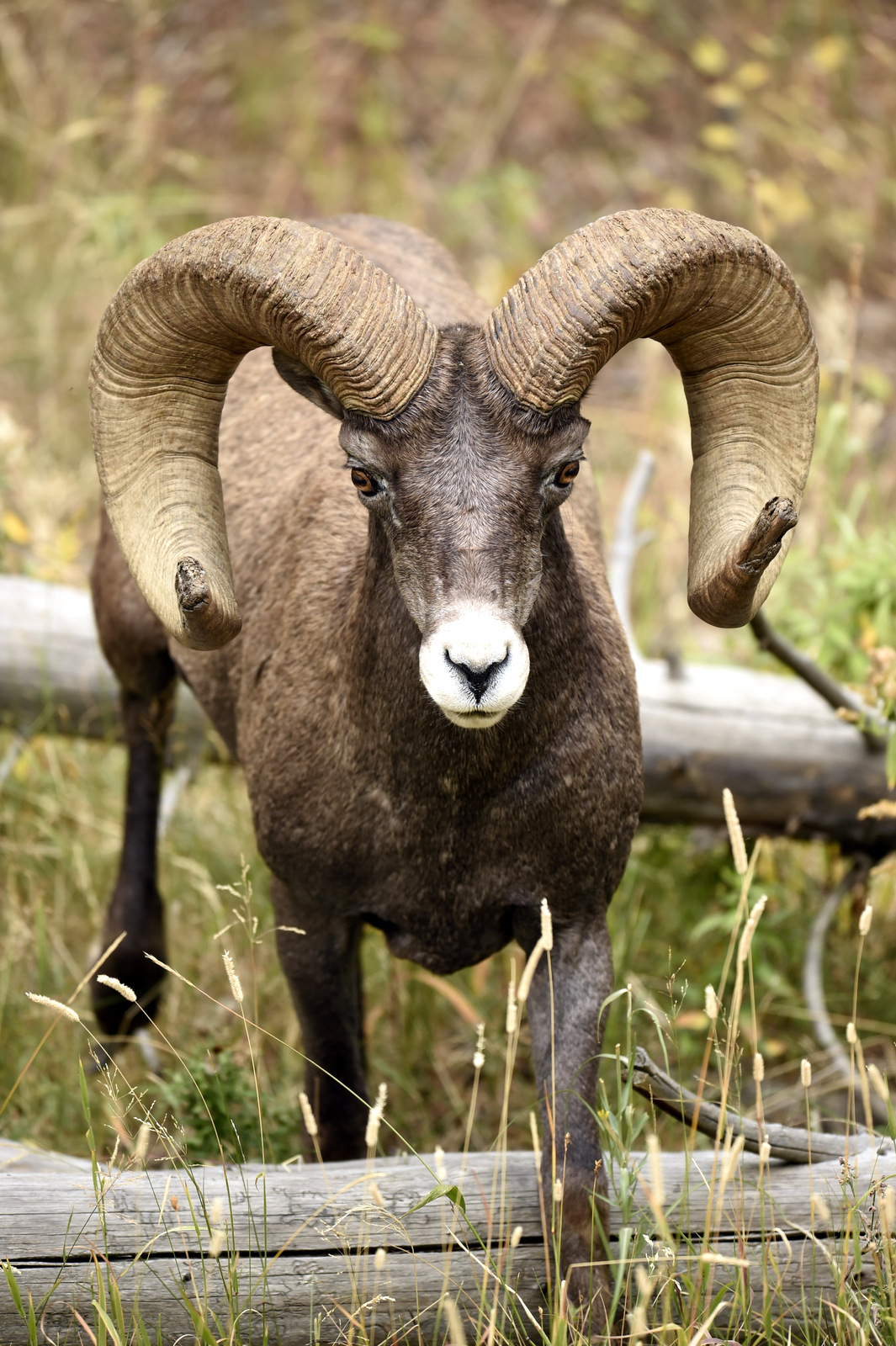 On the fall trip to Yellowstone I had my first sighting of a male Bighorn Sheep. Our guide said that this may have been the biggest ram he had ever seen during his 35 years as a guide.
#5 Yellowstone Landscape
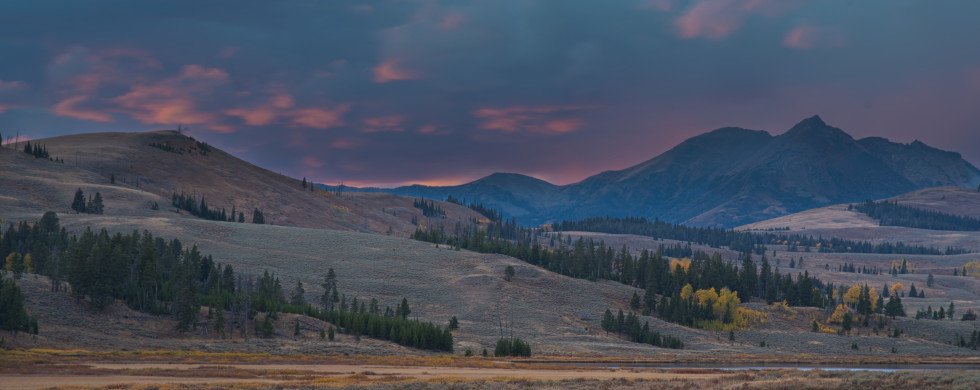
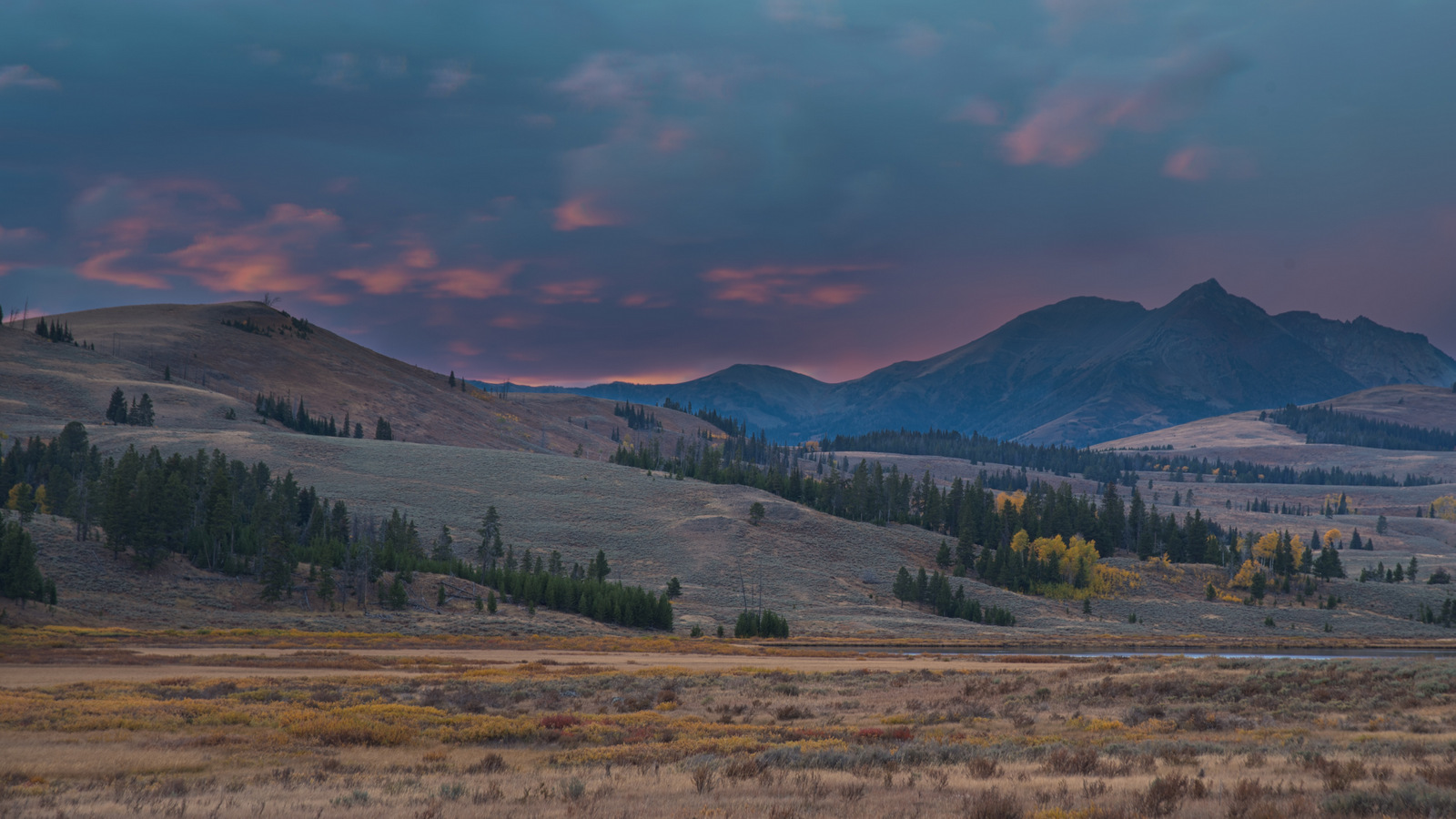 A nice sunset in Yellowstone captured using the HDR technique. If HDR is jibberish to you, learn more here.
#6 Robin
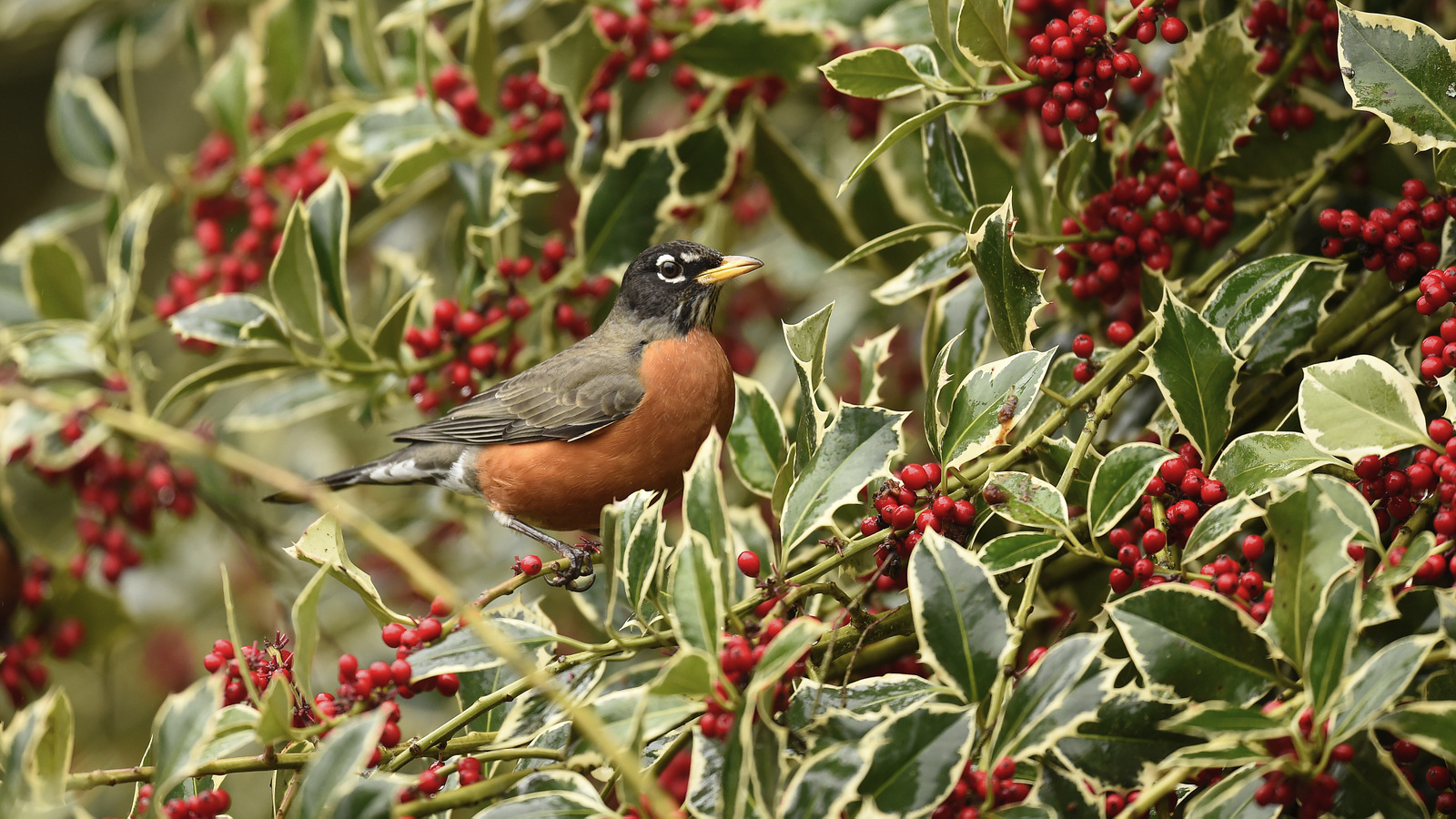 I have to admit that I never imagined that an image of a robin would make my top-of-the-year list, but I really like this scene of a robin in a holly tree. Not bad for backyard photography.
#7 Short-eared Owl
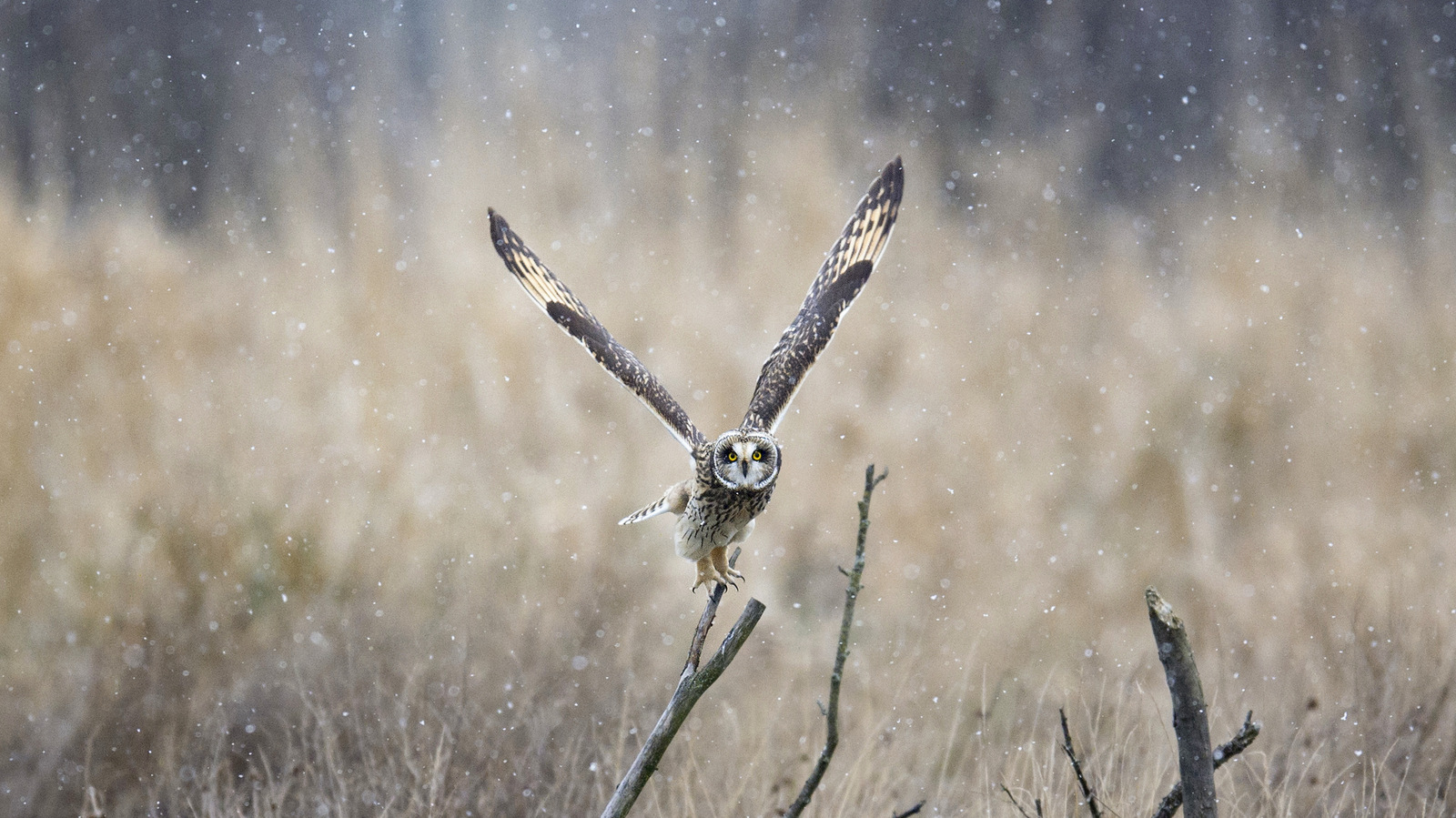 I never had much luck in finding Short-eared Owls (SEOs) on the east coast. Turns out that many owls winter over in Washington state. You now know how my winters will be spent…..This shot of an SEO taking off in the snow is my favorite capture so far.
#8 Coyote
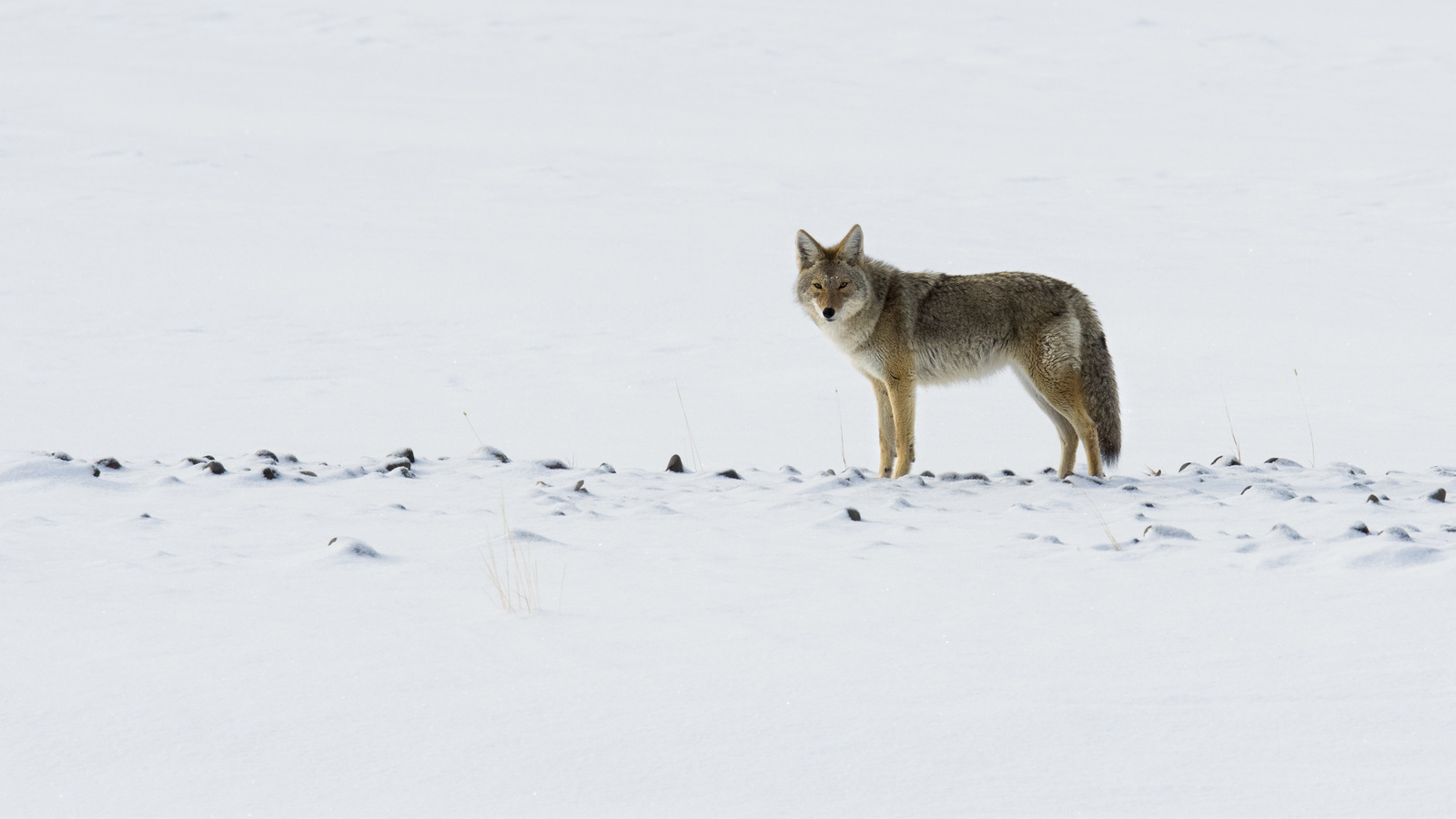 Our winter trip to Yellowstone provided my first opportunity at a decent image of a coyote.
#9 Bison
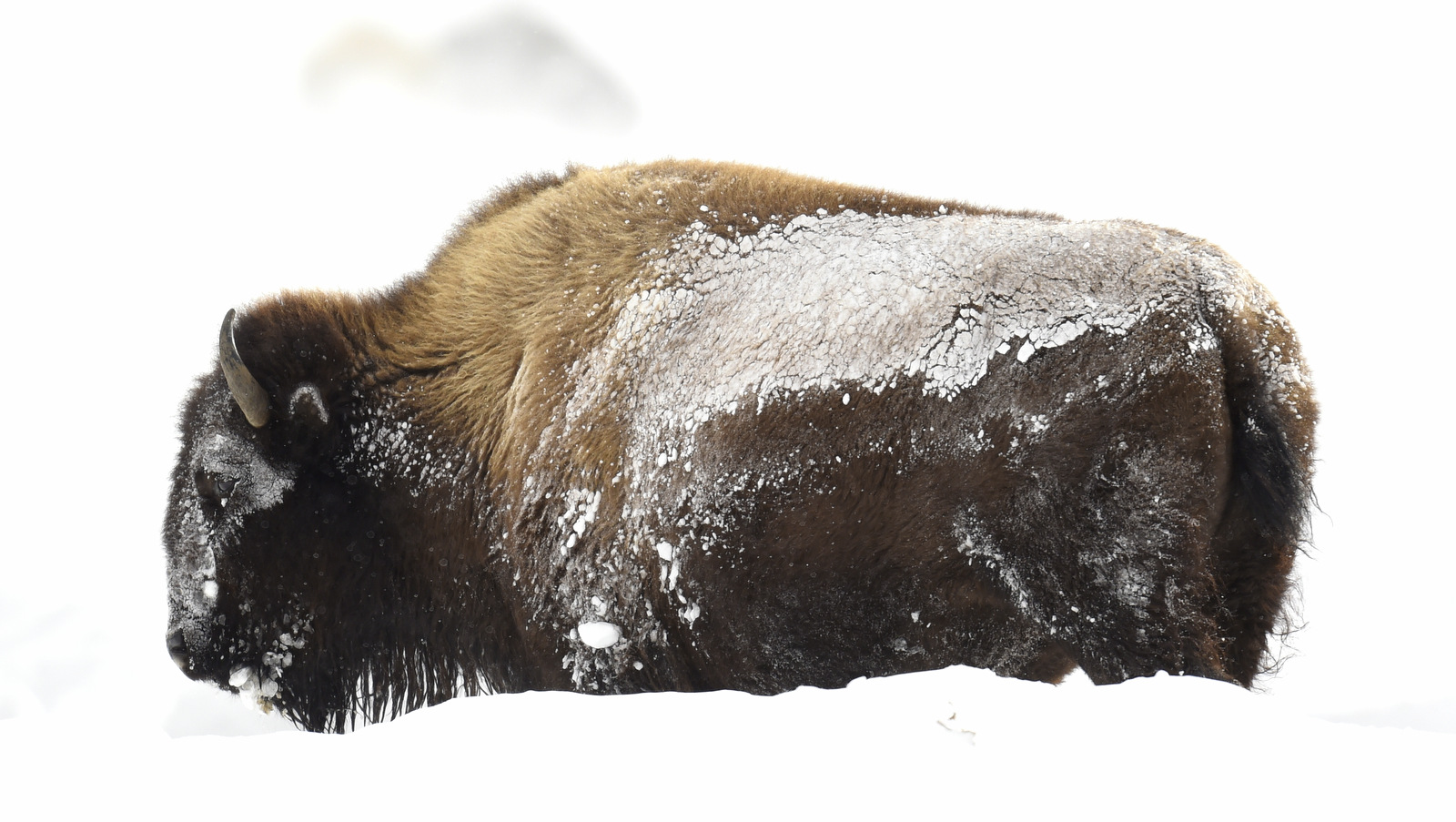 The star attraction of our winter trip to Yellowstone was the bison. I loved the abstract nature of this shot.
#10 Pronghorn in a snow storm
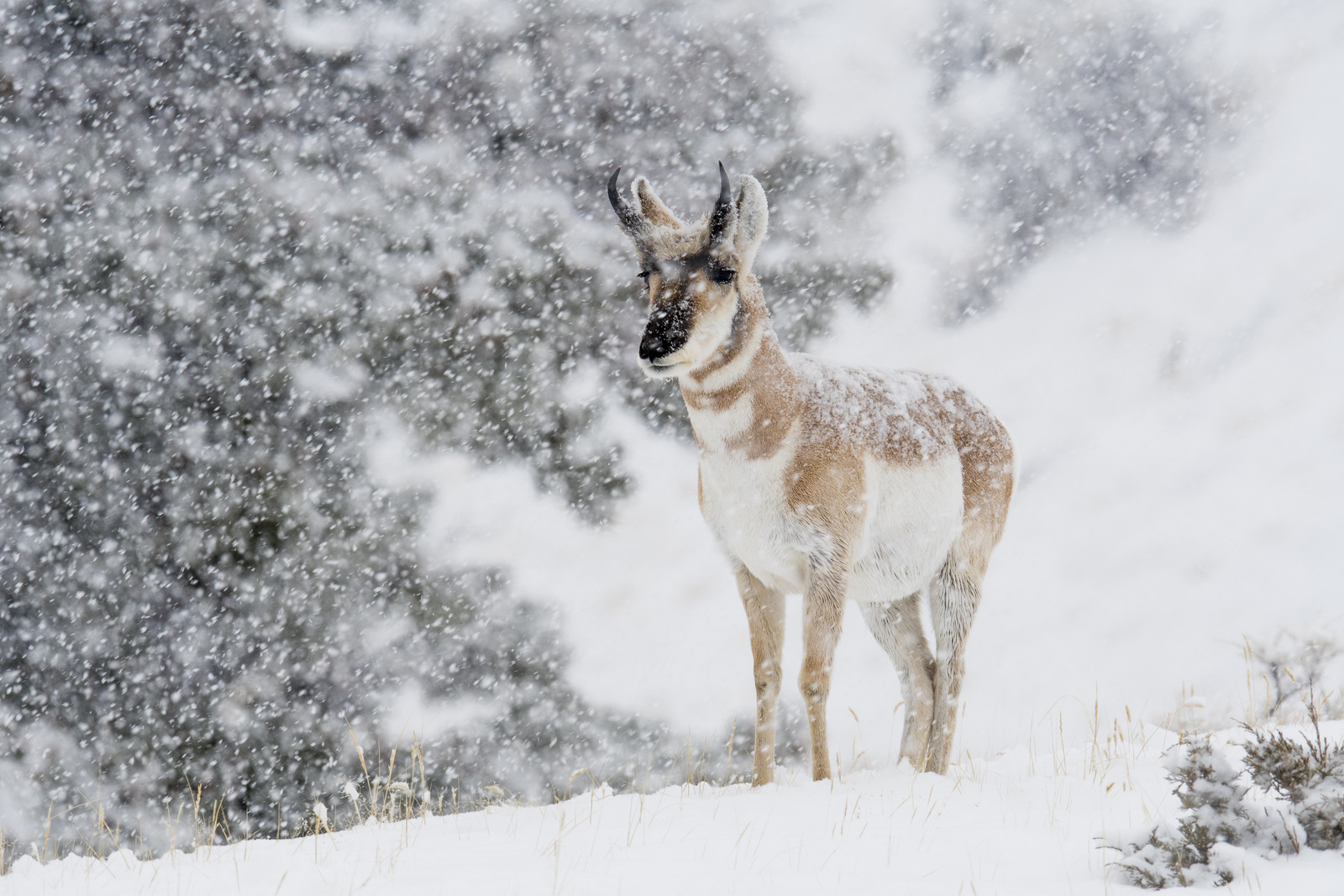 Probably my favorite shot from our winter trip to Yellowstone. One day one, five minutes from the gate at the end of the day as were leaving the park we found this herd of Pronghorn caught in a sudden flurry of snow.
Wishing you a great 2017!
Dec
31
Shot of the Month – December 2016
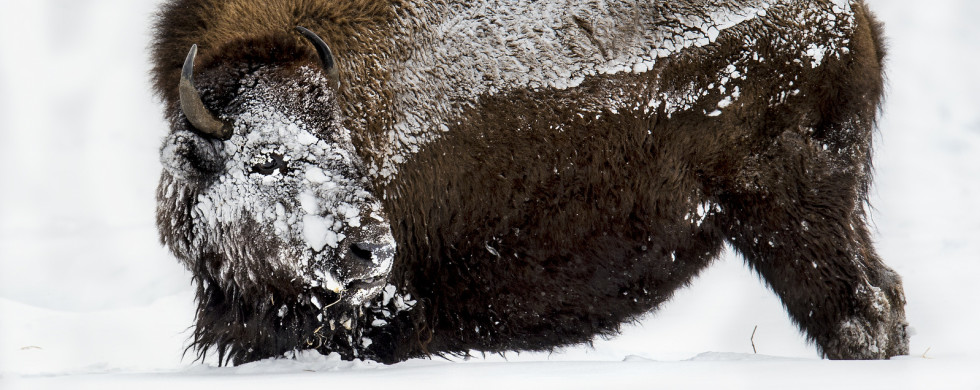
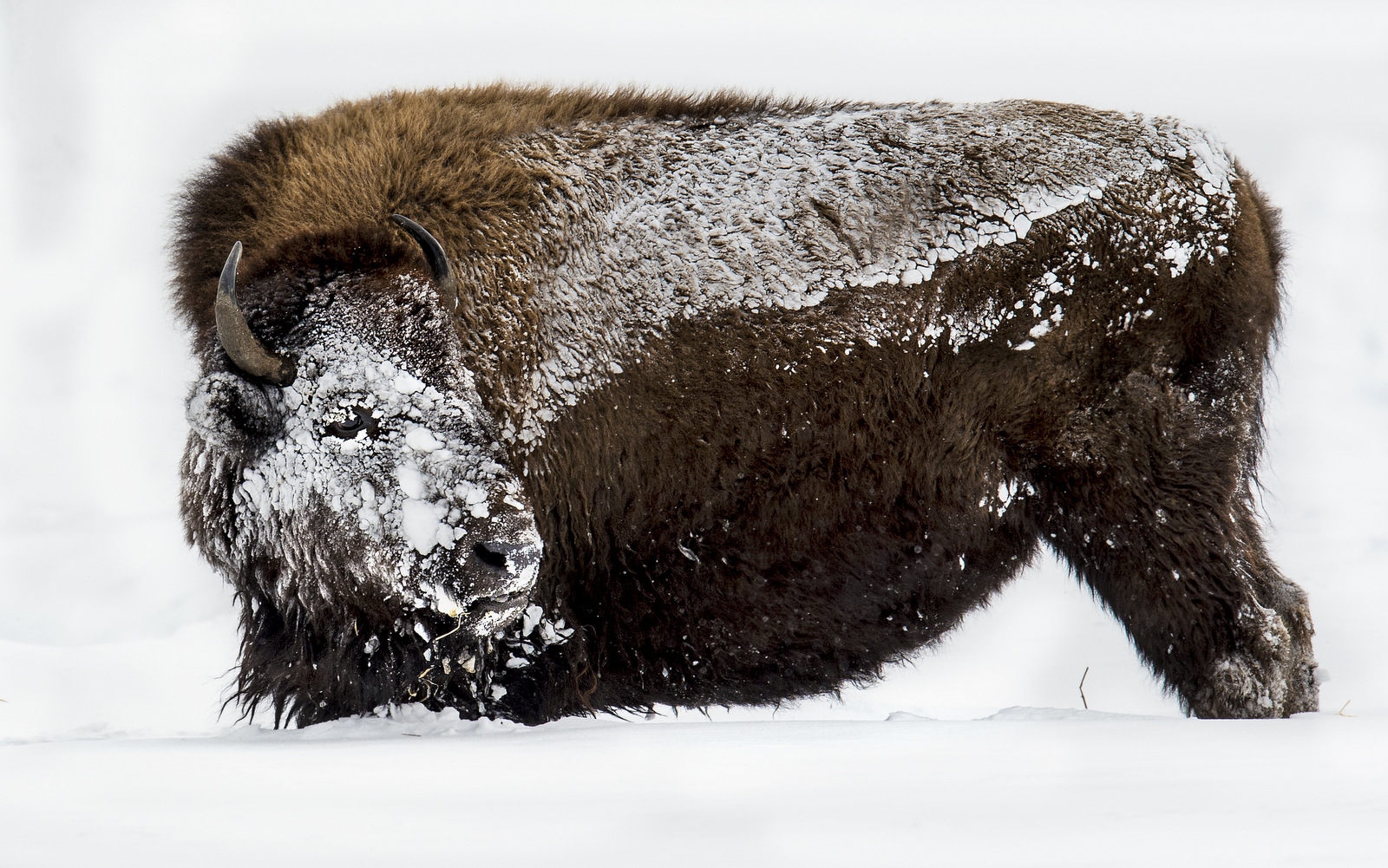 One look at this image and most of us shudder with cold in sympathy for this poor beast. Some might even clamor — “Help that poor animal, he must be freezing to death.” I am a real wimp when it comes to the cold and I normally walk around the house wearing multiple layers and a fleece — I seem to always be cold. So, upon seeing this bison in Yellowstone NP, standing in deep snow and generally covered in the white stuff, I felt quite despondent for him.
Well, dear friends, the nature science folks tell us that we can all relax. Bison have evolved over millions of years to deal with this type of weather. Our human concepts of what is cold simply don’t really apply in the bison world. When I photographed this bison I was standing in waist-deep snow and it was about 16° Fahrenheit. There was also a gusty wind that would swirl about causing mini blizzards every few minutes such that I would lose sight of this massive beast for a few seconds at a time. In Yellowstone, a temperature of 16° F is considered “moderate” — almost balmy conditions considering that temperatures can easily drop down to -30° F and beyond.
I have been told by park officials that bison don’t feel the cold until it reaches about -40° F. Nope, not a typo. In the winter a bison will grow a coat of woolly underfur with coarse guard hairs that protects them from the elements. This rich coat has 8 times the number of hair follicles compared to cattle. The fur is thickest on the bison’s head, on the front of their body and on their forelegs. When the wind blows us humans will often turn our backs to the wind to avoid the worst of it. Bison have no need for such contortions; given their full fur defense they are quite content to face directly into the onslaught. The bison swings its massive head into the snow to clear the way so that it can eat the grass that lies beneath — the body is so well insulated that the snow does not melt as you can see in this photo.
So, now you know, the next time you see what looks like a poor, freezing bison, you can rest assured that he is most likely doing just fine and is rather, just chillin.
Until next month….michael
🙂
Nikon D4S, Nikon 600mm, 1.4 x TC (effective 850mm), f/9, 1/640 s, +1 EV, ISO 500
Nov
30
Shot of the Month – November 2016
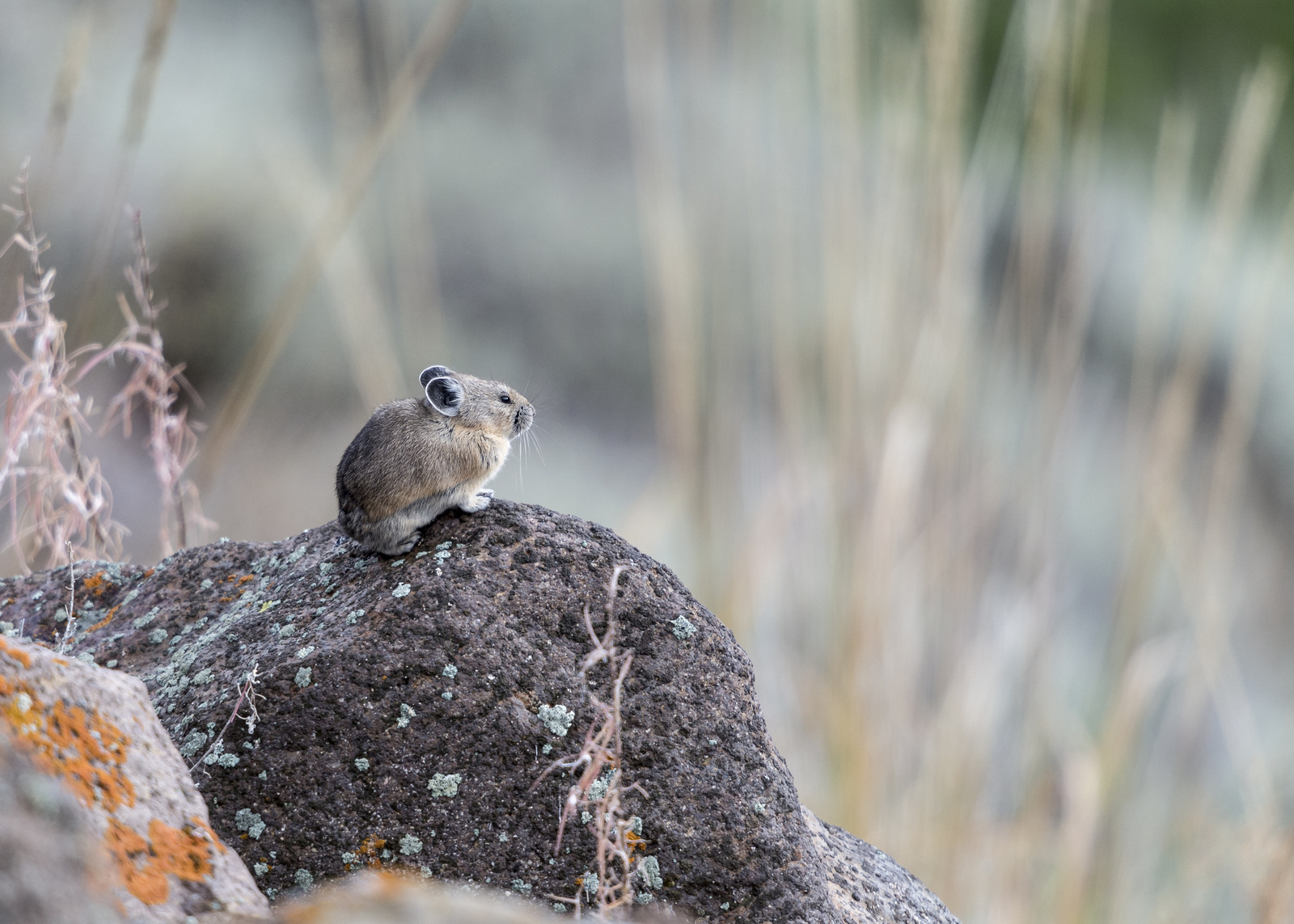
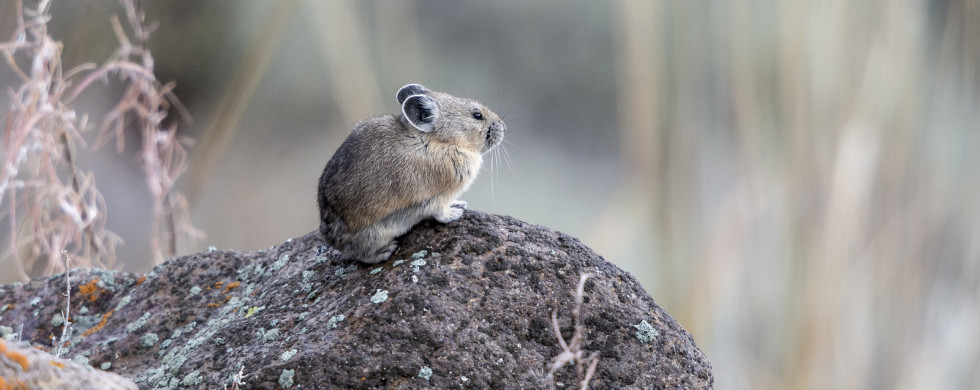
For someone who doesn’t believe in climate change then karma would dictate that said person be reincarnated as a Pika. But before we get to the hot topic at hand, what the heck is a Pika you might ask. I think Pika is an acronym for Probably the most Incredibly Kute Animal. Though, I might be wrong on that.
The Pika is an incredibly cuddly and cute fur ball found amongst the highest mountain ecosystems around the world. “Fur ball” is pretty accurate as a Pika’s body is quite round and she doesn’t have a tail. There are about 30 species of Pika in the world (mainly Asia, North America, and parts of Eastern Europe) with one species found in the United States. The American Pika can be found in Colorado, Oregon, Washington, Idaho, Montana, Wyoming, Nevada, California, and New Mexico. The fine lass (could be a chap, I have no way of knowing) above was photographed in Yellowstone NP.
The Pika is well adapted to surviving in alpine mountain ecosystems which are typically windswept, treeless, and frigid. The alpine zone only represents about 5 percent of the planet’s surface and thanks to climate change, this habitat is disappearing fast. As the mountain tops warm the vegetation changes, the snowpack melts and new predators and pests move in. Most mountain habitats in the Western US have warmed by at least 1 degree F in the last hundred years. In the next hundred years, the temperatures are expected to rise by another 4.5 to 14 degrees.
Pikas literally cannot take the heat. Expose a Pika to temperatures above 78 degrees and she will die within six hours. Yes, really.
In Oregon and Nevada Pikas have disappeared from 1/3 of their previously known habitat. Since the early 1900’s the Pika has disappeared from 8 of the 25 U.S. mountain ranges where they previously lived. Pikas keep climbing higher but once they reach the top of the mountains, they can’t go any higher to escape the deadly heat.
Expect to see the Pika on the Endangered Species list soon. And given current trends, the Pika may become the first known species in the US to go extinct from climate change.
As they say, karma is a b****.
Until next month….m
Nikon D4S, Nikon 600mm w 1.4x TC (@ 850mm), 1/750s, f/5.6, ISO 720
Oct
31
Shot of the Month – October 2016
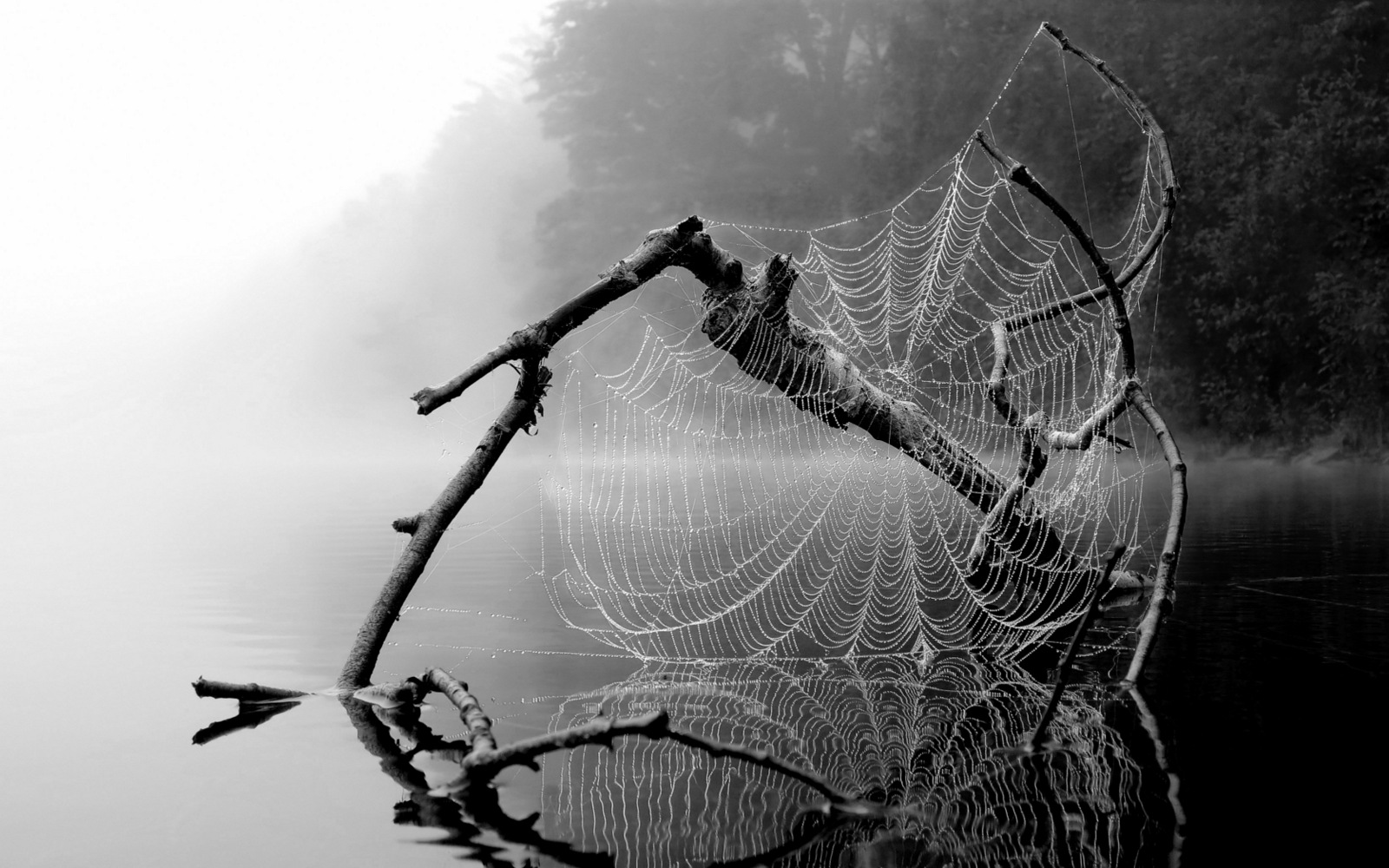
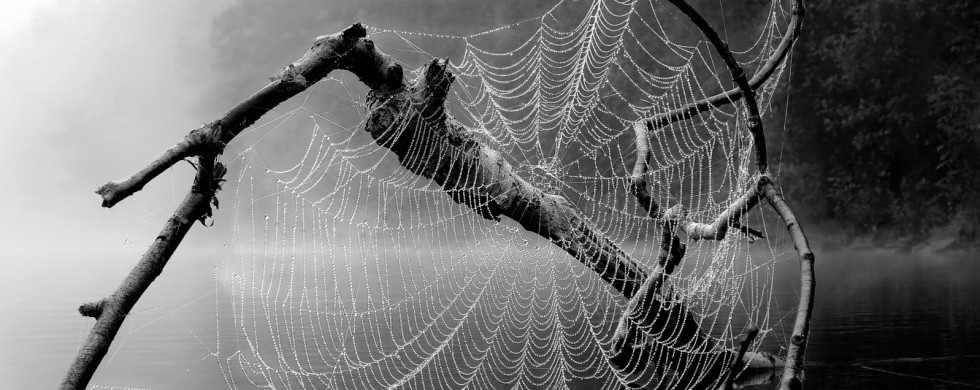
Last month’s image was a cacophony of color amongst the trees. This month’s image captures the quiet stillness of shades of gray by the waters edge. I love how the image transitions from pure white in the upper left corner through shades of gray to deep black in the lower right corner of the image. On this sunless morning in Vermont the lake was quiet and there was no wildlife to be found. While drifting along in my kayak, with not much to do, I came upon this spider’s web and decided to experiment and see what I could come up with. While shooting this image my main focus was on trying to capture the glistening dew drops on the spider’s lair. I paddled around and around trying every position imaginable until I found the angle that worked best. The image was shot with a point-and-shoot camera (Canon G1X).
Converting the photo to black and white was rather easy given that there was virtually no color to be found in the scene. Other than the two corners, most of the image is filled with shades of gray.
Turns out that creating gray can be a rather complicated affair. In the art world painters create different shades of gray by mixing black and white paint in different proportions. Want a darker gray? Add more black. Lighter gray? Add more white. You get the idea. A mixture of just black and white creates a “neutral gray.” Add a bit of yellow, orange or red and you can add a warm cast and create a “warm gray.” Add a bit of green, blue, or violet and you can get a “cool gray.”
In the world of print the CMYK color model is used — cyan, magenta, yellow, and black. All colors are made from a combination of these four colors. To make gray you add equal amounts of cyan, magenta and yellow.
TV and computer screens use a RGB color model – red, green and blue. Red, green and blue light at full intensity on the black screen makes white; by lowering the intensity one can create shades of gray.
On this particular day mother nature made graduations of gray by blocking out the sun with a heavy shroud of fog with a dab of dew thrown in for good measure.
I have to say, I am a big fan of her work……
Until next month…
Canon Powershot G1 X, @ 17.2 mm, f/5.6, 1/60 s, ISO 200,
Sep
30
Shot of the Month – September 2016
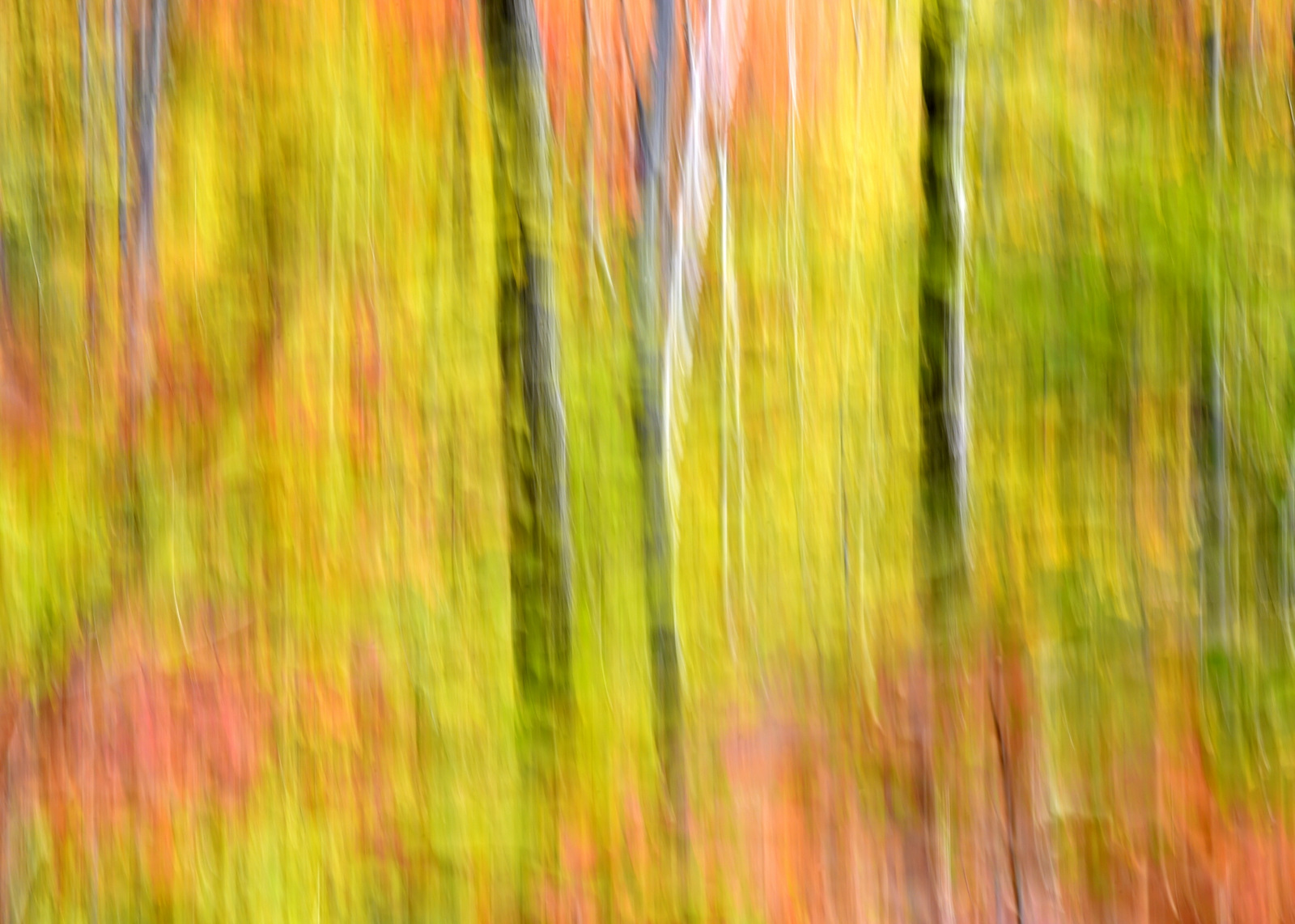
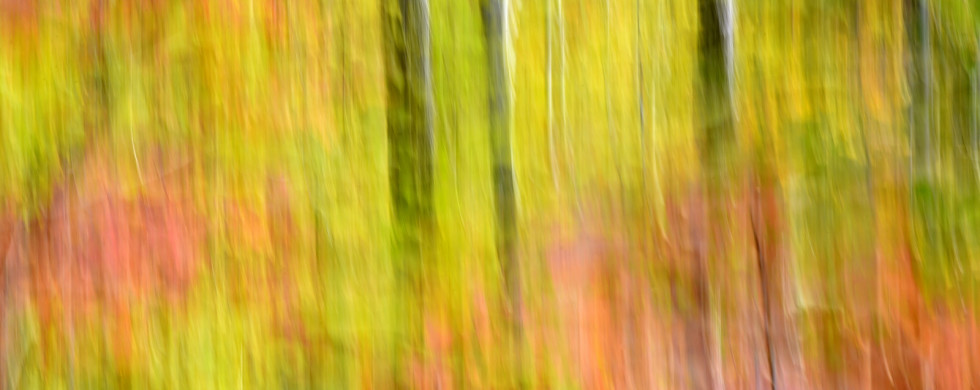
If you dig color then autumn in New England is the place to be. For a few glorious weeks, your entire world becomes a crazed canvas of exploding greens, yellows, oranges, and reds. As a photographer, I have often struggled to capture the scale and audacity of the landscapes that Mother Nature majestically painted each year. The colors in the image never seemed to quite capture the radiance and intensity that assaulted (in the most pleasant manner, mind you) my eye. The scale was always far too pedestrian — either too close, too far, or just never quite right to inspire and capture the sense of awe I felt in the field.
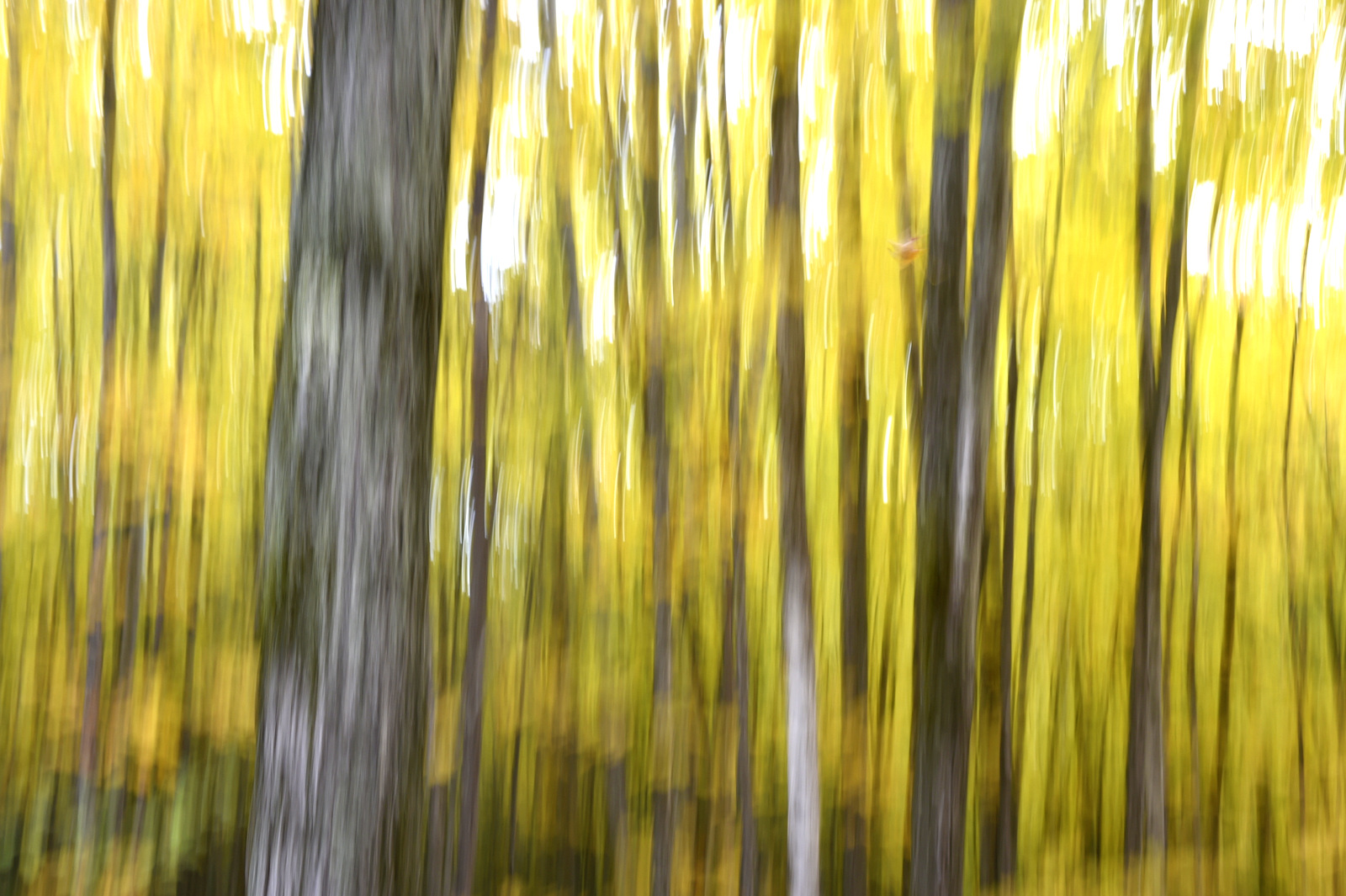
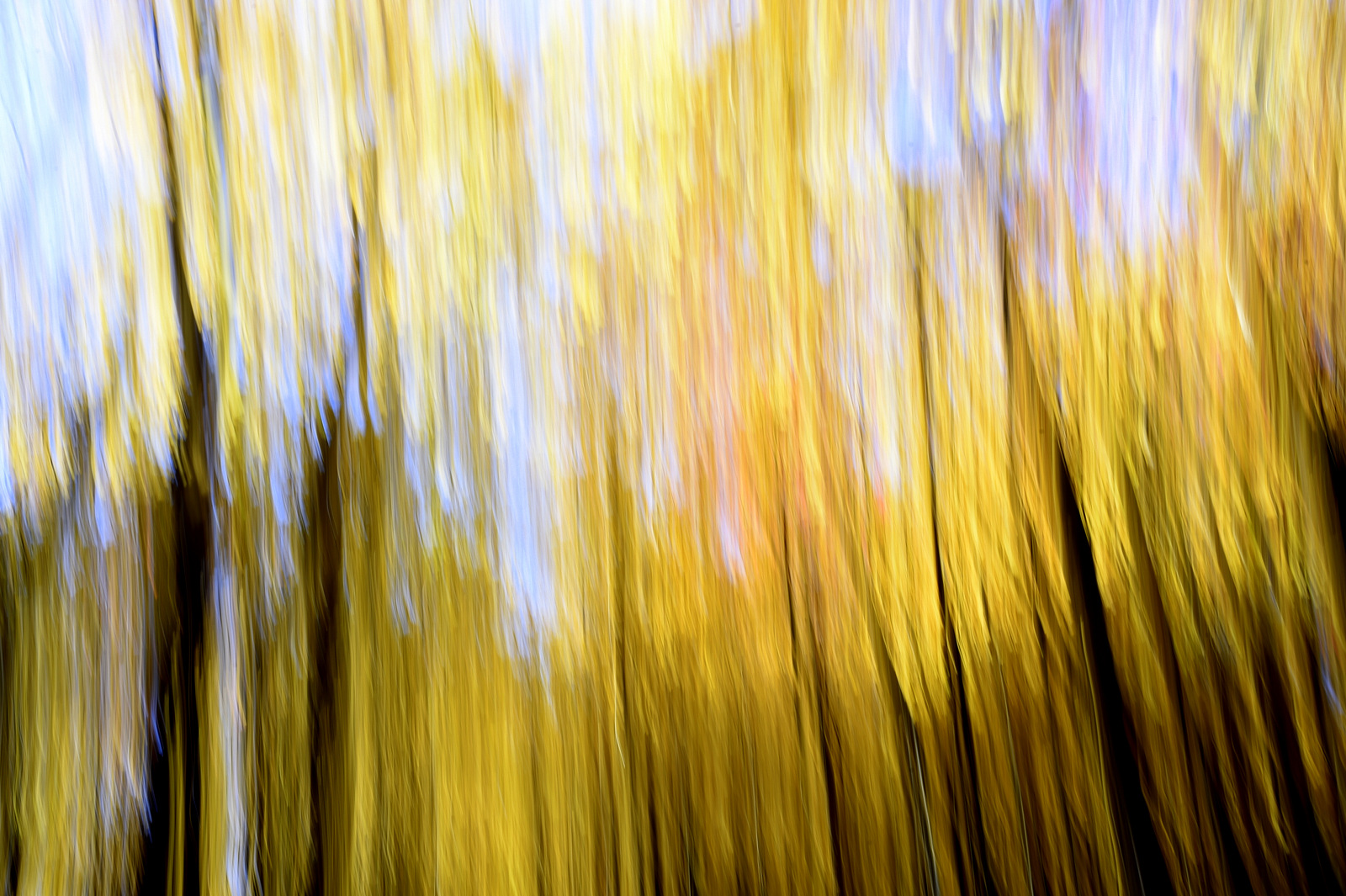
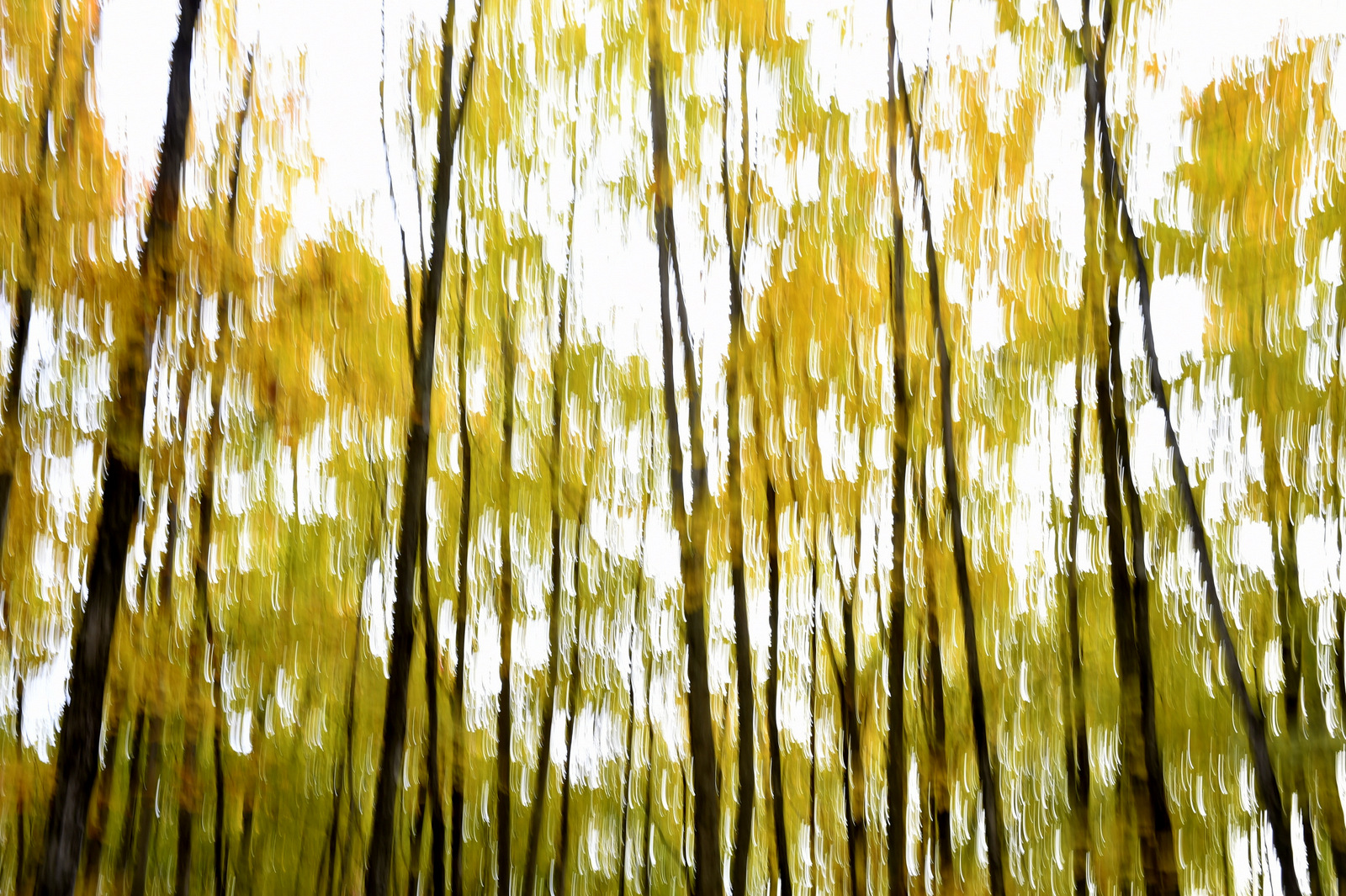
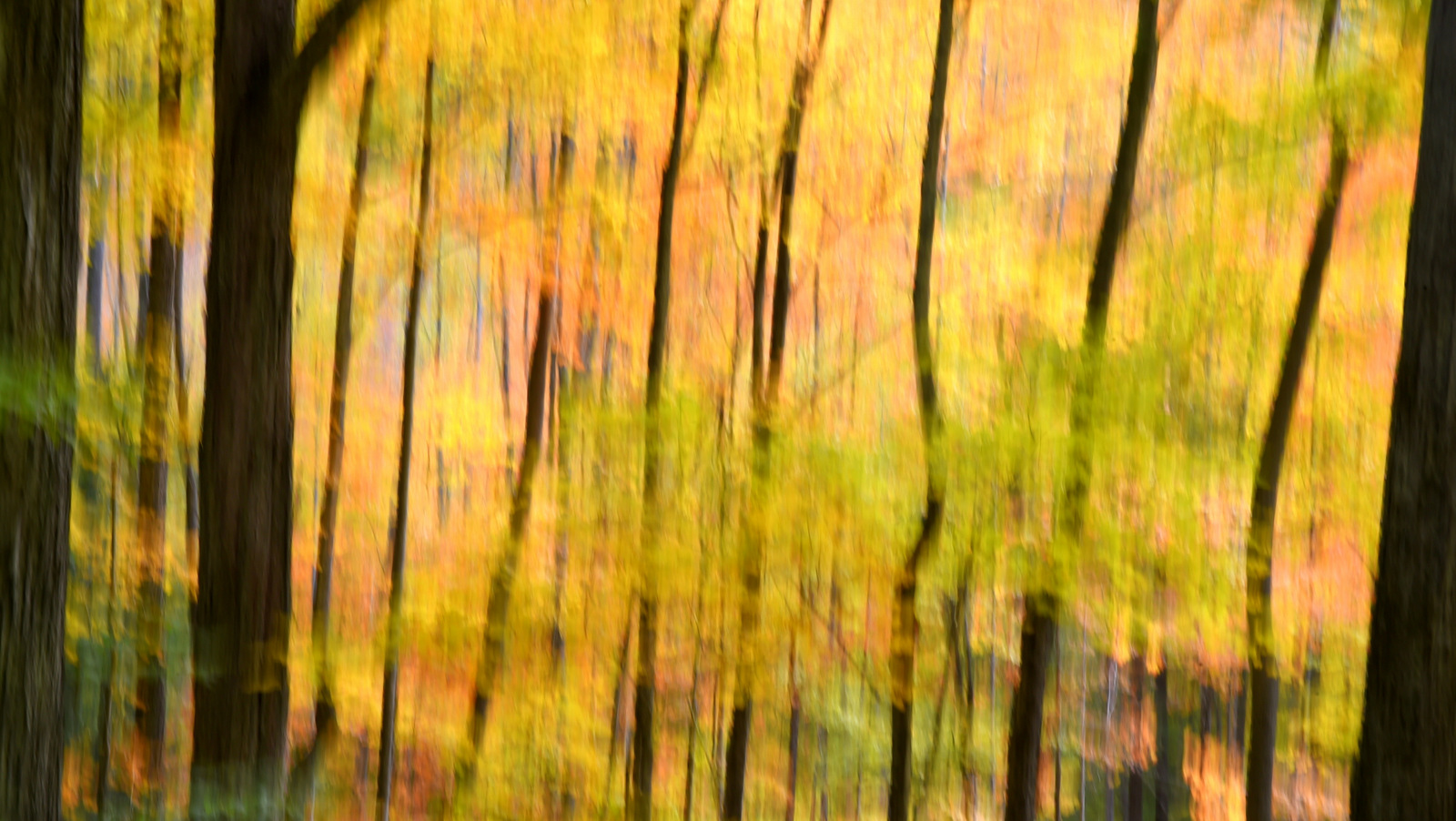
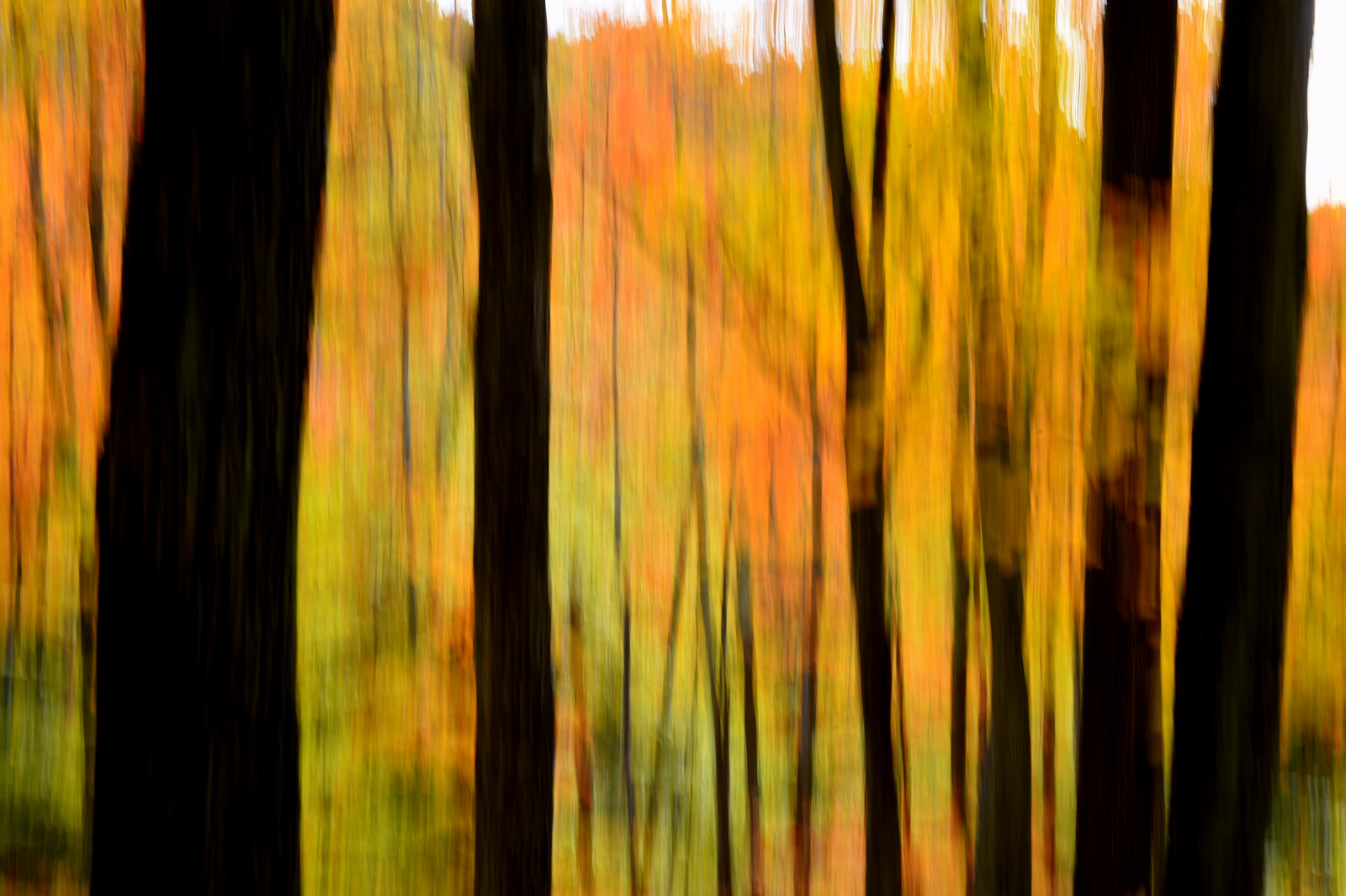
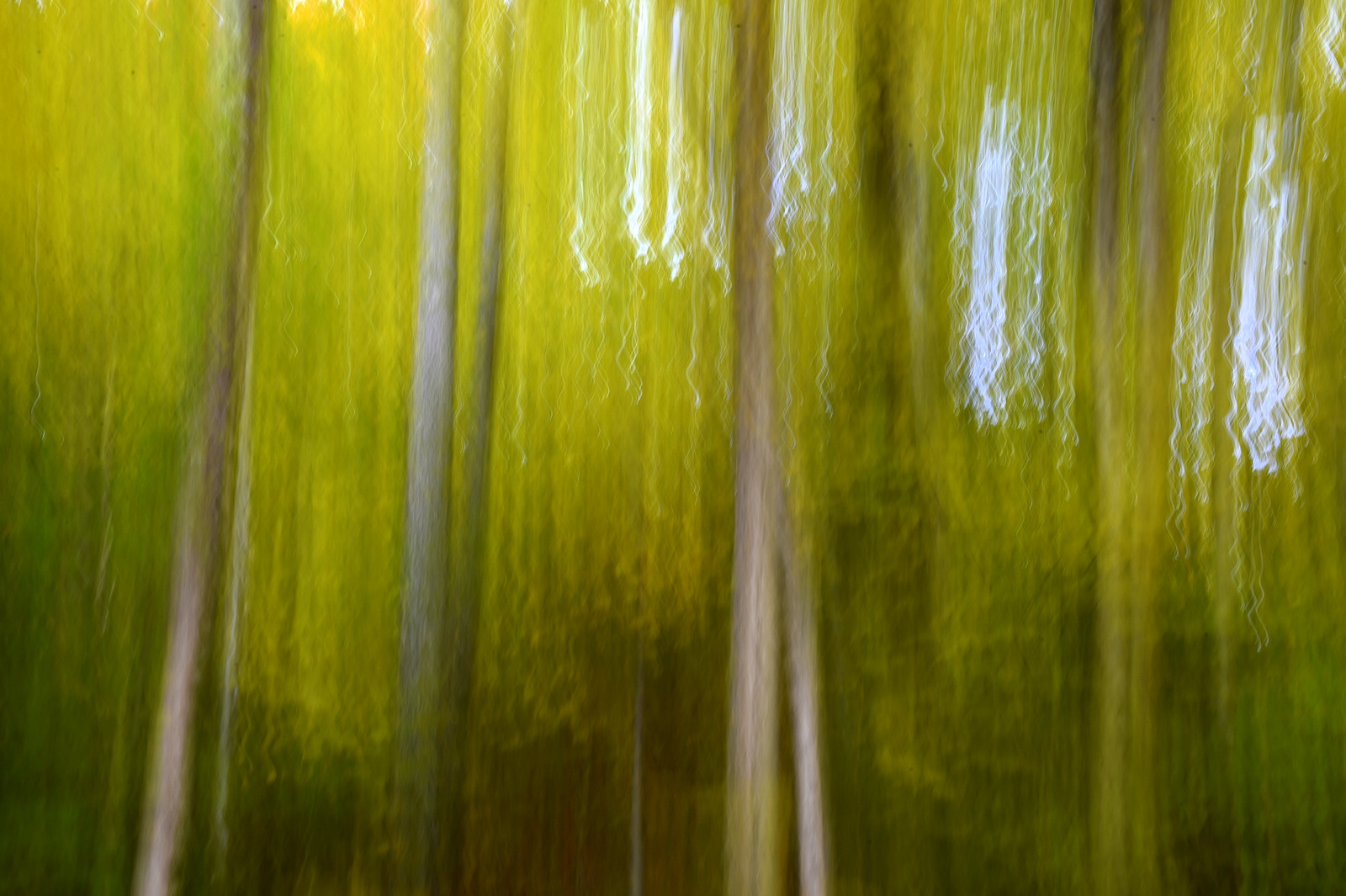
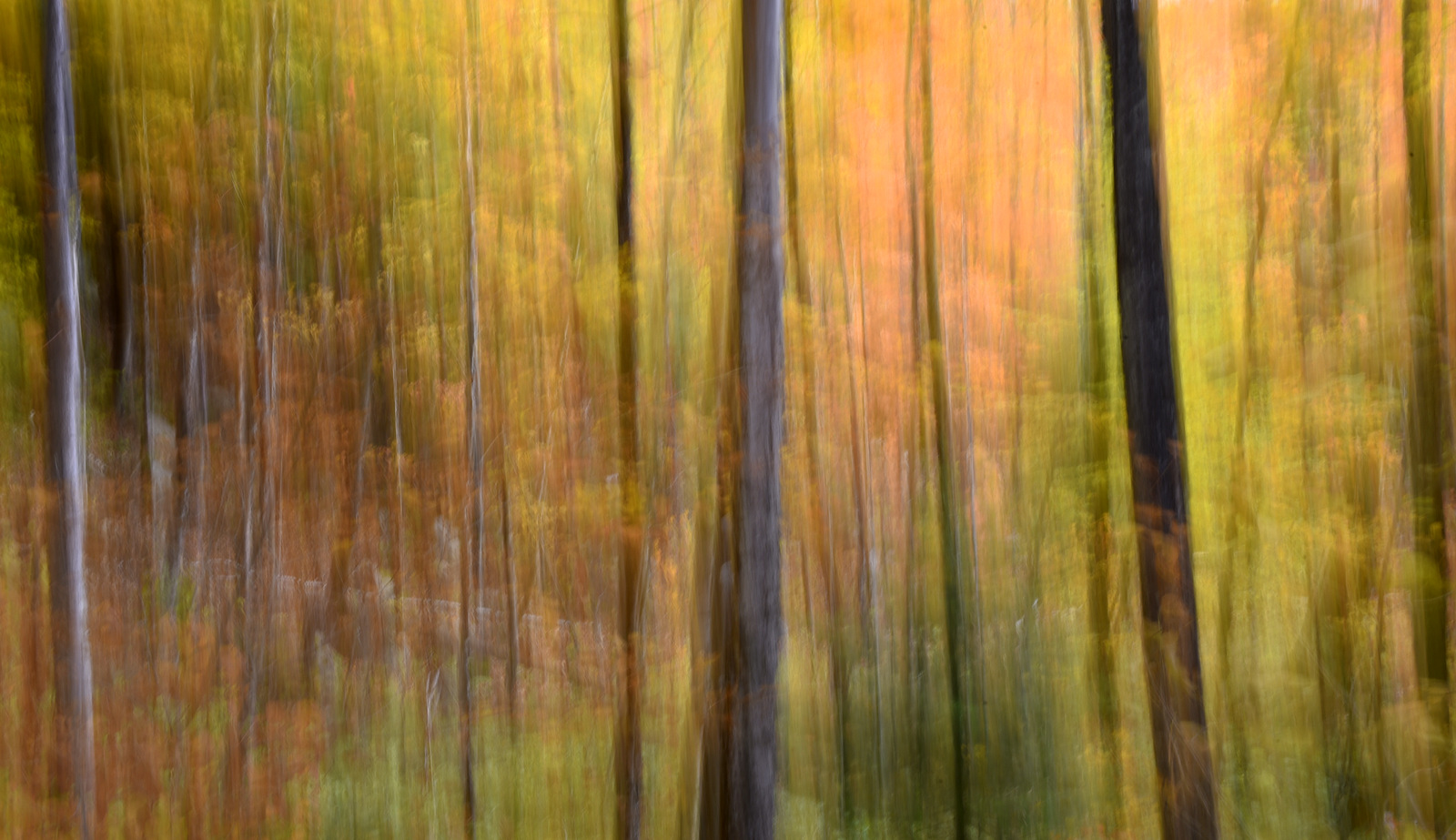
However, last fall I experimented with a motion blur technique that I read about in one of my photography magazines — the Vertical Pan. For the first time, I created images that conveyed the cacophony of color that enveloped me on my walks through the woods. Realism is nice, but these images much better reflect the imprint these experiences have left on my being.
There are three parts to this technique:
Find a Scene that Strikes Your Fancy
Get out there and walk around and look for scenes with bold colors, or great contrast in texture, or some cool shaped tree trunks, or a nice mix of colors…or…or…
Low Shutter Speed
The slower the shutter speed, the greater the blur and the more abstract the image. I experimented with shutter speeds that ranged from 1/2, 1/3, 1/4, 1/10, 1/20, and 1/30th of a second. There is no right speed. It depends on the scene before you and the look that you are going for. To lower the shutter speed you can set your ISO at its minimum and then close your aperture till you get the shutter speed that you want. On bright days, you may need to use a polarizing filter to help slow things down, or you can use a neutral density filter to reduce the light to your camera sensor to get slower shutter speeds.
Move the Camera
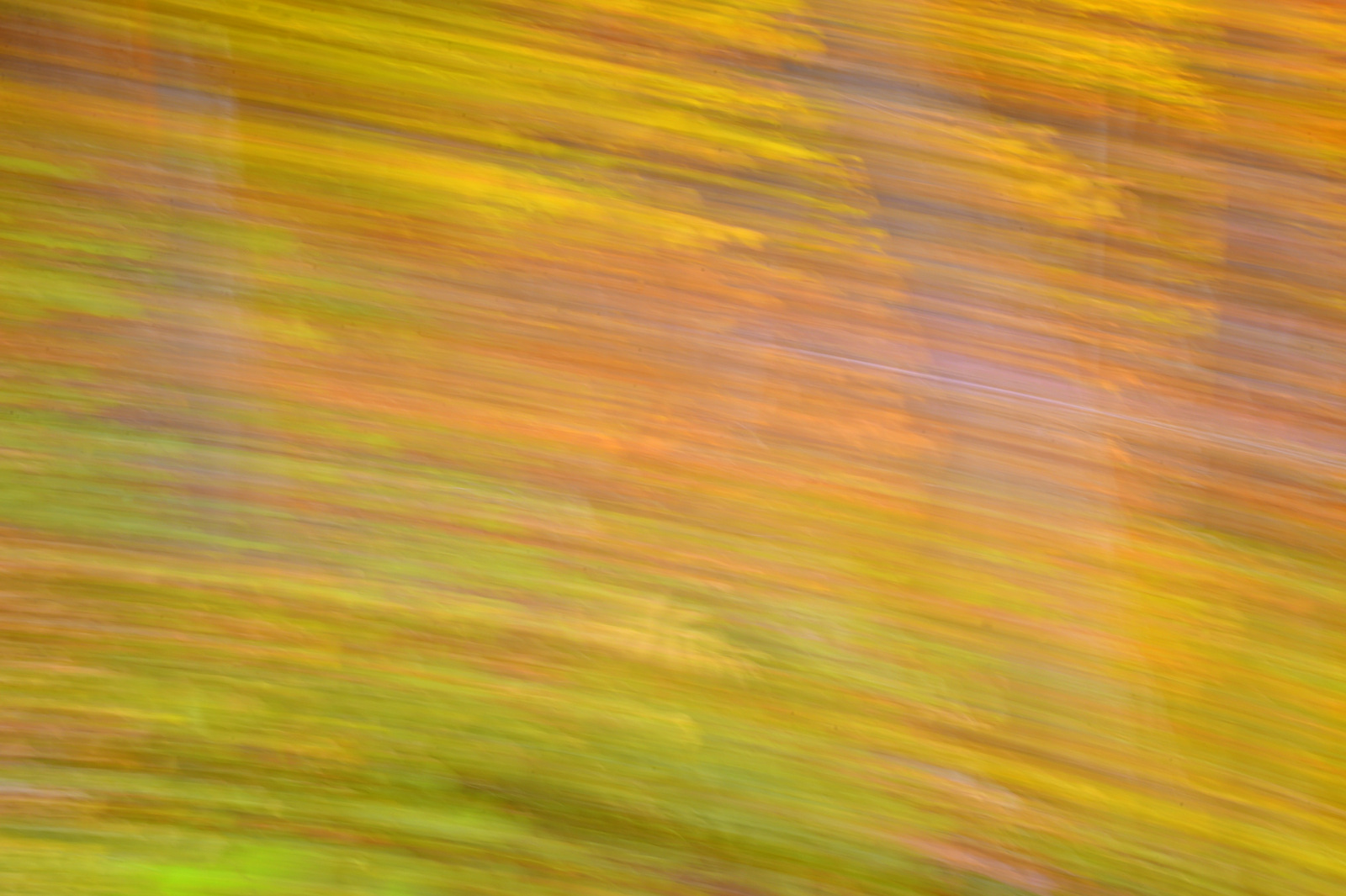
Point your camera at the scene of choice and lock the focus. Then, as you press the shutter release button to expose the image tilt the camera down with a smooth motion. Again, you will need to experiment to find the right mix. You can tilt slowly, quickly, or somewhere in between. Sometimes I begin the pan before I release the shutter button. You can pan down (my usual preference), up, or to the side.
There are endless possibilities. Keep playing with the shutter speeds as you vary your movement of the camera. Most will look like junk. Delete and move on.
Others will be, well, magical.
(I recommend viewing the images below on the biggest screen you can find. And once you click on one, you can move through the series easily by using your right or left arrow button.)
-
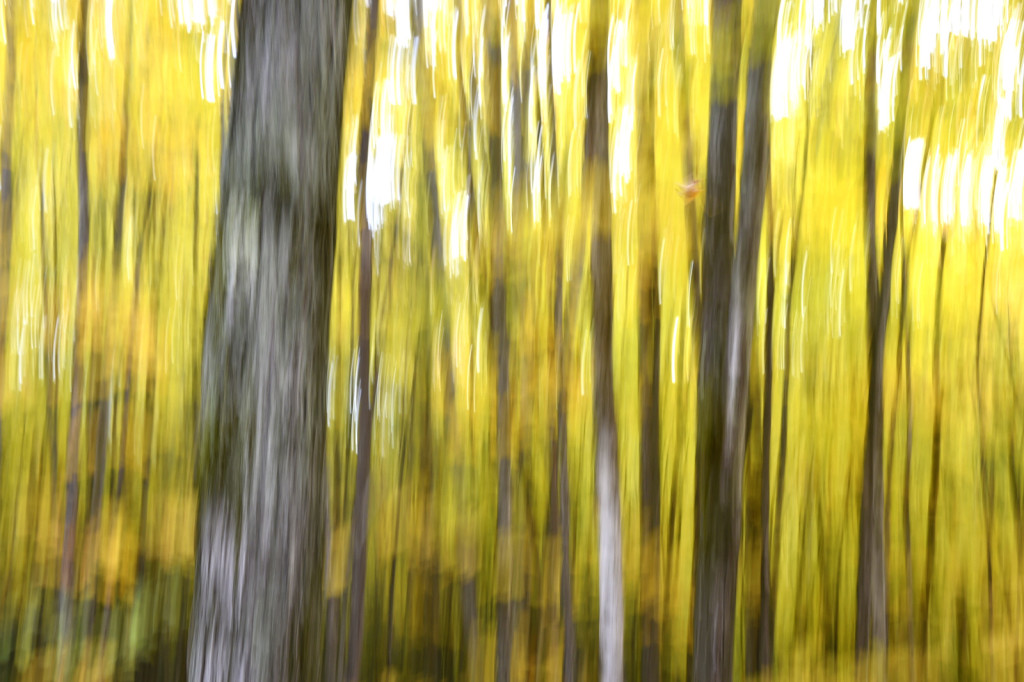
- See the falling leaf??!!
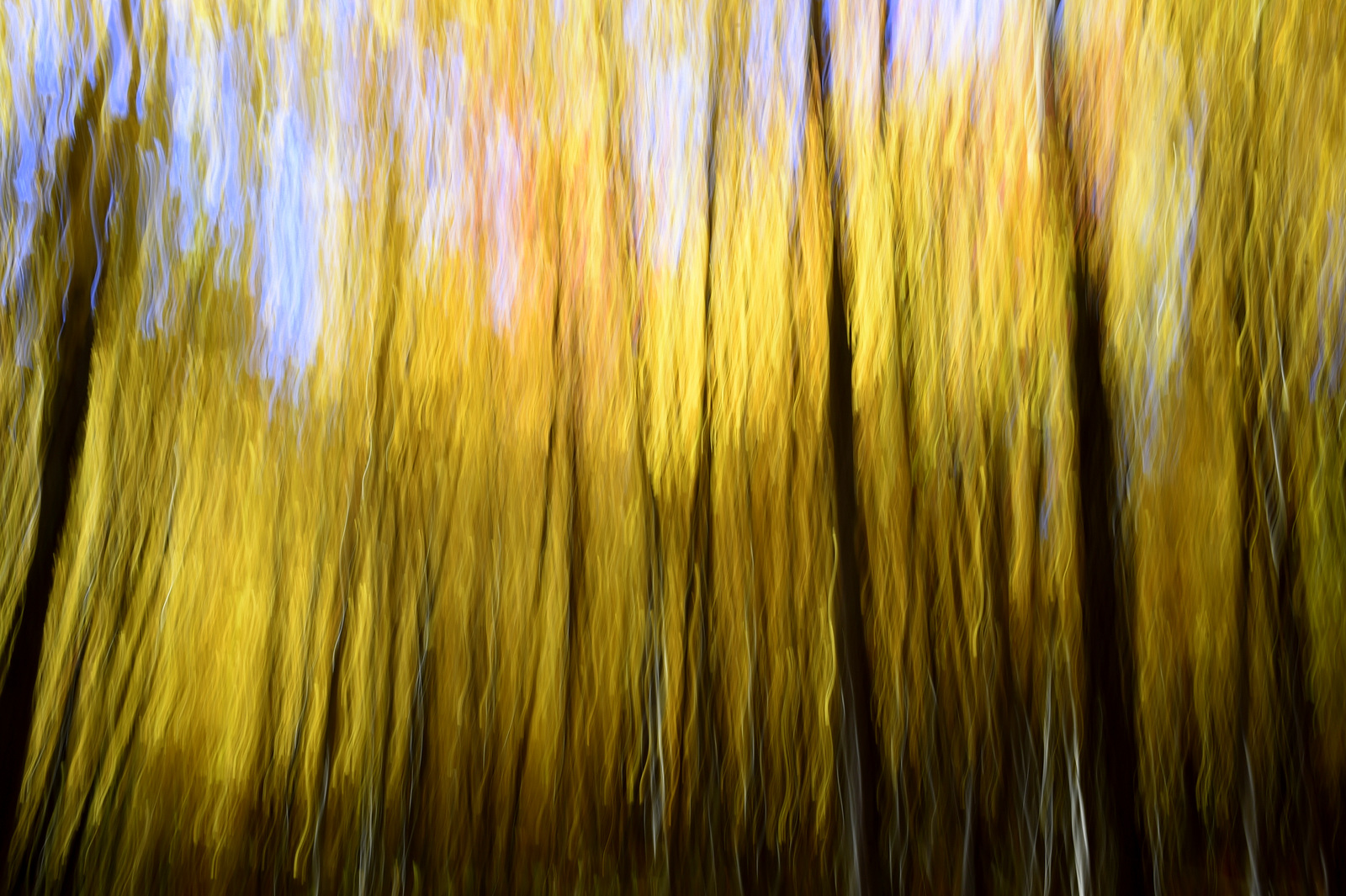
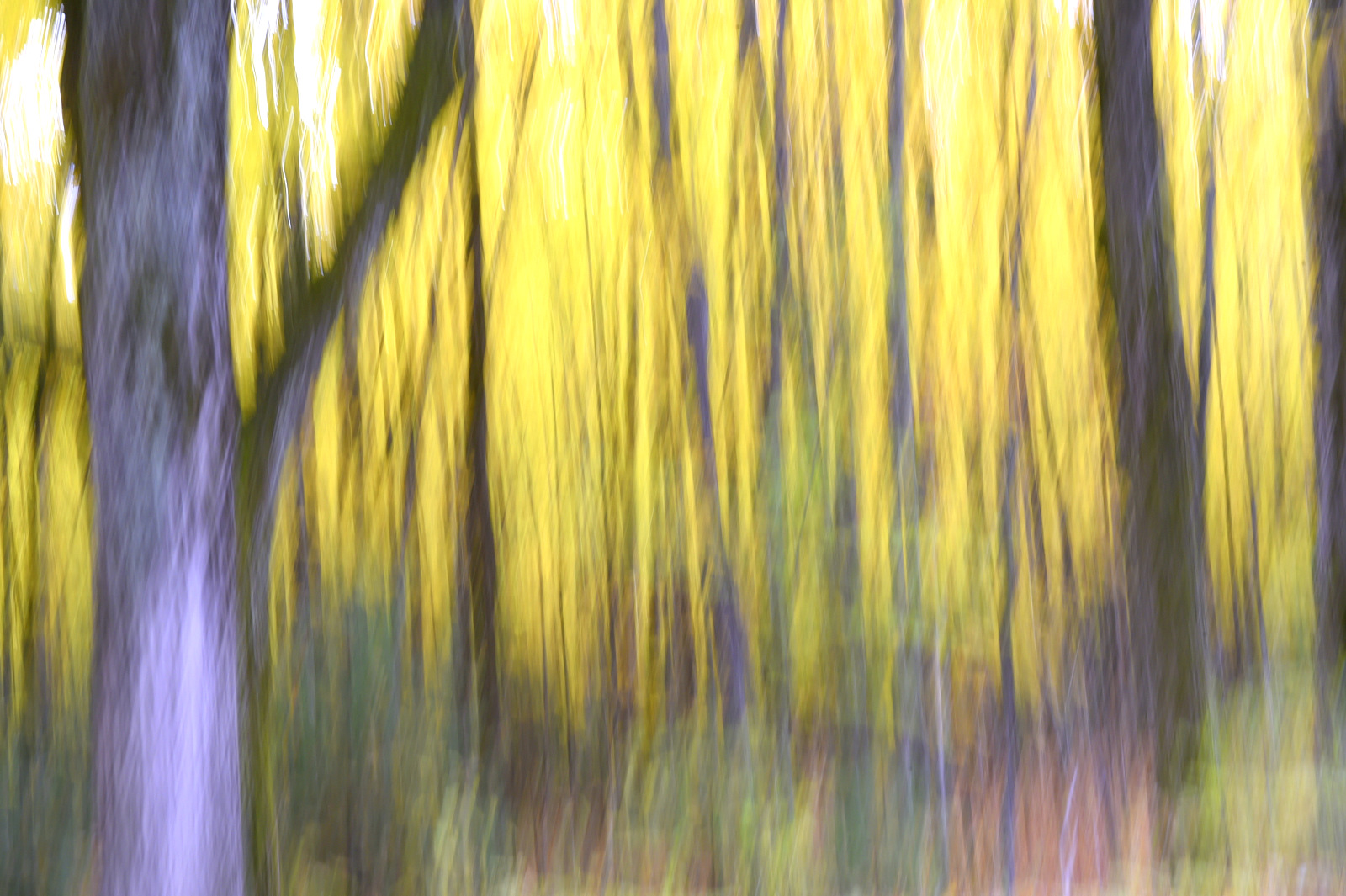
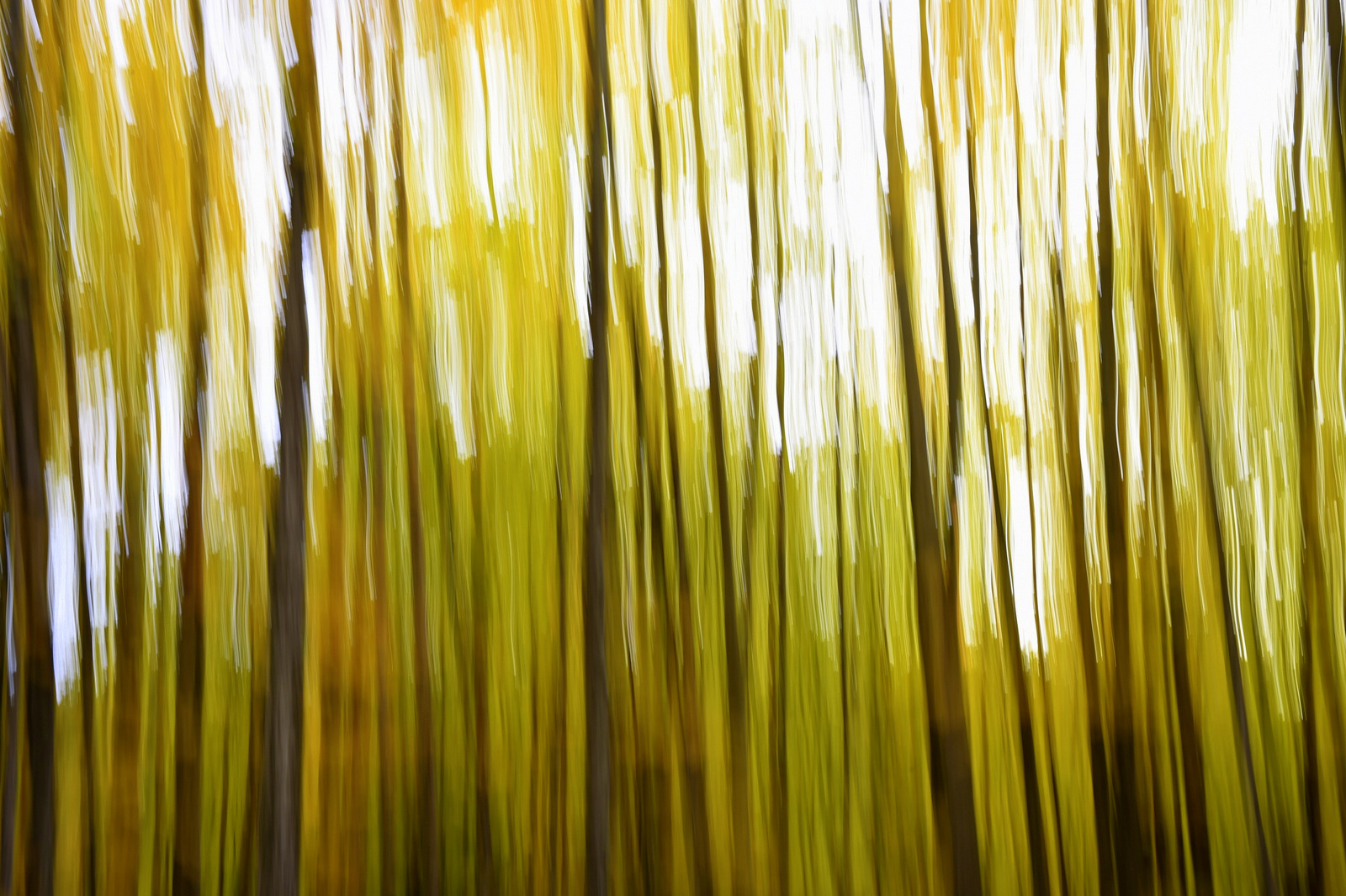
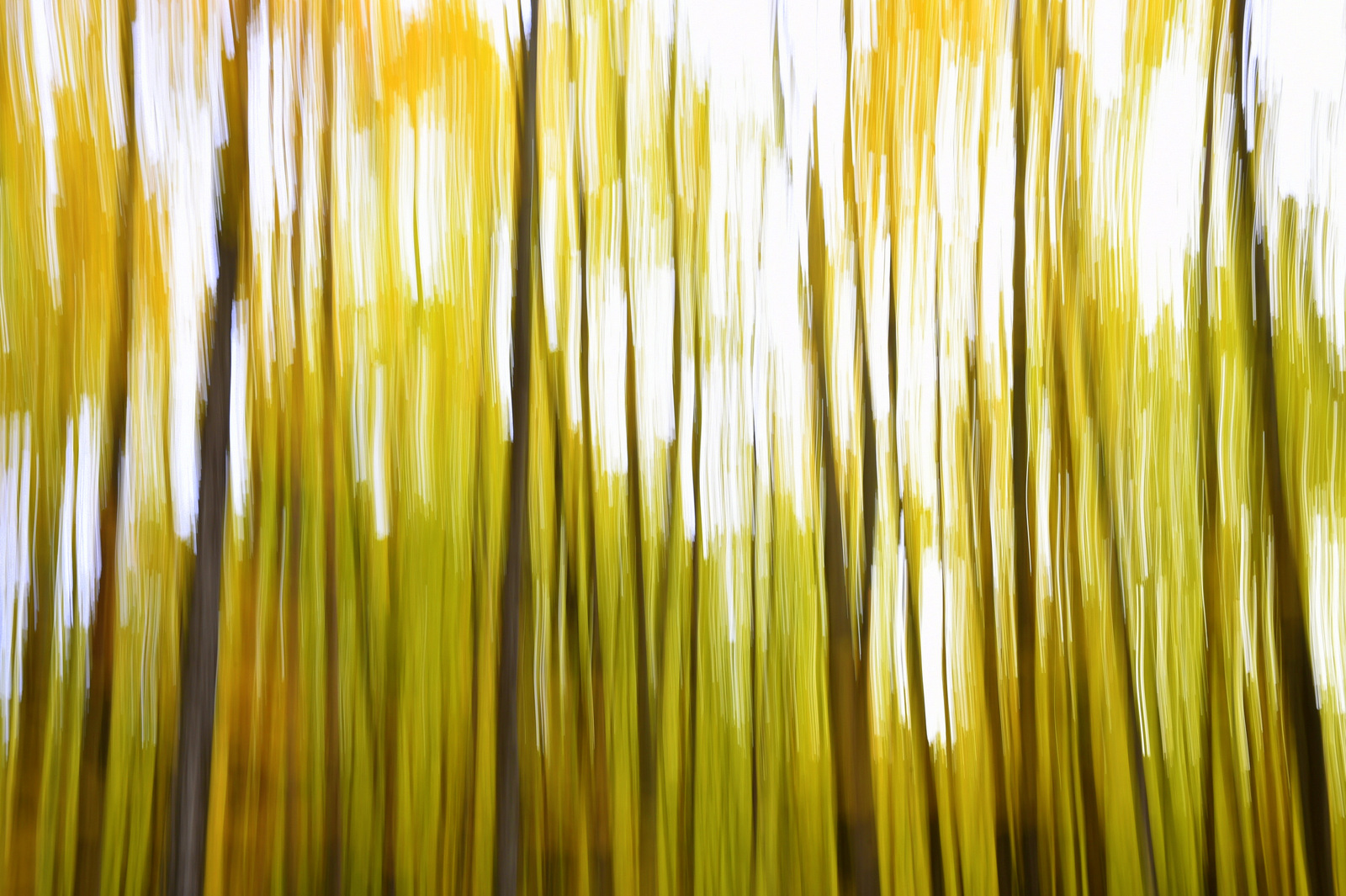
-
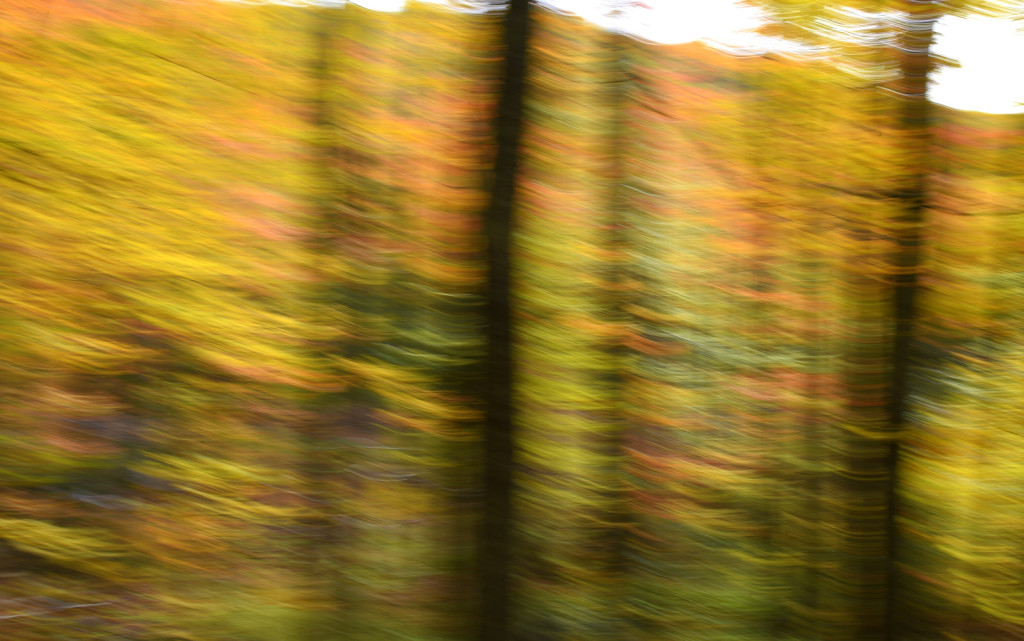
- Horizontal Pan
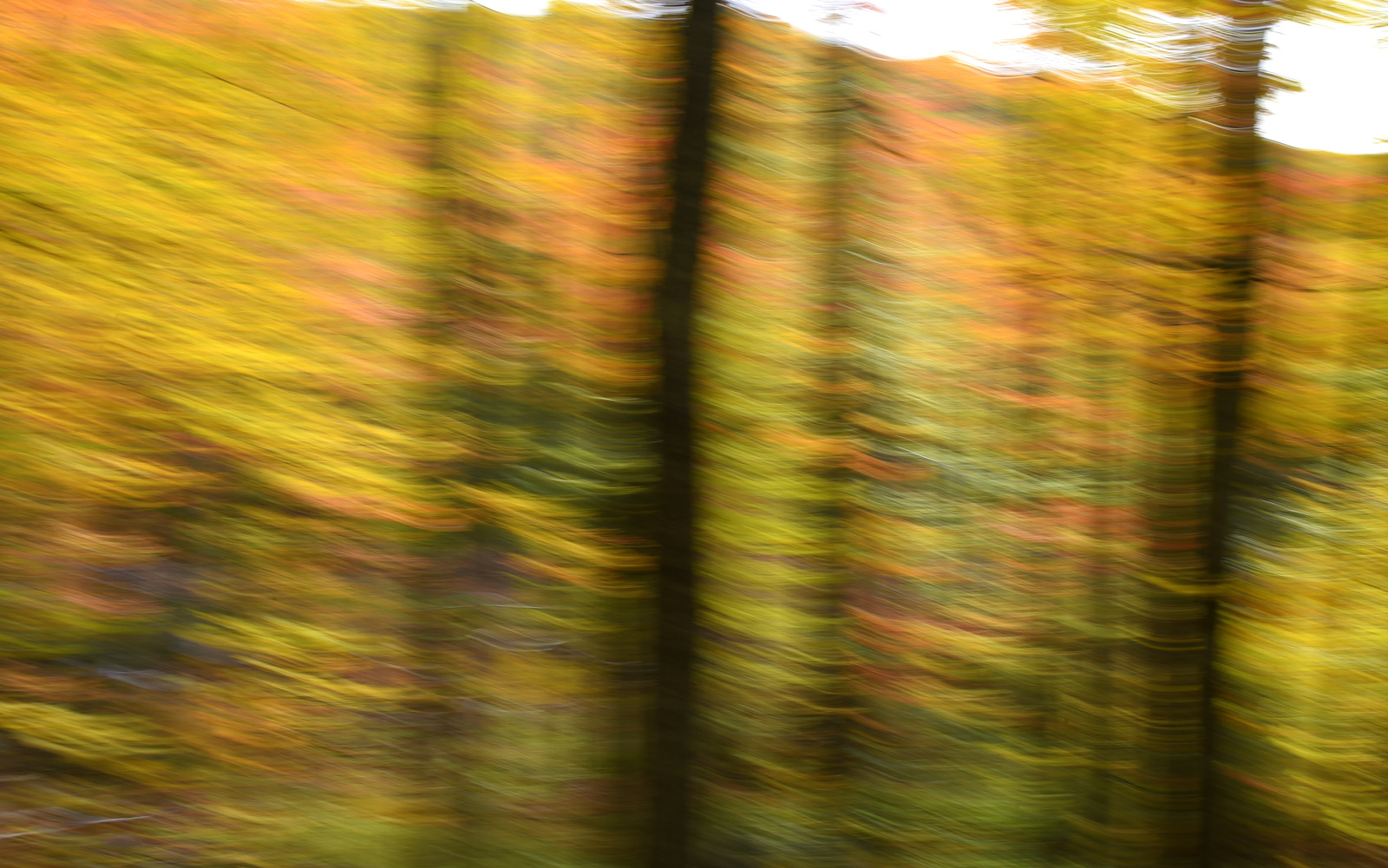
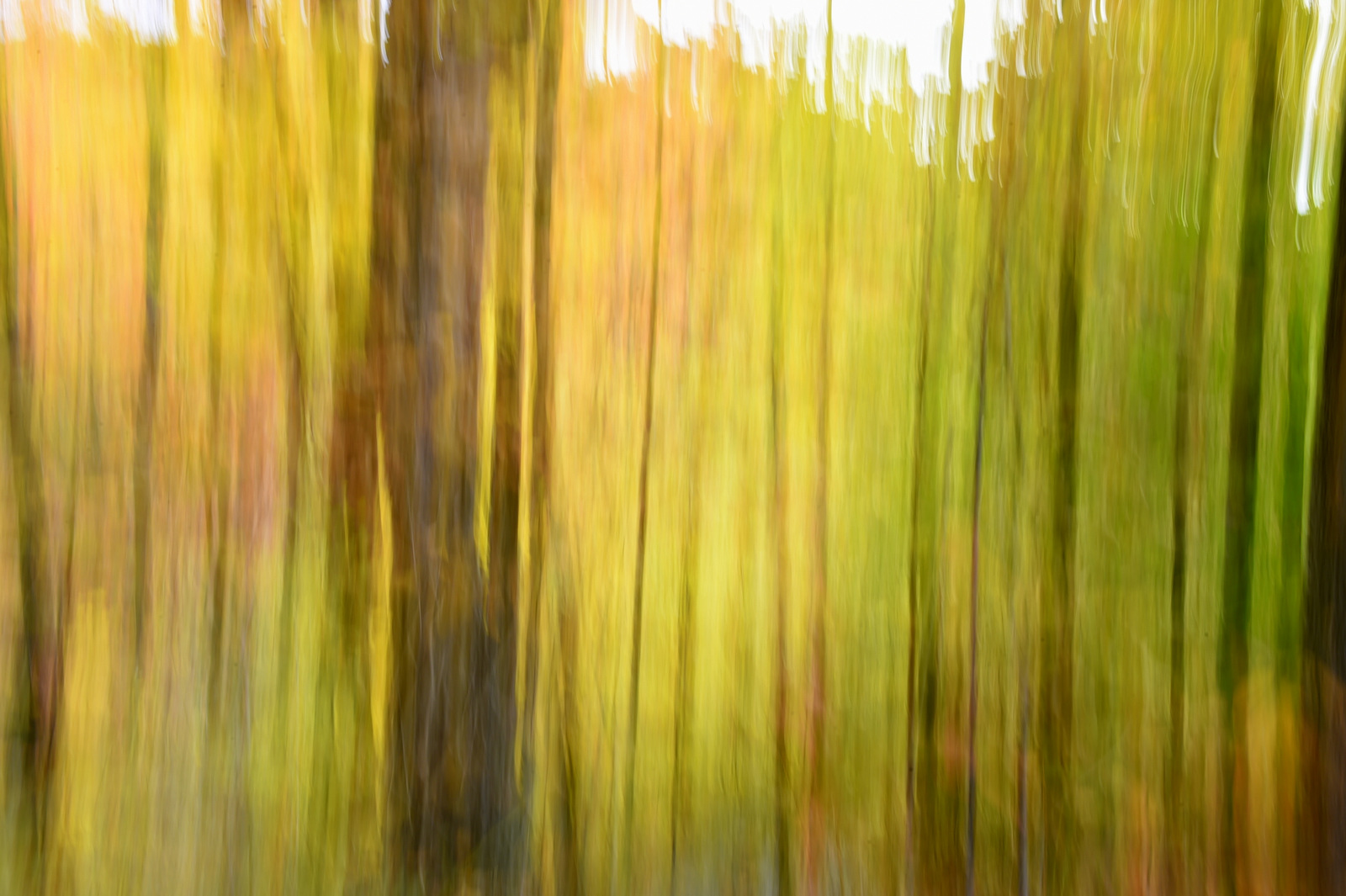
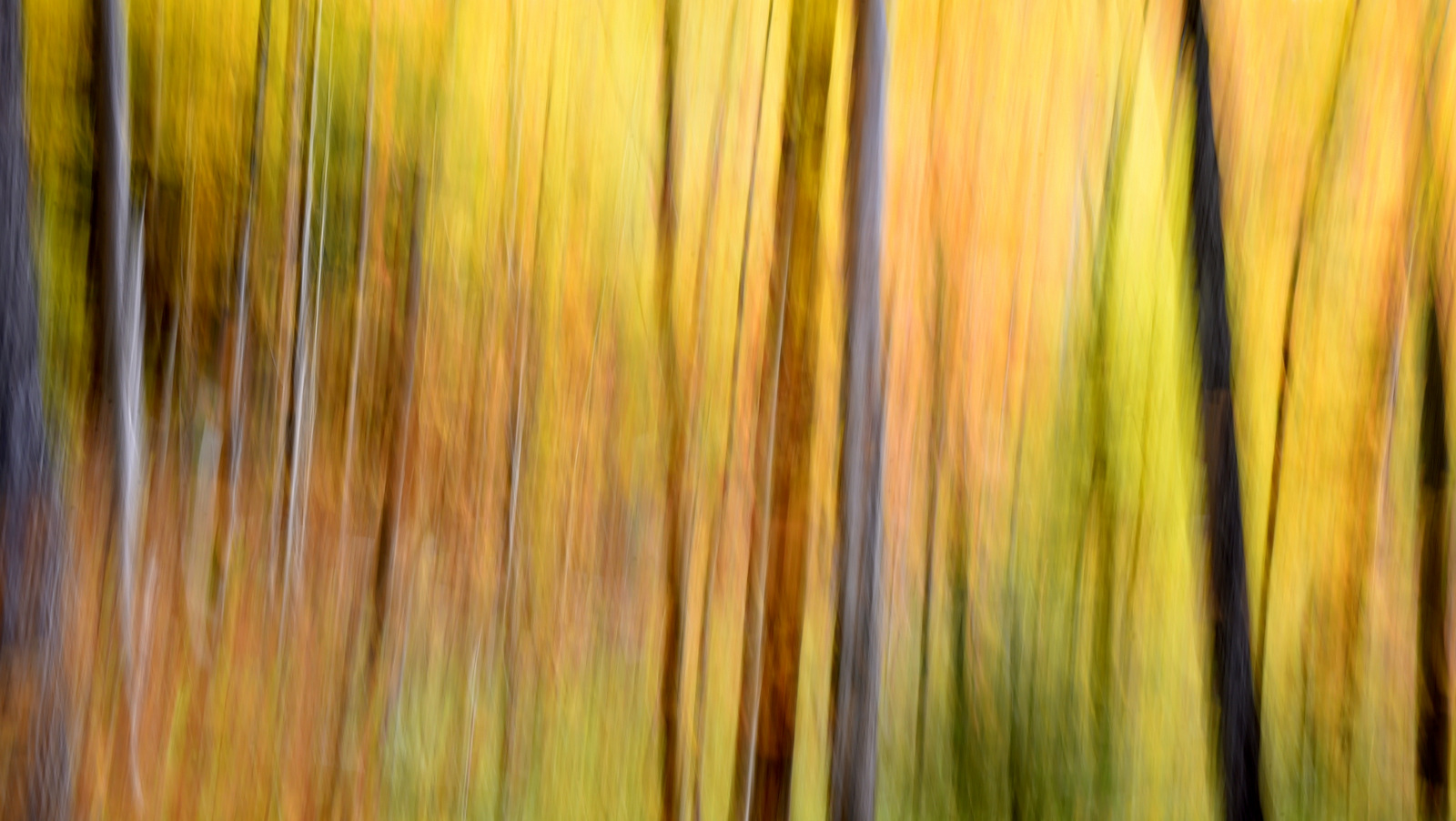
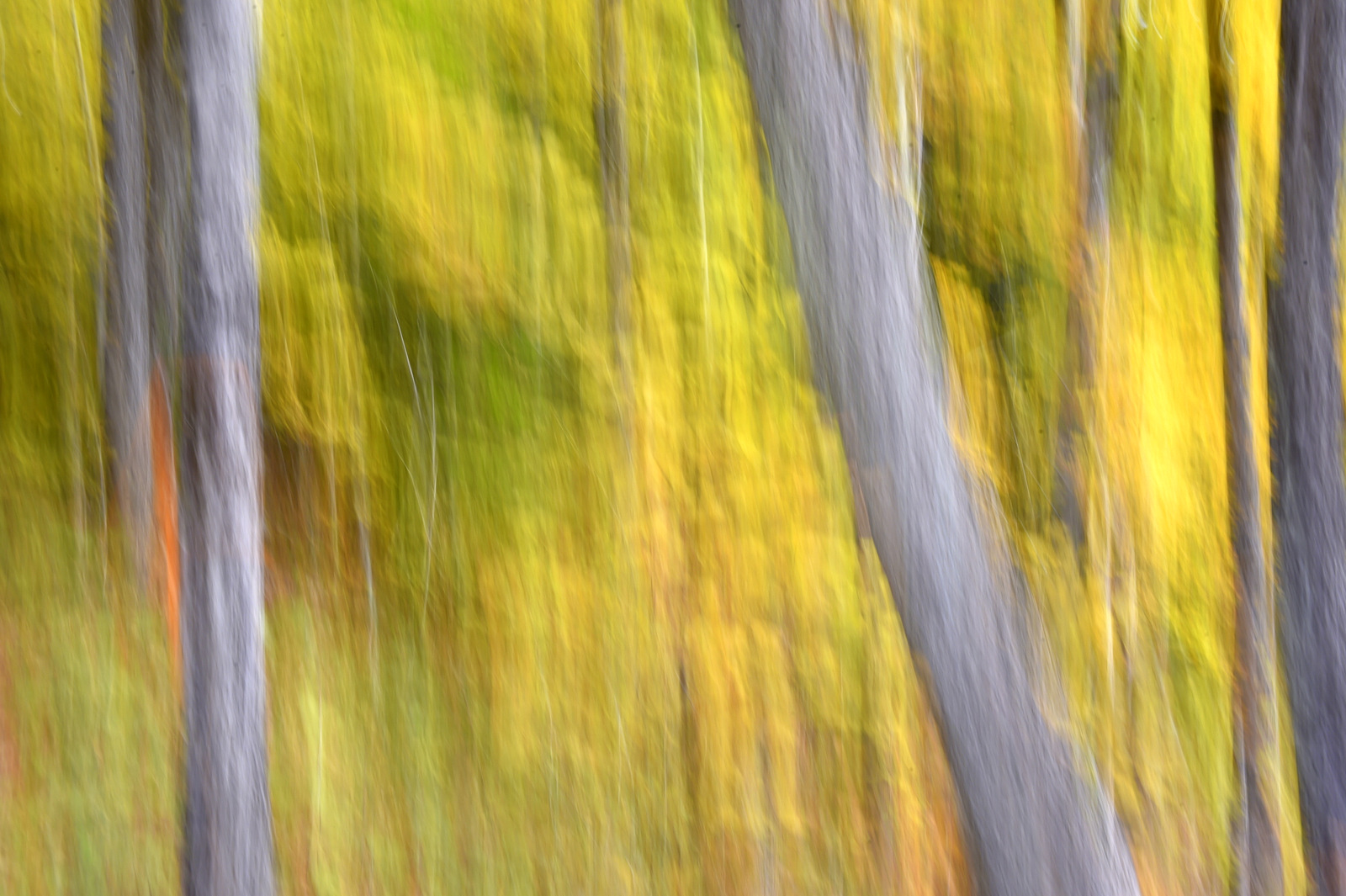
-
- Horizontal Pan
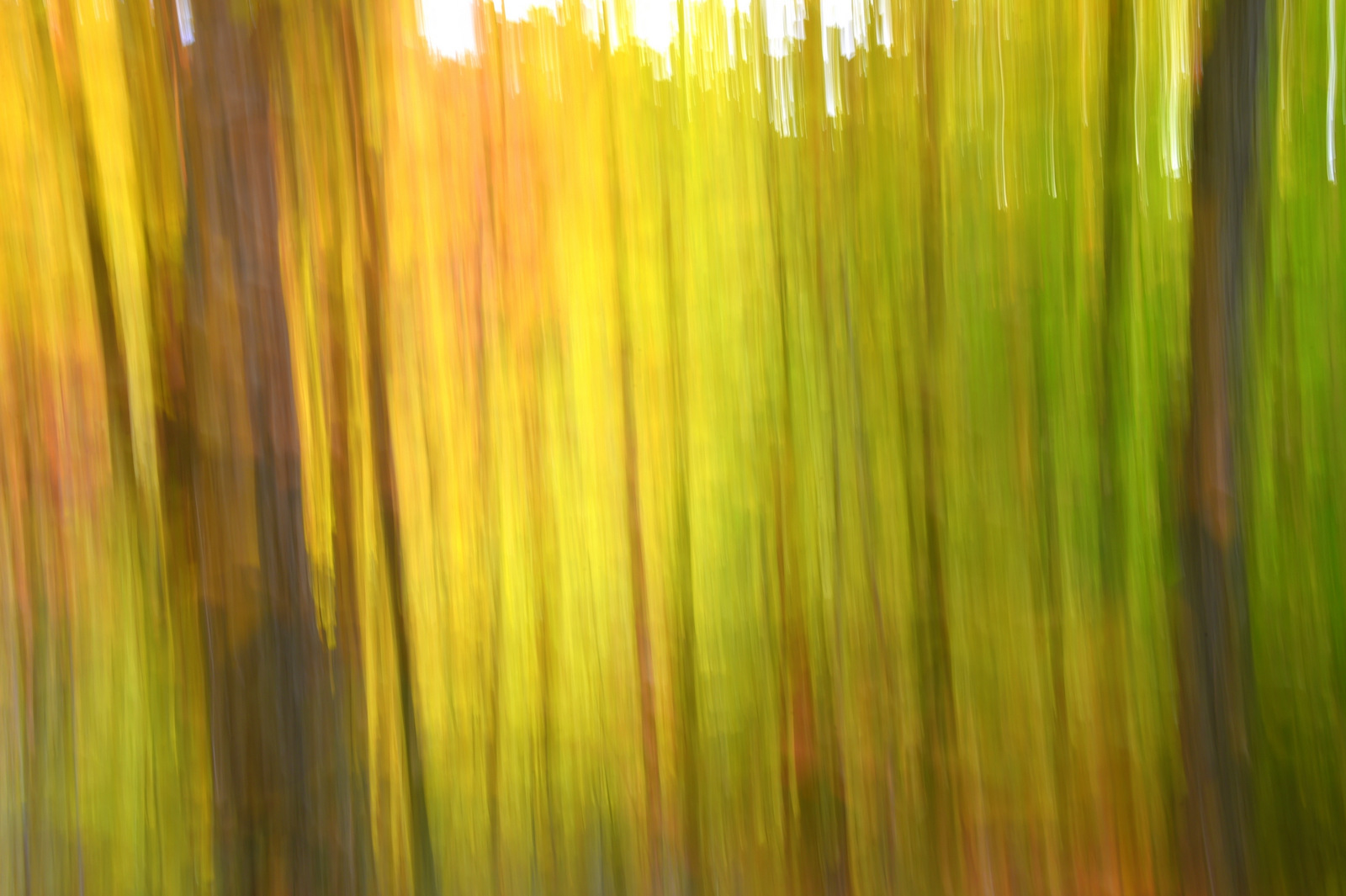
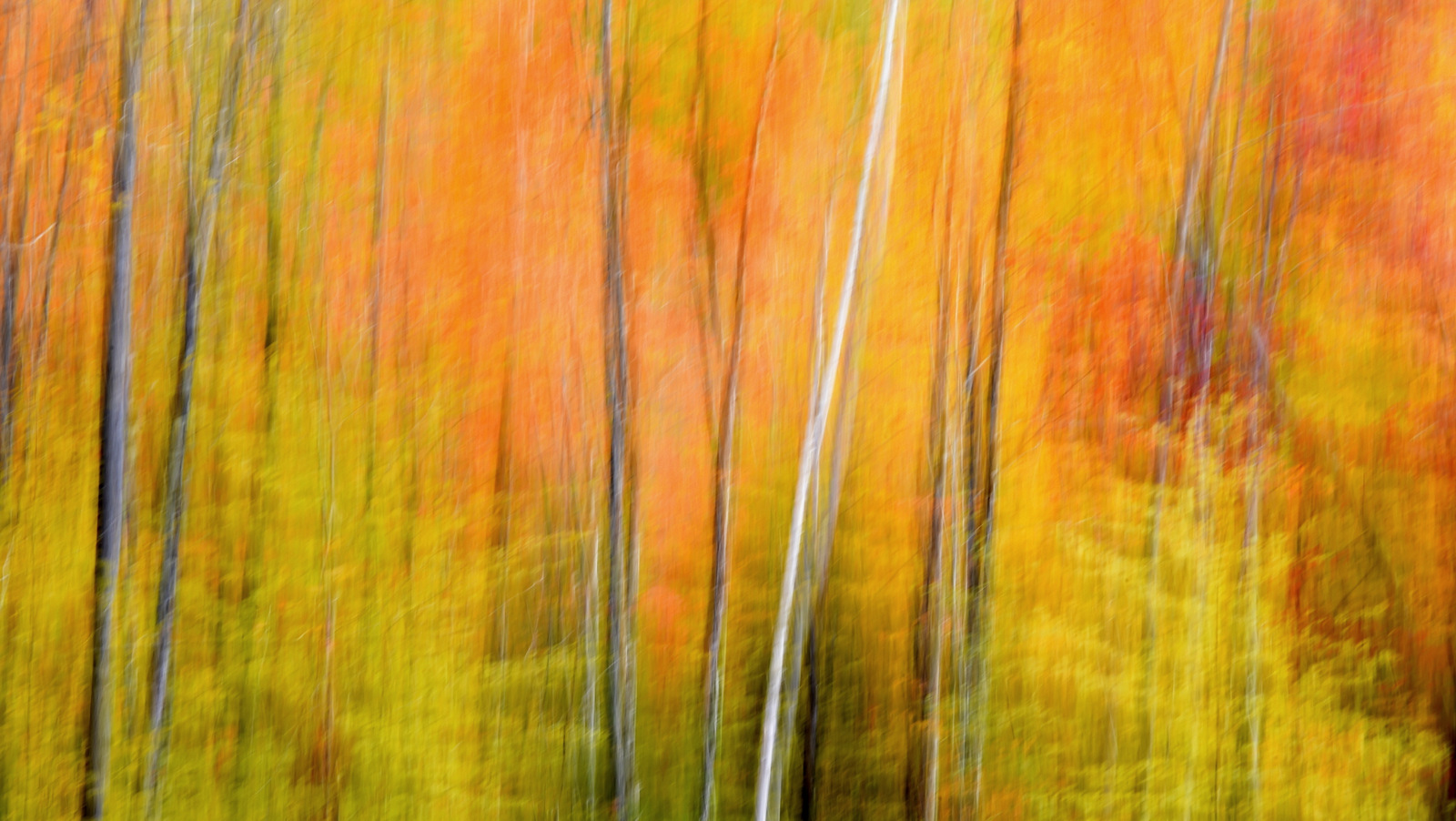
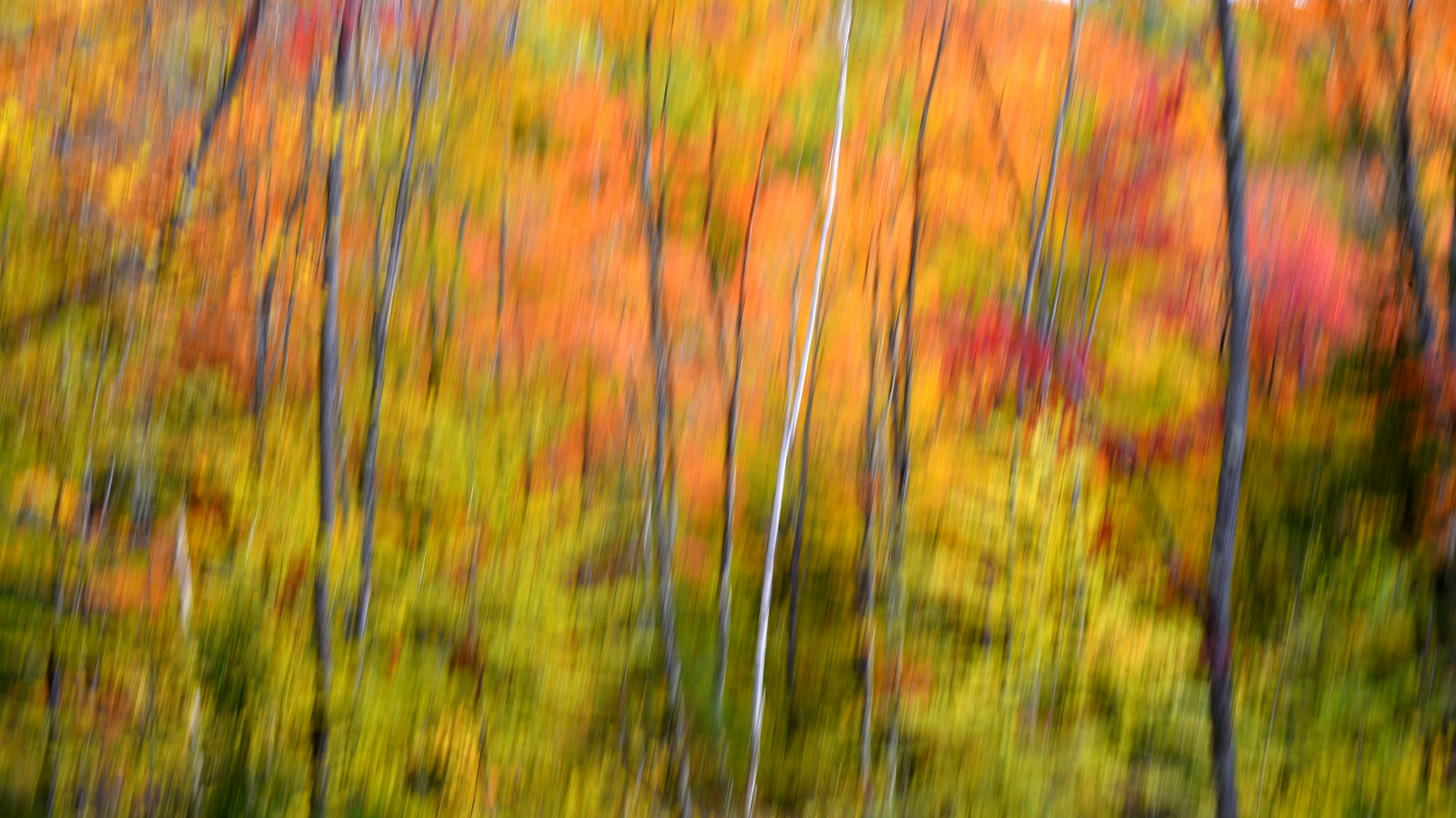
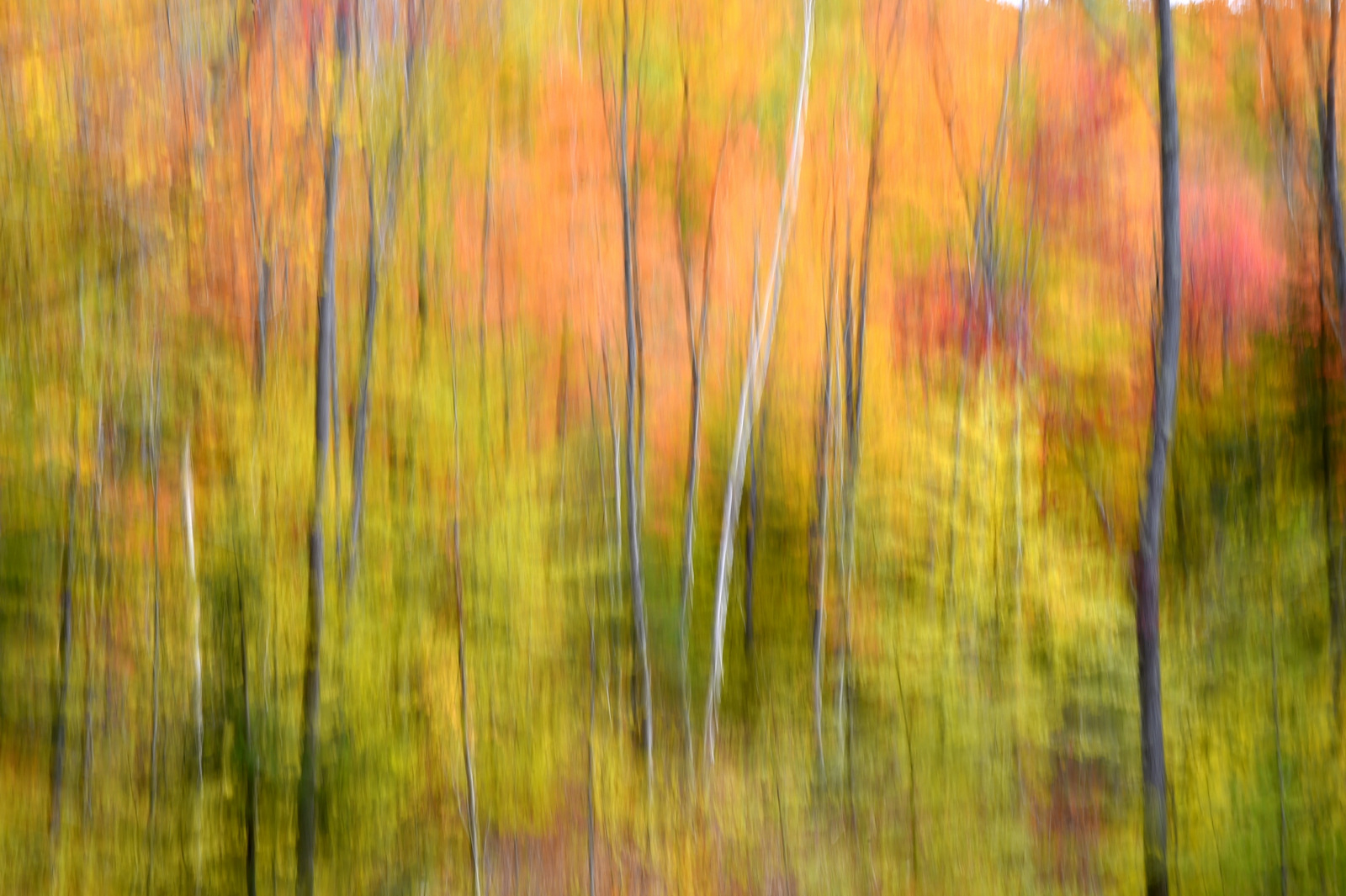

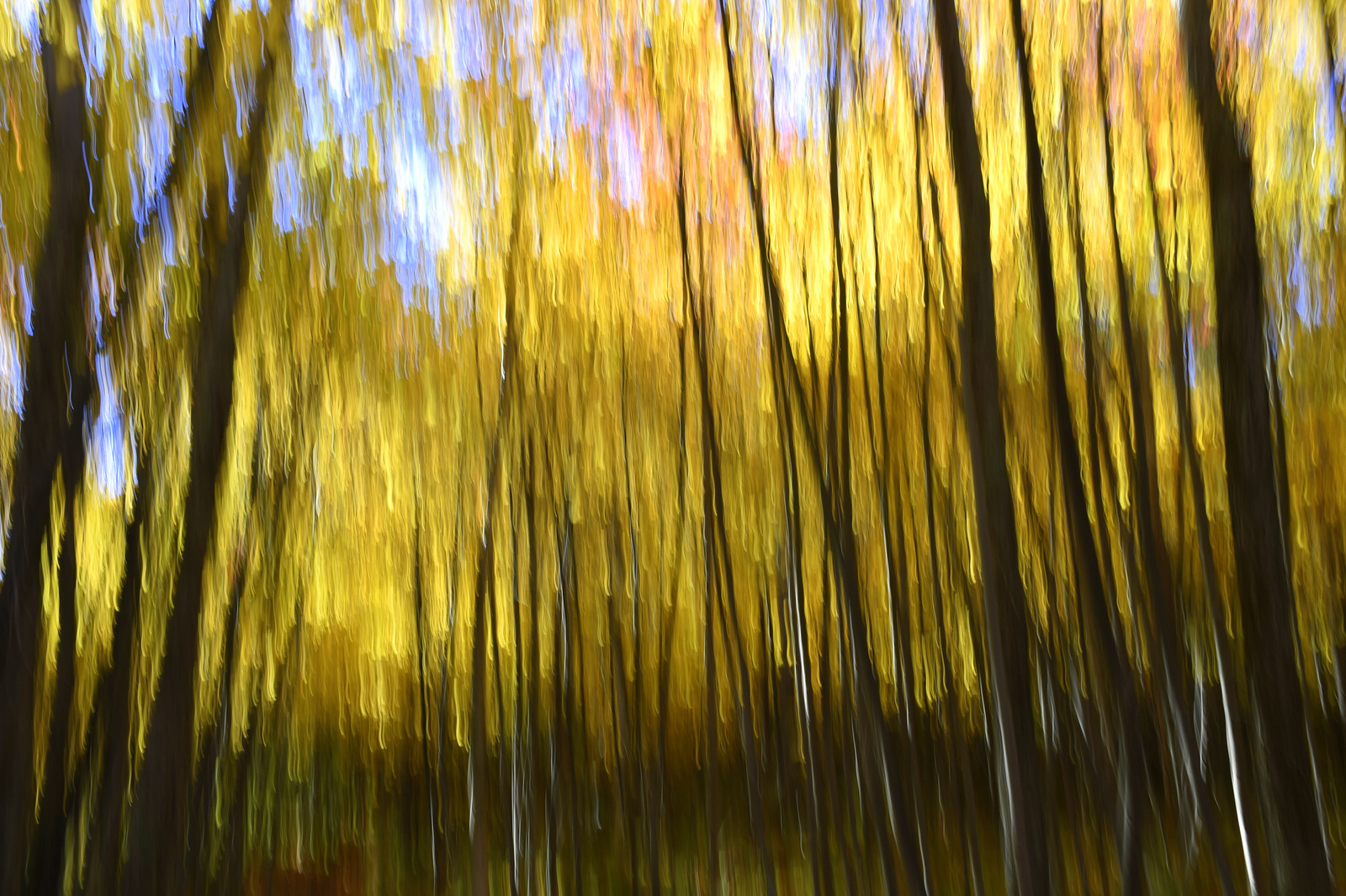
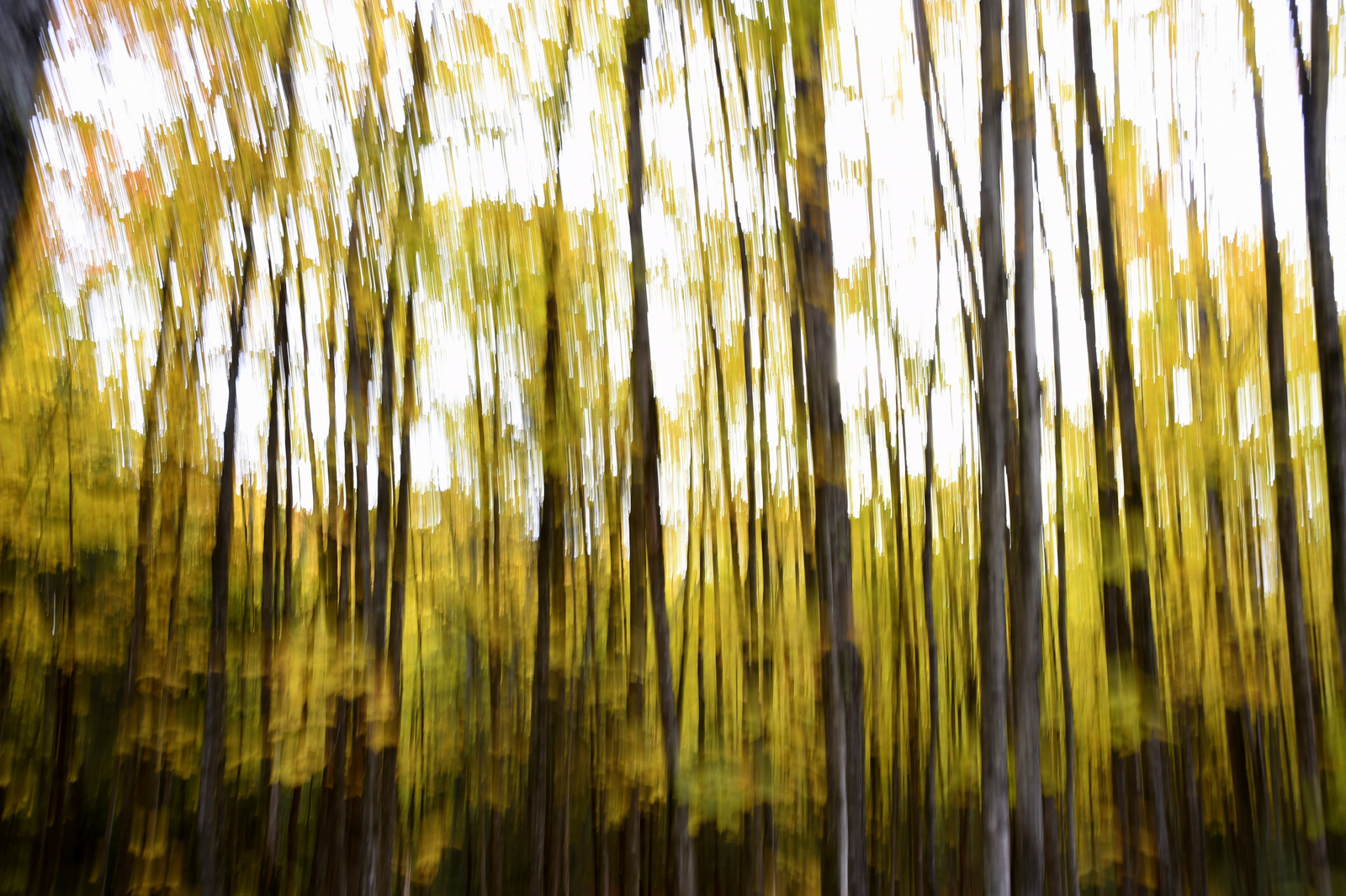
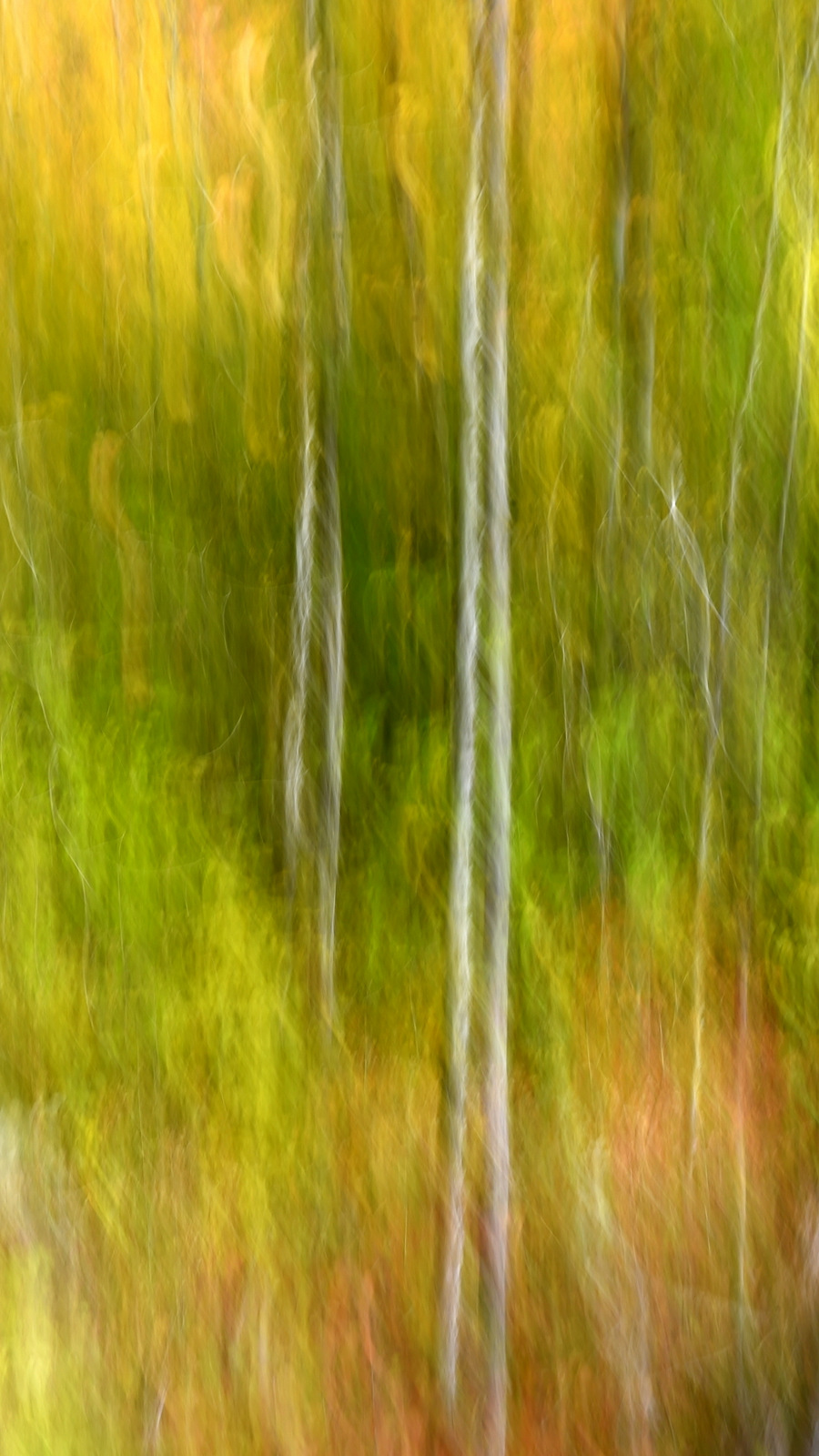
Until next month…..m
Nikon D4S, Nikkor 28-105mm (@ 105mm), f/29, 1/8 s, ISO 400
Aug
31
Shot of the Month – August 2016
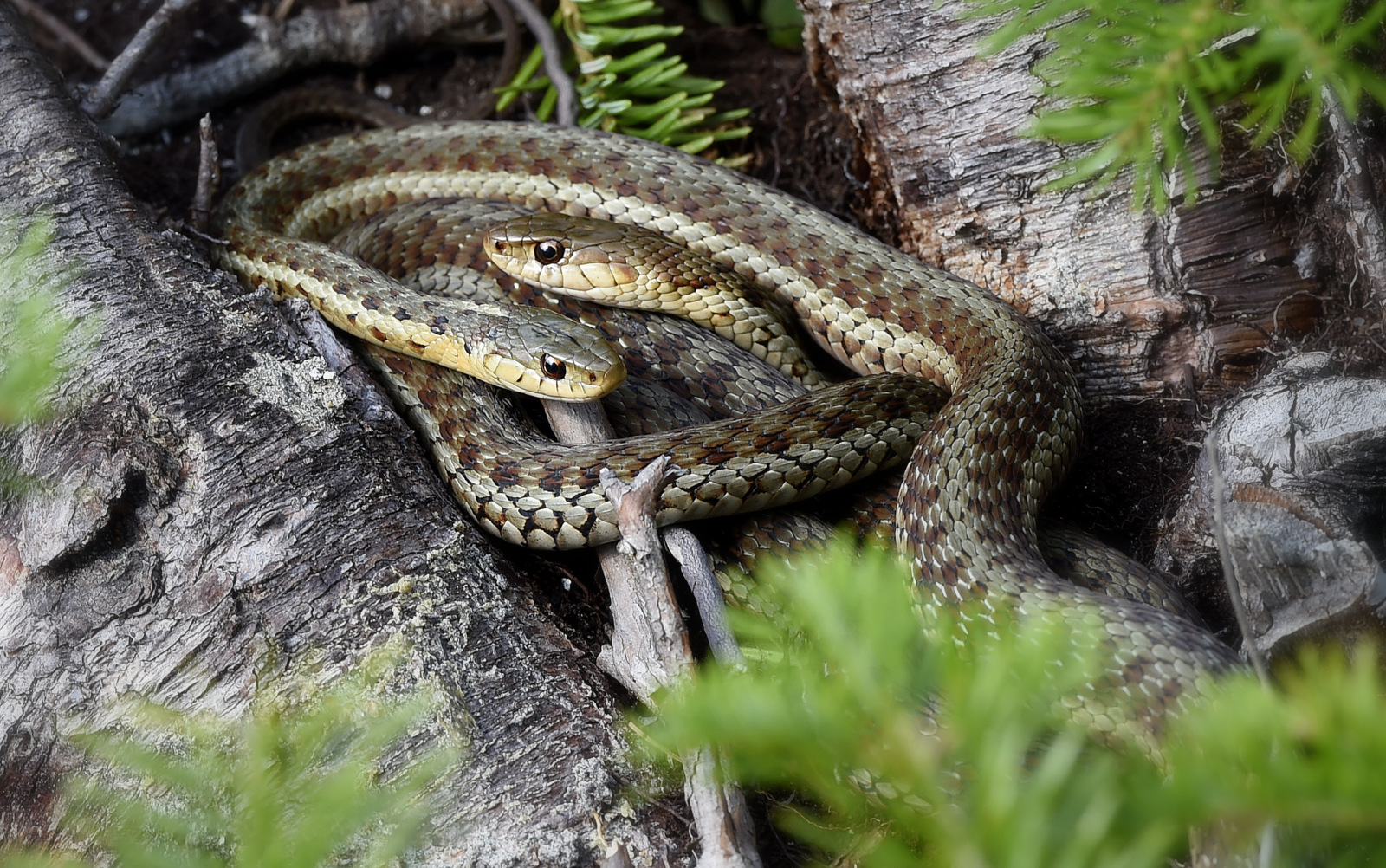
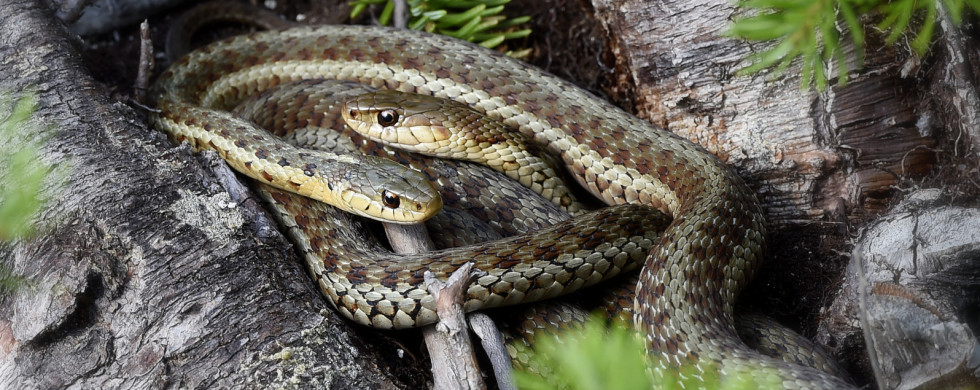
Snakes tend not to be a crowd favorite but nature’s beauty comes in many sizes and shapes. Ok, while these Common Garter Snakes (CGS), photographed in Baxter State Park in Maine are not adorable, nor cuddly, I think that they do have a certain charisma and geometric charm about them.
If you get out in the woods, even a little bit, there is a good chance that you have seen a garter snake. They are by far the most common snake in North America and can be found from Canada to Florida, from the Pacific to the Atlantic coast, and most places in between. The CGS is quite adaptable and can live in forests, fields, prairies, streams, wetlands, meadows, marshes, and ponds – it is often found near water. These snakes are quite harmless though some species of garter snake have a mild neurotoxic venom that may help to immobilize its prey, but its bite is harmless to humans.
Common garter snakes are thin and tend to be about 22 inches in length and rarely get longer than four feet in length. Given their relative small size the CGS is often preyed upon by large fish, hawks, crows, bears, turtles, birds, foxes, squirrels, raccoons, bullfrogs, and some other snakes.
I know that some people get very afraid when they see a snake. Trust me, this fellow is not a threat. His main prey is, are you ready for this? – earthworms. Yep, this snake is a viscous killer of, 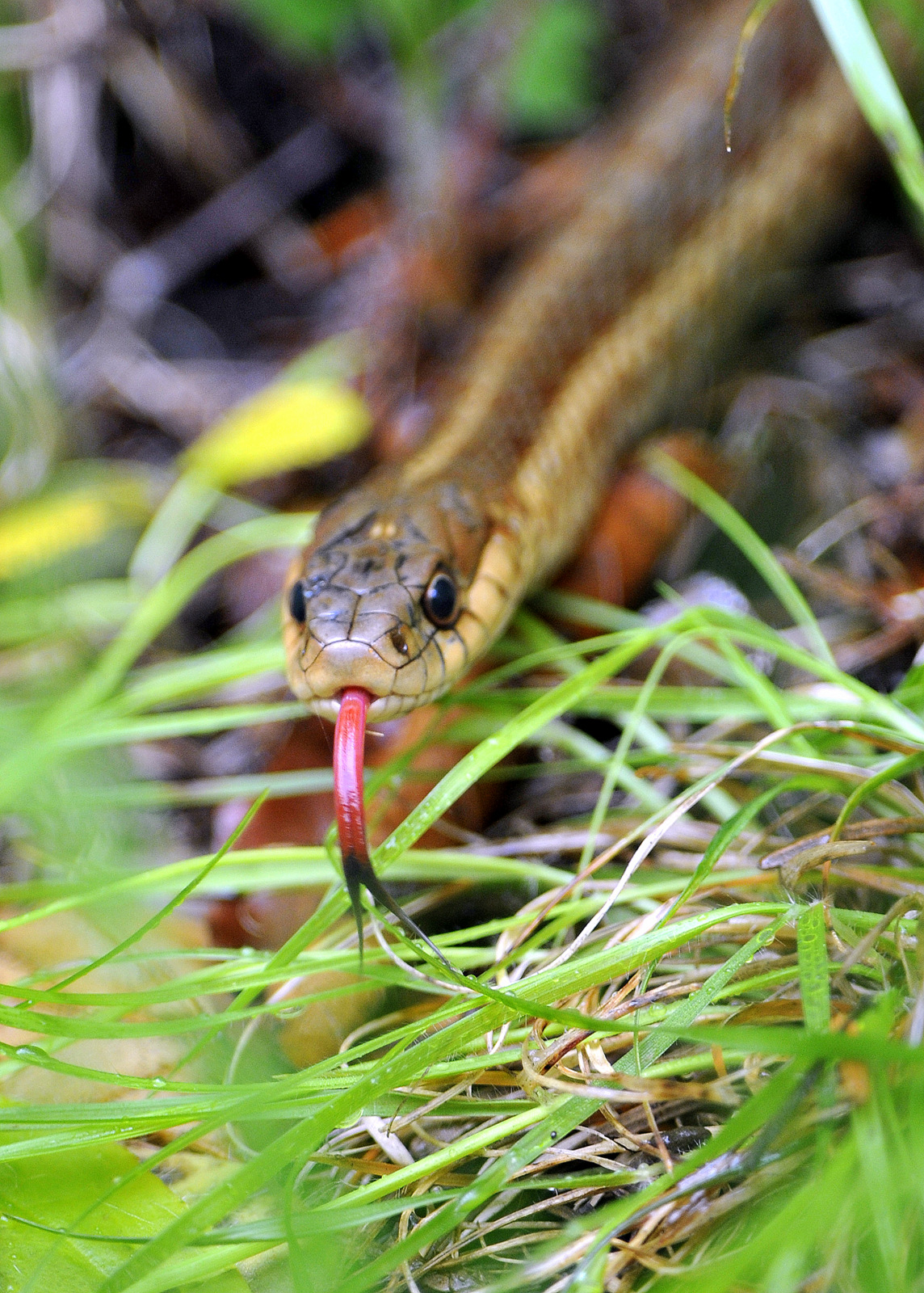 earthworms. See, now don’t you feel a bit silly? CGS are also very good swimmers and will hunt small fish, frogs, tadpoles, leeches, insects, slugs, and crayfish. They will also hunt for small mammals and birds when possible.
From the photo, you might deduce that all CGS are small, brown, striped snakes. Alas, life is not that simple. Turns out that there is tremendous variability in the appearance of the CGS and you may find them adorned in green, blue, yellow, gold, red, orange, brown (as above), and black. The CGS is just one out of thirty species of garter snakes that exist, not to mention the various sub-species, so figuring out which is which can be tricky. Check local reference guides for the state where you saw the snake for more precision on the colors typically found there.
So the next time you are in the woods and you see one of these fellas, take a deep breath, relax, and enjoy one of nature’s lesser-appreciated beauties.
Until next month…..m
Nikon D4S, Nikon 70-200mm @ 200mm, f/11, 1/60 s, ISO 400
Jul
31
Shot of the Month – July 2016
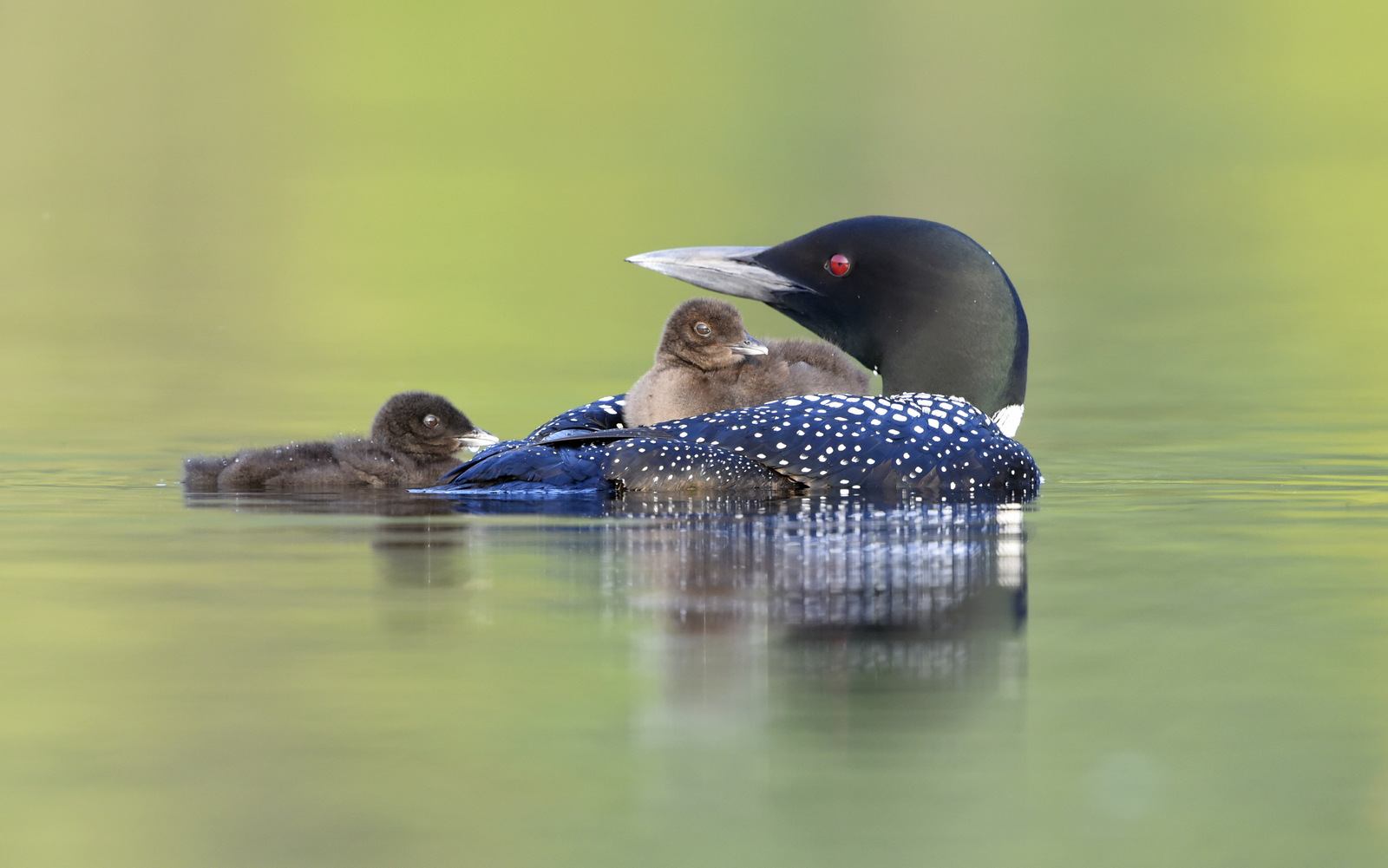
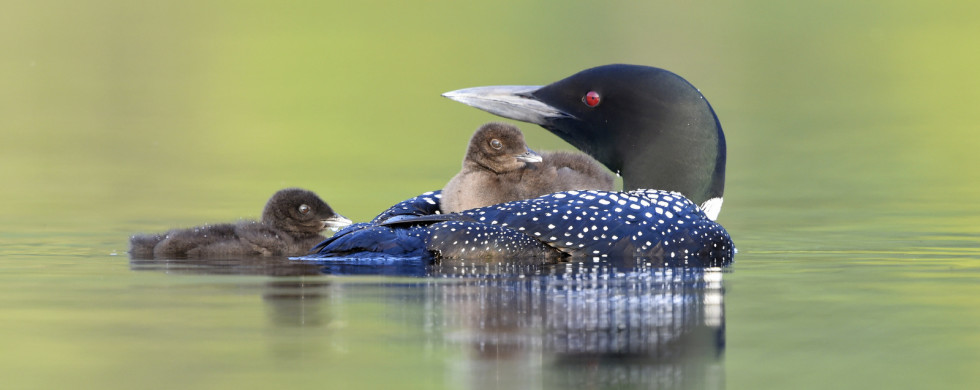
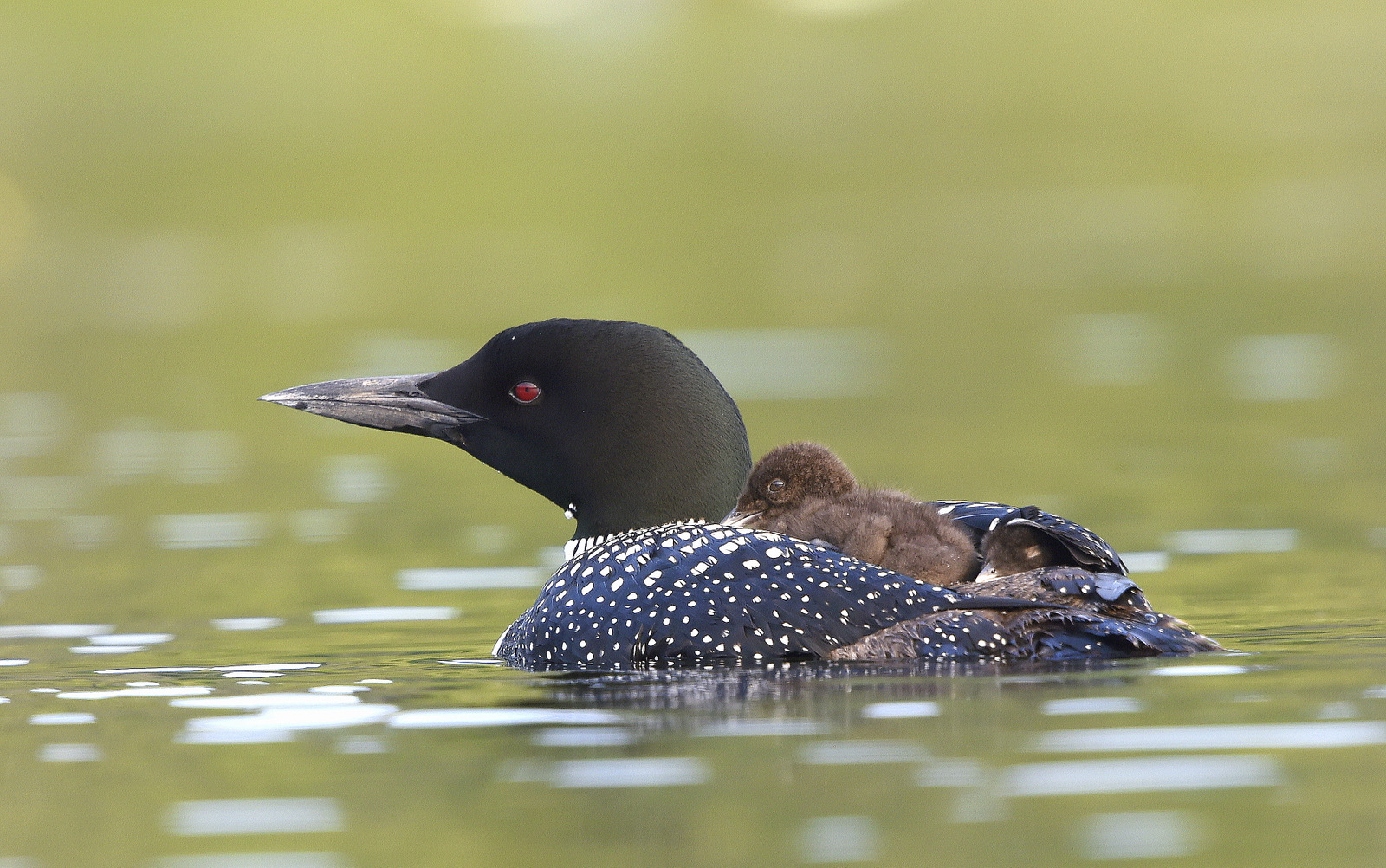
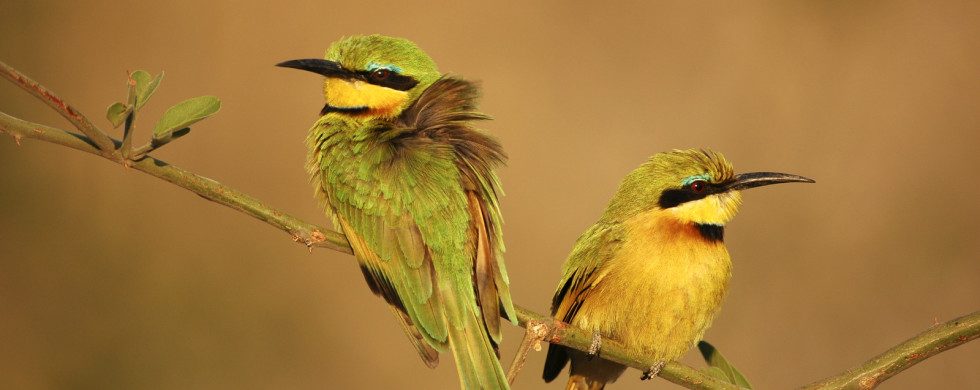
It was over in an instant. This “Awwwwwl”-inspiring shot of an Atlantic Loon chick riding on its parent’s back was taken in 1/1,000th of a second. Sounds easy and pretty painless. But not so fast Speed Racer — it also took me four years to get my kayak in the right spot to capture this scene.
Why so long you ask? Let’s break it down.
Atlantic Loons, aka Common Loons, spend the spring and summer on lakes and ponds in Canada and Northern US where they breed and raise the next generation of aquatic birds. During the first 2 weeks of life, the tiny chicks can often be found riding on the backs of the adults. Besides being incredibly cute, this behavior helps promote the survival of the wee birds. When so small the chicks are very buoyant and they have a hard time maneuvering in the water on their own. Keeping the chicks off the water also helps avoid the dangers from below, such as from large-mouth bass, and avoid danger from above in the form of Bald Eagles (Source). I have often seen a Bald Eagle circle above a loon family waiting for a chance to pick off a chick. Also during the first two weeks of life, the loon chicks are not able to effectively regulate their body heat and they lose a lot of heat through their feet when in the water. Riding on a parent’s back helps keep them warm and if necessary the chicks can seek shelter under a protective wing (Source), as seen below:
So my challenge was to be in the right place at the right time to capture a behavior that only takes place during just a part of a two-week window each year. And in good light, of course.
In year 1 I had just moved to Vermont and I didn’t know anything about loons, their behavior, where to find them, etc. By the time I discovered my first mating pair, it was too late in the summer and the chicks were too big for back riding. Perhaps next year.
In year 2 I returned to the same pond and monitored the breeding pair as they built their nest and incubated the eggs. For some reason the eggs failed and no chicks. Sad. Maybe next year.
By year 3 I was now tracking loons at two different ponds. In pond #1 the nest was flooded during a thunderstorm and the eggs were lost. At the second pond, I arrived too late (working for a living often gets in the way of photography) and I missed the behavior. Well, there is always next year…..
In year 4 I was tracking loons in three different ponds. In site #1 the nest failed. In site #2 the pair was successful and I managed to catch a couple of days of the behavior and captured a few good shots. In site #3 I found the chicks on what must have been day 2 or day 3 of their young lives. Bingo!! For the next 10 days, I returned to the pond before sunrise each morning and spent a few hours with the loon family before heading off to work.
It was a magical two weeks as I had the chance to glimpse through a fleeting window of opportunity and share in the loons’ first weeks of life. The experience was definitely a highlight of my time living in New England!
And the image was well worth the 126,144,000.001 second wait.
Until next month….m
Nikon D4S, Nikon 600 mm, 1.4 TC (effective 850mm), f/8, 1/1000 s, ISO 2500, +0.333 EV, handheld from a kayak
Jun
30
Shot of the Month – June 2016
Click on the photo to see it larger
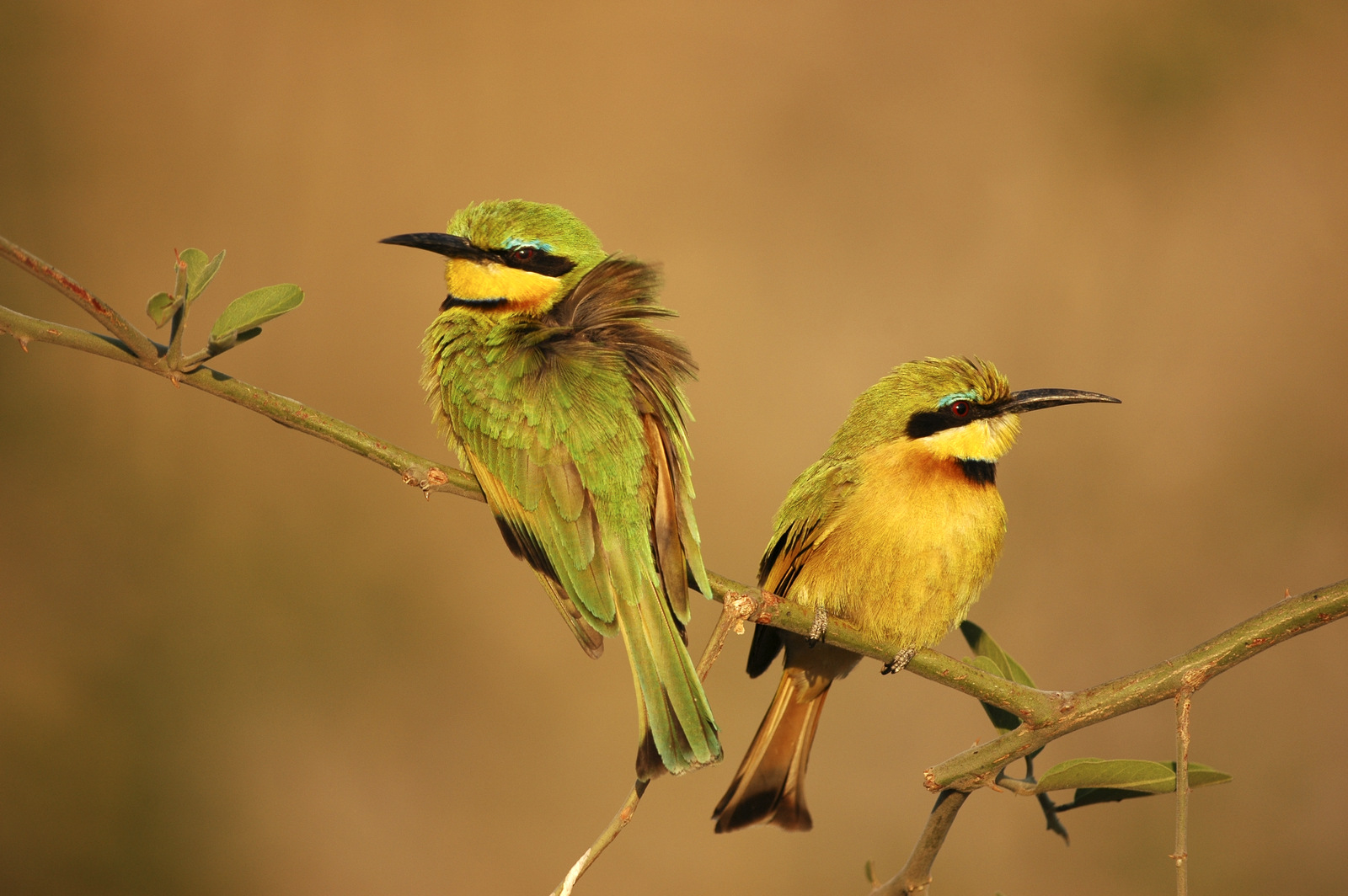
This month we get a lovely rector-verso view of the Little Bee-eater (LBE) – a dandy little bird in every sense.
Dandy: “…is a man who places particular importance upon physical appearance, refined language, and leisurely hobbies….”(from late 18th and 19th century Britain)
The LBE is definitely a stunner — both male and female (as seen in this photo) are adorned in a shimmering coat of green, yellow throat, offset with a black gorget, a luxurious rich brown upper breast that fades into a buffish ochre on the belly. And that daring dash of aqua (?) above the eyes. Bold and beautiful.
As for the leisurely hobbies – seems that LBEs spend about 10% of their time engaged in “comfort activities.” This would include sunning themselves, dust bathing, and water bathing. Dust bathing?–yeah, it helps protect against parasites like mites and flies. (source)
Dandy: “An excellent thing of its kind”
As the title says, Little Bee-eaters are dandy flyers. Little Bee-eaters catch all their prey while on the wing. If an insect lands on the ground the bird is no longer interested. As their name gives away, LBEs eat mainly bees, wasps, dragonflies, and similar insects. These birds typically hunt from a favorite perch – once a flying insect is spotted, the bird launches into the air, snatches the insect with that powerful, forceps-like beak, and dines while flying or returns to the perch. Insects with stingers (da-bees) are thrashed against a tree branch as the LBE pinches tightly on the insect to squeeze out all the venom. (source)
I photographed this couple in Botswana. I also photographed a Blue-cheeked bee-eater in Botswana and you can see some of that dining-at-the-perch behavior here. (you really should, it is a great shot if I say so myself)
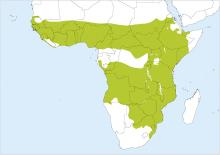
Little Bee-eater Range
The Little Bee-eater is indeed little. There are 26 species of bee-eaters in the world and the LBE is the tiniest of them all. What they lack in size they make up in numbers. It is estimated that there are 60 to 80 million Little Bee-eaters spread out across Africa. The bee community must be very bummed about that fact!
Ahhh, the lovely little bee-eater, beautiful but deadly, especially if you are a bee.
Until next month….:-)
Nikon D70, Sigma 300-800mm (@650mm), 1/400 s, f/5.6,
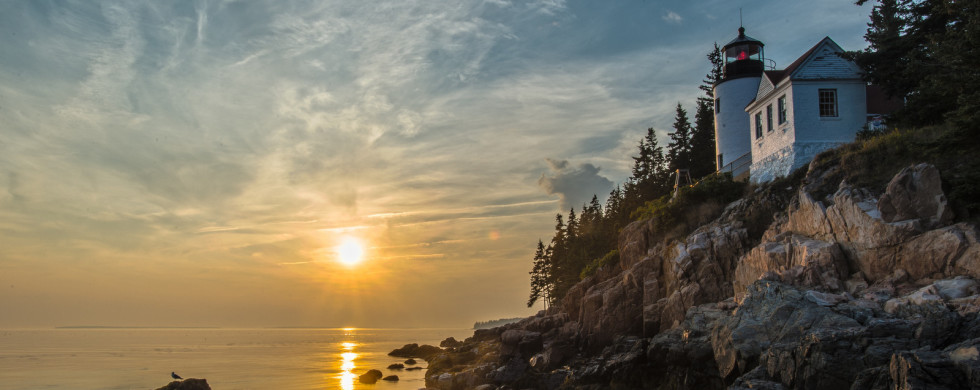
May
31
Shot of the Month – May 2016
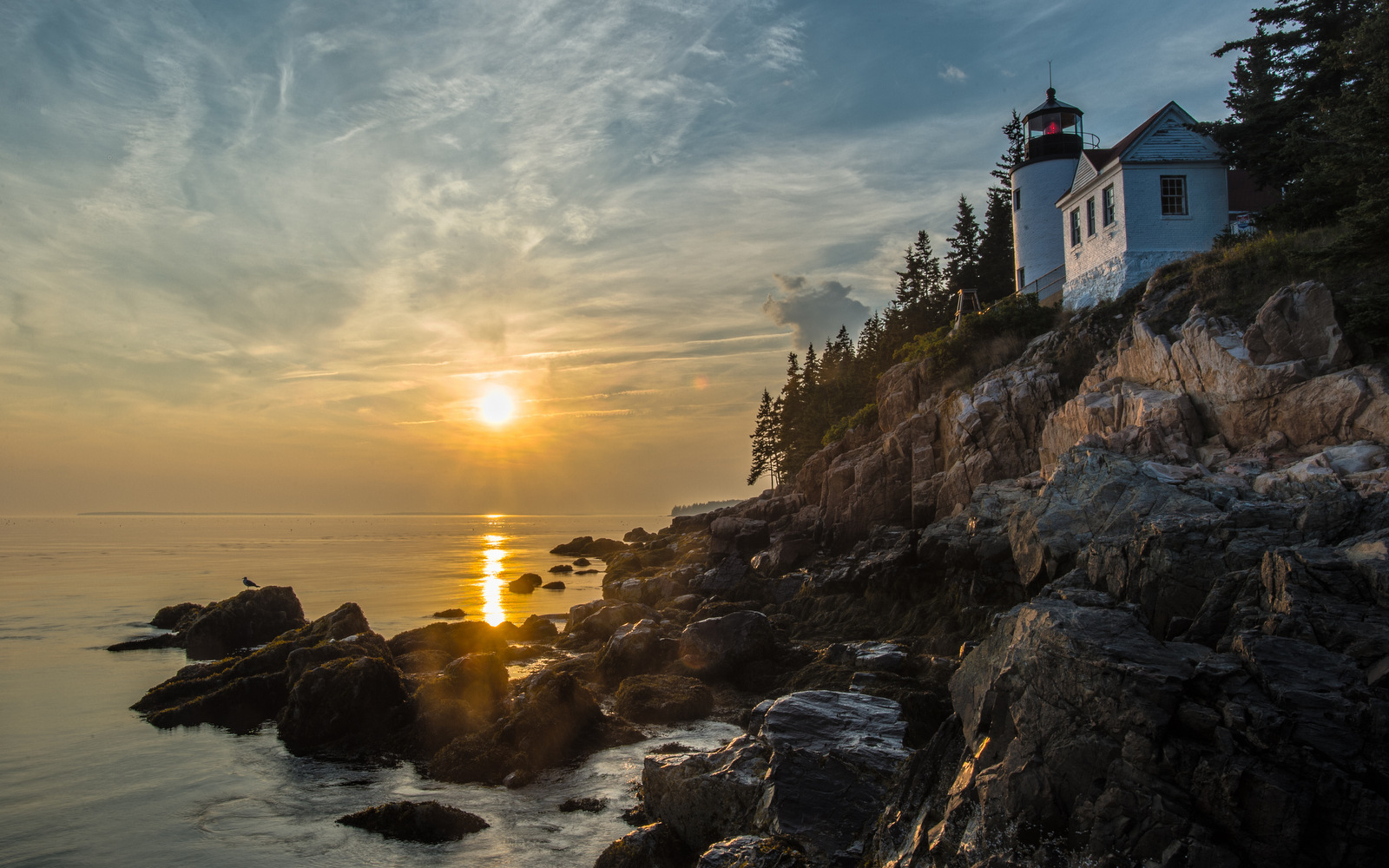
Did you know that it is impossible to take this picture, as shot, with today’s cameras?
Uh, you mean the one I am looking at right now.
Yes, that one.
The one that doesn’t exist.
Exactly.
Scratch head…
Photographic equivalent of “Who’s on First?” (If you have never heard this, stop now, and listen…Comedy Classic!)
Obviously, I did create the image so it does exist. However, this is not one picture but 7 that have been merged together to accurately represent the scene as I saw it with my eyes.
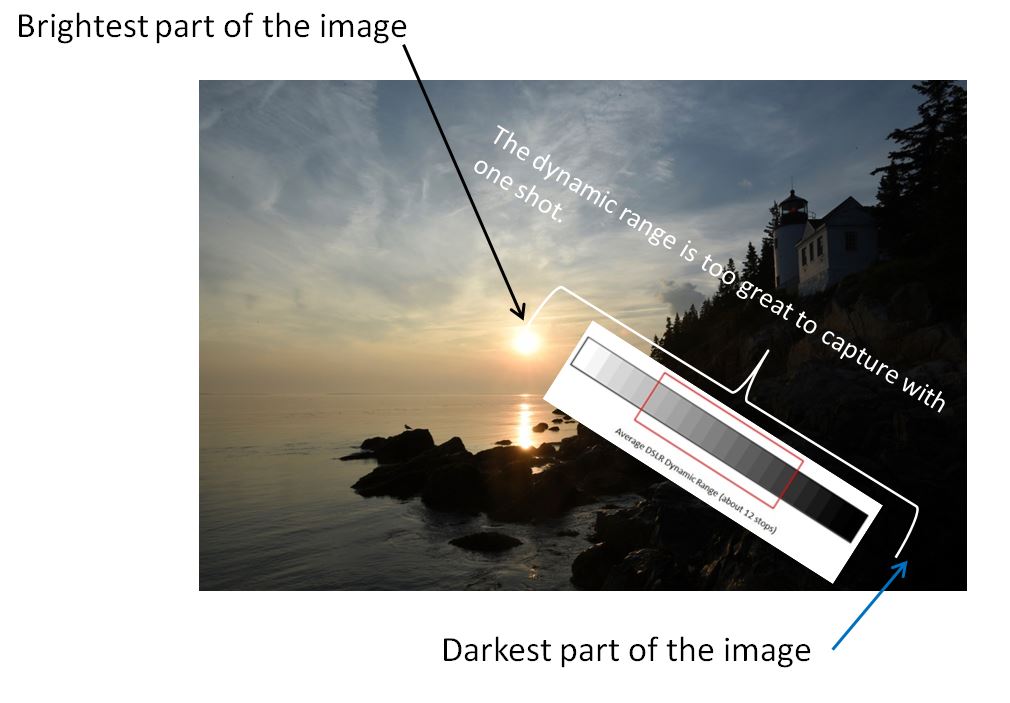
Today’s digital cameras are amazing, but they still cannot see the world as accurately as the human eye can, yet. Humans are capable of seeing about 24 different levels of brightness in a scene. In photo lingo, we would say that people can see close to 24 stops of light, or 24 Exposure Values (EVs). Today’s best cameras can see about 10-14 stops of light. Some scenes have a high dynamic range, meaning that there is a large difference in Exposure Values between the darkest shadows in the scene and the brightest highlights.
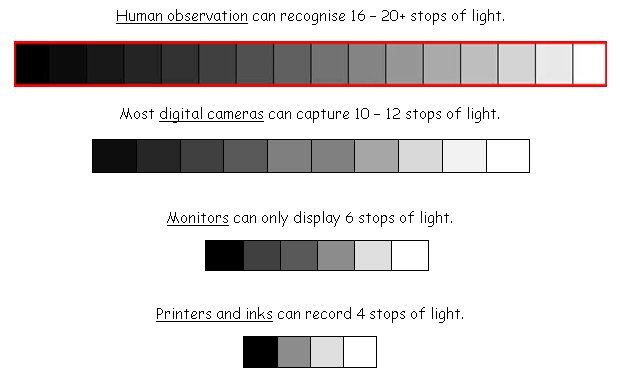
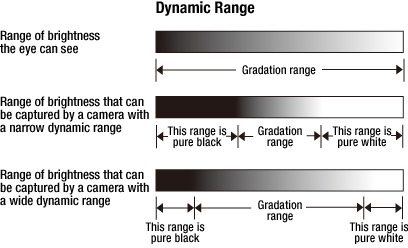
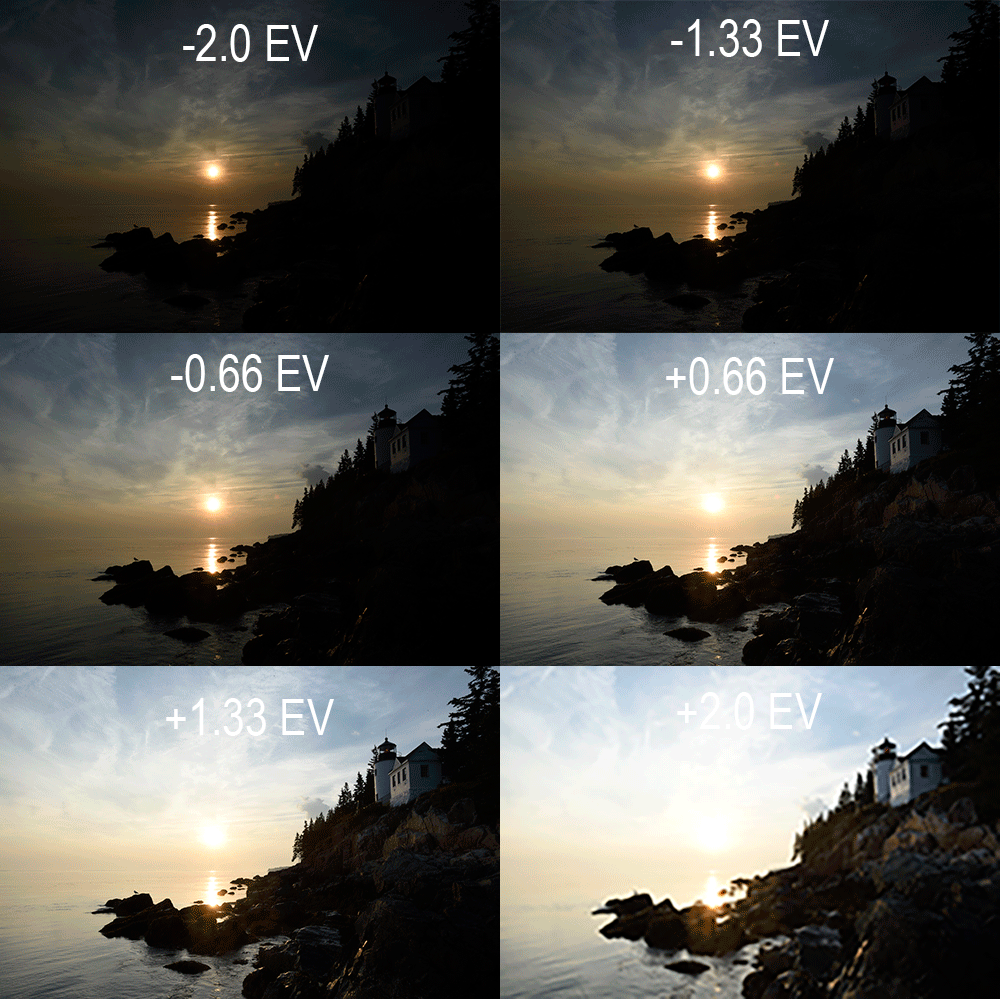
The dynamic range of this sunset scene is beyond the capability of my camera. I could expose for the sun (see the image below that was underexposed at -0.66 EV, but then the rocks in the lower right would be completely black – you would lose all the detail in that part of the picture. Or, I could set my camera to expose properly for the rocks, but then the sun would be drastically overexposed and just be a white mess (as you can see in the image below that was shot +2 EV ).
Pack up and go home? Nope. One solution is to use “High Dynamic Range (HDR) photography techniques. In HDR photography one takes multiple shots where each image is exposed differently to capture the full range of brightness levels in the scene. For this image, I took 3 shots that were increasingly “underexposed”, one shot that was “properly” exposed (the camera’s best guess under the circumstances), and then 3 shots that were increasingly “overexposed.” Here you can see each shot in a row, with the most underexposed image to the far left, and the most overexposed to the far right.

Through the wonders of software, I was able to merge these shots so that each area was properly exposed in the final image.
Typical scenes that will challenge the dynamic range of your camera include backlit scenes (strong sun behind your subject), bright skies, interiors (if there is a window present you will probably have a problem), and scenes that include a strong light source.
Most cameras have an “Auto-HDR” mode. Yes, iPhones and similar smartphones (Samsung Galaxy) have them. When faced with such a scene turn on the HDR function and see if it helps.
As you can see, although the technology keeps getting better and better (just a few years ago most cameras could only capture about 5 stops of light), we still have a ways to go before matching human eyesight. In the meantime, with proper use of HDR, you don’t have to let too many stops, stop you from getting that great shot.
Until next month….michael
P.S.
Here is an article that also explains dynamic range, amazingly, using the same scene as an example!
Also, did you notice the lone seagull on the rocks?
Bass Harbor Head Light Station, Acadia National Park, Maine
Nikon D4S, Nikon 17-24 mm (@ 24mm), f/22, ISO 200, variable shutter speed for 7 shots at -2 EV, -1.33 EV, -0.667 EV, 0 EV, +0.667, +1.33 EV, +2 EV

