
31
2025So Many Stories
Shot of the Month – October, 2025
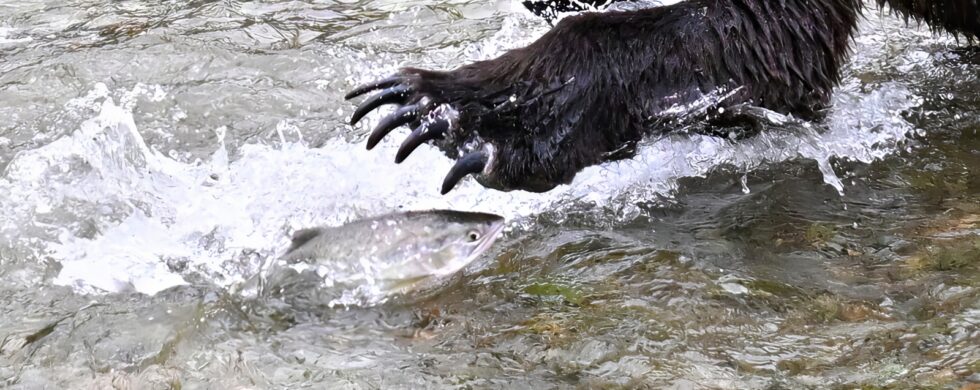
Opportunities to photograph wildlife are often rare and fleeting. When lightning strikes, I often struggle to keep calm. My natural reaction is to pull the camera immediately to my eye and fire off shots wildly to capture anything I can before the scene is gone. But I know that my best images happen when I stay calm and look carefully at the scene before me and ponder,
“What is the story that I want to tell?” Or, rather, “What story is the most interesting here?”
Or even better, I think about the potential stories that I want to tell given the subject and setting BEFORE the action begins.
Pondering even briefly can help get beyond the obvious snapshot and offer something a bit more meaningful for the viewer. Once I have clarity on that, all the technical stuff comes into play – where to position myself, what elements do I include in the image that help tell the story? And just AS important, what elements do I leave out because they distract from the story? And all the other tech stuff..what aperture is best? shutterspeed? How close to zoom in? Get low? Get high? Blah blah….
Let’s look at how different compositions of the same scene that I saw while at Katmai National Park in Alaska, earlier this year, tell different stories:
Story #1:
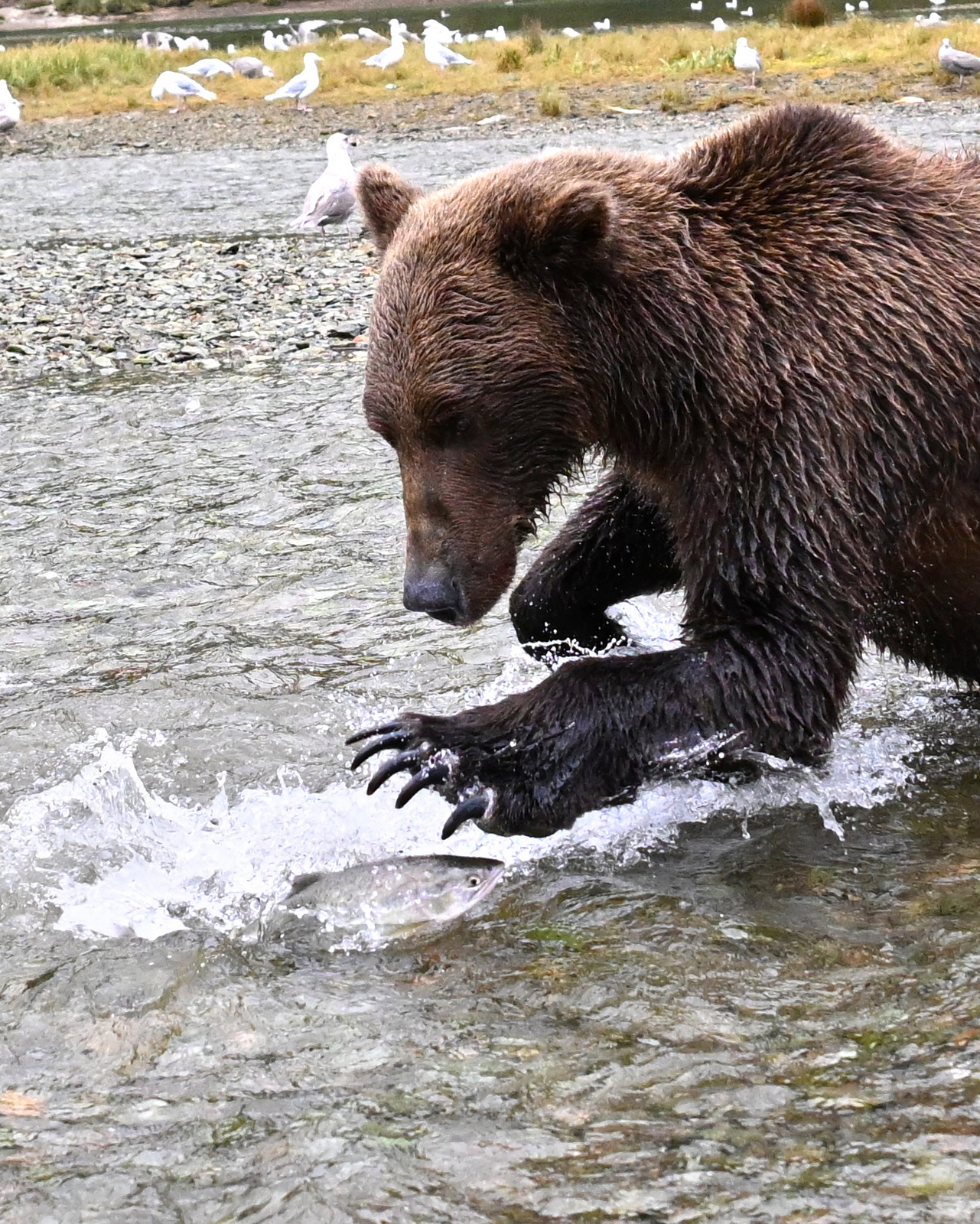
In the image above, we zoom in tightly to tell a very intimate tale of a life-and-death struggle between two individuals. The brown bear has come to this river outlet in Alaska to feast on the spawning salmon. The salmon are practically bursting with calories, up to 4,000 per fish, and the bear needs every calorie to fatten up before the long winter settles in. The salmon, for his part, is racing against time to reproduce before he dies – with or without the bear, he will die within a few weeks of this final act. It is part of the salmon’s ultimate sacrifice for its young. The coastal rivers are nutrient-poor, and the parents’ rotting corpses infuse essential nutrients into the waterways that their offspring will feed upon once they hatch.
In this scene, the action is intense as the bear lunges forward with her plate-sized paw, striking downward as the salmon makes an evasive leap out of the water. The bear’s massive 4-inch claws are spread wide to create a lethal “net.” For the fish, this is a potentially life-ending encounter, while for the bear, this is just one of hundreds of paries that she will make that day. I find myself tensing up as I make eye contact with the salmon and absorb his panic. In this story, we not only look closely at each subject but FEEL something palpable for another life.
Story #2
If I zoom out, I capture an image where a broader story unfolds:
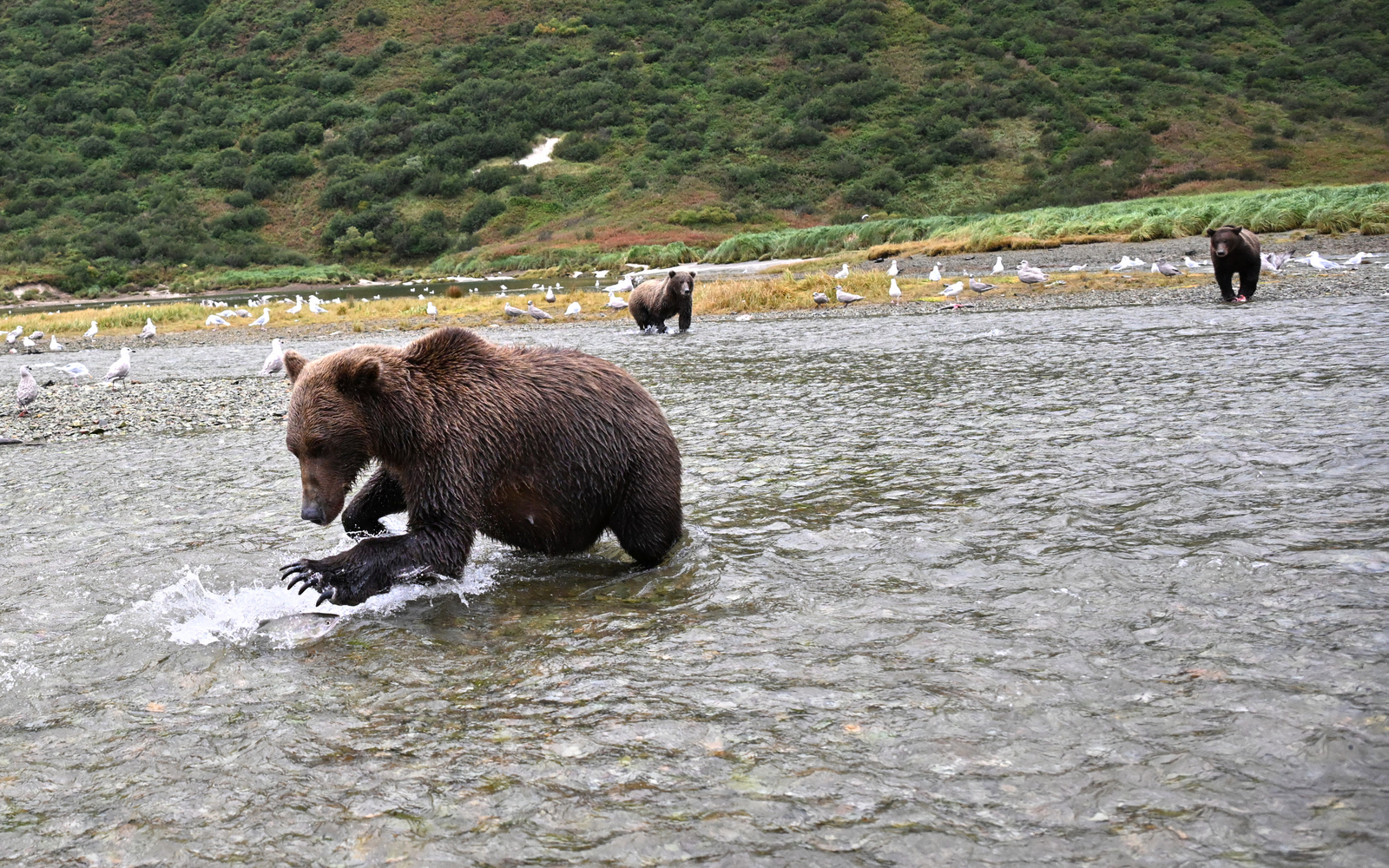
In this photo, we have a wider view of the environment and see other actors. The story becomes less about an individual bear or fish but rather about the natural cycles that drive many ecosystems. Brown bears normally are solitary, so having three in one shot indicates that something special is going on. They have all been drawn to the coast for the annual salmon migration – the movement of millions of fish from the ocean into coastal waterways that attracts untold numbers of species of mammals and birds to feast on the brief bounty. It is an epic tale that affects millions of creatures in this ecosystem and countless others along the northern Pacific Ocean.
Learn more about this in my post – Keystone Krisis
The individual life-and-death struggle is now more subtle but ever-present. The bear in the back right is feeding on a just-caught salmon. The bear in the lower left has been frozen mid-strike. The life of that fish is less than a second from ending. And the bear in the back left is walking up the river in search of an opportunity. Numerous seagulls wait for their chance to feed on the leftovers. The shrill squawks from the seagulls can be deafening, and the water churns as salmon flee in all directions.
The second image pays homage to the sweeping cycles of nature that have gone on for millennia, while the first shot poignantly reminds us of the very real lives of the victors and the vanquished caught up in these epic movements. The difference in scale and nature of reflection caused by each image reminds me of this quote:
A Single Death Is a Tragedy; A Million Deaths Is a Statistic
As I mentioned here, I often push myself to shoot a range of compositions of a given scene to help me find the range of tales possible.
Well, enough chatter, time to grab my camera and get out there and find my next story….
Until next month…..michael

