
30
2025Meadow Dream
Shot of the Month – September 2025
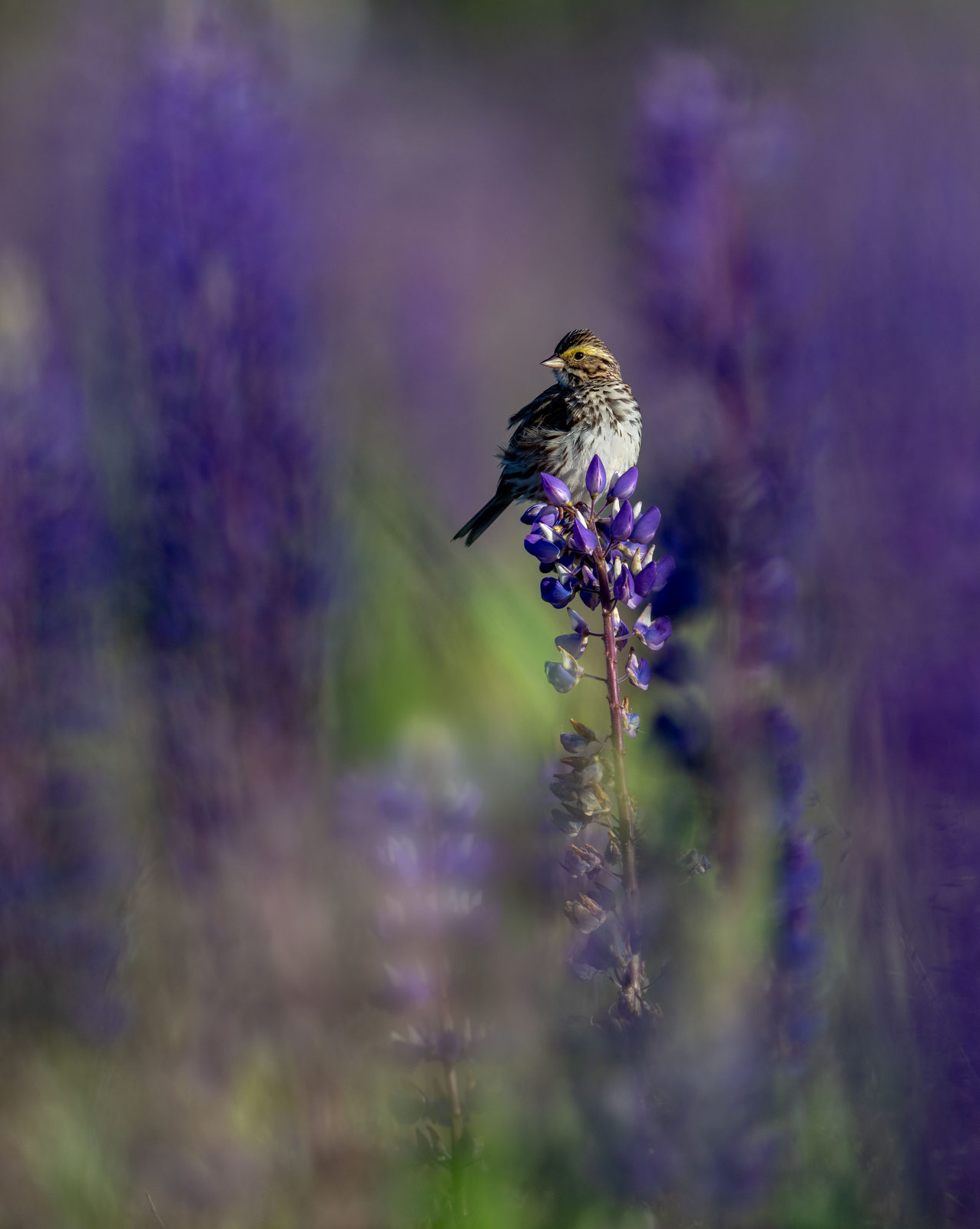
In the early morning light, I scurried about the field photographing Savannah Sparrows as they fed on Lupines. A bird would land on a perch, and I would hurry over and fire off a few shots. After each opportunity, I checked the camera’s LCD screen to review the results (one of the wonders of digital photography – you can get immediate feedback on what is working, or in this case, what is not). An hour in, and I still had not captured anything to write home about.
The challenge was that the field was a cluttered mess of plants, colors, and shapes – at least from a photography point of view. The field was actually quite lovely in the morning sun, with vibrant purple and green flowers and dapper-looking birds with yellow war stripes. But I was struggling to find a scene where the bird stood out from the cacophony of competing details.
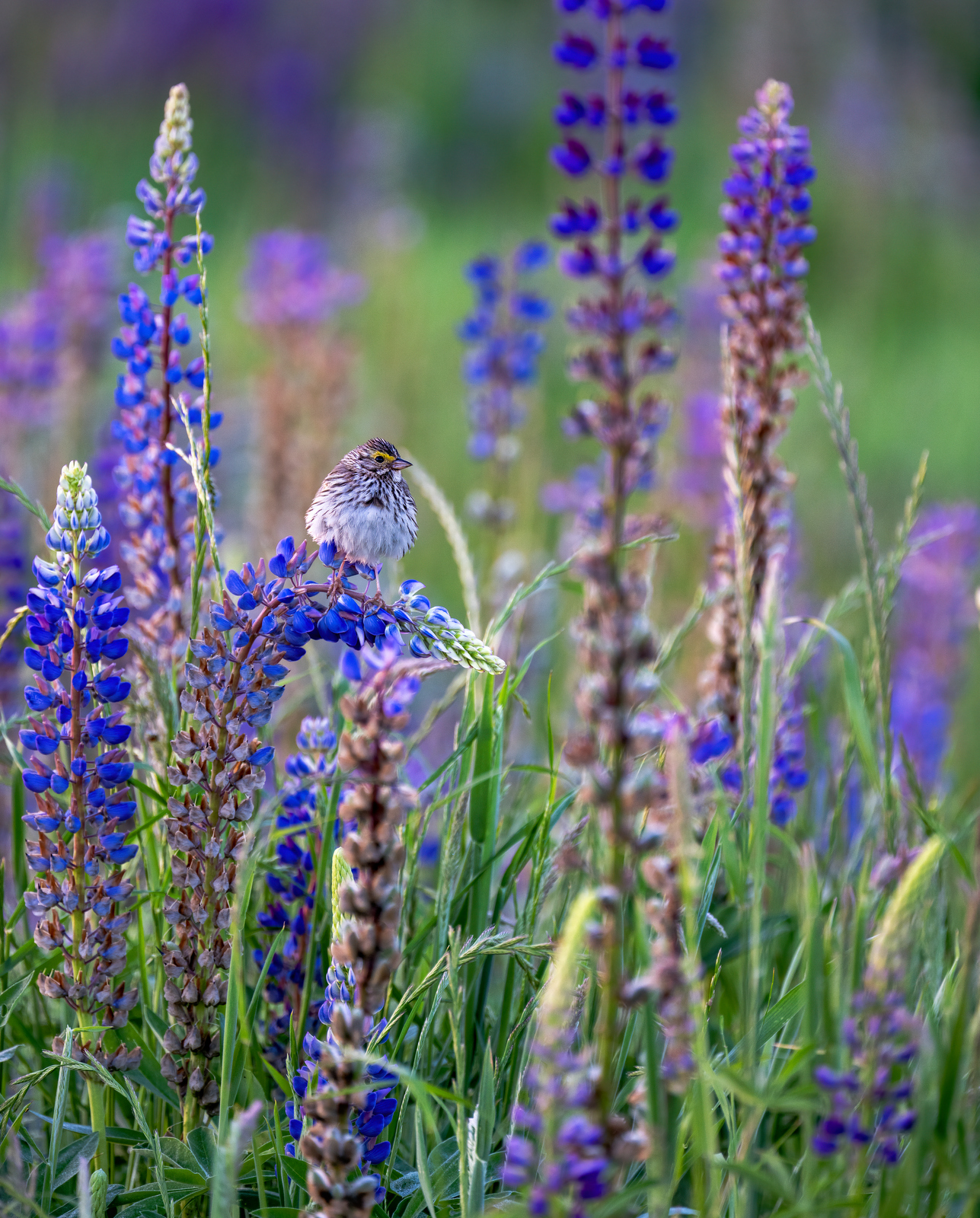
After thirty more minutes, I wandered to a far corner of the field where it all came together. In this scene (the image above), the bird is finally isolated, and the subject is clear. The flowers in the background are far enough in the distance that they fade away into a lovely, colorful blur that allows the sparrow to really pop. The image is evenly lit, so there are no dramatic hot spots from other elements in the frame to distract the eye. All the different layers create this wondrous, hazy, color-infused meadow dream of an image.
In photography-speak, this composition is an example of creating good “separation” between the subject and the background or using “isolation” to highlight the subject. Two words that describe the same technique. Simply put, isolation is about composing an image to make the subject clearly stand out from the background.
“…..separation is the art of visually isolating your subject from its background and other elements within the frame. This technique enhances clarity, draws attention to the subject, and minimizes distractions.” (source)
Ways to make your subject stand out:
- Compositional isolation: Visually separating a subject from its surroundings to make it stand out and minimize distraction.
- Depth of field: Using a wide aperture (low f-number), a telephoto lens, or placing the background far behind the subject to create a blurred background.
- Color contrast: Positioning a subject against a background of a contrasting or complementary color to make it pop.
- Atmosphere: Using natural elements like fog or mist to soften the background and enhance depth.
- Negative space: Including enough empty space around a subject so it isn’t cluttered or confusing.
Let’s look at some of my failures to make the point clearer.
Example 1:
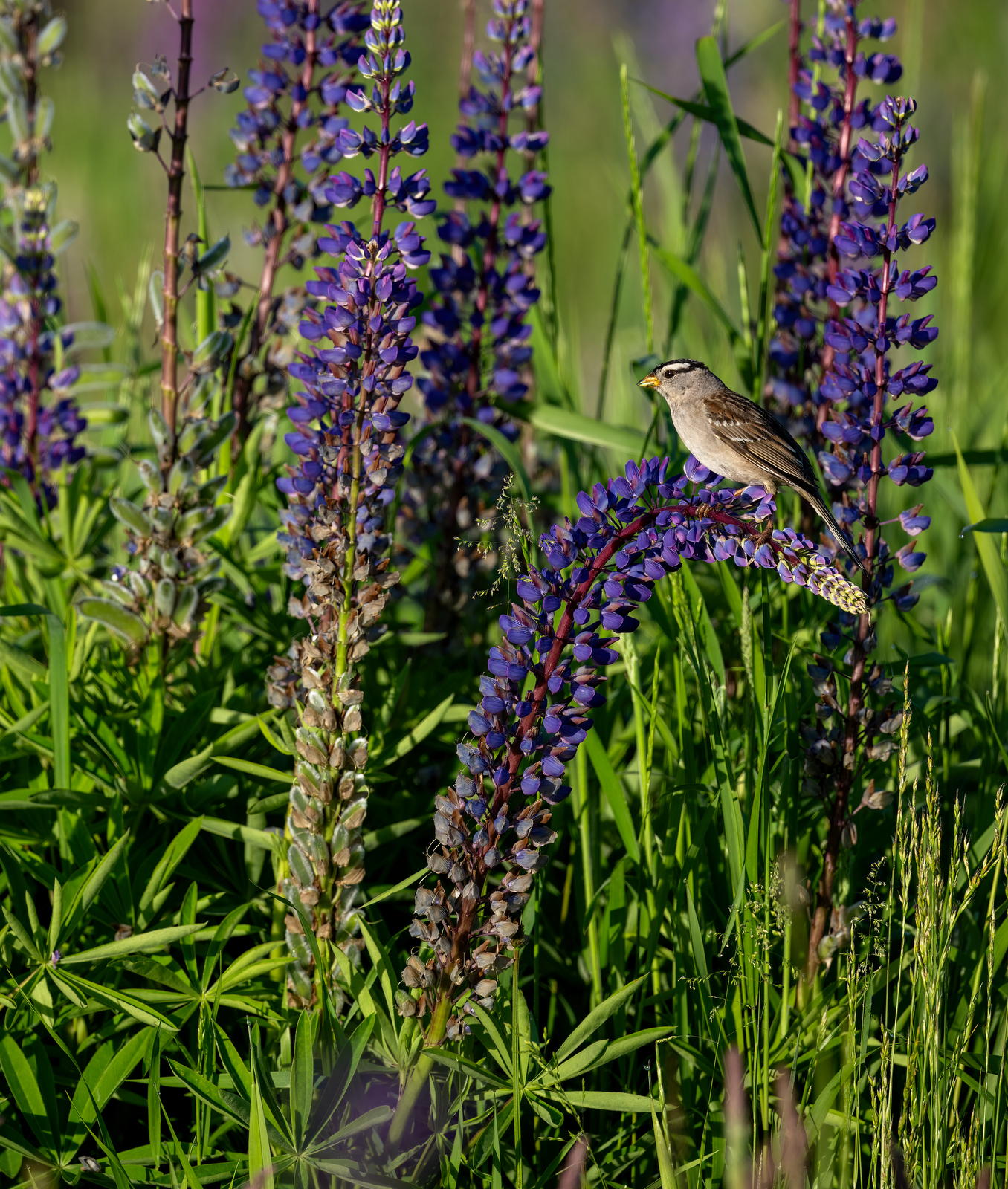
The white-crowned sparrow is properly exposed, but the image is rather boring and too “flat.” Why is it not as visually pleasing/interesting as the first shot?
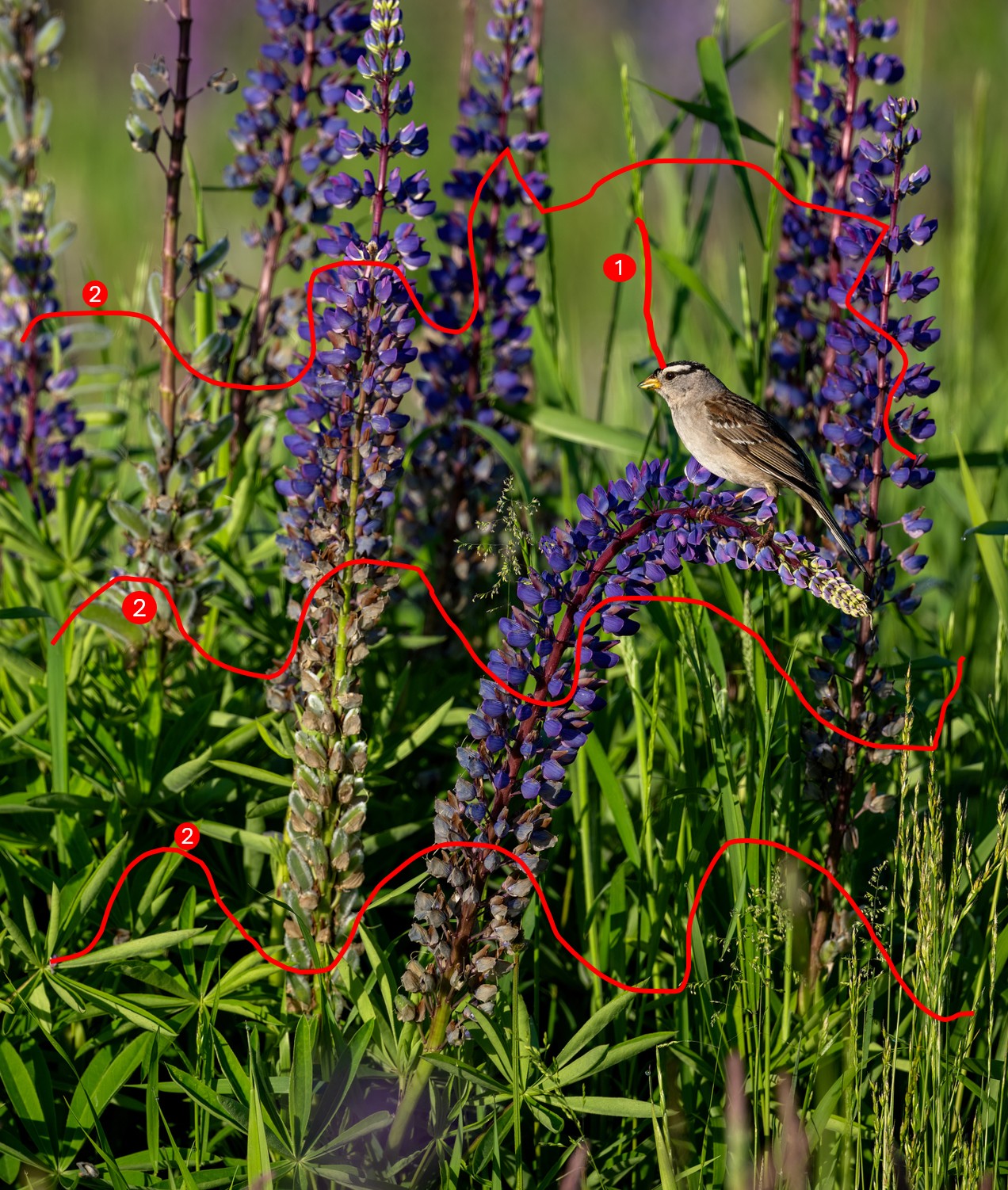
Distractions:
- There is a plant stem coming out of the bird’s head. The background is slightly blurred, but still has too many details that are distracting.
- The biggest problem is that so many plants are at the same focal length as the bird, so they are all in focus and fight for our attention. It can be hard to find the bird in all this visual clutter. The bird and the plants are compressed so the bird blends in – not a good thing for photography.
Speaking of clutter, check out this mess:
Example 2:
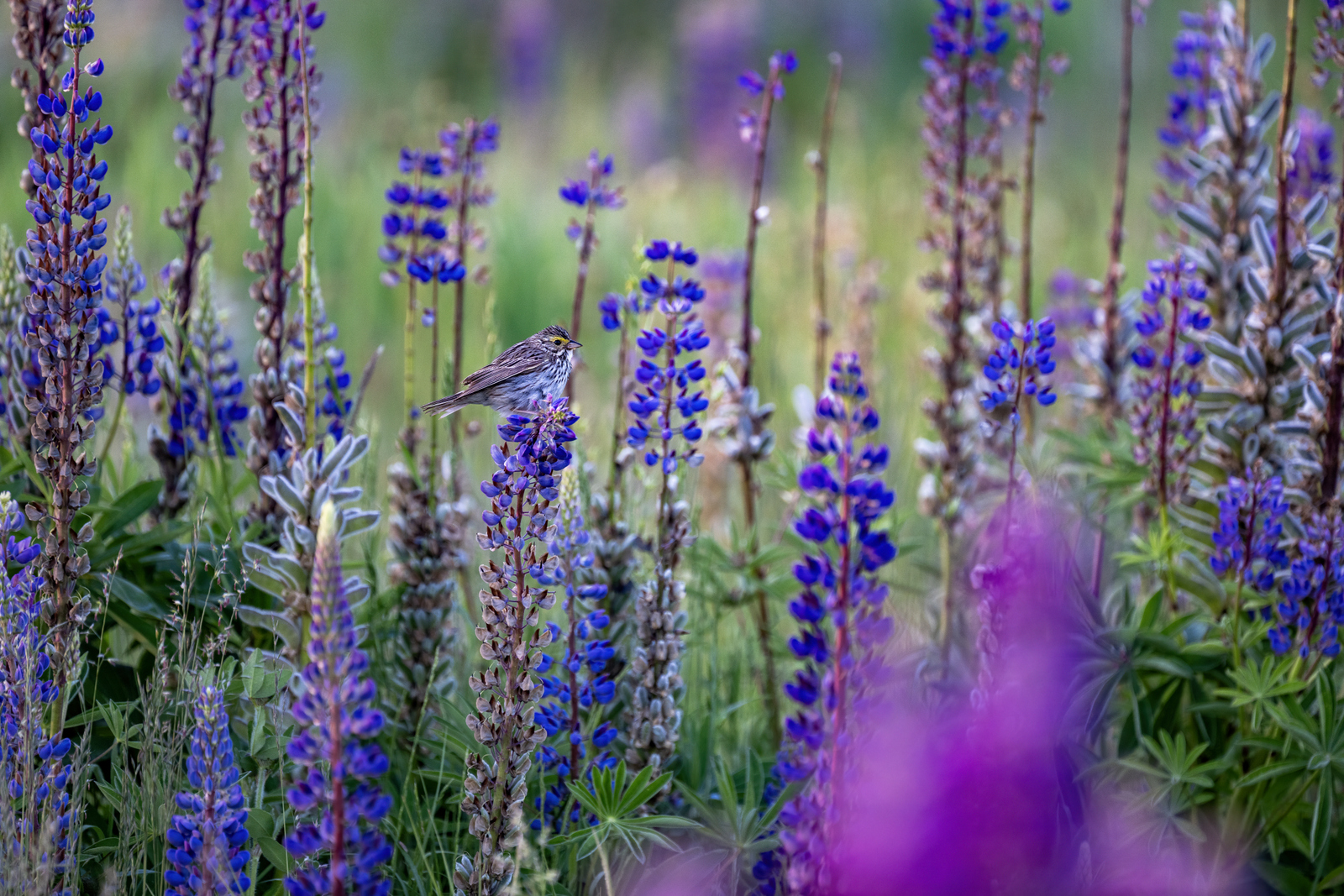
Yuck! How many problems do you see? Let’s break it down:
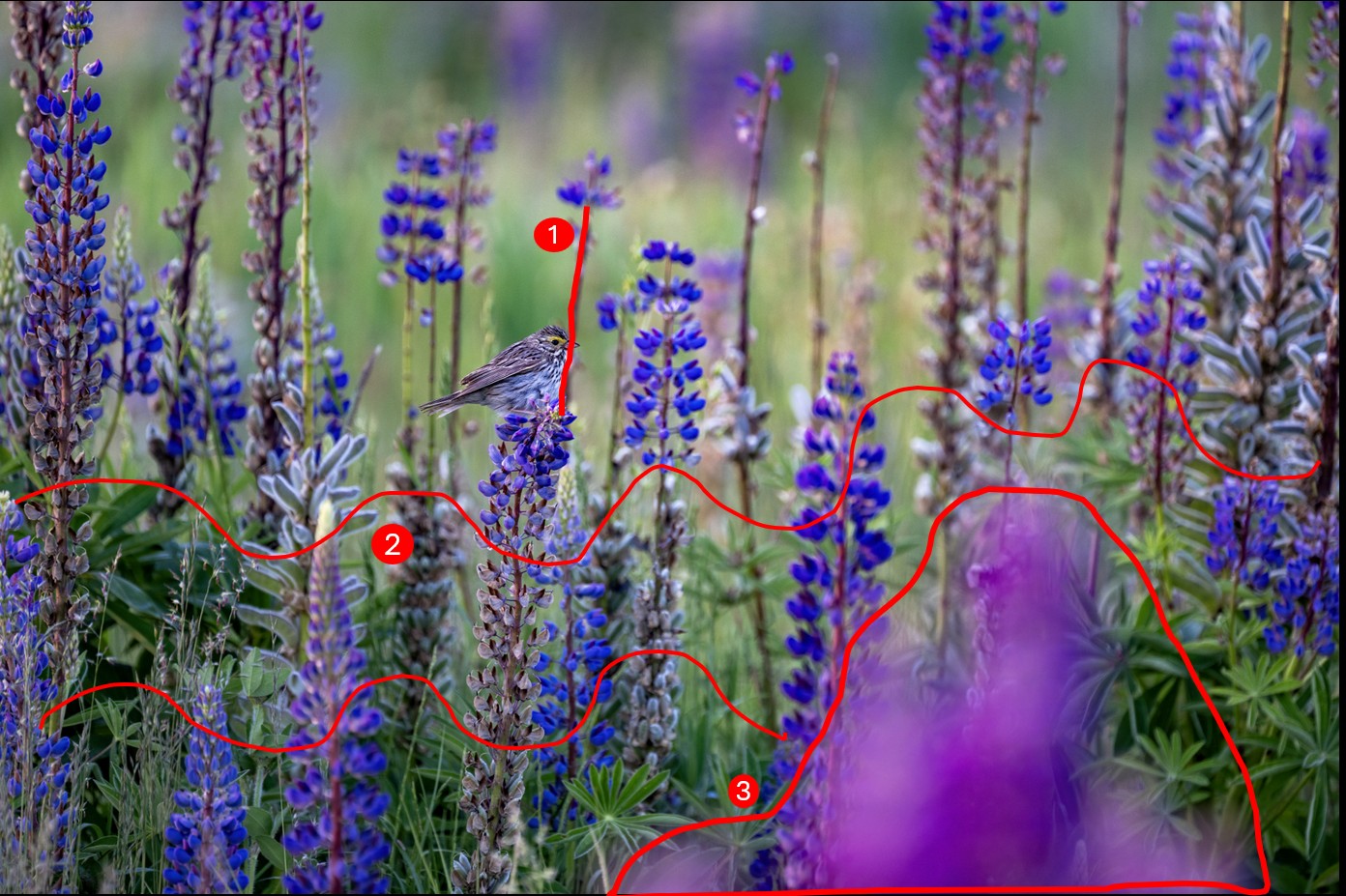
Problems:
- Plant stem going through the bird’s head – ugh.
- Far too many plants at the same focal length and in sharp focus, competing with the bird for attention
- This flower is out of focus, which is good, but it is too bright, so the sharp tonal contrast becomes a big distraction and draws the eye away from my intended subject.
Example 3:
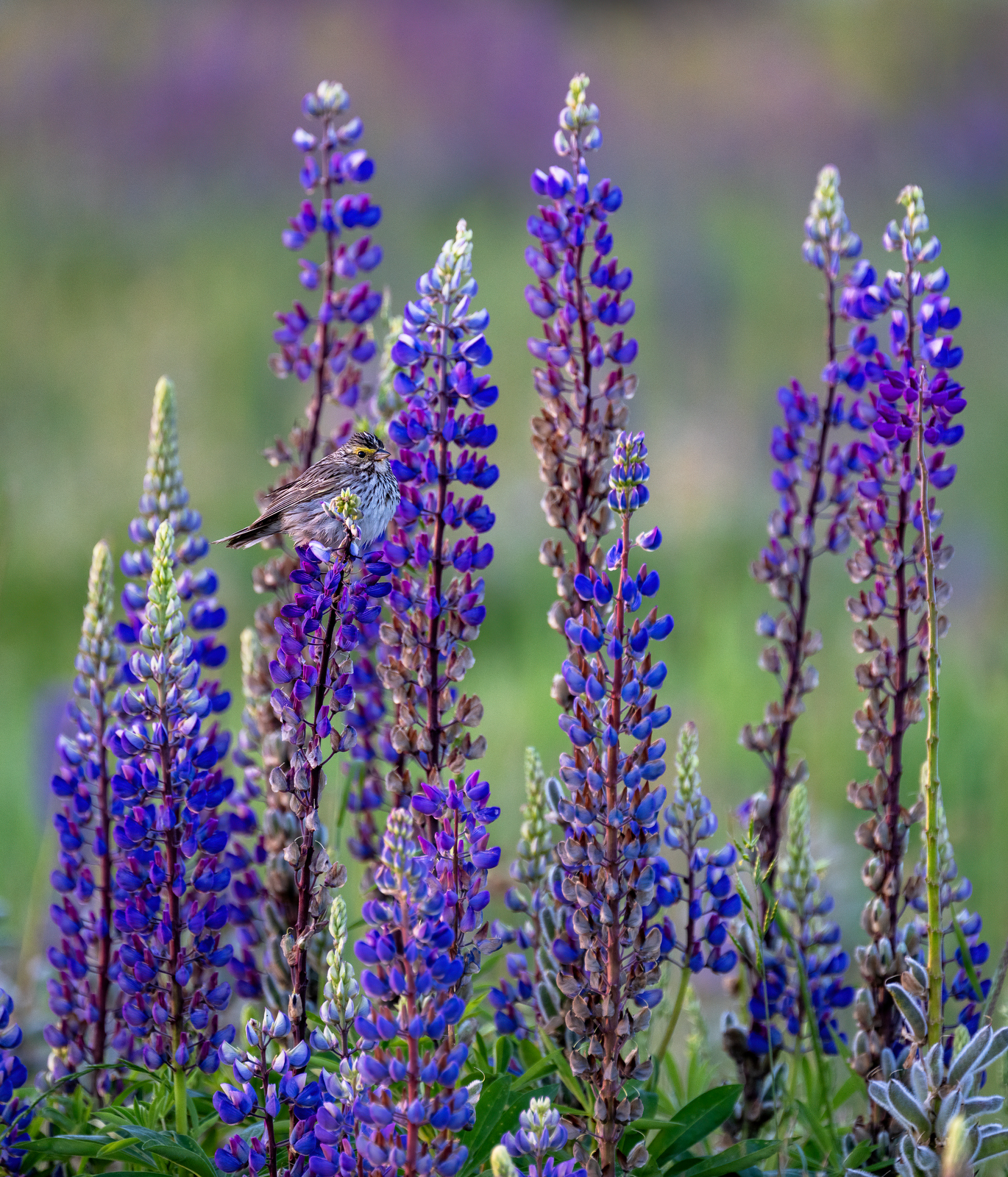
Ok, if you are playing at home, can you tell the class what the problems are here? I spy three issues hindering good subject isolation.
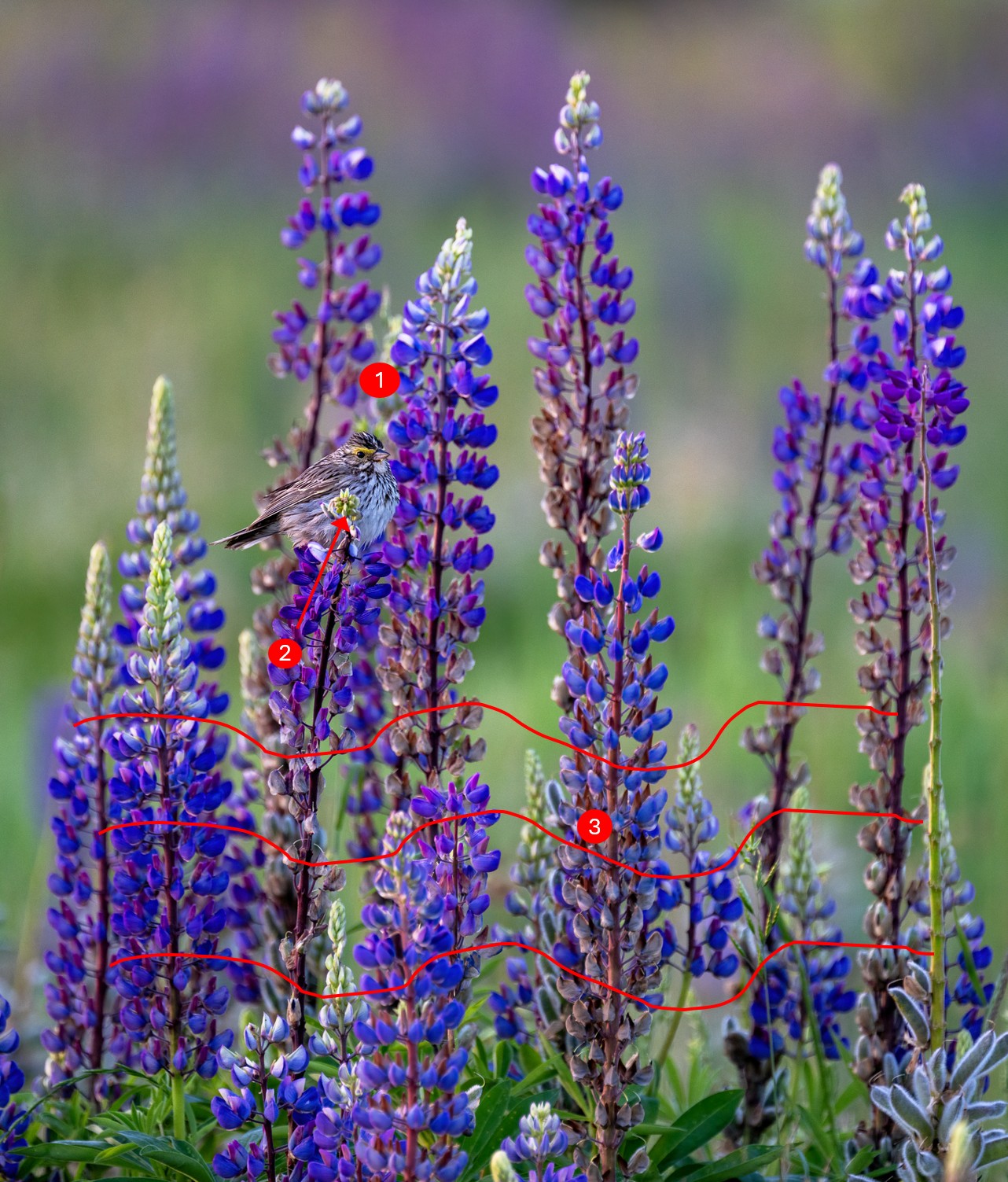
Problems:
- Those plants directly behind the bird are still in focus, which makes it hard to see the bird (our subject)
- That plant is directly in front of the bird, blocking our view of the subject.
- Lots of plants in the foreground are in sharp focus, competing for our attention. The bird gets lost amongst it all.
Are we having fun seeing what a crap photographer I am? Ok, one final example:
Come on, you got this. What are the issues that send this image to the trash bin?
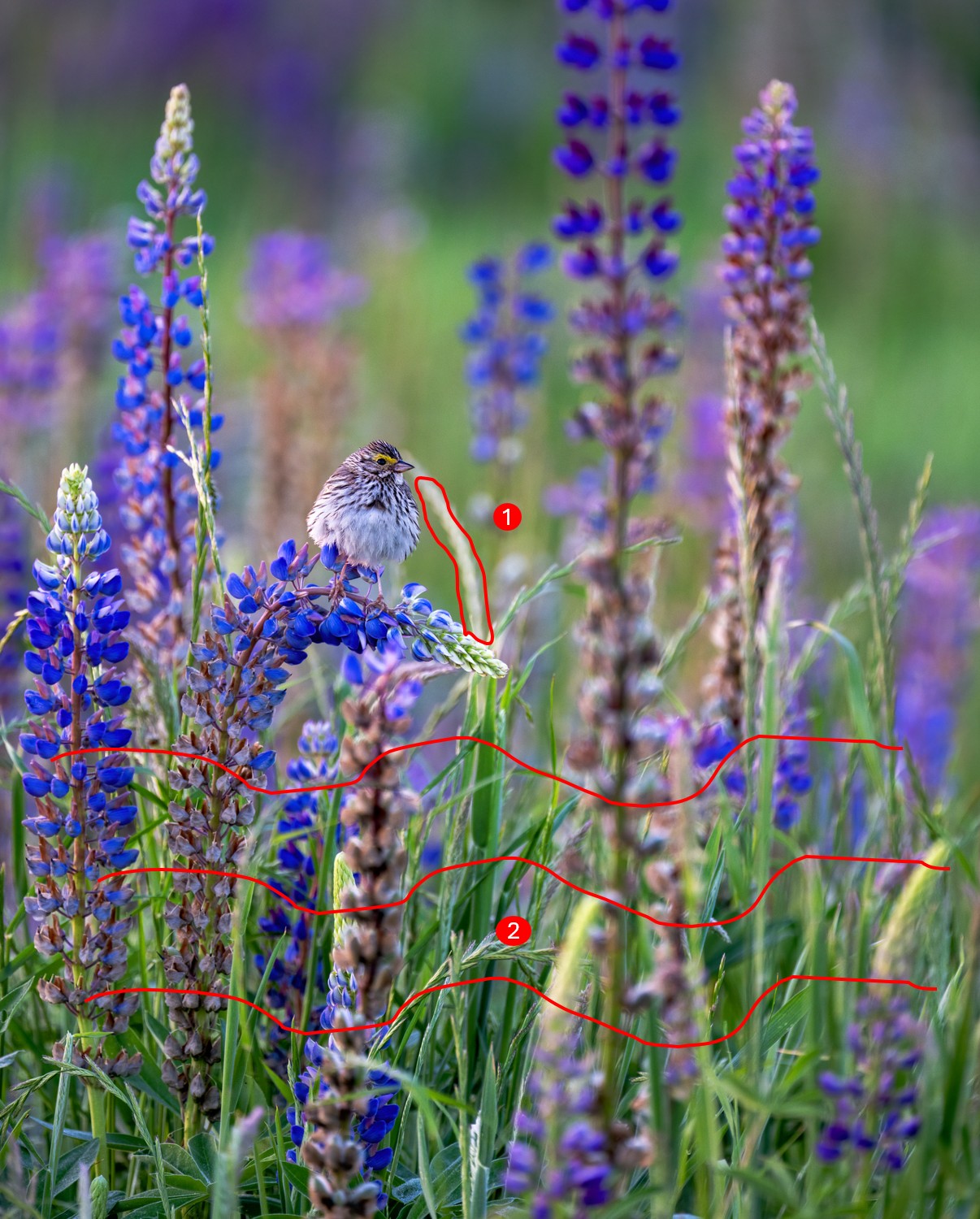
Isolation fails:
- That stem leads the eye to the bird, which is nice, but goes through his head. And it is too bright (too much contrast) so it draws the eye away from the bird.
- Too many plants in the foreground are in focus and fight for our attention. Our eyes won’t stay on the bird as they keep jumping back to these other competing elements.
The sparrows had their preferred perches, so I found myself returning to the same compositions again and again. After enough time, I realized that some perches were simply not going to give me the right mix of compositional elements. I had to abandon them.
If I was going to get anywhere, I needed to search out prime locations and force myself to be patient and not get lured back to those other perches. Hearing the shutter fire away was fun and made me feel like I was making use of my time – but that was just a delusion.
Sometimes you have to know when to walk away (just like what Kenny advised here). The shot simply wasn’t there, and no amount of “willing” would make it so.
Congrats on completing your “isolation” crash course. The key message is simply this: when you are composing your images, whether it be at your family barbeque or on the Serengeti Plains, stop and take a second to look at what ELSE is in your viewfinder. Any elements that distract from your main subject? Do they help or hurt your composition?. If the composition does not work, see if you can change your position, or if possible, remove the offending elements.
“Sorry, Uncle Gus, you gotta go….”
Ok, grandma, say cheeeese….”
Until next month…..
Nikon Z9, Nikon 600 mm f/6.3, 1/500 sec, ISO 125, -1.0 EV

