
31
2025Silver Falls State Park
Shot of the Month – May 2025
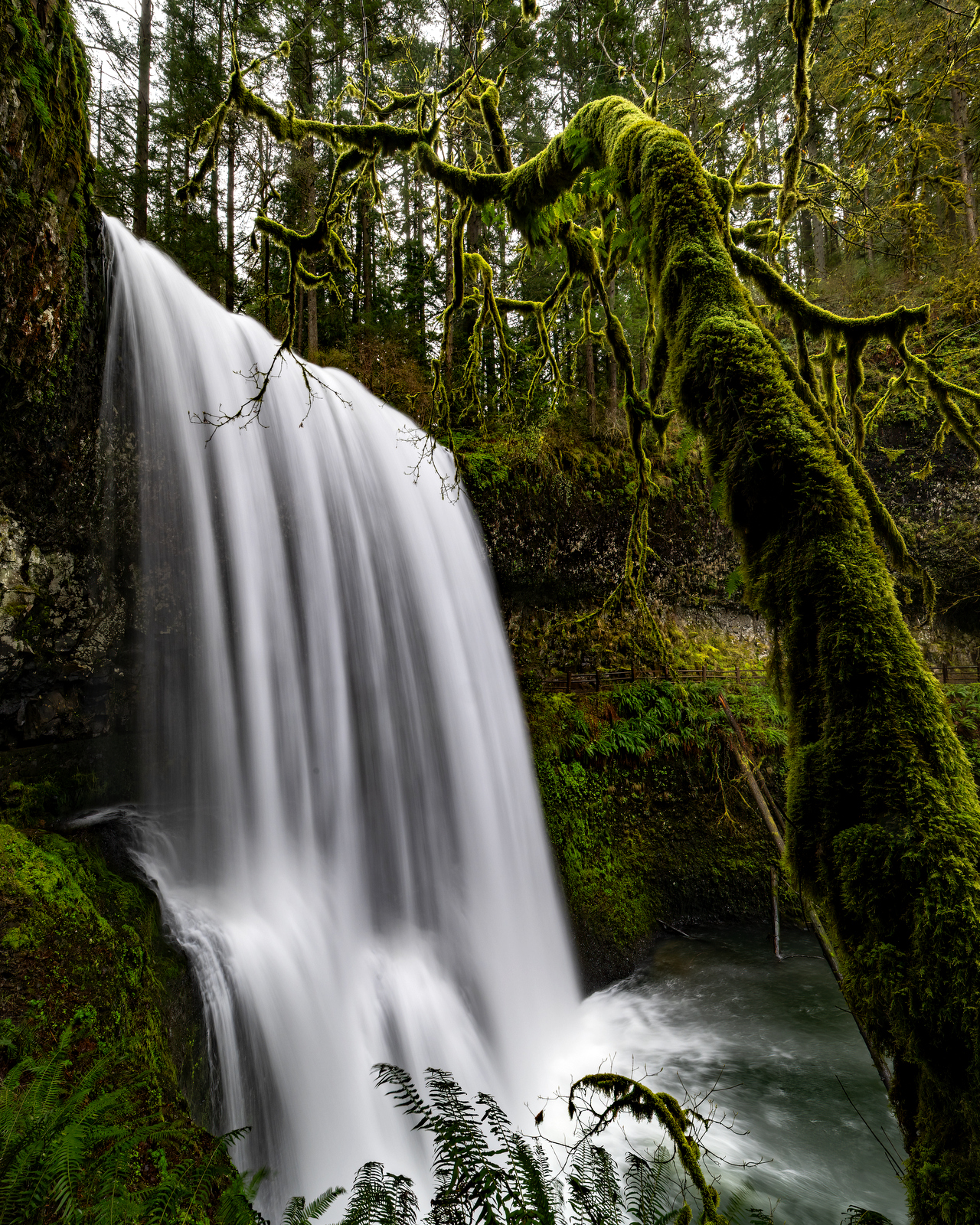
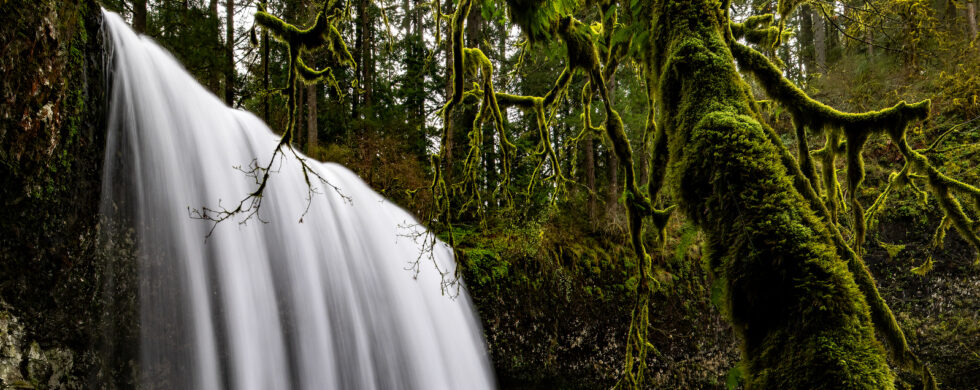
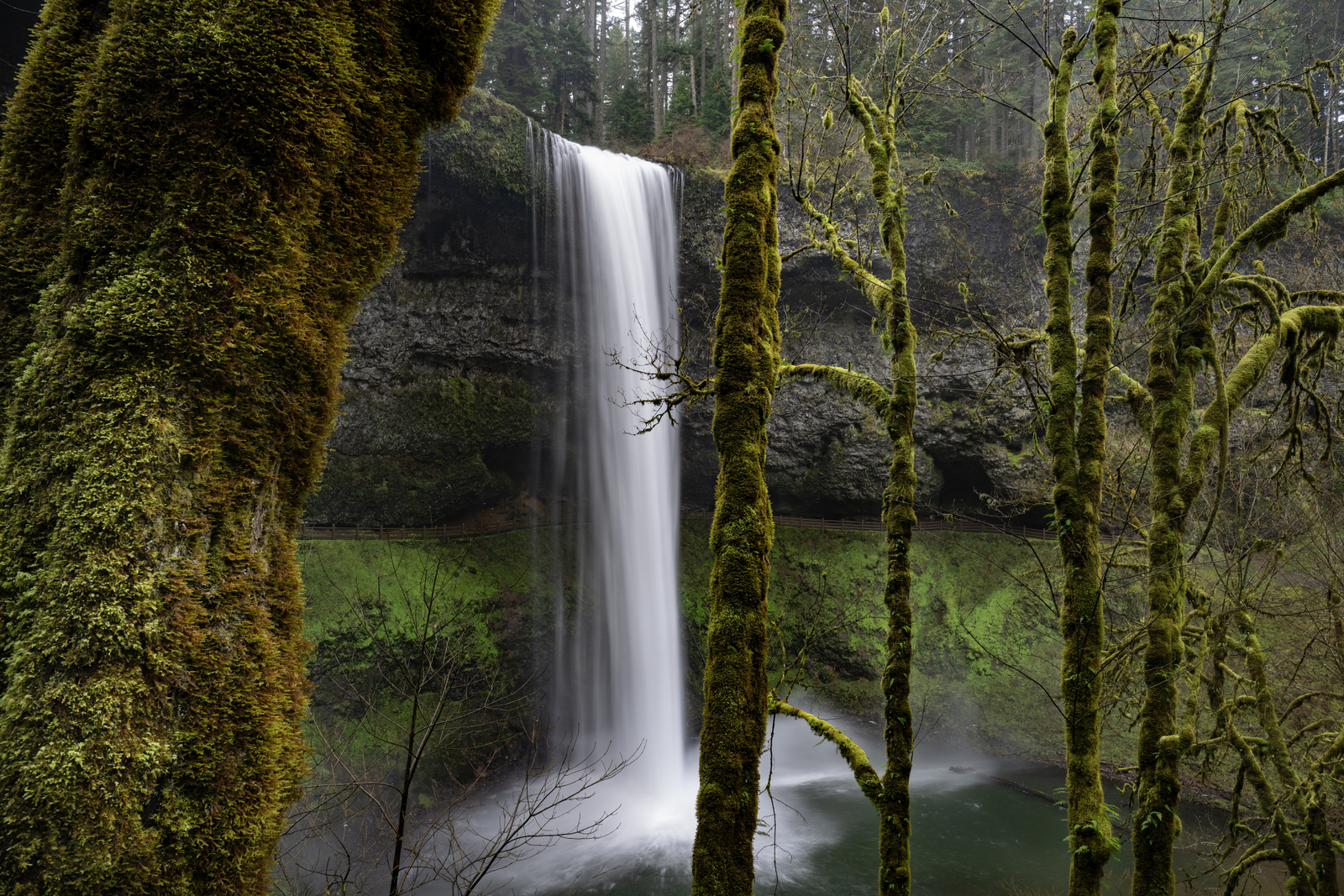
Stand in one spot for too long in the Pacific Northwest (PNW) and there is a good chance that you will be covered in moss before you know it, like the tree in my photo above. The PNW is (in)famously wet, and all that rainfall produces some of the few remaining lush forests in the Northern Hemisphere. Let’s break it down:
Pacific Northwest?
What exactly is the Pacific Northwest? Turns out that this is a rather complicated question and no one can agree on exactly what geography is covered under this title. The most common “definition” is that the PNW is made up of the US states of Oregon, Washington, Idaho and the Canadian Province of British Columbia.
What’s with the weather?
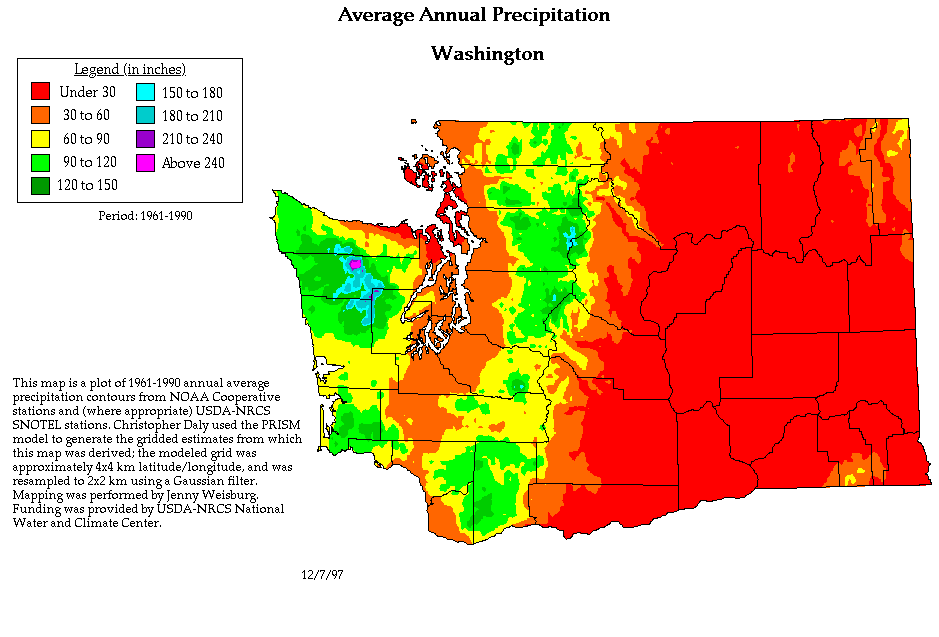
The PNW is famous for being wet. In fact, it does not rain year-round as many assume, and the summers are very dry. Most precipitation is during the winter, with areas west of the Cascade Mountains and along the coast getting the brunt of the wet stuff. But areas on the eastern side of the Cascade Mountains can be arid due to the rain shadow effect. Check out this animated graphic to see how the mountains impact rainfall levels. Winters are so wet along the coast due to the “Pineapple Express,” a weather pattern that brings warm, moist air from Hawaii across the Pacific Ocean. On the plus side, the temperatures are moderate/mild year-round thanks to the warm(ish) air from the ocean. Western Washington is classified as Csb which is “warm-summer Mediterranean climate.”
Shocking Fun Fact: I was blown away when I learned that New York City actually gets more rain than Seattle. Yep, you read that right. New York City averages 50 inches of rain annually while Seattle only averages about 37-40 inches each year. And it gets crazier. Seattle doesn’t even rank in the top 30 cities in the US for annual rainfall! Click here to understand the shocking truth!.
Today’s color is Green
Put all that together, and you find luscious temperate rain forests all the way from Alaska, through the PNW, down to northern California. Some areas can receive up to 12 feet of rain/year. Squish. These forests can have dense vegetation with every surface covered with some variation of fern, moss, or lichen.
Silver Falls State Park (SFSP)
A great place to experience this wondrous alchemy of water and vegetation is at the Silver Falls State Park in Oregon. SFSP is located about 20 miles east-southeast of Salem, the state Capital. There is a fantastic 8-mile loop that you can hike that takes you past (and sometimes under!) 10 waterfalls and through some glorious green and mossy forests. Go in the spring when the snowmelt is at its peak to find the falls GUSHING with water and the surroundings bursting in shades of green.
In the image above, we see the Lower South Falls – you can actually walk behind this waterfall.
Here is another view of the same waterfall:
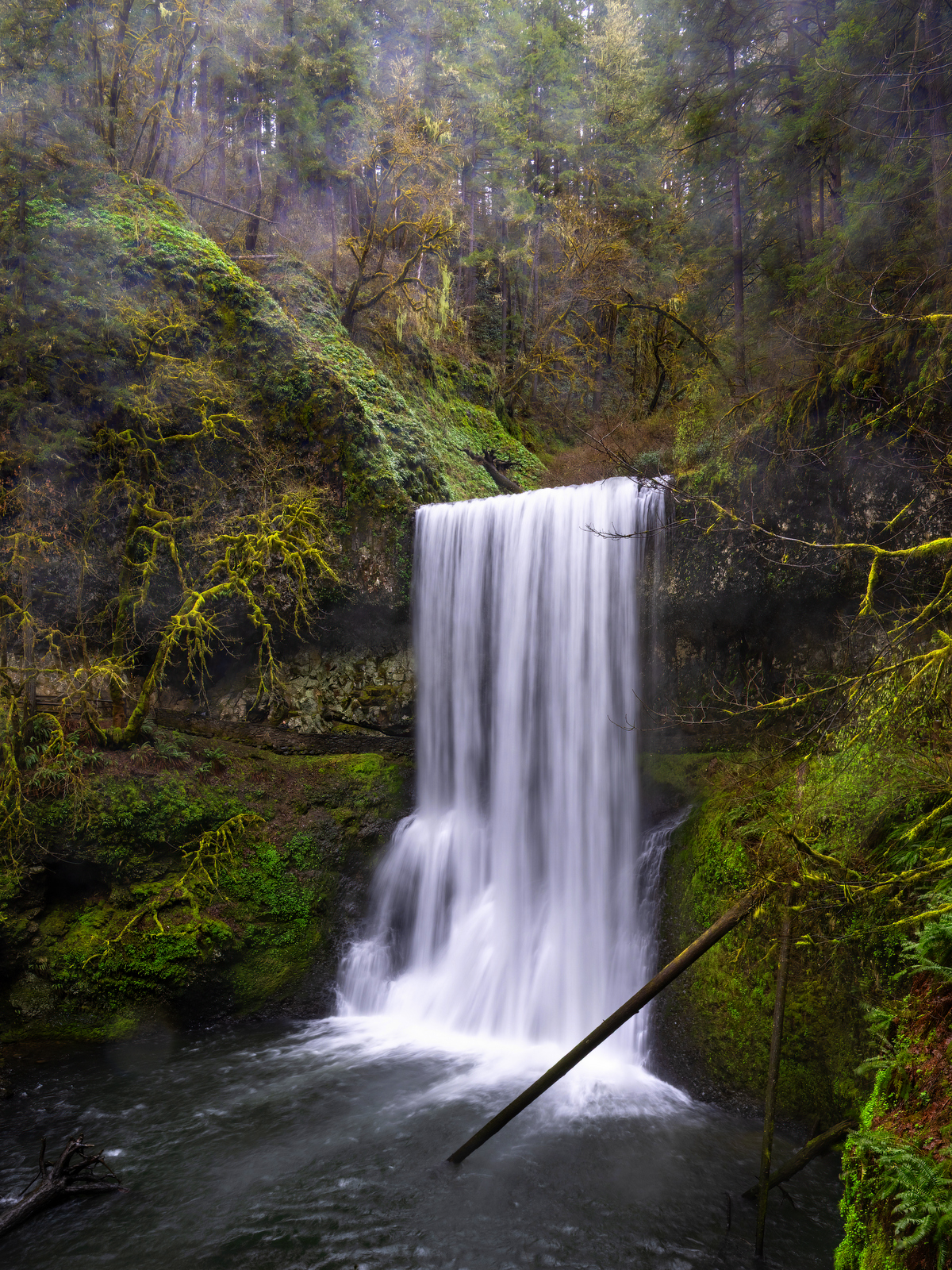
Does this scene not just scream Middle-earth?? I love the early morning fog and cacophony of colors and textures. That mossy tree that we saw in the first image is on the left side of this image.
Here is Lower Falls, the most visited waterfall in the park:
If you visit in the autumn, the water flow is much less as some falls slow to a trickle, but in compensation, you get a fun, albeit a bit odd, mix of Maine “fall” colors among the mossy forest.
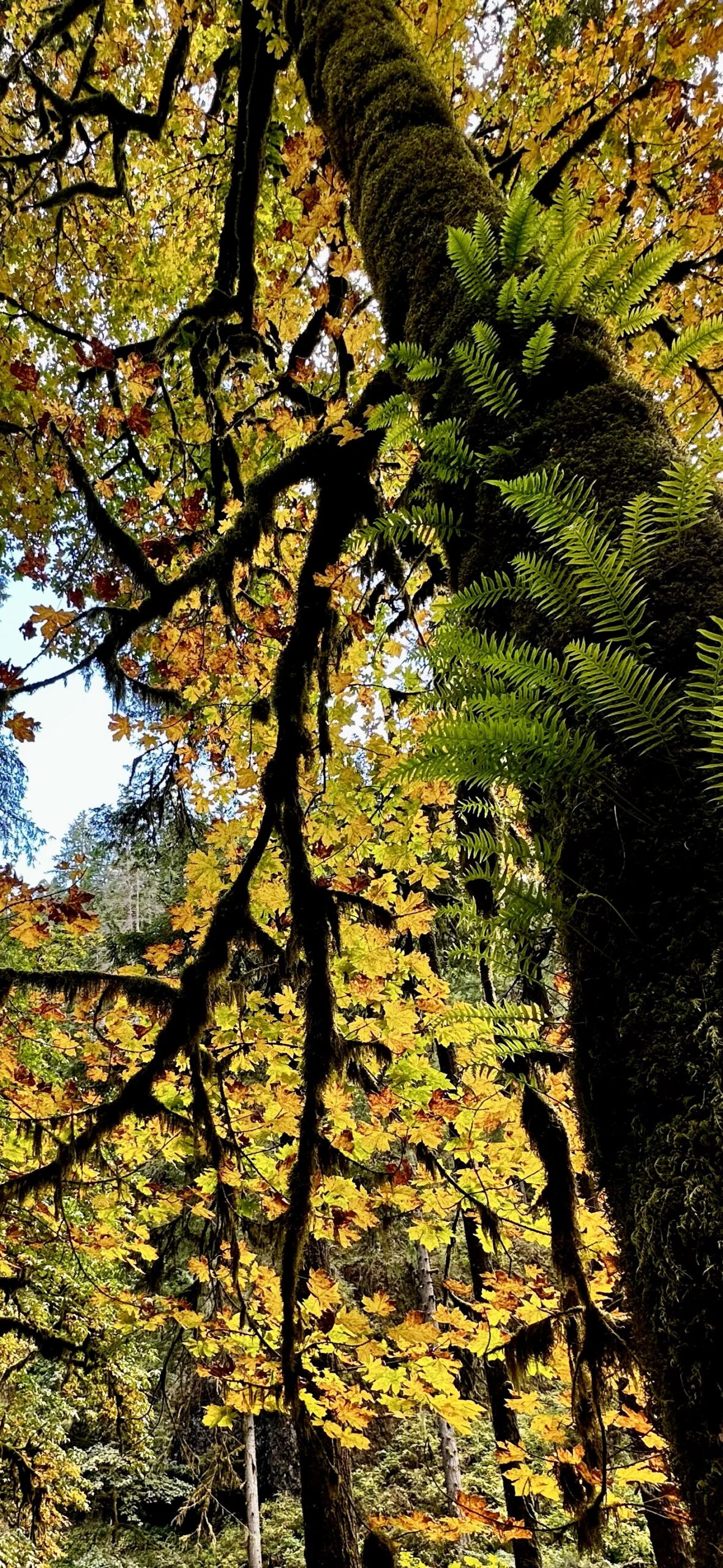
Either way, it is a visual treat. Just keep moving, as the moss is always looking for its next host…
Until next month….m
Nikon Z9, Nikon 14-30 mm (@14 mm), f/16, 1/25 sec, ISO 64


Nancy Rupp
Thank you, Michael.
You always refresh!! Best wishes for the coming months.