A Lovely Lady

Shot of the Month – November 2013

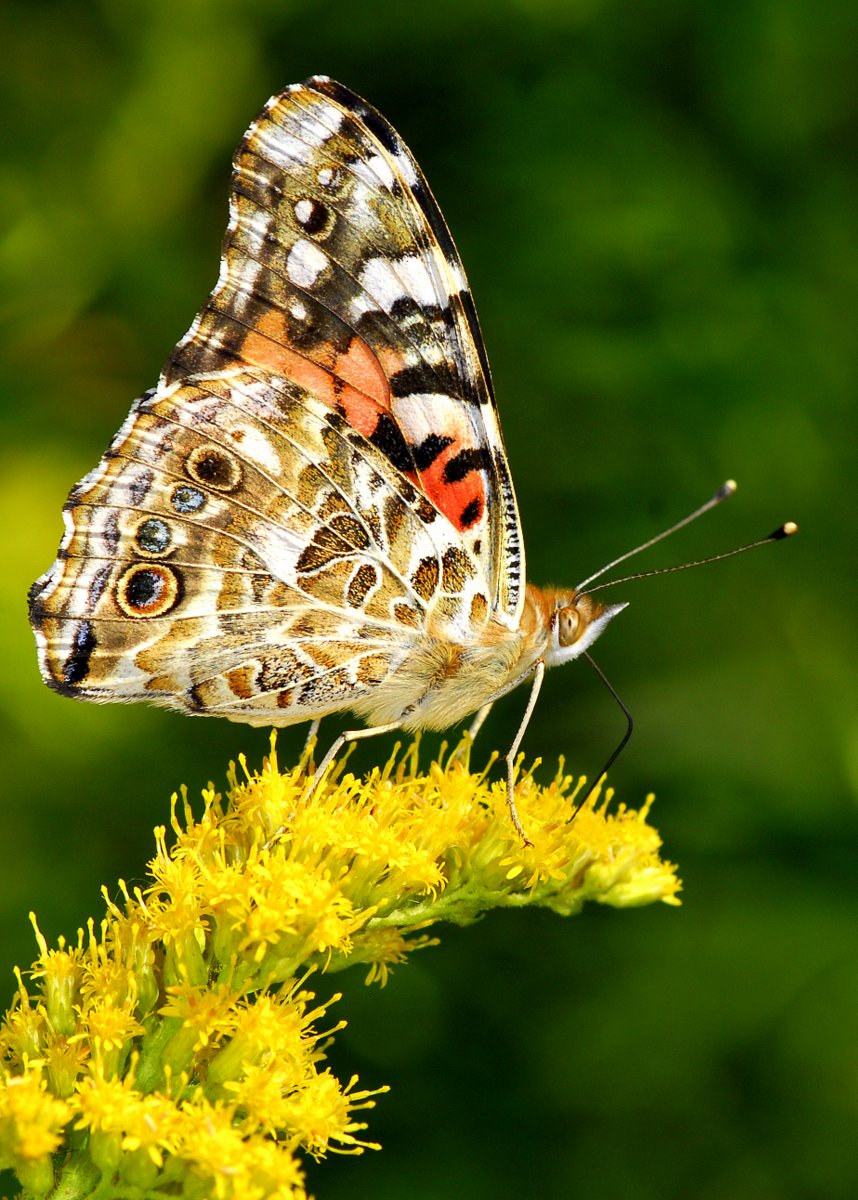
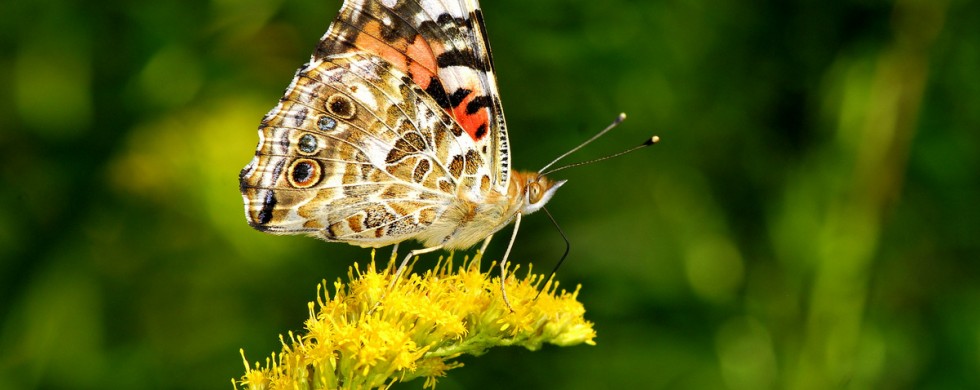
Painted Lady, Vermont - USA (1984) Check out Vanessa, isn’t she lovely?  Actually, it could be a he, I have no way of knowing, but either way, it definitely is a Vanessa.  Perhaps a full introduction is in order.  Please meet Vanessa cardui, her more formal, scientific name.

There is a pretty good chance that you have met “her” before as this is one of the most common butterflies in the world and is found on every continent except Antarctica.

In less formal settings Vanessa is known as The Painted Lady.  In some circles, mainly in Europe, her nickname is the “Cosmopolitan” highlighting her global distribution.

In my image to the left, we see the underside of the Painted Lady’s wings. In butterfly lingo, this is the ventral side of the wing.  The ventral side is seen when the wings are closed.  When the wings are open we are looking at the dorsal side.

Dorsal = open wings

Ventral = closed wings

On the ventral side, the wings have a fascinating camouflage pattern and have 4 colored eye spots.  The eye spots and the pattern markings on the hindwings are designed to draw predators’ attention away from the butterfly’s head.
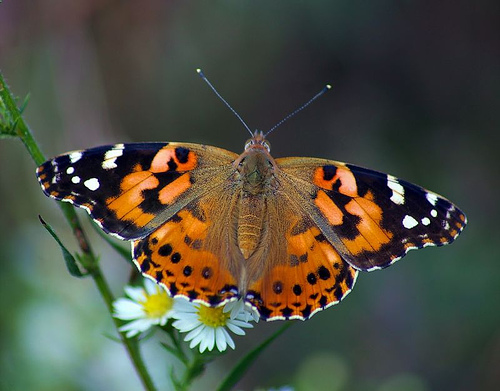
painted-lady-butterflyWith wings open, as shown to the right, Vanessa is draped in orange with black and white highlights. (source)

Alas, such beauty is fleeting.

The life cycle of the Painted Lady is typically 2-4 weeks!  In warmer climates, they can live longer but rarely do they survive beyond one winter.

Painted Ladies are very popular in elementary schools where students can observe the entire “circle of life” firsthand.  Butterflies go through 4 distinct stages of life:

Egg:  3-5 days

Larva(Caterpillar):  5-10 days

Chrysalis: 7-10 days

Butterfly: 2 weeks

Here is a nice graphic showing the life cycle.

Moral of the Story:  Life is short, get out there and do your part to make it beautiful.

Thanks, Vanessa…
Redily Available

Shot of the Month – October 2013

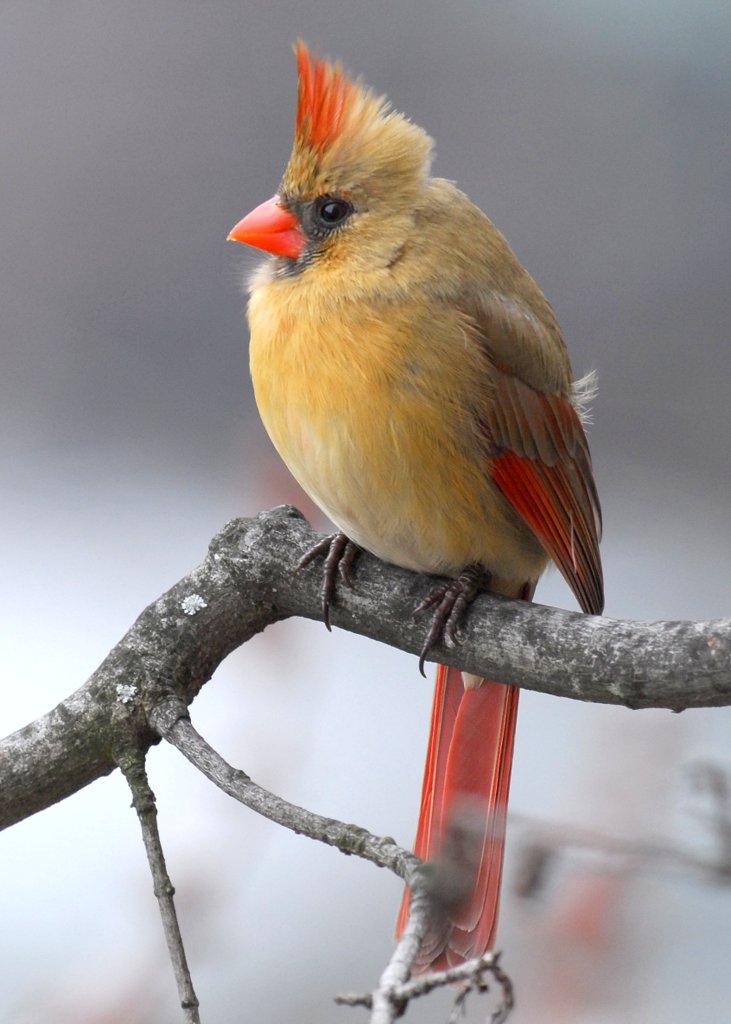
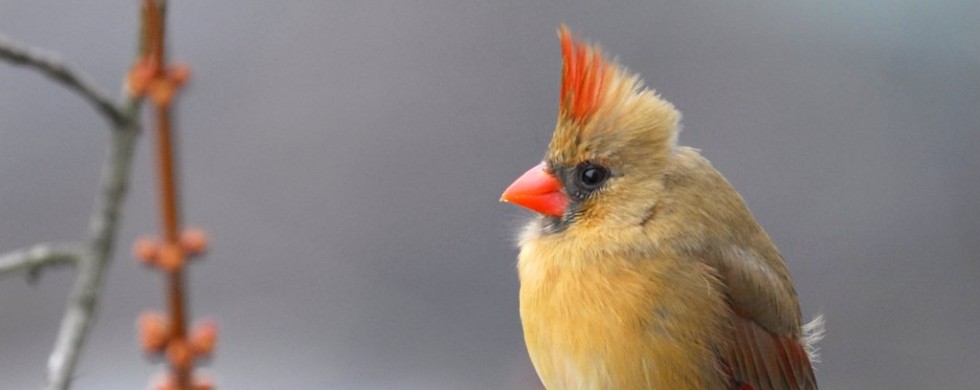
Northern Cardinal (female), Maryland-USA (2031)This month one of the most readily recognizable and popular birds in the United States.  How popular?  Well, no less than seven states have made this species their state bird (North Carolina, West Virginia, Ohio, Illinois, Indiana, Kentucky, and Virginia).  And then there are the sports teams.  This bird is a very popular mascot — a certain St. Louis baseball team uses this bird as their moniker, as does an NFL football team in Arizona.  Many a high school, college, and university fly this bird’s likeness on their team flag.

Still in doubt? (you non-birder, non-sports fan, non-mid-west/Southerner types) Part of the problem might be that this photo is of the female gender of this bird species.  Per usual, the male tends to garner all the attention.

Another clue, they are named after these guys:  Cardinals

No, it is not the monk bird.

Of course, it is a Cardinal.

To be accurate, it is a Northern Cardinal (NC).  For you bird geeks out there, the term cardinal includes about 60 species of birds (see the whole list here) that us laypeople would call tanagers, grosbeaks, buntings, chats, and saltators that may exhibit a broad range of colors from red to blue to green to just about any color in the rainbow.

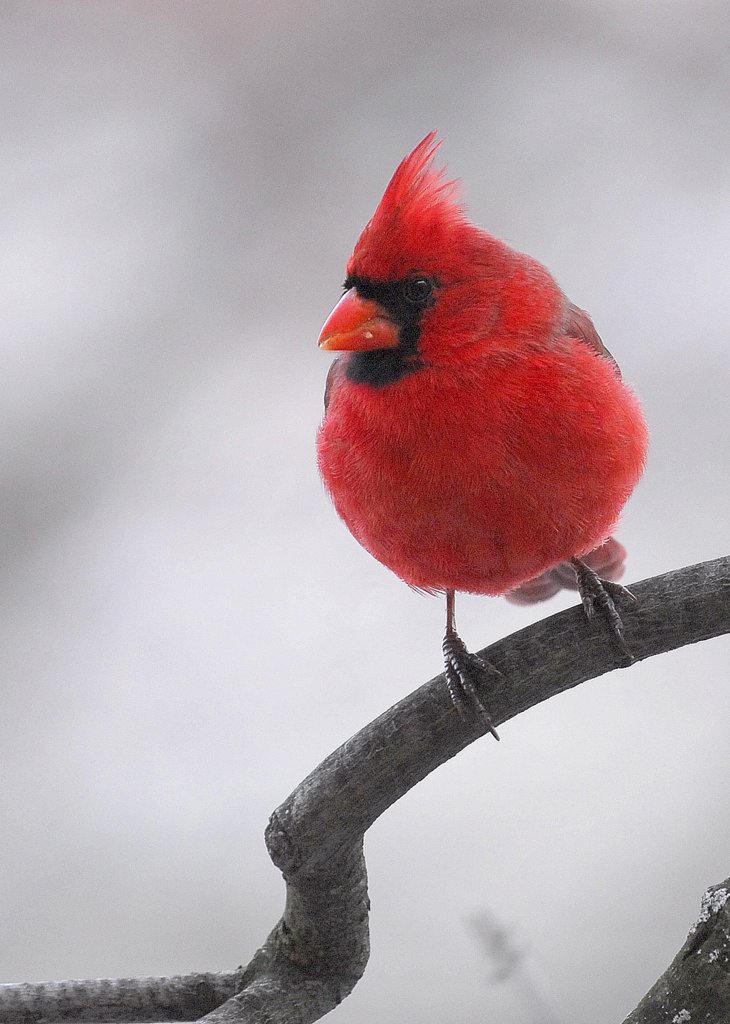
To the right is the flashy male Northern Cardinal that is almost universally recognized, even by non-bird enthusiasts:


Northern Cardinal (male), Maryland-USA (8547-3)

No doubt that the male is a stunner, a startling all-out attack of RED; the female is more subtle, with delicate tones of tan and caramel with well-appointed red highlights.

A few bird bits to ponder:

  1. Northern Cardinals used to be found primarily in southern states.  With the proliferation of bird feeders and warming climates, these birds can now be increasingly found from Mexico to Canada, from Maine to Nebraska.
  2.  NCs are ground feeders and dine mostly on seeds (hence that powerful, seed-cracking beak).
  3. NCs used to be popular pets but the Migratory Bird Treaty Act of 1918 put an end to that silly practice.  If you capture or kill a NC you can be fined $15,000.
  4. Cardinals mate for life.  The females really dig the red — the brighter the male plumage, the better the success in finding a mate.
  5. NCs don’t migrate.
  6. Unlike many other songbirds in North America, both the male and female can sing.  Usually, only the male sings.


Next time you spot that glorious jolt of red at the feeder or in the woods, take a bit of time to find and appreciate his lovely partner…


Until next month….:-)


Revealing Times

Shot of the Month – September 2013

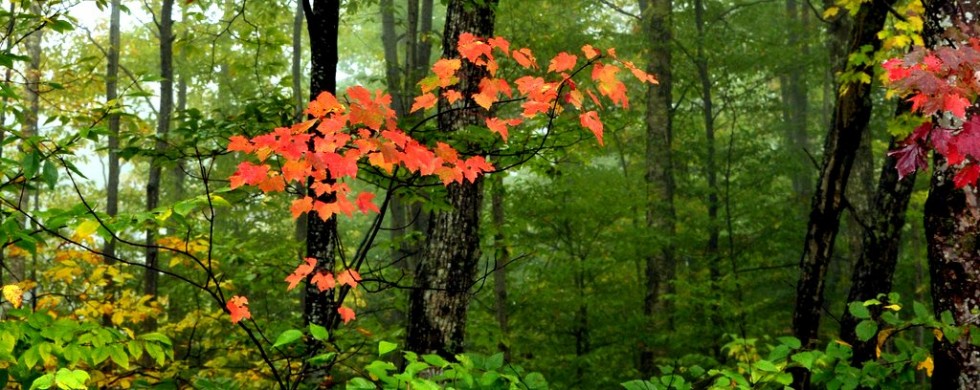
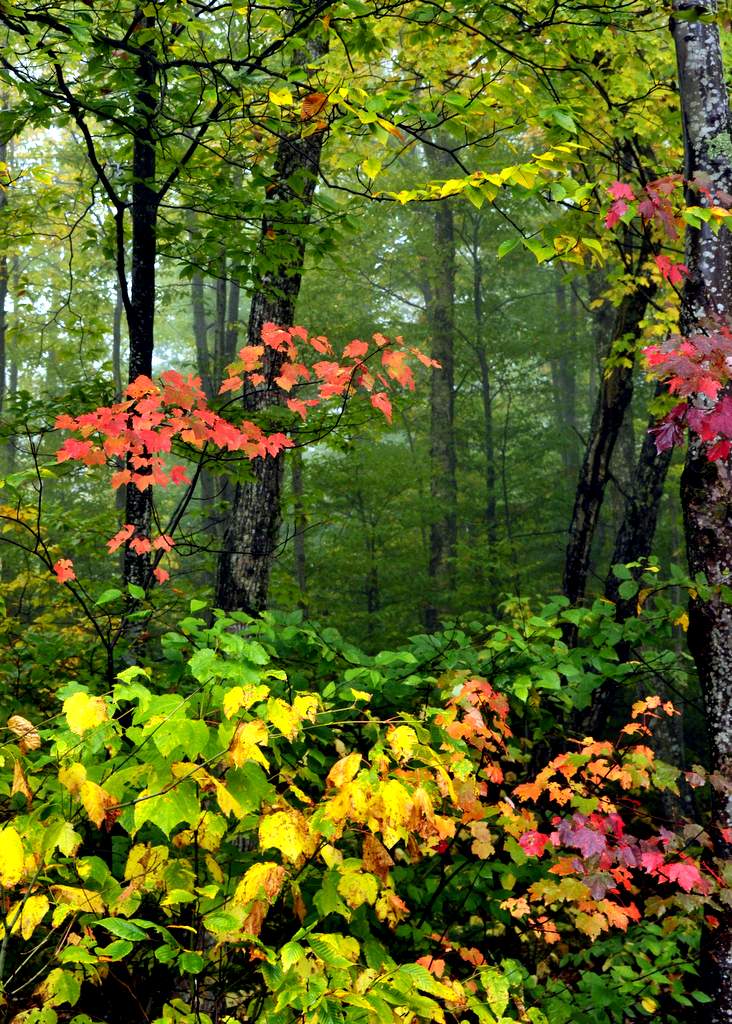
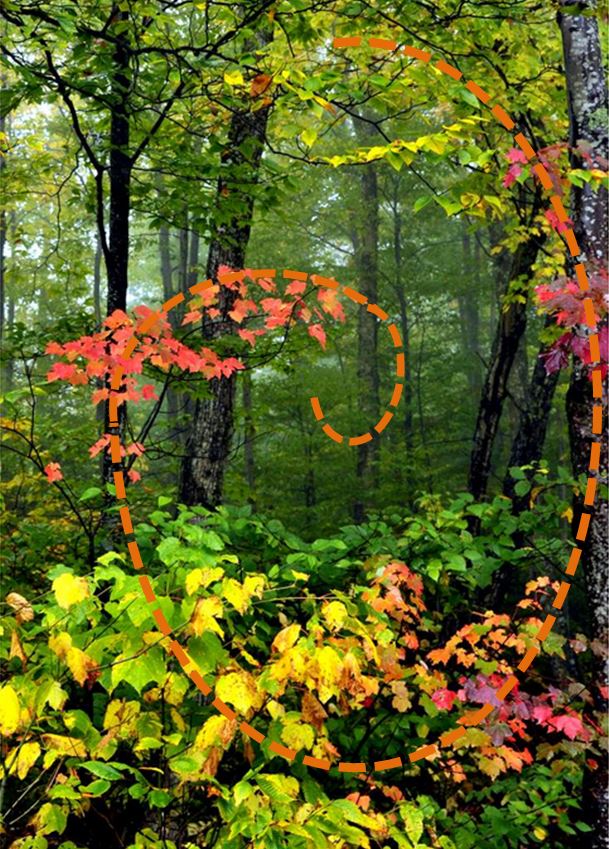
Fall Foliage, Vermont-USA (3420)In my current state of being (geographic, not metaphysic), Vermont, September is the month when the trees explode with color.  I found this scene during a short walk down the mountain road that we live on.   I like how there is a spiral of color on the outside that guides you to the forest within that seems intent on resisting the change of seasons.

Revealing Times-spiral

How and why do leaves change their color?  I forgot long ago.  As a service to all those who also forgot their 5th-grade science here is a simplified summary:

Leaves create the food trees need to survive by converting light energy into chemical energy that is used to convert water and carbon dioxide into carbohydrates (sugars).  These sugars are the fuel for a plant’s growth and maintenance.

Leaves contain several pigments, chlorophyll, and carotenoids, to absorb different wavelengths of light to facilitate photosynthesis. Chlorophyll captures red and blue wavelength light but reflects green light — that is why most plants are green.  Carotenoids (also found in corn, carrots, and bananas) increase the efficiency of photosynthesis by expanding the spectrum of light captured by the leaf. Carotenoids capture blue and green light and reflect back yellow and orange.  Leaves always contain yellow and orange pigments but we can’t see them in the summer due to the dominance of chlorophyll.

In the fall trees begin to produce less chlorophyll as they begin to shut down food production.  As the green chlorophyll fades from the leaves the carotenoids are finally revealed in all their glory.

Ok, so we have covered the different shades of yellow and orange found in the autumn palette, but what about the reds?  Ahh yes, the glorious reds.

The red pigment (including pinks and purples) in leaves is produced by anthocyanins (also found in cranberries, cherries, strawberries, and plums).  This pigment is not present in leaves until the fall and the production of this pigment varies greatly depending on the weather.  Surprisingly (at least to me) scientists are not exactly sure of the role of anthocyanins — the leading theory is that the red pigment protects the leaves from the sun giving them extra time to transfer nutrients from the leaves into the twigs and roots before the arrival of winter.

Yellow, gold, and orange colors remain constant from year to year as carotenoids are always present in leaves and the amount does not change in response to weather.  The intensity of red can vary greatly from one year to the next.  The best autumn colors are produced when there is a:

  1. Warm, wet spring; plus
  2. A summer that is not too hot or dry; plus
  3. A fall with plenty of warm sunny days and cool nights (below 45 F but above freezing)


Who knew chemistry could be so beautiful?


Want to learn more?

Why are plants green? (a nice video)

Light absorption for photosynthesis (geeky physics with colorful graphs)


Crowned Crane

Shot of the Month – August 2013

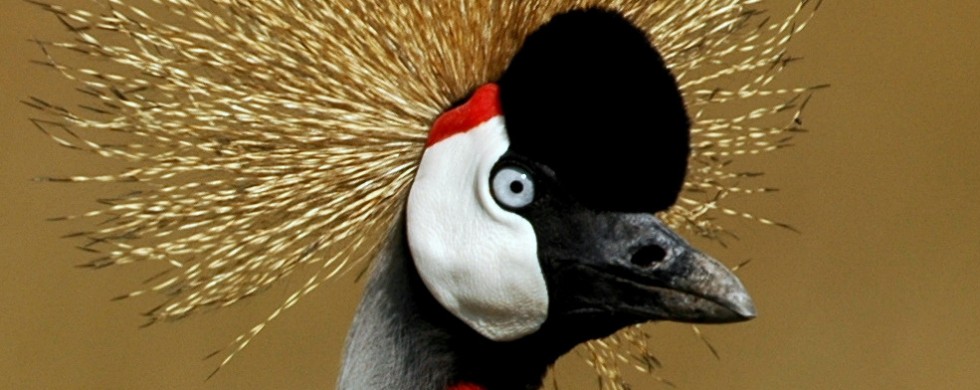
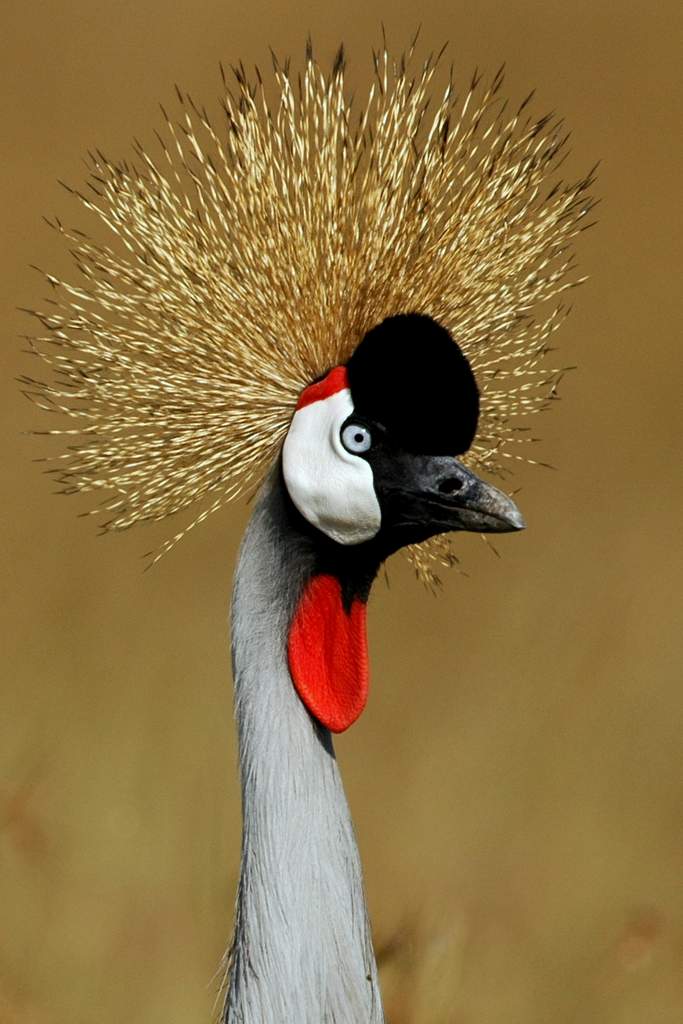
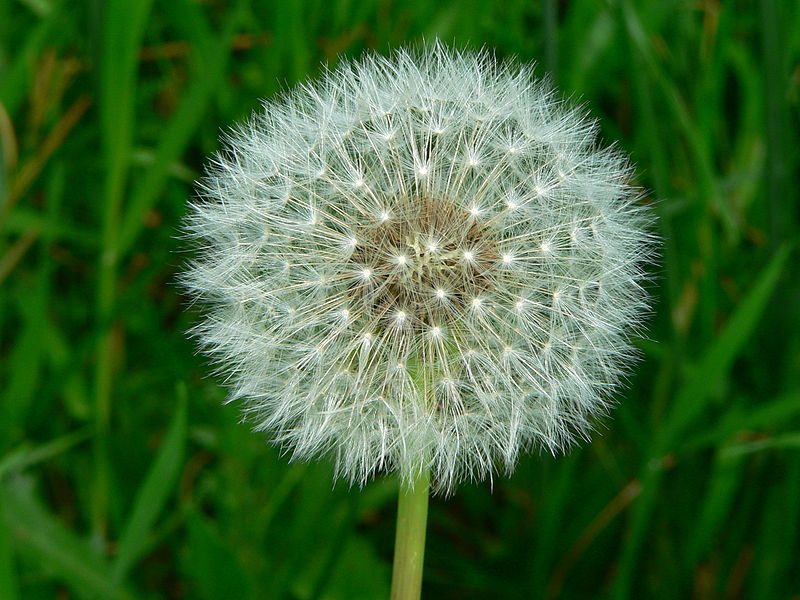
Grey Crowned Crane, Masai Mara NP -Kenya (066)This month a look at the Grey Crowned Crane (aka, the Crested Crane),  the seemingly dandelion-inspired, dancing dandy of the avian world.Dandelion

Dandelion:  The golden crown on top is a sight to behold, especially when the sun hits it just right, and gives the bird a slightly crazed, mad hatter look.  Gaze closely and you will see that each feather of the crown is dipped in black.

Dancing:  When breeding the Crowned Cranes can put on quite a display called a “nuptial dance.”  Their dance includes much bobbing, bowing, spreading of wings, and jumping to great effect.  Here is a not-great-but-best-I-could-find video that gives you a sense of what the bird looks like when s/he busts a move.

Dandy:  The Crowned Crane is a looker — she can stand three feet tall adorned in a lovely pearl grey body suit while the wings are mostly white but can include brown and golden feathers.  The head is a stunning mix of white, red, and black.

Other Fun Grey Crowned Crane (GCC) Facts:

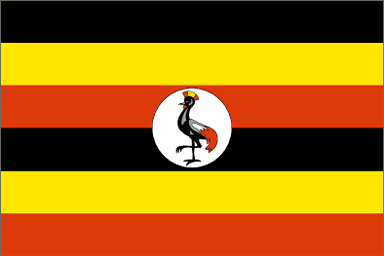
1. GCCs are the official bird of Uganda and can be found on the national flag.  Its plumage contains the three colors of the Ugandan flag.  Black identifies Uganda as a black nation in Africa.  Yellow represents the abundant sunshine Uganda enjoys being situated on the equator.  Red represents Uganda’s brotherhood with the rest of Africa and the world. (source)

flag

2.  As you may have gathered, GCCs are found in Africa.  Two subspecies exist: the East African Crowned Crane and the South African Crowned Crane.  The eastern lot can be found in Uganda, Kenya to Northern Zimbabwe.  The southern crew can be found in Angola, Namibia, Botswana, Zimbabwe, and South Africa.

3.  There are 15 species of cranes in the world — only 2 of those species can roost in trees.  The GCC has long hind toes that give it the grip to be part of that elite group. (The Black Crowned Crane is the other)

4.  GCCs do not migrate.

5. GCCs can live up to 22 years in the wild they seem to mate with the same partner for life.

6.  While the population of GCCs is still fairly robust, the trend is dire.  In the last 20 years, the population has dropped in half due to loss of habitat and the increased use of pesticides.  In 2012 the GCC’s conservation status was downgraded from Vulnerable to Endangered (only 2 steps away from extinction)

Here’s hoping for a continued long reign for the crowned crane…


Abstractly Nature

Shot of the Month – July 2013

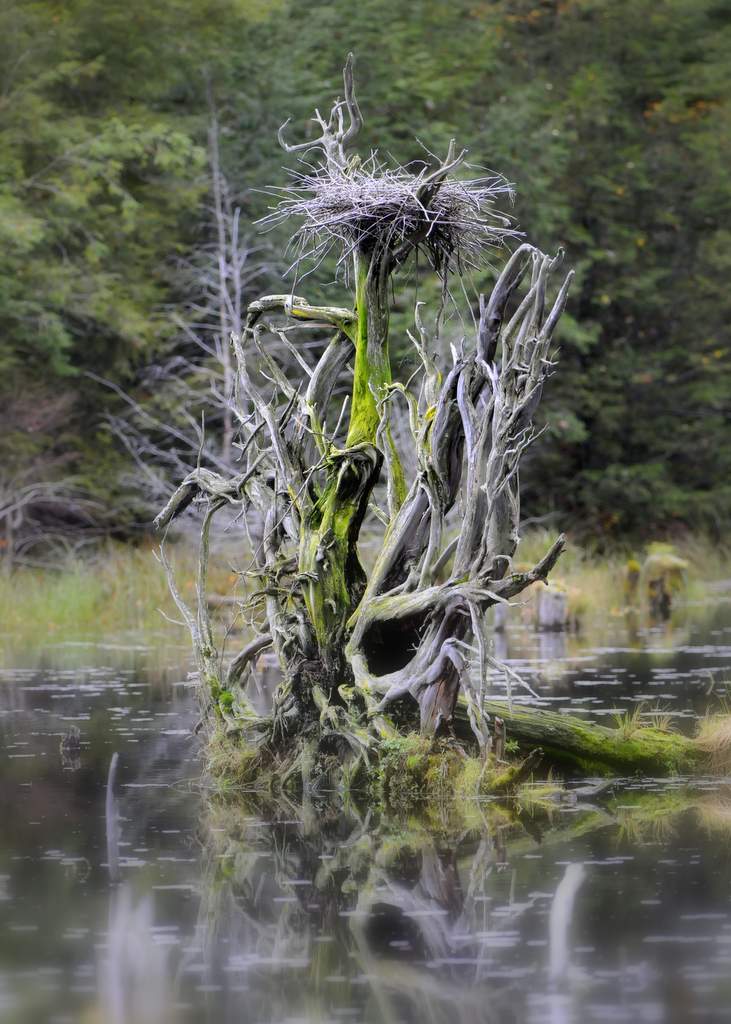
Fallen Tree, Vermont-USA (1411)

When I first gazed upon this scene I was baffled.  I couldn’t make heads or tails of it.  I could see only chaos.  Well, the pile of sticks seemed familiar. Yeah, ok, that could be a bird’s nest.  But the rest of it?  No idea.   I looked and I looked.  I looked some more.  Tilting of the head.  Squinting of the eyes. Tilt to the other side.

Nothin’.

Finally, our guide gave me the orientation I needed to make sense of it all.

She explained that we were looking at a tree that had fallen over in this small bog.  The main trunk of the tree can be seen in the water to the right.

The standing fan of “branches” was actually the root system of the fallen tree!  Bam.  It all snapped into place.  The pile of sticks on top was an abandoned osprey nest.  Well, at least I got that part right.

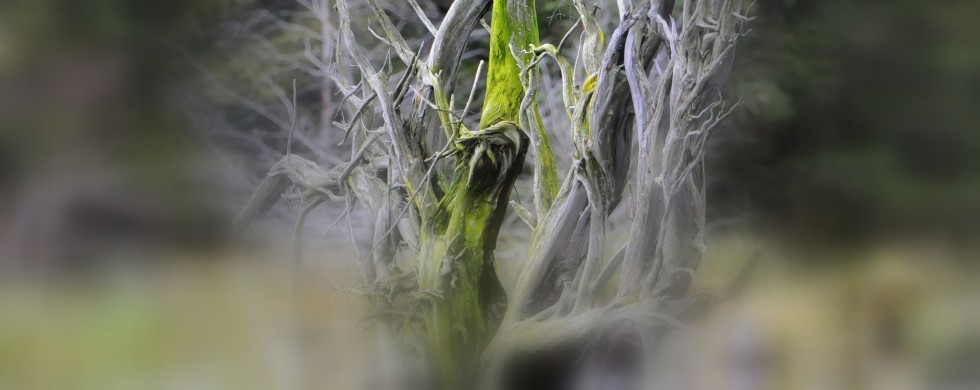
I couldn’t take my eyes off the visual disarray.  It seemed like abstract art. I have tweaked this image in that vein to bring out the “art” even more.  I have boosted the colors to make the green on the main vertical root really pop out.  And I have blurred the edges of the photo to allow the eyes to be naturally drawn into the “canvas.”

Is it just me or do you also see a screaming face in the main vertical root? It’s mouth is agape as if caught in an eternal scream. A pointy nose and two furrowed brows filled with rage just above the black gob.  Two root arms spread out in opposite directions as if appealing to the gods.  Seems like the tree is unfurling its outrage over the injustice that has befallen it.

I love how something so real,  a tree (you know, brown, stands straight, has some green stuff on it), has been transported into the realm of the abstract where lines and shapes no longer follow the rules and new meanings and realities blur from one into the next.

Perhaps this is Mother Nature’s version of the Rorschach test?  If yes, I  don’t think that I want to know how I did.

Something to ponder over your morning coffee:  If there is no one in the forest to hear a tree scream, does it make a sound?

Until next month….