Blushed with Praise!

Shot of the Month – October 2015

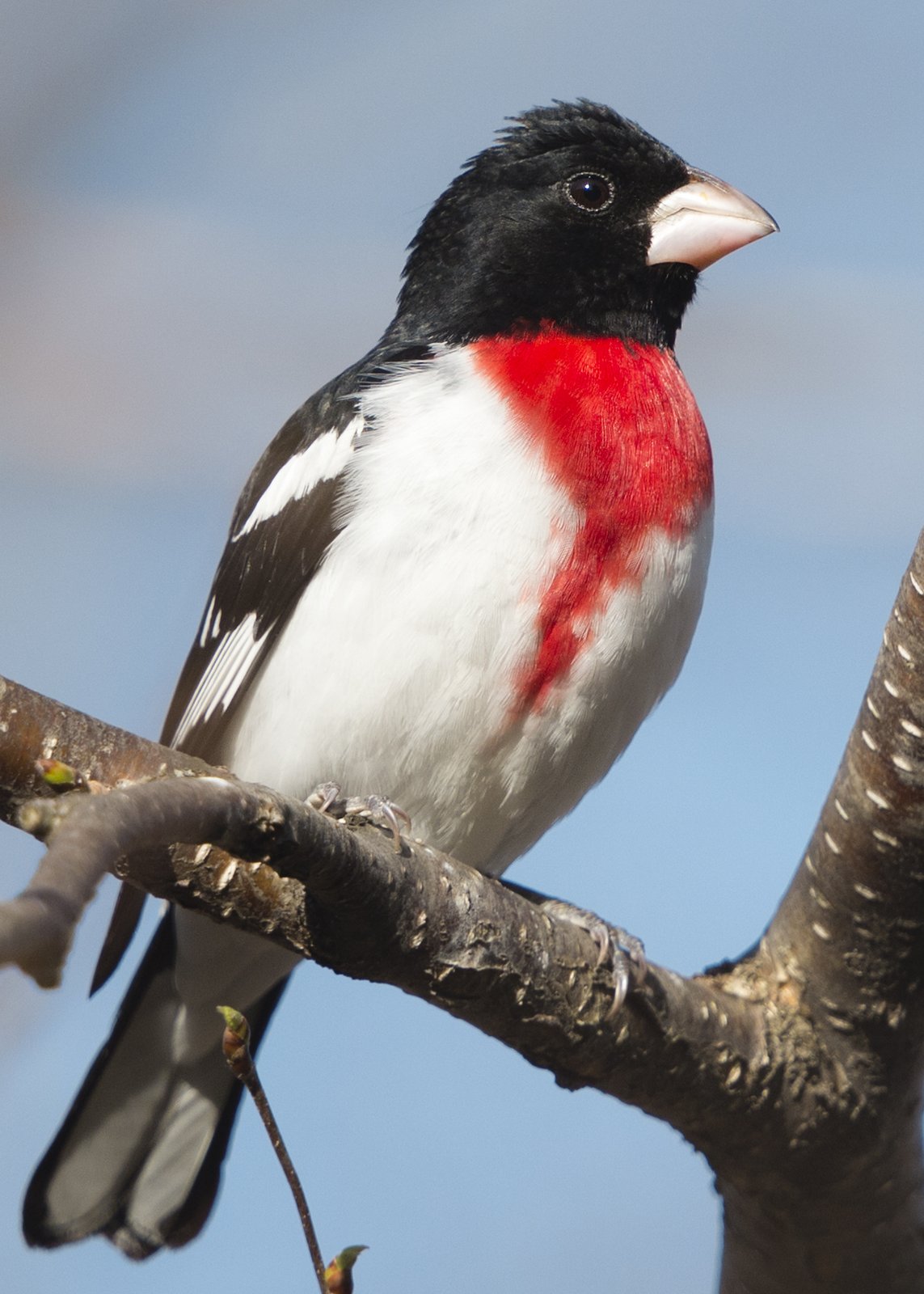
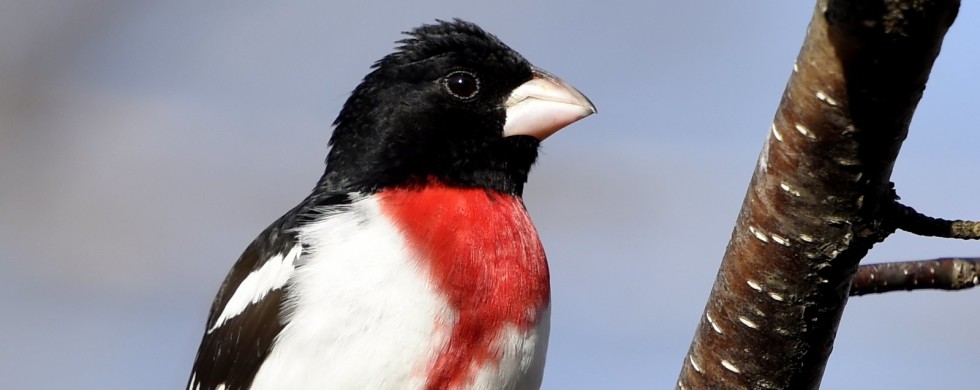
Rose-breasted Grosbeak, Vermont (3197)As you can see, the Rose-breasted Grosbeak (RBG) is a striking-looking fellow. And not only is he good-looking,  this guy has a lovely voice.  His double threat traits strike a chord with the ornithological crowd and stir flight of fancy and poetic prose.

A few of my favorite turns of phrase:

“Bursting with black, white, and rose-red, male Rose-breasted Grosbeaks are like an exclamation mark in your binoculars.” (source)

Nicely done, sir.  I love that visual.

Another, albeit a bit more gruesome nickname is “cut-throat.”  I find that visual much less pleasing, though one can’t argue with the logic.

And for the bird’s lovely song?  A couple of early twentieth-century naturalists said it is

“…so entrancingly beautiful that words cannot describe it….it has been compared to the finest efforts of the Robin and…the Scarlet Tanager, but it is far superior to either.”

Ouch, it seems that the robin and scarlet tanager will not be going to the next round of the competition.

Even the Cornell Lab of Ornithology (home of smarty-pants-bird geeks) was getting all artsy-like in its description of the RBG’s lovely fine voice:

“They sound like American Robins, but listen for an extra sweetness, as if the bird had operatic training…”

Operatic training? Oh, so high brow of them…


Here you can hear his lovely call in action:

If you want to catch this lovely star in action your best chance is to visit northeastern forests in the US and Canada during the spring and summer; the cut-throats spend the winter in Central and South America.

Ahh, the life of a celebrity…..until next month.  🙂


Nikon D4S, Nikon 600mm f/4 (@f/5.6), 1.4x TC, 1/2000 sec, ISO 800,
To Bee or Not To Be

Shot of the Month – September 2015

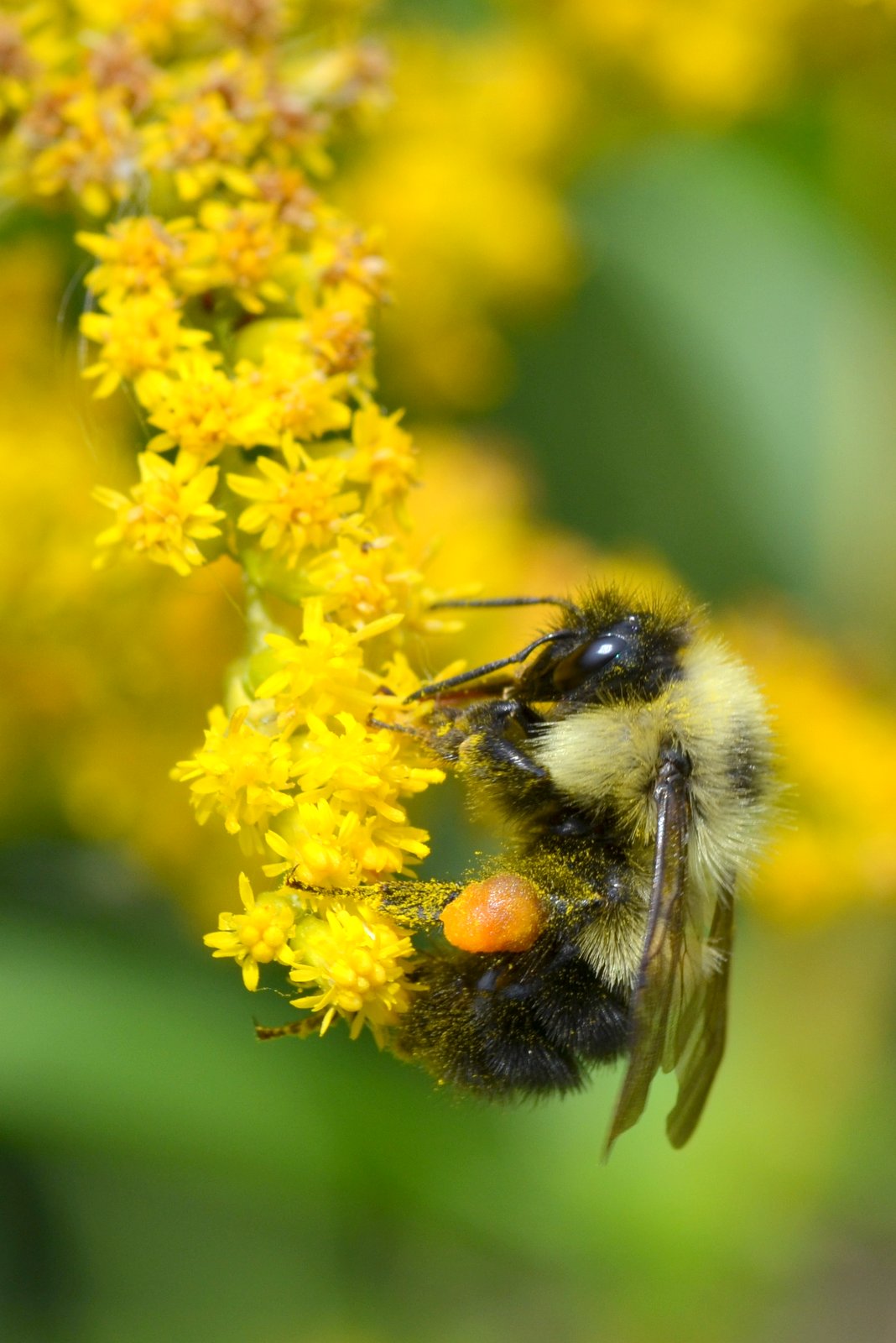
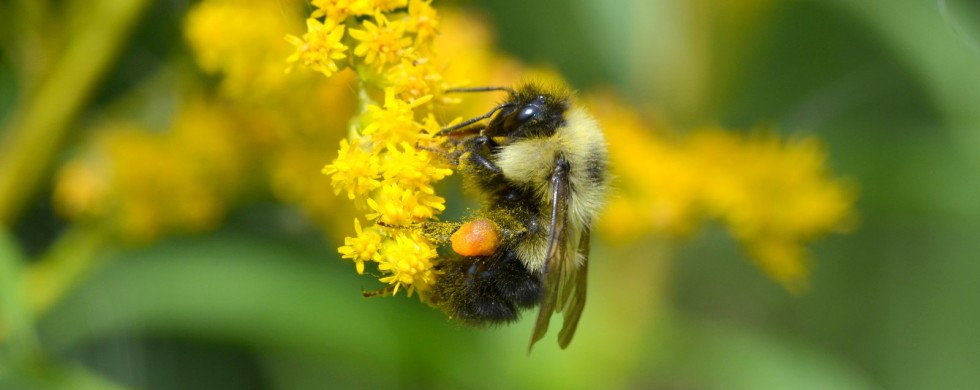
Bumblebee, Vermont (1684)

I have taken liberty with what is perhaps Shakespeare’s most famous line to highlight the plight of one of humanity’s oldest partners — da bee. A recent study indicates that humans have benefited from the bee’s labor for at least 8,000 years.  However, since 2006 or so bee populations have been crashing (Colony-Collapse Disorder (CCD) is the scientific lingo for it) around the planet and this beautiful relationship is in serious peril.

Why should we care?

Well, bees are expert pollinators and we rely on them to produce much of our food — some estimate that 1 in every 3 mouthfuls of the food you ate today was pollinated by a bee.  Of the 100 crops that provide about 90% of the food eaten in 146 countries, 71% are bee-pollinated. Did you know that the ENTIRE almond crop in the US relies on bees for pollination?  Me neither.

Without bees forget about apples, lemons, limes, carrots, celery, zucchini, oranges, blueberries, cherries, watermelons, grapefruit, lettuce, macadamia, cashew, coriander, cucumber, buckwheat, mango, avocado, apricot, peach, pear, raspberry, broccoli, onion…and many more. See a comprehensive list here.

Much of the pollinating is done by the Western Honey bee — a species that is commonly used by commercial beekeepers.  Typically a beekeeper will lose about 10-15% of his bees over the winter.  Since 2006 the loss rate has been around 30%.  In 2014-2015 about 42% of all honey bee colonies died off.

So what is causing all the deaths?  There is no single answer but most scientists believe the mass die-off is being caused by:

  1. Habitat Loss: Modern agriculture is characterized by massive fields with just one crop –  rarely can you find a range of flowers along fields where bees can forage.  These fields are like deserts for bees.
  2. Pesticides: Bees are very sensitive to pesticides and seem particularly sensitive to neonicotinoid pesticides.  Neonicotinoids were introduced in the mid-1990s and bee numbers began falling soon after.  Over 50,000 bumble bees (like the one I photographed here) died in Oregon in 2013 after a landscaping company sprayed nearby trees. Oregon banned the use of this insecticide in 2015.
  3. Parasites:  A microscopic mite, the Varroa destructor, surfaced in the US in 1987 and has since killed millions of bees.

How can you help?  A few ideas:

  1. Buy Organic:  Organic farms don’t use pesticides.
  2. Buy Local:  Support your local farms, especially local organic farms (see #1 above)
  3. Use less pesticides:  We use WAY too much pesticides.  Most pest problems can be solved without pesticides.
  4. Plant bee-friendly plants:  Start a garden and provide desperately needed food for the bees.  Here is some guidance on how to start.  And check out this fun tool.

And here is a good list of ideas on how to help.

A world without bees would be terribly unbeecoming and a lot less beeautiful, and dining would be a lot more boring (damn, no “ee’s” in boring, sigh).

Anyways, we really do need bees to be, so do what you can to help out.

Until next month….:-)


Nikon D5100, VR Micro-Nikkor 105mm f/2.8, f/10, 1/250 sec, ISO 200

The Eyes Have It

Shot of the Month – August 2015

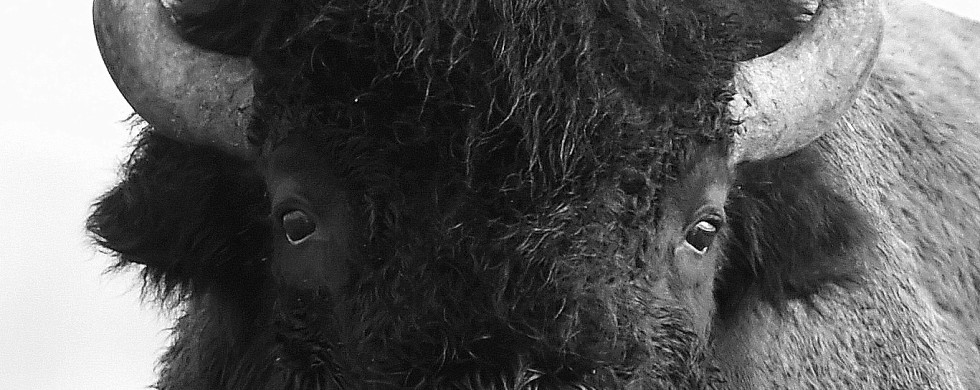
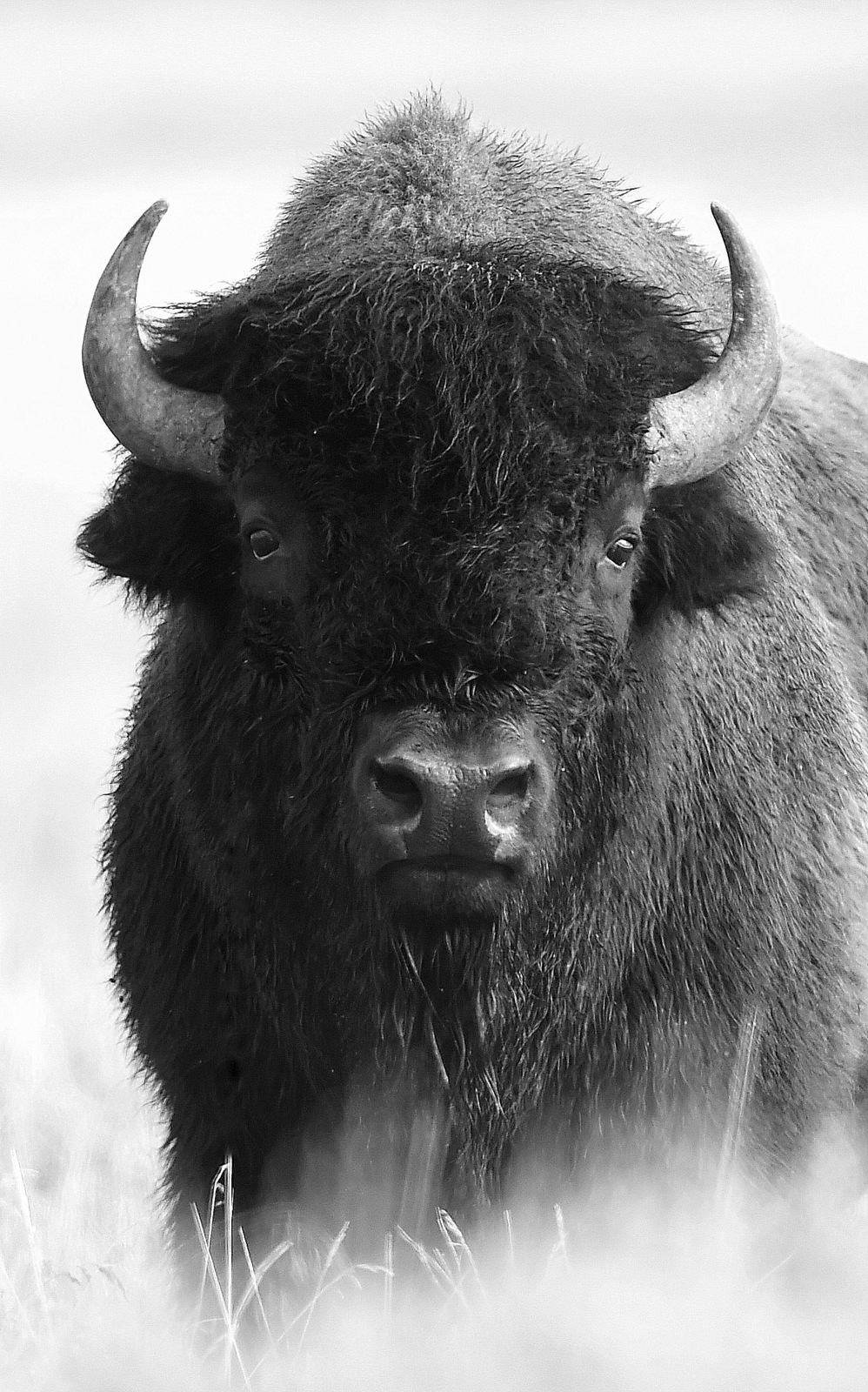
American Bison, Yellowstone NP (6330)This month’s throwback pinup beauty is a gorgeous bison babe.  I don’t know about you, but I find myself getting lost in those big brown eyes (Yes, I realize it is a black and white photo — trust me on this one). That luscious nose.  And who wouldn’t want to run their fingers through that luxurious black hair?

No doubt about it, that is a half-ton of cuteness right there.  Bob the Bison would surely be humming Bob the Marley’s “Looking in your big brown eyes” as he sauntered by this bovine beauty.

The eyes come to life in this image because I was able to capture the elusive “catchlight.”  Catchlight is simply the reflection of the sun or light source in the subject’s eyes.  Catchlight adds depth and dimension to the eyes and makes the subject come alive.  Wildlife photographers obsess about this little dint of illumination – some feel that the foundation of a great wildlife image is catching a bit of ocular sparkle.

Without the glint the human brain seems to not respond as strongly to an image — we tend to see the photo as “lifeless.”  Sort of like the difference between looking at a photo of a stuffed toy bison and a picture of well, this Yellowstone beauty.  That extra twinkle can make an otherwise “flat” image seem to jump off the page…errr, screen.

The eye glint thing also works for people. So when taking a picture of friends and family, try to capture a bit of catchlight to make your evil ____ more loveable/likable/humanlike. (fill in the blank with the relative or friend of your choice).

The psychological power of catchlight is so strong that sometimes in movies the director will go in the other direction and remove the glint from the eyes of antagonistic characters in post-production to make them seem more evil or heartless.

As you can see, beauty is truly in the eye of the beholder…..or is it the beholdee?  Now I’m confused…

Until next month…..michael


Nikon D4s, Nikkor 600mm f/4G ED, 1.4x TC (@850mm), f/5.6, 1/750s, +0.5 EV, ISO 640

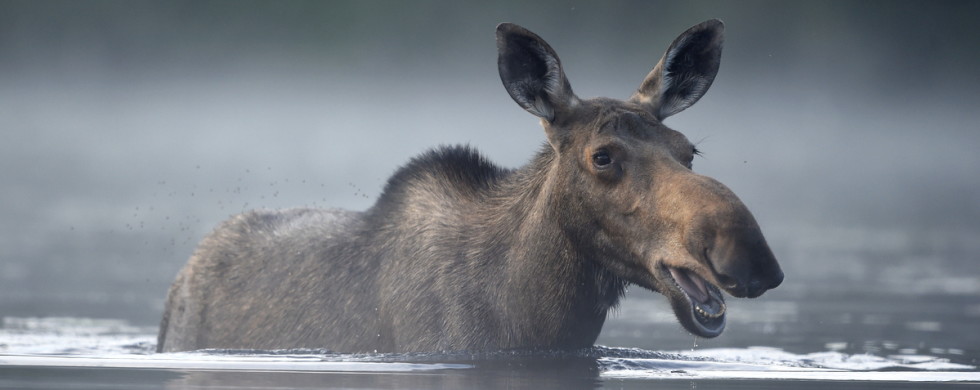
Moose “Hunting” with Michael

Here is a short video on my photo trip to Maine last week:


Ruby-throated hummingbird (4983)

Ultralight Aviation…

Shot of the Month – July 2015
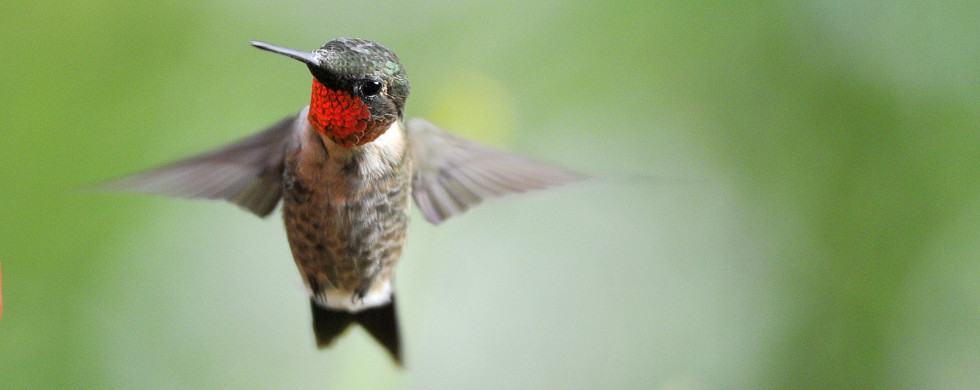
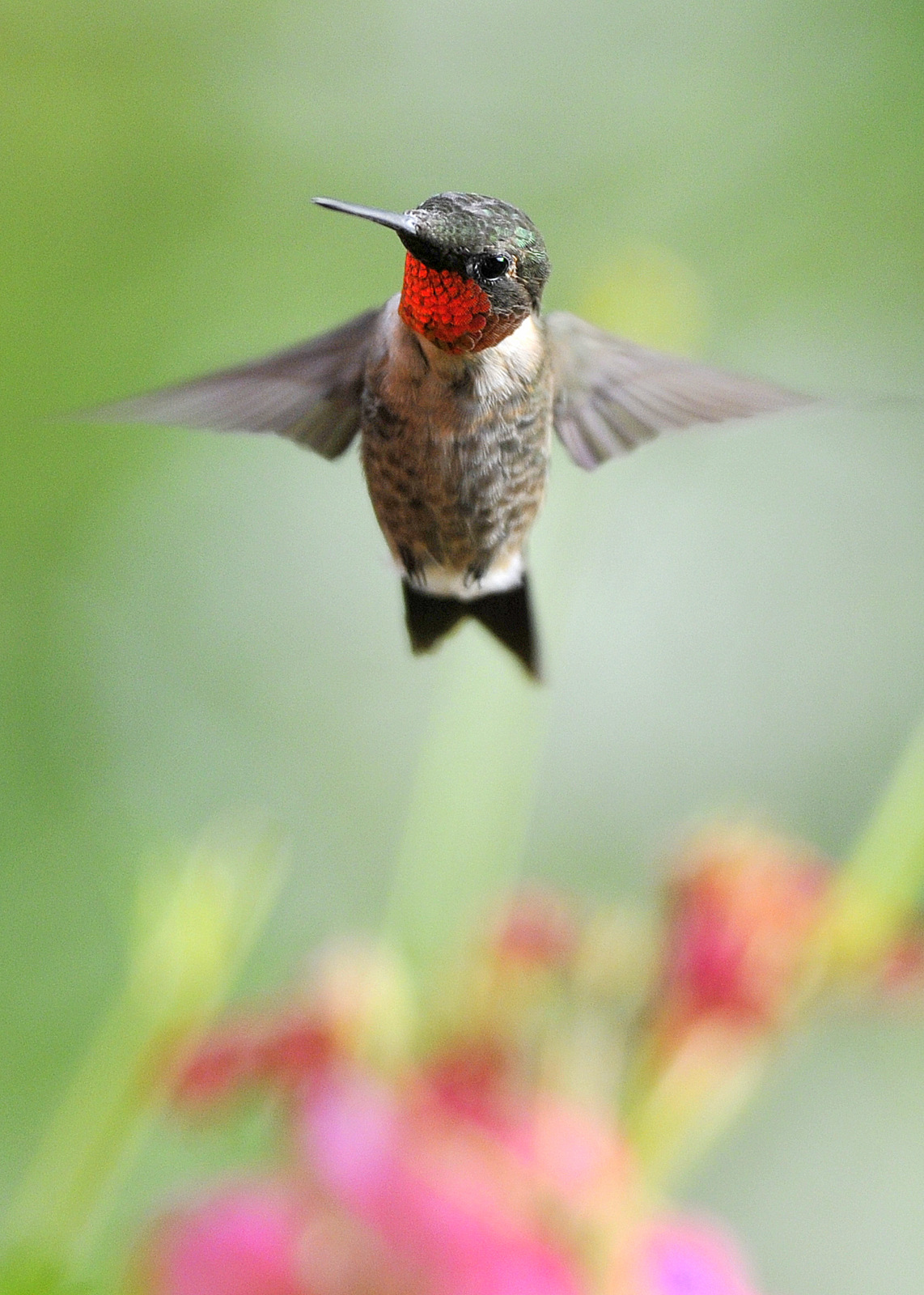
Ruby-throated hummingbird, Vermont (4983)Hummingbirds are the tiny flying jewels of the New World — all 340 known species are distributed among North and South America and the Caribbean. Alas, this wealth is not shared equally.  In the eastern US (i.e., east of the Mississippi River) we only have one breeding species, the Ruby-throated hummingbird (RTH), as photographed here in our garden in Vermont.  The wealth is shared thusly:

Ecuador:             163 known species (the clear winner)

Columbia:          127 known species

Mexico:                50 known species

North America:   23 known species (most are found west of the Rocky Mountains and south of the US-Mexico border)

The wee birds can be found from southeastern Alaska and western Canada through the United States and Central America (including the Caribbean islands) down to Tierra del Fuego at the southernmost point of South America. The few species that do breed in the US and Canada migrate south to Mexico, Central America, West Indies, and southern Florida for the winter.

Here is a good map showing the distribution of the Ruby-throated hummingbird.


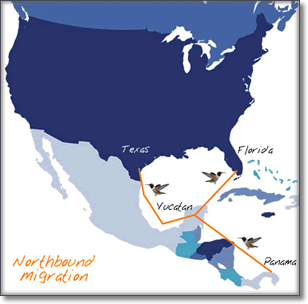
In the spring many RTHs pass through the Yucatan Peninsula of Mexico and fly across the Gulf of Mexico to reach Florida or Louisiana before continuing north. That is a 500-mile non-stop flight over water.

That is also, insane.

A bit of perspective.  A RTH weighs about 3 grams.  Put a US nickel in your hand — that is about 5 grams. (No, really, I mean it, go find a nickel and hold it.  I can wait…….Crazy, right?)

Before departure, the birds go on an eating binge and double their weight to 6 grams.  After completing the 20-22 hour, non-stop flight the bird may only weigh 2.5 grams!  Once on the mainland, the birds average about 20 miles per day as they continue north. (Source)

In the spring you can use this great map to follow the migration of the Ruby-throated hummingbird.

Until next month…..m


Fade to black as I sit here shaking my head trying to imagine a nickel (with wings, of course) flying 500 miles across open water….


Other Coin Weights for my International Readers:

UK Penny = 3.56 grams 
0.10 Euro coin = 4.10 grams 
0.05 Euro coin = 3.97 grams 
0.02 Euro coin = 3.0 grams 
Kenya 10 Shillings coin = 5 grams 
Kenya 5 Shillings coin = 3.4 grams 
1 Indian Rupee = 4.85 grams


Nikon D300s, Nikon 70-200mm f/2.8G ED VRII (@ f/2.8, 300mm), 1/500 sec, ISO 400