
Menu
Apr
30
Shot of the Month – April 2019
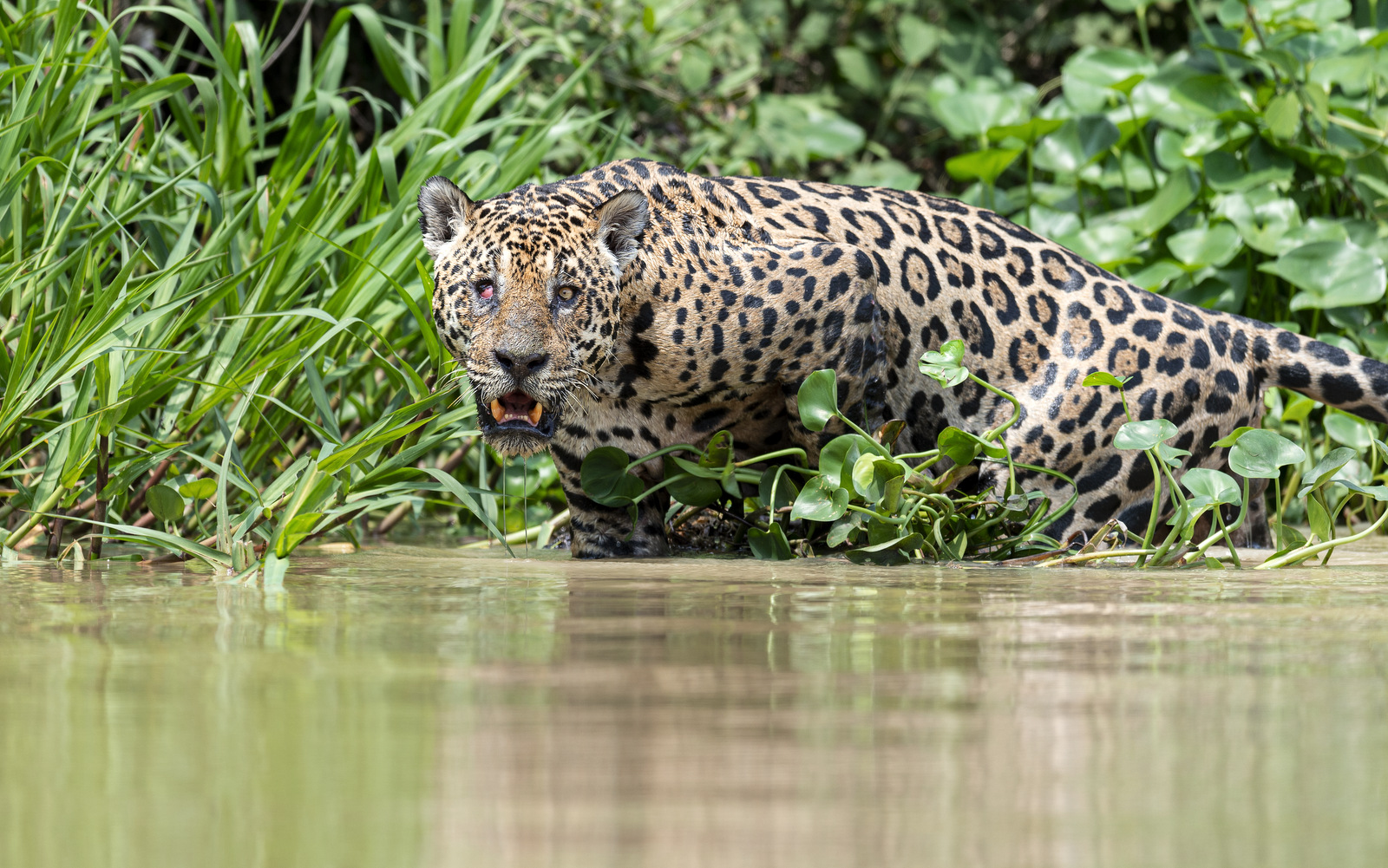
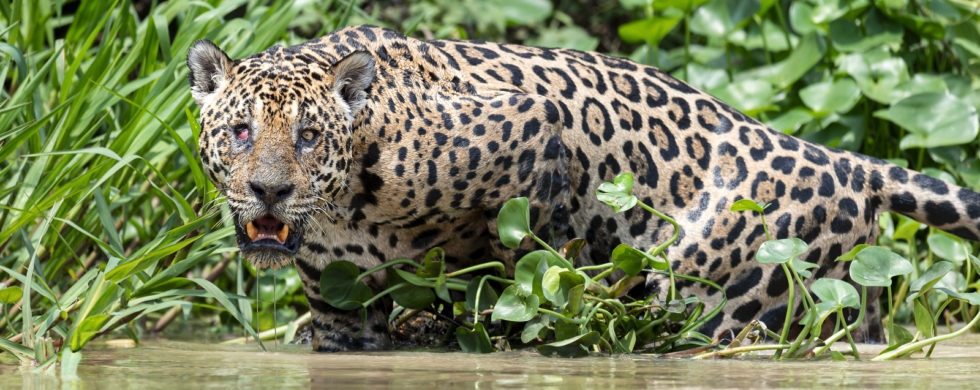
This month we visit with the most powerful cat in the Western Hemisphere — the Jaguar. This heavyweight of the feline world is the third largest in the world, coming in just behind the Lion and then the Tiger. The jaguar is the only member of the “Big Cats” that is found in the Americas. I photographed this jaguar in the Pantanal, in Brazil.
Looking like a heavyset leopard these cats are built for life in the tropical rain forest where they are found — they have muscular limbs and large paws which allow them to climb trees and swim rivers with ease. Unlike most felines, these cats absolutely love the water and rarely stray too far from the river. That being said, they are adaptable and can be found in other habitats including grasslands and deserts.
The jaguar is a stalk-and-ambush hunter unlike lion and cheetah which chase their prey. These cats walk slowly, and silently through the jungle in search of a meal. They also walk along the river’s edge, or even in the water as seen in my image above. We watched this impressive male, known locally as Mick Jaguar (Groan, I know. It doesn’t seem as corny when you are there seeing this incredible cat….) hunt along the river for several hours. Even though Mick is past his prime now, perhaps 11 years old, he is still the top cat in this part of the river. You can see that his one eye is injured but we were told that he can still see with it.
Medium-sized mammals make up the majority of Mick’s diet and can include deer, capybara, Peccaries, and Tapirs. When hunting in the water prey may include turtles, fish, and caiman (a relative of the crocodile and alligator). In total Mick and his brethren can take over 85 species depending on what they can find. One of the few jaguars that lived in the US was known to even kill and eat American black bears. (source)
Like most big cats Mick kills large prey with a deep throat bite that suffocates the animal. Jaguars have the most powerful bite of any cat and sometimes kill their prey by biting through the animal’s skull! When hunting large caiman the jaguar will sometimes jump on the back of the reptile and bite through the base of the skull and sever the cervical vertebrae which instantly paralyzes the animal.
Blah, blah, blah. So many words. Watch this unbelievable video of Mick himself on a hunt from several years ago– this video will show you everything you need to know about the hunting style of the jaguar, their fearless nature, and their lethal hunting techniques.
Any questions? WOW!
Until next month…..m
Want more?….
Check out my other post on the Jaguar.
And a few more videos:
A different angle of the same hunt as shown on National Geographic
And a short piece as shown on Nature about the Jaguar
Nikon D4S, Nikon 600mm f/4, 1/800 sec, ISO 250, +0.5 EV
Mar
31
Shot of the Month – March 2019
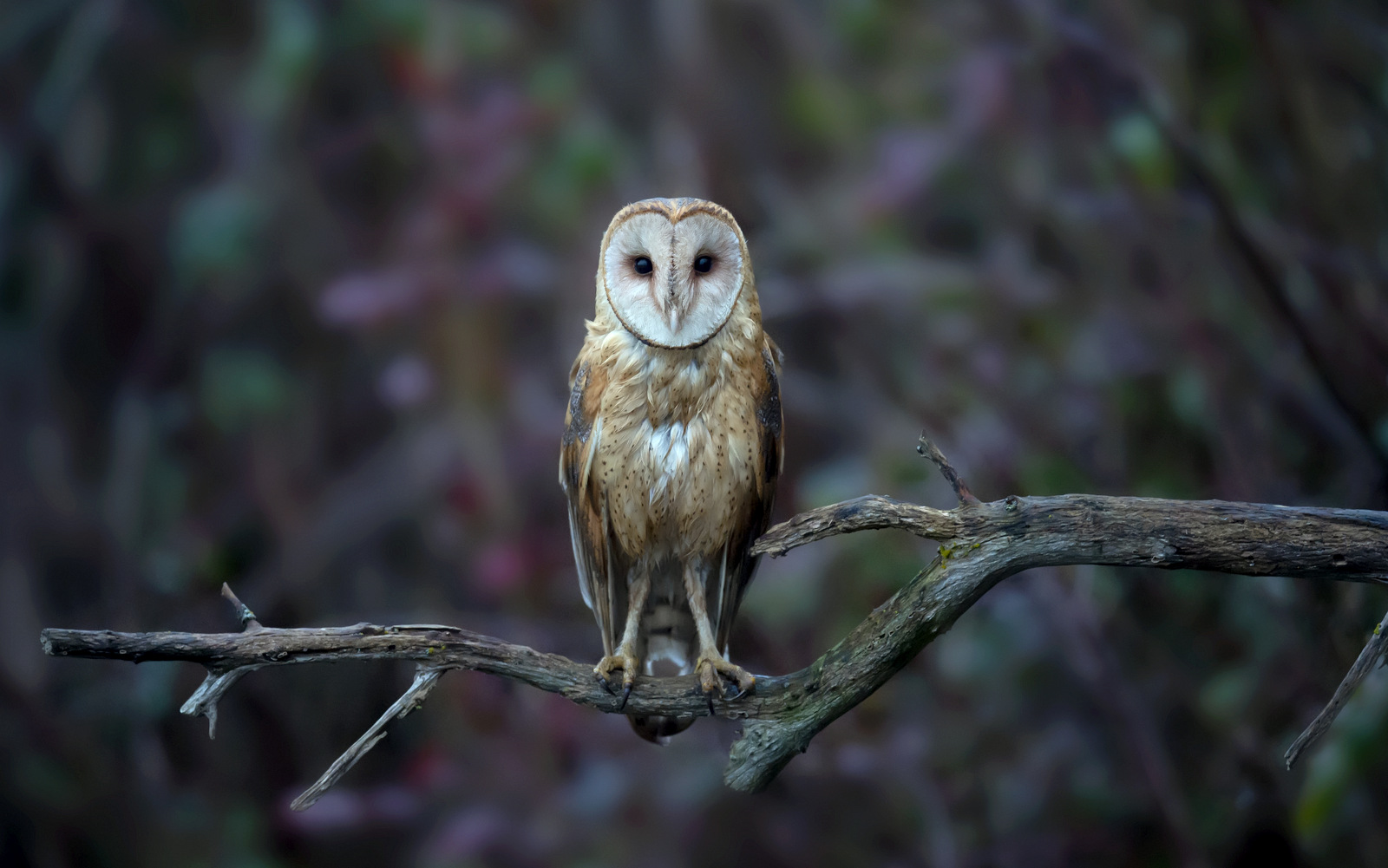
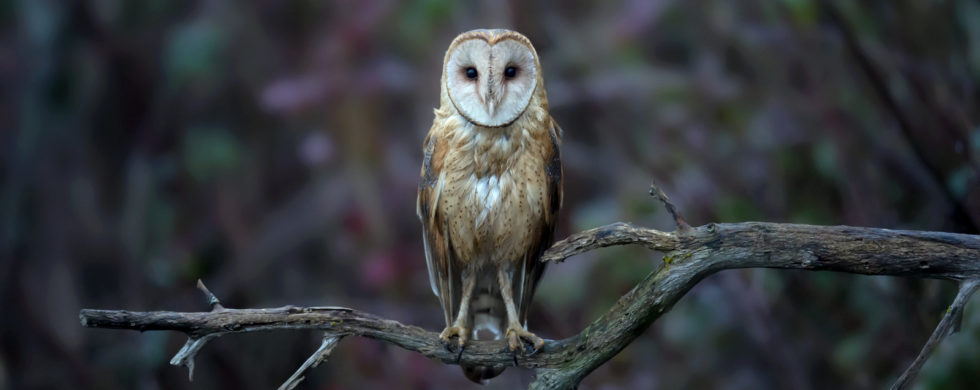
What do you do when the “death owl” stares into your soul? Do you reach for your rosary and hope that its powers will protect you? Or perhaps do you stop and take a moment to reflect on a life well, or not so well, lived as you prepare to meet your maker? As a nature photographer, I didn’t have time for such contemplation. I frantically moved my tripod into position and even more frantically tried to find a group of settings that might allow me to photograph this apparition in almost total darkness. An opportunity to capture an image of the common barn owl was truly a supernatural event even though they are the most common owl in the world. The barn owl can be found on every continent except Antarctica (range map)! Despite their wide distribution barn owls are highly nocturnal so they are rarely seen. Sightings are typically fleeting and may last just a few seconds. I happened to find this owl just after first light, but before sunrise (Dawn) so it was still quite dark out. Miraculously, Within a few minutes, I saw this female dive into the tall grass, catch a vole, devour it, and fly off before the sun crested the horizon. And not a single other human was around to witness it but me.
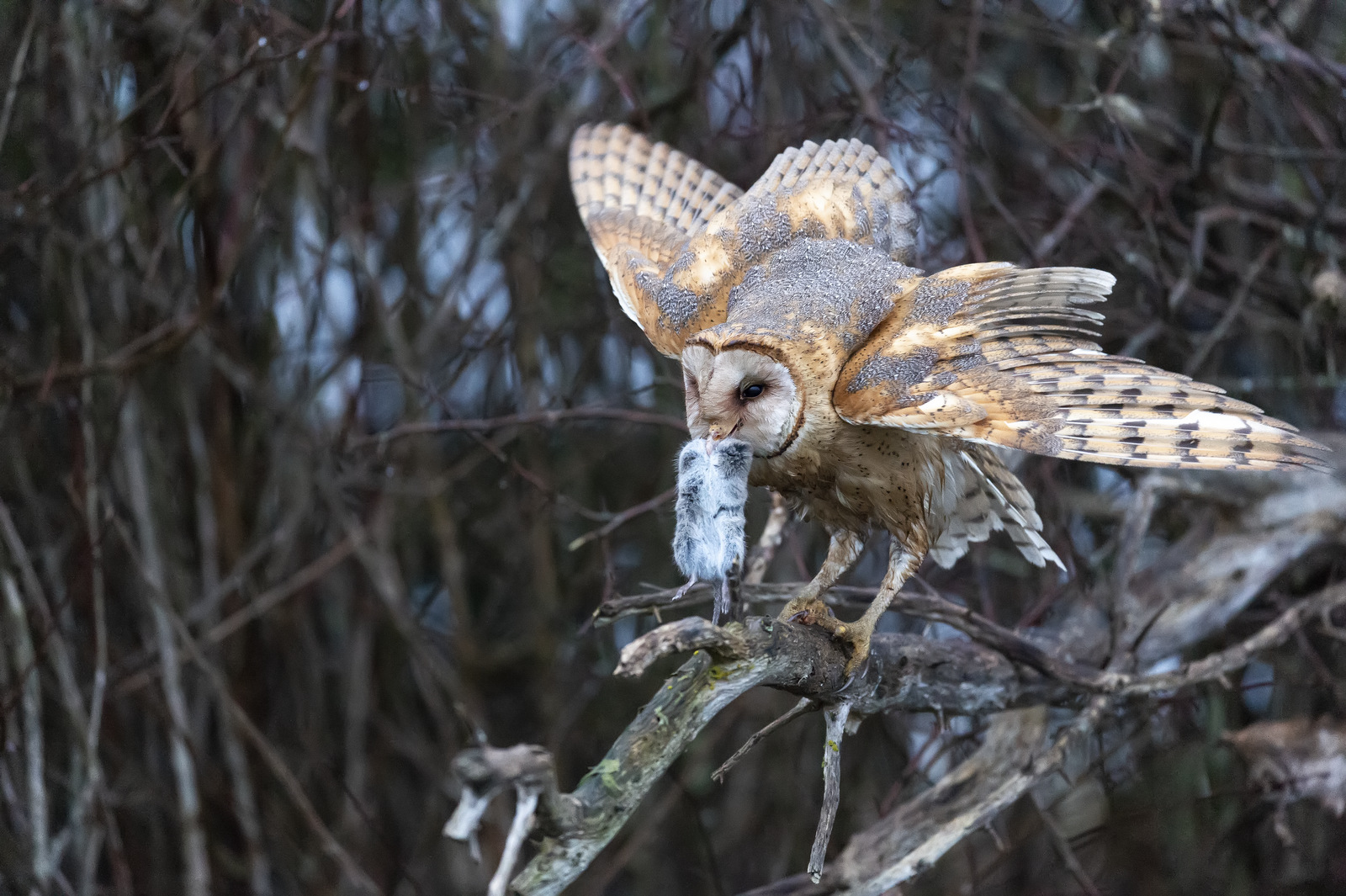
Breakfast is served (click on the image to see larger)
I was left standing there dumbstruck. Did it really happen?
Wait, check your camera! Yes, photographic proof……whew!
The common barn owl is known by many names:
Monkey-face owl/Silver owl/white-breasted owl
These names come from the look of the owl. The scientific name for the species, Tyto alba, means “white owl.”
Church owl/Cave owl/Stone owl/Straw owl
Barn owls prefer open, low-lying habitats and are found around farms, marshes, grasslands, and similar habitats. These owls are cavity nesters and they like holes in trees, fissures in cliff faces, and in Europe and North America they are very fond of old buildings like barns and church towers.
Ghost owl/demon owl/death owl/lich owl (lich is an old term for a corpse)/Hobgoblin owl
In ye olde times many cultures saw the barn owl as an evil omen or a sign of death given their nocturnal habits and terrifying screech. Yeah, these owls do not “hoot” like other owls — their call will curdle your skin. Give a listen:
Yikes!! Imagine hearing this while walking along a dark path.
Barn owls dine mostly on small mammals, particularly rats, mice, voles, and lemmings while they will also prey on shrews, bats, and rabbits. In some locations, they will prey on birds. In North America, voles are the preferred meal. The demon owl has excellent eyesight and can easily find prey at night by sight. However, its hearing is unparalleled and it can find prey in complete darkness by sound alone. Their hearing is aided by the satellite-dish-shaped face and the asymmetrical placement of their ears. Their large wings and relatively small bodies allow the birds to fly slowly, in looping buoyant flight as they listen for movement. Their specialized wing feathers make virtually no noise so creatures below are unaware of the danger just above them. Watch this video below (or here) to appreciate how little noise barn owl wings make:
Given their wide distribution barn owls are numerous though dramatic declines have been seen in some locations as large-scale, mechanized farms destroy their hunting grounds. Also, increased use of pesticides and rodenticides can kill owls who eat poisoned rodents. The barn owl is listed as Endangered in Canada and there are now 10 states in the US that list the barn owl as endangered and another 11 states that list it as a species of Special Concern.
Some potential good news is that more farmers in the US (and around the world) are using barn owls as part of their Integrated Pest Management as an alternative to using poisons. Due to their high metabolic rate, barn owls consume more rodents than just about any other predator. Farms, vineyards, rice fields, sugar cane crops, and orchards can all benefit by installing barn owl nest boxes to increase the owl population and benefit from their rodent-killing ways. How good are they? Well, a barn owl family (parents and chicks) can eat 3,000 rats in a nesting season!
Demon owl?? Nah, for nature lovers and farmers alike, she sounds like a very friendly and beneficial ghost indeed. Let’s hope we can find a way to live in harmony with this wonderful denizen of the night.
Until next month…..m
Nikon D4S, Nikon 600mm f/4, 1/50 sec, ISO 6400,
Sources:
Feb
28
Shot of the Month – February 2019
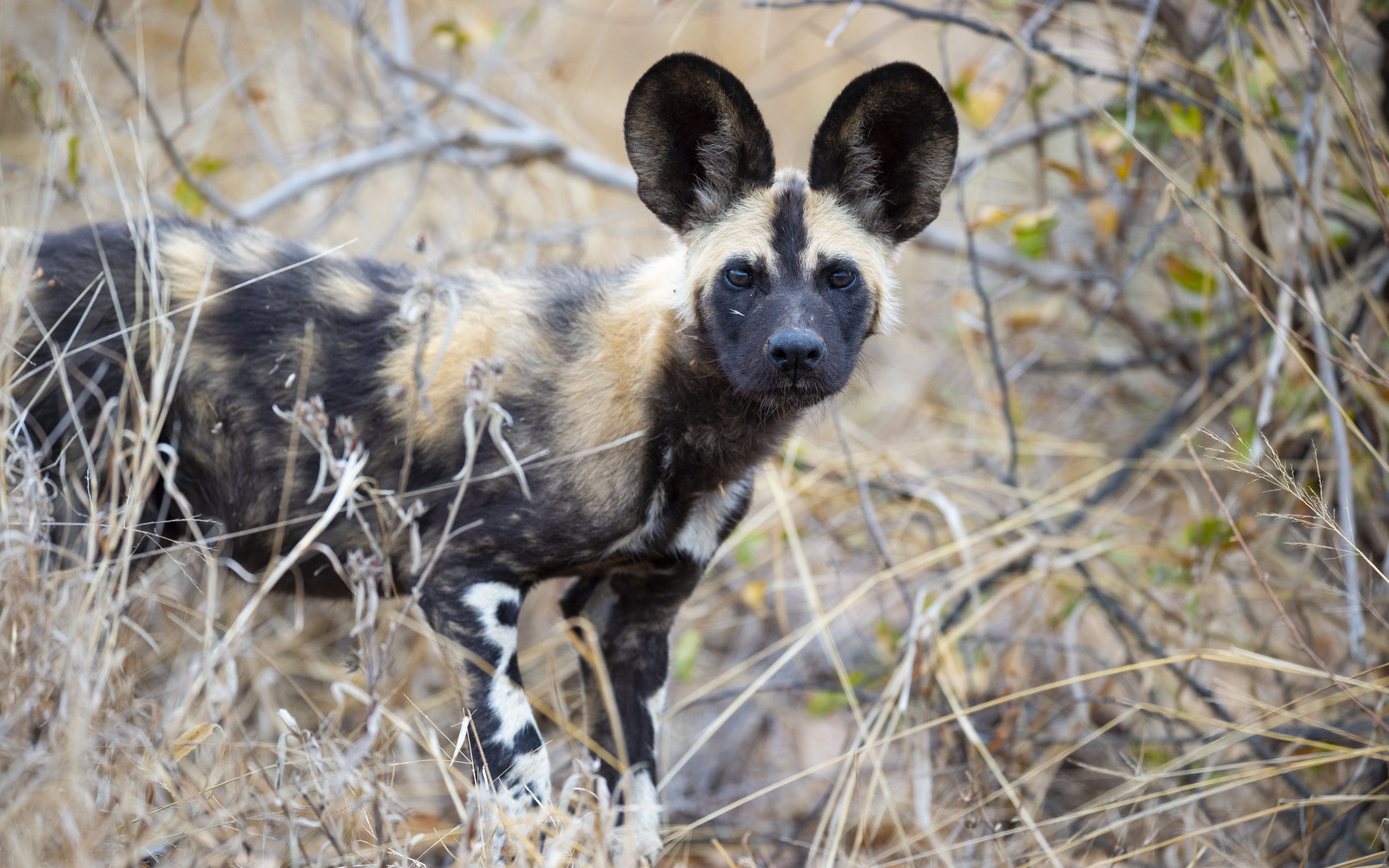
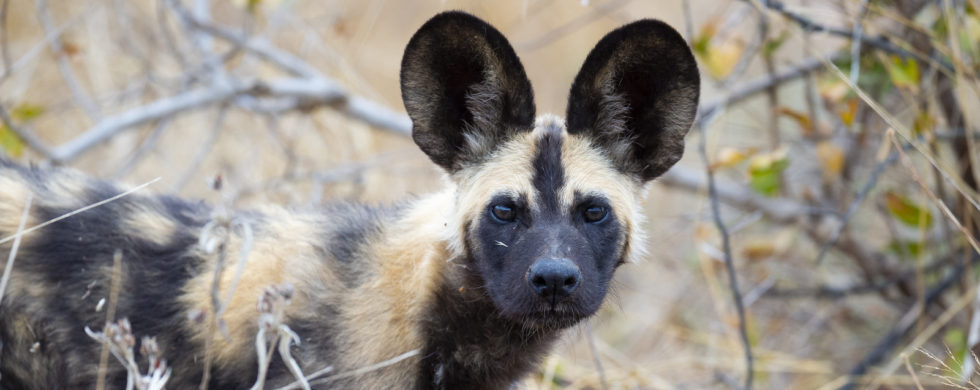
One of the highlights of our 2018 trip to Kruger NP (South Africa) was the magical three hours we spent with a pack of 24(ish) wild dogs. We counted 12 puppies(!) and about 12 adults in one of the largest packs I have ever seen. The pack spent most of the morning sprawled out on both sides of the road. The puppies were on one side and the adults on the other. About every 30 minutes or so, the alpha female would get up and walk over to make sure that the puppies were doing fine. After a few visits by the female, the alpha male got up (trying to be helpful?) and went over to check on the youngins. Well, Dad got too close and woke up the pile of puppies. Chaos ensued with all sorts of yelping and clamoring and assorted mayhem. The alpha female, very annoyed, had to get up and go over and severely reprimand the whole crew. She “bit” a couple of them (in a lovingly, mother kind of way, ouch!), snapped at a few others, and eventually got them to lie back down. Future monitoring visits were done by Mom…..
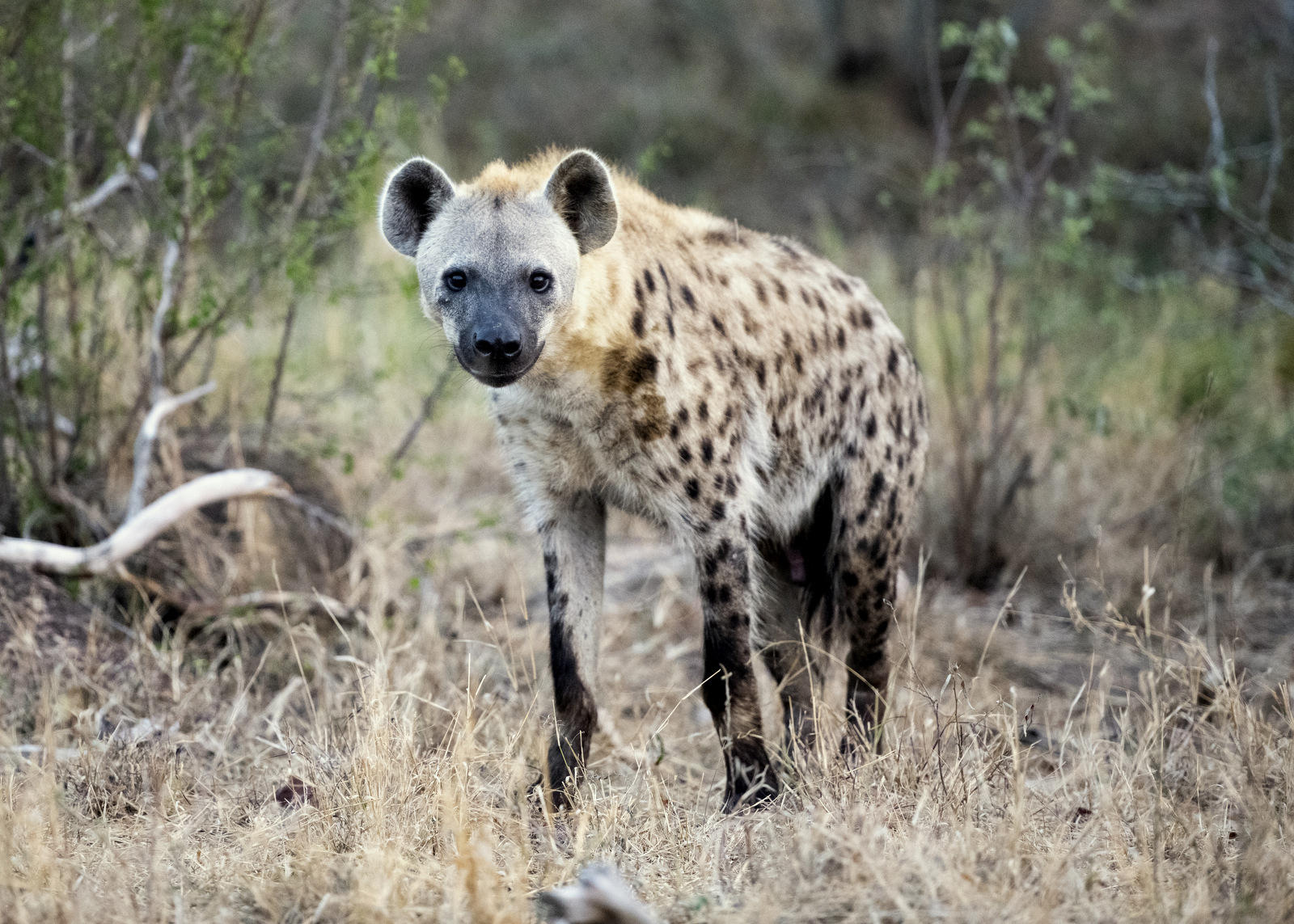
NOT a Wild Dog (Is a Hyena)
In case you were wondering, wild dogs are not feral domestic dogs that live in Africa. Wild dogs, also known as the
painted hunting dog,
painted wolf,
African hunting dog,
Cape hunting dog, or
African painted dog
have never been domesticated.
The scientific name for these canids is Lycaon pictus which means “painted wolf” in Latin. The painted hunting dog is part of the Canidae family which includes jackals, foxes, coyotes, wolves, dingoes, and domestic dogs. People often confuse wild dogs with hyenas but hyenas are bigger and more powerful and different enough that they belong in their own taxonomic family, Hyaenidae.
The theme song for a pack of wild dogs would be “We Are Family” (If animals had theme songs, that is. Which for the record, I heartily endorse. I like what the sharks have done with theirs…). The social structure of the pack is much like that of wolves but much gentler. There is a tenderness to wild dog life, unlike anything I have ever seen. Like other pack animals, there is a strict hierarchy with the pack led by an alpha breeding pair. All other adults are subordinate to this couple. Only the alpha female will breed and can produce 10 to 12 puppies per litter — the most of any canid. However, the entire pack raises and cares for the puppies. While the puppies are small the pack will go off to hunt while some adults stay behind to protect the puppies in the den. After a successful hunt, the adults will return and regurgitate food to feed both the puppies AND the “babysitters.” When the pups are old enough to travel they will be escorted to a kill site and they are always the first to feed before any of the adults, even those that participated in the hunt. If an adult becomes ill, injured or elderly, and is unable to hunt, the other dogs will share food and take care of the ailing member. It is reported that the alpha female of a pack in Botswana lost one of her forelegs during a hunt. Normally, this would be a death sentence for a predator. Not for a wild dog — she remained the alpha female for a few more years continuing to breed and raise pups while being taken care of by the pack. (source)
Wild dogs are so team-oriented that they vote on whether to go on a hunt. Yes, really.
So how in the heck does that work?? Well, if a dog wants the team to get going to look for a meal s/he can sneeze to rally the pack to get going. However, voting is weighted depending on rank. If an alpha dog sneezes then only about three other “yea” votes are needed to launch a hunt. If a lower-ranked dog kicked off the voting, a hunt would not start unless about ten other sneezes were counted. (Source)
Wow, that is some bad-ass-African-plains-wild-dog democracy right there — definitely nothing to sneeze at. (the crowd moans…)
Until next month….m
Nikon D4S, Nikon 600mm, f/4, 1/500 sec, ISO 1000, EV +1.0
Jan
31
Shot of the Month – January 2019
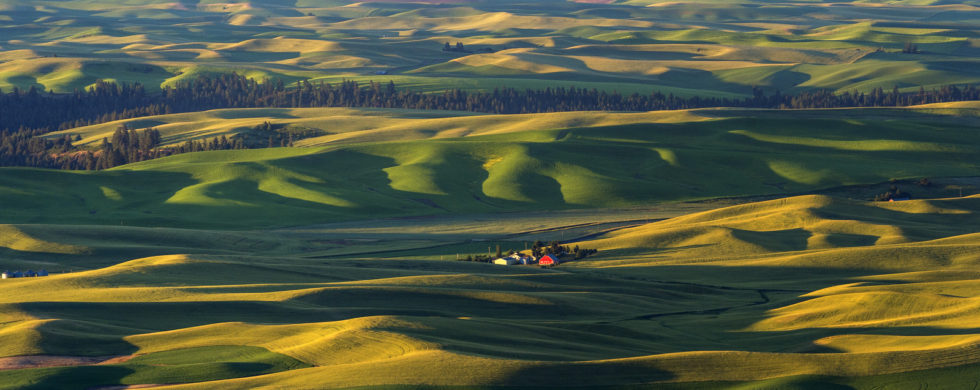
If you are looking for a Picture Palooza, visit the Palouse. Any other questions?
(Many hands shoot into the air…)
Alright, calm down. In modern lingo “palooza” implies an “Excessive, plethora of word modifying the type of ‘palooza'” (Source). Clear as mud, right? An example will help. A Pizza Palooza, for example, would be a wild, delicious pizza party with a seemingly endless supply and variety of the tasty treat. Mmmmn. A landscape photographer visiting the Palouse would similarly experience a Picture Palooza — an opportunity to take a mind-blowing number and variety of photographs.
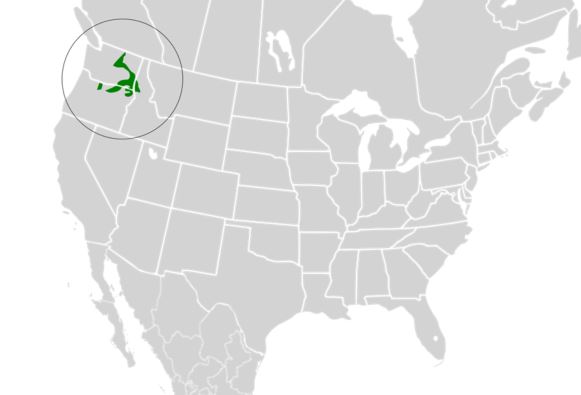
Ehh, what or where is a Palouse? The Palouse is a unique region of the Pacific Northwest that takes in parts of north central Idaho, southeastern Washington, and parts of northeast Oregon. It also happens to be one of the most fertile and productive farming regions of the world. The area is a major producer of wheat, barley, peas, lentils, garbanzos, bluegrass, and some oil seed crops like mustard and canola. The Palouse is the world’s leader in the production of soft white winter wheat and the region produces 95% of the world’s lentils! It is hard to find a flat spot in the Palouse – the roughly 4,000 sq mile area is covered in rolling hills, looking like a richly colored, textured desert from the air. The hills were formed over tens of thousands of years from wind-blown dust and silt from dry regions to the south west. These loess hills (a new word for Michael) look like sand dunes from above which makes sense as they are formed in much the same way. (Source)
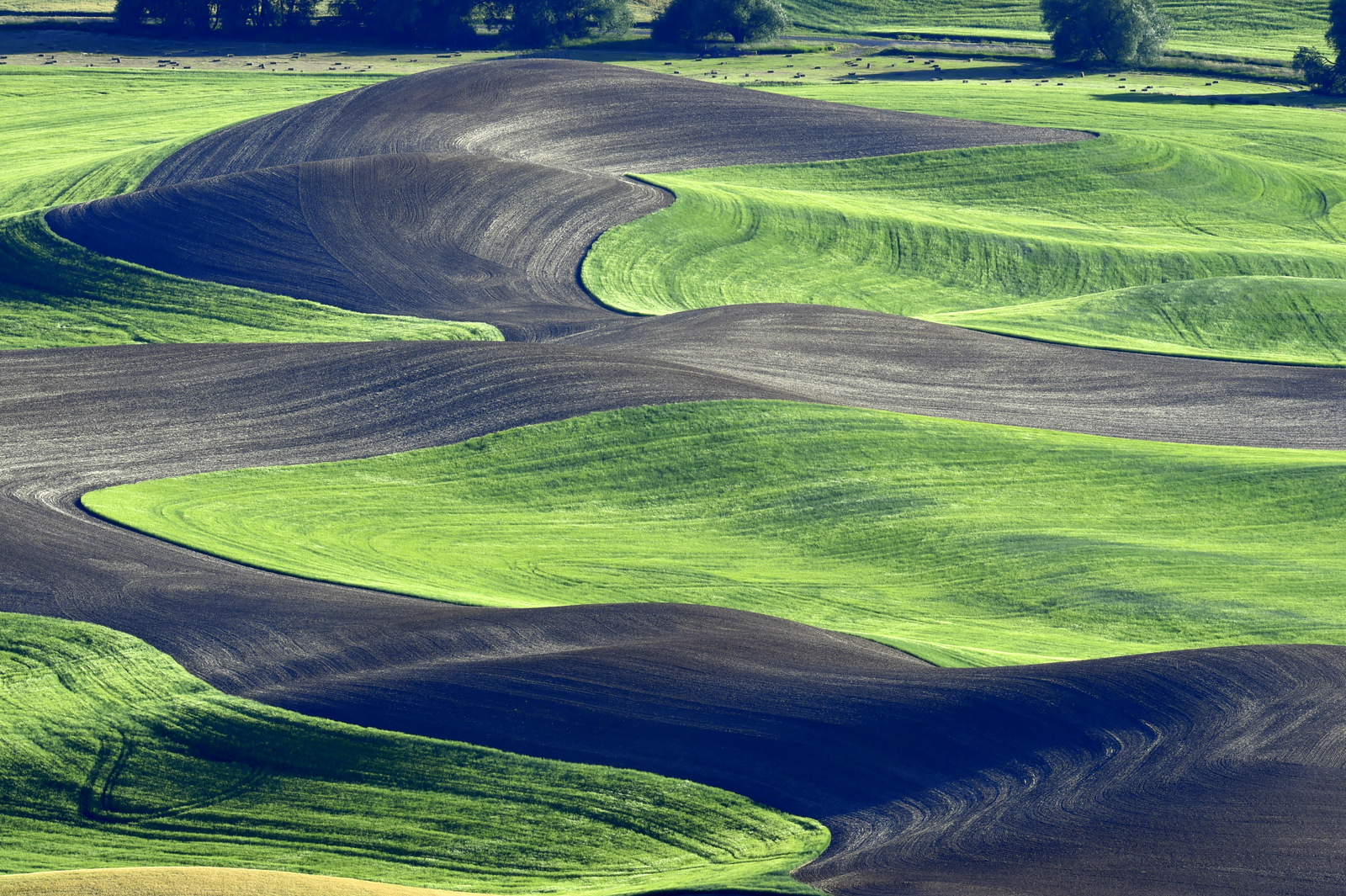
Come early in the summer and the landscape is awash in shades of green when the wheat and barley are young. Arrive later in the summer and the palette shifts to include more shades of brown as the crops are ready for harvest.
This agricultural bounty did come at a cost, however. Before cultivation began this area was part of an extensive prairie — the entire area is now farmland and only about 1% of the original prairie exists. The habitat was once rich in wildlife and birds — few remain in what is now for these creatures, a sterile landscape.
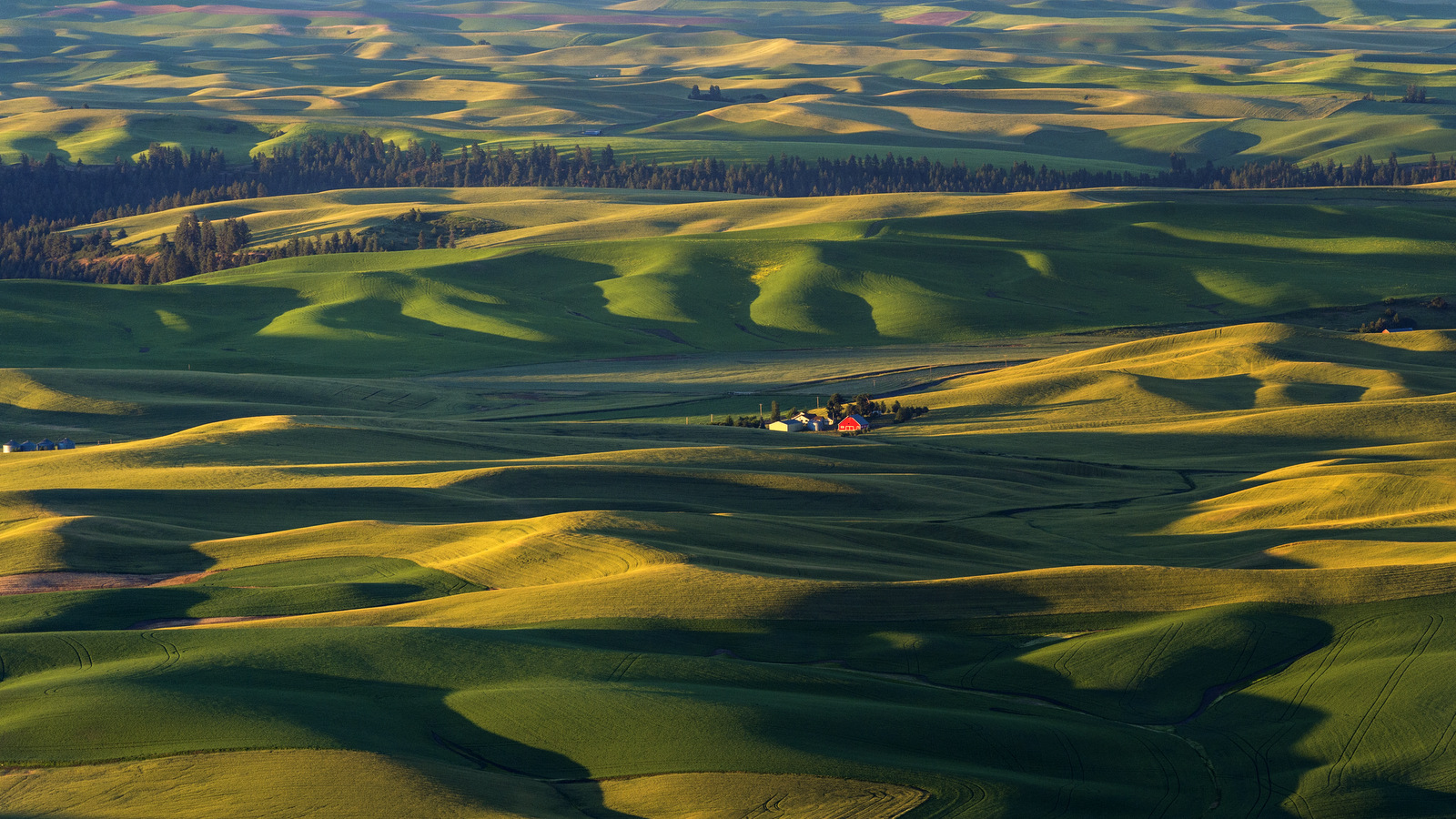
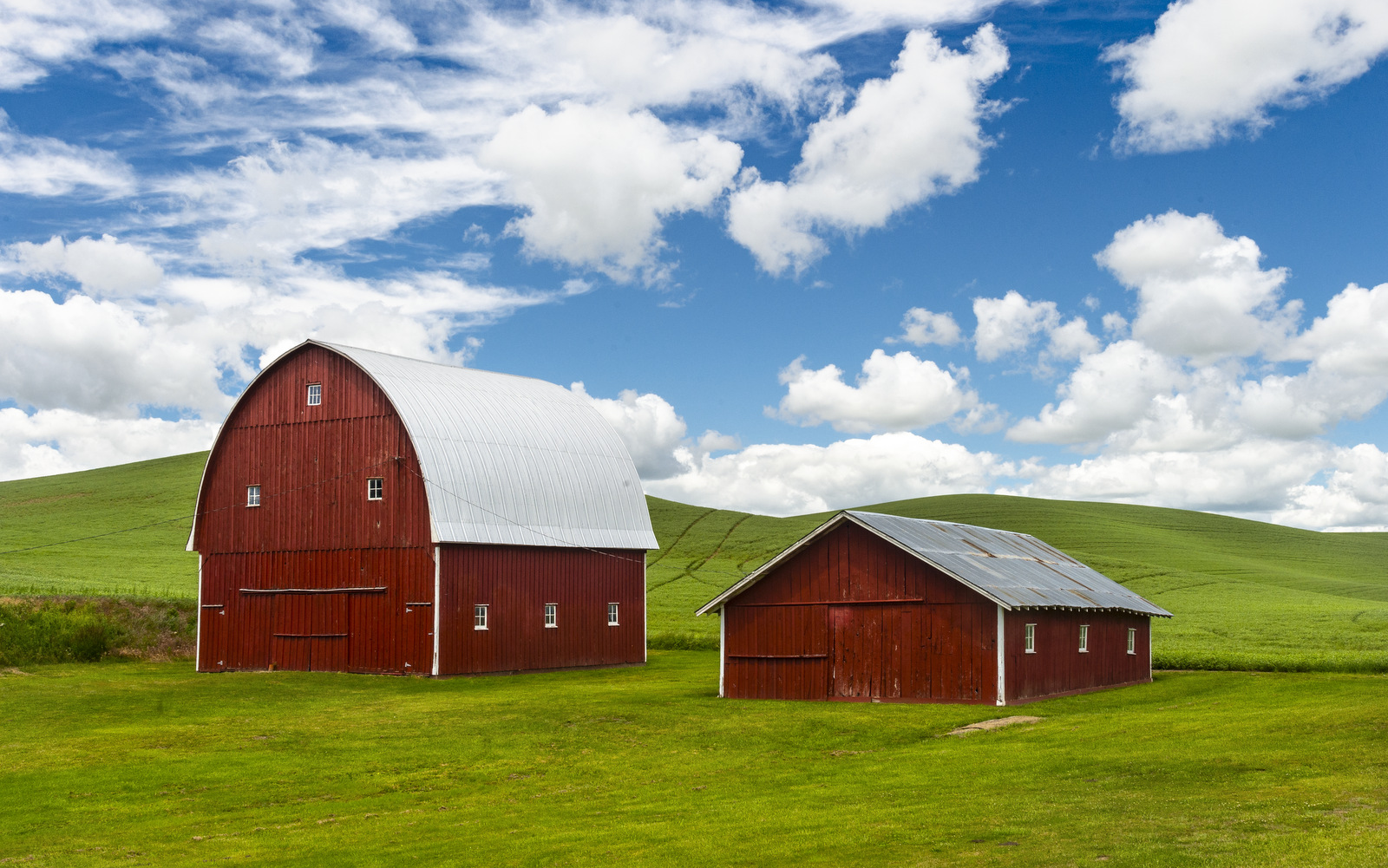
How best to photograph this unique region? A great place to start is at the top of Steptoe Butte — the summit, at 3,612 feet offers a stunning view of the rolling hills below. The best time to shoot from here is at the beginning and end of each day as the low sun produces rich colors and dramatic shadows. My red barn image above was taken from this vantage point. From here you can use your entire range of lenses. Your longest telephoto can produce fun abstracts like this:
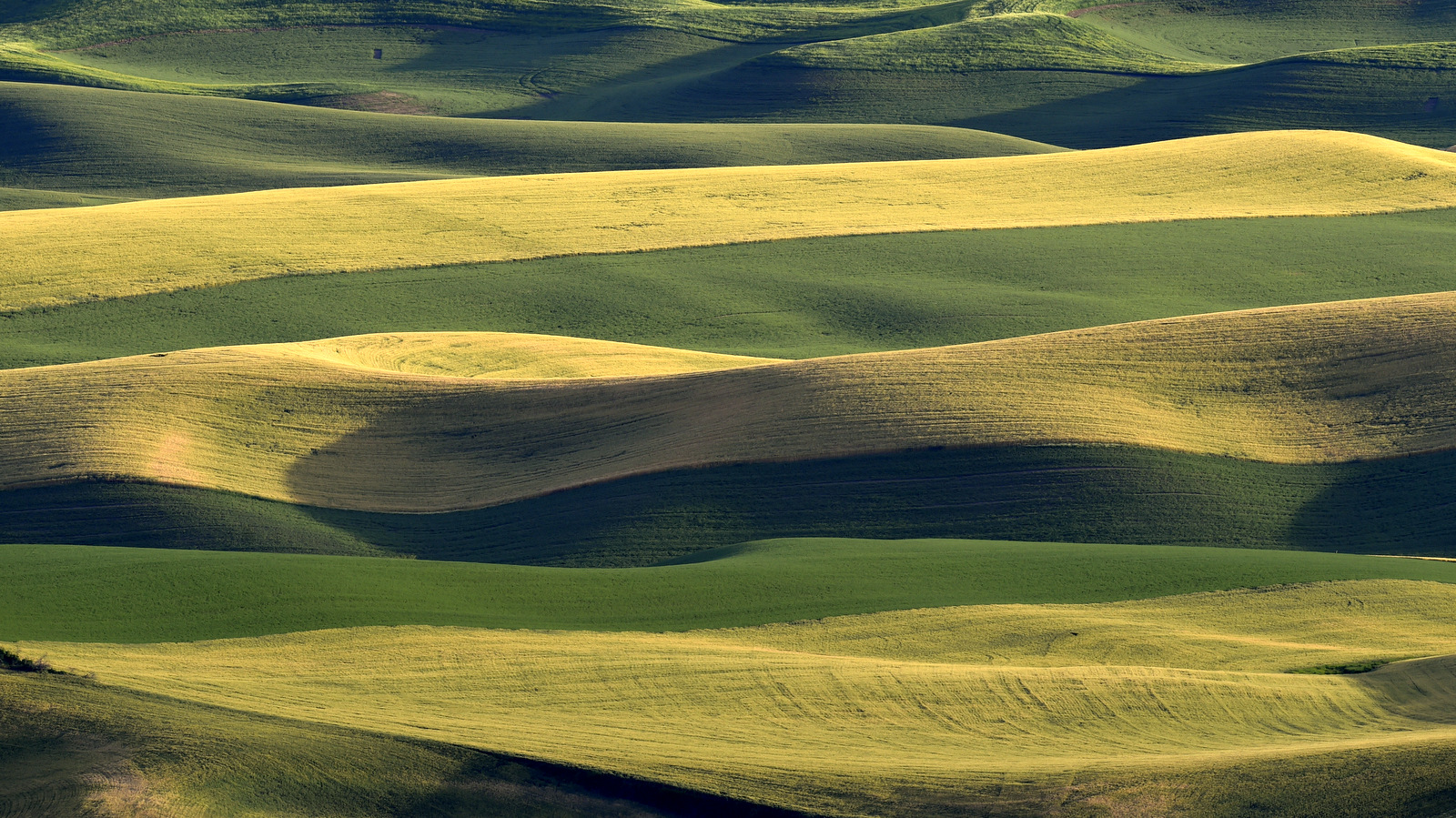
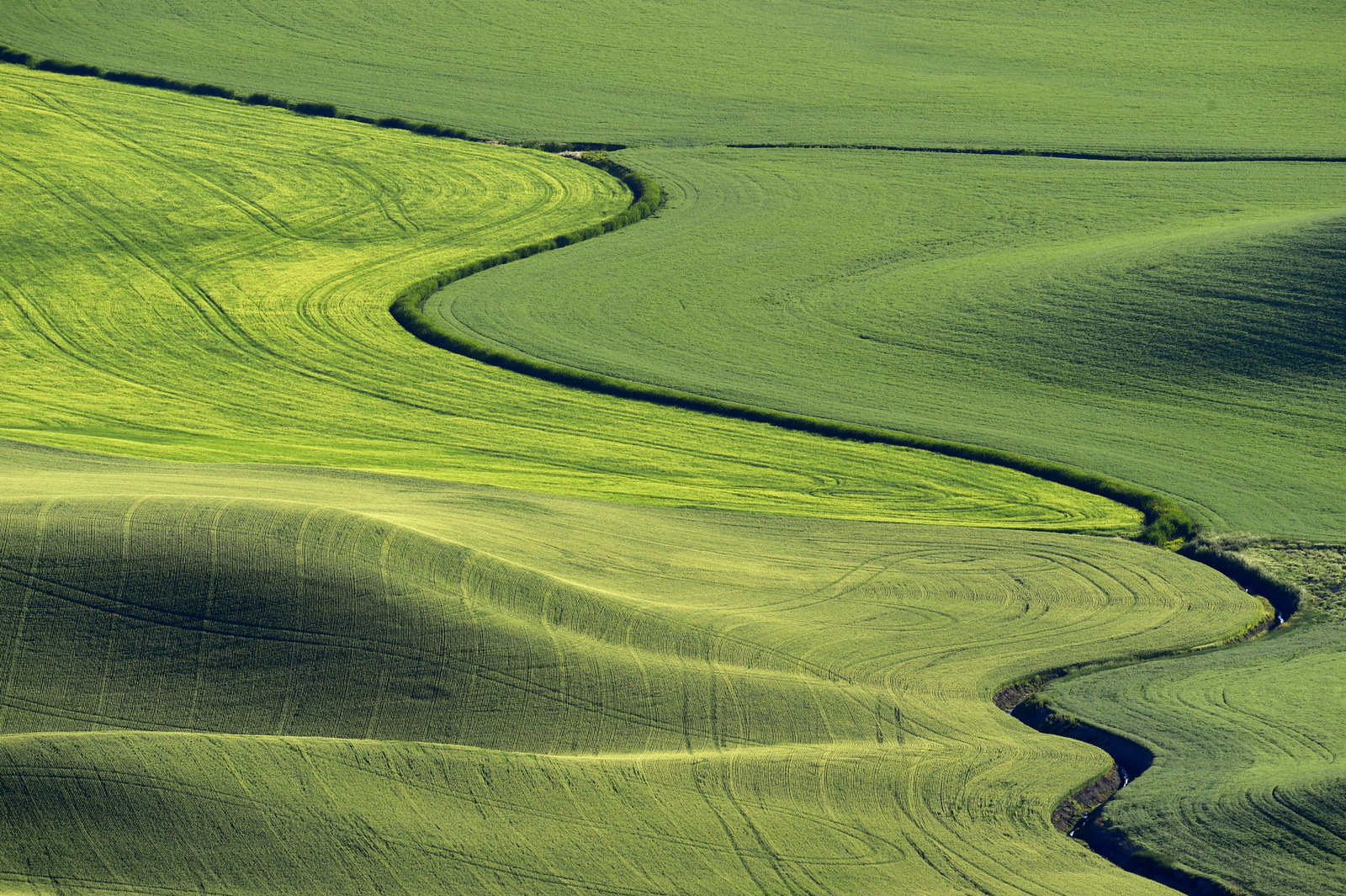
While shorter lenses can produce a more classic landscape overview like this:
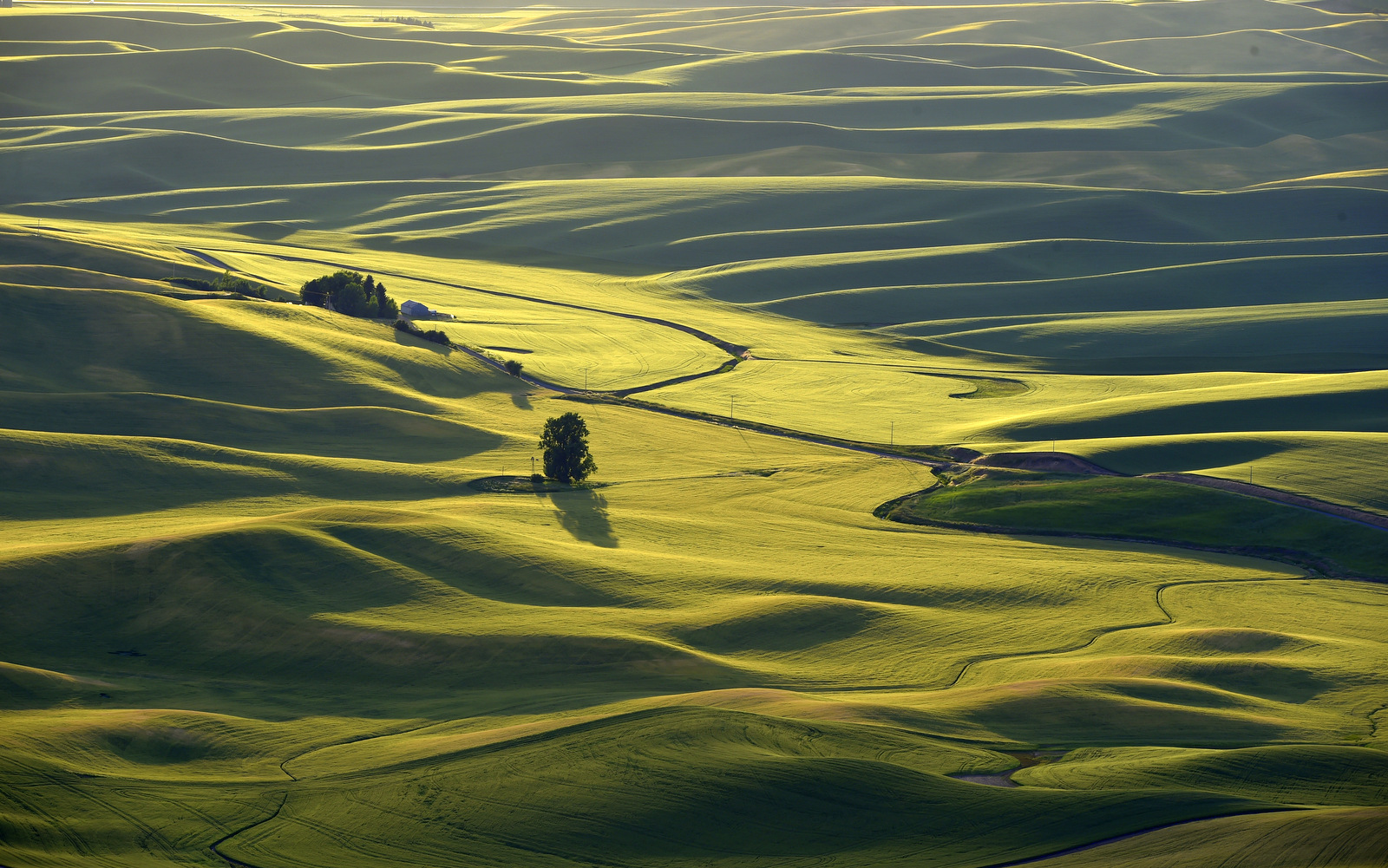
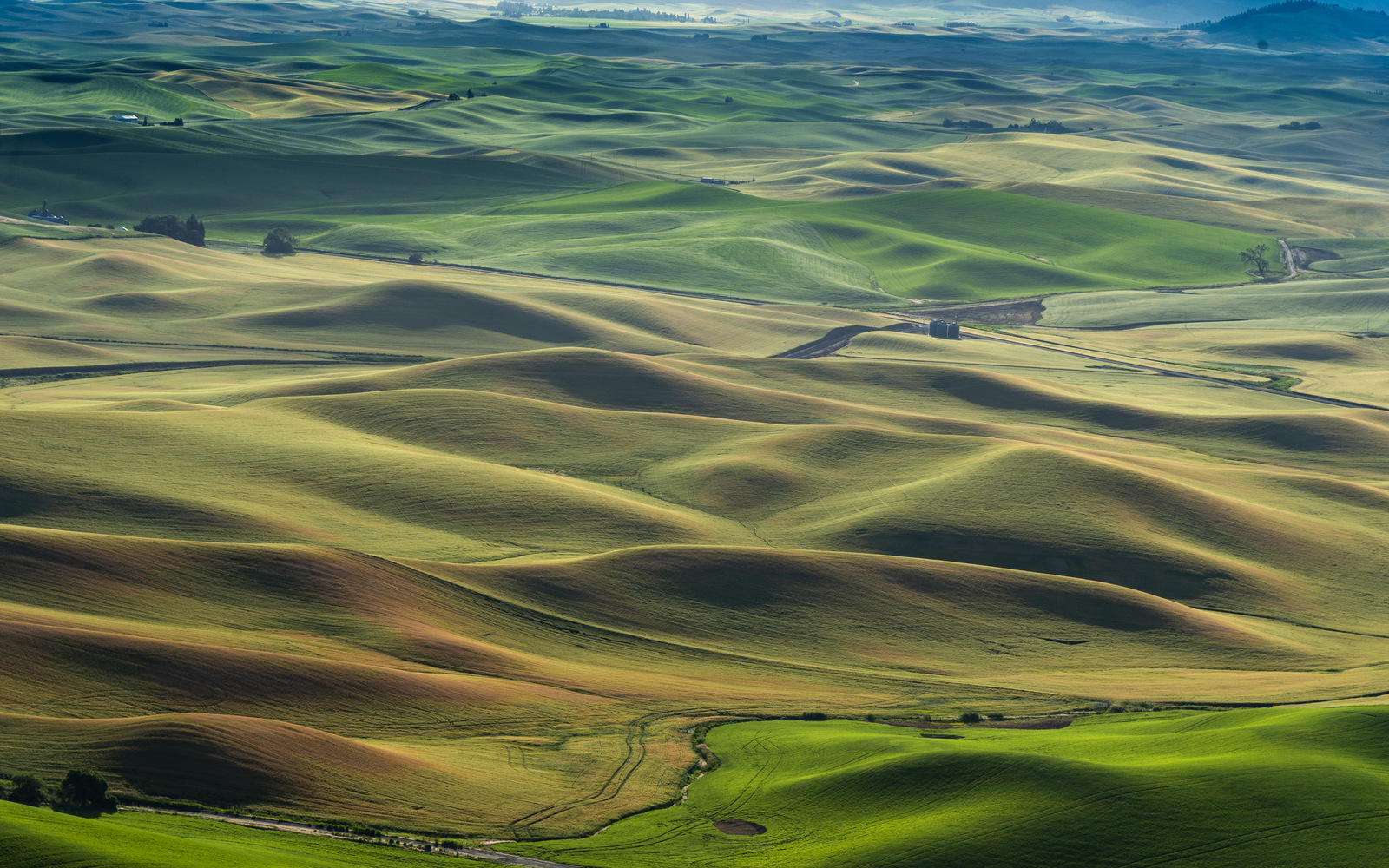
And of course, you can also shoot verticals…
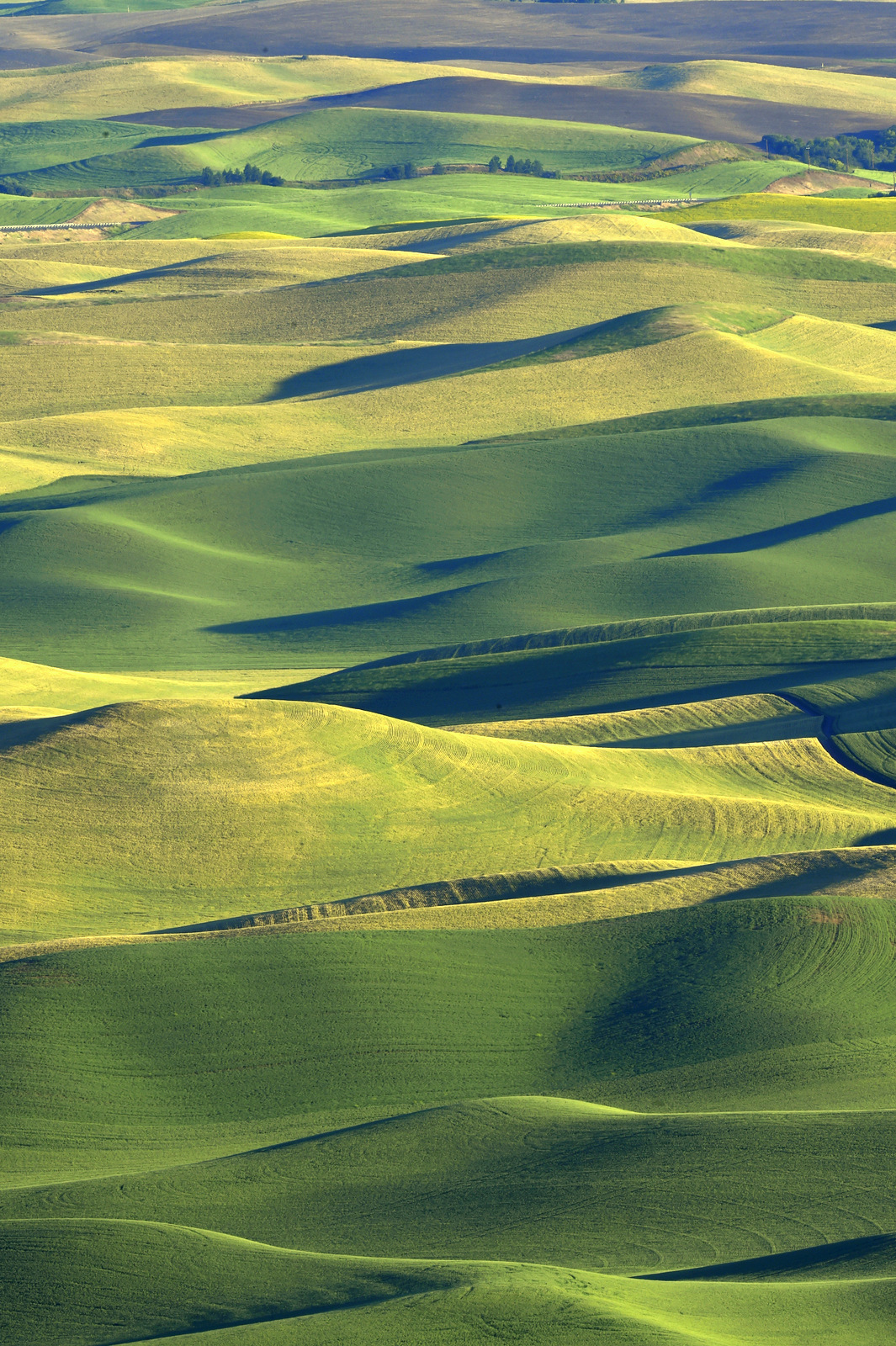
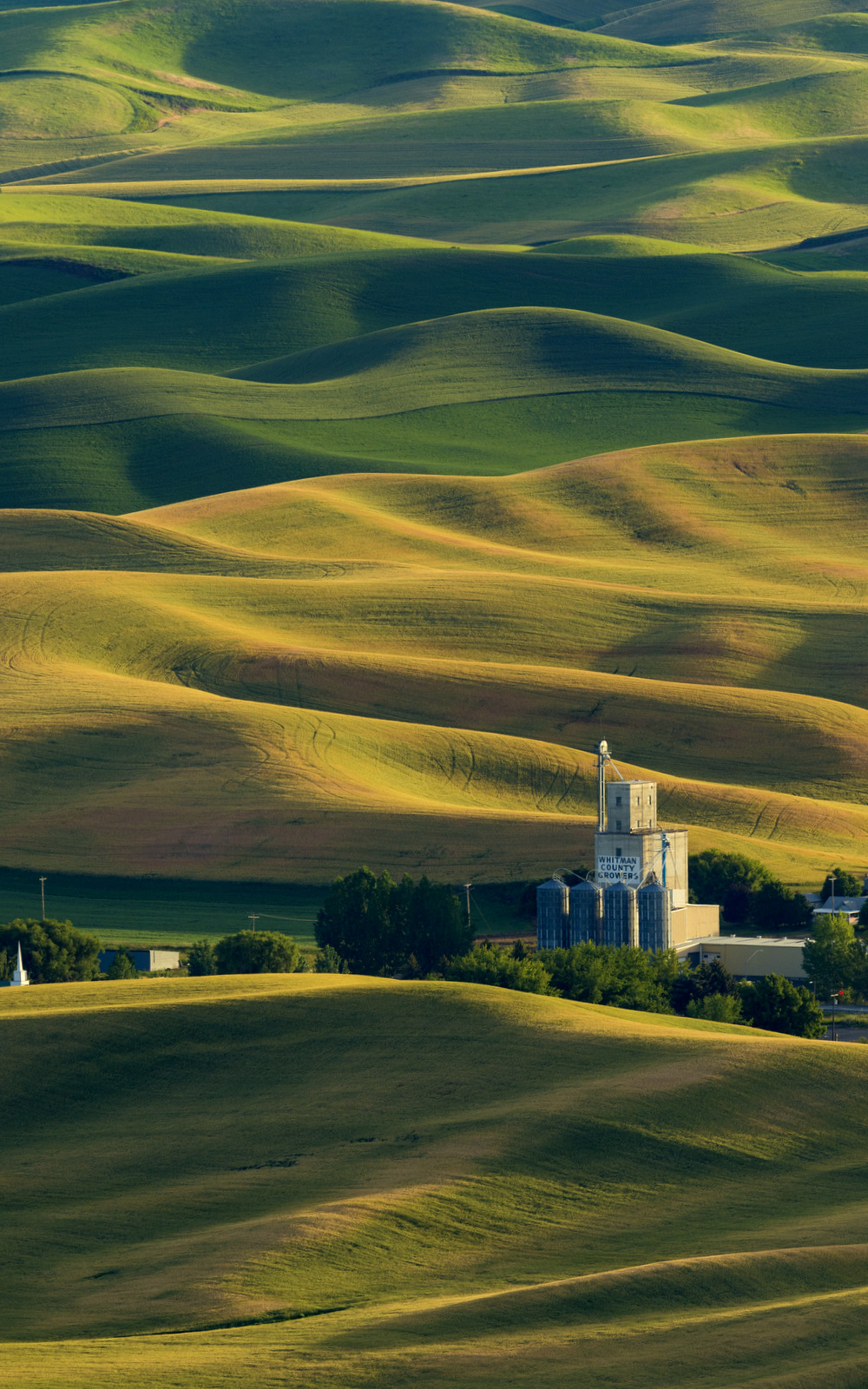
With every minute the light changes providing a living canvas to work with and there are a limitless number of compositions to explore as you experiment with different focal lengths. The hours go by quickly…
The following day I shot a closer version of my red barn image. If you look closely you can see that there are bales of hay in the field behind the farmer’s house. He must have done that work soon after I took my first image as they are not in my shot from the day before. (click on any image to see it larger!)
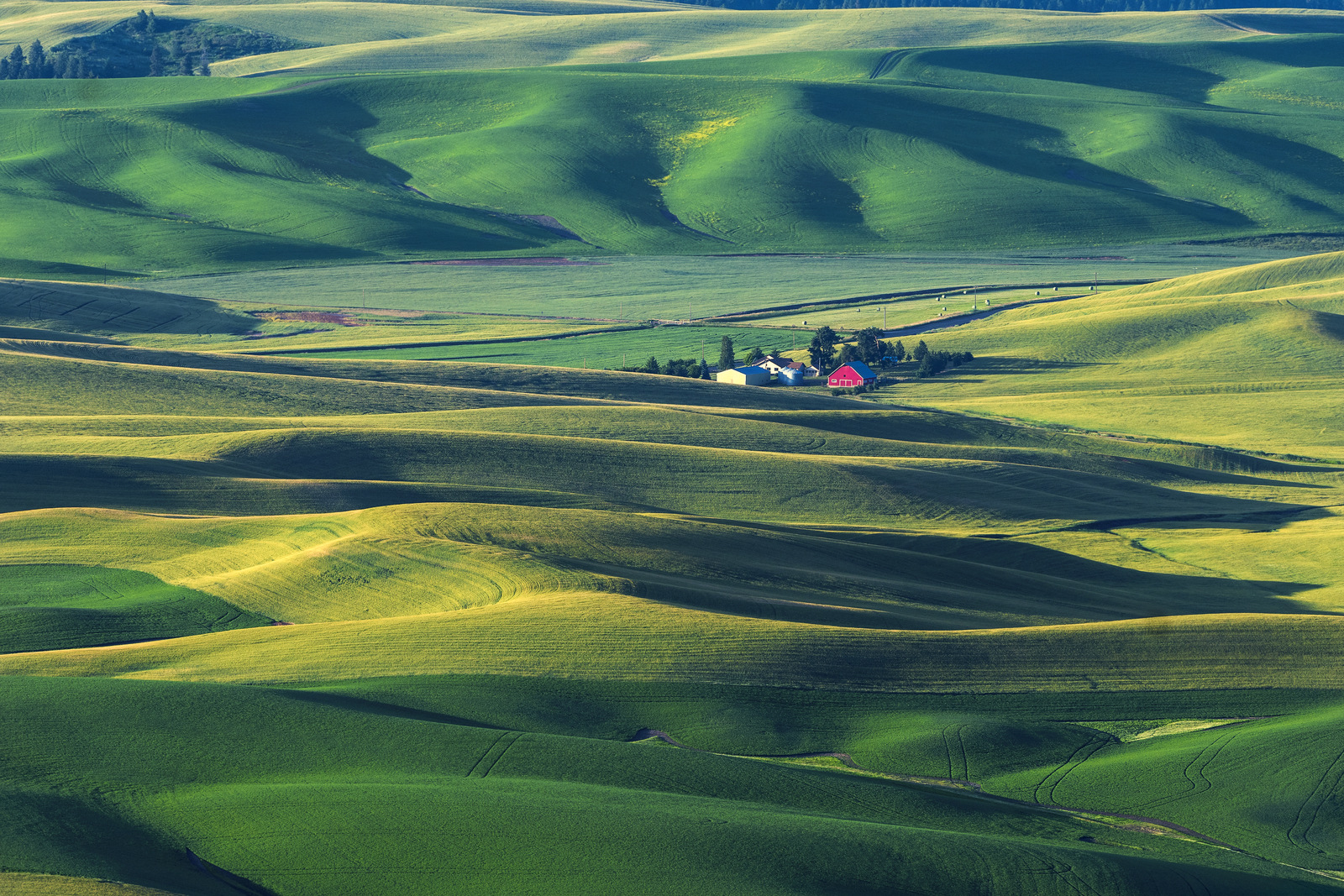
But we are not finished. Steptoe Butte is just the beginning — now it is time to descend down to the fields and explore the landscape at eye level. As one meanders along the many small dirt roads a Norman Rockwellesque scene awaits around the next bend or just over the next hillside.
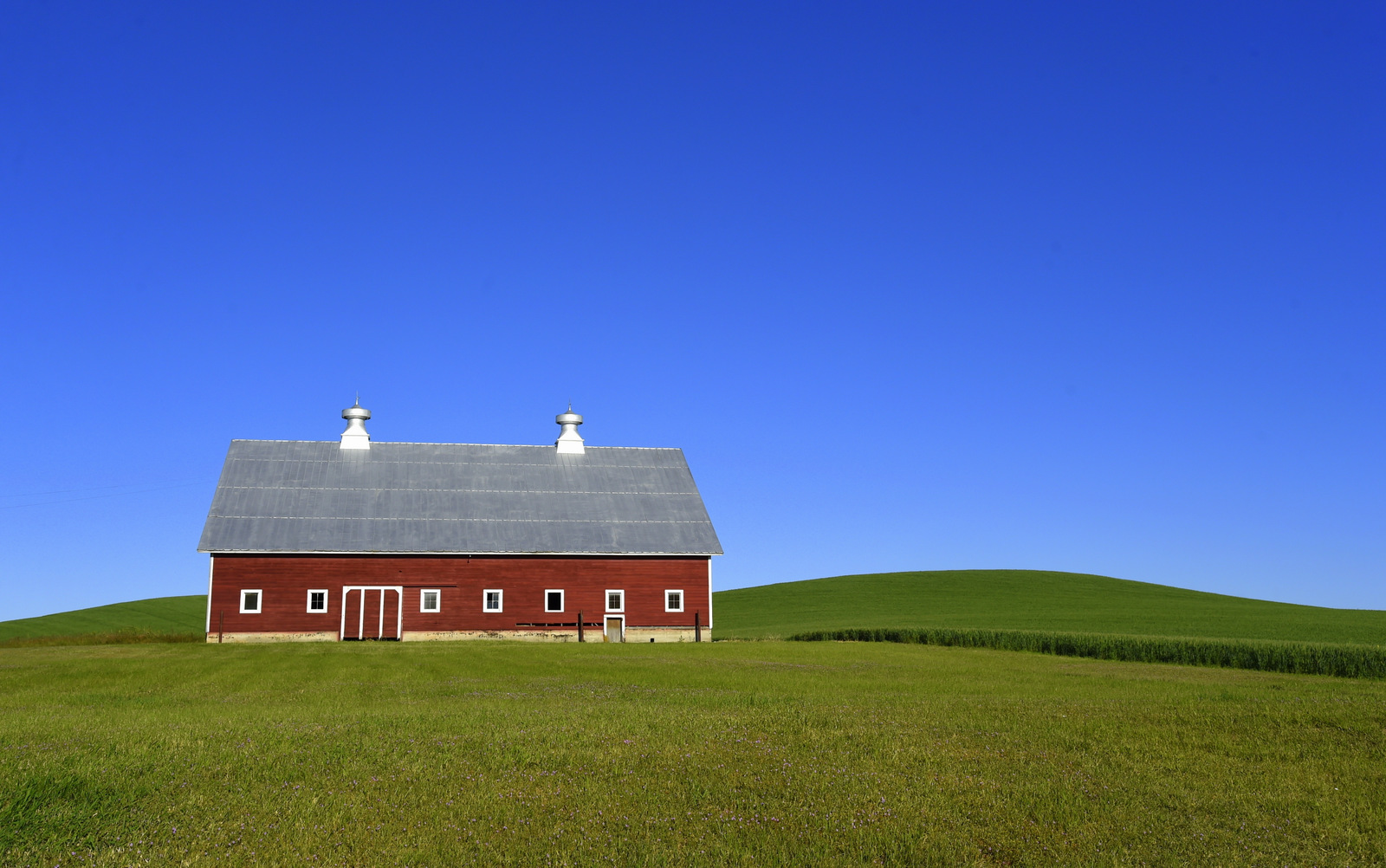
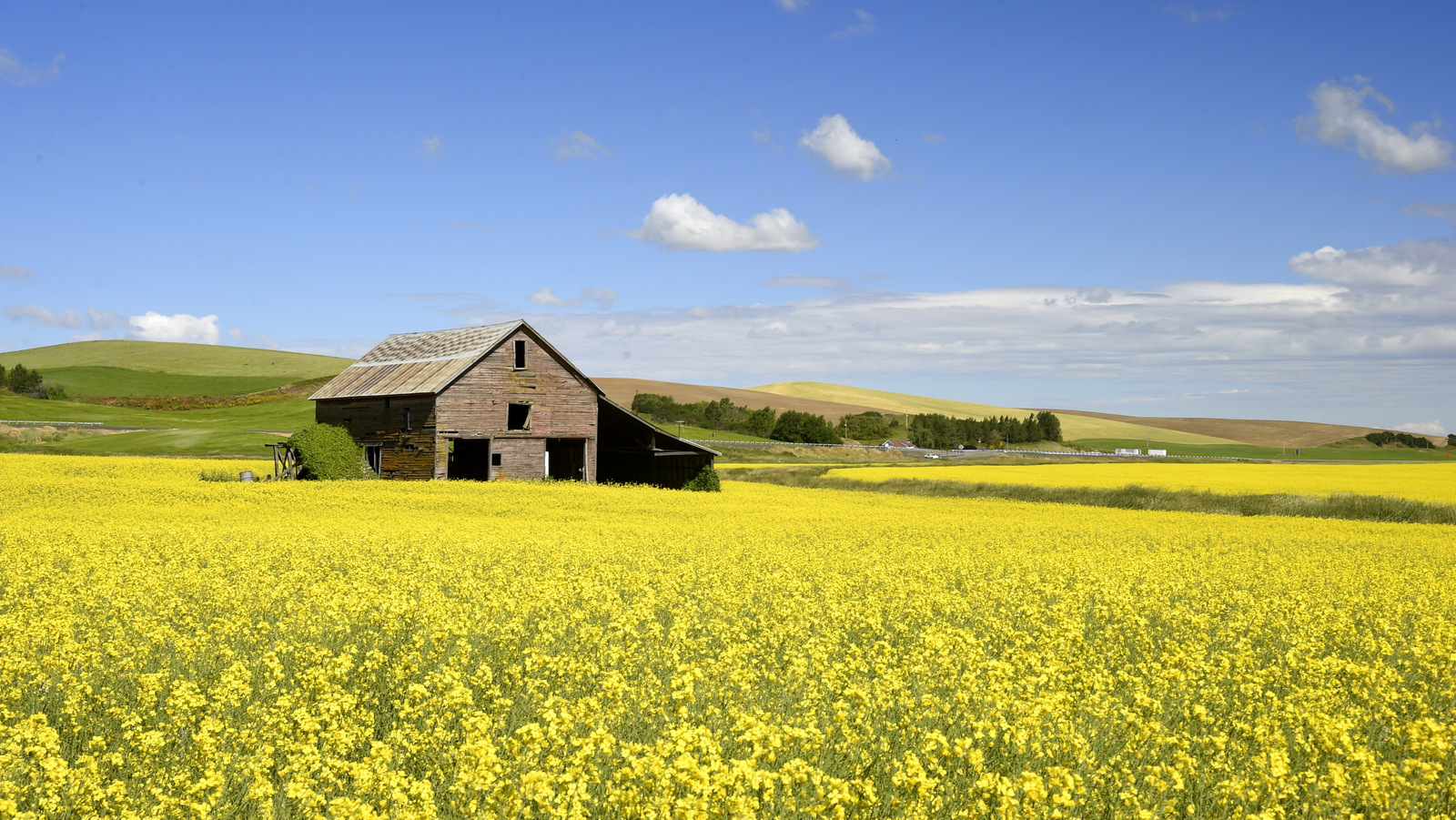
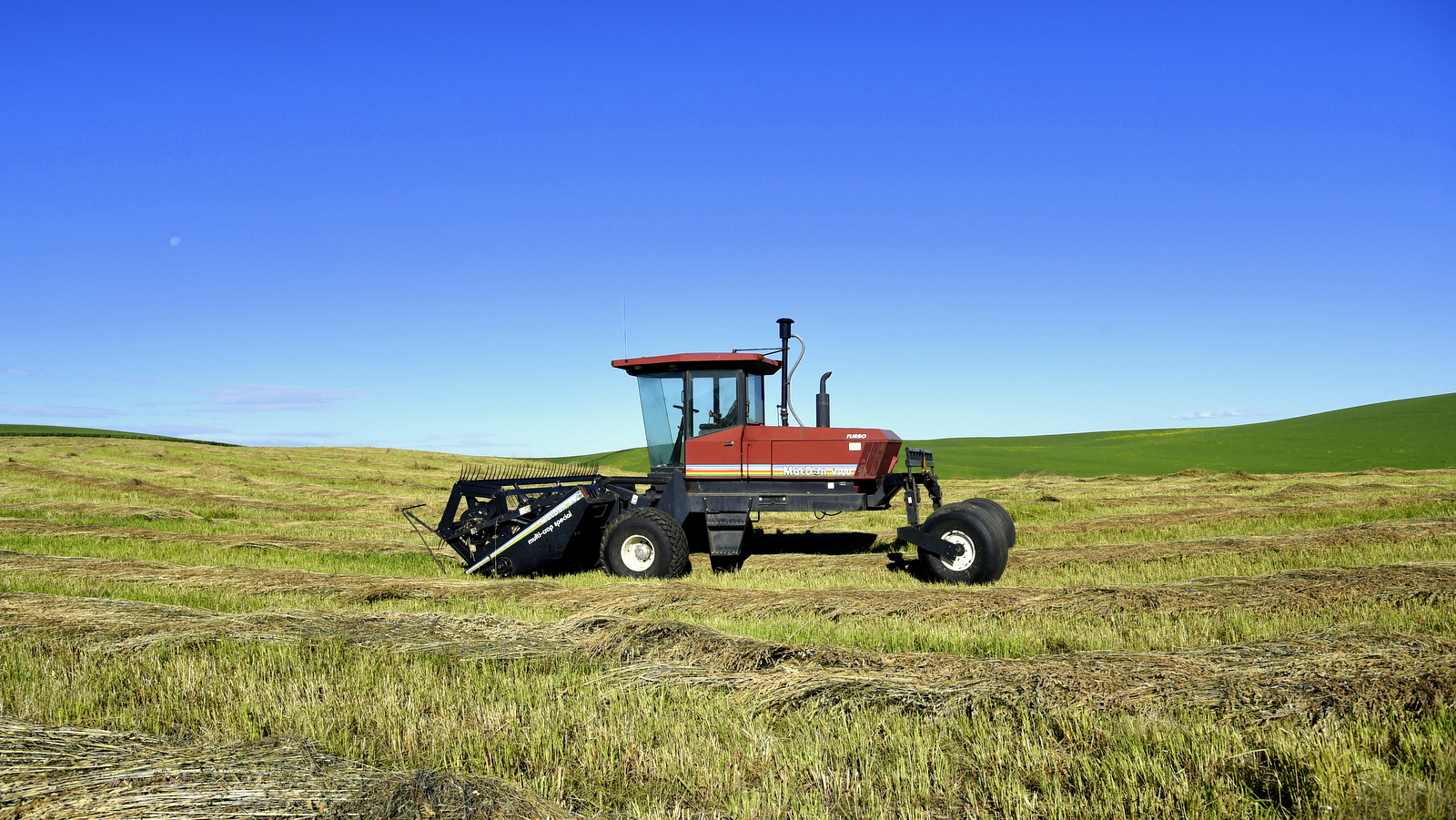
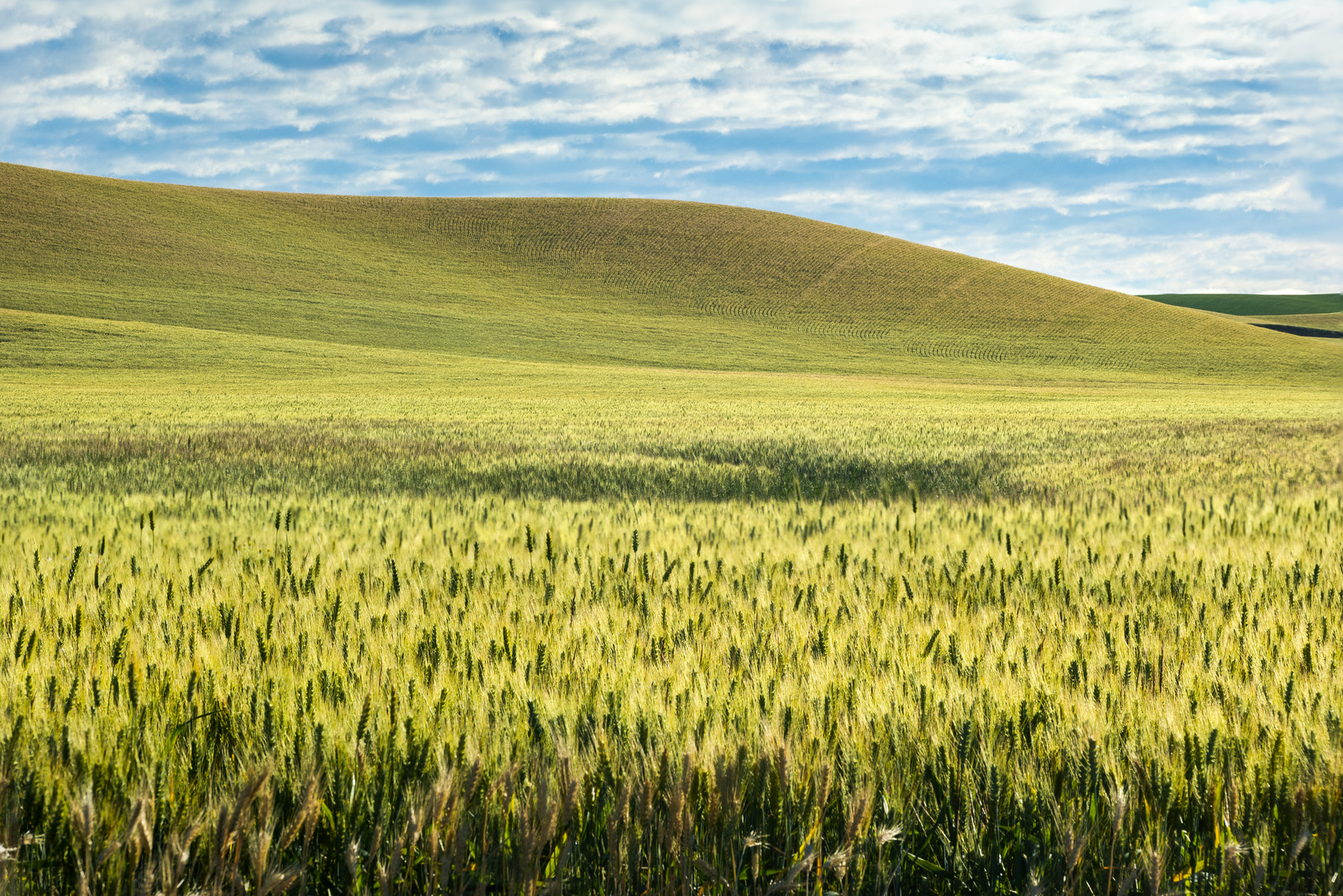
I drove to the Palouse on a Saturday and came back on a Monday so I had about two 1/2 days and one full day for shooting. Not much time but I have hundreds and hundreds of images. So many images.
Moody shots.
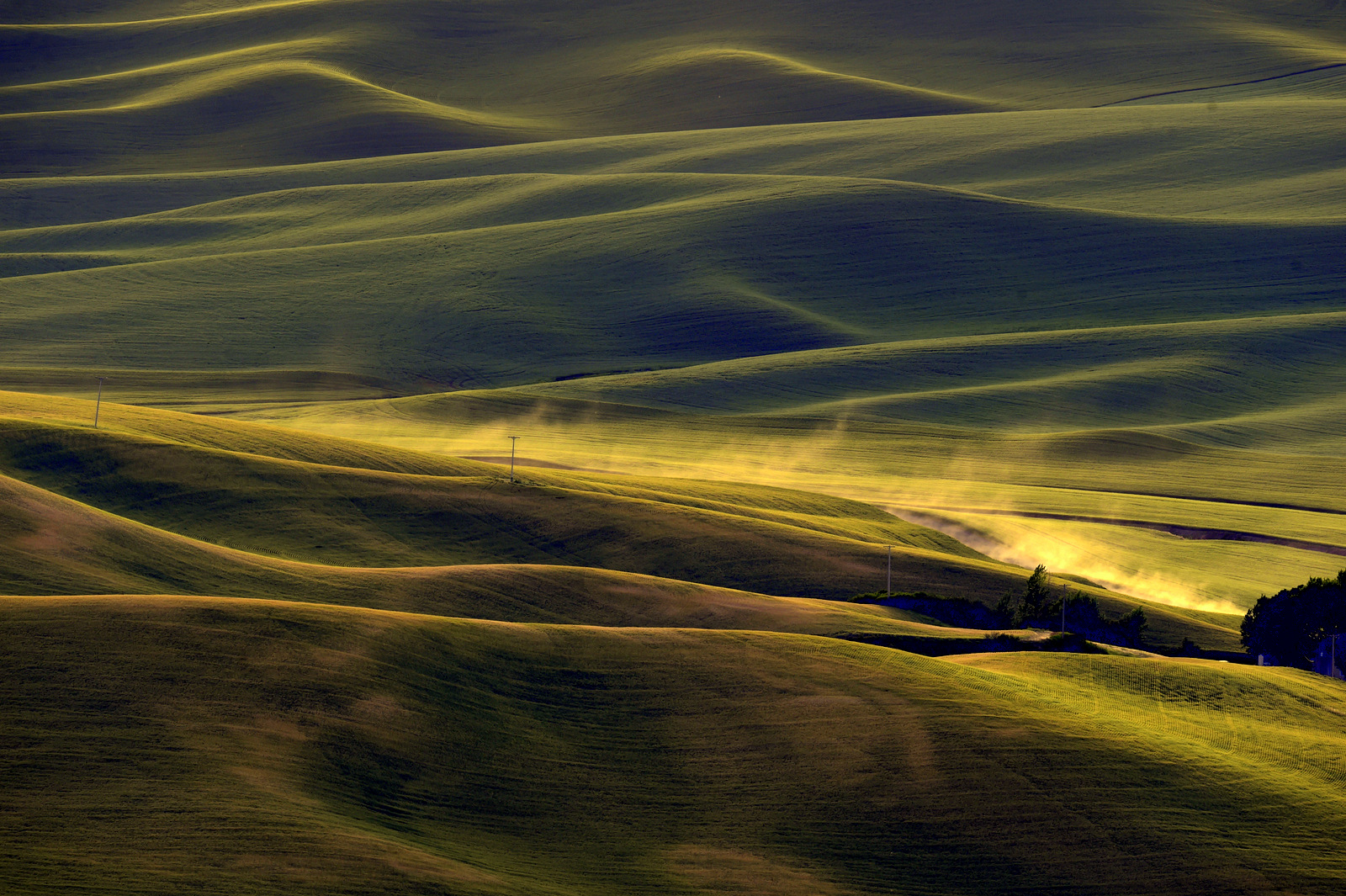
Lots of abstracts.
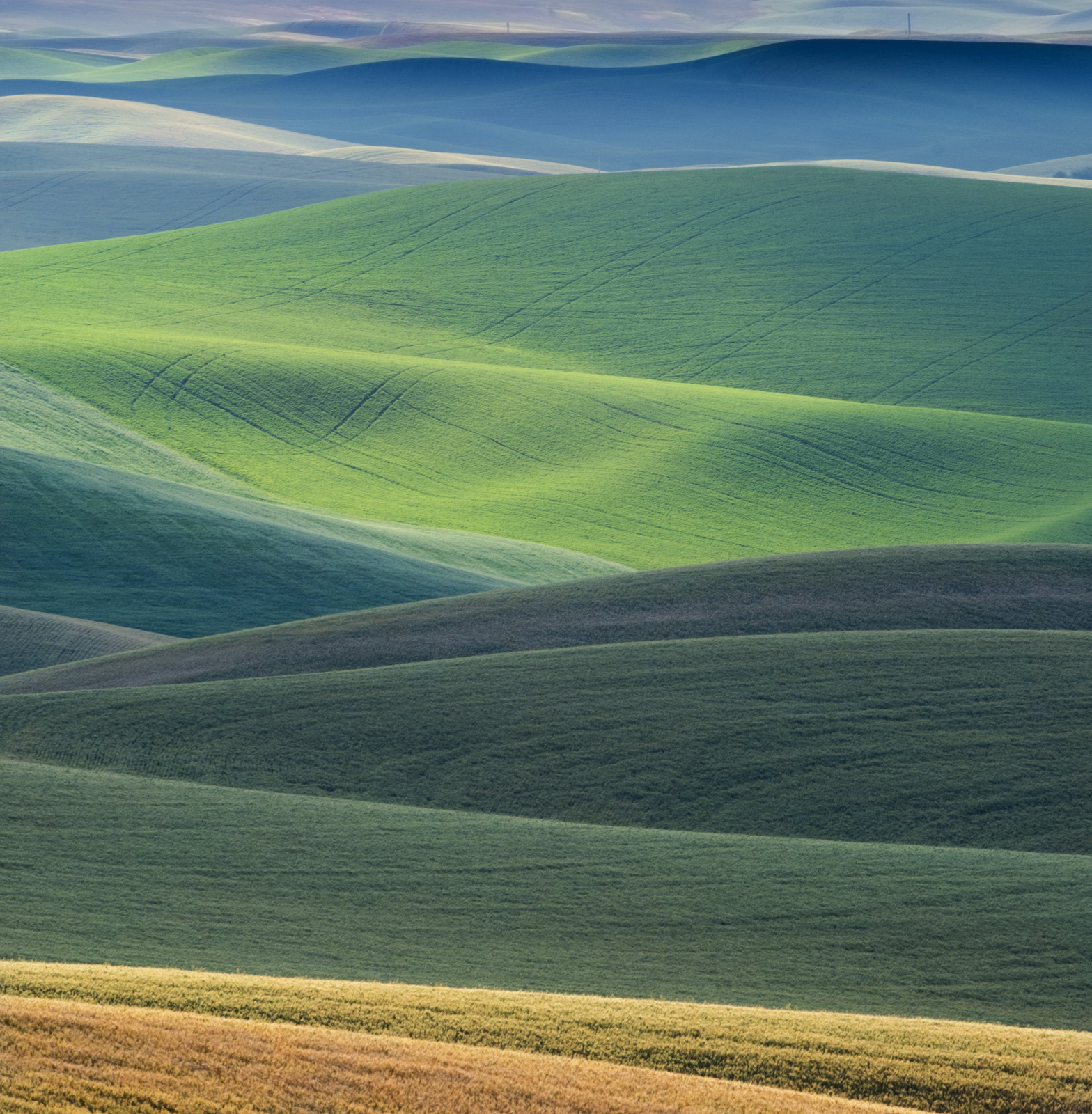
Americana moments.
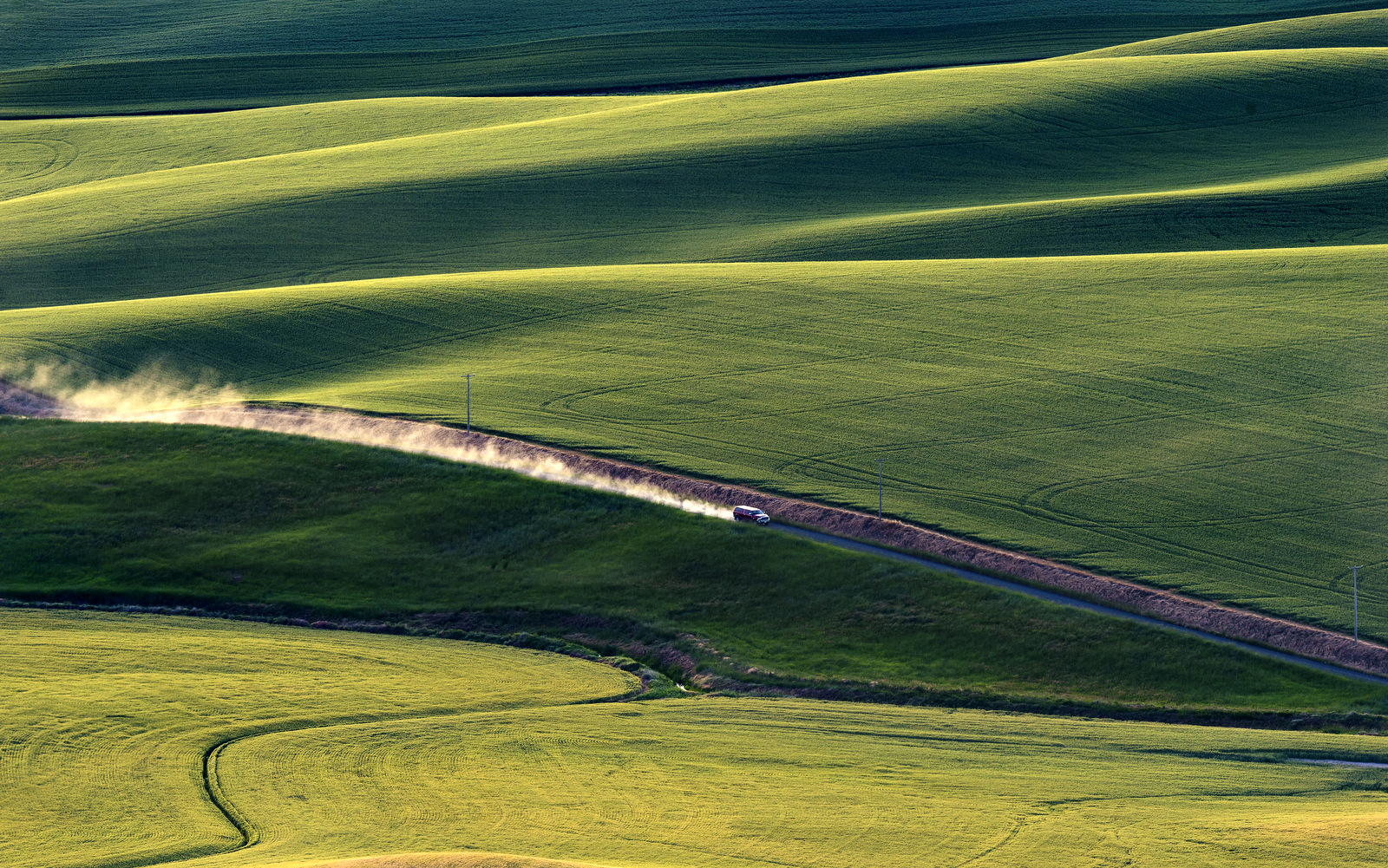
So, so many images…
Shooting at sunrise and sunset and during every time in between at the Palouse is not for the faint of heart. In early July sunrise is at about 5 am. So you will want to be at the top of Steptoe Butte by 4:00 am to catch the full show. Last light is not till about 9:30 pm. So I got about 3 hours of sleep both nights I was there and I was pretty much on the move nonstop otherwise…..
If you are inspired to visit this visual playground, with a camera or without, check out this resource:
Terri Lou’s Map
Photographer’s Map of the Palouse. It l highlights all the key spots you will want to visit. You can download the PDF map and then print it out if you prefer your maps to be of the paper variety.
Until next month…michael
Nikon D4S, Nikon 70-200mm (@200mm), f/8, 1/200 sec, ISO 400, EV -1.0
Jan
01
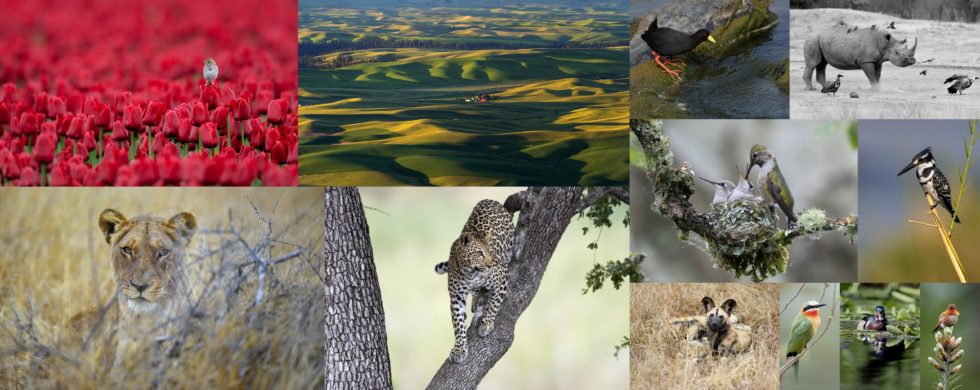
Here are a few of my favorite images from 2018. These photos are not necessarily the best images I captured this year, but are ones that I like for one reason or another and/or give a good sense of the environments that I explored in the past 12 months.
I recommend viewing the photos on the biggest screen you have — click on an image to see it larger.
Drop me a line and let me know which one(s) you like best.
In no particular order:
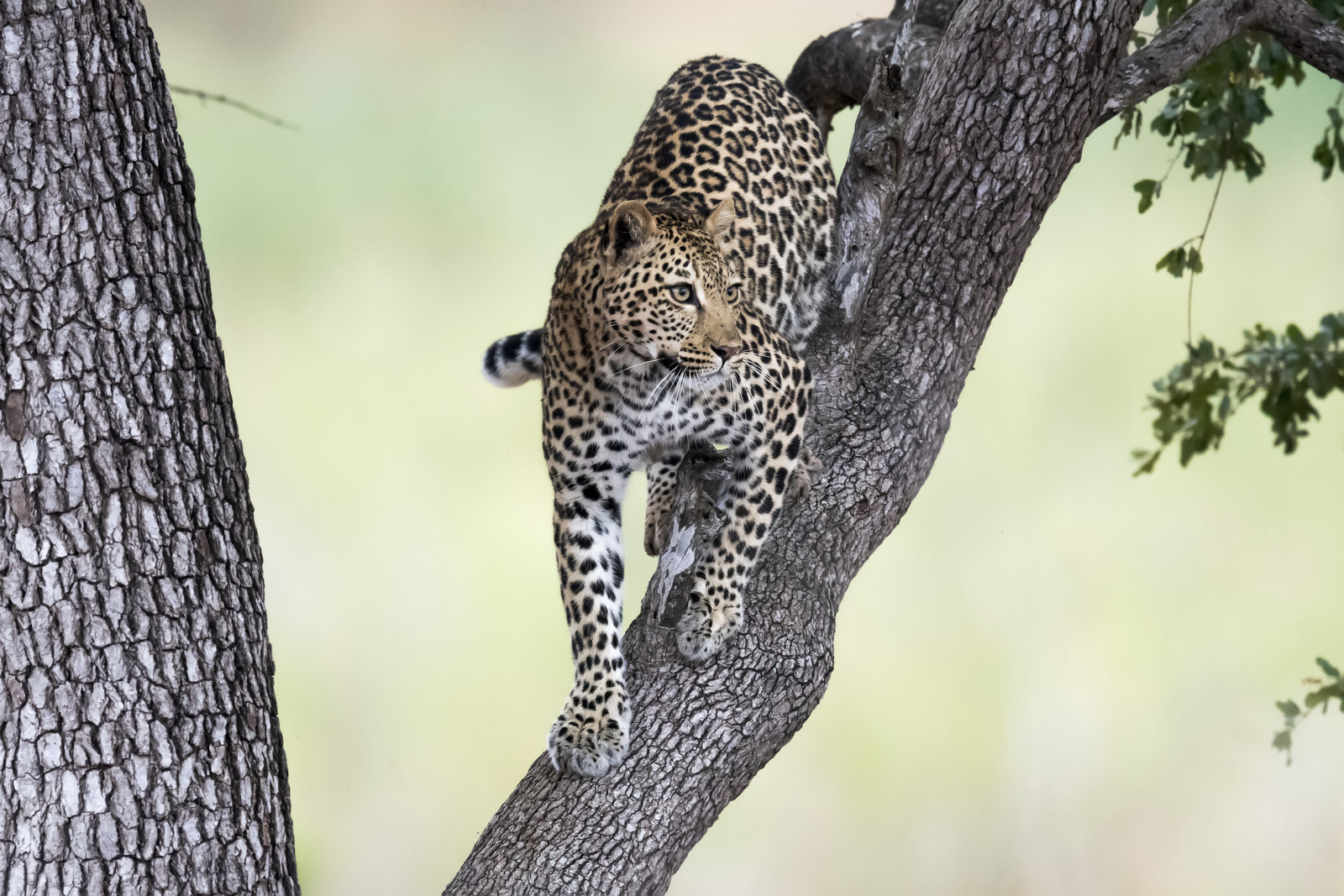
1. Leopard
Probably my favorite image from our visit to Kruger National Park. The vantage point of this shot makes it special.
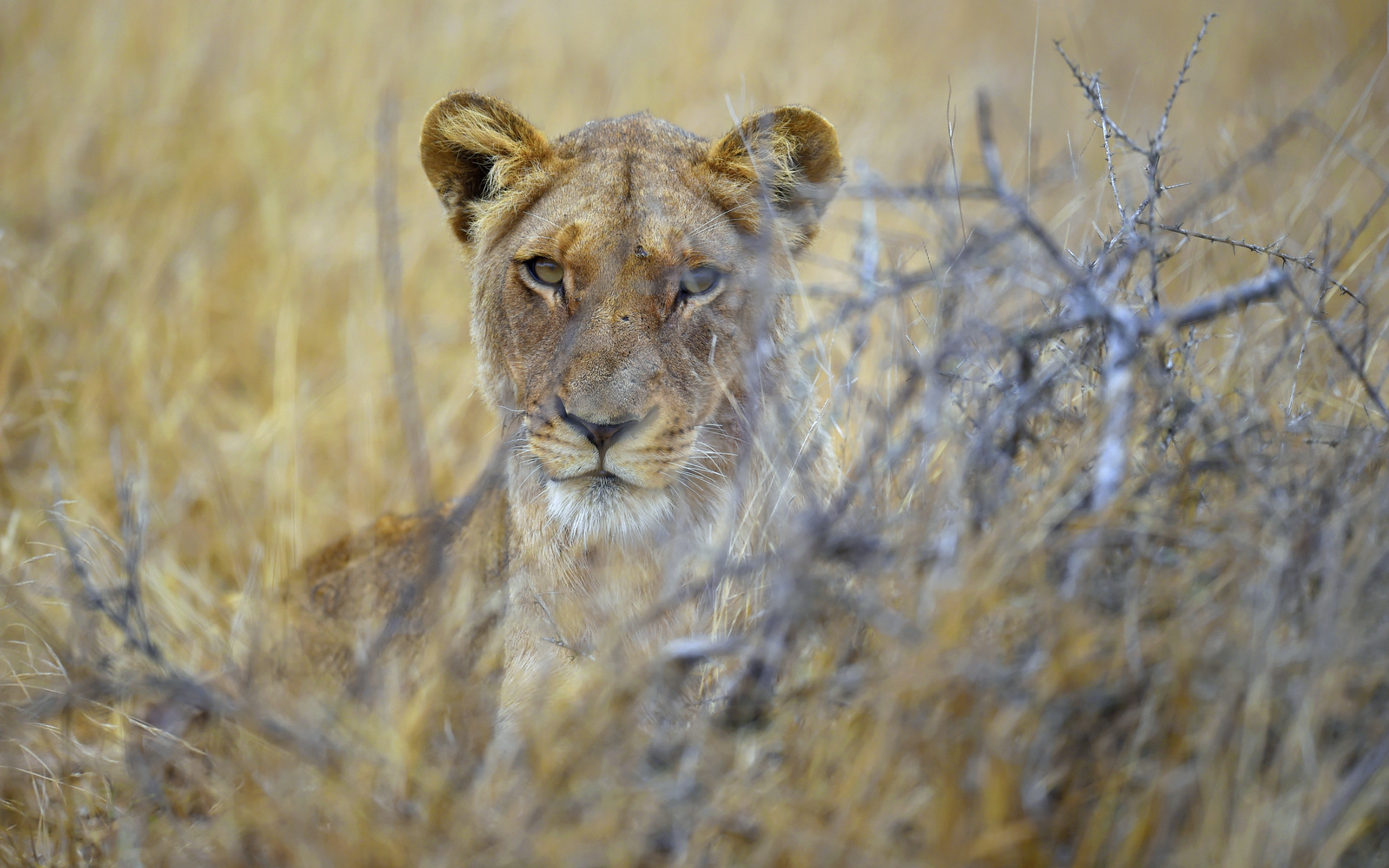
2. Lion
An ominous gaze from a female lion. Click on the image to see it larger and to get a good fright…
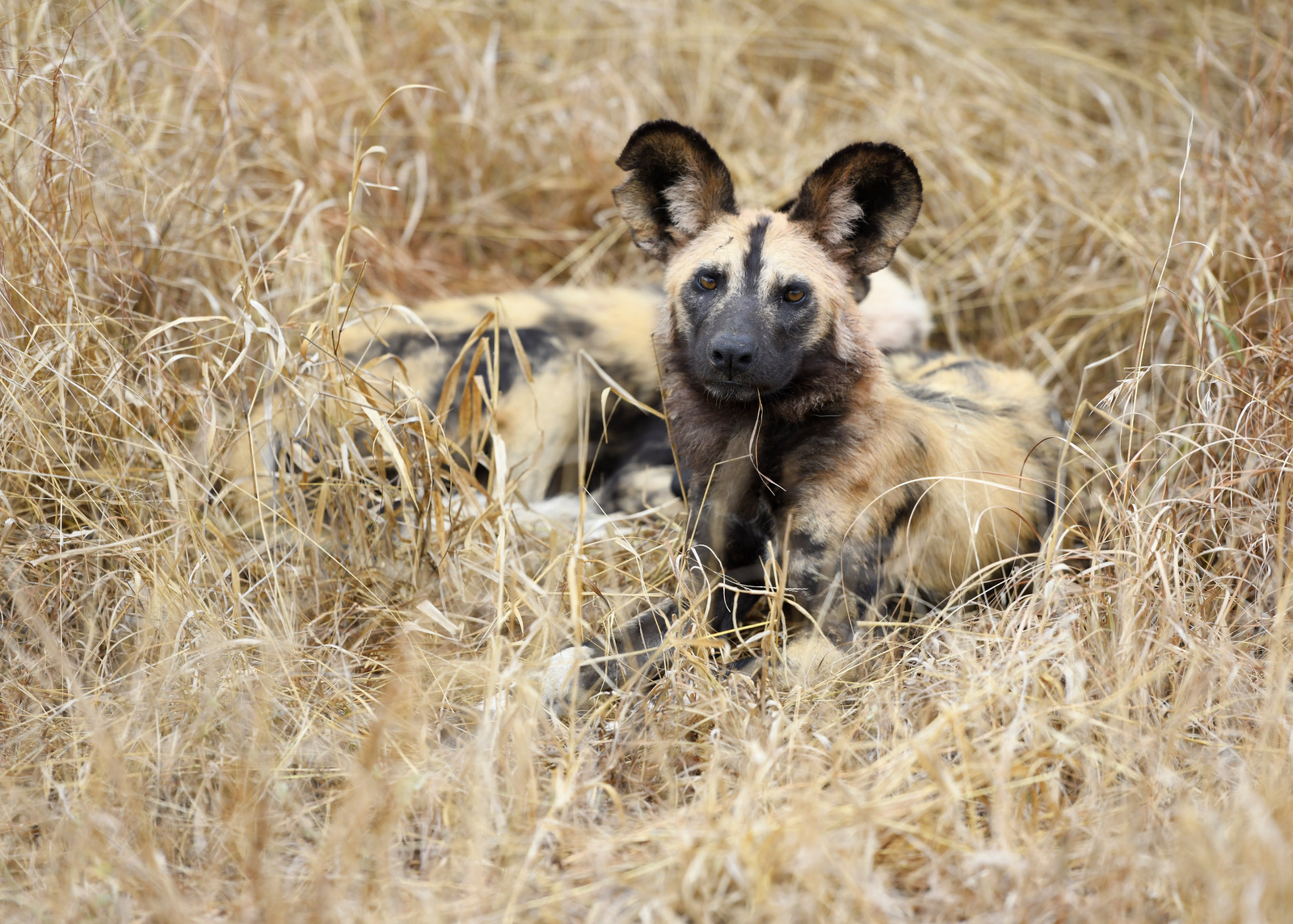
3. Wild Dog
My first decent image of a wild dog!
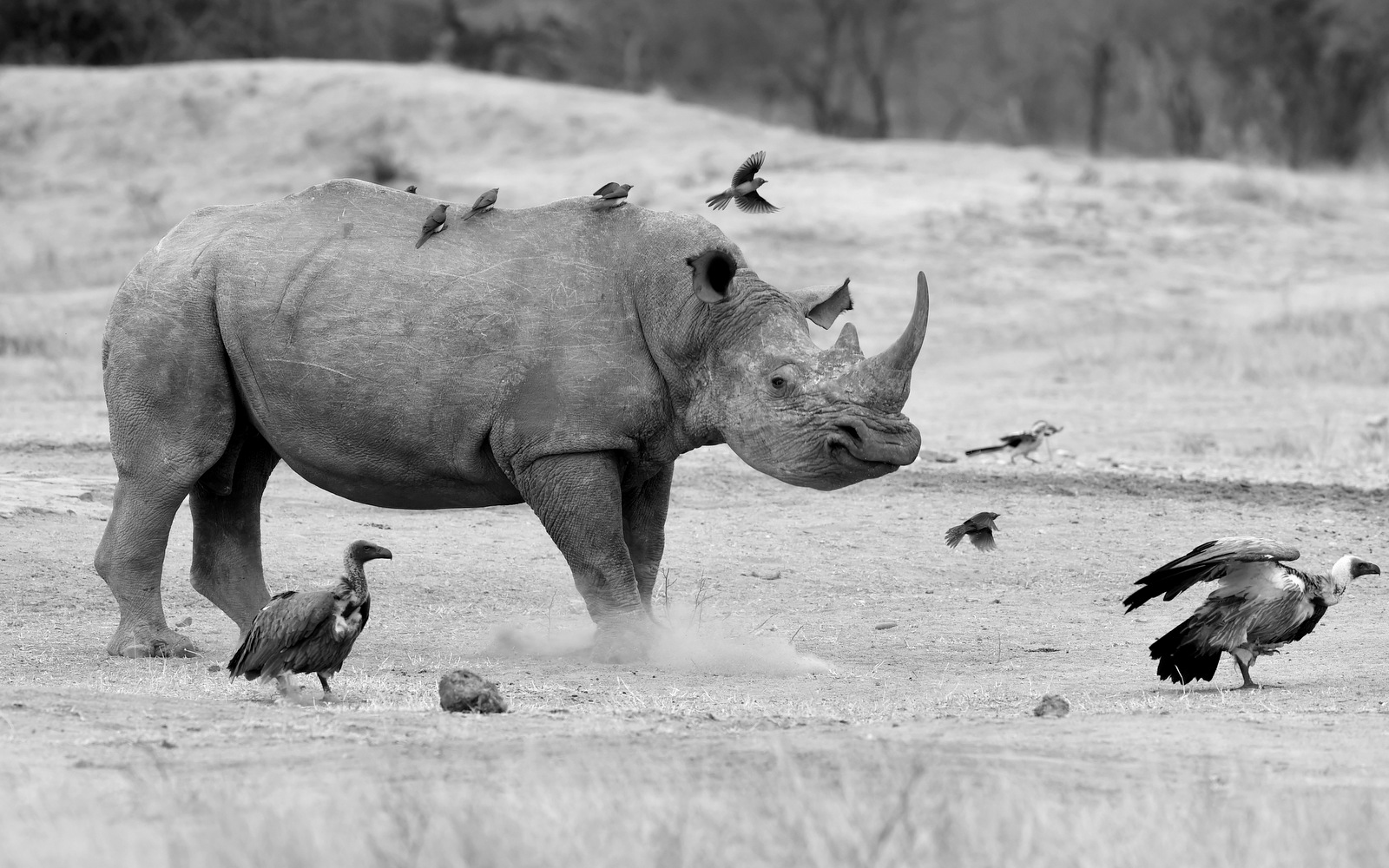
4. White Rhino
Seeing a rhino in the wild is a life-changing event. Click here to see my recent post to learn more about these amazing animals.
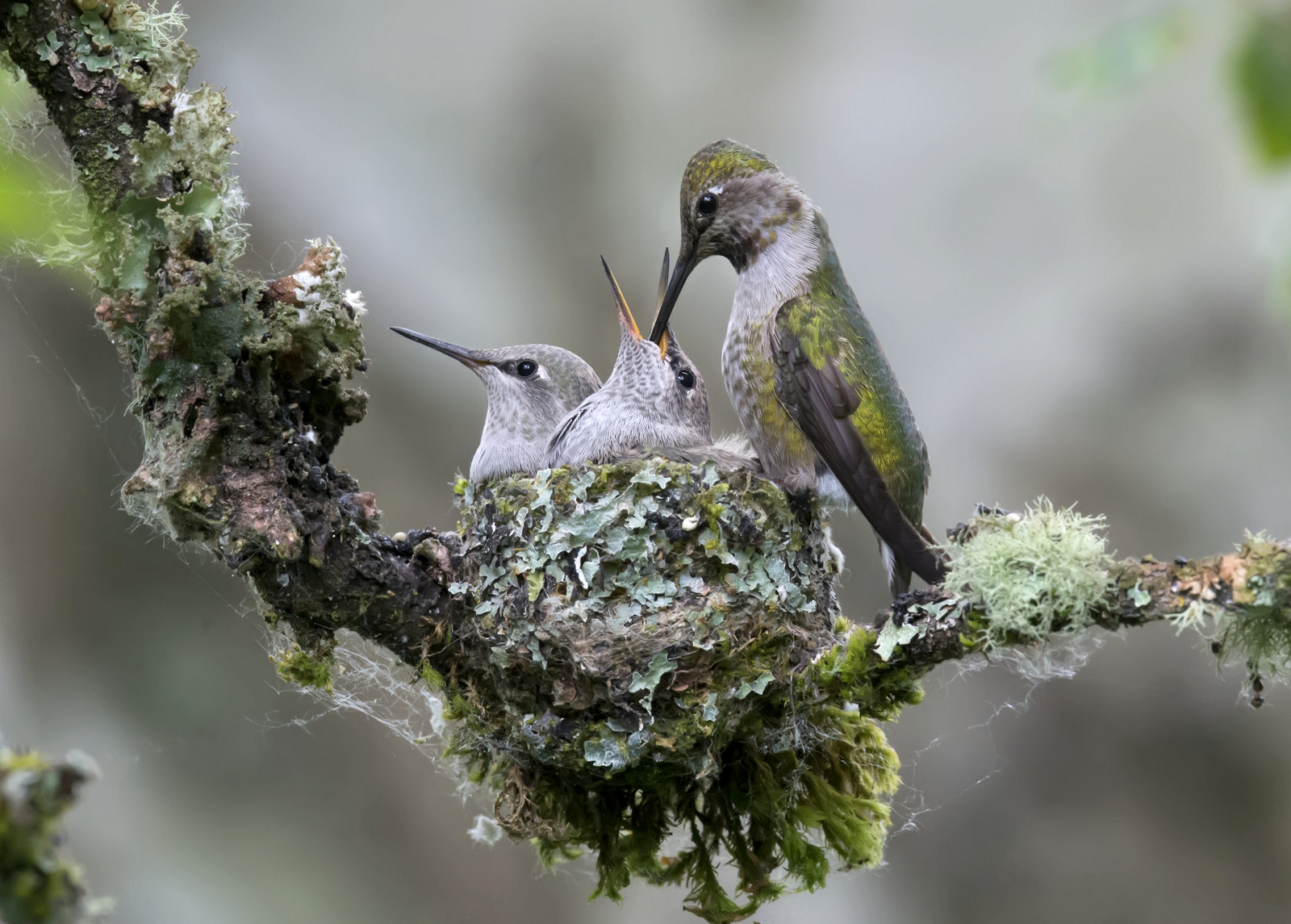
5. Anna’s Hummingbird
I spent three weeks this year watching these chicks grow up. Wow. Click here to see the entire story.
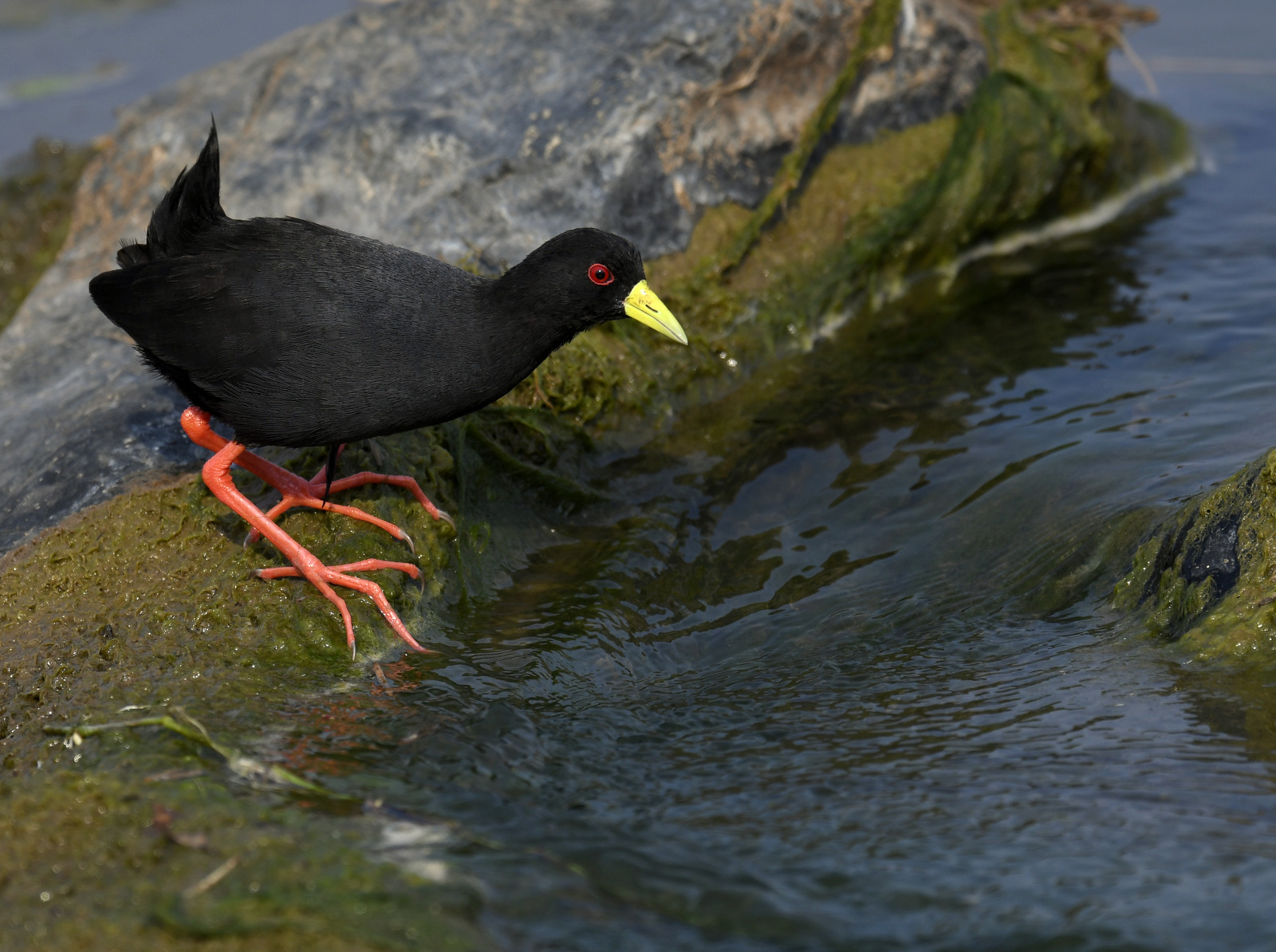
6. Black Crake
I found this guy in Kruger NP and shot hundreds of images of him over an hour as he explored every nook and cranny of the river. I had an absolute blast. I am mesmerized by his bold colors. And those feet!!
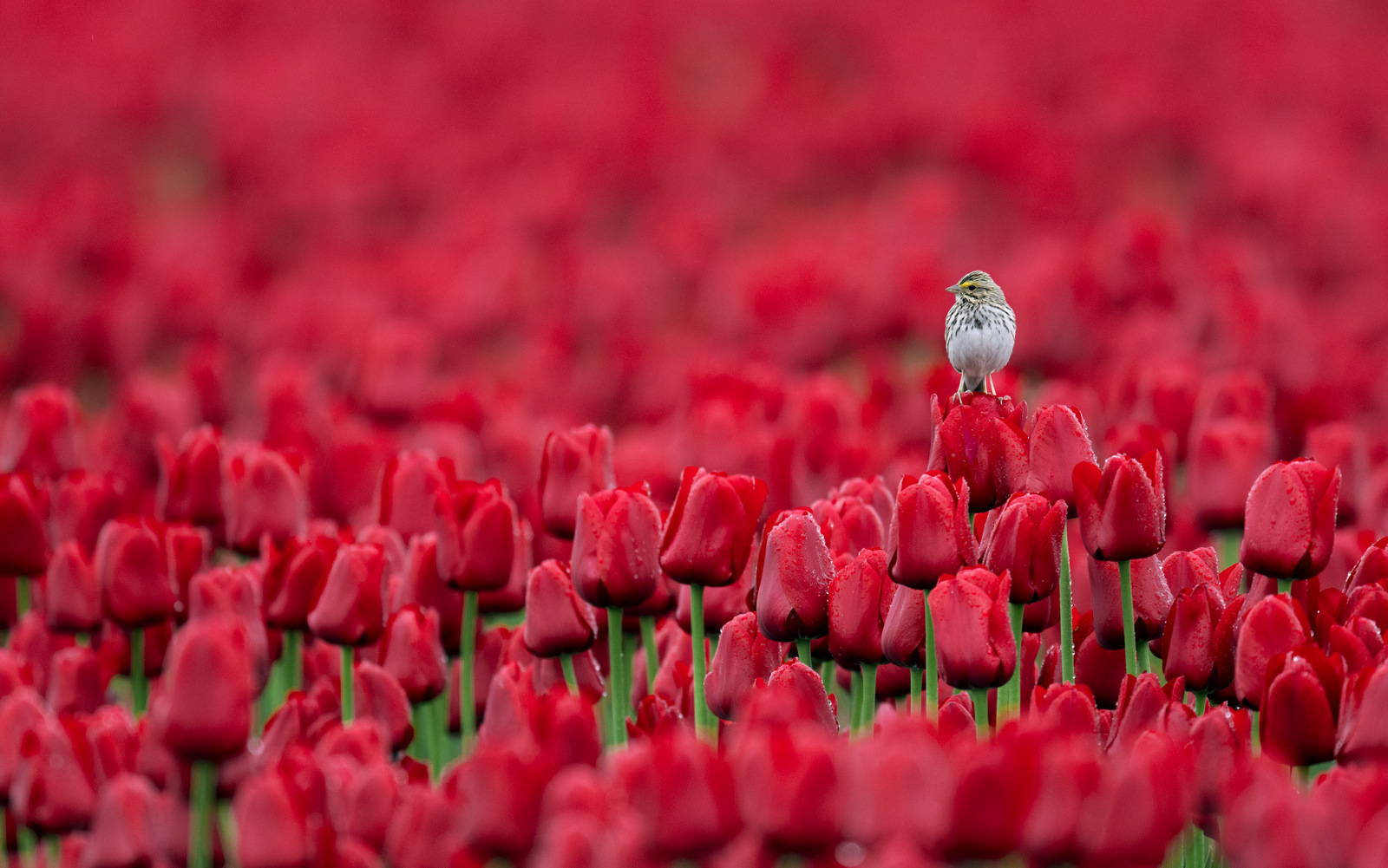
7. Birdscape
I made a first-time visit to some tulip fields in Washington in 2018 and I had the time of my life creating bold birdscapes like this one. Click here to see a few more.
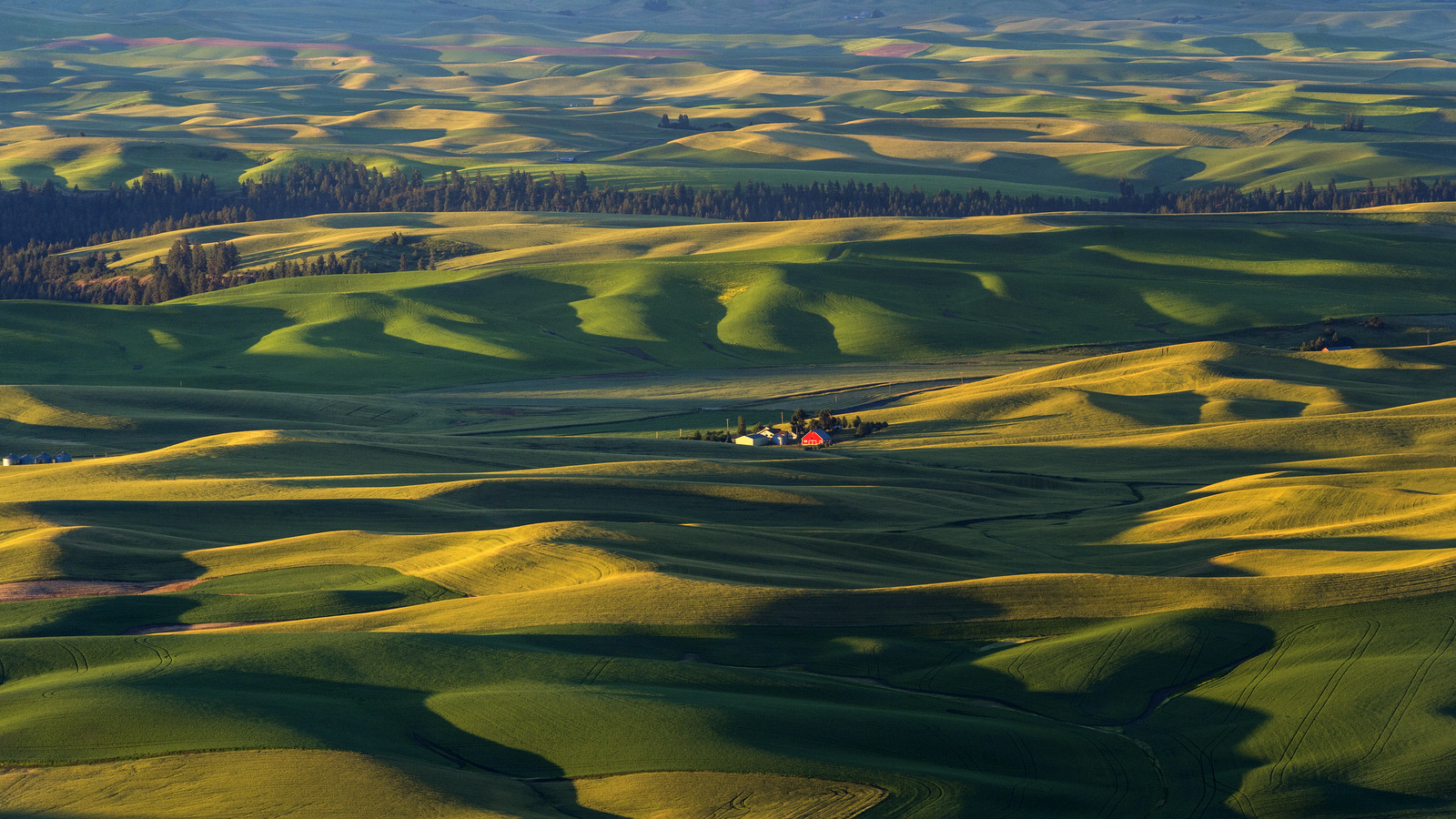
8. Palouse
I also explored the farmlands of the Palouse in eastern Washington for the first time in 2018. Heaven on earth for landscape photographers…
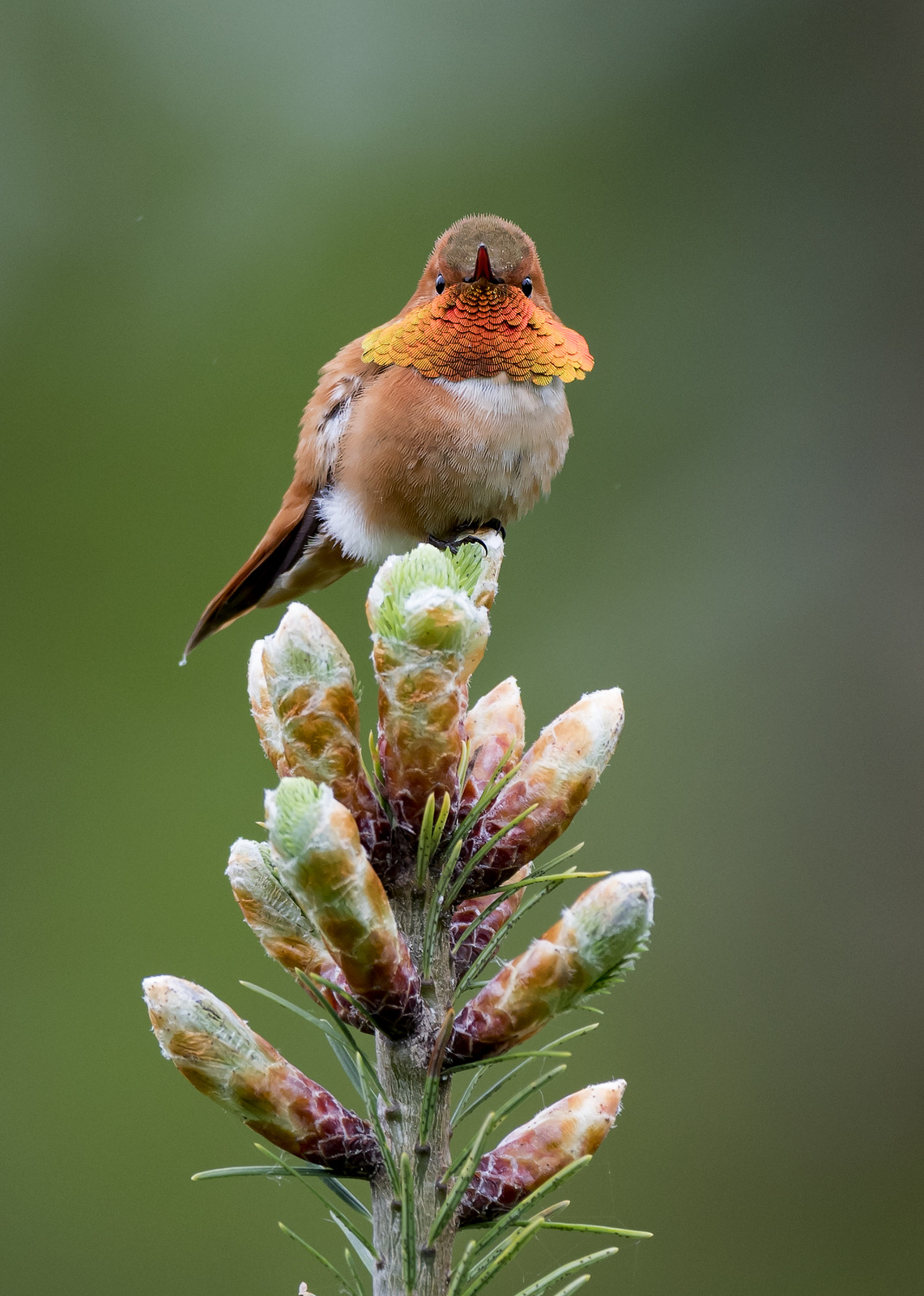
9. Rufous Hummingbird
My first image of a male Rufous Hummingbird in all his iridescent glory.
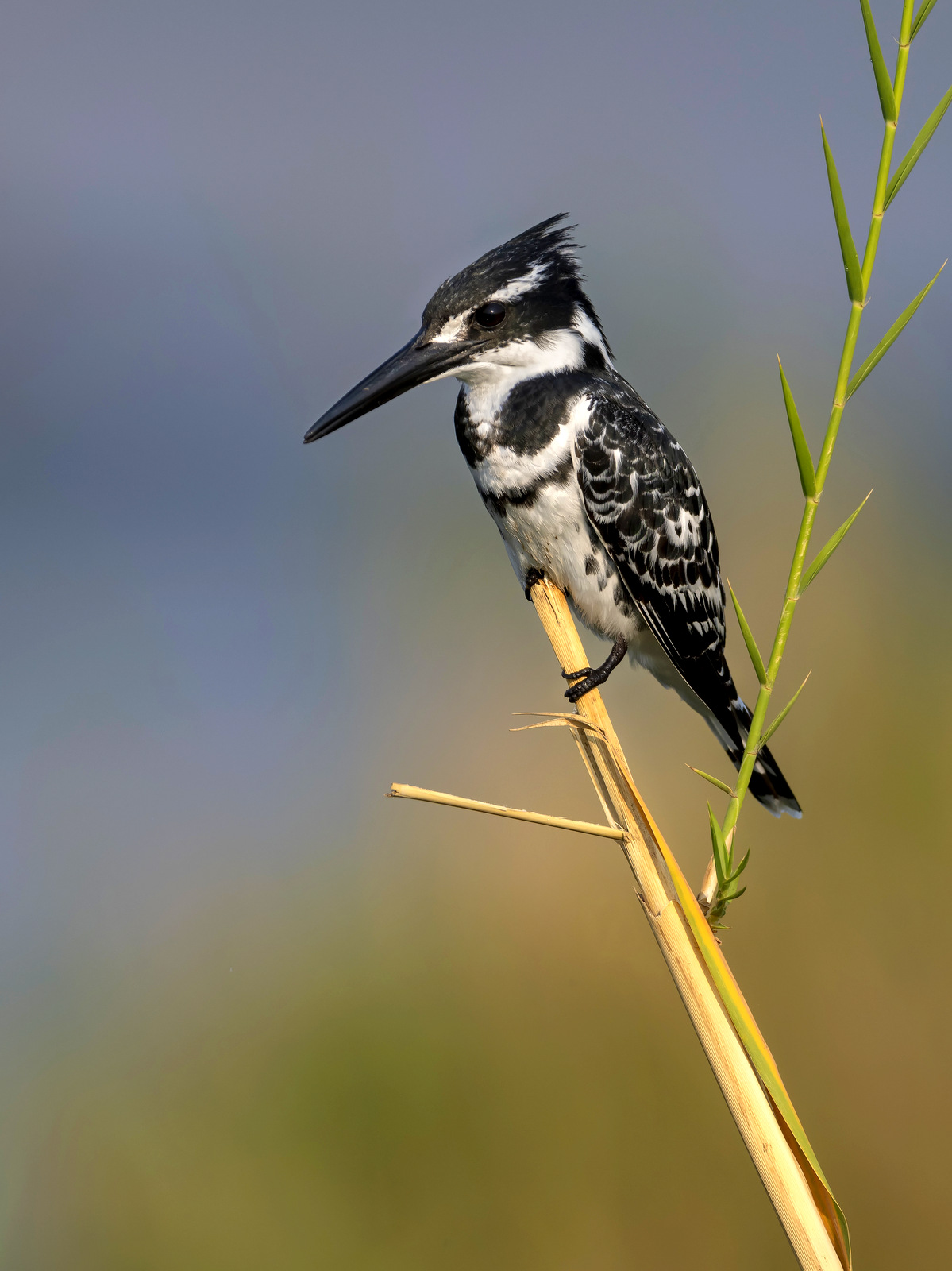
10. Pied Kingfisher
My first decent image of a Pied Kingfisher. Nabbed this guy in Kruger, NP.
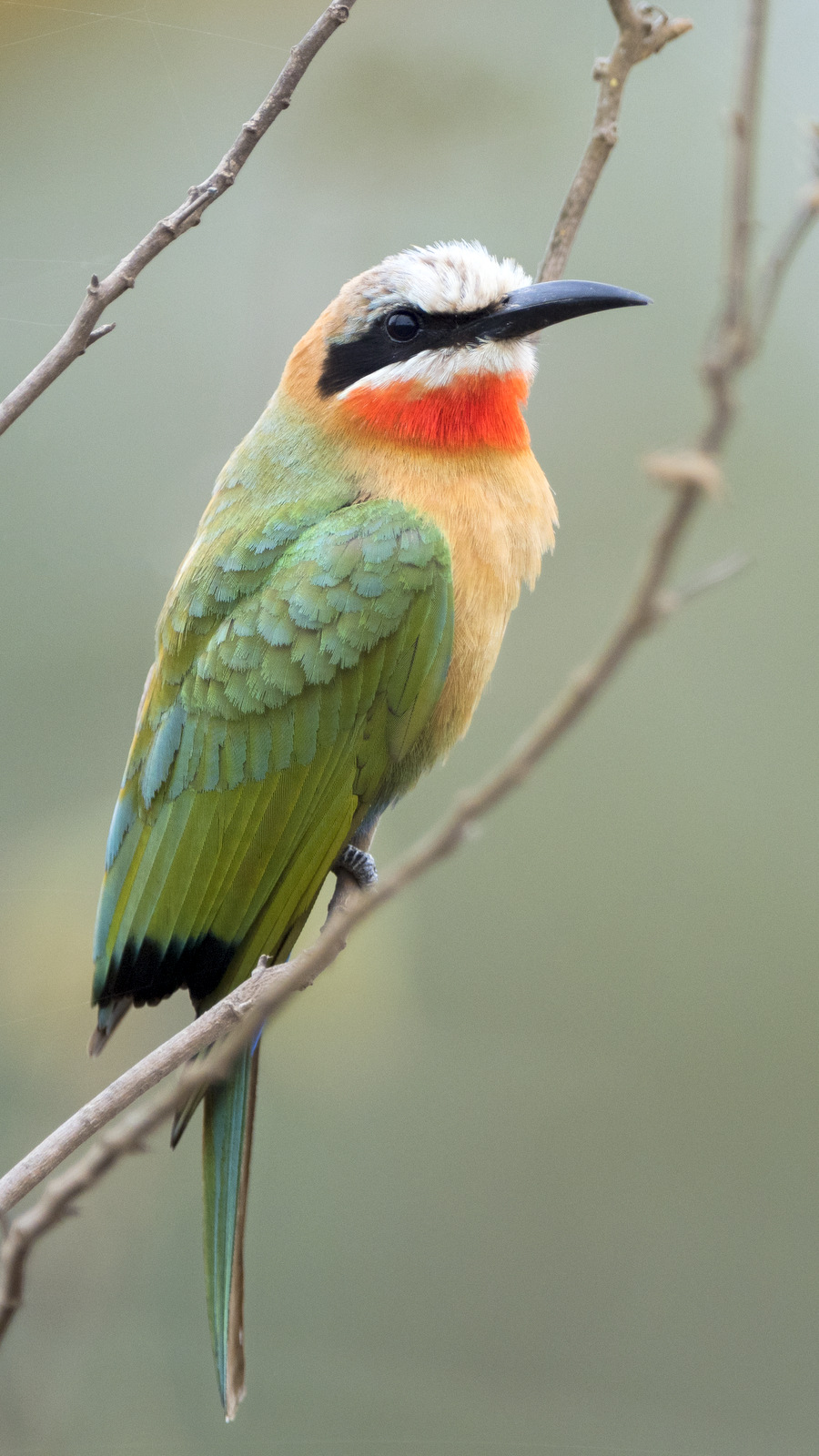
11. White-fronted Bee-eater
And my first image of this lovely bee-eater. Another gift from Kruger NP.
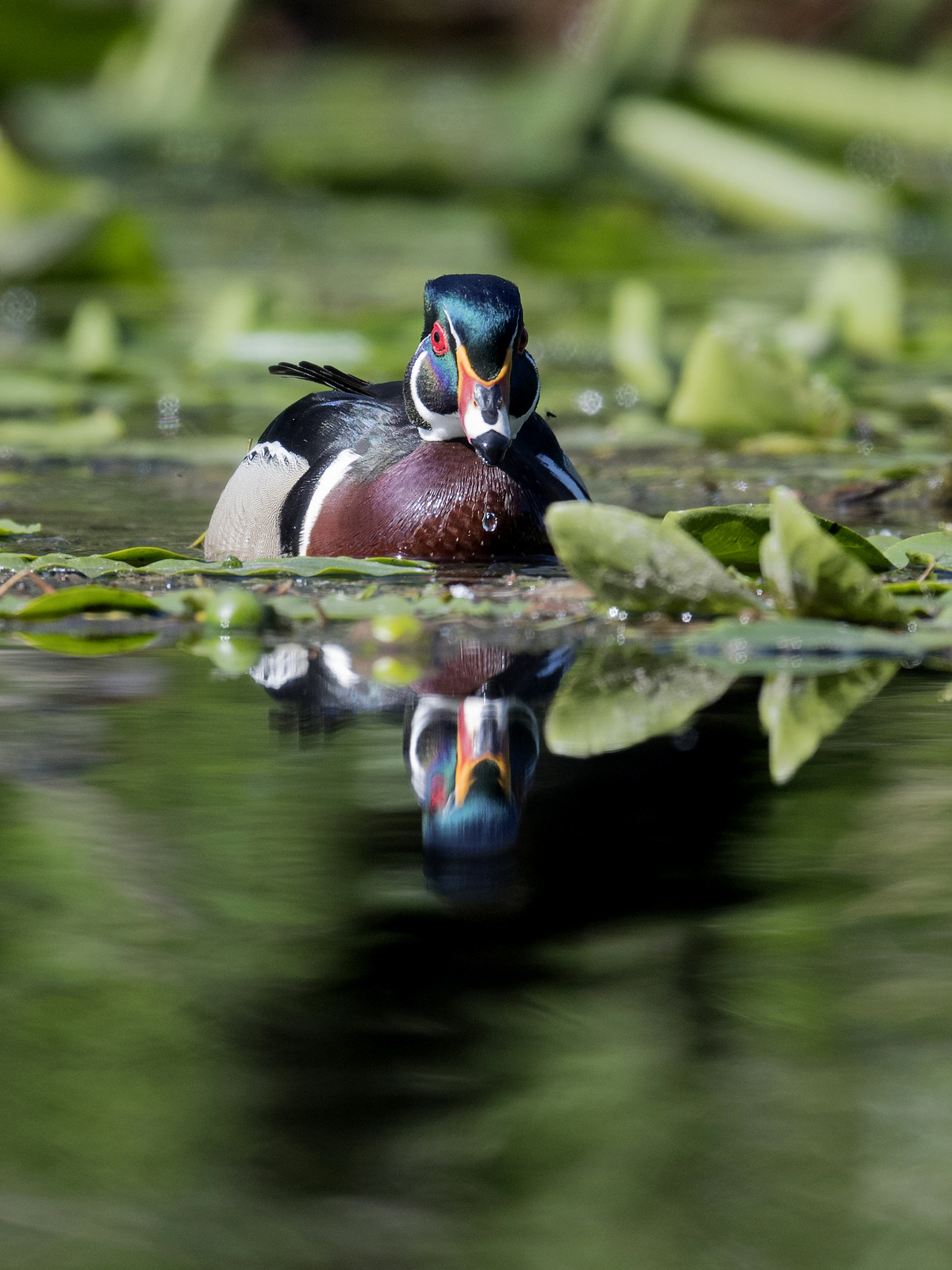
12. Wood Duck!
I have been trying to get a photo of a wood duck for years. Finally….
Ok, so that was 12 images — hope you don’t mind.
Wishing you a wonderful 2019!
Dec
31
Shot of the Month – December 2018
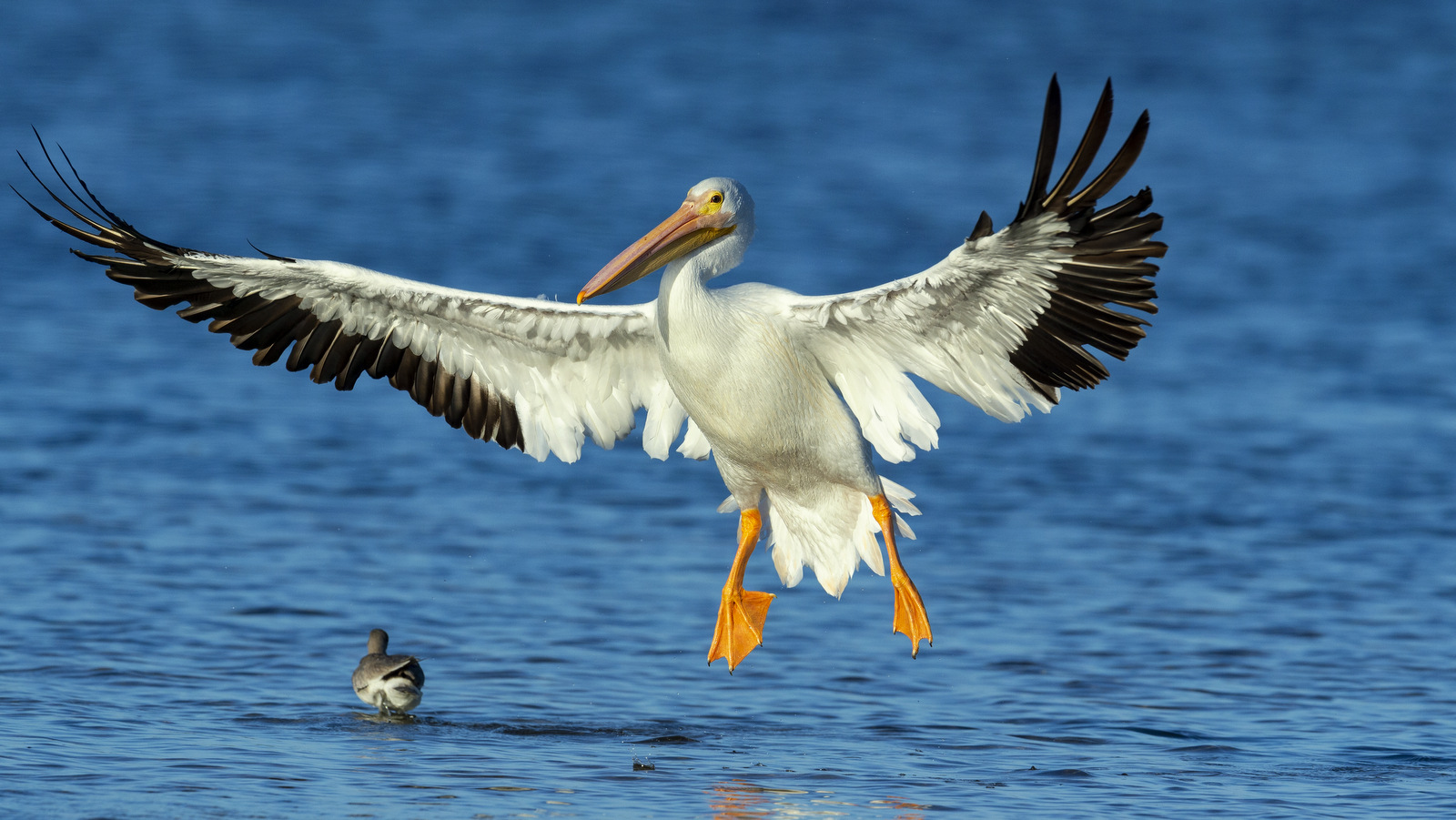
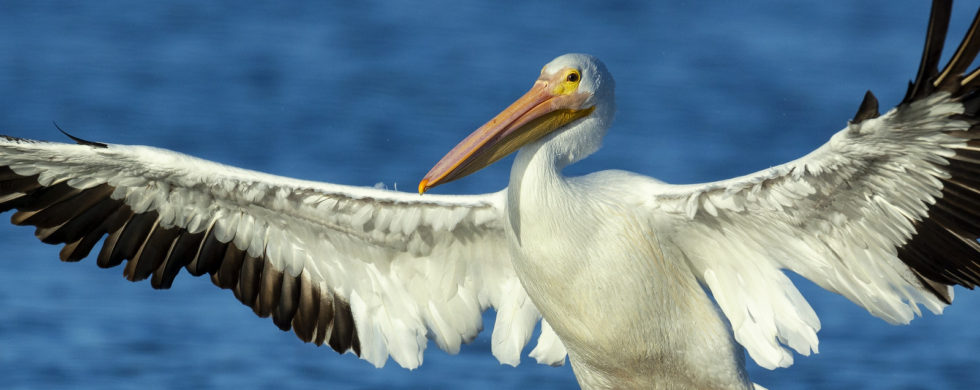
In North America, a snowbird is a slang term used to describe someone (often a retiree) who migrates each winter from his northerly, typically very cold home state to spend the winter in a warmer state like Florida or Arizona. While living in Vermont – a very northerly, and VERY coldly state in the winter, we adopted some sunbird-esque habits and spent Christmas visiting family in Florida two years in a row. These trips allowed me the opportunity to photograph a range of wildlife in Ding Darling Nature Reserve. During one outing I captured a photo of a big bird — not THE Big Bird, but his cousin, the American White Pelican (AWP).
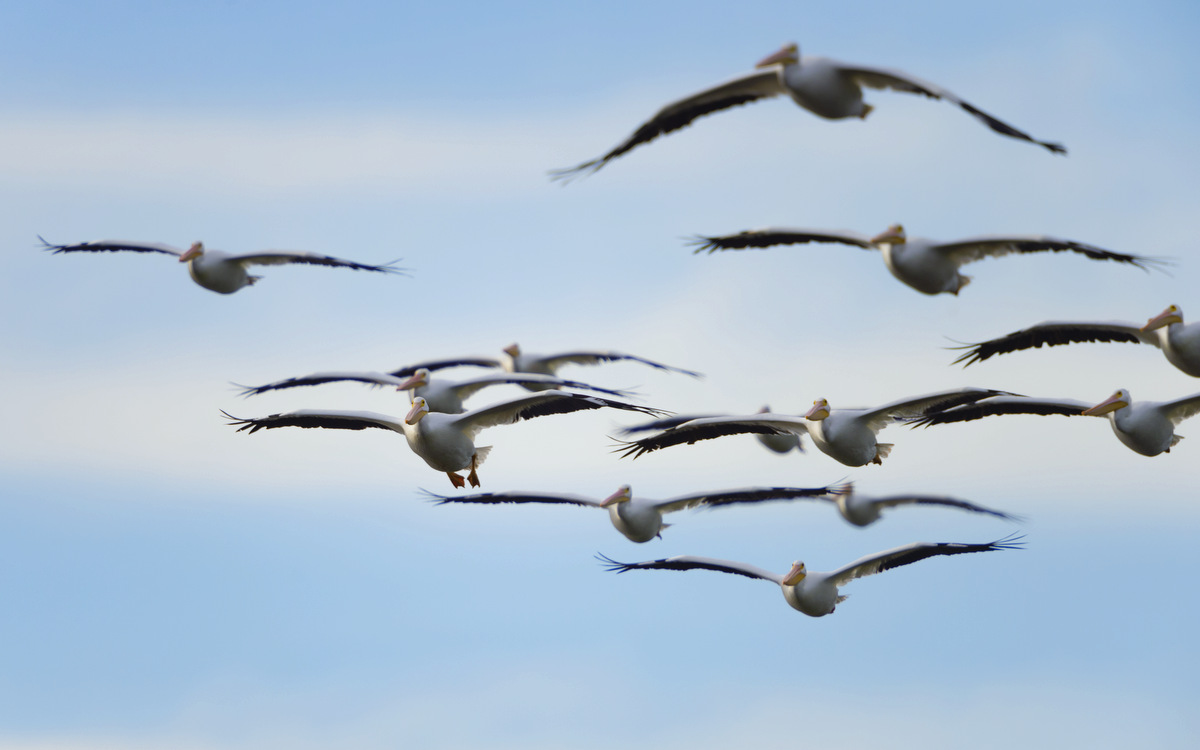
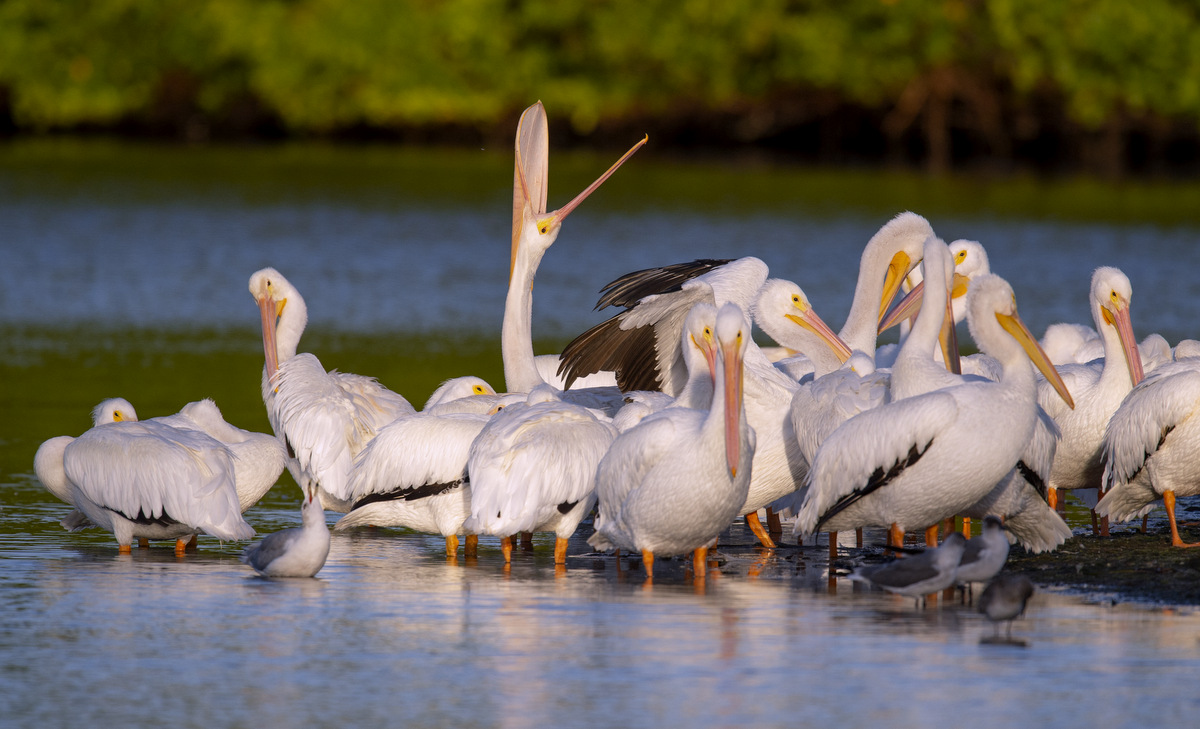
How big? Well, the AWP has a nine-foot wingspan, which you can see in all its glory in the image above. A male can stand almost 4 feet tall and can weigh thirty pounds! That massive bill can add almost another 2 feet to the length of this bird. These Goliaths are among the heaviest flying birds in the world. Despite their size, those massive wings allow the pelican to excel at soaring and they can be seen traveling long distances in V-formation.
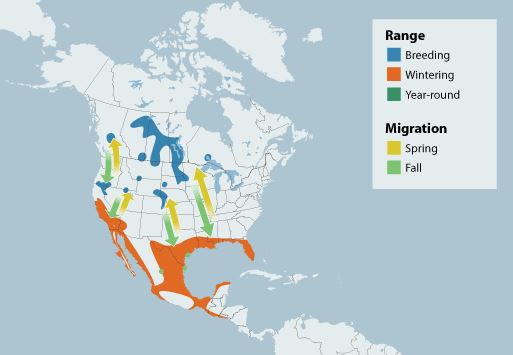
These birds breed and spend the warmer months in the heart of northern North America and spend the colder months in warmer locales as you can see in this range map.
The AWP is very gregarious and they often travel and forage in large flocks. Some pelican species plunge-dive to catch their prey — not these guys. The AWP feeds from the water’s surface, dipping their beaks into the water to catch fish and other prey. The birds will often work together to corral fish to one another. Sometimes a group of birds will dip their bills into the water together and flap their wings to drive fish toward the shore where the water is shallow. This then allows for a very efficient, collective feast.
The American White Pelican can eat up to four pounds of food a day with fish (carp, Tuie chub, shiners, perch, rainbow trout, jackfish, catfish, etc.) being the preferred meal. The AWP is not above theft, known as kleptoparasitism in the animal world, to catch a meal and they can often be seen stealing fish from other pelicans, gulls, and cormorants.
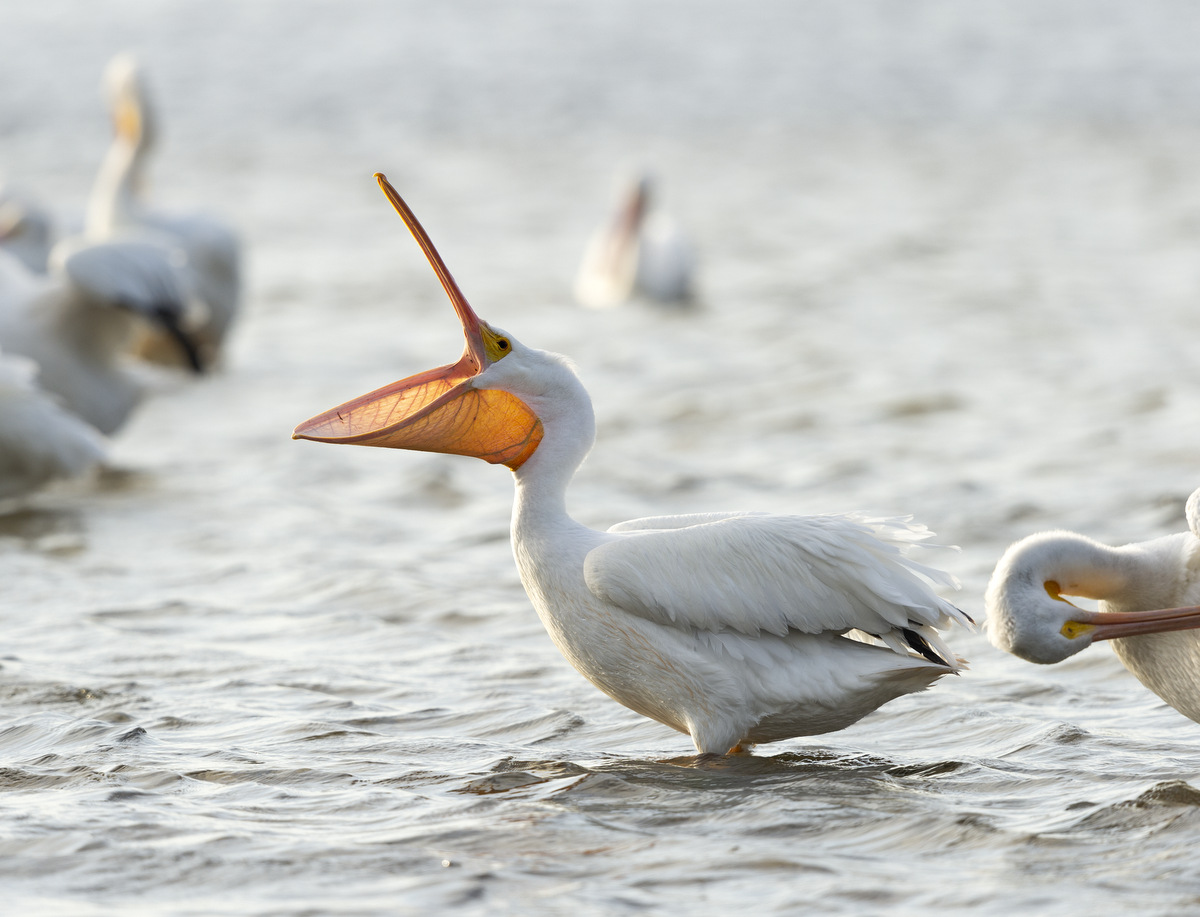
Once a fish, or two, has been caught the pelican will raise its bill to drain the water and swallow the prey.
Gregarious, larger than life, a healthy appetite, and seasonal migrations — it sounds like this pelican might be a subspecies of snowbird. If you get my drift….. 😉
Until next month…
Nikon D4S, Nikon 600mm, 1.4X TC (effective 850 mm), 1/2500 sec, ISO 400, -1 EV
Nov
30
Shot of the Month – November 2018
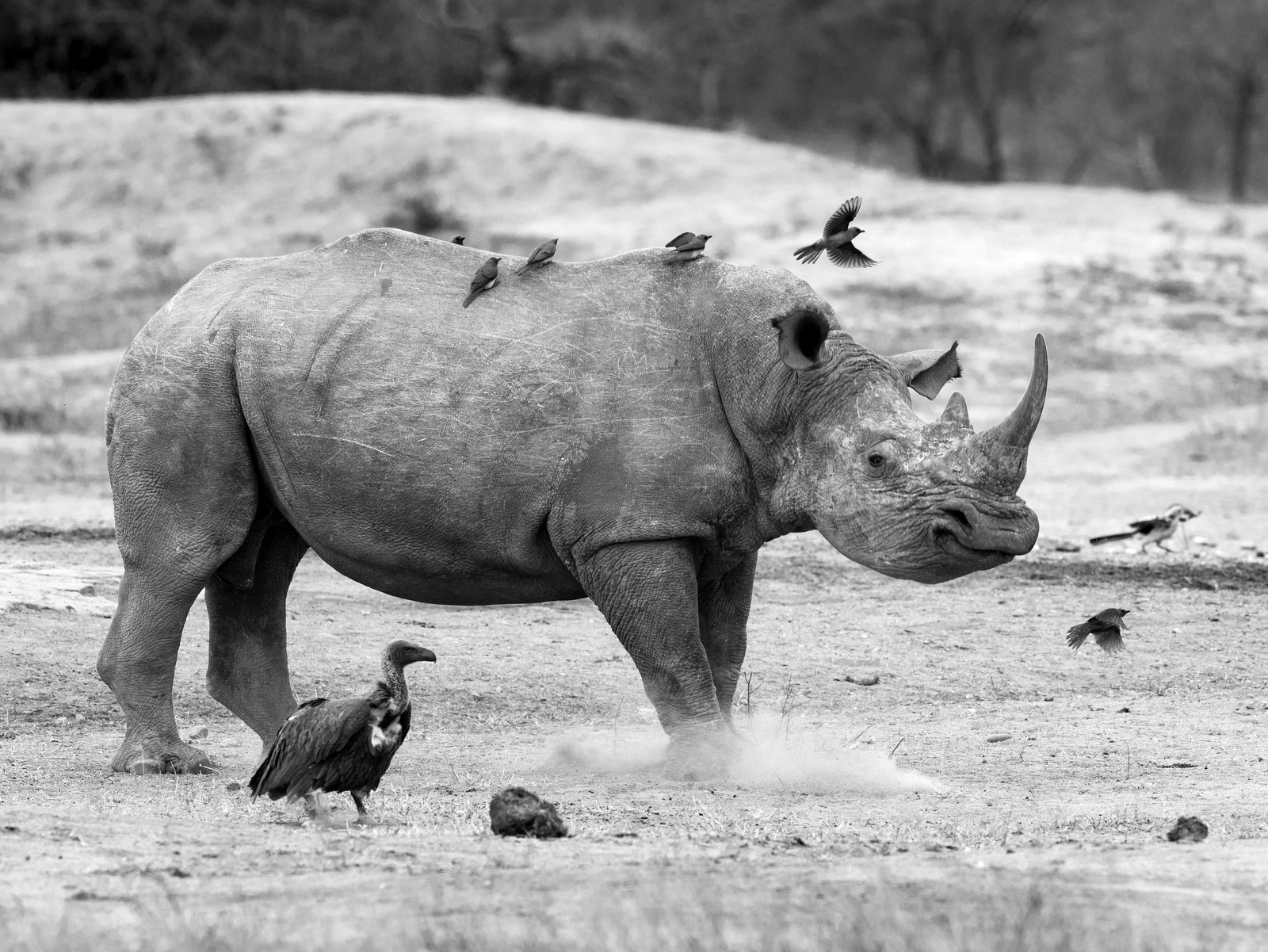
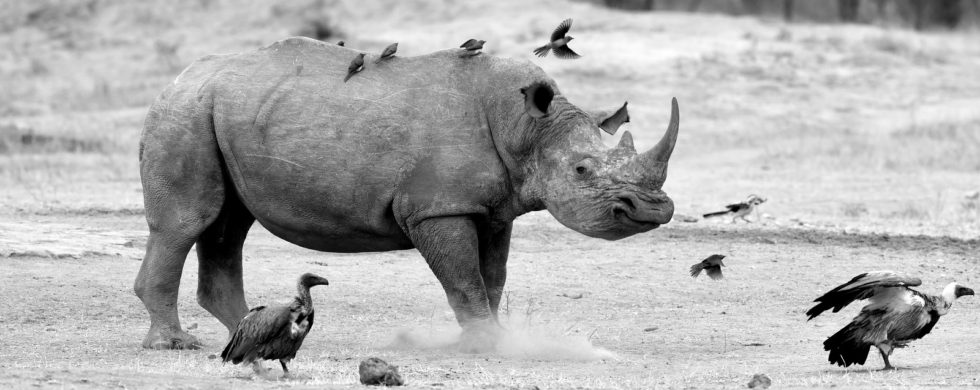
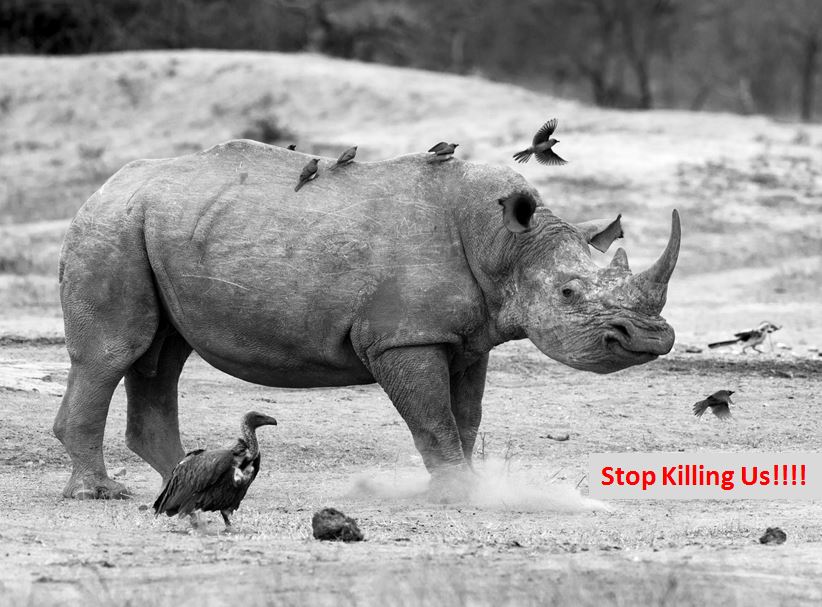
It looks like somebody is having a bit of a tantrum. Check out those pursed lips and the dust caused by the stamping of the foot. The thought bubble may say something like “Everybody off!” I photographed this white rhino, and his bird friends, in Kruger NP, South Africa.
Despite the humorous nature of this photo, the reality is that any image of a rhino is bittersweet. We are obliterating these beasts and they are hurtling toward extinction. Any photo taken now could simply be capturing the last of a kind.
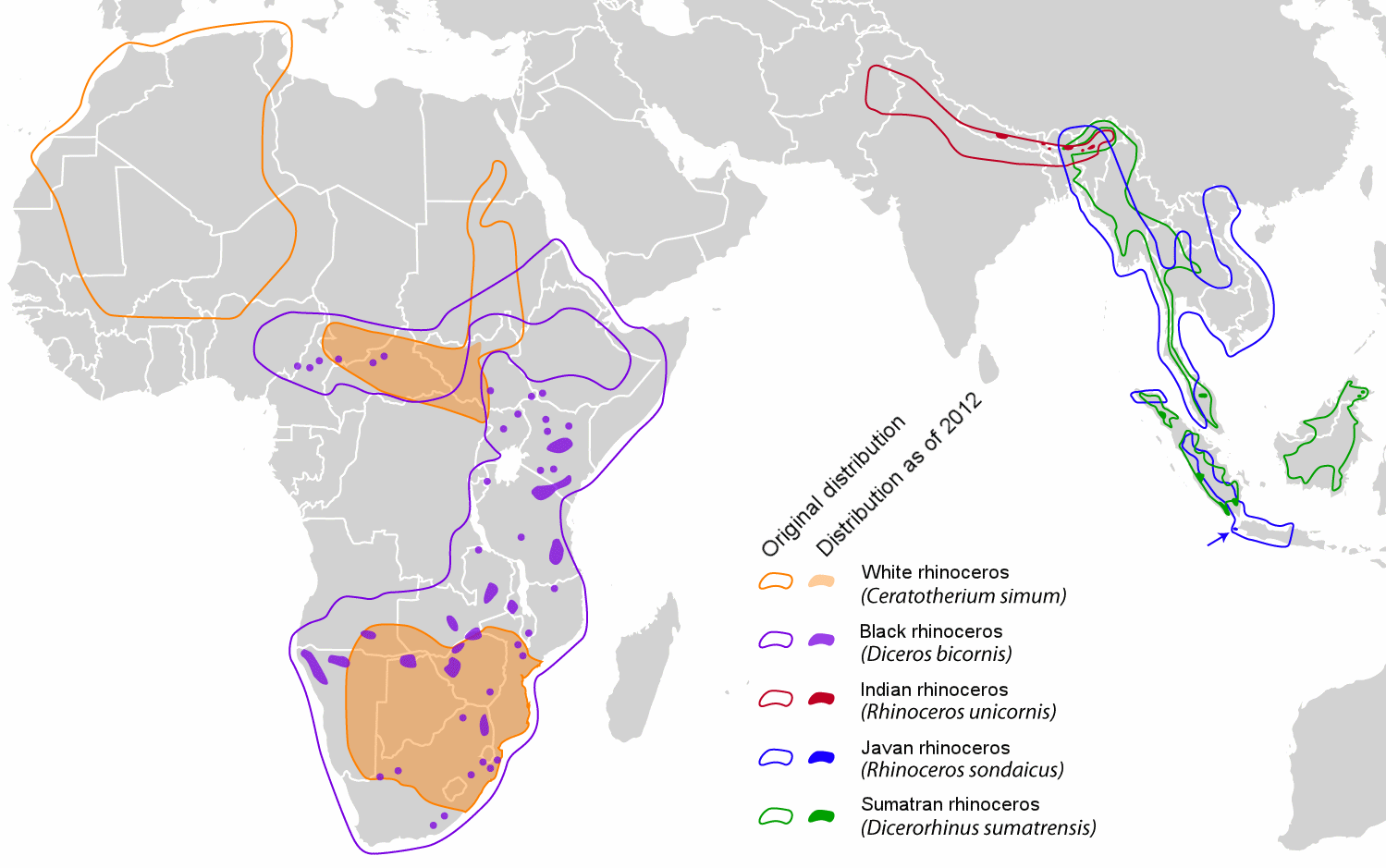
There are five remaining species of rhino. Look closely at this map (click on it to see it larger) and take note of the former range of these animals compared to the reality today. Can you find the dot that represents the last enclave for the Javan rhino?
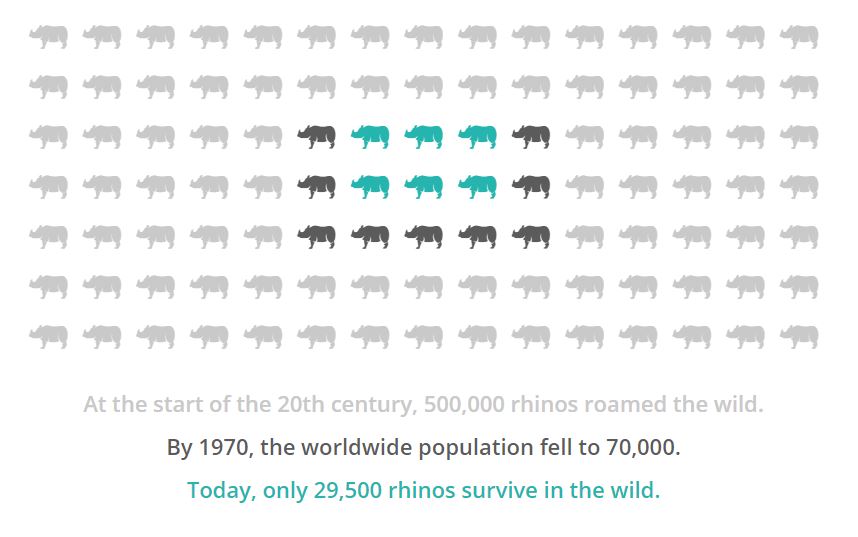
In the last hundred years we have decimated the rhino population (Source):
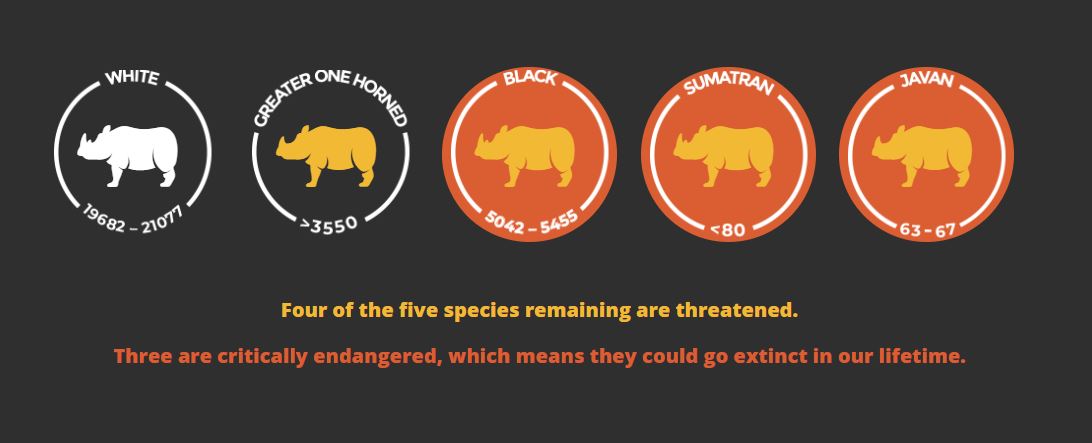
Africa is home to 2 species (Black and White) and Asia is home to 3 (Indian (also known as the Greater One-horned Rhino), Javan, and Sumatran). How are they doing? Not great (Source):
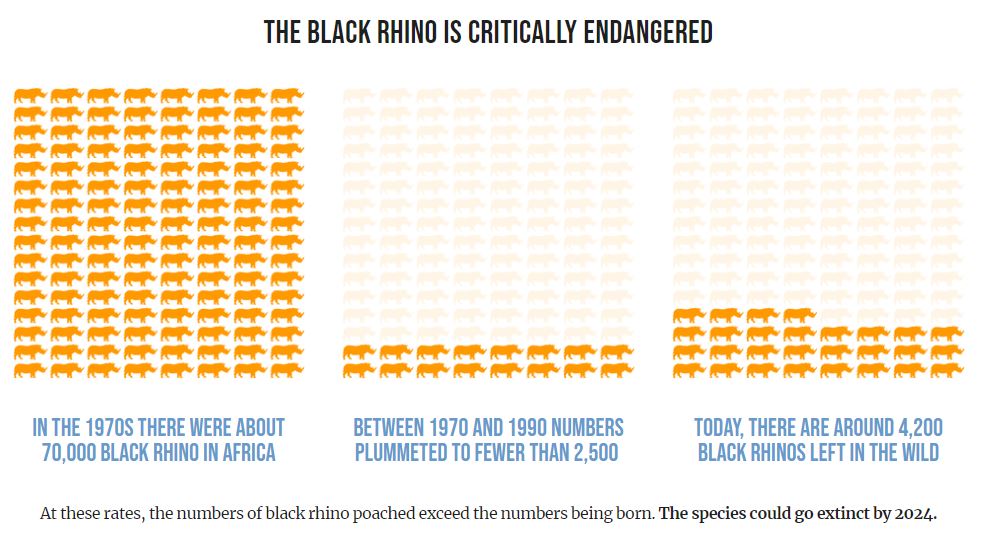
The Sumatran and Javan rhinos are just about gone with less than a 1oo remaining of each in the wild. And the Black Rhino numbers have plummeted since the 1970s (Source):
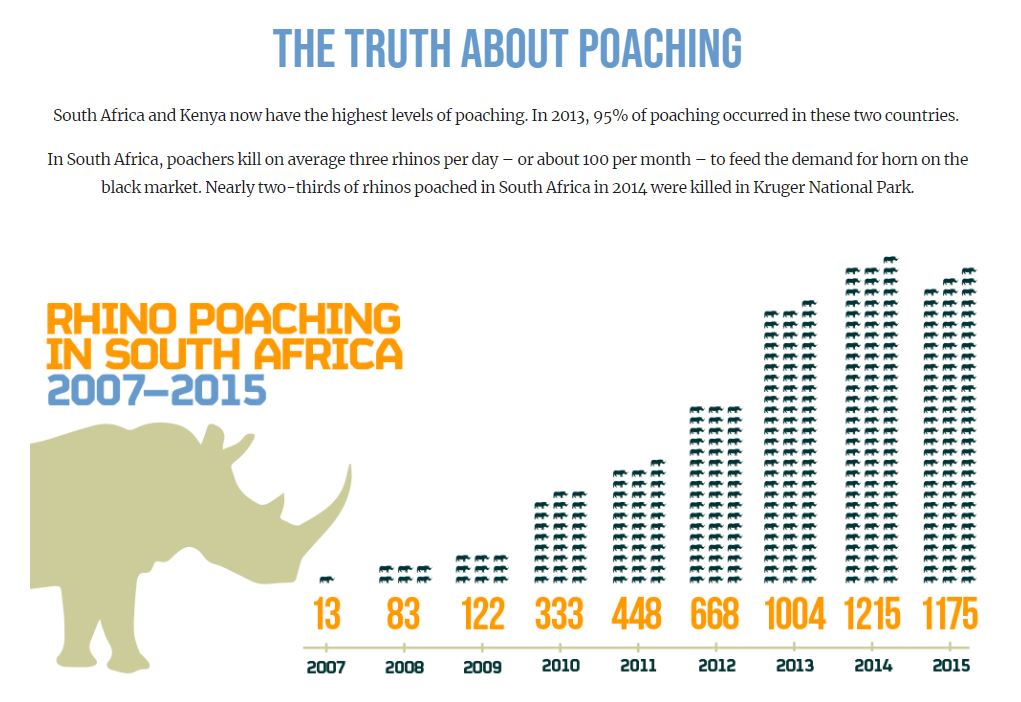
South Africa is an important country for rhinos with 80% of the world population living there. Look at the trend in poaching since 2007!!!!! (Source)
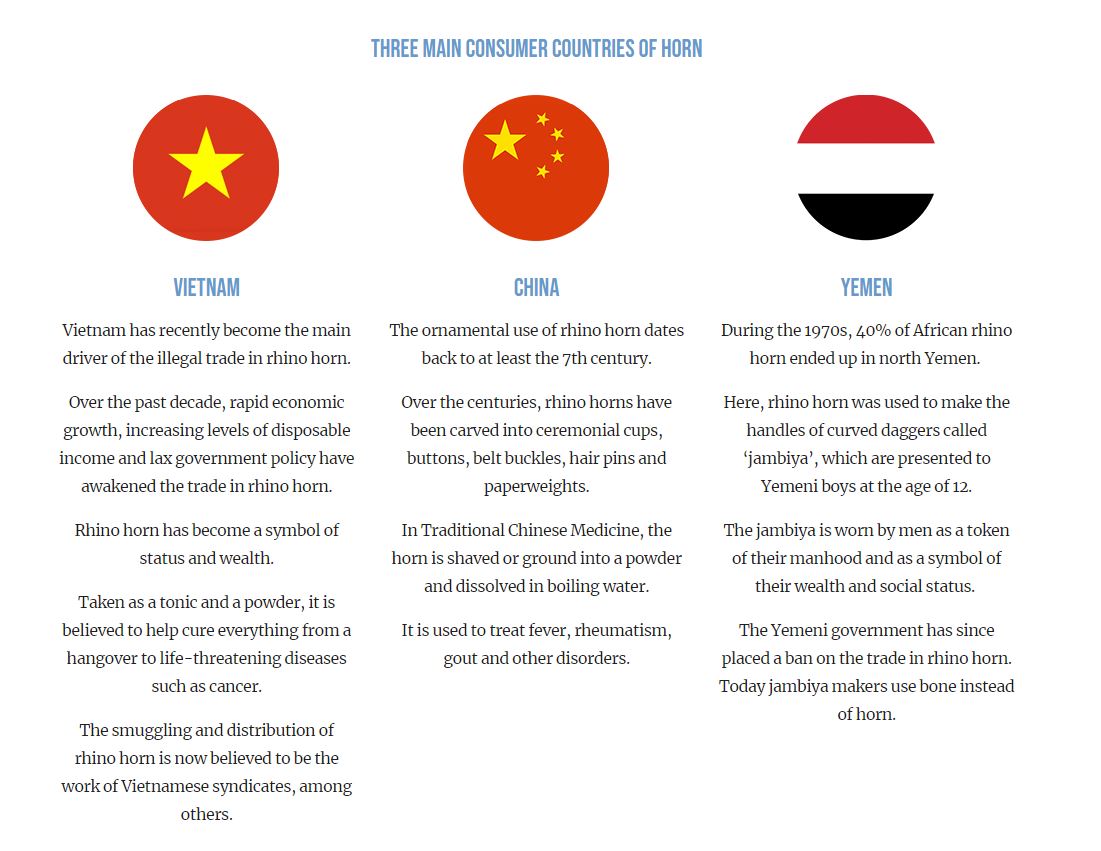
We are killing the rhino for its horn. The main culprits are Vietnam, China, and Yemen. (Source)
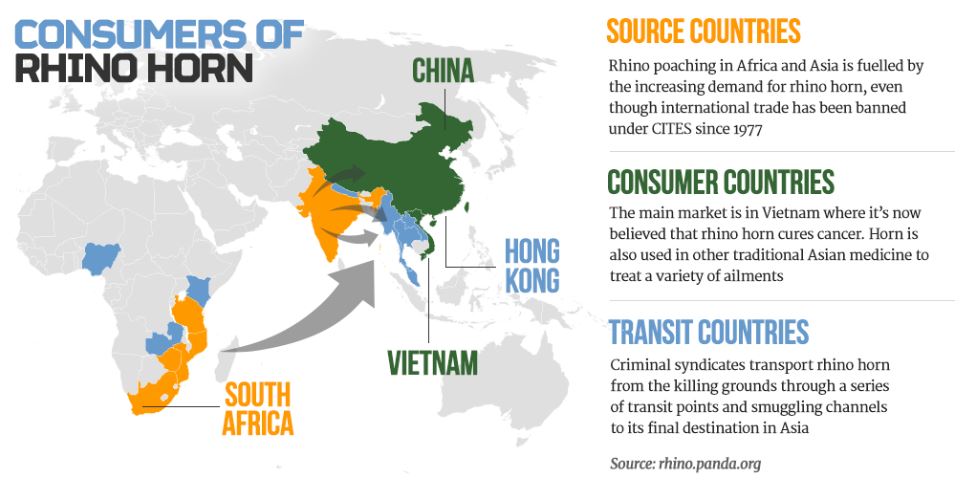
This is where we need to direct our anger to stop this insane slaughter. (Source)
I find the data in these graphics to be powerful, but the image below knocks the wind right out of me. There are two sub-species of Africa’s White rhino — the Northern White Rhino (NWR) and the Southern White Rhino (SWR). The NWR lived in Uganda, South Sudan, the Central African Republic, and Democratic Republic of Congo. The SWR can be found in South Africa, Namibia, Zimbabwe, Kenya and Uganda). In this image, we see the world’s last male Northern White Rhino. He died on March 19, 2018. Only two more remain on the planet, and they are both female.
So this sub-species of rhino is now functionally extinct. There were about 500 NWRs left in the 1980s but poachers killed them until these last three remained. His name was Sudan, and he lived under armed guard in Kenya. He died of old age, and one of his guards is seen here saying goodbye just before he passed away. This image captures the last of his kind.
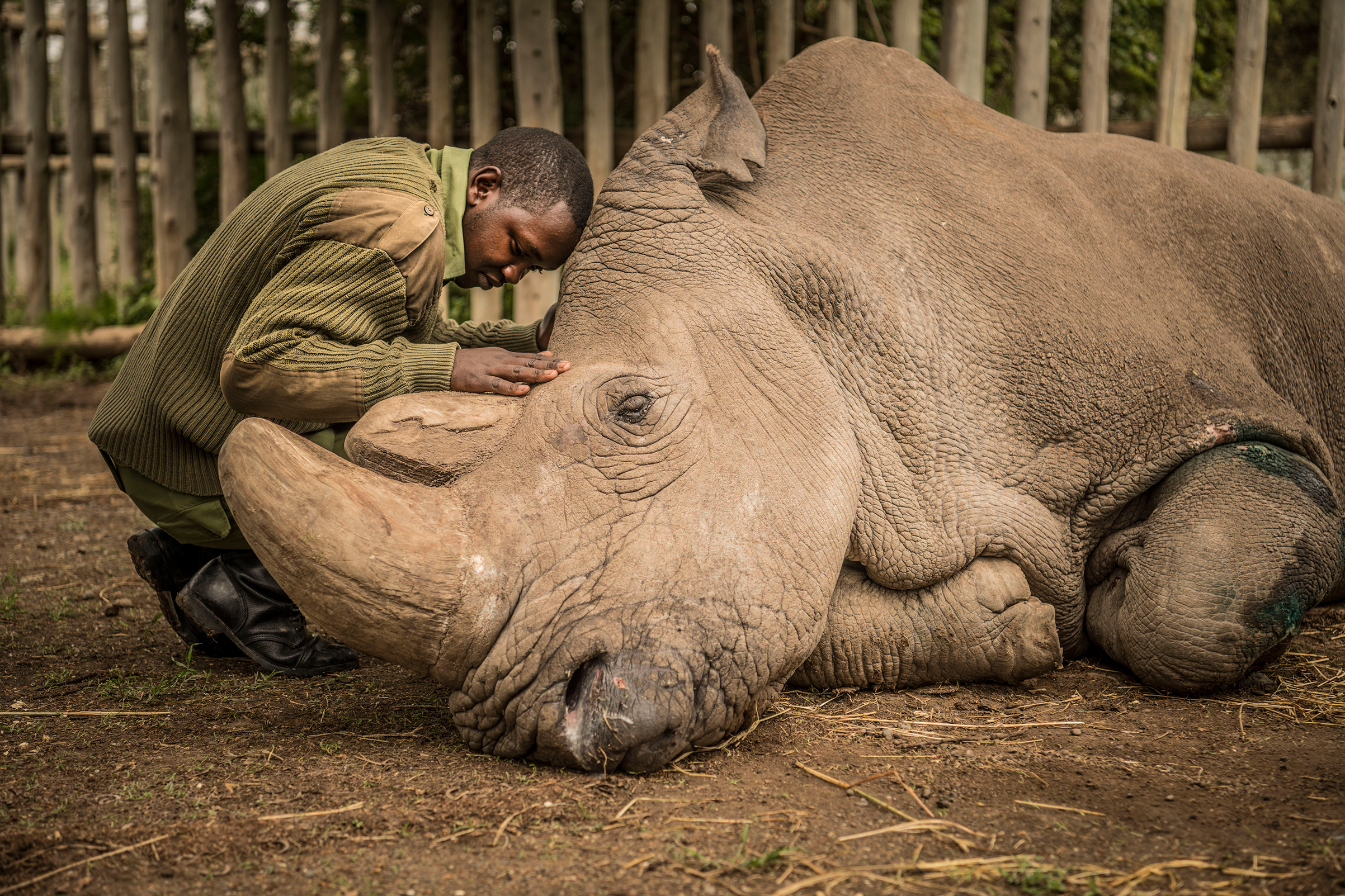
What else can one say?
Until next month…..m
Nikon D4S, Nikon 600mm, f/4, (@ f/8) 1/500 sec, ISO 640, +0.5 EV
Oct
31
Shot of the Month – October 2018
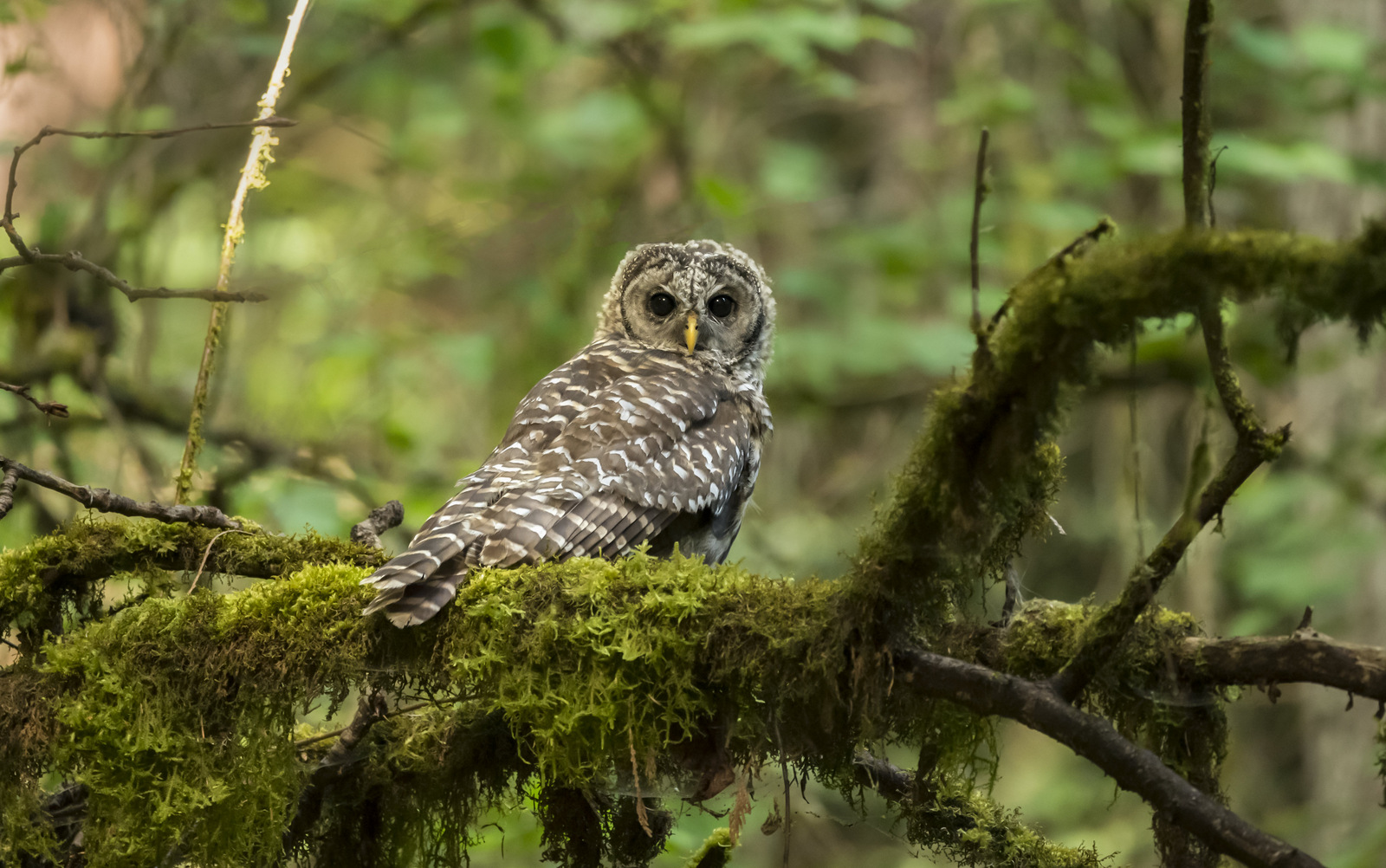
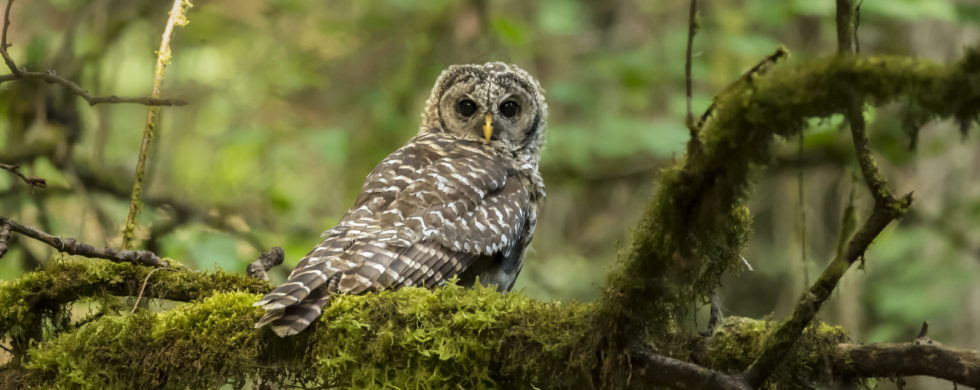
While living in Vermont I saw Barred Owls (BOs) a few times but never managed a good image. Ironically, it wasn’t till we moved to Washington State that I captured my first compelling photo of this owl. What’s ironic about this you wonder? Well, BOs are native to eastern North America. These birds were only first seen in eastern Washington in 1965 and in western Washington in 1973! The BOs range expanded dramatically to the west in the second half of the 20th Century.
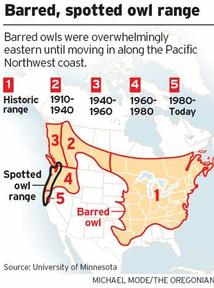
What caused this sudden migration west? Until the 20th century BOs lived in old, undisturbed forests in eastern North America. Some think that they were restricted from moving into northwestern boreal forests because of frequent forest fires. But with more active fire suppression and tree planting in the Great Plains by humans the owls were able to spread northward and westward. These are the leading theories but no one knows for sure where the truth lies.
What we do know is that this western movement has been a disaster for the spotted owl – a natural resident of forests in British Columbia, Washington, Oregon, and California. The spotted owl, already in trouble from logging, is a bit smaller and less aggressive than the BO. The spotted owls are losing the fight with their bigger cousins and numbers are dropping.
Forest managers are now facing a brutal ethical dilemma — what to do with this “invasive species” that is helping cause the extinction of another owl? The spotted owl is listed as threatened under the Endangered Species Act and the government is responsible for taking action to protect them. Since 2013 the US Fish and Wildlife Service has been testing to see if controlled killing of barred owls in limited areas helps allow the spotted owl population to recover. Here is a good article on the gut-wrenching conundrum.
Do we kill Barred Owls, forever, to give the spotted owl a fighting chance to not go extinct? Do we simply stand by and let the spotted owl die off, even though we may have helped facilitate the invasion by another other owl?
Given our track record of wrecking nature with our “good intentions,” I vote that we stand aside and let the owls work it out and hope that the spotted owl can find a way to coexist with his bigger cousin. I have more faith in Mother Nature’s wisdom…….
All the best….michael
Nikon D4S, Sigma 1500-600mm C (@450mm), f/6, 1/250 sec, ISO 6400
Sep
30
Shot of the Month – September 2018
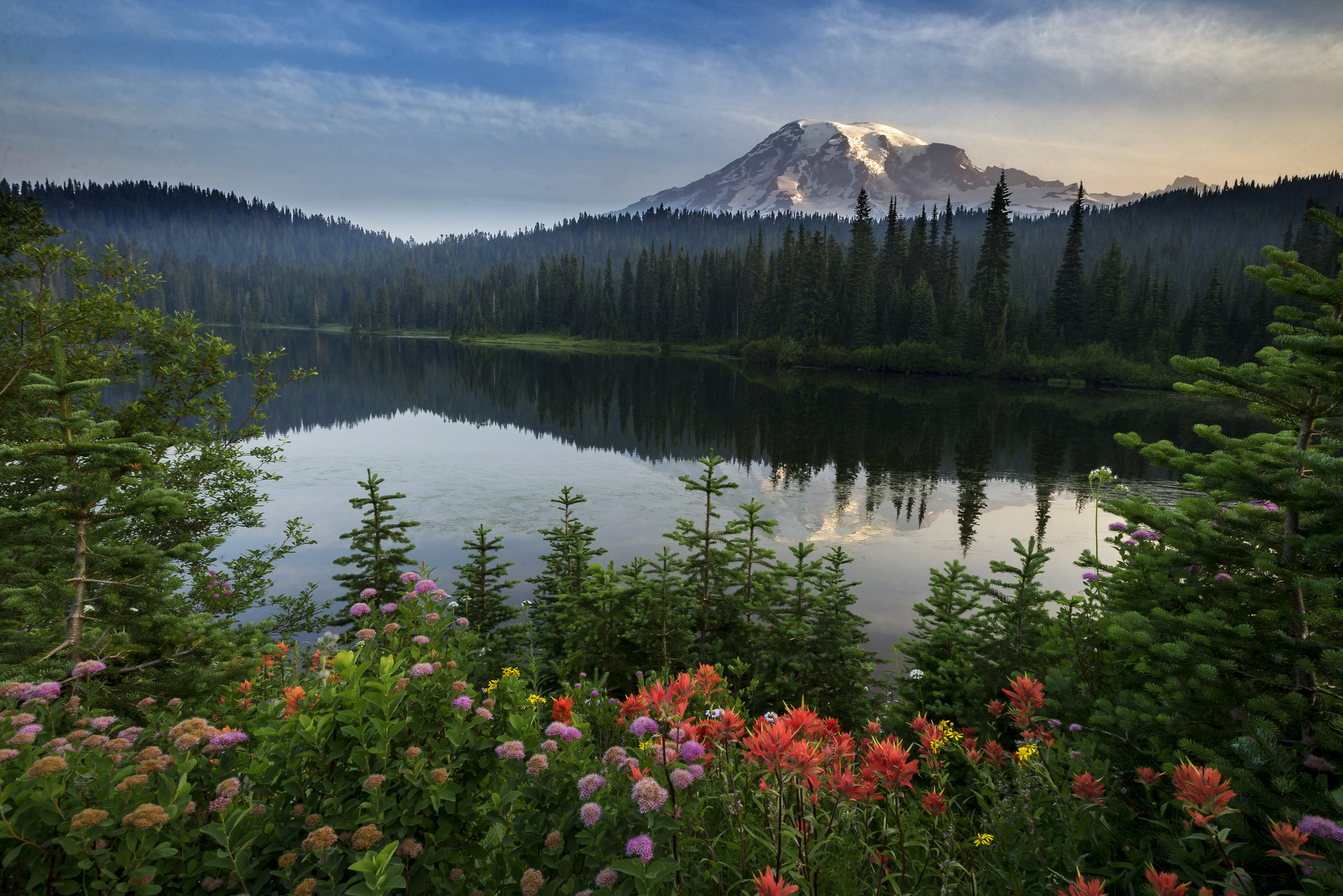
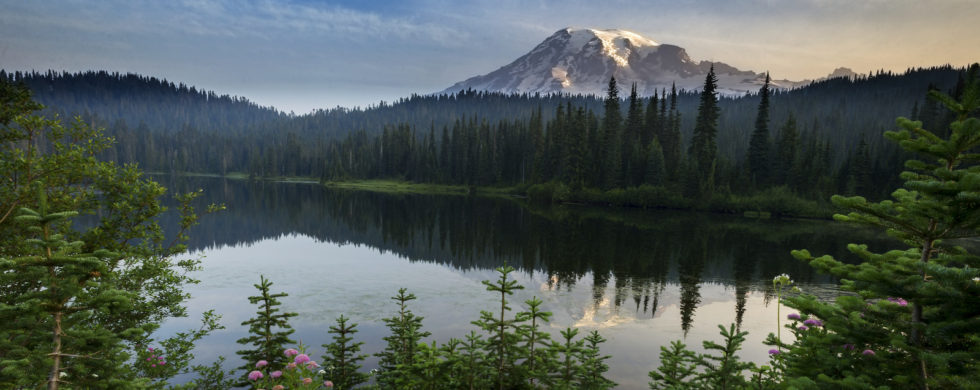
Ahhhh, isn’t it beautiful? What a lovely, albeit frightfully dangerous, scene.
Say what? Dangerous? How could this tranquil spot be dangerous? Where are we?
This image was taken at Reflection Lake in Washington State. What is said lake in fact reflecting? Why that would be Mt. Rainier — the state’s tallest mountain with a summit reaching just over 14,000 feet. This lake is a tourist and photographer favorite as it can offer a wonderful view and reflection of this epic mountain. An image of Mt. Rainier from this vantage point is pretty much a portfolio requirement for any nature photographer visiting the area. In late summer one can include blooming wildflowers in the shot as I have done with the image above to add a dash of color to the composition. Sunrise is the best time to shoot from this spot as the water is most calm at this time of the day and offers the best chance for the still water needed to capture the reflection of the mountain. Soon after the sun is up the the water’s surface begins to ripple with the stirring winds and the iconic shot will often be gone until the next day.
Yeah, yeah, all very interesting, but what about the d-a-n-g-e-r-o-u-s part??
Are bears or cougars lurking nearby? No, no cougars but there are black bears in the park but they are not much of a risk. It turns out that Mt. Rainier is considered one of the most dangerous volcanoes in the world. Who knew?!! The mountain is so dangerous that it is on the Decade Volcanoes list — this is the list that all bad-ass-wanna-be volcanoes aspire to be on. Mt. Rainier is on the list because it has a great deal of glacial ice — an eruption could create massive lahars that could threaten large population centers near the city of Seattle.
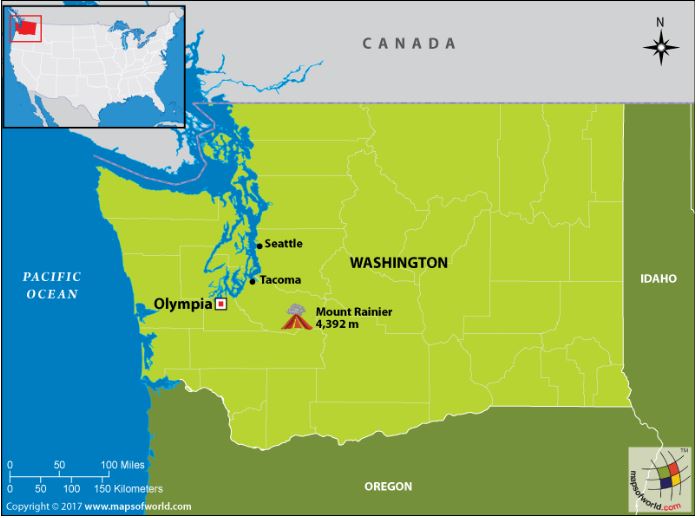
Lahar? Yeah, me neither. Lahars are a violent type of mudflow made up of a slurry of pyroclastic material, rocky debris, and water. They can have the consistency of wet cement when moving. These flows can be super fast, potentially reaching speeds of 60 mph, and may be hundreds of yards wide and up to almost 500 feet high. These massive, fast flows can wipe out any structure in their path and provide very little time to react offering little chance to get out of the way of this wet cement freight train. You can’t outrun a fast-moving lahar…
Wow, so it seems that I just barely escaped the jaws of death. Who knew that landscape photography could be so risky? I may go back to photographing lions and jaguars where it is safe…
Until next month…michael
Nikon D4S, Nikon 17-35mm (@17mm), f/16, 1/15 sec, ISO 400
Aug
31
Shot of the Month – August 2018
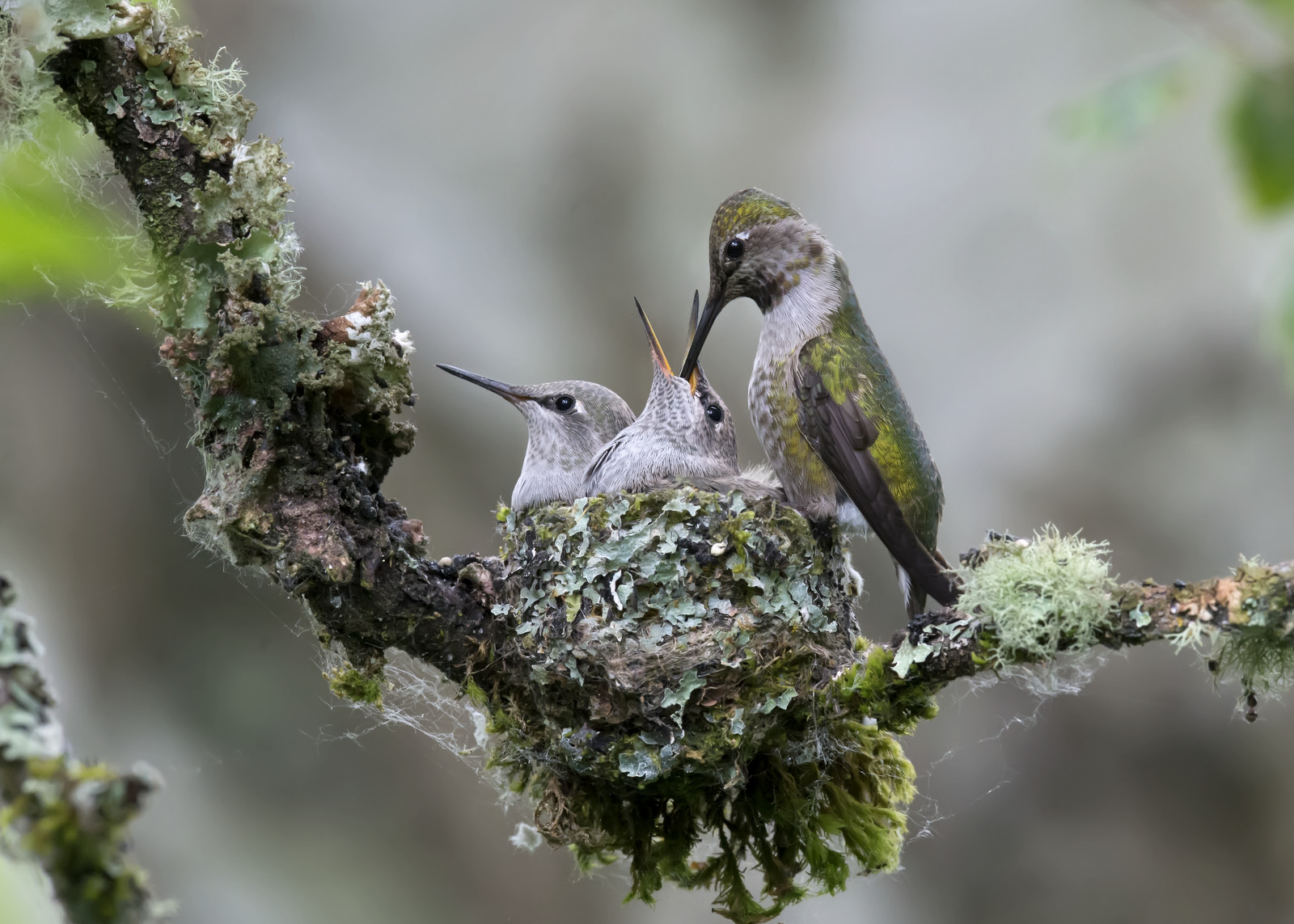
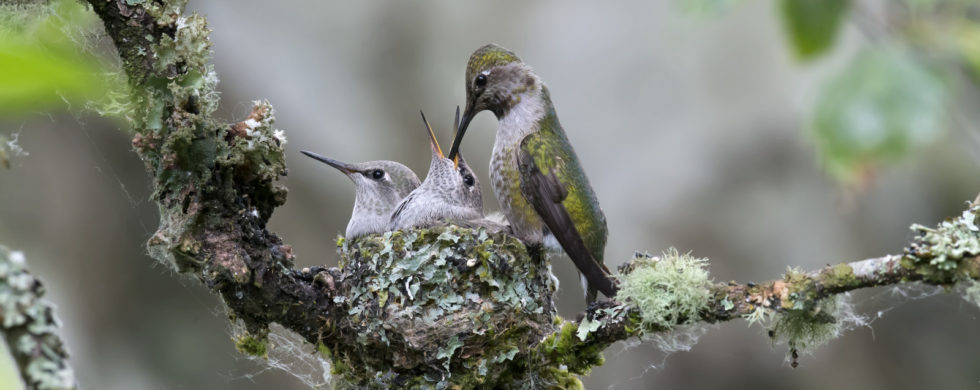
Earlier this summer I had the good fortune to find an Anna’s Hummingbird nest in a park near my house. Let me share my three-week journey with this lovely family.
The Nest
First, let’s stop to admire the nest — it is stunning. The female builds the nest by sitting in the middle and building the cup rim around her. The nest can be made out of plant fibers, cattail, willow, leaves, thistle, or small feathers and it is bound together with spider webs or insect cocoons. The nest can be decorated with lichen and moss to blend in with the surroundings. The nest is about 1 inch tall and 1.5 inches in diameter. And the one I saw, was perfect. I was blown away by how perfect it was. Perfectly round. Perfectly decorated. Perfectly camouflaged.
It belongs in a museum.
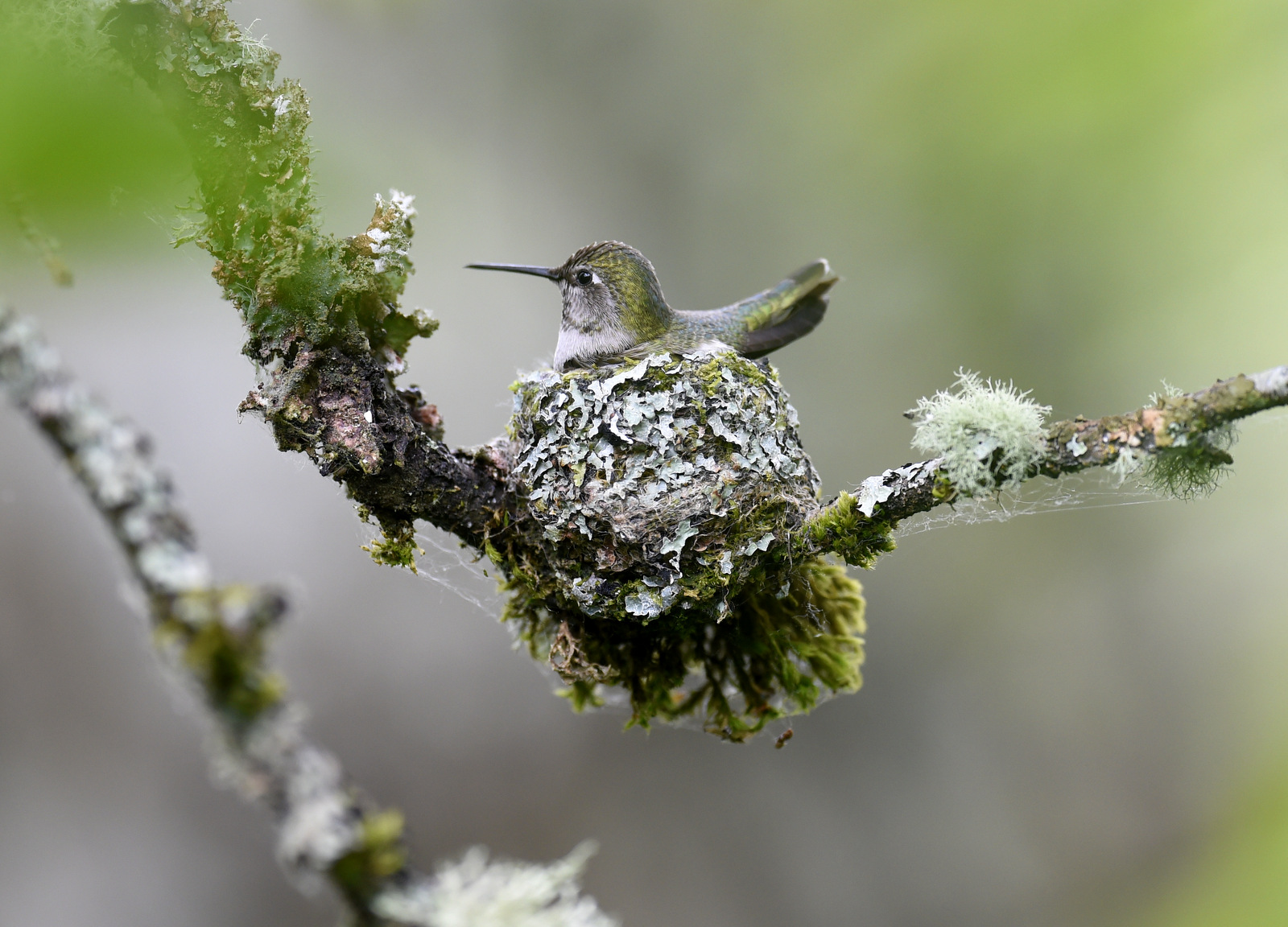
Did I mention that it was perfect?
They Grow Up So Fast
I spent about three weeks visiting this glorious little nest because that is about how long it takes for an Anna’s Hummingbird chick to grow up and develop its wing feathers to fly away. When I first found the nest the chicks were barely visible as they were so tiny. Here is a breakdown of my visits to the nest.
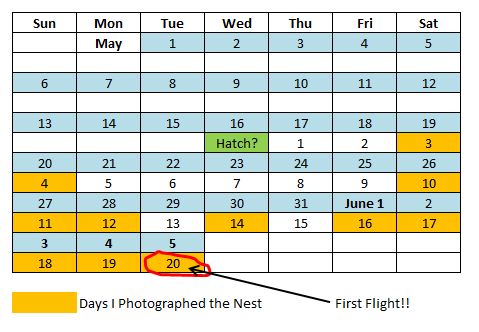
I discovered the nest on May 19th – given the size of the chicks and from information from other photographers, I estimated that the chicks were 3 days old at this point, as indicated on my calendar to the left. In total I made 11 visits to the nest, when the chicks were about 3,4,10,11,12,14,16,17,18,19, and 20 days old. On the 20th day, I had the opportunity of a lifetime — I was there when the fledglings took their FIRST flight. Even more amazingly I was video-taping (boy that term is outdated) and got the first flight on “film.” But I am getting ahead of myself. Let’s look at our little “photo album” from the kids’ childhood…
Day 3
Below, if you look closely you can the little yellow beaks of the two chicks in the nest. They are so tiny that they barely reach the top of the rim of the nest.
And here is the only clear view of a chick I got at this age. Eeeek! Uh, I mean, “Aww, he is so beautiful” “He looks just like you!” At this age, the eyes are not open yet and there is not a feather to be found on this naked little beast. He must be standing on his tippy toes to reach out this high to reach Mom’s food. Remember that the diameter of the nest is only about 1.5 inches, so the chick’s head is about the size of your fingernail!
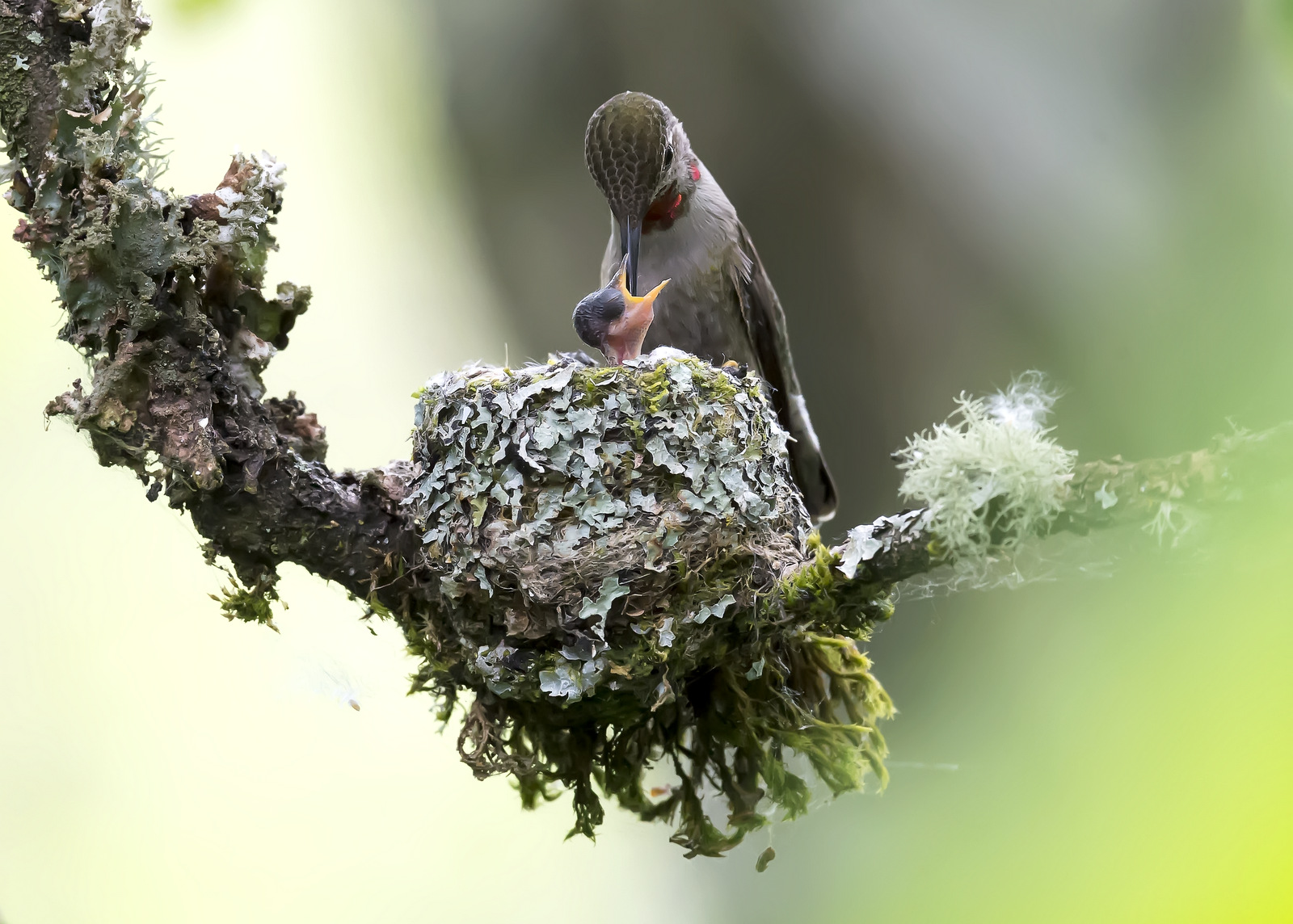
Day 4
The chicks are so small that mom can still sit on the nest.
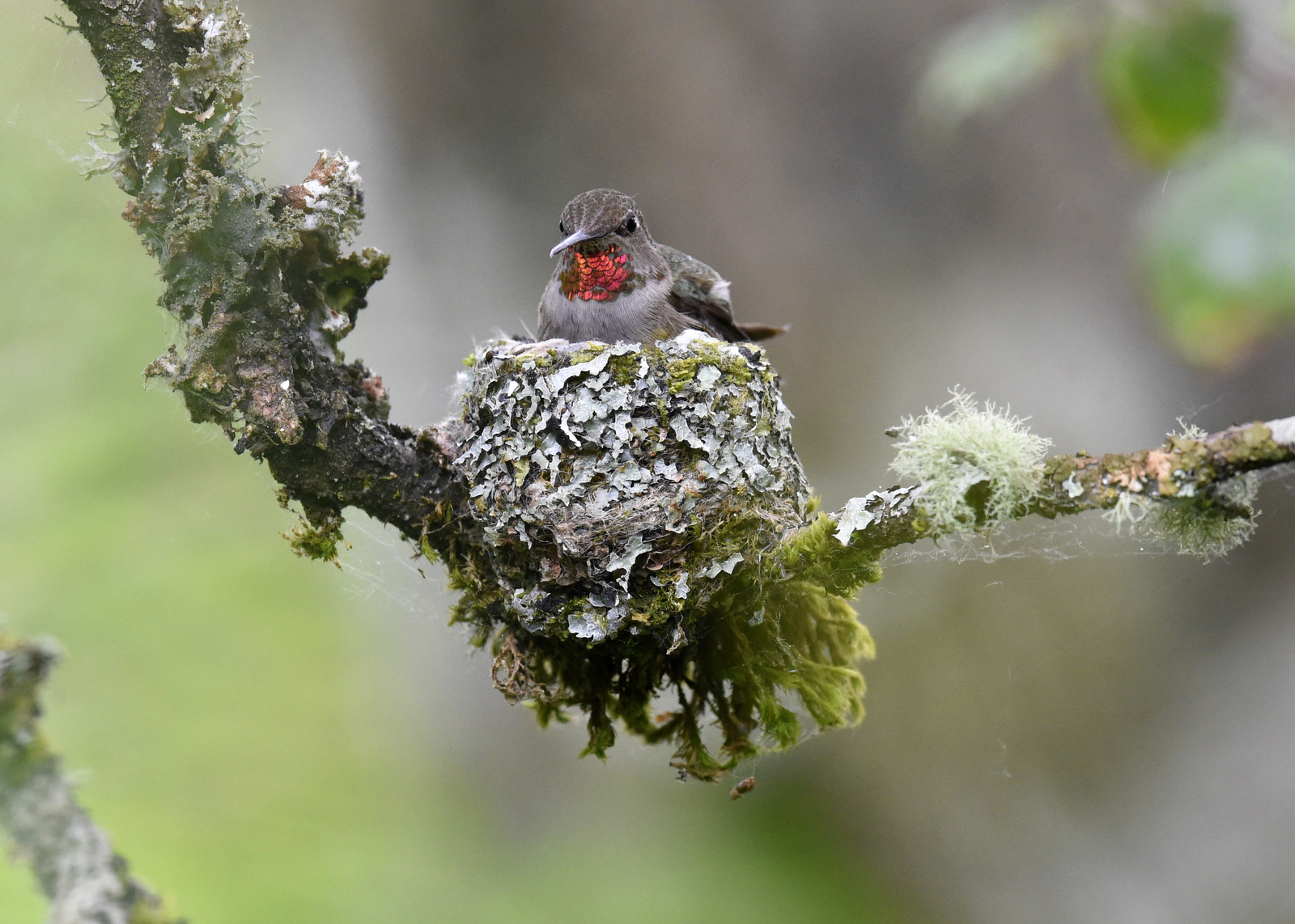
Day 10
Let’s jump ahead to May 26 – day ten of their little lives. Look at how much they have grown – their heads clearly stick out above the rim of the nest. Their eyes are open. And we can see the stems of their feathers coming through.
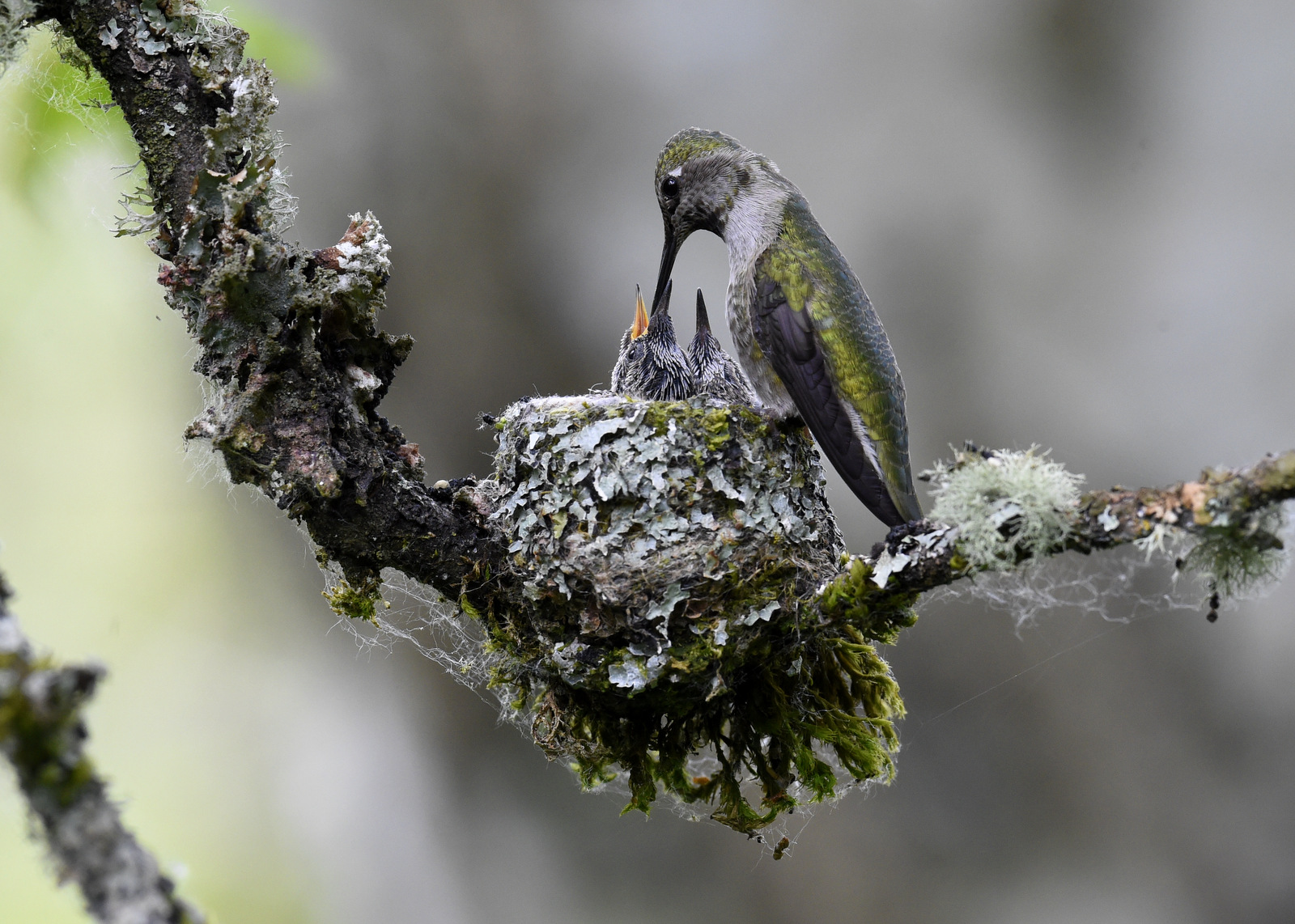
Day 12
Getting bigger and their feathers are filling out.
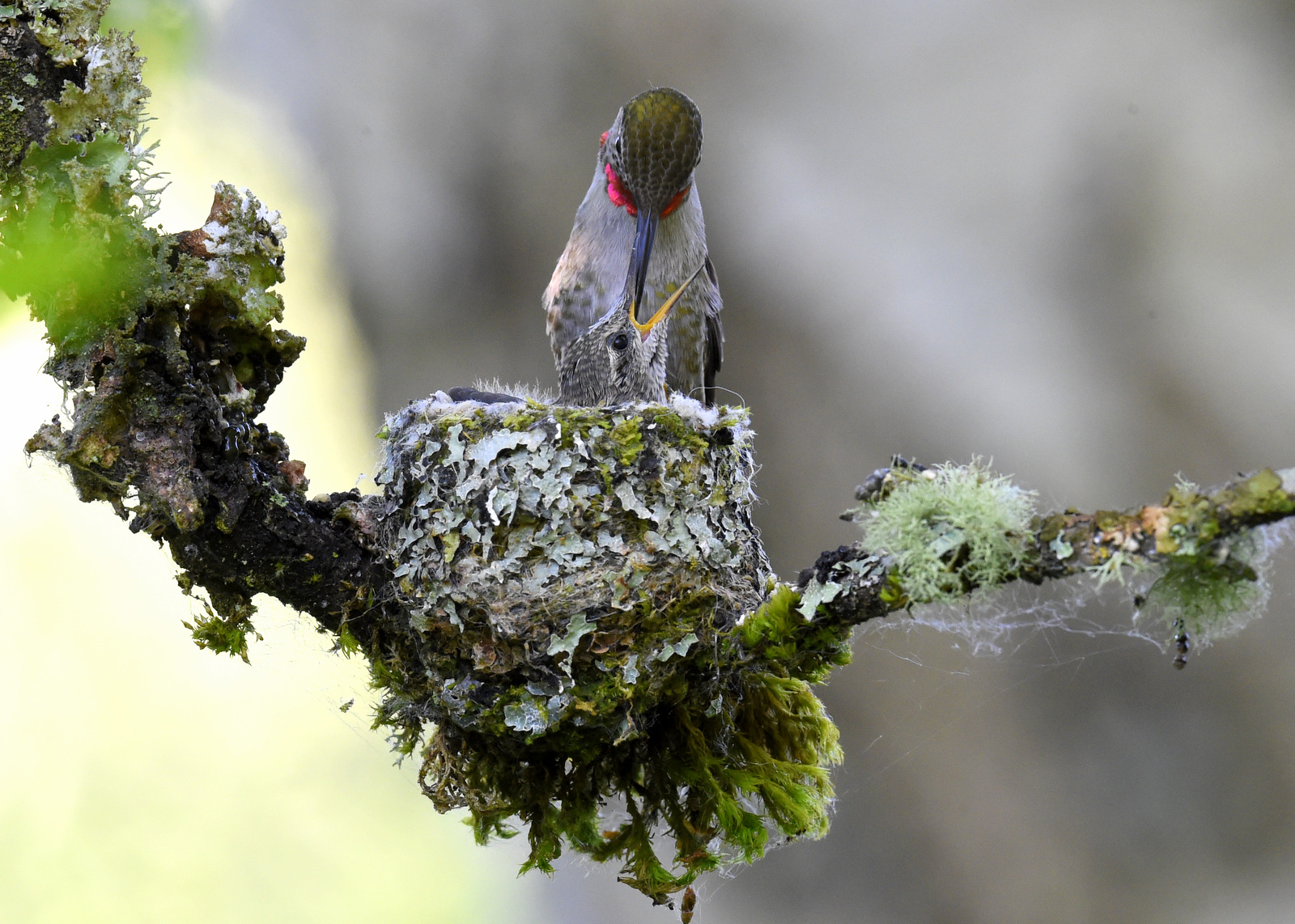
At this stage, it is starting to get crowded in the nest.
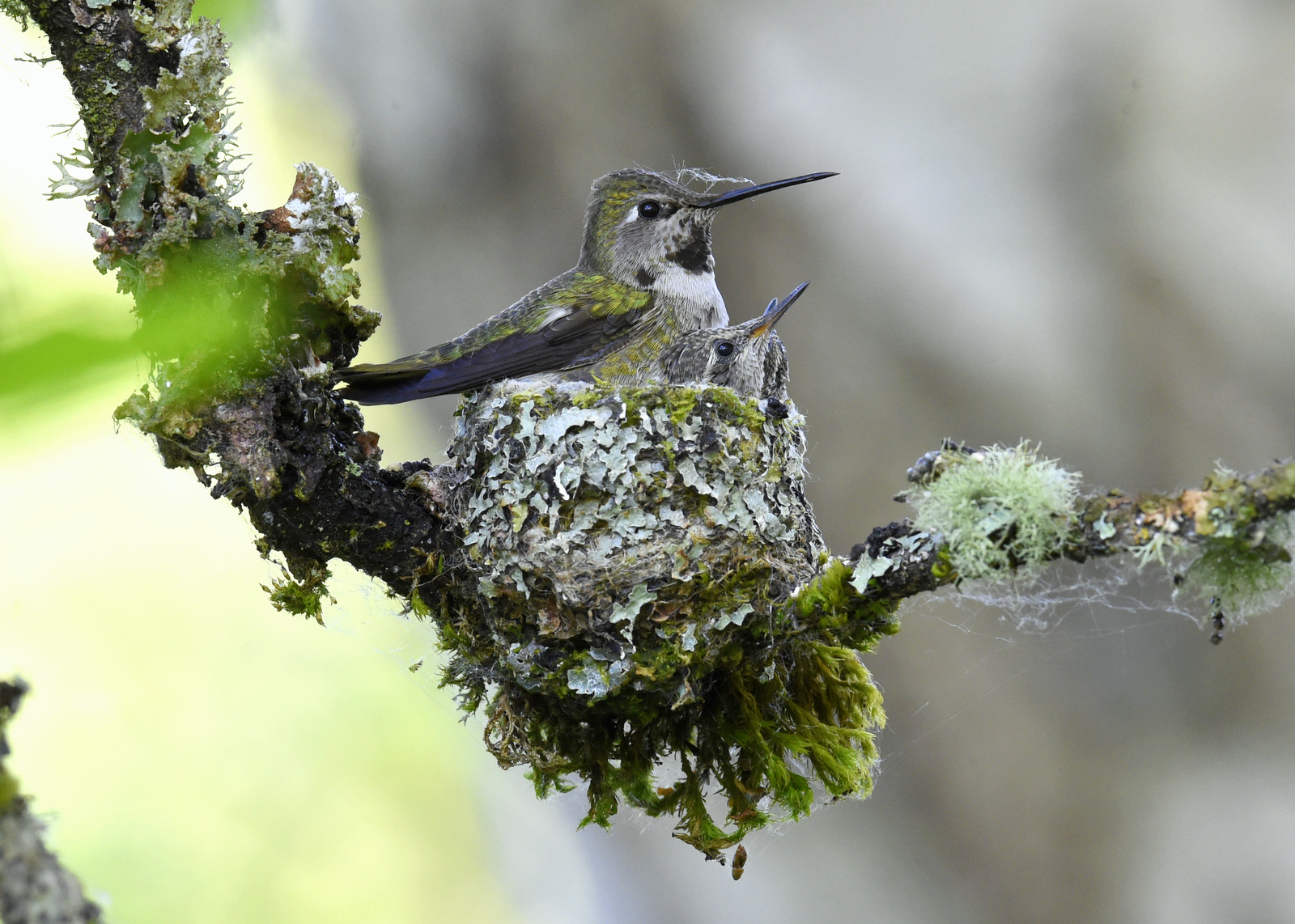
Getting bigger but the wing feathers are still filling in…
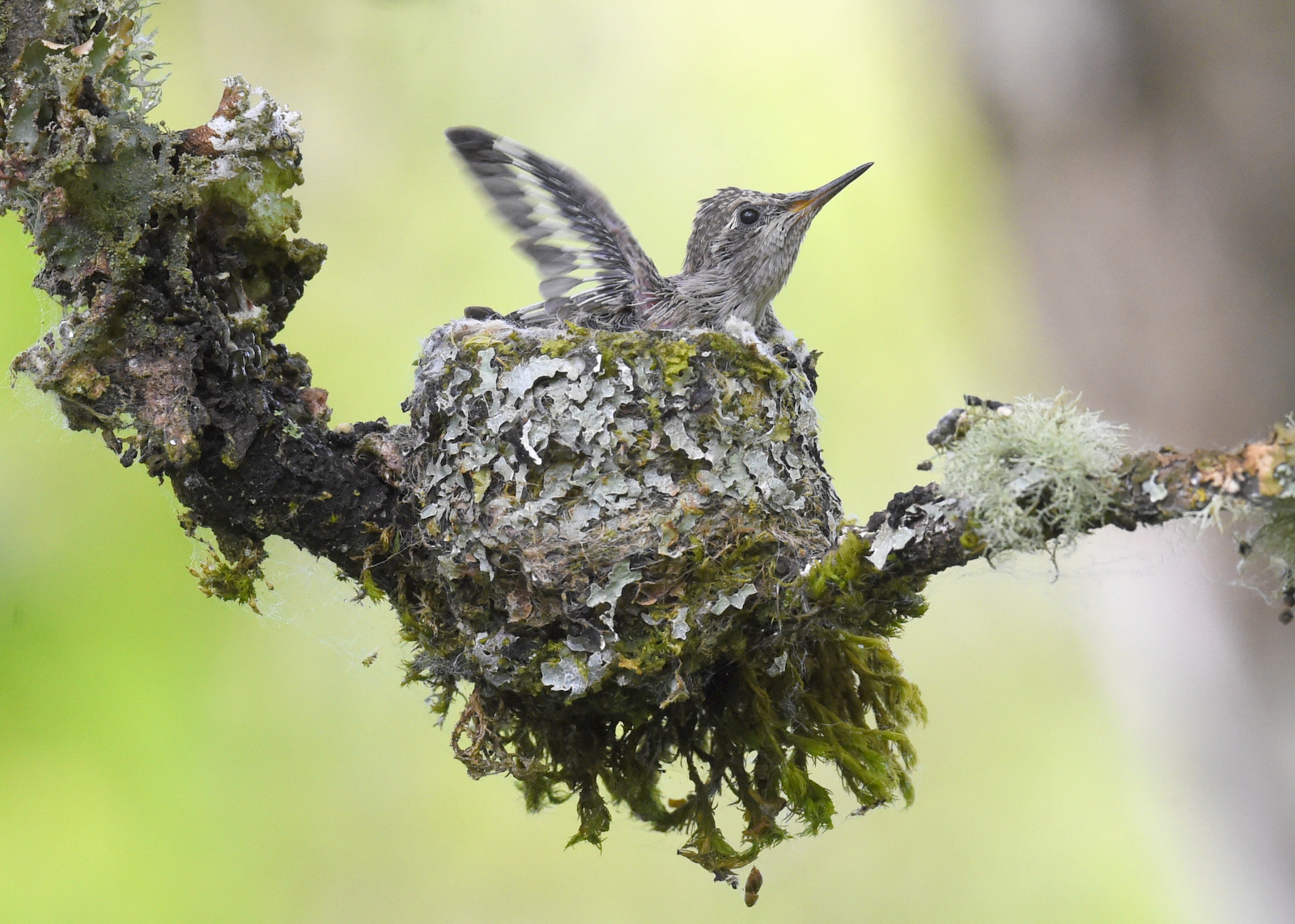
Day 17
Just over 2 weeks old and look how refined their feathers are now.
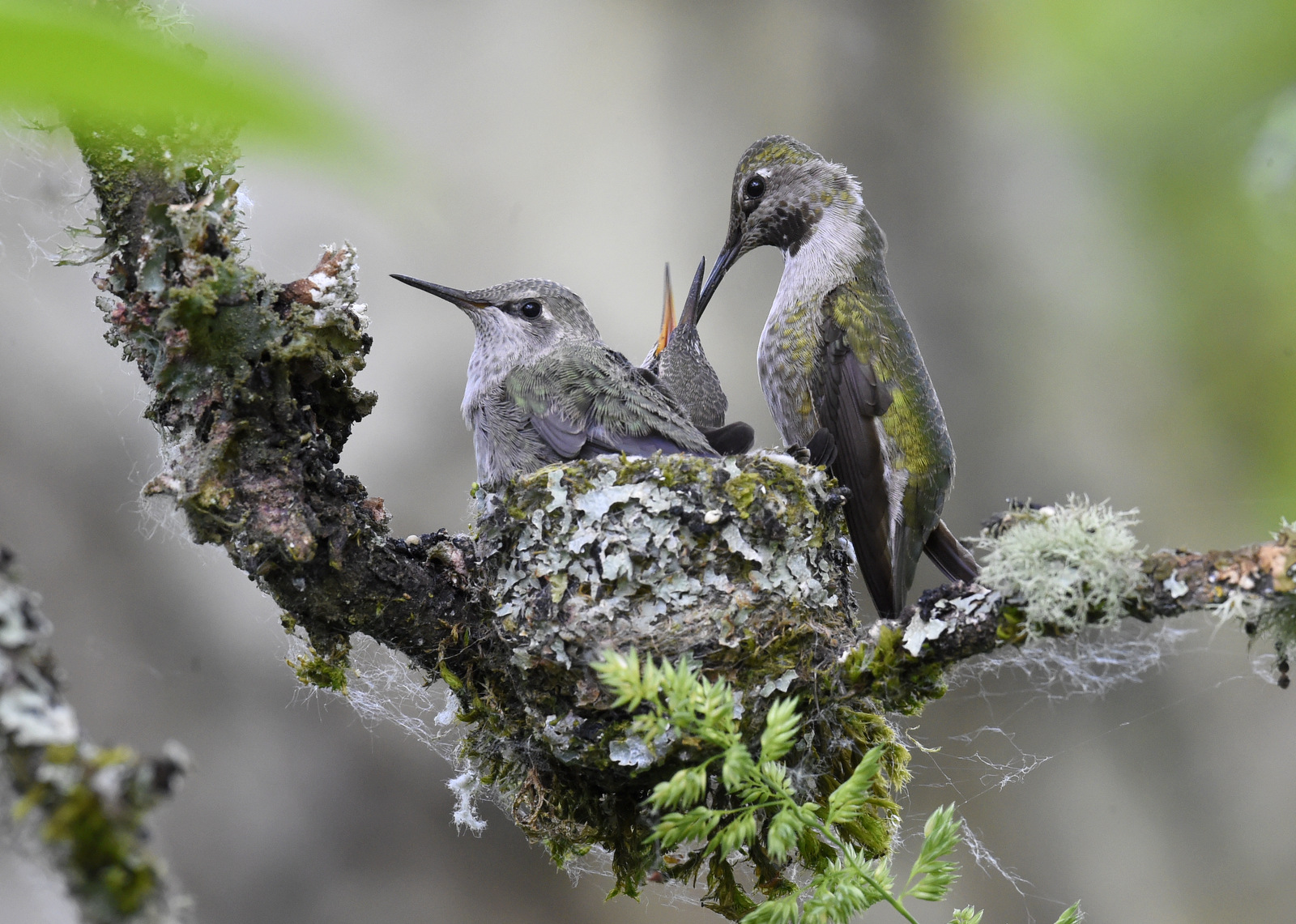
Day 18
Beautiful, though, we are going to need a bigger boat.
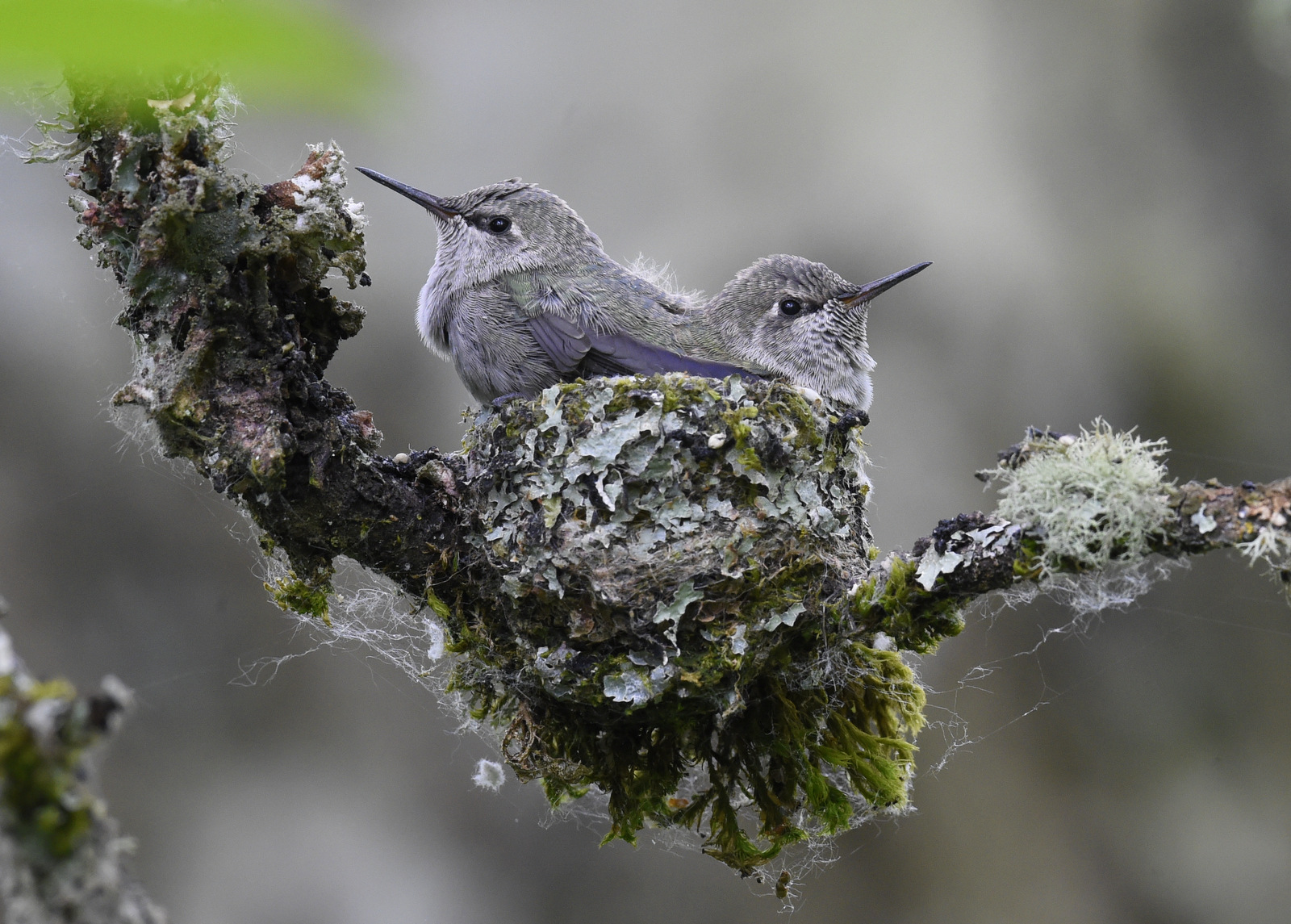
Demanding kids…
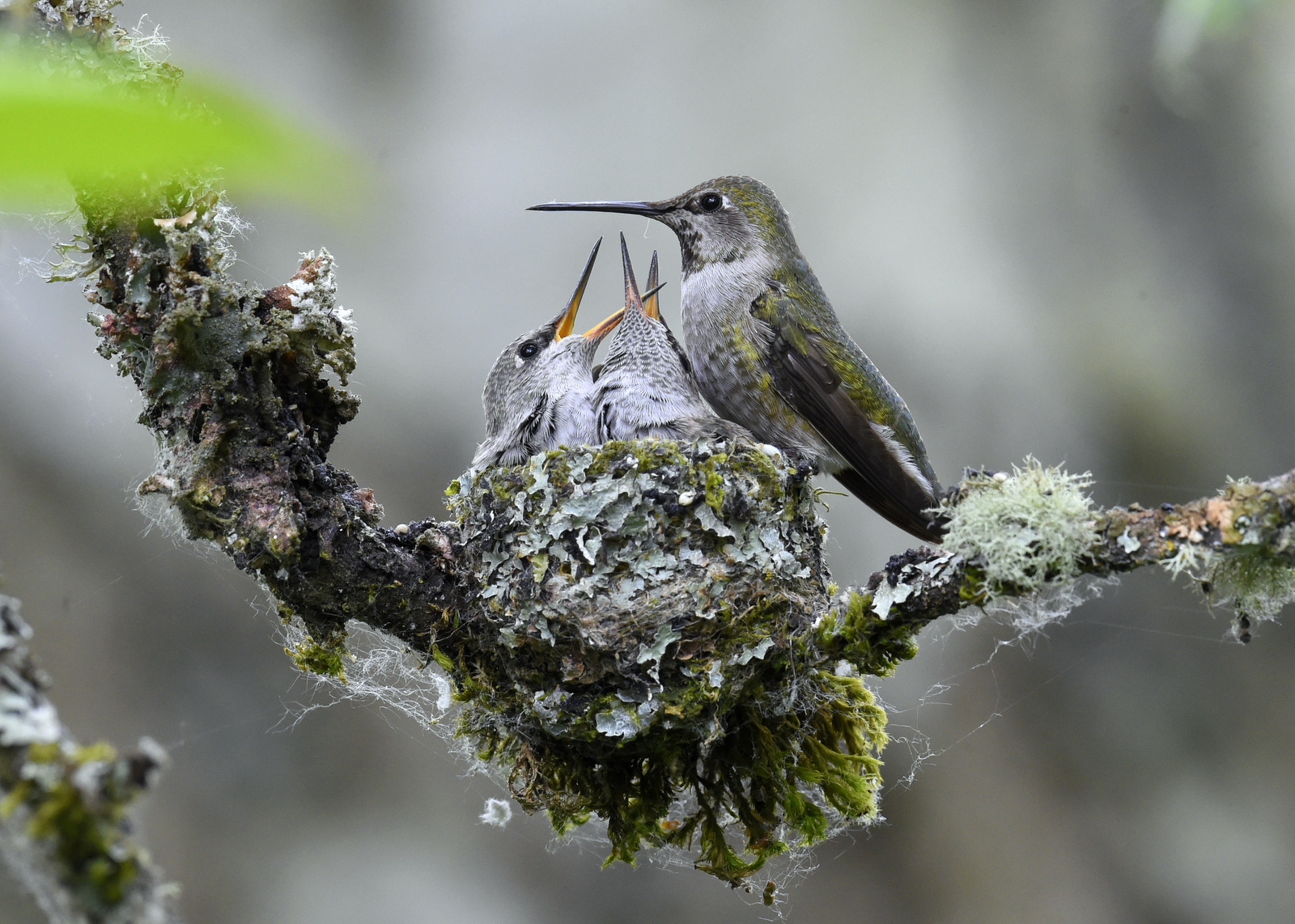
Day 20
And before you know it, they are proper little birds. Here is Junior’s first flight. Sniff, I am so proud…(you can also see the video here)
The chicks only flew a few feet away to a nearby branch in the same tree.
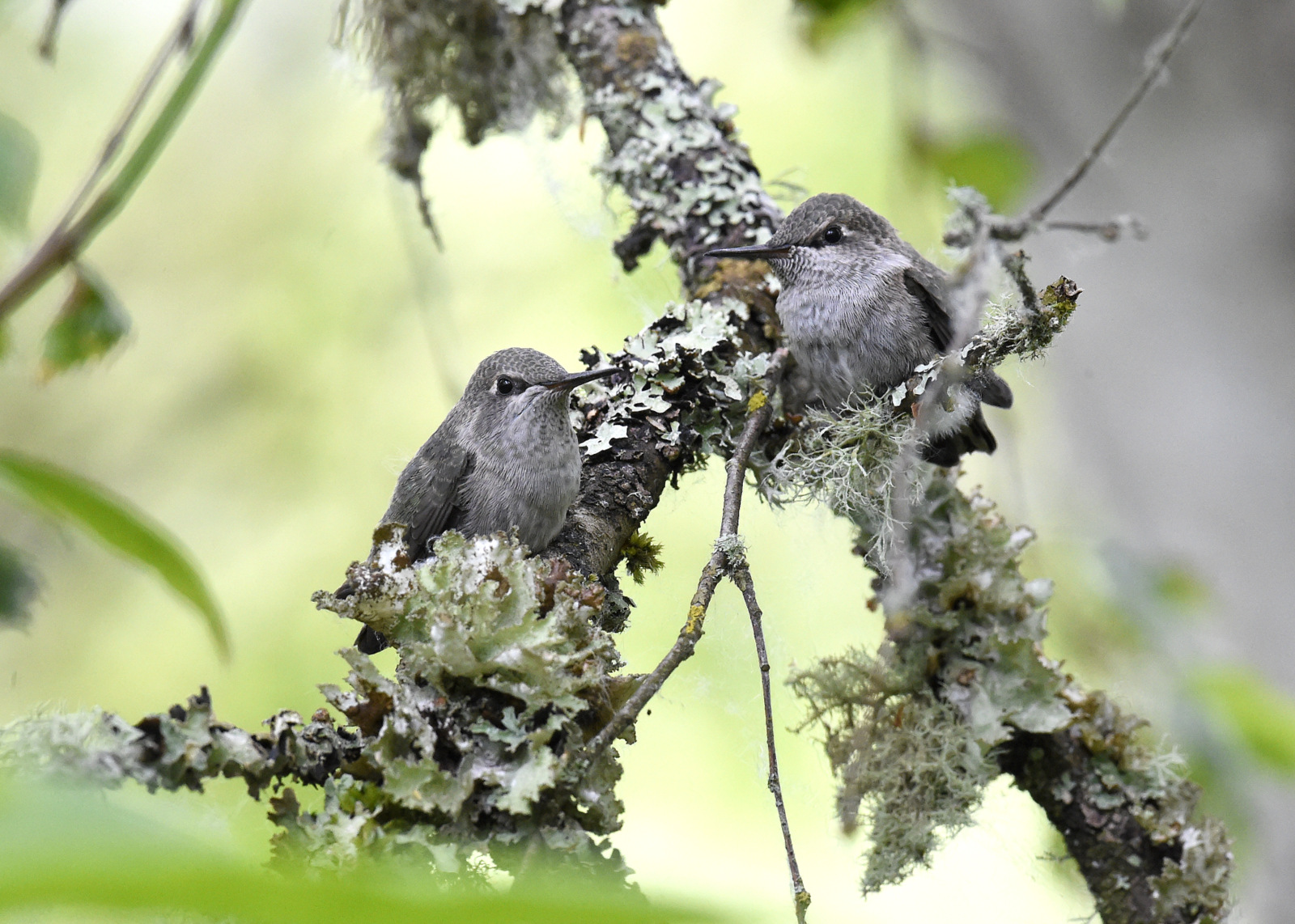
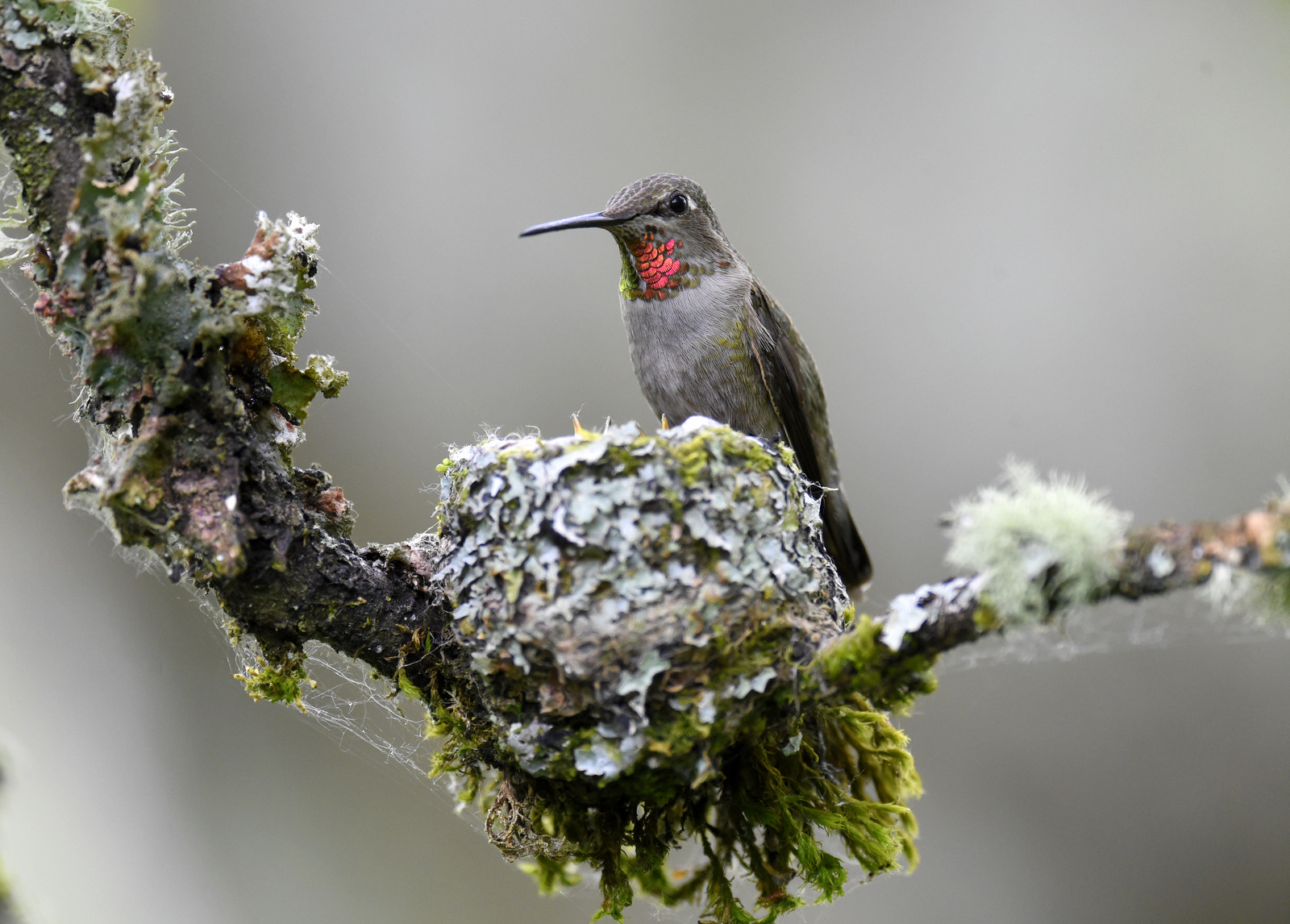
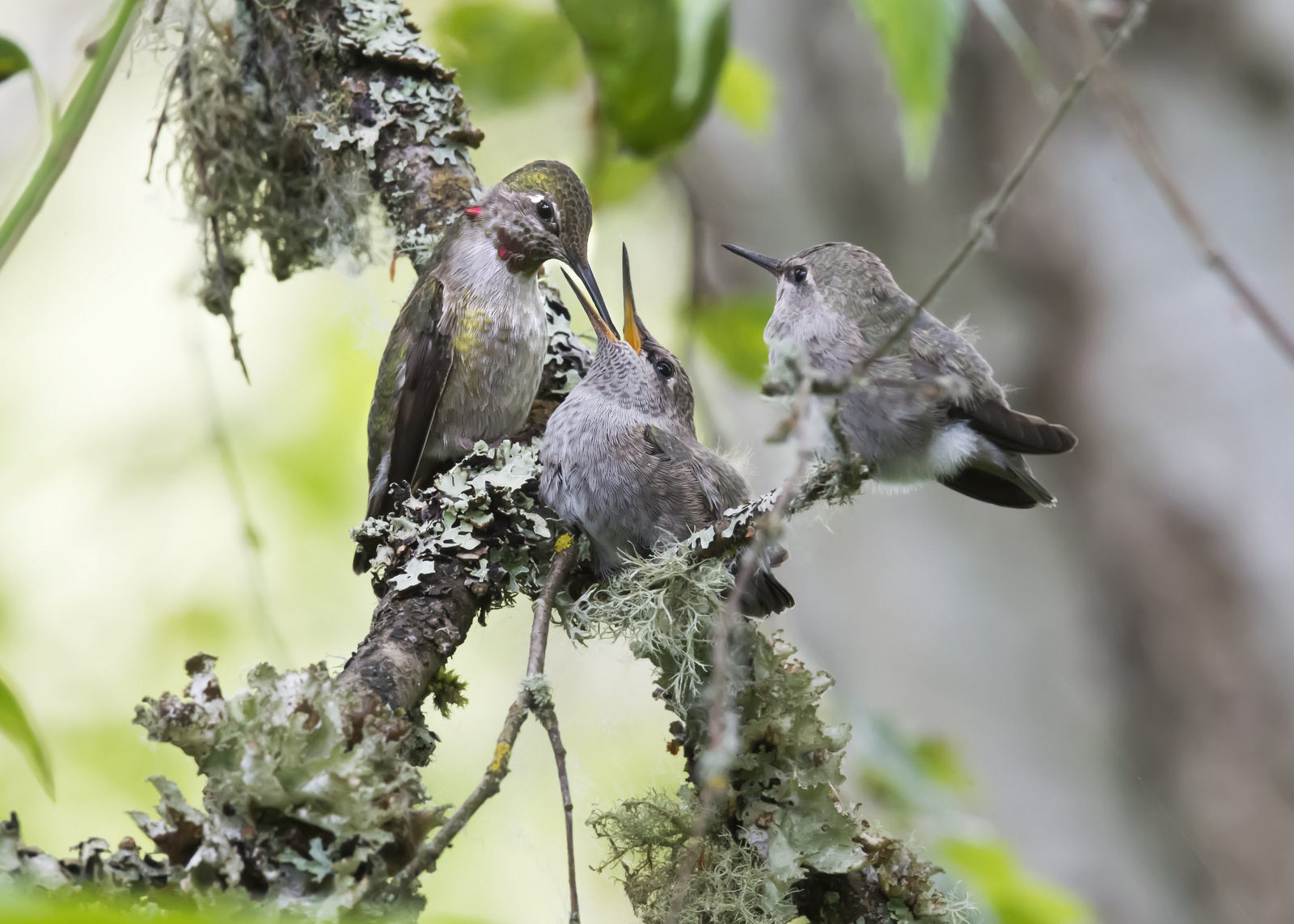
Mom’s duties continued, however, most likely for a few more days:
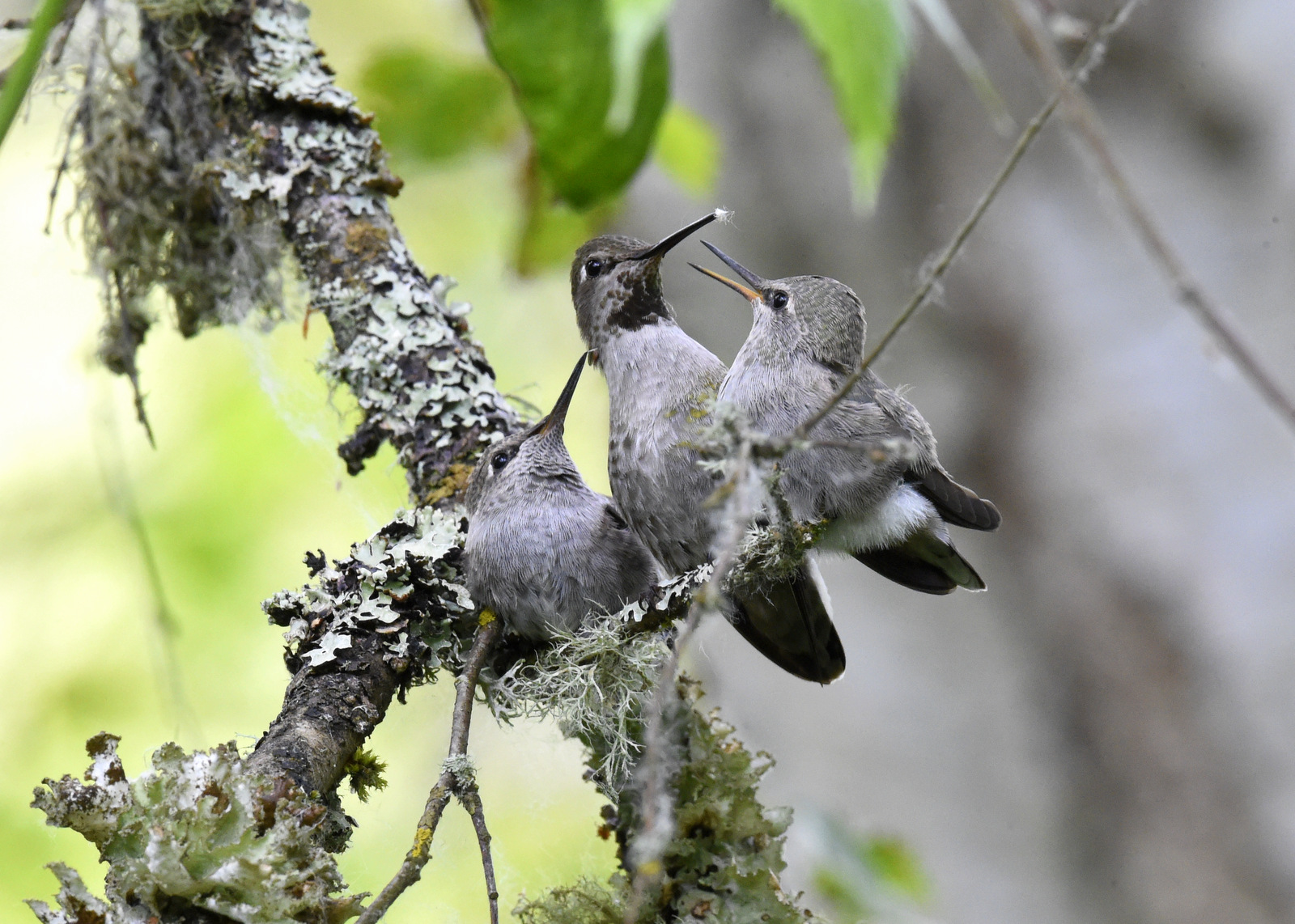
And so ends our time together. Well done, mum. You have raised a lovely pair of hummingbirds…
Until next month…..m
Nikon D4s, Nikon 600mm @ f/11, 1/125 ses, ISO 6400

