
31
2025A Sappy Tale…
Shot of the Month – August 2025
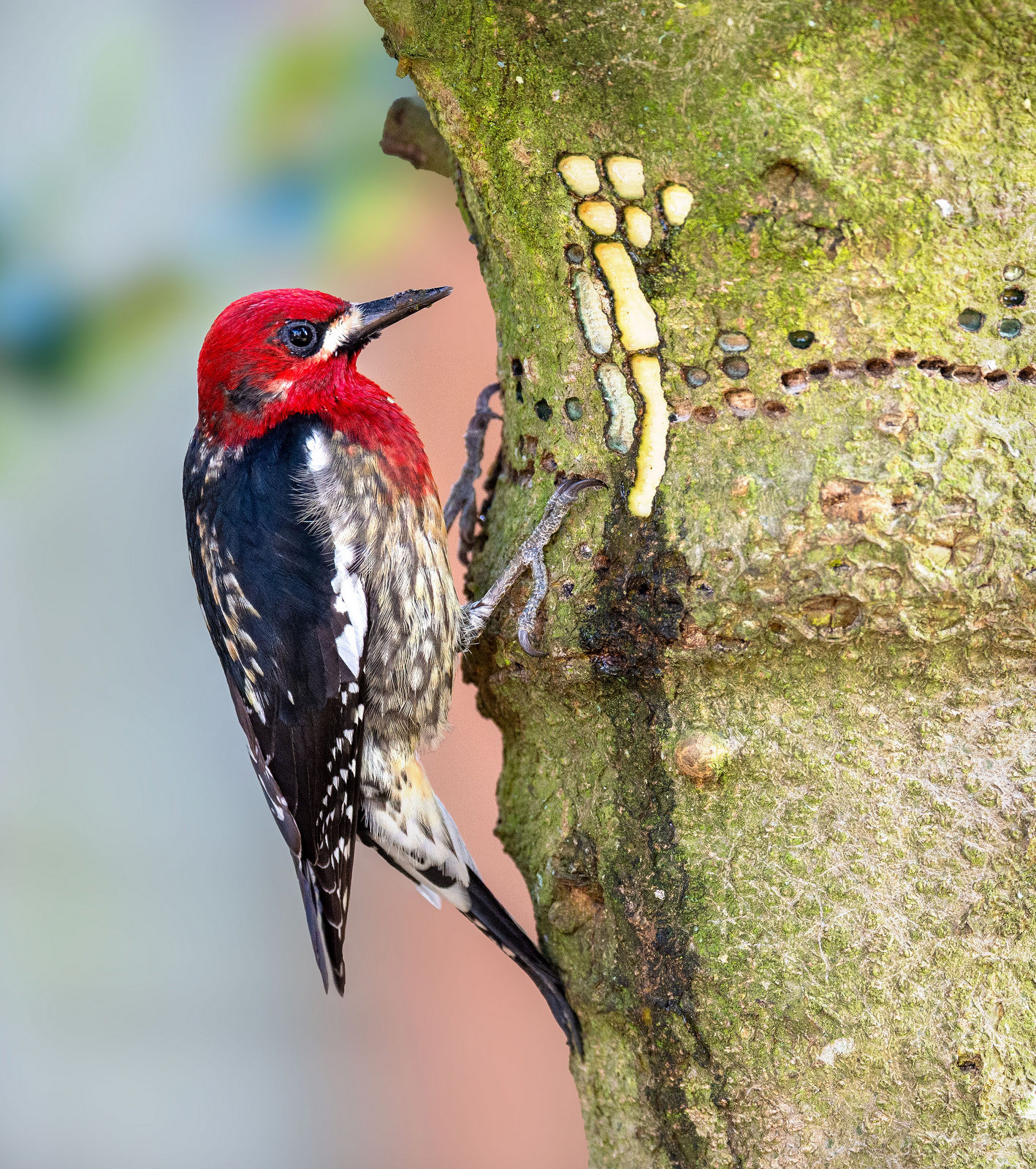
This month, we visit with the Red-breasted Sapsucker (RBS). I photographed this fellow in the yard on our Holly tree.
Let’s break it down:
Red-breasted
As we can see, this bird, especially the male, is dashingly adorned in a vibrant red covering his head and chest. The RBS is a US robin-sized bird found in western North America, as shown here:
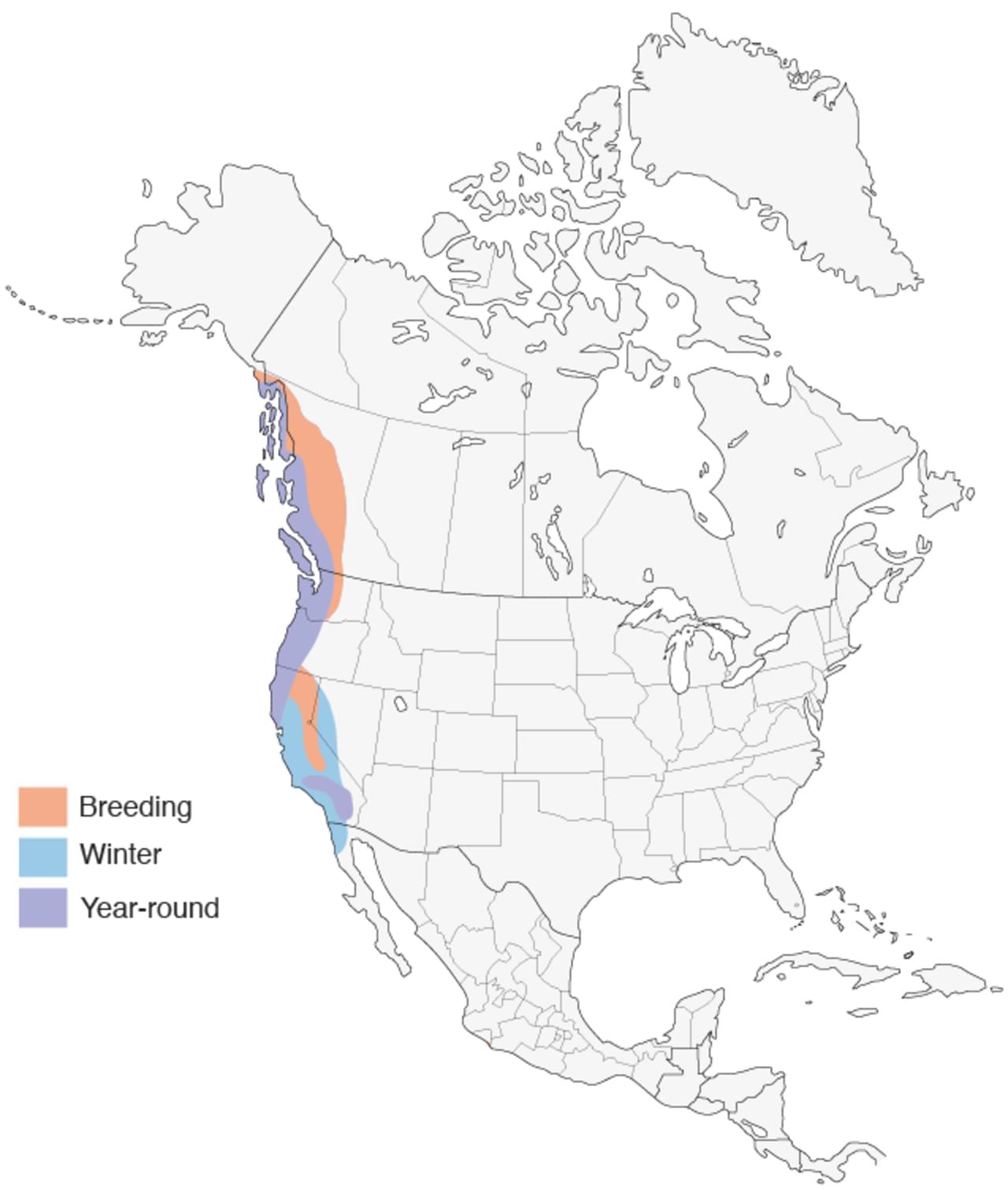
If you wander about in the western regions of Canada, Alaska, Washington, Oregon, California or the western tip of Mexico, you have a chance of seeing this dapper dandy.
Sapsucker
The red-breasted sapsucker is a type of woodpecker that specializes in collecting and eating sap from trees. Hence, “sapsucker.” Of the 400+ species of woodpeckers, only 4 are considered sapsuckers. The four are:
- Red-breasted Sapsucker
- Red-naped Sapsucker
- Yellow-bellied Sapsucker
- Williamson’s Sapsucker
And all are found in North America.
Sap Story
The RBS drills shallow holes or wells in the trunks of trees (most commonly aspen, cedar, pine, birch, or maple) and drinks the collected sap as it oozes from the open wound. Despite their name, sapsuckers do not suck the sap out of the tree wells, but rather, lick it up with their tongues, which are equipped with stiff hairs designed just for this task. The birds make regular rounds to their active sap trees to keep the wells open and ensure that the sap keeps flowing.
Below is a photo of the other side of our holly tree — the RBS has drilled shallow wells around the entire trunk. If you look closely, you can see where the larger wells have produced heavy sap “streams” oozing down the bark.
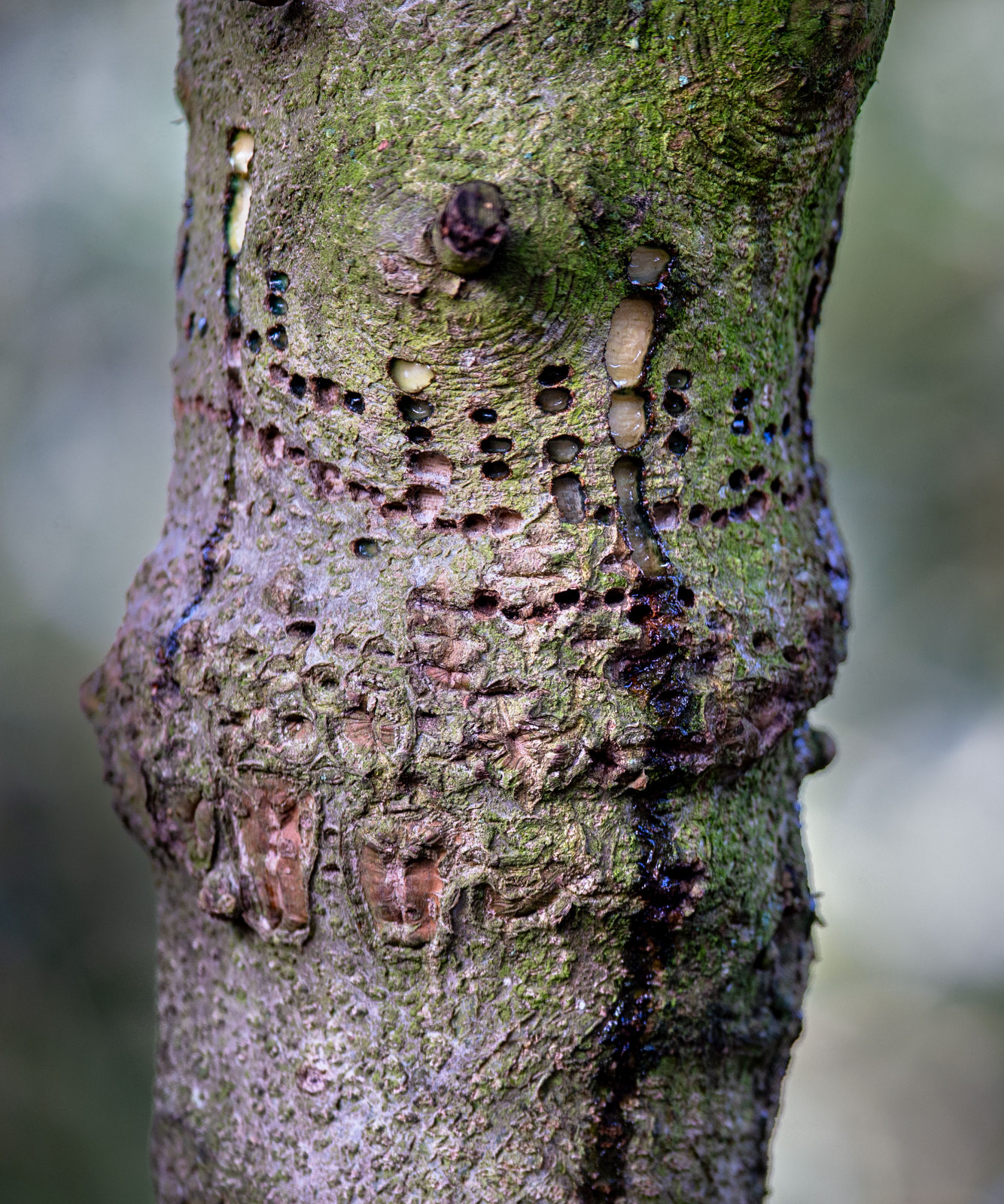
The sap attracts insects, which often become trapped in the gooey mess, and the bird benefits from the extra protein. During breeding season, the parents collect insects at the sap wells and feed them to the chicks to enrich their diet. The parents sometimes catch ants at other locations but bring them back to the sap tree, dip them in the sticky stuff, and feed them to the young as a tasty treat!
Sapsuckers cannot live on sap alone, and they round out their diet with spiders, caterpillars, berries, fruit, and tree cambium (the slender plant membrane located under the bark of a woody tree or plant).
Community benefits
Quite a few animals benefit from the sapsuckers’ hard work. The Rufous hummingbird, in particular, follows the RBS to learn the location of the sap wells and regularly feeds from them (sneaky little bugger!). These wells can provide essential calories to squirrels, chipmunks, porcupines, and bats in the spring when flowers are scarce. Many birds (hummingbirds, warblers, nuthatches, orioles) and other insects (bees, wasps, moths, flies) also feed at the sap wells.
Habitat
RBS are cavity dwellers and excavate holes in dead trees for their nests. They build a new nest each year, so over time, there are numerous cavities available for other bird species and mammals.
Keystone
Sapsuckers are considered a “double keystone” species given the essential role they play in their ecosystem. What’s the double part?
- Nutritional Hubs: As highlighted above, the sap wells provide essential calories and nutrients to a broad range of animals and insects. For example, hummingbirds will time their spring migration to coincide with the arrival of sapsuckers so they can feed on the sap wells.
- Habitat Creators: The tree cavities provide essential nesting sites for birds and are especially important for swallows and small mammals.
Put it all together, the sapsuckers have a disproportionately large effect on their ecosystem, granting them keystone species status!
I don’t want to get all sappy, but that is a beautiful story…sniff, sniff.
Until next month……m
Nikon D4S, Nikon 600mm with 1.4x TC (@ 850 mm), f/5.6, 1/320 sec, ISO 3200, +0.5 EV

